Navratri Day 4 2026: Maa Kushmanda Puja Vidhi, Mantra, Colour and Bhog
Navratri Day 4 falls on October 14, 2026 and is dedicated to Maa Kushmanda. Check today’s royal blue colour, malpua bhog, mantra, simple puja vidhi, Chaturthi timing and what comes on Day 5.
Wednesday, October 14, 2026 marks Day 4 of Shardiya Navratri, when devotees worship Maa Kushmanda, the fourth form of Goddess Durga in the Navdurga tradition.
For people following the widely used nine-day Navratri colour calendar, today’s colour is royal blue. Malpua is among the traditional bhog offerings commonly associated with Maa Kushmanda, while a simple mantra used in her worship is:
ॐ देवी कूष्माण्डायै नमः॥
Om Devi Kushmandayai Namah.
October 14 falls under Shukla Paksha Chaturthi. According to Drik Panchang, the Chaturthi tithi continues until 1:13 AM on October 15 in both its New Delhi and Hyderabad calculations.
Panchang timings are location-specific, however. Readers outside these cities — including Indians living in the United States, Canada, the United Kingdom, Australia or elsewhere — should not convert an Indian muhurat mechanically to their local clock. A Panchang calculated for the place where the puja is being performed is preferable.
Key Takeaways
Date: Wednesday, October 14, 2026
Goddess: Maa Kushmanda
Colour: Royal Blue
Recommended Reading
Related Stories & In-Depth Guides
Curated editorial perspectives matching this topic.
Navratri Day 3 falls on October 13, 2026 and is dedicated to Maa Chandraghanta. Check today’s red colour, mantra, bhog, puja vidhi and what comes on Day 4.
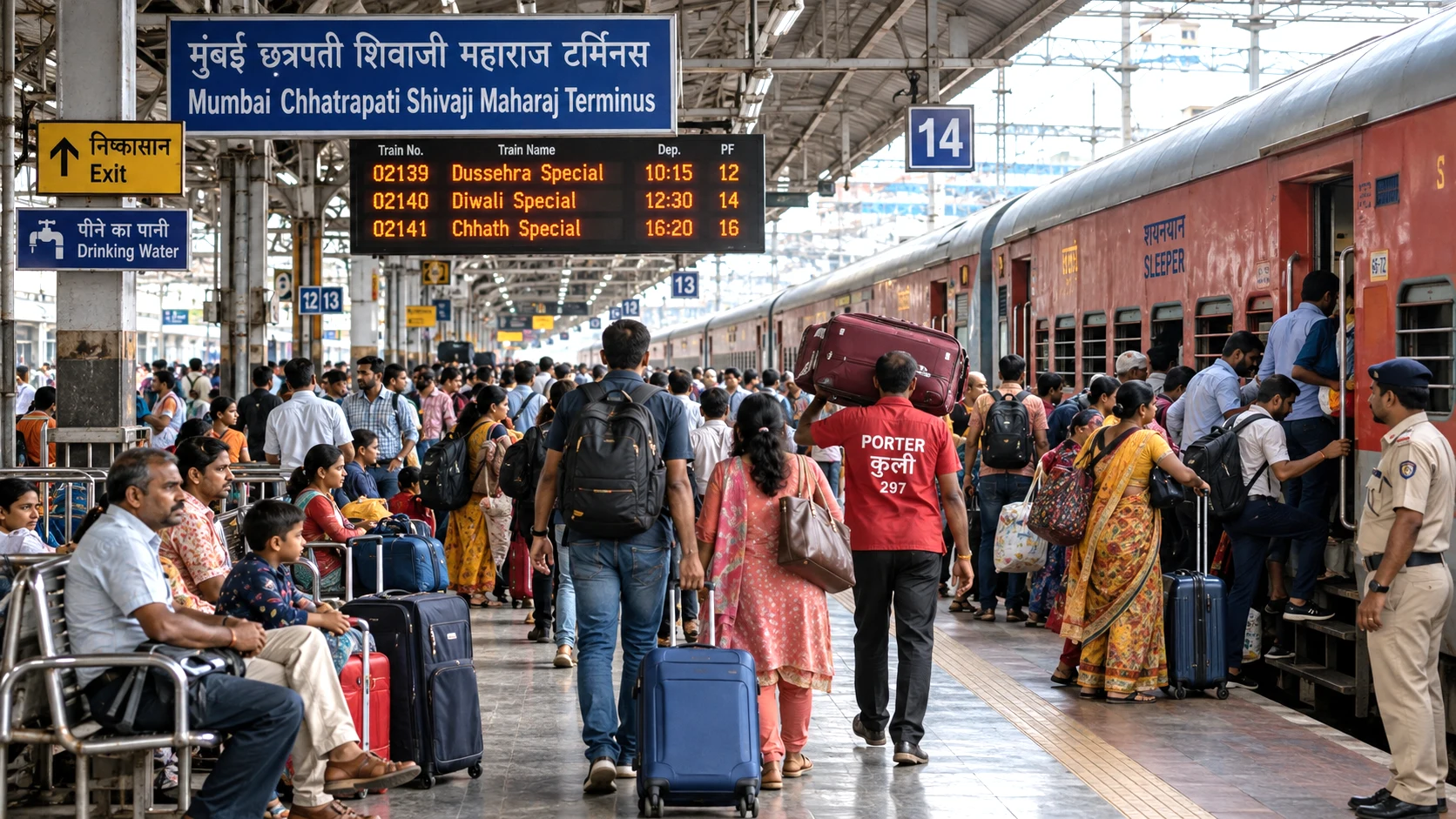
Central Railway has announced 418 festival-special services for Puja, Dussehra, Diwali and Chhath 2026. The first reservation batch opened September 27, with another opening September 28. Check train numbers, routes, dates and official booking options.
Tithi: Shukla Chaturthi (ends 1:13 AM on Oct 15)
Common bhog: Malpua
Mantra: Om Devi Kushmandayai Namah
Next: Day 5 (October 15) — Maa Skandamata, Yellow
Navratri Day 4 2026 at a Glance
Date: Wednesday, October 14, 2026
Festival: Shardiya Navratri Day 4
Navdurga form: Maa Kushmanda
Tithi: Shukla Chaturthi
Popular colour of the day: Royal Blue
Common bhog: Malpua
Simple mantra: Om Devi Kushmandayai Namah
Panchang reference used: Drik Panchang
New Delhi sunrise: 6:21 AM IST
New Delhi Chaturthi ends: 1:13 AM on October 15
Hyderabad sunrise: 6:09 AM IST
Hyderabad Chaturthi ends: 1:13 AM on October 15
Next Navratri day: Thursday, October 15, 2026
Day 5 Goddess: Maa Skandamata
Day 5 colour: Yellow
Vijayadashami / Dussehra: Tuesday, October 20, 2026
Who Is Maa Kushmanda?
Maa Kushmanda is worshipped as the fourth manifestation of Goddess Durga during Navratri.
In devotional tradition, she is associated with the creation of the universe and with light, vitality and cosmic energy. One traditional explanation of her name connects her with the idea of the cosmic egg, or Brahmanda.
The religious narrative describes Maa Kushmanda as bringing light into primordial darkness through her divine smile. This is a devotional account and should be understood in its religious and symbolic context rather than as a scientific explanation of the origin of the universe.
Traditional iconography depicts Maa Kushmanda with eight arms, which is why she is also known as Ashtabhuja Devi.
Representations commonly show her carrying sacred and symbolic objects that can include a kamandalu, bow, arrow, lotus, pot, japa mala, mace and chakra. She is commonly depicted riding a lion.
As with many Hindu deities, exact artistic representations can differ between regions, temples and traditions.
What Is the Navratri Colour Today, October 14?
The widely followed Navratri colour for Wednesday, October 14, 2026 is royal blue.
The daily colour tradition has become a highly visible part of contemporary Navratri celebrations. Families, workplaces, community groups and Garba events often coordinate clothing around the colour associated with each day.
A devotee may therefore choose a royal blue saree, kurta, salwar suit, dupatta, shirt or another blue element today.
However, wearing royal blue is not a compulsory requirement for performing Maa Kushmanda puja.
Navratri customs differ across India, and individual families or temples may follow regional colour traditions that do not exactly match the widely circulated nine-colour calendar.
The colour custom should therefore be treated as a popular devotional and cultural practice rather than a rule that overrides an established family or temple tradition.
Navratri Day 4 Puja Time on October 14, 2026
There is no single puja time that applies identically to every city.
For clarity, Rajatheertha is using Drik Panchang as the Panchang reference for the timings below.
New Delhi timings — October 14
Sunrise: 6:21 AM IST
Brahma Muhurta: 4:41 AM to 5:31 AM IST
Pratah Sandhya: 5:06 AM to 6:21 AM IST
Vijaya Muhurta: 2:02 PM to 2:48 PM IST
Amrit Kalam: 4:38 PM to 6:23 PM IST
Sayahna Sandhya: 5:53 PM to 7:08 PM IST
Rahu Kalam: 12:07 PM to 1:33 PM IST
Chaturthi ends: 1:13 AM on October 15
Drik Panchang lists no Abhijit Muhurat for New Delhi on October 14.
Hyderabad timings — October 14
Sunrise: 6:09 AM IST
Brahma Muhurta: 4:31 AM to 5:20 AM IST
Pratah Sandhya: 4:56 AM to 6:09 AM IST
Vijaya Muhurta: 2:00 PM to 2:47 PM IST
Amrit Kalam: 4:38 PM to 6:23 PM IST
Sayahna Sandhya: 5:55 PM to 7:09 PM IST
Chaturthi ends: 1:13 AM on October 15
Drik Panchang also lists no Abhijit Muhurat for Hyderabad on October 14.
These timings should not be interpreted as saying Maa Kushmanda can be worshipped only during one narrow window.
Many households continue their normal morning or evening Navratri worship according to family practice. Anyone following a specific temple, priest, sampradaya or regional Panchang should continue to use that tradition.
Why Does the Puja Time Change From City to City?
Panchang calculations are sensitive to location.
Sunrise and sunset differ between cities, and several daily religious time periods are calculated using local astronomical conditions.
That is why a time published for Delhi may differ from Hyderabad, Mumbai, Kolkata, Chennai or Bengaluru.
It becomes even more important for diaspora readers.
A family performing Navratri puja in London, Toronto, Sydney, Melbourne, New York or another overseas city should use a Panchang calculated for that city rather than simply treating an IST timing as its local puja time.
The IST timings above are included as Indian reference points, not as universal global timings.
Navratri Day 4 Puja Vidhi: A Simple Household Guide
Navratri worship varies by family, community and region. There is no single household method that every devotee across India must follow.
For readers seeking a simple general sequence, the following approach can be used while respecting established family customs.
1. Prepare the puja space
Begin by bathing and wearing clean clothes.
Clean the home shrine or Navratri puja area. If your family performed Ghatasthapana on Day 1, continue worship of the established Kalash according to your normal practice.
Those following the daily colour tradition may wear royal blue.
2. Light the diya
Light a diya carefully at the puja place.
If an Akhand Jyoti is being maintained throughout Navratri, make sure it is kept on a stable, fire-safe surface and is not left in a hazardous location.
Incense may also be offered according to household custom.
3. Invoke Maa Kushmanda
Offer prayers to Maa Kushmanda as the fourth Navdurga form.
A traditional picture or murti can be used if that forms part of your regular worship.
There is no requirement to purchase a separate idol for every Navratri day if that is not part of your family tradition.
4. Offer customary puja items
Depending on household practice, devotees may offer flowers, kumkum or roli, akshat, fruit and other traditional puja materials.
Red flowers are associated with Maa Kushmanda in some devotional traditions, though flower practices vary.
Families can continue using the flowers and worship materials customary in their tradition.
5. Offer bhog
Malpua is one of the offerings most frequently associated with Maa Kushmanda on Navratri Day 4.
Other devotional references also mention preparations such as petha,halwa or other sattvic offerings.
This variation is not unusual.
Food customs during Navratri differ widely across regions and households, so devotees do not need to assume that one online bhog list is compulsory everywhere.
If your household observes vrat dietary restrictions, prepare the offering in accordance with the fasting rules followed in your family.
6. Recite the Maa Kushmanda mantra
A simple mantra commonly recited for Maa Kushmanda is:
ॐ देवी कूष्माण्डायै नमः॥
Om Devi Kushmandayai Namah.
Devotees may repeat the mantra according to their normal spiritual practice.
People who already follow a family mantra, Durga Saptashati recitation or another established form of worship can continue that practice rather than combining several unfamiliar rituals found online.
7. Conclude with prayer or aarti
Complete the worship with the prayer, aarti or devotional recitation normally followed in your household.
The offered bhog can then be distributed as prasad according to family custom.
What Bhog Is Offered to Maa Kushmanda?
Malpua is widely listed as the traditional bhog associated with Maa Kushmanda.
Malpua is a sweet preparation found in several regional Indian cuisines, although recipes vary significantly.
Some versions use wheat flour, milk or other ingredients, while fasting households may follow different preparation rules depending on what their vrat tradition permits.
Other sources and family traditions associate Maa Kushmanda with petha, halwa, fruit or other sattvic offerings.
The safest approach is therefore not to present one recipe as compulsory.
If your family already has a traditional Navratri naivedyam, continuing that established custom is entirely consistent with the diversity of Indian festival practice.
Maa Kushmanda Mantra for Navratri Day 4
One of the simplest and most commonly cited invocations is:
ॐ देवी कूष्माण्डायै नमः॥
Om Devi Kushmandayai Namah.
The mantra is an invocation of Goddess Kushmanda.
Longer prayers, dhyana verses and stutis also exist, but a household devotee does not need to assume that a lengthy online prayer sequence is mandatory.
Following the form of worship already practised by the family, temple or spiritual tradition is generally the more appropriate approach.
Why Is Maa Kushmanda Associated With Light and Creation?
Traditional narratives about Maa Kushmanda describe a universe surrounded by darkness before creation.
Her smile is symbolically associated with the emergence of light and the creation of the cosmic order.
This association also explains why devotional interpretations frequently connect her with energy, radiance, vitality and the Sun.
These ideas belong to Hindu religious tradition and devotional symbolism.
For a modern festival guide, maintaining that distinction matters: religious belief can be described respectfully without presenting a theological narrative as a scientific claim.
Day 4 Continues the Navdurga Sequence
Rajatheertha's 2026 Navratri series began on October 11 with Maa Shailputri and Ghatasthapana.
Day 2, October 12, was dedicated to Maa Brahmacharini and the popular white colour.
Day 3, October 13, honoured Maa Chandraghanta, with red as the widely followed colour.
Day 4 now turns to Maa Kushmanda and royal blue.
The sequence continues tomorrow with Maa Skandamata.
Readers who have been following the series can also refer back to Rajatheertha's Day 1, Day 2 and Day 3 guides for the earlier Navdurga forms, colours and household puja guidance.
Navratri Day 5 Tomorrow: Maa Skandamata and Yellow
Thursday, October 15, 2026 is Navratri Day 5.
The fifth Navdurga form is Maa Skandamata, and yellow is the widely followed colour for the day.
Maa Skandamata is traditionally depicted with Skanda, or Kartikeya, and represents the maternal form in the Navdurga sequence.
Rajatheertha's Day 5 guide will continue the daily series with the relevant Panchang details, puja guidance, mantra, colour and customary bhog.
Until the dedicated Day 5 article is live, readers can use Rajatheertha's Day 1 Navratri guide for the complete 2026 nine-day colour calendar.
What Comes After Navratri Day 4?
The widely followed 2026 colour sequence continues as follows:
October 15 — Day 5 — Maa Skandamata — Yellow
October 16 — Day 6 — Maa Katyayani — Green
October 17 — Day 7 — Maa Kalaratri — Grey
October 18 — Day 8 — Maa Mahagauri — Purple
October 19 — Day 9 — Maa Siddhidatri — Peacock Green
The principal Vijayadashami or Dussehra observance falls on Tuesday, October 20, 2026 in the commonly followed calendar.
Drik Panchang's Hyderabad calculation places Vijayadashami on October 20, with Dashami tithi beginning at 12:50 PM that day and continuing into October 21.
Readers may encounter a separate October 21 reference for Bengali Vijayadashami, which reflects regional observance and should not automatically be interpreted as meaning the principal Dussehra date has changed.
A Note for Navratri Fasting
People fasting during Navratri should remember that religious fasting practices vary significantly.
Some avoid grains, onion and garlic. Others eat fruit, milk, nuts or specific vrat foods. Some households observe only selected days.
Anyone with diabetes, pregnancy, high blood pressure, a condition requiring regular medication or another medical concern should be particularly careful about major changes in meal timing or food intake.
Rajatheertha's separate Navratri fasting health guide covers hydration, balanced food choices and situations in which medical guidance may be appropriate.
Religious observance and health needs do not have to be treated as competing priorities.
Key Takeaway
Navratri Day 4 (October 14): Maa Kushmanda, royal blue colour, malpua bhog.
The Rajatheertha Team publishes news, explainers, guides and updates across India and the world. Our coverage follows Rajatheertha's editorial, verification and corrections standards.
Navratri Day 2 falls on October 12, 2026 and is dedicated to Maa Brahmacharini. Here is today’s white colour, Dwitiya tithi, simple puja vidhi, mantra, traditional bhog and what comes on Day 3.
Shardiya Navratri 2026 begins on October 11. Check the Ghatasthapana muhurat, Day 1 puja guide, today’s orange colour, the full nine-day colour calendar and key dates through Dussehra.
Dussehra 2026 falls on Tuesday, October 20 in the widely followed Vijayadashami calendar, while Bengal observes Vijayadashami on October 21. Check the Dashami tithi, Vijay Muhurat, Shastra Puja guidance and what to know about Ravan Dahan timing.
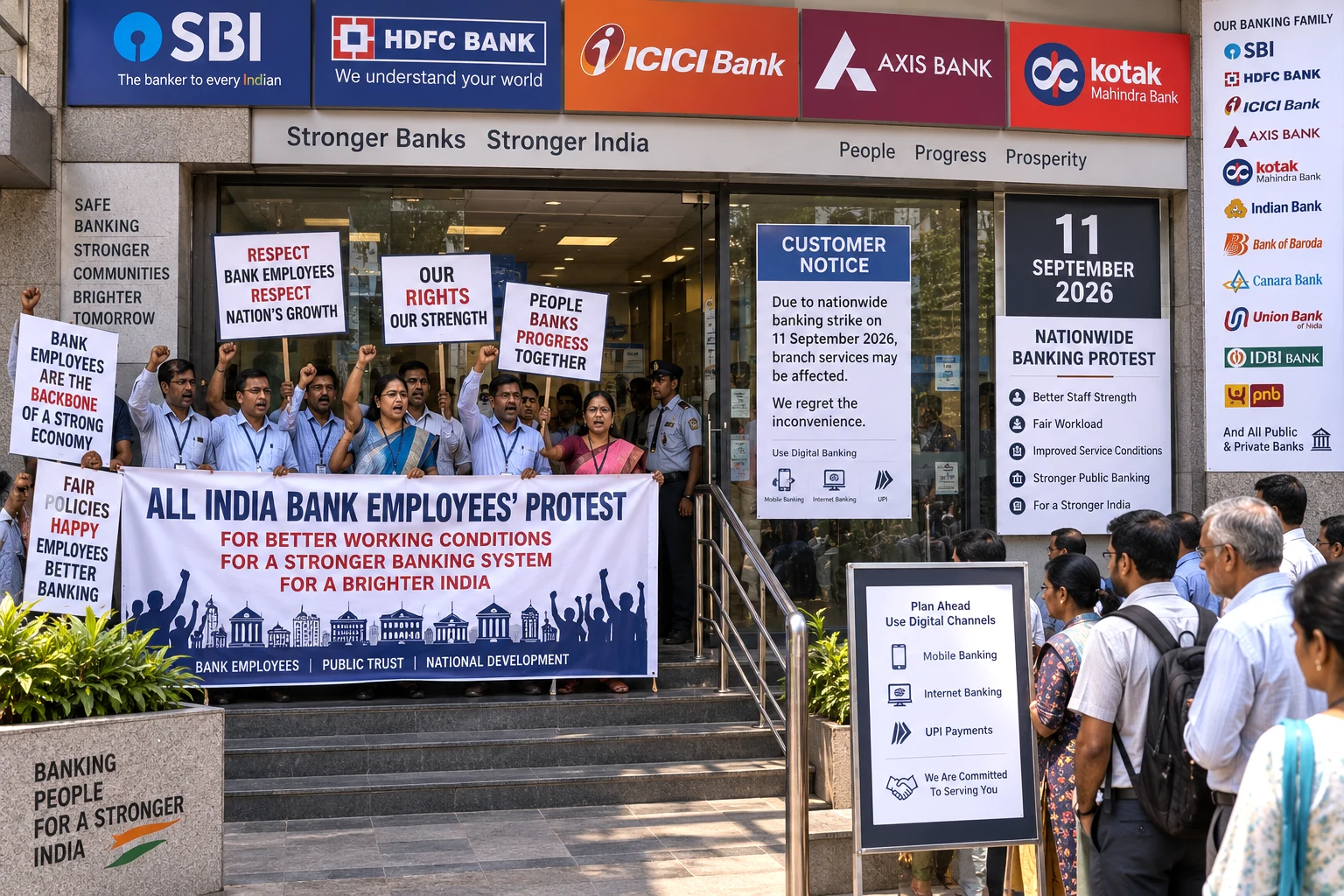
Bank unions will strike nationwide on September 11 over five-day banking and other demands. Here is why employees are protesting, what banks say, how customers may be affected and what happens next.
India/ Politics | Election Commission | Supreme Court10 min read
The Supreme Court has listed Rahul Gandhi and other INDIA bloc leaders’ petition over the Election Commission’s Special Intensive Revision of electoral rolls. The plea seeks disclosure of ECI records, an independent audit of voter deletions, safeguards against removal without notice and an interim s
Several trader associations have called for a voluntary “No UPI Day” on October 2 against the new MDR on some merchant UPI payments above ₹2,000. UPI itself will not shut down, customers will not pay the MDR, and most transactions remain free.










0 Comments