Bombay High Court Restarts Maratha Quota Case: Key Arguments and What Happens Next
The Bombay High Court has restarted hearings on Maharashtra’s 10% Maratha reservation law. Here is what petitioners argue, how the State has defended the quota and what happens next.*
Editorial illustration representing the Bombay High Court hearing on Maharashtra’s Maratha reservation law
Table of Contents (16 sections)
The Bombay High Court is deciding whether Maharashtra’s 2024 law granting a separate 10% reservation to the Maratha community in education and government employment can survive constitutional scrutiny, particularly in light of the general 50% ceiling on reservations and the Supreme Court’s earlier ruling on Maratha reservation.
A newly constituted three-judge bench began hearing the challenge afresh on October 9, 2026. The bench comprises Justices M. S. Karnik, N. J. Jamadar and Sandeep V. Marne.
This is not the first time arguments have been heard in the case. The litigation has effectively restarted because earlier benches could not complete the proceedings after changes in judicial assignments. That procedural history matters because the present bench is hearing the constitutional challenge from the beginning rather than simply continuing from where the previous bench stopped.
The immediate focus of the new hearing was on arguments from petitioners opposing the reservation. They questioned whether Maharashtra can again classify Marathas for a separate quota after the Supreme Court’s 2021 judgment invalidating an earlier Maratha reservation law.
The State, meanwhile, has consistently defended the 2024 legislation on the basis of a fresh backward-class commission exercise and its findings. Those arguments were extensively placed before the previous bench and are expected to remain central as the new hearing progresses.
Recommended Reading
Related Stories & In-Depth Guides
Curated editorial perspectives matching this topic.
India/ Politics | Election Commission | Supreme Court10 min read
The Supreme Court has listed Rahul Gandhi and other INDIA bloc leaders’ petition over the Election Commission’s Special Intensive Revision of electoral rolls. The plea seeks disclosure of ECI records, an independent audit of voter deletions, safeguards against removal without notice and an interim s
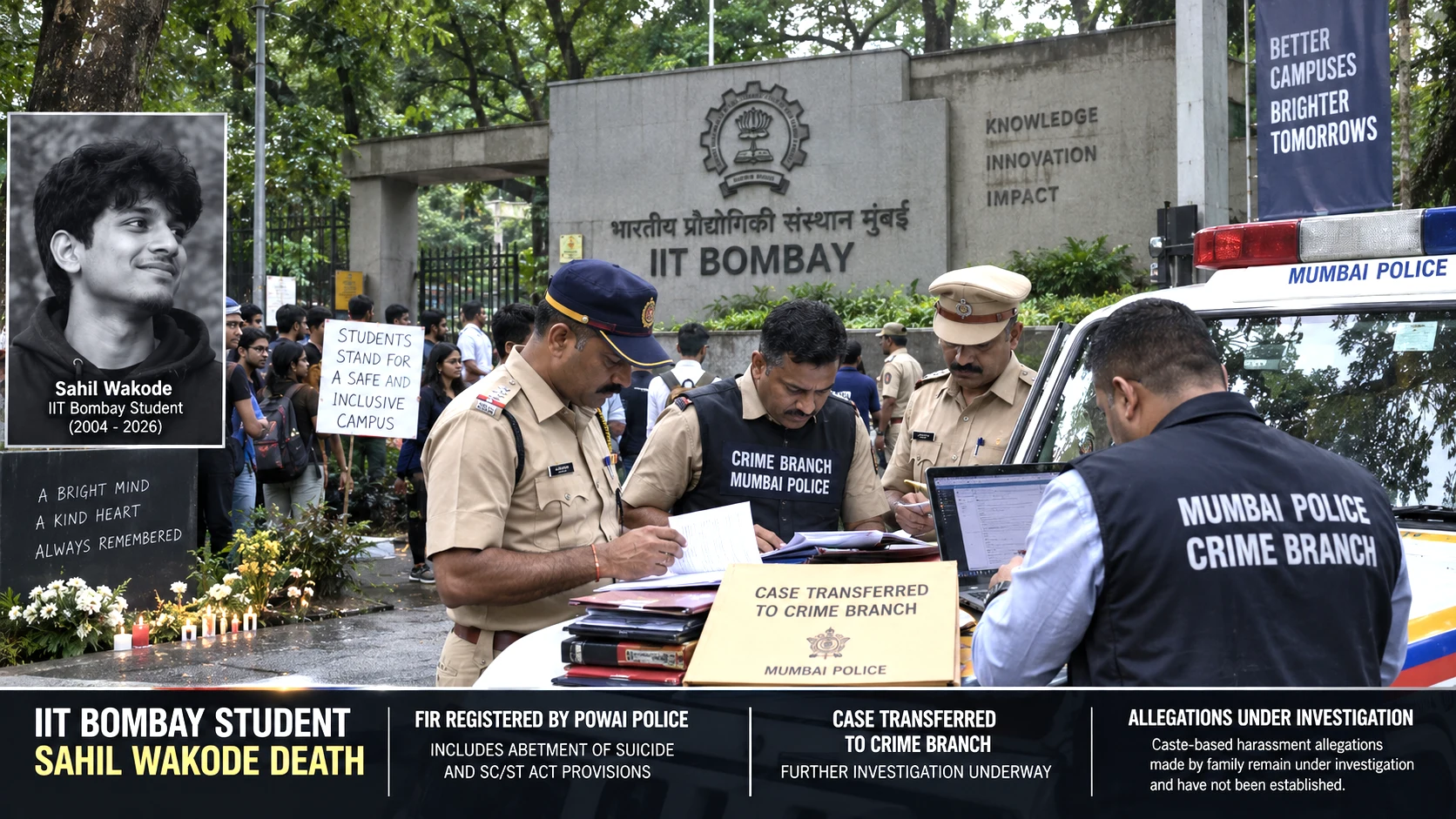
The Mumbai Police Crime Branch has taken over the investigation into the death of IIT Bombay student Sahil Wakode after his family alleged caste-based harassment and demanded action against those they hold responsible. An IIT Bombay faculty member has been booked for alleged abetment to suicide, whi
Key Takeaways
A new three-judge Bombay High Court bench restarted hearings on Maharashtra’s 10% Maratha reservation law on October 9, 2026.
Petitioners argue the 2024 law cannot sidestep the Supreme Court’s 2021 findings on the 50% reservation ceiling.
The State defends the law on the basis of the Shukre Commission’s fresh findings.
The 10% Maratha quota remains operational but subject to the outcome of the litigation.
The next reported hearing date is October 23, 2026 (to be verified against the official cause list).
What Exactly Is the 10% Maratha Quota?
• Maharashtra’s 2024 Socially and Educationally Backward Classes law provides a separate 10% reservation for the Maratha community in educational institutions and public employment covered by the State law.
• The legislation relies on the findings of the Maharashtra State Backward Class Commission headed by retired Justice Sunil B. Shukre, which concluded that the community qualified for backward-class treatment and that circumstances justified a separate reservation.
• The quota operates while its constitutional validity remains under challenge. Admissions and appointments made using the reservation have been made subject to the eventual outcome of the litigation.
Why Did the Bombay High Court Hearing Start Again?
The latest round is the third major attempt by a three-judge bench to complete the challenge to the 2024 law.
The first bench hearing the petitions was headed by then Bombay High Court Chief Justice Devendra Kumar Upadhyaya. Proceedings could not be completed after he was transferred to become Chief Justice of the Delhi High Court.
A second full bench led by then Acting Chief Justice Ravindra V. Ghuge, along with Justices Jamadar and Marne, subsequently heard extensive arguments. That process was disrupted when Justice Ghuge was elevated as Chief Justice of the Calcutta High Court.
The High Court then formed the present bench headed by Justice Karnik.
That means substantial legal arguments heard earlier cannot simply be treated as though the new bench had heard them itself. The parties are therefore presenting their cases again.
For students, job applicants and others affected by the quota, this also means that a case which had already reached an advanced stage has returned to an earlier procedural point.
What Are the Petitioners Arguing?
Senior advocate Arvind Datar, appearing for parties challenging the quota, opened the fresh hearing with a fundamental constitutional objection.
The petitioners’ case is that Maharashtra cannot use a new statute to sidestep conclusions reached by the Supreme Court when it examined the earlier Maratha reservation legislation.
In 2021, a Constitution Bench of the Supreme Court struck down Maharashtra’s earlier Maratha reservation law. One of the central findings was that the material before the court did not establish the extraordinary circumstances required to exceed the 50% reservation ceiling recognised in the Indra Sawhney judgment.
The petitioners now argue that the 2024 law must be examined against that history.
Their position is not simply that Maharashtra has enacted another reservation law. They are questioning whether there is sufficiently new, reliable and constitutionally relevant material to justify reaching a substantially different conclusion about the community and about exceeding the 50% benchmark.
The 50% Reservation Ceiling
A major part of the litigation concerns the Supreme Court’s landmark Indra Sawhney ruling.
That judgment established 50% as the general ceiling for reservations, while recognising that exceptional circumstances may require different treatment in unusual cases.
The legal dispute is therefore more nuanced than saying that every reservation above 50% is automatically invalid.
The crucial question is whether Maharashtra can demonstrate circumstances sufficiently exceptional, supported by adequate contemporary evidence, to constitutionally justify crossing the ceiling.
The State says it can.
The petitioners say it has not.
That difference will be one of the central questions the Bombay High Court must ultimately resolve.
Can the Legislature Overcome the Earlier Supreme Court Findings?
Datar argued that the State legislature cannot simply disregard an earlier judicial finding concerning the Maratha community and reach the opposite conclusion without a constitutionally sustainable new basis.
The petitioners contend that the Supreme Court’s earlier findings about the community’s position in Maharashtra remain highly relevant.
They are therefore asking the High Court to examine what has materially changed between the evidence considered in the earlier litigation and the evidence supporting the 2024 law.
That question is likely to bring the Shukre Commission report under particularly close examination.
Challenge to the Shukre Commission Exercise
Senior advocate Pradeep Sancheti, also arguing against the quota, questioned the methodology and conclusions of the Maharashtra State Backward Class Commission headed by Justice Shukre.
The petitioners allege that the survey and analytical process used by the commission do not provide a sufficiently reliable basis for reversing earlier assessments of the Maratha community.
One question raised during arguments was how a community previously treated as relatively advanced could subsequently be classified as socially and educationally backward for the purposes of a separate reservation.
That does not by itself decide whether the commission was right or wrong. It defines an evidentiary question the court must examine: whether the new data establishes a material social and educational position different enough to support the 2024 classification.
The petitioners are consequently attacking both the constitutional framework of the law and the factual foundation on which it rests.
What Has Maharashtra Argued in Defence of the Quota?
Because the October 9 proceedings began the case afresh, the State’s complete defence has not yet been replayed before the new bench.
Its position, however, was extensively developed before the previous three-judge bench and gives a clear indication of how Maharashtra has defended the law.
The State has argued that the 2024 legislation does not simply repeat the earlier quota that was struck down.
It relies on a new commission report based on a new exercise intended to assess the present social, educational and economic position of the Maratha community.
Maharashtra has maintained that the Shukre Commission addressed deficiencies associated with previous exercises and gathered contemporary information before recommending reservation.
The government has also argued that the circumstances of sections of the Maratha community justify backward-class treatment and that the presence of politically powerful, wealthy or professionally successful individuals from a community does not necessarily establish the social position of every member of that community.
That distinction is important.
The constitutional assessment concerns a class as defined under the law and the evidence concerning backwardness and representation. It cannot be resolved solely by naming prominent individuals who belong to that community.
Why Maharashtra Chose a Separate 10% Category
The State has also defended the decision to create a separate quota instead of simply including Marathas within the existing OBC reservation.
During the previous proceedings, Maharashtra argued that placing such a large community inside the existing OBC quota could affect the share available to communities already receiving OBC reservation.
The government therefore presented the separate SEBC reservation as a way of addressing what it describes as Maratha backwardness without reducing the existing OBC allocation.
Petitioners dispute whether that solution can legally justify taking total reservations beyond the general 50% ceiling.
That is where the State’s policy justification and the petitioners’ constitutional objection directly meet.
The Importance of the 2021 Supreme Court Ruling
The current litigation cannot be understood without the earlier case.
Maharashtra’s 2018 legislation had originally provided a 16% Maratha reservation.
The Bombay High Court subsequently upheld reservation for the community but reduced the permissible percentage. The dispute then reached the Supreme Court.
In 2021, the Supreme Court struck down that law.
The judgment dealt with several constitutional questions, but for the present case one of the most significant conclusions was that the evidence did not establish the exceptional circumstances necessary to exceed the 50% reservation ceiling.
Parliament later restored the ability of states and Union Territories to maintain their own lists of socially and educationally backward classes through the 105th Constitutional Amendment.
That addressed an important question concerning the States’ power to identify SEBCs.
It did not, however, automatically settle the separate question of whether a particular reservation crossing the 50% ceiling is constitutionally justified.
The 2024 law therefore still has to survive judicial scrutiny on its own facts and evidence.
What Happens to Admissions and Government Appointments?
The Bombay High Court has previously declined to halt the law altogether while the constitutional challenge is pending.
However, admissions and public-employment appointments made using the Maratha reservation remain linked to the outcome of the litigation.
In practical terms, beneficiaries can continue to be affected by the quota while the case proceeds, but the legal foundation for those benefits remains subject to what the courts ultimately decide.
That makes the case significant beyond constitutional theory.
Its outcome could affect recruitment processes, educational admissions and candidates competing across reservation categories.
Is the Kunbi Certificate Issue the Same Case?
No.
The challenge to the separate 10% SEBC reservation should not be confused with the separate controversy over Kunbi certificates for eligible Marathas and access to OBC reservation.
The two issues can overlap politically and socially, but they involve different legal measures.
The current full-bench hearing is principally examining the constitutional validity of the Maharashtra State Reservation for Socially and Educationally Backward Classes Act, 2024.
Challenges involving later government decisions concerning Kunbi certification are being dealt with separately.
Keeping those proceedings distinct is important because combining them can give readers a misleading picture of what the High Court is actually deciding in this case.
When Is the Next Hearing?
A report published after the October 9 proceedings said the three-judge bench adjourned the matter to October 23, 2026, when further arguments are expected.
At the time of Rajatheertha’s verification, however, an official future Bombay High Court cause-list entry confirming the October 23 listing was not available in the sources checked.
The date should therefore be treated as the currently reported next hearing date and checked again against the High Court’s official board or cause list closer to the hearing.
What Should Readers Watch Next?
The first major question is how extensively the new bench will require the parties to repeat evidence and arguments already covered before the earlier bench.
The second is how the petitioners develop their challenge to the Shukre Commission report. Questions about the commission’s methodology, data and conclusions could become as important as the broader constitutional debate over the 50% ceiling.
The third is the State’s response.
Because the fresh hearing opened with the challengers’ arguments, Maharashtra will have another opportunity to explain why it believes the 2024 evidence materially distinguishes the present legislation from the law struck down in 2021.
The judges will ultimately have to examine several interconnected questions: whether the Maratha community can constitutionally be treated as an SEBC on the present evidence, whether exceptional circumstances exist to justify crossing the reservation ceiling, whether the commission’s findings withstand judicial review and whether the legislature has adequately addressed the constitutional deficiencies identified in the earlier litigation.
No final conclusion has been reached.
The October 9 hearing marks the beginning of another round of a long-running constitutional dispute, not a judgment on the validity of the quota.
For now, Maharashtra’s 10% Maratha reservation continues under the shadow of that pending judicial review, while the Bombay High Court begins again the task of deciding whether the State has built a legally sustainable case for it.
Bottom Line
The Bombay High Court has restarted constitutional hearings on Maharashtra’s 10% Maratha reservation law before a new three-judge bench. Petitioners argue the 2024 legislation cannot override the Supreme Court’s 2021 findings on the 50% ceiling, while the State relies on the Shukre Commission’s fresh findings to justify the separate SEBC quota. The law continues to operate subject to the outcome of the litigation. The next reported hearing is October 23, 2026.
Key Takeaway
New Bombay High Court bench restarts Maratha quota hearings.
Petitioners challenge the law against the 2021 Supreme Court ruling and 50% ceiling.
State defends the quota on Shukre Commission findings.
The Rajatheertha Team publishes news, explainers, guides and updates across India and the world. Our coverage follows Rajatheertha's editorial, verification and corrections standards.
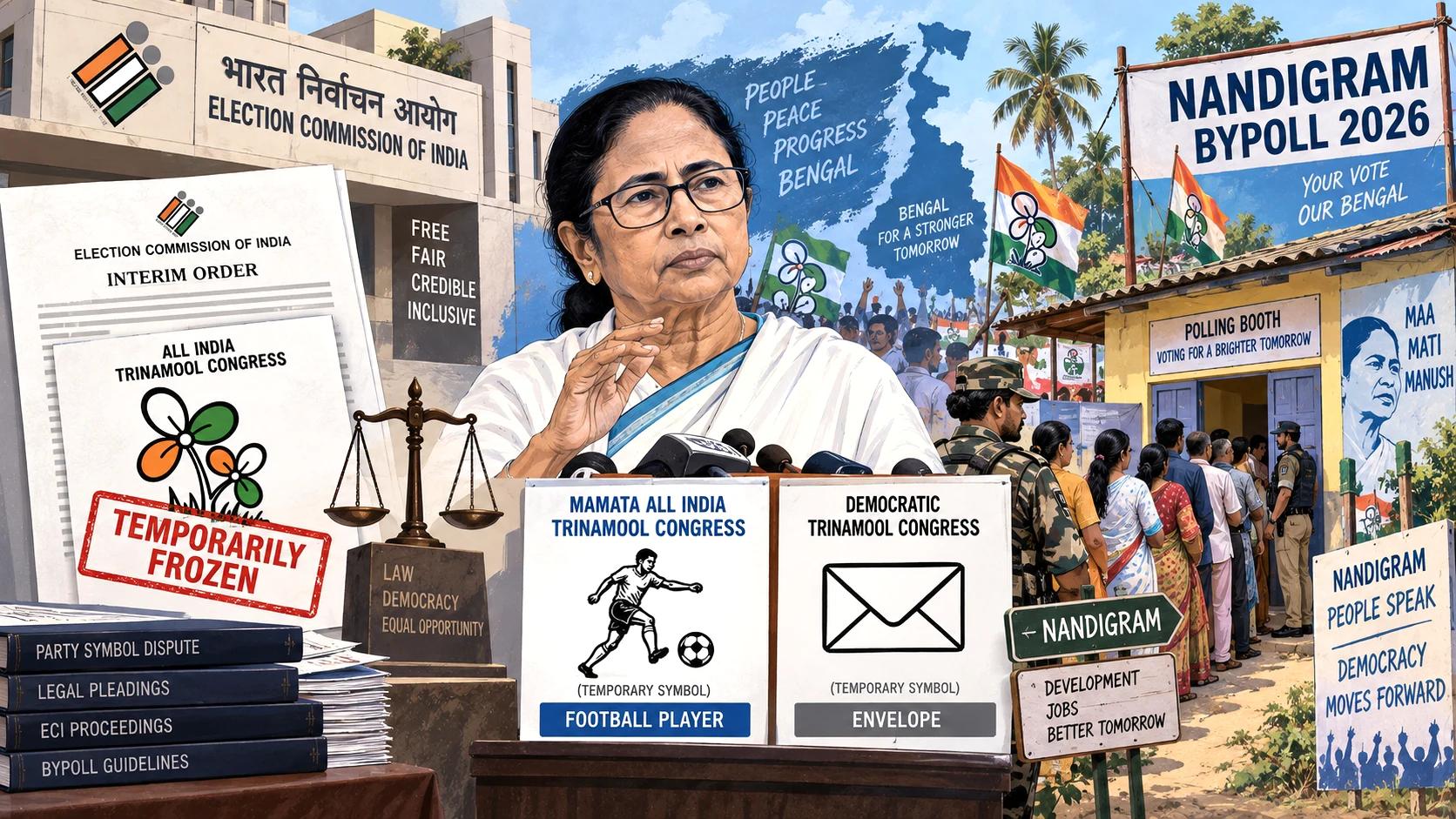
The Election Commission’s interim freeze on the Trinamool Congress name and ‘Flowers and Grass’ symbol has pushed rival factions to temporary identities. Mamata Banerjee has challenged the order in the Supreme Court, while the October 6 Nandigram bypoll has been further complicated by the withdrawal
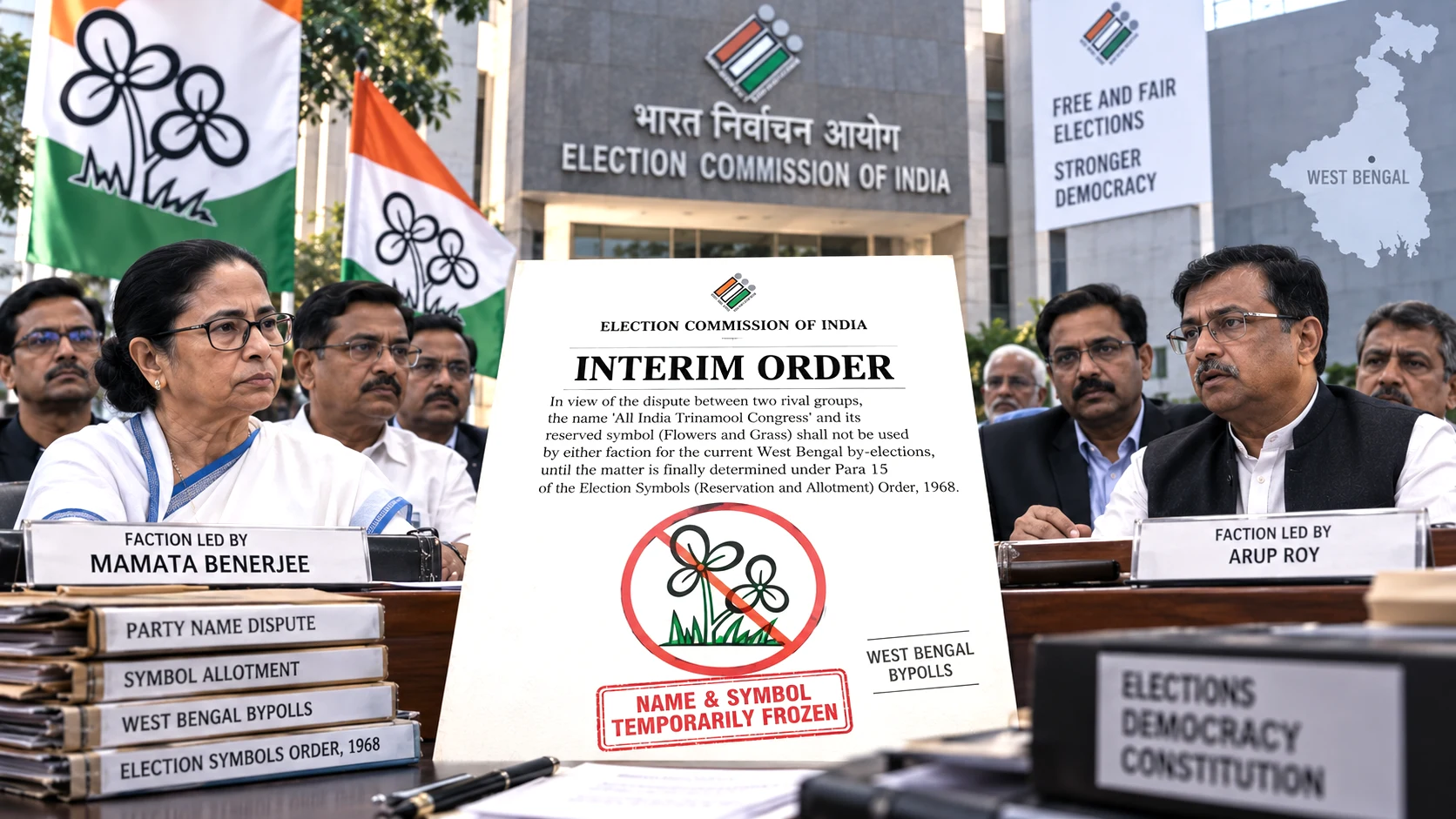
Neither the Mamata Banerjee group nor the rival faction formally represented before the Election Commission by Arup Roy can use the All India Trinamool Congress name or its reserved symbol in the October 6 bypolls. The order is temporary while the ECI decides the larger party-control dispute under P
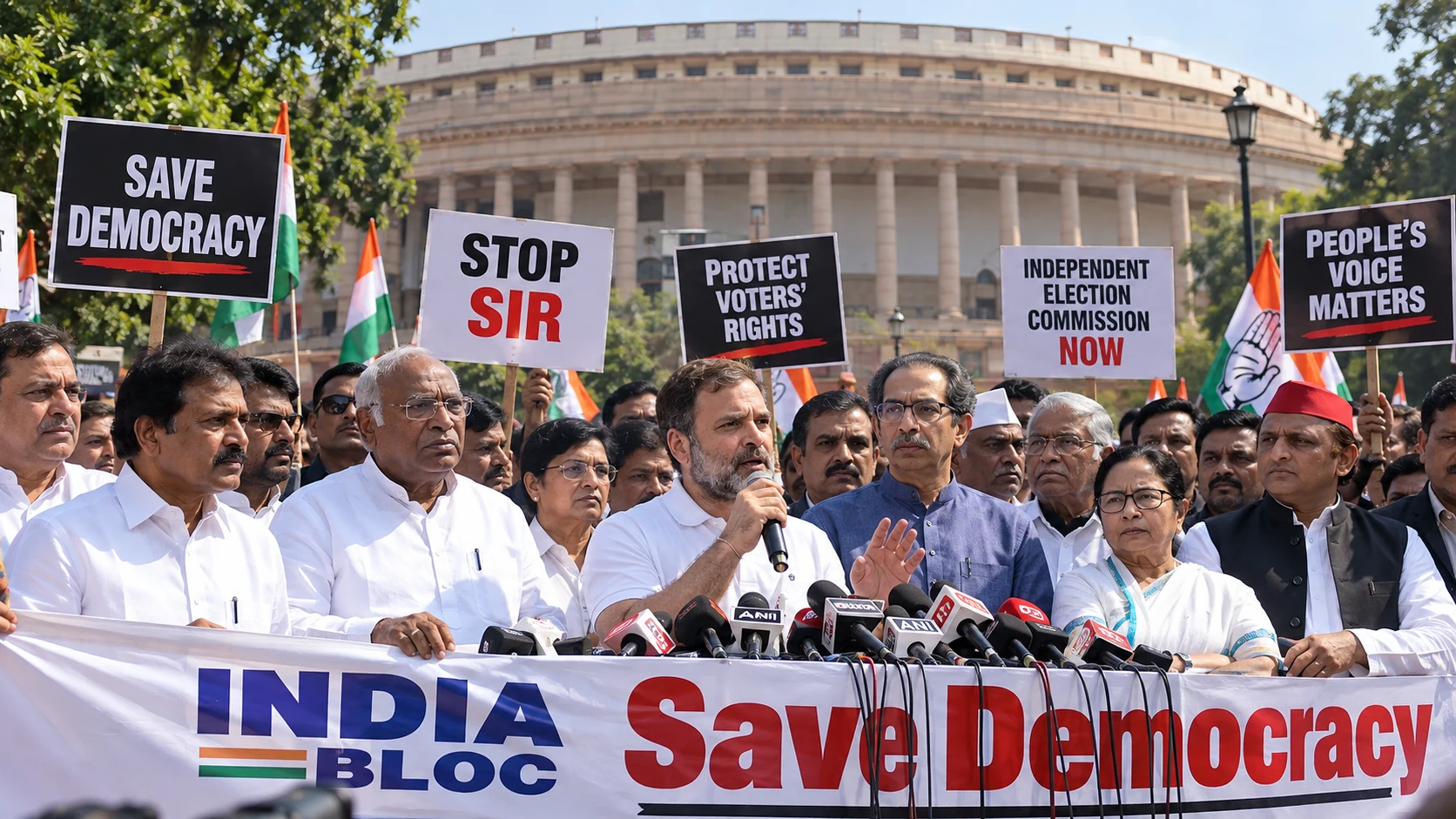
The INDIA bloc has announced nationwide “Save Democracy” marches from Oct. 2–8 over the Election Commission and SIR controversy, with MPs planning an Oct. 6 march to the EC. The BJP has rejected the allegations as political frustration after electoral defeats.
A Karnataka High Court ruling has renewed questions over a daughter’s right in her father’s property. The court rejected a US-based daughter’s partition claim after finding the assets were not proved to be ancestral coparcenary property. Here is what the ruling means—and what it does not mean.
Bank unions will strike nationwide on September 11 over five-day banking and other demands. Here is why employees are protesting, what banks say, how customers may be affected and what happens next.
Home Minister Amit Shah has set December 31, 2029 as the government's target for uprooting India's drug trade. Here is what the 2026–29 narcotics roadmap proposes on cartels, synthetic drugs, darknet markets, financial investigations, prevention and rehabilitation.







0 Comments