Navratri Day 2 Colour 2026: Goddess, Puja Vidhi, Mantra and Bhog
Navratri Day 2 falls on October 12, 2026 and is dedicated to Maa Brahmacharini. Here is today’s white colour, Dwitiya tithi, simple puja vidhi, mantra, traditional bhog and what comes on Day 3.
Editorial illustration representing Navratri Day 2 Maa Brahmacharini worship and white colour
Table of Contents (14 sections)
The Navratri Day 2 colour for Monday, October 12, 2026 is white.
The second day of Shardiya Navratri is dedicated to Maa Brahmacharini, the second form of Goddess Durga in the Navdurga tradition.
After Navratri began on Sunday with Ghatasthapana and the worship of Maa Shailputri, devotees across India move to the second form of the Goddess on October 12.
Day 2 falls on Shukla Dwitiya and is associated with Maa Brahmacharini, whose worship is traditionally linked with tapas, patience, discipline, devotion and perseverance.
White is the widely followed Navratri colour for the day in the popular nine-colour calendar. Devotees may also offer sugar or mishri as bhog and recite prayers dedicated to Maa Brahmacharini.
Here is a practical guide to Navratri Day 2 in 2026, including the date, tithi, goddess, colour, simple household puja steps, mantra, bhog and what comes next on Day 3.
Key Takeaways
Date: Monday, October 12, 2026
Goddess: Maa Brahmacharini
Colour: White
Tithi: Shukla Dwitiya
Traditional bhog: Sugar / mishri (panchamrit also common)
Recommended Reading
Related Stories & In-Depth Guides
Curated editorial perspectives matching this topic.
Navratri Day 4 falls on October 14, 2026 and is dedicated to Maa Kushmanda. Check today’s royal blue colour, malpua bhog, mantra, simple puja vidhi, Chaturthi timing and what comes on Day 5.
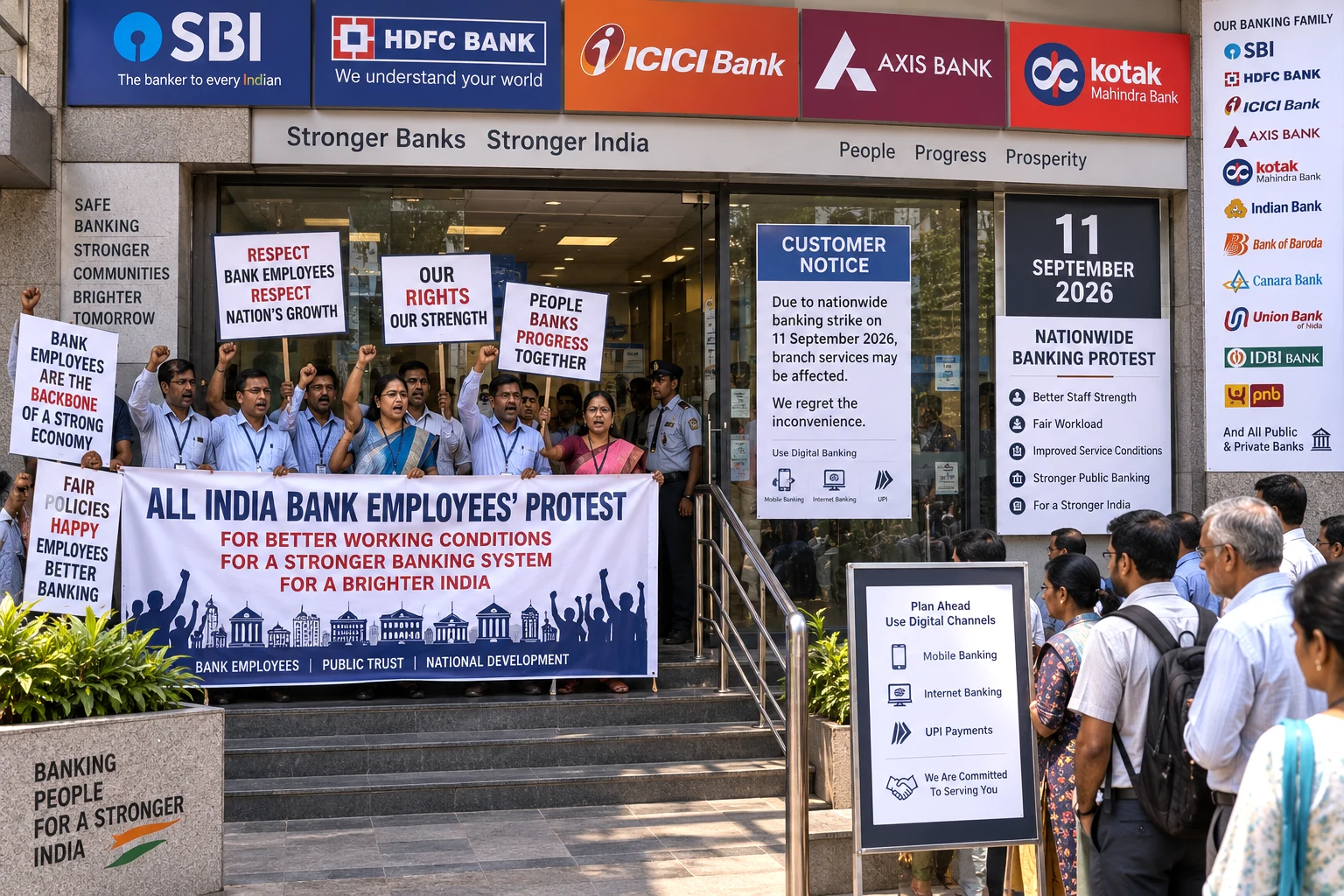
Bank unions will strike nationwide on September 11 over five-day banking and other demands. Here is why employees are protesting, what banks say, how customers may be affected and what happens next.
Mantra: Om Devi Brahmacharinyai Namah
Next: Day 3 (October 13) — Maa Chandraghanta, Red
Navratri Day 2 2026 at a Glance
Date: Monday, October 12, 2026
Festival: Shardiya Navratri Day 2
Tithi: Shukla Dwitiya
Goddess: Maa Brahmacharini
Navratri colour: White
Traditional bhog: Sugar or mishri; panchamrit is also offered in many households
Common mantra: Om Devi Brahmacharinyai Namah
Next Navratri day: Day 3 on Tuesday, October 13
Day 3 goddess: Maa Chandraghanta
Day 3 colour: Red
The exact puja routine can differ between families, temples, regions and sampradayas. Devotees who follow a family priest or traditional local panchang should continue following that established practice.
Is October 12 Really Navratri Day 2 in 2026?
Yes.
Shardiya Navratri began on Sunday, October 11, 2026, with Shukla Pratipada and the worship of Maa Shailputri.
Monday, October 12 is the second observance of the festival and is associated with Shukla Dwitiya and Maa Brahmacharini.
For Hyderabad, the local panchang places Shukla Dwitiya through approximately 10:13 PM on October 12 before Tritiya begins.
Readers should, however, avoid treating every timing published online as universal for India.
Festival dates are determined according to the Hindu lunar calendar, while sunrise, Rahu Kalam and other time windows can vary by city. Hyderabad, Delhi, Mumbai, Kolkata and Chennai therefore do not necessarily share identical sunrise-based muhurat timings.
For any ceremony where a precise muhurat is important, use a recognised panchang set to your city or follow your family or temple tradition.
Who Is Maa Brahmacharini?
Maa Brahmacharini is worshipped as the second form of Goddess Durga in the Navdurga sequence.
Traditional representations commonly show her walking barefoot and carrying a japa mala, or rosary, in one hand and a kamandalu, or water vessel, in the other.
Her form is associated with austerity, meditation, discipline and unwavering devotion.
The name “Brahmacharini” is commonly understood in this devotional context as referring to one who practises spiritual discipline or tapas.
According to traditional narratives associated with the Goddess, this form represents Parvati during her period of intense austerity and devotion before her union with Lord Shiva.
Different religious traditions may explain aspects of the story and symbolism in slightly different ways. The central idea, however, remains remarkably consistent: Brahmacharini represents commitment, patience and the ability to continue with discipline even when the path is difficult.
That makes Day 2 distinct from the ceremonial beginning of Navratri on Day 1.
The emphasis moves from starting the festival to sustaining devotion.
What Is the Navratri Colour Today, October 12?
The widely followed Navratri colour for Monday, October 12, 2026 is white.
In festival tradition, white is commonly associated with peace, purity, simplicity and calmness.
It also fits naturally with popular depictions of Maa Brahmacharini in simple white clothing.
Many devotees choose white sarees, kurtas, salwar suits, dresses or other traditional clothing for Navratri celebrations on Day 2.
But an important distinction is worth making.
Wearing the daily Navratri colour is a popular cultural custom, not a compulsory condition for worship.
A person does not need white clothing to perform the puja or participate meaningfully in Navratri.
The nine-colour tradition is particularly visible in western India and has become much more widely followed through community celebrations, workplaces, schools and social media.
For 2026, the commonly followed sequence begins with orange on Day 1 and white on Day 2.
Navratri Day 2 Puja Vidhi: Simple Household Steps
Household puja traditions vary considerably across India, so there is no single ritual sequence that every devotee must follow.
A simple Day 2 puja can be performed as follows:
Prepare yourself and the puja area
Take a bath, wear clean clothes and clean the place where the Goddess is worshipped.
Those following the 2026 daily colour custom may wear white.
Continue worship at the Navratri altar
If a Kalash was established during Ghatasthapana on Day 1, continue the regular worship according to your family tradition.
If an Akhand Jyoti has been lit, handle it carefully and follow the established household practice for maintaining it.
Invoke Maa Brahmacharini
Place or worship the image or murti used for Navdurga worship and offer prayers to Maa Brahmacharini.
Light a diya and incense
A lamp and incense may be lit as part of the usual household puja.
Take normal fire precautions, particularly where children, curtains or other combustible materials are nearby.
Offer flowers and customary puja items
Flowers, roli or kumkum, akshat, fruit and other offerings may be presented according to household practice.
Some traditions use white flowers for Day 2, but flower choices vary.
Offer bhog
Sugar or mishri is among the commonly associated traditional offerings for Maa Brahmacharini.
Many households also prepare or offer panchamrit.
Recite the mantra
Devotees may chant:
ॐ देवी ब्रह्मचारिण्यै नमः॥
Om Devi Brahmacharinyai Namah
The number of repetitions can depend on personal or family practice. It is not necessary for a general household devotee to adopt an unfamiliar elaborate ritual simply because it is circulating online.
Perform aarti and distribute prasad
Conclude the worship with prayers or aarti followed according to your household tradition and distribute the offered prasad.
The purpose of a simple puja guide is to make the sequence easier to understand, not to replace instructions given by a family priest, temple or established religious tradition.
Maa Brahmacharini Mantra for Navratri Day 2
One of the commonly recited mantras for the second Navdurga form is:
ॐ देवी ब्रह्मचारिण्यै नमः॥
Om Devi Brahmacharinyai Namah
It is a short naam mantra invoking Maa Brahmacharini.
A traditional dhyana verse also describes the Goddess as holding a rosary and kamandalu.
For readers who normally follow a specific Sanskrit recitation, Durga Saptashati practice or temple liturgy, it is better to continue that established method rather than combine several unfamiliar internet versions.
Festival worship in India is highly diverse, and different communities can use different prayers while worshipping the same form of the Goddess.
What Bhog Is Offered to Maa Brahmacharini?
Sugar or mishri, also known as rock sugar, is one of the most commonly mentioned traditional bhog offerings for Maa Brahmacharini on Navratri Day 2.
Panchamrit is also used in many households.
Depending on family practice, devotees may additionally offer fruit, sweets or another sattvic preparation.
There is no need to assume that every household must prepare an identical offering.
Navratri customs vary considerably between states, communities and families.
The practical approach is simple: follow the food and puja tradition normally observed in your household while keeping the offering clean and suitable for worship.
What Does Maa Brahmacharini Symbolise?
The most useful way to understand Day 2 is through the themes traditionally associated with the Goddess.
Discipline
Brahmacharini represents sustained effort rather than momentary enthusiasm.
Navratri begins ceremonially on Day 1, but Day 2 represents continuing that spiritual practice with discipline.
Patience
Traditional accounts of the Goddess emphasise tapas and perseverance.
For devotees, the symbolism can be understood as remaining steady even when results are not immediate.
Simplicity
Her familiar representation is comparatively austere: a rosary and water vessel rather than elaborate symbols of royal power.
That simplicity is one reason the white colour of Day 2 feels particularly appropriate to many devotees.
Devotion
Above all, the form represents concentrated devotion.
These meanings belong to religious and cultural tradition. They should be understood as devotional interpretations rather than scientific claims about guaranteed outcomes from worship.
Do You Have to Fast on Navratri Day 2?
No single fasting pattern is followed by every Navratri devotee.
Some people fast through all nine days.
Some observe only particular days.
Others avoid selected ingredients without keeping a full fast.
Many devotees eat fruit, milk, curd, nuts, permitted flours, potatoes, sama rice or other foods allowed under their household vrat tradition.
Health should remain an important consideration.
People with diabetes, high blood pressure, pregnancy, kidney problems or other medical conditions should not make significant changes to normal food, fluids or medicines simply because a festival fast is being observed.
Rajatheertha has a separate Navratri fasting health guide covering balanced fasting meals, hydration and additional precautions for people with medical conditions.
A religious fast should never require someone to ignore symptoms that need medical attention.
Why Navratri Colours Change Every Day
The daily colour calendar has become one of the most searched aspects of modern Navratri celebrations.
The colour changes with each festival day, creating an easy cultural rhythm across workplaces, community events, Garba celebrations and family gatherings.
For 2026, the commonly followed sequence is:
Day 1 — October 11 — Orange
Day 2 — October 12 — White
Day 3 — October 13 — Red
Day 4 — October 14 — Royal Blue
Day 5 — October 15 — Yellow
Day 6 — October 16 — Green
Day 7 — October 17 — Grey
Day 8 — October 18 — Purple
Day 9 — October 19 — Peacock Green
Vijayadashami follows on October 20.
The colour calendar is useful as a cultural guide, but it should not be confused with the tithi system itself.
A Hindu lunar tithi does not necessarily begin or end at midnight. This can occasionally produce festival calendars in which major observances appear compressed, extended or described differently by different publishers.
That is why a recognised local panchang remains more reliable than simply counting calendar dates.
Navratri Day 2 in Hyderabad
For readers in Hyderabad and Telangana, October 12 is Navratri Day 2 and Shukla Dwitiya.
Local panchang calculations for Hyderabad place Dwitiya until approximately 10:13 PM, after which Tritiya begins.
Because sunrise-based timings vary by place, Hyderabad readers should use a Hyderabad-specific panchang when they need exact daily muhurat information rather than automatically using Delhi timings found in national articles.
This location distinction is especially important for rituals for which a family follows a particular muhurat.
For normal household Day 2 worship, many devotees simply perform their regular morning or evening puja according to established family practice.
What Comes on Navratri Day 3 Tomorrow?
Navratri Day 3 falls on Tuesday, October 13, 2026.
The third form worshipped in the Navdurga sequence is Maa Chandraghanta.
The widely followed colour for Day 3 in 2026 is red.
Maa Chandraghanta is traditionally associated with courage, strength and protection, marking another shift in the symbolism of the nine-day Navdurga journey.
Tomorrow: Navratri Day 3 Colour 2026 — Maa Chandraghanta, Puja Vidhi, Mantra and Bhog.
Readers following the complete series can also return to Rajatheertha’s Day 1 guide for the Ghatasthapana details, full colour calendar and explanation of why Navratri began on October 11 this year.
Key Takeaway
For Monday, October 12, 2026, the Navratri colour is white and the Goddess worshipped is Maa Brahmacharini.
The day falls on Shukla Dwitiya and centres on a form of Durga traditionally associated with devotion, tapas, patience and self-discipline.
A simple household observance may include regular Navratri altar worship, a lamp, flowers, prayers, the mantra “Om Devi Brahmacharinyai Namah” and a traditional offering such as sugar or mishri.
Customs vary by family and region, so devotees should follow their established tradition and consult a recognised local panchang when exact timings matter.
On Tuesday, October 13, the Navratri sequence moves to Day 3, dedicated to Maa Chandraghanta, with red as the widely followed colour of the day.
The Rajatheertha Team publishes news, explainers, guides and updates across India and the world. Our coverage follows Rajatheertha's editorial, verification and corrections standards.
Navratri Day 3 falls on October 13, 2026 and is dedicated to Maa Chandraghanta. Check today’s red colour, mantra, bhog, puja vidhi and what comes on Day 4.
Shardiya Navratri 2026 begins on October 11. Check the Ghatasthapana muhurat, Day 1 puja guide, today’s orange colour, the full nine-day colour calendar and key dates through Dussehra.
Dussehra 2026 falls on Tuesday, October 20 in the widely followed Vijayadashami calendar, while Bengal observes Vijayadashami on October 21. Check the Dashami tithi, Vijay Muhurat, Shastra Puja guidance and what to know about Ravan Dahan timing.
Mumbai’s Santacruz observatory recorded 37.6°C on October 8, just days after the southwest monsoon withdrew from the city. Here is why Mumbai often turns unusually hot in October, what monsoon withdrawal changes and what the heatwave warning actually means.
India celebrates National Space Day 2026 on August 23, remembering Chandrayaan-3’s historic Moon landing while highlighting ISRO’s achievements and the country’s rapidly expanding ambitions in space exploration.
The Bombay High Court has restarted hearings on Maharashtra’s 10% Maratha reservation law. Here is what petitioners argue, how the State has defended the quota and what happens next.*









0 Comments