Supreme Court Says It Did Not Approve Modified Form 6; Seeks ECI Records Amid CEC Row
The Supreme Court says it never approved a modified Form 6 used during the SIR process and has sought Election Commission records to determine who authorised any changes, while declining for now to suspend CEC Gyanesh Kumar.
Supreme Court of India examines dispute over Form 6 changes and Election Commission decision-making during SIR
Table of Contents (23 sections)
The Supreme Court has clarified that it did not approve any modified version of Form 6, the statutory application used for enrolment of new voters, adding a significant judicial dimension to the continuing controversy over the Election Commission of India’s Special Intensive Revision of electoral rolls.
During proceedings on October 5, 2026, Chief Justice of India Surya Kant said that any modified Form 6 had not been approved by the Court and indicated that the bench would examine Election Commission records to determine who made any changes and under what authority.
The three-judge bench comprised CJI Surya Kant and Justices Joymalya Bagchi and V Mohana.
The Court also issued notice to the Centre and the Election Commission in a connected challenge concerning allegations that important electoral-roll decisions were taken unilaterally within the Commission. Notices were also directed to Chief Election Commissioner Gyanesh Kumar, Election Commissioners Sukhbir Singh Sandhu and Vivek Joshi and senior ECI officials named in the petition.
Recommended Reading
Related Stories & In-Depth Guides
Curated editorial perspectives matching this topic.
India/ Politics | Election Commission | Supreme Court10 min read
The Supreme Court has listed Rahul Gandhi and other INDIA bloc leaders’ petition over the Election Commission’s Special Intensive Revision of electoral rolls. The plea seeks disclosure of ECI records, an independent audit of voter deletions, safeguards against removal without notice and an interim s
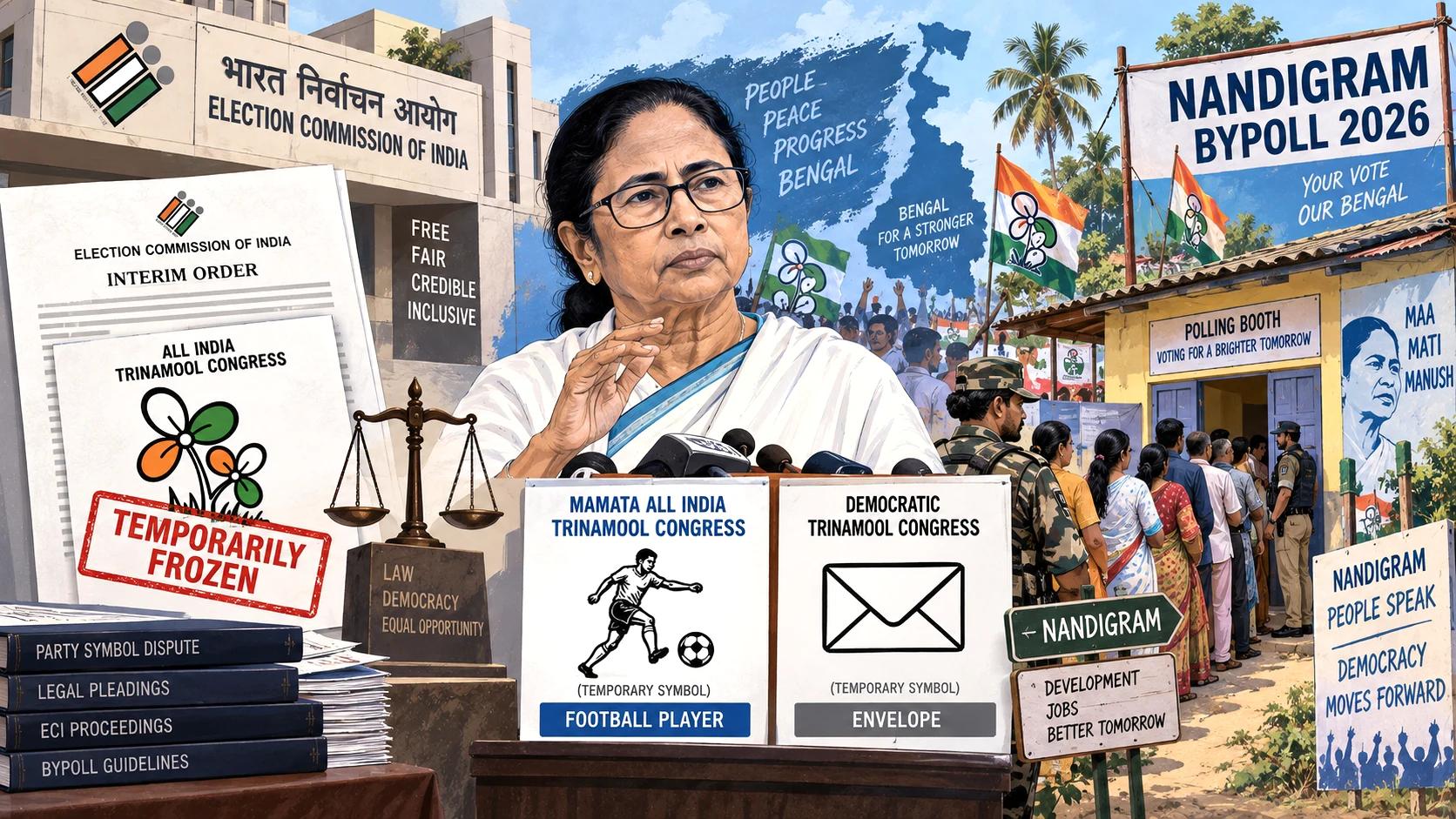
The Election Commission’s interim freeze on the Trinamool Congress name and ‘Flowers and Grass’ symbol has pushed rival factions to temporary identities. Mamata Banerjee has challenged the order in the Supreme Court, while the October 6 Nandigram bypoll has been further complicated by the withdrawal
The Court has not found Gyanesh Kumar or any Election Commission official guilty of illegality, nor has it struck down Form 6, cancelled the nationwide SIR process or ordered the CEC’s removal.
Instead, the bench has sought responses and records so that the competing claims can be examined.
That distinction is important amid an escalating political dispute surrounding the Election Commission.
What Did the Supreme Court Say About Form 6?
The central observation came when Senior Advocate Menaka Guruswamy, appearing in one of the petitions, raised concerns about changes associated with Form 6 during the SIR process.
CJI Surya Kant responded that the Court had not approved a modified Form 6 and said that once the Election Commission’s records were produced, the bench wanted to examine who had modified what.
The statement is significant because the Election Commission had earlier said that the additional declaration associated with Form 6 during SIR had been upheld by the Supreme Court.
The two positions now require careful separation.
The Supreme Court’s oral observation concerns whether a modified Form 6 itself had received judicial approval.
The Election Commission’s position is that the statutory Form 6 was not formally amended and that an additional declaration used during SIR was supported by the Court’s earlier judgment concerning the Commission’s power to require documentation during an intensive revision.
The legal question over that distinction is now before the Court.
What Is Form 6?
Form 6 is the application used by eligible Indian citizens seeking inclusion in an electoral roll as new voters.
It is prescribed under the Registration of Electors Rules, 1960.
The existing statutory form asks for information including the applicant’s identity, address, date of birth and related particulars required for voter registration. The Election Commission continues to provide Form 6 through its official voter-services system.
The controversy concerns additional SIR-linked questions and a declaration associated with the digital voter-registration process.
Reporting by The Indian Express said applicants using the online system were asked whether they, their parents or grandparents were present on the electoral roll used during an earlier Special Intensive Revision.
That additional requirement became contentious because Form 6 is a statutory form.
Why Did the Form 6 Change Become Controversial?
The dispute emerged publicly after an Indian Express investigation reported that Election Commissioners Sukhbir Singh Sandhu and Vivek Joshi had raised repeated concerns about various electoral-roll decisions.
The investigation reported that the two commissioners recorded objections on at least 14 occasions over roughly 10 months, covering issues including voter registration, deletion and restoration of names, electoral-roll software, database access and the Form 6 process.
According to the newspaper’s reporting, Commissioner Vivek Joshi had argued that Form 6 could not be altered without following the process required to amend the Registration of Electors Rules.
Sandhu subsequently reportedly described the disputed alteration as unauthorised and illegal and sought its withdrawal.
These were reported internal observations.
They should not be confused with a final Supreme Court finding that the Election Commission committed an illegal act.
That question remains under judicial examination.
What Had the Election Commission Said?
The Election Commission responded to the broader controversy by saying that differing views, observations and technical suggestions are part of the normal decision-making process of a multi-member constitutional institution.
It maintained that its final decisions over the relevant period, including SIR-related decisions, were unanimous.
On September 26, the Commission also said that the declaration attached to Form 6 for SIR had been upheld by the Supreme Court.
For periods outside SIR, it said forms prescribed under the Registration of Electors Rules, 1960 would be used.
The Commission later removed the disputed SIR declaration from its ECINET application in states where the SIR had concluded.
The ECI has continued to maintain that Form 6 itself was not changed, characterising the disputed element as an additional SIR declaration rather than an amendment to the statutory form.
That distinction is central to the current legal dispute.
What Did the Supreme Court’s Earlier SIR Judgment Actually Address?
The Election Commission has referred to the Supreme Court’s May 27, 2026 judgment concerning the Special Intensive Revision.
That judgment examined, among other issues, the Commission’s authority to prescribe documentation for an intensive revision of electoral rolls.
The Court recognised that the ECI has some residual authority to design an appropriate documentation framework for an SIR, while also indicating that such authority is not unlimited and must remain consistent with the statutory framework.
However, legal reporting following the October 5 hearing noted an important timing issue: the additional Form 6 declaration currently at the centre of the dispute was introduced after the May judgment.
Bar & Bench and LiveLaw therefore reported that the Court had not previously examined that later version or declaration when delivering its May ruling.
This helps explain why the Supreme Court’s latest clarification is significant.
The earlier judgment concerning documentation powers does not automatically settle whether a later digital alteration or appended declaration complied with the statutory procedure governing Form 6.
Does This Mean the Supreme Court Has Declared Form 6 Changes Illegal?
No.
The Court has said it did not approve a modified Form 6.
That is different from a final judgment holding that particular officials illegally changed the form.
The bench intends to examine the Election Commission’s records before deciding what actually happened, who authorised relevant decisions and whether statutory decision-making requirements were followed.
This distinction became politically important after Congress leader Rahul Gandhi characterised the Supreme Court proceedings as establishing that CEC Gyanesh Kumar had acted illegally.
The BJP rejected that interpretation, arguing that the CJI had not declared Form 6 illegal.
The Election Commission also called Gandhi’s characterisation misleading and reiterated its position regarding the SIR order and the additional declaration.
Those are competing political and institutional claims.
The Supreme Court has not yet delivered a final finding on responsibility.
Supreme Court Also Seeks Response Over Alleged Unilateral ECI Decisions
The Form 6 issue forms part of a wider legal battle concerning how the Election Commission made decisions during the SIR process.
In one petition, Patna resident Rakesh Kumar Singh sought production of original Election Commission records and challenged alleged unilateral decision-making by CEC Gyanesh Kumar.
The petition relies substantially on reported internal ECI records and argues that important decisions were taken without the participation required of the full multi-member Commission.
The Supreme Court issued notice rather than accepting the allegations as established fact.
CJI Surya Kant said the newspaper reports could ultimately prove completely correct, partly correct or partly incorrect and that the Court needed the respondents’ version before taking consequential action.
That is a critical point for neutral reporting.
Could the Supreme Court Cancel Decisions Taken Unilaterally?
The bench indicated that it could intervene if the records eventually showed that Election Commission decisions were taken without the legally required collective process.
The CJI observed that Commission decisions are expected first to be taken unanimously and, where unanimity cannot be reached, through the majority mechanism provided by law.
Justice Joymalya Bagchi similarly indicated that if decisions were found to have been taken neither unanimously nor by majority, the Court could restrain or invalidate those decisions.
But this was a statement about what the Court could do after examining the evidence.
No such wholesale annulment occurred during the October 5 hearing.
Did the Supreme Court Suspend CEC Gyanesh Kumar?
No.
The petitioners sought strong interim relief, including suspension or removal of authority from the Chief Election Commissioner while the case was pending.
The Supreme Court declined to take such action at this stage.
When suspension was sought, the bench questioned how elections would be administered if the CEC were immediately removed from functioning before the allegations had been examined.
The Court also declined for now to issue an interim direction requiring every Commission decision to be unanimous.
Instead, it said the existing law already governs how the multi-member Commission must transact its business.
Gyanesh Kumar therefore continues to serve as Chief Election Commissioner.
Who Received Supreme Court Notices?
According to the October 5 proceedings, notices in the challenge were directed to the Centre and Election Commission and also to individuals named as respondents, including:
Chief Election Commissioner Gyanesh Kumar, Election Commissioners Sukhbir Singh Sandhu and Vivek Joshi, Deputy Election Commissioner Maneesh Garg and ECI Director General for Information Technology Seema Khanna.
Receiving notice from the Supreme Court does not establish wrongdoing.
It gives respondents an opportunity to answer the allegations.
Why Does Unanimity Matter Inside the Election Commission?
India’s Election Commission is a multi-member constitutional institution.
The current controversy is therefore not simply about whether individual commissioners disagreed during discussions.
Internal disagreement itself can be perfectly lawful.
The key question is whether the final institutional decision was taken in accordance with the process required by law.
Rajatheertha previously reported the ECI’s explanation that Commissioners can raise objections, questions or technical concerns during deliberations and later collectively approve a final decision.
That remains possible.
However, the present petitions make a different allegation: that some actions were allegedly implemented before or without valid collective approval.
It is that claim the Court now wants to test against the original records.
How This Changes the Earlier SIR Controversy
Until now, much of the public dispute centred on two competing accounts.
The Indian Express investigation reported significant internal objections concerning electoral-roll administration.
The Election Commission responded that internal comments were part of normal deliberation and that final decisions were unanimous.
The October 5 Supreme Court hearing adds a third and potentially decisive layer: judicial examination of the underlying records.
Instead of relying solely on political accusations, newspaper investigations or Election Commission statements, the Court may now directly examine documentary records showing:
who proposed particular actions,
when they were approved,
whether Commissioners consented,
whether majority or unanimity requirements were followed,
and who authorised changes associated with the Form 6 process.
That makes this a material update to Rajatheertha’s earlier coverage.
Political Reactions Intensify
The Court’s remarks immediately triggered another round of political confrontation.
Rahul Gandhi said the proceedings showed that CEC Gyanesh Kumar had changed Form 6 illegally and accused him of abusing his office to benefit the BJP.
That remains Gandhi’s allegation, not a Supreme Court finding.
BJP spokesperson Sambit Patra rejected the claim and said the Supreme Court had not declared Form 6 illegal.
He described the judicial process itself as evidence that institutional scrutiny was functioning.
The Election Commission separately said Rahul Gandhi’s post was misleading and reiterated that the June 24, 2025 Bihar SIR order had been unanimously approved by the Commission and upheld by the Supreme Court in its May 27, 2026 judgment.
Opposition leaders from several parties have continued demanding greater accountability from the Election Commission and CEC.
None of those political statements determines the legal outcome of the pending cases.
What Does This Mean for Ordinary Voters?
For voters, the immediate practical position is more limited than the political controversy may suggest.
The Supreme Court has not cancelled Form 6.
Eligible citizens can still use Form 6 for new voter registration.
The ECI’s official voter portal currently provides the standard Form 6 and separately presents SIR-related declaration functionality where applicable.
The October 5 proceedings also do not automatically restore every voter whose name may have been omitted during an SIR or invalidate every electoral roll prepared under the exercise.
Individual claims, objections, notices and pending court cases continue to be governed by applicable procedures unless a competent authority orders otherwise.
Form 6 Versus Form 7 and Form 8
Voters should also avoid confusing different electoral forms.
Form 6 is primarily used for new voter registration or inclusion in an electoral roll.
Other prescribed electoral forms deal with matters such as objections, deletion requests, corrections, shifting of residence and replacement of electoral documents.
The present Supreme Court controversy is specifically focused on whether additional SIR-linked requirements connected with Form 6 were introduced through a legally valid process.
It does not mean every voter-service form has been declared invalid.
Has the SIR Been Cancelled?
No.
The Supreme Court has not cancelled the nationwide Special Intensive Revision solely because of the October 5 proceedings.
Several aspects of the revision process remain under judicial scrutiny, but the current order is principally about seeking responses and records before deciding the allegations.
Any claim that the Court has already cancelled SIR would therefore be inaccurate.
Has the Supreme Court Ordered a Criminal Investigation?
Not at this stage.
One of the petitions seeks stronger action, including investigation or prosecution relating to alleged breaches of electoral law.
But those are reliefs requested by petitioners.
The Court has not yet ruled that a criminal offence occurred or directed that any individual be convicted or prosecuted merely because the petition was filed.
The matter remains pending.
What Happens Next?
The next significant stage will be the filing of responses and production of records by the Election Commission and other respondents.
Those records could help establish whether:
the disputed Form 6-related requirement constituted a modification of the statutory form or a separate SIR declaration;
who authorised the digital implementation;
whether Commissioners Sandhu and Joshi objected before or after implementation;
whether any later Commission decision validated or changed the earlier action;
whether final decisions were unanimous or supported by a lawful majority;
and whether any electoral-roll decisions need corrective judicial action.
Until those records are examined, categorical claims about individual criminal responsibility would be premature.
Why This Case Matters
The case goes beyond a technical dispute over an online form.
Electoral rolls determine who is legally registered to vote.
Rules governing inclusion, deletion, correction and verification therefore directly affect citizens’ participation in elections.
At the same time, the Election Commission has a constitutional responsibility to maintain accurate electoral rolls and verify voter eligibility.
The legal dispute is consequently about how those two objectives are reconciled:
accurate electoral rolls and lawful verification on one side, and procedural safeguards protecting eligible citizens from improper exclusion on the other.
The Supreme Court’s scrutiny may provide greater clarity on where the Commission’s administrative authority during an intensive revision ends and where formal statutory amendment procedures begin.
Latest Verified Position — October 6, 2026
As of the morning of October 6:
The Supreme Court has clarified that it did not approve a modified Form 6.
The Court wants to examine ECI records to determine whether changes were made, by whom and through what process.
The bench has issued notice to the Centre, ECI and officials named in petitions challenging alleged unilateral electoral-roll decisions.
The Supreme Court has not suspended CEC Gyanesh Kumar and has not found him guilty of wrongdoing.
It has not cancelled Form 6 or the entire SIR exercise.
The Election Commission maintains that the statutory Form 6 itself was not amended and that an additional SIR declaration was used.
The ECI also maintains that its principal SIR decisions were approved unanimously and says political claims suggesting otherwise are misleading.
The legality and authorisation of the disputed Form 6-related changes remain matters for further judicial examination.
Frequently Asked Questions
Did the Supreme Court approve changes to voter Form 6?
No. CJI Surya Kant said on October 5 that a modified Form 6 had not been approved by the Supreme Court.
Has the Supreme Court said the Form 6 modification was illegal?
Not yet. The Court said it had not approved a modified Form 6 and wants to examine Election Commission records. It has not yet delivered a final judgment determining who acted illegally.
What did the Election Commission say?
The ECI maintains that Form 6 itself was not formally amended and that the disputed SIR element was an additional declaration. It had previously said the declaration was upheld by the Supreme Court.
Who is hearing the case?
The bench is headed by Chief Justice of India Surya Kant and includes Justices Joymalya Bagchi and V Mohana.
Has CEC Gyanesh Kumar been suspended?
No. The Supreme Court declined to order his suspension at this stage.
Did the Court issue notice to the Election Commission?
Yes. The Court issued notice seeking responses in petitions challenging alleged unilateral decision-making within the ECI.
Has SIR been cancelled?
No. No nationwide cancellation of the SIR exercise resulted from the October 5 hearing.
Can voters still use Form 6?
Yes. The ECI continues to provide Form 6 for new voter enrolment through its official voter-services system.
What happens if the Court finds ECI decisions were taken unilaterally?
The bench indicated that decisions found to have been made without the legally required unanimity or majority could potentially be restrained or annulled. A final determination has not yet been made.
Does the hearing prove allegations of election manipulation?
No. The hearing concerns serious procedural and constitutional allegations, but those allegations are still being examined. The Court has not ruled that election results were manipulated.
Bottom Line
The Supreme Court has clarified that it did not approve a modified Form 6 and has sought Election Commission records to examine who authorised any changes. CEC Gyanesh Kumar has not been suspended, Form 6 remains in use, and the SIR process has not been cancelled.
The Rajatheertha Team publishes news, explainers, guides and updates across India and the world. Our coverage follows Rajatheertha's editorial, verification and corrections standards.
The Supreme Court is scheduled to hear two pleas today challenging CEC Gyanesh Kumar's functioning, seeking his suspension and questioning the nationwide SIR process amid continuing protests and a dispute over internal Election Commission decisions.
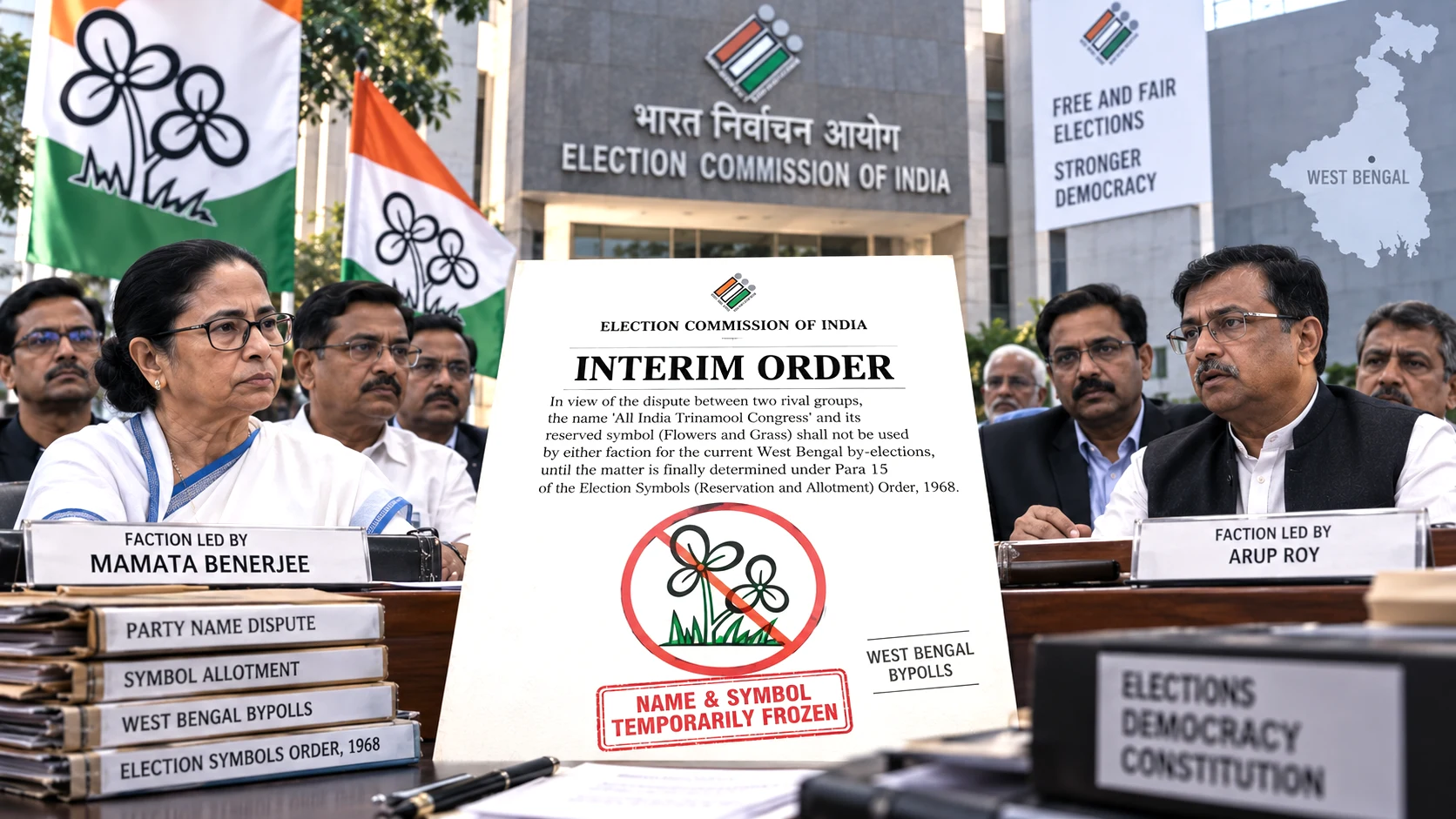
Neither the Mamata Banerjee group nor the rival faction formally represented before the Election Commission by Arup Roy can use the All India Trinamool Congress name or its reserved symbol in the October 6 bypolls. The order is temporary while the ECI decides the larger party-control dispute under P
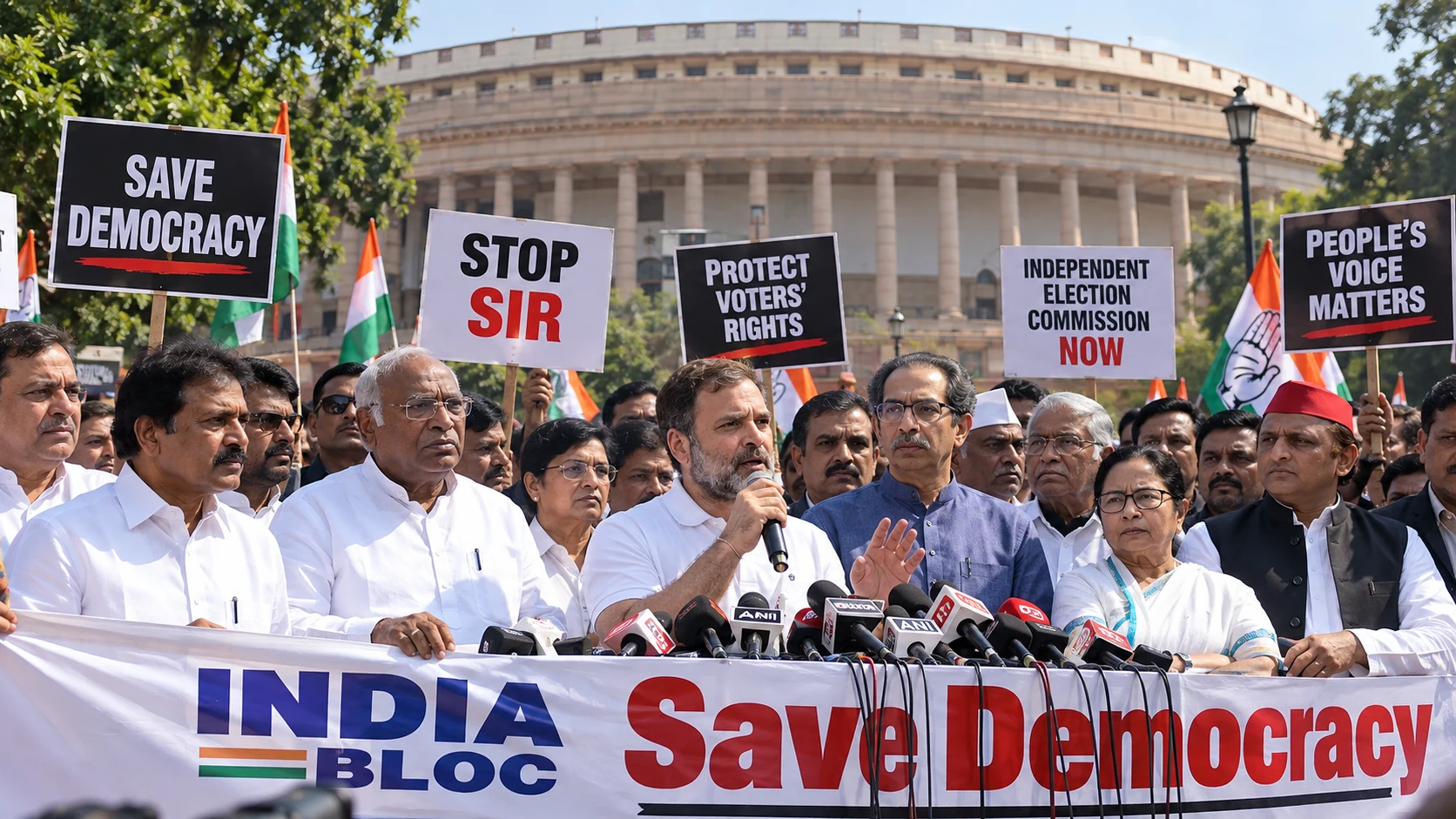
The INDIA bloc has announced nationwide “Save Democracy” marches from Oct. 2–8 over the Election Commission and SIR controversy, with MPs planning an Oct. 6 march to the EC. The BJP has rejected the allegations as political frustration after electoral defeats.
Seriously wounded inside the cockpit of flydubai Flight FZ1073, Captain Smit Machchhar realised the aircraft was descending and forced himself towards the door release. That decision allowed others to enter the cockpit and intervene. Now the Mumbai-born pilot’s actions are drawing recognition from t
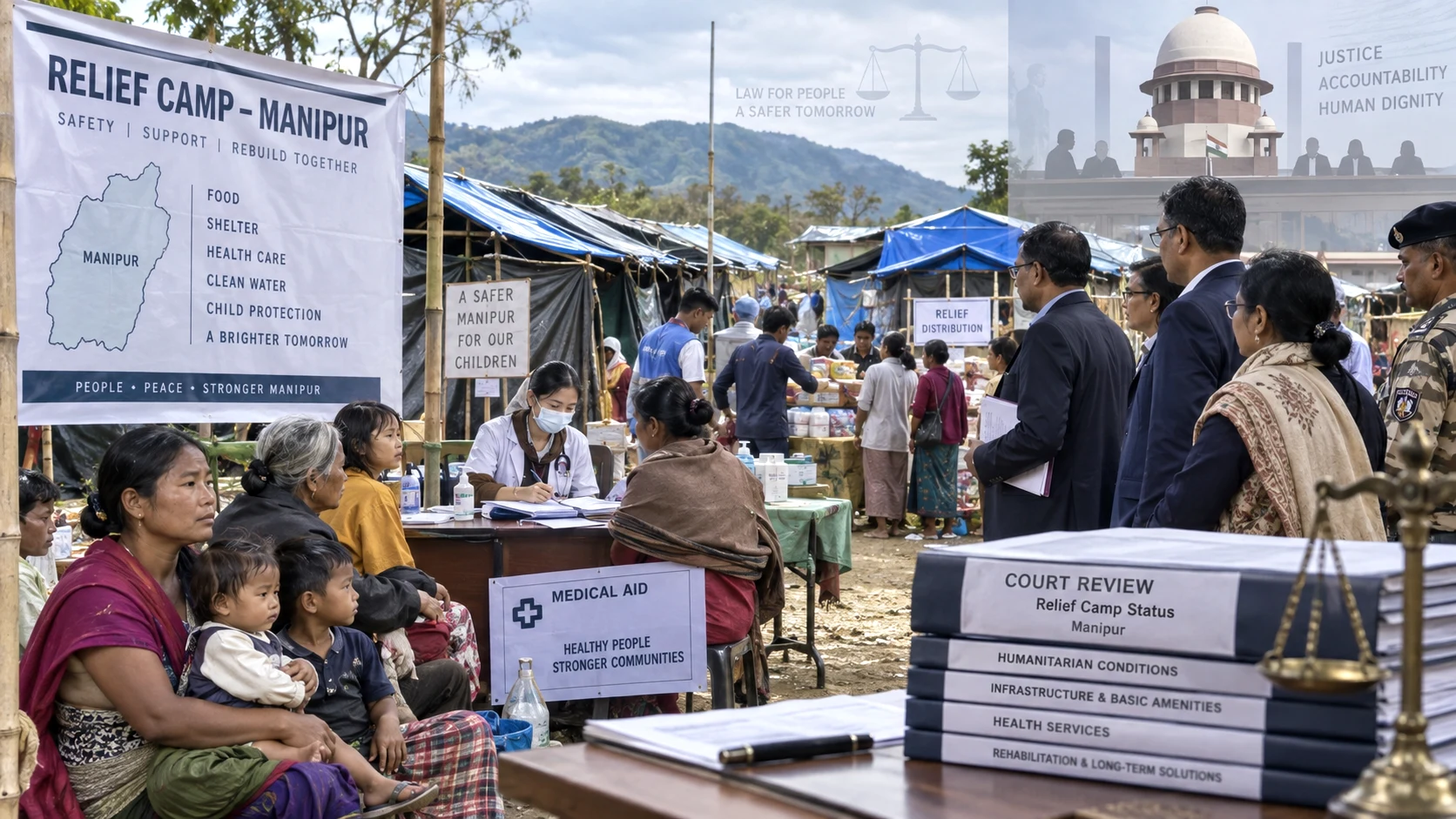
The Supreme Court has directed the Manipur Chief Secretary to provide details of 25 reported unnatural deaths of internally displaced people, including post-mortem findings and preventive measures. Material before the court separately referred to 640 deaths across relief camps in eight districts, of
The Bombay High Court has restarted hearings on Maharashtra’s 10% Maratha reservation law. Here is what petitioners argue, how the State has defended the quota and what happens next.*








0 Comments