Navratri 2026 Day 1: Ghatasthapana Muhurat, Puja Vidhi and Today’s Colour
Shardiya Navratri 2026 begins on October 11. Check the Ghatasthapana muhurat, Day 1 puja guide, today’s orange colour, the full nine-day colour calendar and key dates through Dussehra.
Editorial illustration representing Shardiya Navratri 2026 Day 1 Ghatasthapana and Maa Shailputri worship
Table of Contents (15 sections)
For New Delhi, Drik Panchang lists the main Ghatasthapana Muhurat for Shardiya Navratri 2026 from 6:19 AM to 10:12 AM on Sunday, October 11, with an additional Abhijit Muhurat from 11:44 AM to 12:31 PM.
Shardiya Navratri begins across India today, October 11, marking the start of the annual festival dedicated to the worship of Goddess Durga and her different forms.
The first day is associated with Maa Shailputri, while Ghatasthapana, also known as Kalash Sthapana, formally marks the beginning of Navratri worship in many households.
The colour associated with the first day of Navratri 2026 is orange.
However, devotees should remember that puja timings are location-specific. Sunrise and local panchang calculations affect the precise Ghatasthapana window, so a time published for Delhi should not automatically be treated as the exact time for Hyderabad, Mumbai, Kolkata or another city.
According to Drik Panchang, for example, Hyderabad has a Ghatasthapana window of 6:08 AM to 10:05 AM, followed by an Abhijit Muhurat of 11:39 AM to 12:26 PM.
Key Takeaways
Recommended Reading
Related Stories & In-Depth Guides
Curated editorial perspectives matching this topic.
Navratri Day 4 falls on October 14, 2026 and is dedicated to Maa Kushmanda. Check today’s royal blue colour, malpua bhog, mantra, simple puja vidhi, Chaturthi timing and what comes on Day 5.
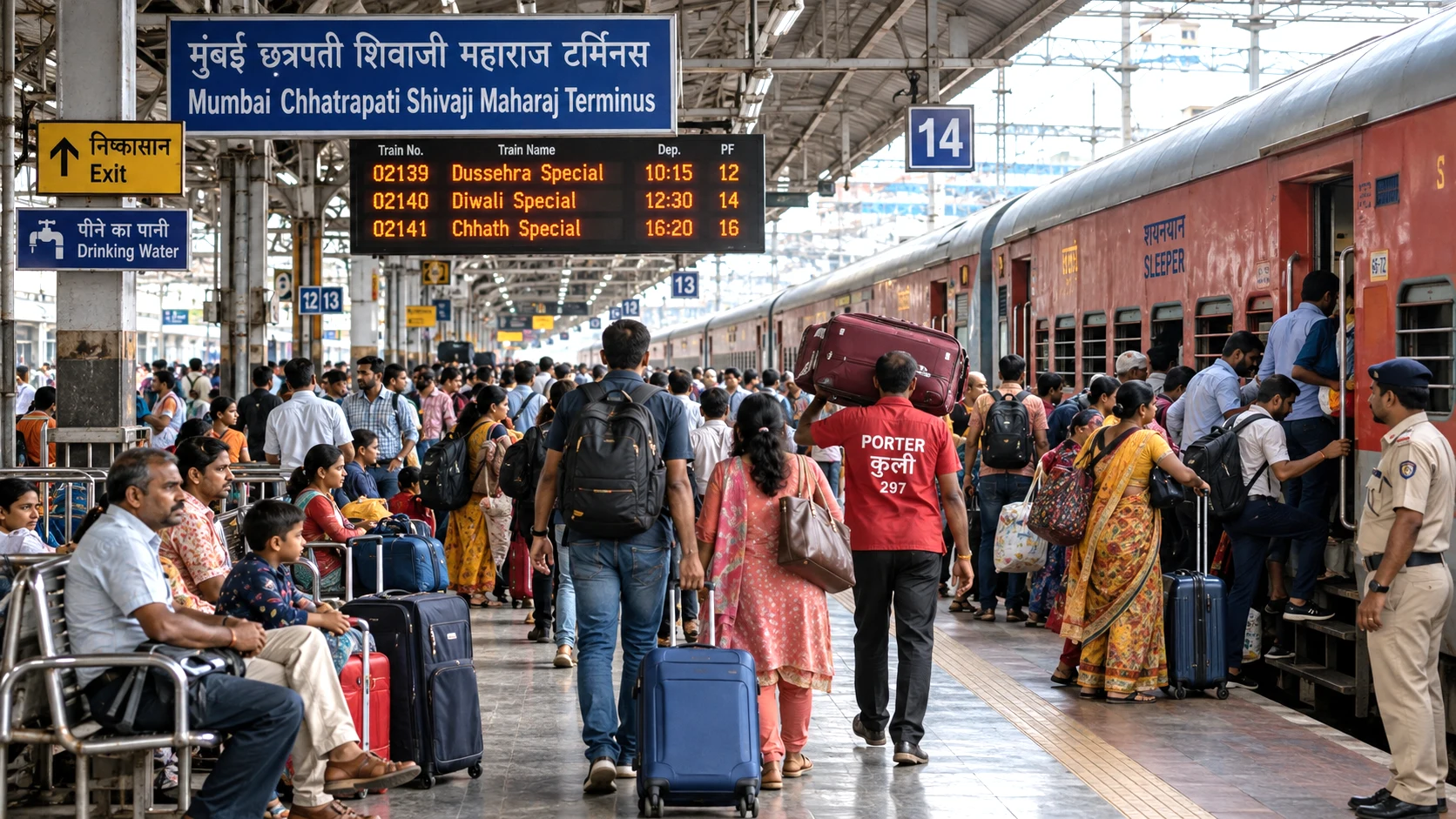
Central Railway has announced 418 festival-special services for Puja, Dussehra, Diwali and Chhath 2026. The first reservation batch opened September 27, with another opening September 28. Check train numbers, routes, dates and official booking options.
Shardiya Navratri 2026 begins on Sunday, October 11.
Day 1 deity: Maa Shailputri.
Today’s colour: Orange.
New Delhi Ghatasthapana Muhurat: 6:19 AM–10:12 AM (Abhijit: 11:44 AM–12:31 PM).
Hyderabad Ghatasthapana Muhurat: 6:08 AM–10:05 AM (Abhijit: 11:39 AM–12:26 PM).
Full nine-day colour calendar and key dates through Dussehra (October 20) included below.
Navratri 2026 Day 1 at a Glance
Date: Sunday, October 11, 2026
Festival: Shardiya Navratri Day 1
Tithi: Shukla Pratipada
Day 1 deity: Maa Shailputri
Main ritual: Ghatasthapana or Kalash Sthapana
Today’s Navratri colour: Orange
New Delhi Ghatasthapana Muhurat: 6:19 AM to 10:12 AM
New Delhi Abhijit Muhurat: 11:44 AM to 12:31 PM
Hyderabad Ghatasthapana Muhurat: 6:08 AM to 10:05 AM
Hyderabad Abhijit Muhurat: 11:39 AM to 12:26 PM
Panchang reference: Drik Panchang
Shardiya Navratri continues through the festival period leading to Vijayadashami, or Dussehra, on October 20.
Why Does Navratri Begin on October 11 in 2026?
The calendar can occasionally create confusion because a Hindu tithi does not necessarily begin at midnight.
For Shardiya Navratri 2026, Drik Panchang records the Ashwina Shukla Pratipada Tithi as beginning at 9:19 PM on October 10 and ending at 9:30 PM on October 11.
Navratri observance begins on October 11, with Ghatasthapana performed on Pratipada according to the applicable muhurat.
That is why references to October 10 as the start of Pratipada should not be confused with the principal Navratri Day 1 observance, which falls on Sunday, October 11.
What Is Ghatasthapana?
Ghatasthapana is one of the principal opening rituals of Shardiya Navratri.
It is commonly known as Kalash Sthapana because the worship involves establishing a sacred kalash or pot at the puja place as part of the invocation of the Goddess.
Practices differ between families, traditions and regions, but Ghatasthapana traditionally marks the formal beginning of the Navratri worship period.
Timing is important in customary panchang practice. Drik Panchang recommends performing Ghatasthapana during the appropriate period of Pratipada, generally during the earlier part of the day, while also identifying an Abhijit Muhurat where applicable.
Anyone following a particular family sampradaya, temple tradition or regional panchang should continue to follow that tradition rather than treating a national online timetable as overriding local practice.
Ghatasthapana Muhurat 2026: Why Your City Matters
A common mistake in festival coverage is to describe a single muhurat as the exact timing for all of India.
Panchang timings can vary with location because sunrise and other calculations are city-specific.
For Navratri Day 1 in 2026, Drik Panchang gives:
Location
Main Ghatasthapana Muhurat
Abhijit Muhurat
New Delhi
6:19 AM–10:12 AM
11:44 AM–12:31 PM
Hyderabad
6:08 AM–10:05 AM
11:39 AM–12:26 PM
Readers outside these cities should use a recognised panchang set to their own location for the precise local timing.
This is particularly useful for households planning the ritual around sunrise, work schedules or a visit to a temple.
Navratri Day 1 Puja Vidhi: A Simple Household Guide
The exact ritual can differ by community and family tradition. The following is a general sequence commonly followed for household Navratri worship rather than a replacement for a family priest or local religious tradition.
Prepare the puja area
Clean the place where the Navratri puja will be performed and arrange the required items before the muhurat begins.
A clean cloth or suitable puja platform can be used to establish the worship space.
Prepare the Kalash
The kalash is traditionally prepared according to family custom. Water and other customary sacred items may be placed in it, and leaves and a coconut are commonly used in many traditions.
The precise materials vary regionally, so families should follow the method they normally observe.
Perform Ghatasthapana during the appropriate muhurat
The Kalash is installed at the puja place during the applicable Ghatasthapana period.
Those who cannot perform the ritual during the principal period may check whether an appropriate Abhijit Muhurat is available for their location.
Worship Maa Shailputri
The first day of Navratri is dedicated to Maa Shailputri, regarded in the Navdurga tradition as the first of the nine forms worshipped during the festival.
Devotees may offer flowers, fruit, incense, a lamp and other customary puja offerings.
Offer prayers according to family tradition
Some households recite Durga prayers or other devotional texts, while others perform a simpler puja and aarti.
There is no need for readers to copy an unfamiliar elaborate ritual from the internet if their family or temple tradition follows a different established practice.
Observe fasting according to personal practice
Many devotees observe a Navratri fast, but the type and strictness of fasting differ widely.
Health, age, pregnancy, medication and other personal circumstances should take priority over unnecessarily strict fasting. Anyone with dietary or medical restrictions should follow appropriate professional advice.
Which Goddess Is Worshipped on Navratri Day 1?
Day 1 is associated with Maa Shailputri.
Her name is commonly understood as “daughter of the mountain,” and she is worshipped as the first form in the Navdurga sequence.
For many devotees, the first day represents the ceremonial beginning of nine days of worship, discipline and devotion.
The religious meaning attached to individual forms of Durga can vary in wording across regional and devotional traditions, so broad symbolic descriptions should not be mistaken for a single compulsory interpretation.
What Is Today’s Navratri Colour?
The widely followed Navratri colour for Sunday, October 11, 2026 is orange.
The nine-colour custom is particularly popular in places such as Maharashtra and Gujarat and has spread widely through community celebrations and social media.
Drik Panchang explains that the colour allocation follows the weekday sequence.
Wearing the colour is a popular festival custom rather than a requirement for participating in Navratri worship. Devotees can observe the festival irrespective of whether they wear the suggested colour.
Navratri 2026 Nine-Day Colour Calendar
Here is the 2026 sequence listed by Drik Panchang:
Navratri Day
Date
Day
Colour
Day 1
October 11
Sunday
Orange
Day 2
October 12
Monday
White
Day 3
October 13
Tuesday
Red
Day 4
October 14
Wednesday
Royal Blue
Day 5
October 15
Thursday
Yellow
Day 6
October 16
Friday
Green
Day 7
October 17
Saturday
Grey
Day 8
October 18
Sunday
Purple
Day 9
October 19
Monday
Peacock Green
One important calendar detail is worth noting: the convenient “Day 1 to Day 9” colour sequence does not mean that every lunar tithi changes neatly once each calendar morning.
In Drik Panchang's 2026 calendar, Saptami extends across the October 17–18 period, while Durga Ashtami and Maha Navami observances converge on October 19. This is why readers may encounter apparently different festival-day descriptions even when the colour calendar itself remains the same.
Day 2 Tomorrow: White Is the Navratri Colour for October 12
Day 2 tomorrow falls on Monday, October 12, and the colour assigned in the 2026 Navratri colour sequence is white.
Day 2 is associated with Maa Brahmacharini in the Navdurga tradition.
A dedicated Day 2 Rajatheertha guide can cover the local puja timings, Maa Brahmacharini worship, white colour significance and the next stage of the Navratri calendar.
Once that article is published, this Day 2 reference should be linked directly to the dedicated Rajatheertha page so readers following the festival day by day can move naturally through the series.
Important Dates After Navratri Begins
The opening of Navratri is only the start of a festival period that continues through several major observances.
According to the 2026 Drik Panchang calendar, Durga Ashtami and Maha Navami fall on October 19, while Vijayadashami or Dussehra falls on October 20.
That calendar pattern is slightly different from years in which Ashtami and Navami are more clearly separated across different sunrise dates.
Regional Durga Puja practices can also follow specific rules, particularly in West Bengal and other eastern states. Readers planning temple visits, Sandhi Puja or Durga Visarjan should therefore confirm the schedule followed by the temple or organising committee they intend to visit.
Is Navratri 2026 Nine Days or Ten Calendar Dates?
This is another point that can confuse readers.
The familiar expression “nine nights” refers to Navratri itself and the Navdurga worship tradition. But a lunar tithi and a civil calendar date do not always align in a simple one-day-to-one-tithi pattern.
Drik Panchang's 2026 Navratri calendar begins with Ghatasthapana on October 11 and continues through October 20, when Navratri Parana, Durga Visarjan and Vijayadashami are listed.
The popular nine-colour sequence, meanwhile, runs from October 11 to October 19.
Therefore, readers should distinguish between:
The nine Navratri colour days
The underlying lunar tithis
Regional Durga Puja observances
Vijayadashami or Dussehra
They are closely connected but are not always interchangeable calendar labels.
What Should Devotees Avoid While Checking Online Muhurat Information?
The most important precaution is to check the location attached to the timing.
A webpage may rank highly in search results while showing a muhurat calculated for Delhi, Mumbai, Ahmedabad or another city.
Readers should not assume that every published minute applies identically nationwide.
It is also sensible to distinguish established panchang information from viral claims about “rare yogas,” guaranteed prosperity, financial rewards or other predictions. Religious observance can be reported accurately without presenting astrological predictions as established facts.
For practical puja planning, the most useful details are the date, tithi, location-specific muhurat and the tradition followed by the household or temple.
Navratri 2026: What Comes Next?
With Ghatasthapana on October 11, devotees now move into the day-by-day Navdurga worship period.
Monday, October 12 is Day 2, associated with Maa Brahmacharini, and white is the colour in the widely followed 2026 sequence.
The colour calendar then moves through red, royal blue, yellow, green, grey, purple and peacock green before the festival reaches its major closing observances.
For readers planning ahead, the most important dates to remember are:
October 11: Navratri begins and Ghatasthapana
October 12: Day 2 and Maa Brahmacharini worship
October 19: Durga Ashtami and Maha Navami in the 2026 Drik Panchang calendar
October 20: Vijayadashami or Dussehra
Because individual ritual timings depend on location, devotees should check a recognised panchang configured for their city before beginning a time-sensitive puja.
For Day 1, however, the essential details are straightforward: Shardiya Navratri begins today, October 11, Maa Shailputri is worshipped, orange is the colour of the day, and Ghatasthapana marks the ceremonial opening of the festival.
Key Takeaway
Shardiya Navratri begins October 11 with Ghatasthapana.
The Rajatheertha Team publishes news, explainers, guides and updates across India and the world. Our coverage follows Rajatheertha's editorial, verification and corrections standards.
Navratri Day 3 falls on October 13, 2026 and is dedicated to Maa Chandraghanta. Check today’s red colour, mantra, bhog, puja vidhi and what comes on Day 4.
Navratri Day 2 falls on October 12, 2026 and is dedicated to Maa Brahmacharini. Here is today’s white colour, Dwitiya tithi, simple puja vidhi, mantra, traditional bhog and what comes on Day 3.
Dussehra 2026 falls on Tuesday, October 20 in the widely followed Vijayadashami calendar, while Bengal observes Vijayadashami on October 21. Check the Dashami tithi, Vijay Muhurat, Shastra Puja guidance and what to know about Ravan Dahan timing.
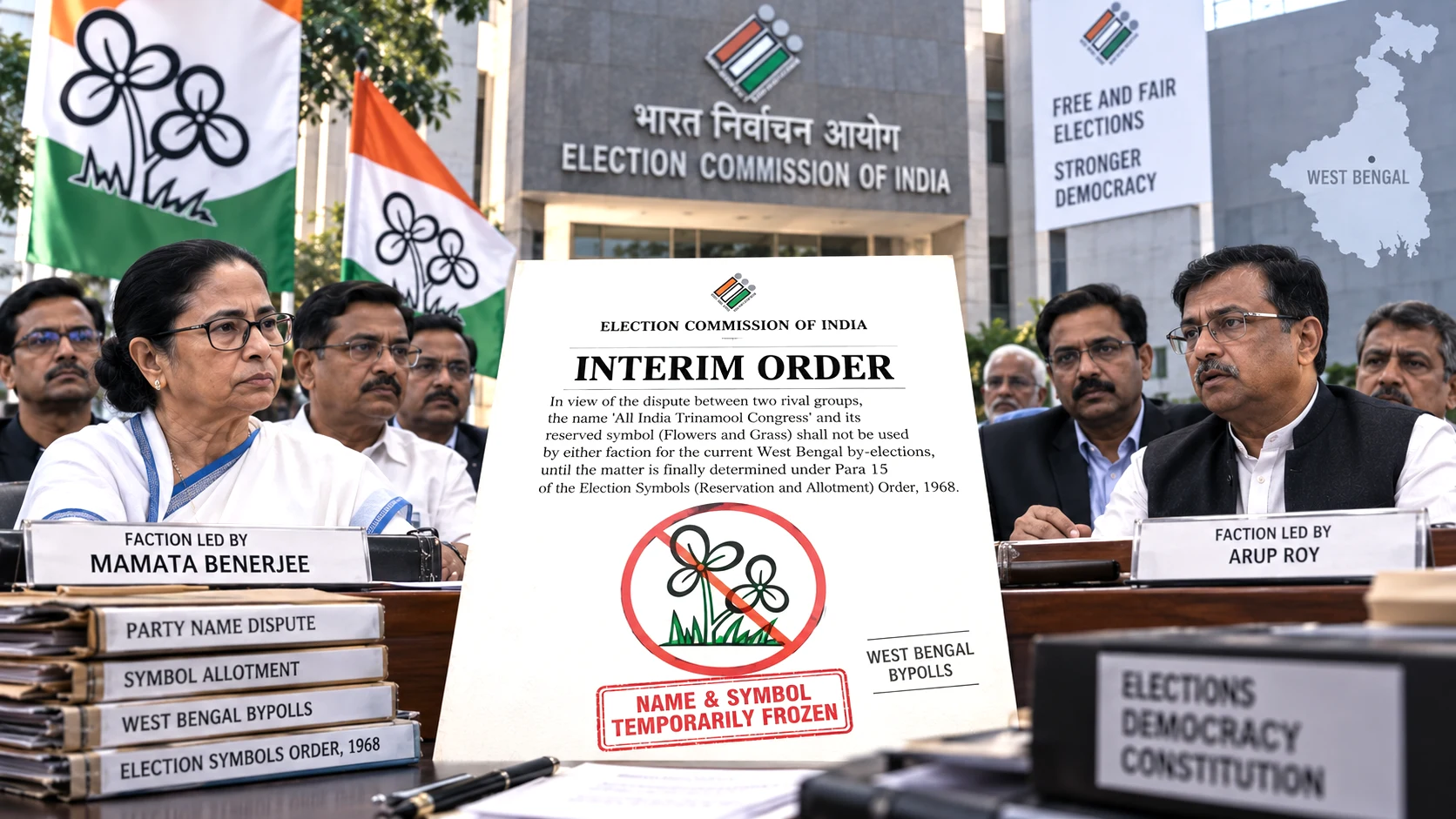
Neither the Mamata Banerjee group nor the rival faction formally represented before the Election Commission by Arup Roy can use the All India Trinamool Congress name or its reserved symbol in the October 6 bypolls. The order is temporary while the ECI decides the larger party-control dispute under P
India/ Politics | Election Commission | Supreme Court10 min read
The Supreme Court has listed Rahul Gandhi and other INDIA bloc leaders’ petition over the Election Commission’s Special Intensive Revision of electoral rolls. The plea seeks disclosure of ECI records, an independent audit of voter deletions, safeguards against removal without notice and an interim s
The Election Commission’s interim freeze on the Trinamool Congress name and ‘Flowers and Grass’ symbol has pushed rival factions to temporary identities. Mamata Banerjee has challenged the order in the Supreme Court, while the October 6 Nandigram bypoll has been further complicated by the withdrawal










0 Comments