Supreme Court Lists Rahul Gandhi, INDIA Bloc SIR Plea: What the Petition Seeks
The Supreme Court has listed Rahul Gandhi and other INDIA bloc leaders’ petition over the Election Commission’s Special Intensive Revision of electoral rolls. The plea seeks disclosure of ECI records, an independent audit of voter deletions, safeguards against removal without notice and an interim s
Editorial illustration representing Supreme Court hearing on Rahul Gandhi and INDIA bloc SIR petition
Table of Contents (13 sections)
NEW DELHI, October 15, 2026: The Supreme Court has listed a petition filed by Leader of the Opposition in the Lok Sabha Rahul Gandhi and other INDIA bloc leaders questioning a series of Election Commission decisions connected with the Special Intensive Revision, or SIR, of electoral rolls.
The case is listed before a bench comprising Chief Justice of India Surya Kant and Justice Joymalya Bagchi. Current court reporting said the matter was scheduled for hearing on October 15 along with a wider group of proceedings arising from the recent Election Commission controversy and protests in Delhi.
The petition is important, but its precise legal scope needs to be understood carefully.
It should not simply be described as a fresh challenge to the constitutional existence of SIR itself.
The Supreme Court already delivered a major judgment on May 27, 2026 upholding the Election Commission's power to conduct the Bihar Special Intensive Revision under Section 21(3) of the Representation of the People Act, 1950 read with Article 324 of the Constitution.
The latest INDIA bloc petition instead focuses heavily on the way later SIR-related decisions were allegedly taken and implemented, the transparency of the Election Commission's internal decision-making, alleged voter deletions, access to electoral databases and the procedural protections available to electors.
Recommended Reading
Related Stories & In-Depth Guides
Curated editorial perspectives matching this topic.
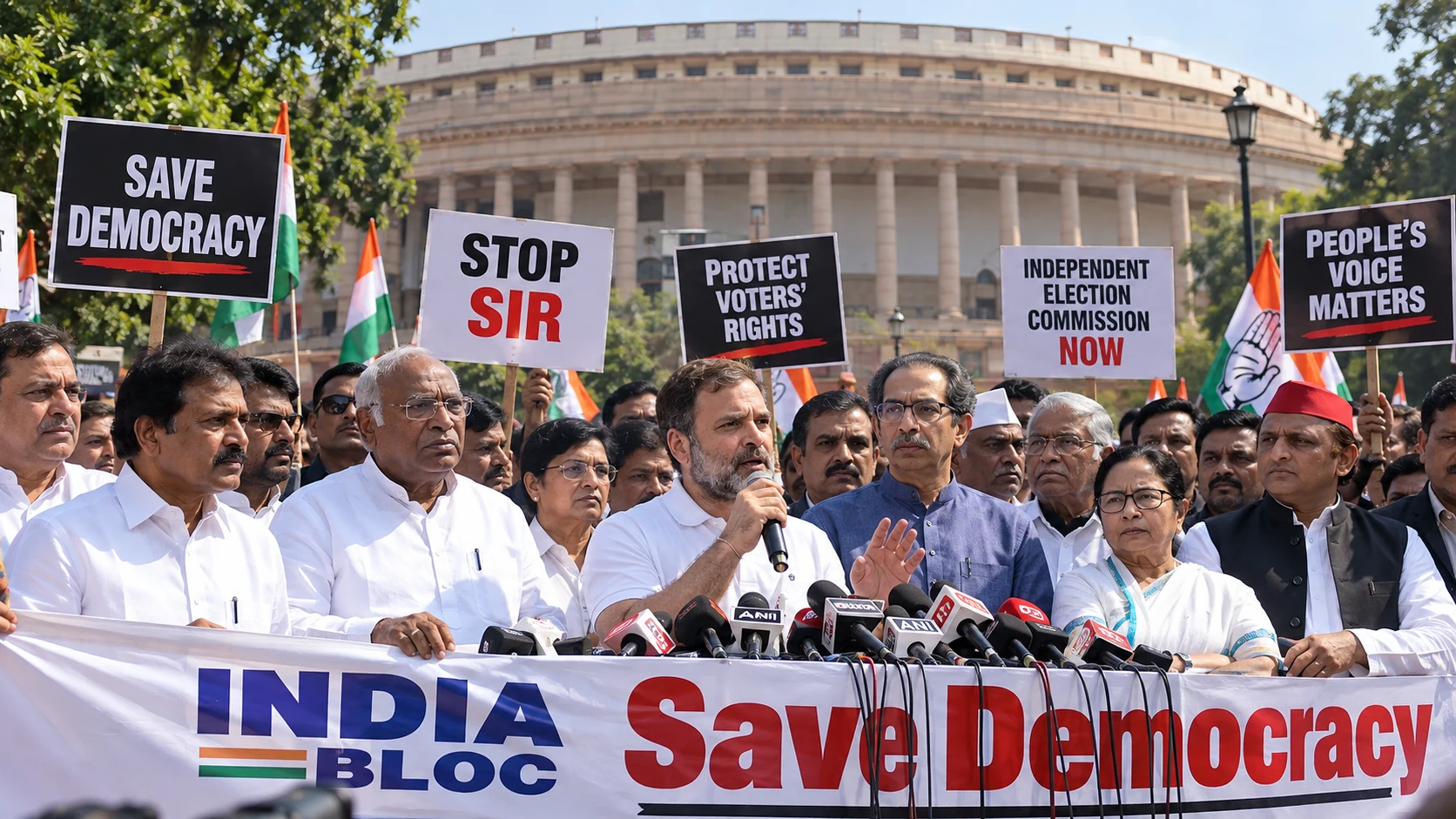
The INDIA bloc has announced nationwide “Save Democracy” marches from Oct. 2–8 over the Election Commission and SIR controversy, with MPs planning an Oct. 6 march to the EC. The BJP has rejected the allegations as political frustration after electoral defeats.
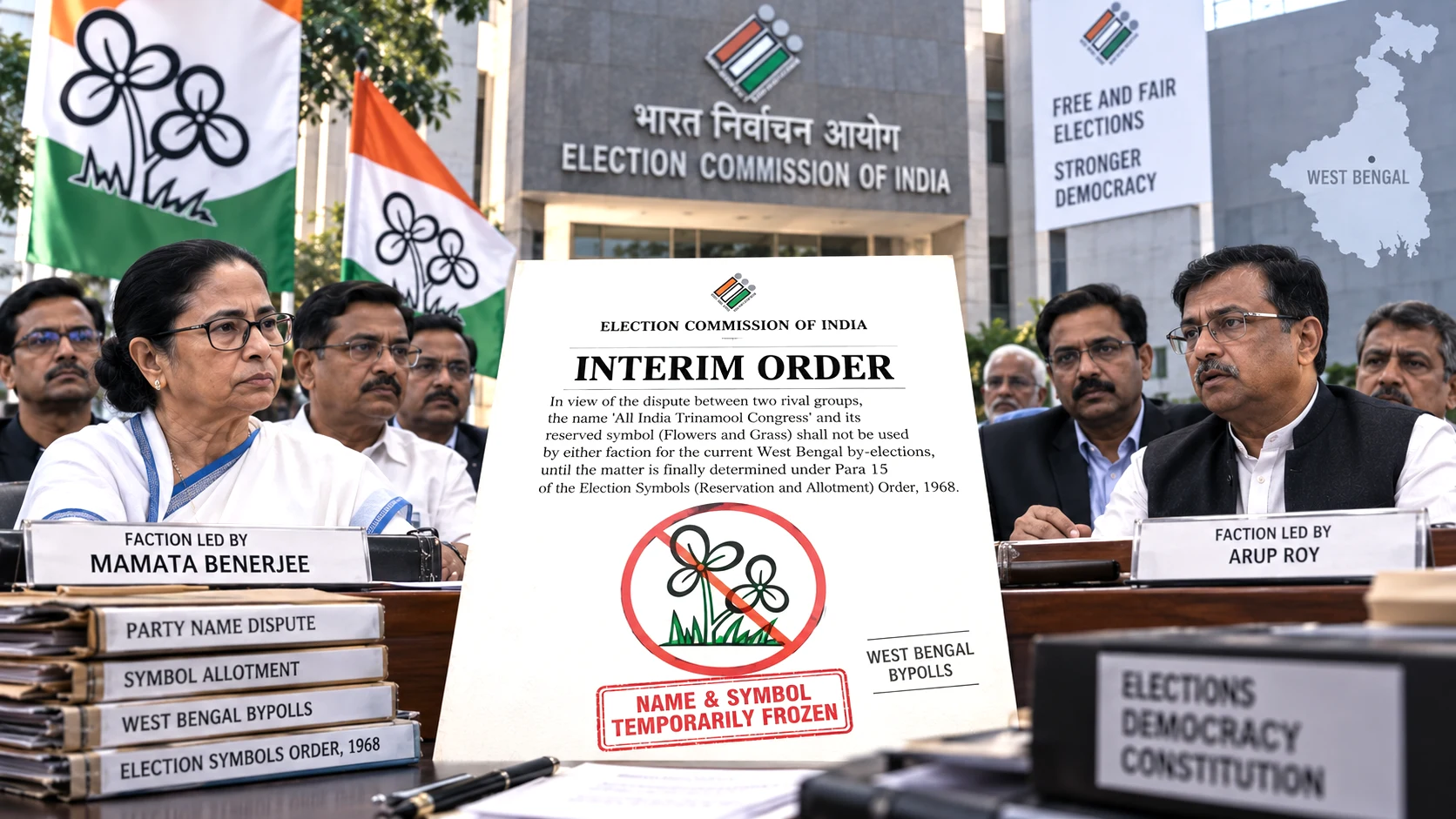
Neither the Mamata Banerjee group nor the rival faction formally represented before the Election Commission by Arup Roy can use the All India Trinamool Congress name or its reserved symbol in the October 6 bypolls. The order is temporary while the ECI decides the larger party-control dispute under P
Key Takeaways
Supreme Court lists Rahul Gandhi & INDIA bloc petition on SIR decisions.
Seeks ECI records, independent audit of deletions, notice safeguards and interim stay.
Not a challenge to SIR’s basic legality (already upheld in May 2026).
Focus is on procedure, transparency and individual voter protections.
No automatic suspension of SIR unless the Court grants a stay.
What Rahul Gandhi and the other petitioners want
The petition asks the Supreme Court for extensive disclosure of Election Commission records relating to disputed SIR decisions.
According to the petition details reported ahead of the hearing, the leaders want files, agendas, minutes, internal notings and objections recorded by Election Commissioners in connection with the revision process to be placed before the court.
They have also sought records relating to the Election Commission's June 24, 2025 decision that initiated the SIR process, as well as information connected with the ECINET and ERONET electoral-roll systems.
The petitioners are asking the Supreme Court to examine whether disputed decisions were taken in accordance with Article 324 of the Constitution, the applicable election laws and Section 18 of the Chief Election Commissioner and Other Election Commissioners Act, 2023.
That question has become particularly significant because opposition parties have cited reports of disagreements or objections recorded by Election Commissioners Sukhbir Singh Sandhu and Vivek Joshi during internal deliberations.
The Election Commission has separately maintained that the final decisions taken by the full Commission were unanimous. That distinction remains central: evidence of questions or objections during an internal process is not automatically proof that the final institutional decision was divided or legally invalid.
Petition seeks an independent audit of voter deletions
One of the most consequential requests is for an independent audit of electoral-roll deletions and database modifications made during SIR.
The petition seeks a committee headed by a retired Supreme Court judge, assisted by technical experts and other independent members.
The proposed review would examine deletions and modifications in electoral databases and, according to reported details of the plea, would also examine aspects of electoral technology and related protocols.
The petitioners have also asked for booth-wise publication of information concerning deleted voters, including the reasons recorded for deletion and demographic information.
These are requests made by the petitioners. The Supreme Court has not, merely by listing the case, accepted the allegations underlying those requests or ordered such an audit.
That distinction is essential because electoral-roll litigation can involve several separate questions: whether the Election Commission possesses the legal power to revise a roll, whether a particular procedure satisfies election law, whether an individual deletion was lawful and whether internal institutional procedures were properly followed.
Those questions should not be treated as interchangeable.
Can a voter be removed without notice?
Another major part of the petition concerns procedural protection for individual voters.
The opposition leaders want a direction ensuring that no elector is deleted without notice and a reasonable opportunity to respond.
The Election Commission's official voter portal currently provides services for new registration, correction, deletion, searching electoral rolls, accessing SIR-related information and submitting documents in response to notices.
Rajatheertha has previously reported on the distinction between receiving an SIR notice and actually losing voter registration.
A notice can initiate further verification. It does not, by itself, establish that a voter is ineligible or that the person's name has finally been removed.
That distinction also reflects the procedural safeguards examined by the Supreme Court in its May judgment.
In the Bihar SIR case, the court said the revision process incorporated stages involving scrutiny, notice, inquiry and an opportunity to be heard before a final determination.
The fresh petition, however, raises the question of whether those safeguards have been followed adequately and consistently in later exercises.
That is a different legal issue from whether the Election Commission has the basic authority to conduct SIR.
Opposition also wants SIR temporarily suspended
The petitioners have asked the Supreme Court to suspend ongoing SIR exercises across states while the court considers the new challenge.
That is an interim request, not the current legal position.
Unless the Supreme Court grants a stay or the Election Commission itself changes the programme, the filing of the petition does not automatically stop the revision exercise.
The ECI's official voter-services system continues to display SIR 2026 services, including tools for electors to search earlier intensive-revision rolls and submit documents connected with the process.
This point matters for voters because political demands for suspension, legal requests for suspension and an actual judicial stay are three different things.
A petition can ask for relief. That relief becomes legally operative only if the court grants it.
Why the May 2026 Supreme Court judgment matters
The latest litigation cannot be understood without the Supreme Court's May 27 judgment in Association for Democratic Reforms v Election Commission of India.
That case concerned the Bihar SIR initiated in June 2025.
The Supreme Court upheld the Election Commission's authority to conduct the intensive revision and held that the exercise was traceable to Section 21(3) of the Representation of the People Act and Article 324 of the Constitution.
The court also found that the objective of improving the accuracy and integrity of electoral rolls was legitimate.
It upheld the use of the earlier intensive electoral roll as a reference point and recognised the Election Commission's authority to prescribe a documentation system appropriate to the exercise.
The judgment therefore created a significant legal baseline: SIR, as a category of electoral-roll revision, was not held unlawful.
The October petition consequently raises a more specific set of questions about how the Commission exercised its powers, how decisions were made within the institution, how electoral data was handled and whether individual voters received the protections required by law.
A court could therefore scrutinise particular decisions or procedures without necessarily reopening every conclusion reached in the May judgment.
Internal decision-making inside the Election Commission
One of the most closely watched aspects of the case is likely to be the petitioners' request for internal Election Commission records.
The controversy intensified after reports that Election Commissioners Sukhbir Singh Sandhu and Vivek Joshi had raised objections or questions on multiple occasions concerning electoral-roll procedures and related matters.
Opposition parties have cited those reports while arguing that some disputed steps require judicial scrutiny.
The Commission's publicly reported position has been that final decisions of the full body were unanimous and that internal discussions, comments and questions are part of the normal decision-making process.
The court may therefore have to distinguish between internal disagreement during deliberation and the formal legal decision ultimately adopted by the Commission.
Section 18 of the 2023 law governing the Chief Election Commissioner and Election Commissioners is relevant because it deals with how business is transacted by the multi-member Commission.
The petitioners want the court to examine whether the disputed decisions met those institutional requirements.
No judicial finding on that allegation should be assumed before the court examines the evidence.
Form 6 is also part of the wider dispute
The petition also seeks a direction concerning online Form 6, which is used for voter registration.
The leaders want the online version to conform to the form prescribed under the Registration of Electors Rules unless those rules are lawfully amended.
The issue has acquired added importance because the Supreme Court has separately been dealing with concerns over Form 6 in the Delhi SIR context.
Reporting on October 15 said the court was considering how to resolve an anomaly affecting previously registered voters required to use a form containing a declaration associated with first-time inclusion.
That separate proceeding illustrates why today's wider petition covers more than a simple political disagreement over whether voter rolls should be revised.
It touches on the practical machinery through which eligible voters remain on, return to or enter electoral rolls.
How this differs from the CEC appointment case
Rajatheertha readers should also distinguish this proceeding from the separate constitutional challenge to the 2023 law governing appointments to the Election Commission.
In September, two Supreme Court judges differed on whether that challenge should go before a Constitution Bench, and the matter was referred to the Chief Justice for consideration of a larger bench.
That case concerns the statutory mechanism used to select the Chief Election Commissioner and Election Commissioners.
The present SIR petition concerns the Commission's exercise of electoral-roll powers, its internal decision-making, voter deletions and related procedures.
The two disputes involve the Election Commission but raise different legal questions.
Political allegations are not judicial findings
The SIR controversy has become part of a wider political confrontation between opposition parties and the Election Commission.
Rahul Gandhi and several INDIA bloc leaders have made serious allegations concerning electoral rolls and the functioning of the poll body.
Some opposition leaders have demanded the resignation or removal of Chief Election Commissioner Gyanesh Kumar.
The Election Commission has rejected the broader suggestion that its final SIR decisions were improperly divided and has defended the revision process as an exercise intended to maintain accurate voter lists.
For readers, the distinction is straightforward but important.
An allegation in a political speech is not a court finding.
A claim made in a petition is not automatically established because a court agrees to hear it.
And the Election Commission's denial does not by itself dispose of legal questions that have been properly brought before the Supreme Court.
The judicial process will determine which issues require evidence, disclosure, directions or further hearings.
What happens next?
The immediate question is whether the Supreme Court issues notice, seeks records or responses from the Election Commission, grants any interim protection, links the case with existing SIR proceedings, or schedules a fuller hearing.
The petition also asks for an interim suspension of SIR, making any ruling on temporary relief especially important for states where revision work remains underway.
At the time of this Rajatheertha update, the sources reviewed reported that the matter had been listed before Chief Justice Surya Kant and Justice Joymalya Bagchi but had not yet reported a substantive final or interim order on this specific petition.
That means the most responsible description is that the case is before the Supreme Court and the petitioners have asked for substantial relief — not that the court has already accepted their allegations or stopped SIR.
Any same-day order could materially change that position and should be incorporated before publication if the court issues one.
What voters should do meanwhile
For ordinary electors, the legal fight does not remove the need to verify their own registration status.
The Election Commission's official voter portal continues to provide tools to search the electoral roll, access SIR information, submit documents where a notice has been issued, seek registration through Form 6 and use other voter services.
A person concerned about an SIR notice should therefore distinguish between a request for verification and a final deletion decision, respond within applicable deadlines and retain copies or acknowledgement details of documents submitted.
The Supreme Court proceedings may ultimately clarify important institutional and procedural questions.
For now, however, SIR remains legally operative unless a competent court orders otherwise, and today's petition should be understood as a new challenge to how parts of the process and the Election Commission's decision-making have allegedly functioned — not as a court determination that those allegations are true.
Key Takeaway
Supreme Court lists Rahul Gandhi & INDIA bloc SIR petition seeking records, independent audit and interim suspension.
SIR’s basic legality already upheld in May 2026. Focus now on procedure and transparency.
The Rajatheertha Team publishes news, explainers, guides and updates across India and the world. Our coverage follows Rajatheertha's editorial, verification and corrections standards.
The Supreme Court is scheduled to hear two pleas today challenging CEC Gyanesh Kumar's functioning, seeking his suspension and questioning the nationwide SIR process amid continuing protests and a dispute over internal Election Commission decisions.
India/ Election Commission | Electoral Rolls |Supreme Court14 min read
The Supreme Court says it never approved a modified Form 6 used during the SIR process and has sought Election Commission records to determine who authorised any changes, while declining for now to suspend CEC Gyanesh Kumar.
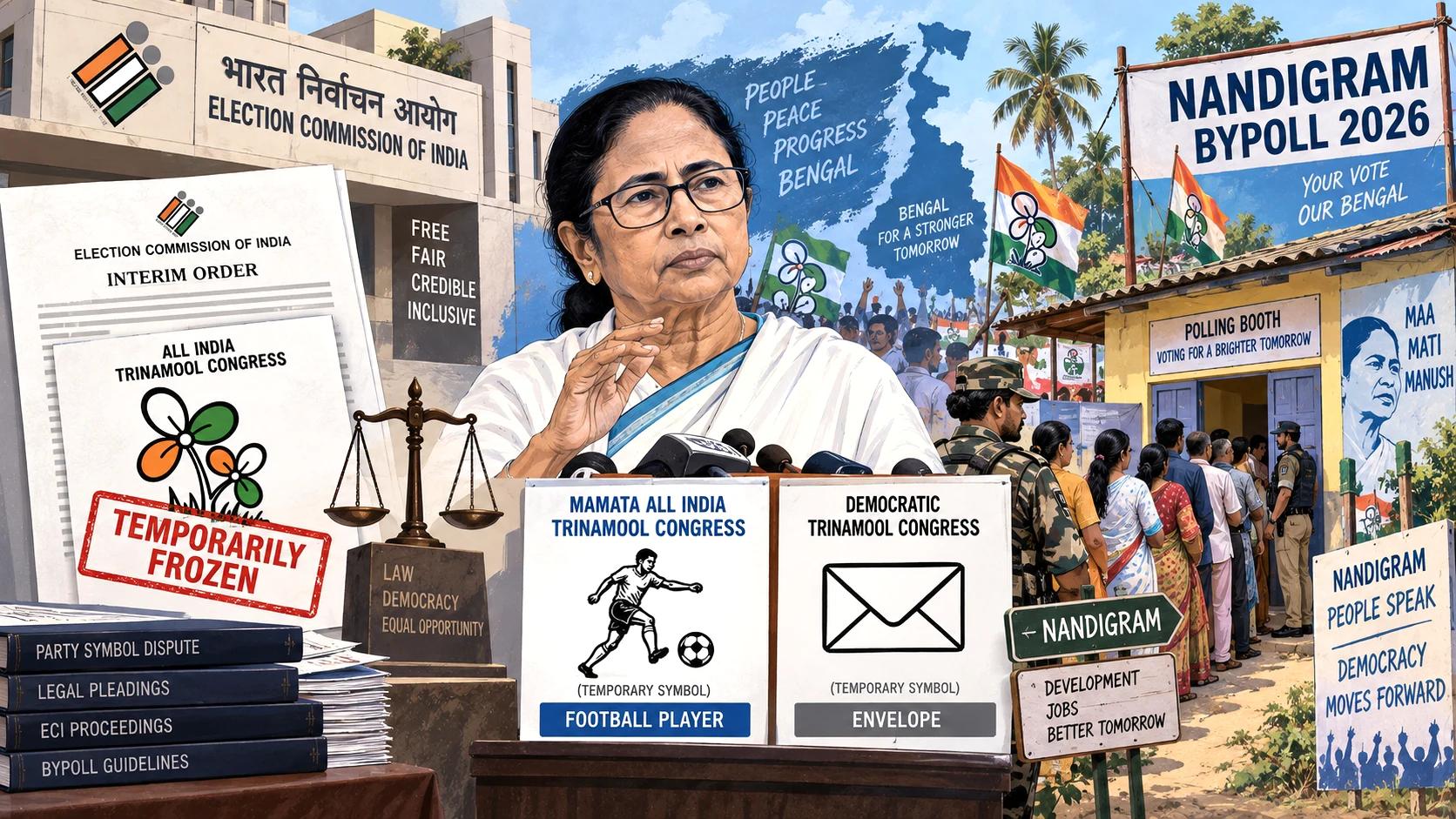
The Election Commission’s interim freeze on the Trinamool Congress name and ‘Flowers and Grass’ symbol has pushed rival factions to temporary identities. Mamata Banerjee has challenged the order in the Supreme Court, while the October 6 Nandigram bypoll has been further complicated by the withdrawal
The Bombay High Court has restarted hearings on Maharashtra’s 10% Maratha reservation law. Here is what petitioners argue, how the State has defended the quota and what happens next.*
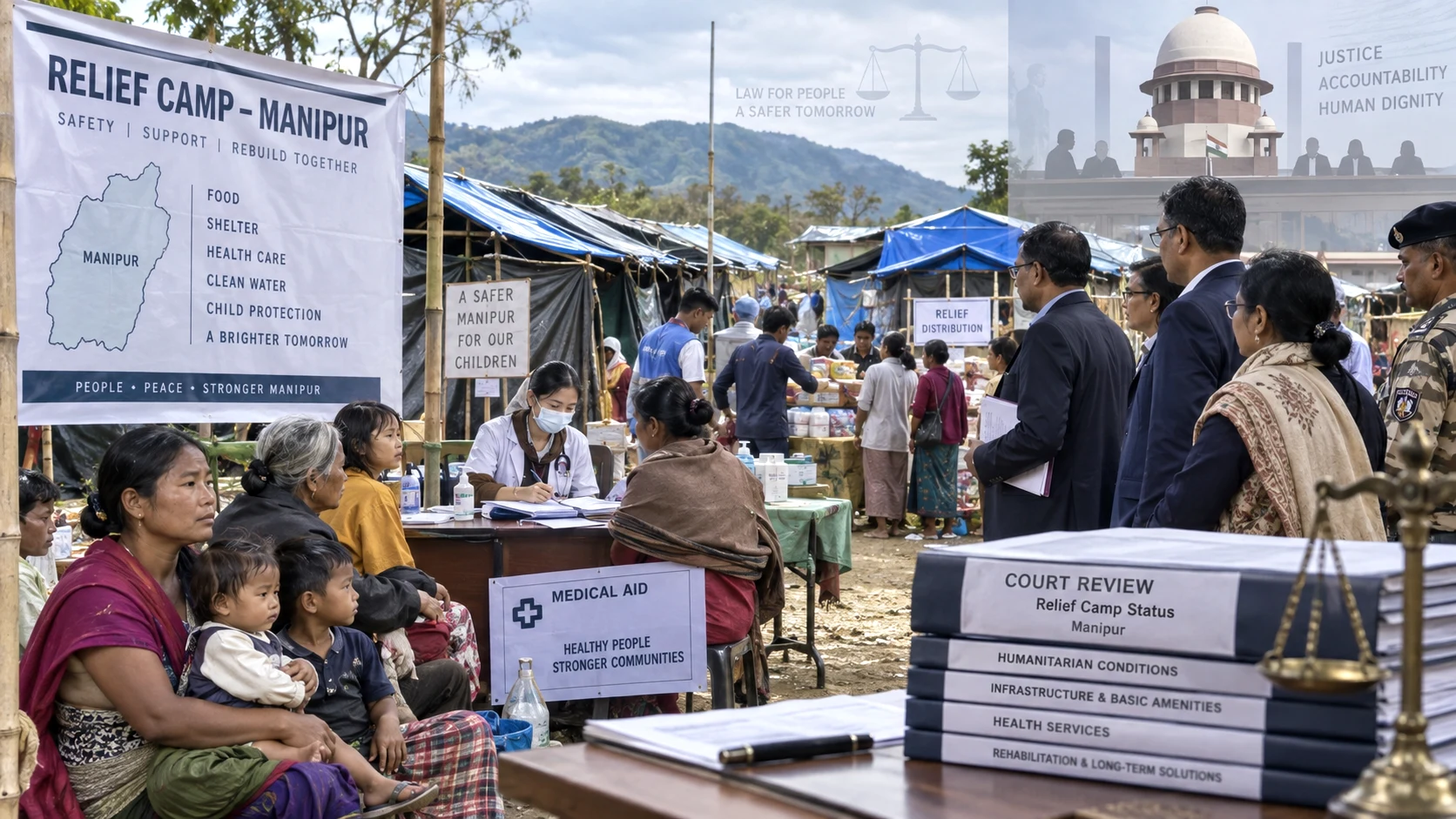
The Supreme Court has directed the Manipur Chief Secretary to provide details of 25 reported unnatural deaths of internally displaced people, including post-mortem findings and preventive measures. Material before the court separately referred to 640 deaths across relief camps in eight districts, of
Seriously wounded inside the cockpit of flydubai Flight FZ1073, Captain Smit Machchhar realised the aircraft was descending and forced himself towards the door release. That decision allowed others to enter the cockpit and intervene. Now the Mumbai-born pilot’s actions are drawing recognition from t








0 Comments