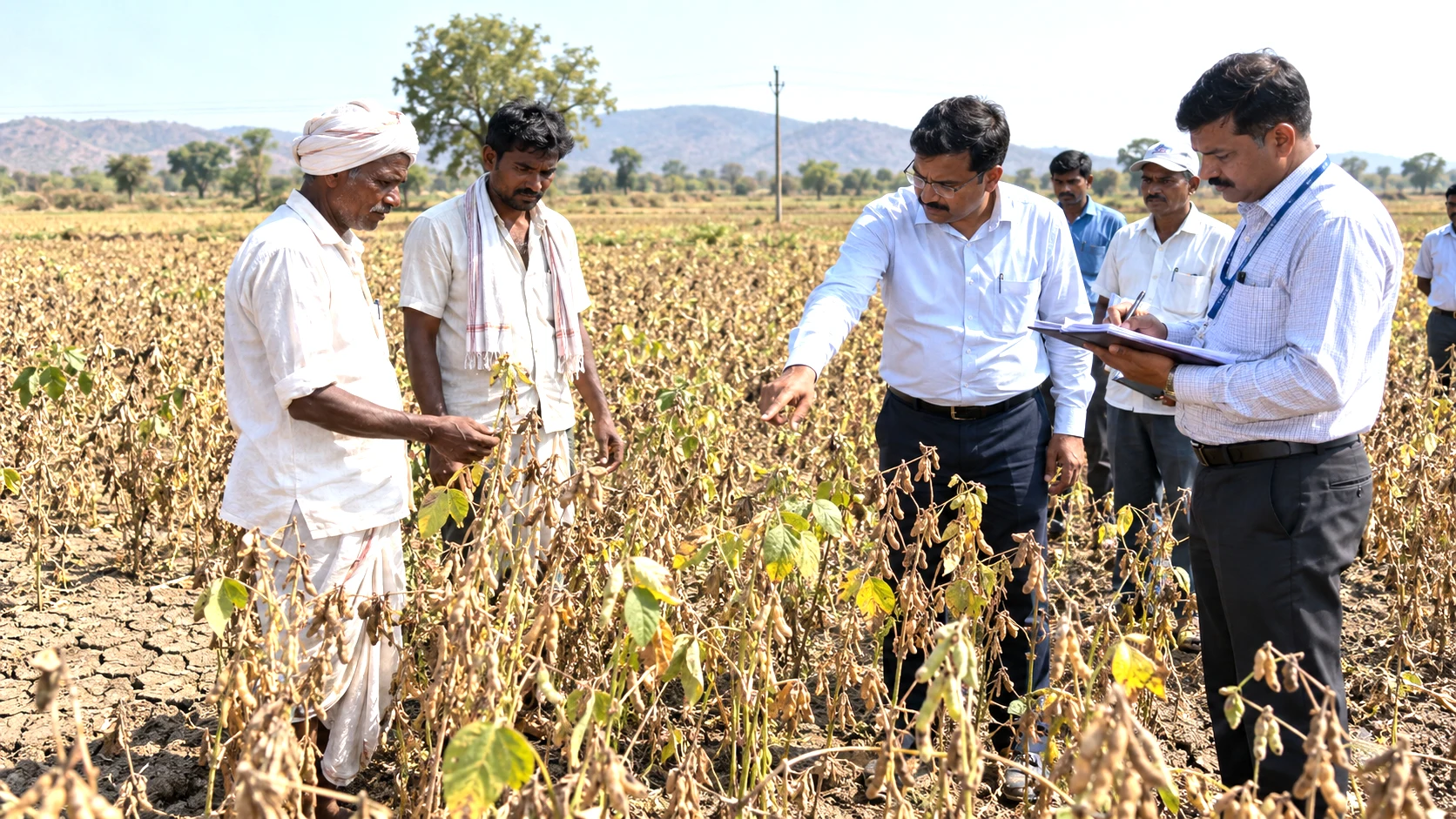
Maharashtra has declared drought conditions in 265 of 358 talukas under Trigger-1 for Kharif 2026. Here is the district-wise list, 12 relief measures, crop-loss compensation position, eligibility and panchnama-to-DBT process.
The Maharashtra government has brought 265 of the state's 358 talukas under drought relief measures for the 2026 Kharif season, covering roughly 74% of the state's talukas after rainfall shortages, prolonged dry spells and other drought indicators affected large agricultural areas.
The Relief and Rehabilitation Department's Government Resolution, dated September 25, 2026, says the 265 talukas met Trigger-1, or the first drought trigger, based on an Agriculture Commissioner's report dated September 24. District collectors have been ordered to immediately begin crop-damage panchnamas and collect photographs and GPS coordinates from surveyed fields.
Recommended Reading
Related Stories & In-Depth Guides
Curated editorial perspectives matching this topic.
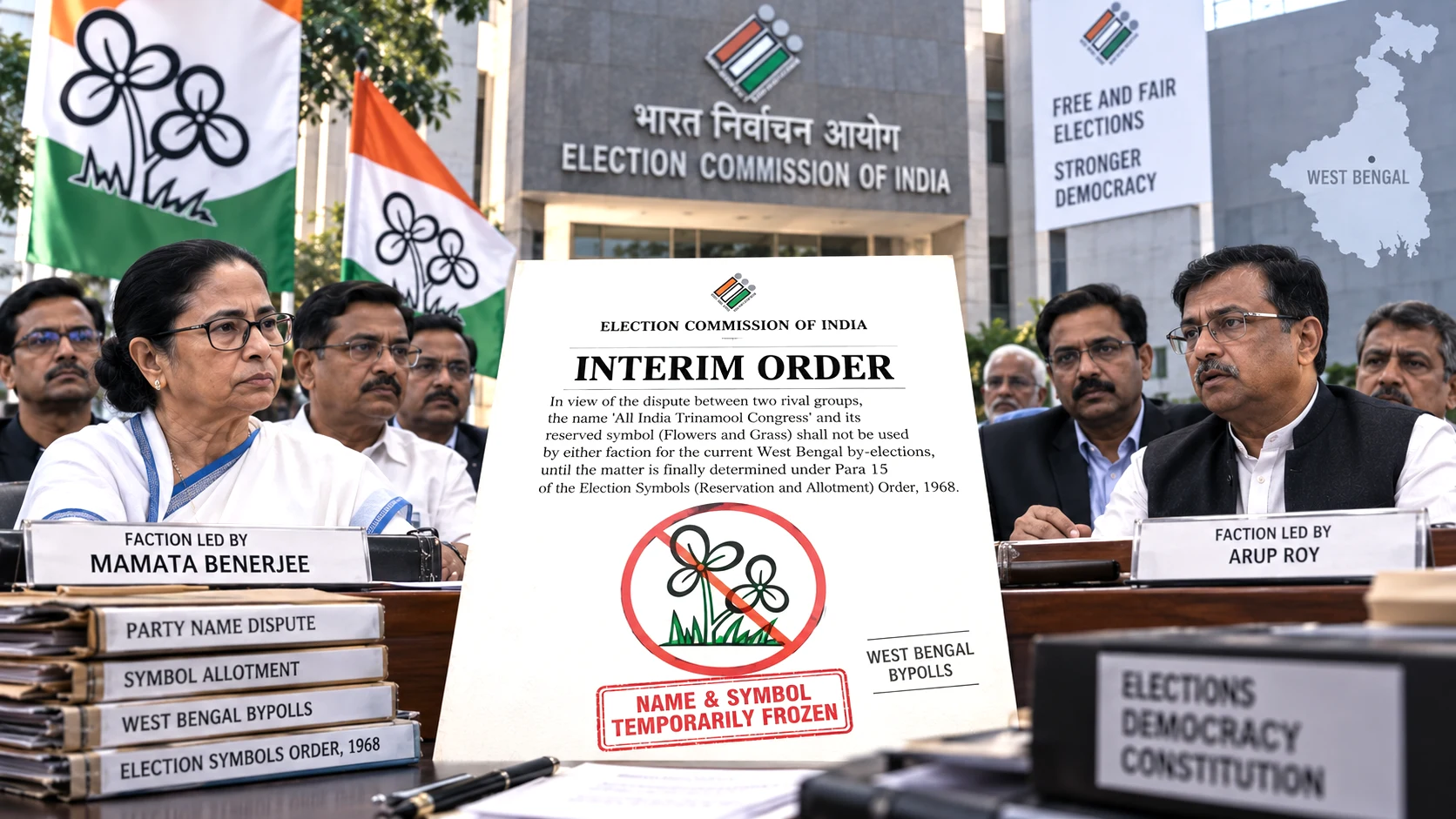
Neither the Mamata Banerjee group nor the rival faction formally represented before the Election Commission by Arup Roy can use the All India Trinamool Congress name or its reserved symbol in the October 6 bypolls. The order is temporary while the ECI decides the larger party-control dispute under P
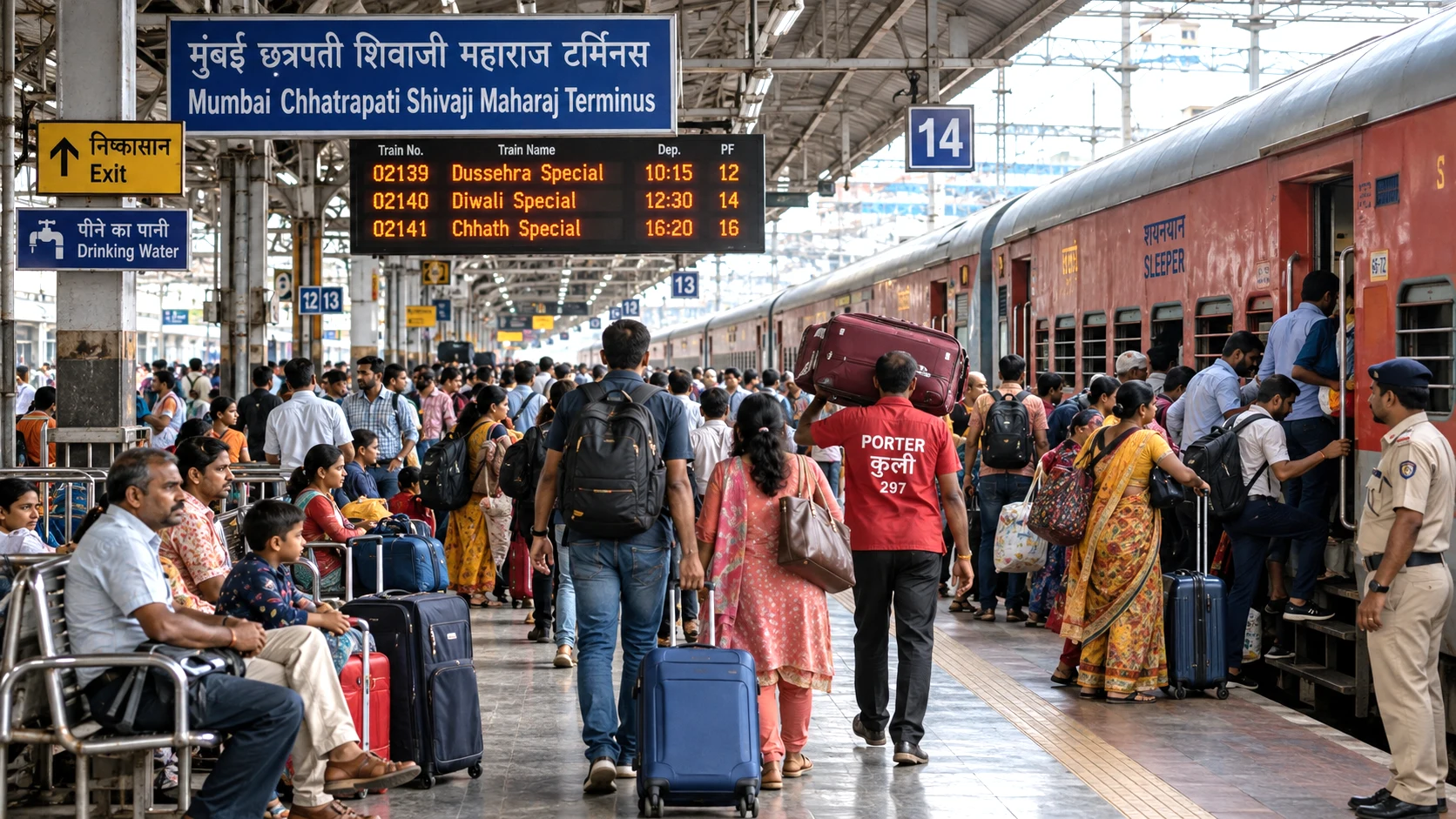
Central Railway has announced 418 festival-special services for Puja, Dussehra, Diwali and Chhath 2026. The first reservation batch opened September 27, with another opening September 28. Check train numbers, routes, dates and official booking options.
For farmers, however, one distinction is crucial:
The declaration does not mean a fixed cash compensation amount has already been sanctioned to every farmer in the 265 talukas.
The GR expressly states that assistance for actual crop losses will be announced through a separate Government Resolution after completion of the prescribed assessment procedure.
For now, the state has activated 12 drought-relief measures, including land-revenue relief, restructuring of crop loans, a pause on agricultural-loan recovery, electricity concessions, student examination-fee waivers, drinking-water tankers, fodder arrangements and employment-guarantee measures.
Maharashtra Drought 2026: Quick Answer
Question
Latest verified position
How many talukas are covered?
265 of 358
Share of state's talukas
About 74%
Season
Kharif 2026
Drought stage
Trigger-1
GR date
September 25, 2026
Public declaration/reporting
September 26, 2026
Crop panchnamas
Ordered immediately
GPS/photos required?
Yes
Cash crop-loss amount announced?
Not yet under this GR
Separate compensation order coming?
Yes, after prescribed assessment
Immediate concessions
12 drought-relief measures
What Does Trigger-1 Mean?
Trigger-1 is the first stage of Maharashtra's drought-assessment framework.
The government says the current classification was based on rainfall deficiency and other drought indicators assessed by the Agriculture Commissioner. The GR directs collectors to move from the initial drought trigger into detailed field verification.
Recent reporting on the state's drought framework says Trigger-1 indicators include substantial rainfall deficiency combined with prolonged dry spells, after which crop conditions are checked more closely on the ground.
This means Trigger-1 is not simply a rainfall label.
It starts an administrative process involving:
field inspection;
crop panchnamas;
photographs of affected crops;
GPS coordinates;
district-level compilation;
review by the Agriculture Commissioner;
and subsequent government decisions on crop-loss assistance.
Why Has Maharashtra Declared Drought Across Such a Large Area?
The state as a whole has recorded a significant monsoon shortfall, but the severity has varied sharply by region.
The Indian Express reported on September 27 that Maharashtra's overall seasonal rainfall deficit was around 18%, while Marathwada was around 38% below normal and Vidarbha around 27% below normal.
Some of the hardest-hit districts—including Solapur, Dharashiv, Latur, Hingoli, Jalna, Beed and parts of Nanded—had received only around half their normal rainfall in the period assessed.
That regional variation helps explain why the drought declaration extends across most of Marathwada and large parts of Vidarbha while some other areas have fewer affected talukas.
265 Talukas: Region-Wise Breakdown
According to the official government appendix, the 265 Trigger-1 talukas are distributed as follows:
Revenue division
Talukas covered
Konkan-related districts listed in GR
12
Nashik Division
49
Pune Division
35
Chhatrapati Sambhajinagar Division
74
Amravati Division
56
Nagpur Division
39
Total
265
The official appendix shows no affected taluka in Thane or Palghar under this declaration.
Full District-Wise List of Drought-Affected Talukas
The final page of the appendix confirms the statewide total of 265.
Which Districts Have the Most Affected Talukas?
The largest numbers include:
Yavatmal — 16
Jalgaon — 15
Nanded — 14
Amravati — 14
Ahilyanagar — 14
Nagpur — 14
Buldhana — 13
Chandrapur — 12
Beed — 11
Solapur — 11
Nashik — 10
Latur — 10
What Relief Has Maharashtra Announced?
The September drought GR provides 12 immediate measures and concessions.
1. Land-Revenue Relief
The government has ordered relief in land revenue for drought-affected areas.
2. Restructuring of Crop Loans
Existing crop loans can be restructured under the applicable banking and government process.
This does not automatically mean that every crop loan has been fully waived.
3. Stay on Recovery of Agriculture-Related Loans
Recovery of agriculture-related loans is to be deferred in the affected areas.
Again, a recovery stay is different from permanently cancelling the debt.
4. Agricultural Pump Electricity-Bill Relief
The GR provides concessions on current electricity bills for agricultural pumps above the capacity already covered by existing waiver arrangements.
It specifically notes that electricity bills for pumps up to 7.5 horsepower were already waived and the new concession applies to pumps above that level as provided under the drought measure.
5. Examination-Fee Waiver
School and college students in qualifying drought-affected areas are to receive examination-fee relief.
6. More Employment-Guarantee Work
The government will relax applicable norms under the rural employment-guarantee framework so more work can be started in affected areas.
7. Drinking-Water Tankers
Tankers are to be deployed where drinking-water shortages make them necessary.
8. No Disconnection of Farm-Pump Electricity in Scarcity Villages
The electricity supply to agricultural pumps in villages officially declared scarcity-hit should not be disconnected under the drought measures.
9. Food-Grain Arrangements
Authorities have been instructed to ensure that farmers, agricultural labourers and others dependent on farming do not face food-grain shortages.
10. Fodder for Livestock
The administration must make arrangements for adequate cattle fodder.
11. Water-Conservation Works
Water-conservation works are to be started in the affected areas.
12. Drinking and Livestock Water Planning
District administrations must plan water availability for both people and livestock in accordance with existing government directions.
These measures are listed directly in the Maharashtra government's drought GR.
Has Crop Compensation Been Announced?
Not yet as a specific 2026 drought payment package.
This is the most important distinction in the announcement.
The September GR says:
265 talukas are under drought measures;
crop panchnamas must begin immediately;
crop photographs and GPS coordinates must be collected;
reports must reach the government through the Agriculture Commissioner;
and financial assistance for crop losses will be announced separately after the prescribed procedure is completed.
Therefore, a headline such as “Every farmer will now receive ₹X” would currently be unsupported.
No uniform 2026 per-farmer cash amount is specified in this drought declaration.
What Are the Existing Maharashtra Crop-Loss Relief Rates?
Maharashtra's Relief and Rehabilitation Department currently publishes the following standing SDRF assistance rates under the Government Resolution dated March 27, 2023:
Crop category
Standing SDRF assistance
Rainfed crops
₹8,500 per hectare
Assured irrigated / horticulture crops
₹17,000 per hectare
Perennial crops
₹22,500 per hectare
Area limit shown on current department page
Up to 2 hectares
These figures are useful for understanding Maharashtra's existing disaster-relief framework.
But they should not yet be presented as the final payout rates for the 2026 drought declaration.
The September 25 GR specifically says crop-loss assistance for these 265 talukas will be covered by a separate order after the required assessment.
The state has also used enhanced limits or special packages in some previous disasters, which is another reason not to assume the final 2026 drought package before the new GR is issued.
Who Is Likely to Qualify for Crop-Loss Relief?
Being located in one of the 265 talukas is an important first condition, but taluka inclusion alone does not automatically establish an individual farmer's final cash entitlement.
For crop-loss assistance, authorities must assess the affected field through the prescribed process.
Under current national SDRF/NDRF norms, agricultural input subsidy becomes payable where assessed crop loss is 33% or more. The Union government reiterated this threshold in 2026.
For the Maharashtra drought exercise, the practical eligibility sequence is expected to depend on:
the land/crop being located in the notified affected area;
the field being covered by the official damage assessment;
the level of crop loss established through the panchnama and applicable norms;
farmer and land/crop details being correctly entered in the government system;
approval of the beneficiary record by the administration;
completion of Aadhaar-based e-KYC where required; and
the terms of the separate 2026 government order sanctioning crop-loss assistance.
The final 2026 eligibility conditions should therefore be checked against that forthcoming GR rather than assumed in advance.
What Is a Panchnama and Why Does It Matter?
A panchnama is the official field-level assessment used to record the extent of damage.
For the current drought, Maharashtra has told district collectors to begin the process immediately and capture both photographs and GPS coordinates showing crop conditions.
The Relief and Rehabilitation Department describes the broader process this way:
government officials inspect the affected area;
panchnama information is submitted through the Tahsil office;
district data is compiled at the Collectorate;
proposals go through the Divisional Commissioner to the state government;
the government sanctions the applicable relief;
beneficiary information is uploaded to the online system;
approved records receive a Vishisht Kramank, or VK number;
farmers complete free Aadhaar-based e-KYC;
payment is sent to the Aadhaar-seeded bank account.
Does a Farmer Need to Apply Online Immediately?
The state's normal natural-calamity relief process is not described as a conventional first-come-first-served subsidy application.
Officials first conduct the panchnama and upload the affected farmer's details.
After approval, the farmer receives or checks the VK number and completes e-KYC through an Aaple Sarkar Seva Kendra.
The Relief and Rehabilitation Department says this e-KYC process is free of cost.
Farmers should therefore be cautious about anyone demanding money to “register” them for drought compensation.
For unresolved cases or missing panchnama details, the department advises contacting the relevant Tahsil or Collector office.
Documents Farmers Should Keep Ready
The final drought-assistance GR has not yet specified a new document checklist for this particular package.
However, because the relief process involves land/crop records, Aadhaar authentication and bank transfer, farmers should ensure that commonly required records are accurate and available, particularly:
Aadhaar details;
Aadhaar-linked bank account;
land and crop records;
mobile number linked to relevant records where applicable;
and information recorded during the government panchnama.
Farmers should follow the Tahsil administration's instructions rather than paying third parties to submit unofficial claims.
What If My Taluka Is Listed but Officials Do Not Visit My Farm?
The government has ordered collectors to begin panchnamas in the Trigger-1 areas.
A farmer who believes an affected field has been omitted should contact:
the local agriculture office;
Talathi or relevant revenue official;
Tahsil office; or
District Collector's relief administration,
depending on the local process.
The Relief and Rehabilitation Department specifically directs farmers seeking assistance or grievance resolution to their nearest Tahsil office.
It is useful to preserve photographs and basic evidence of crop conditions, although private photographs do not replace the government's official damage assessment.
Is This the Same as Crop Insurance?
No.
Government drought relief and crop insurance are separate mechanisms.
Disaster-relief assistance is intended as immediate government support under prescribed norms.
Crop insurance operates under the terms of the applicable insurance scheme and can have different eligibility, notification, crop-cutting and claim rules.
A farmer may potentially be affected by both systems, but receiving or qualifying for one should not automatically be assumed to establish entitlement under the other.
Does the Drought Declaration Waive All Farm Loans?
No.
The September GR provides for:
restructuring of crop loans, and
a stay on recovery of agriculture-related loans.
It does not state that all outstanding agricultural debt across the affected talukas has been permanently written off.
Loan waiver — permanently cancelling qualifying debt.
Only the first two are contained in this drought GR.
Are Agricultural Electricity Bills Completely Free?
The GR needs to be read carefully here as well.
It notes that electricity bills for agricultural pumps up to 7.5 HP had already been waived, while the drought-related concession applies to pumps above that capacity as specified by the measure.
It also directs that farm-pump connections should not be disconnected in villages declared scarcity-hit.
This should not be interpreted as an unrestricted waiver of every type of electricity charge for every rural consumer.
Are Students Covered?
Yes, the GR includes a waiver of examination fees for school and college students in the affected drought areas.
Implementation details can depend on the education department and institution, so students and parents should follow instructions issued by their school, college or local administration.
Why Farmers Should Not Assume the ₹8,500–₹22,500 Rates Are Final
The current Maharashtra Relief and Rehabilitation website lists:
₹8,500/ha for rainfed crops;
₹17,000/ha for irrigated/horticulture crops;
₹22,500/ha for perennial crops,
under standing SDRF norms.
But the new drought GR deliberately leaves crop-loss financial assistance for a separate government decision.
That means the government could ultimately:
apply existing rates;
issue additional state assistance;
change the applicable area limit;
create crop-specific support;
or announce some other package within the legal framework.
Until that order is released, any exact “2026 drought compensation calculator” should be treated as provisional.
Which Crops Are Under Pressure?
Soybean, pulses and other Kharif crops have been affected in major producing regions.
The Indian Express reported that industry participants expected soybean yields to be substantially below normal in parts of Marathwada and Vidarbha. The paper also identified risks to longer-duration tur/arhar crops and warned that low soil moisture could affect the coming Rabi season.
Those production estimates are market and industry assessments rather than the official crop-loss percentages that will determine government relief for individual holdings.
The official panchnama remains important for farmer-level assistance.
Why the Coming Rabi Season Matters
Drought damage does not necessarily end when the Kharif harvest concludes.
Low soil moisture, depleted groundwater and reduced reservoir availability can also influence whether farmers sow crops such as:
chana;
jowar;
wheat;
and other Rabi crops.
The Indian Express reported concern that the more serious economic effect could emerge during Rabi if insufficient moisture discourages planting.
This means Maharashtra's drought response may increasingly involve not only crop-loss relief but also drinking water, livestock support, rural employment and water conservation through the coming months.
What Farmers Should Do Now
For farmers in one of the 265 listed talukas, the most practical steps are:
Confirm that your taluka appears in the official GR.
Watch for the local panchnama schedule.
Ensure officials correctly record the affected crop and field.
Check that Aadhaar and bank details are accurate.
Keep your land/crop records accessible.
Follow your Tahsil and district administration's notices.
After beneficiary approval, obtain/check the VK number.
Complete e-KYC only through the authorised process.
Do not pay agents for e-KYC—the government says it is free.
Wait for the separate crop-loss assistance GR before relying on any quoted final compensation amount.
Latest Verified Position — September 27, 2026
As of September 27:
Maharashtra has placed 265 of 358 talukas under the Kharif 2026 Trigger-1 drought declaration.
The official GR is dated September 25, 2026 and is based on the Agriculture Commissioner's September 24 report.
The affected talukas account for roughly 74% of the state's 358 talukas.
The official appendix identifies 265 affected talukas across 32 districts with at least one listed taluka; Thane and Palghar have zero in the appendix.
District collectors have been ordered to immediately carry out crop panchnamas using photographs and GPS coordinates.
Twelve immediate drought-relief measures and concessions have been activated.
A final crop-loss cash package has not yet been announced under this GR.
Crop-loss assistance will be sanctioned separately after completion of the prescribed process.
Maharashtra's standing SDRF page currently lists ₹8,500/ha for rainfed crops, ₹17,000/ha for irrigated/horticulture crops and ₹22,500/ha for perennial crops, up to two hectares under the published standard norms.
National SDRF rules provide agricultural input assistance where assessed crop loss is 33% or more.
Farmers should not assume those standing rates are the final 2026 drought payout until Maharashtra issues its separate assistance order.
Frequently Asked Questions
How many talukas have been declared drought-affected in Maharashtra in 2026?
The Maharashtra government has placed 265 of 358 talukas under Trigger-1 drought measures for the Kharif 2026 season.
When was the Maharashtra drought declared?
The Government Resolution is dated September 25, 2026, with the declaration widely reported on September 26.
Will every farmer in the 265 talukas automatically get cash compensation?
No. Taluka inclusion activates drought measures, but individual crop-loss assistance depends on the prescribed assessment and beneficiary process. The September GR says the crop-loss assistance itself will be announced through a separate order.
How much compensation will farmers get?
The final 2026 drought crop-loss amount has not yet been announced.
Maharashtra's standing SDRF rates currently published by the Relief and Rehabilitation Department are ₹8,500/ha for rainfed crops, ₹17,000/ha for irrigated/horticulture crops and ₹22,500/ha for perennial crops, up to two hectares. Those should not yet be presented as the final rates under the new drought package.
Is 33% crop loss required?
Under current SDRF/NDRF agricultural-relief norms, input subsidy becomes payable where assessed crop loss is 33% or above. Final eligibility for this Maharashtra drought package will still depend on the separate state sanction order and official panchnama.
What is a crop panchnama?
It is the government's formal field-level damage assessment. In the current drought exercise, authorities have been told to record photographs and GPS coordinates from surveyed crop areas.
How will drought compensation be paid?
Under Maharashtra's normal relief process, approved panchnama data is uploaded to the government system, eligible records receive a VK number, farmers complete free Aadhaar e-KYC, and payment is made to Aadhaar-seeded bank accounts.
Do farmers need to pay for e-KYC?
No. Maharashtra's Relief and Rehabilitation Department says the e-KYC process for natural-calamity crop relief is free of cost.
Has Maharashtra waived all farm loans in the drought-hit talukas?
No. The GR provides for crop-loan restructuring and suspension/deferment of agriculture-related loan recovery. It does not announce a blanket farm-loan waiver.
Are students eligible for any relief?
The 12-point package includes a waiver of examination fees for school and college students in the affected areas.
Where can farmers complain if their crop loss is not recorded?
The Maharashtra Relief and Rehabilitation Department advises affected farmers to contact their nearest Tahsil office for assistance or complaints.
Bottom Line
Maharashtra has declared drought in 265 of 358 talukas under Trigger-1 for Kharif 2026. Twelve immediate relief measures are active, including land-revenue relief, loan restructuring, electricity concessions and employment support.
Crop-loss cash compensation has not yet been announced and will follow a separate order after panchnamas with GPS and photographs. Farmers should wait for the official assessment process and avoid paying agents for registration.
The Rajatheertha Team publishes news, explainers, guides and updates across India and the world. Our coverage follows Rajatheertha's editorial, verification and corrections standards.
The Election Commission’s interim freeze on the Trinamool Congress name and ‘Flowers and Grass’ symbol has pushed rival factions to temporary identities. Mamata Banerjee has challenged the order in the Supreme Court, while the October 6 Nandigram bypoll has been further complicated by the withdrawal
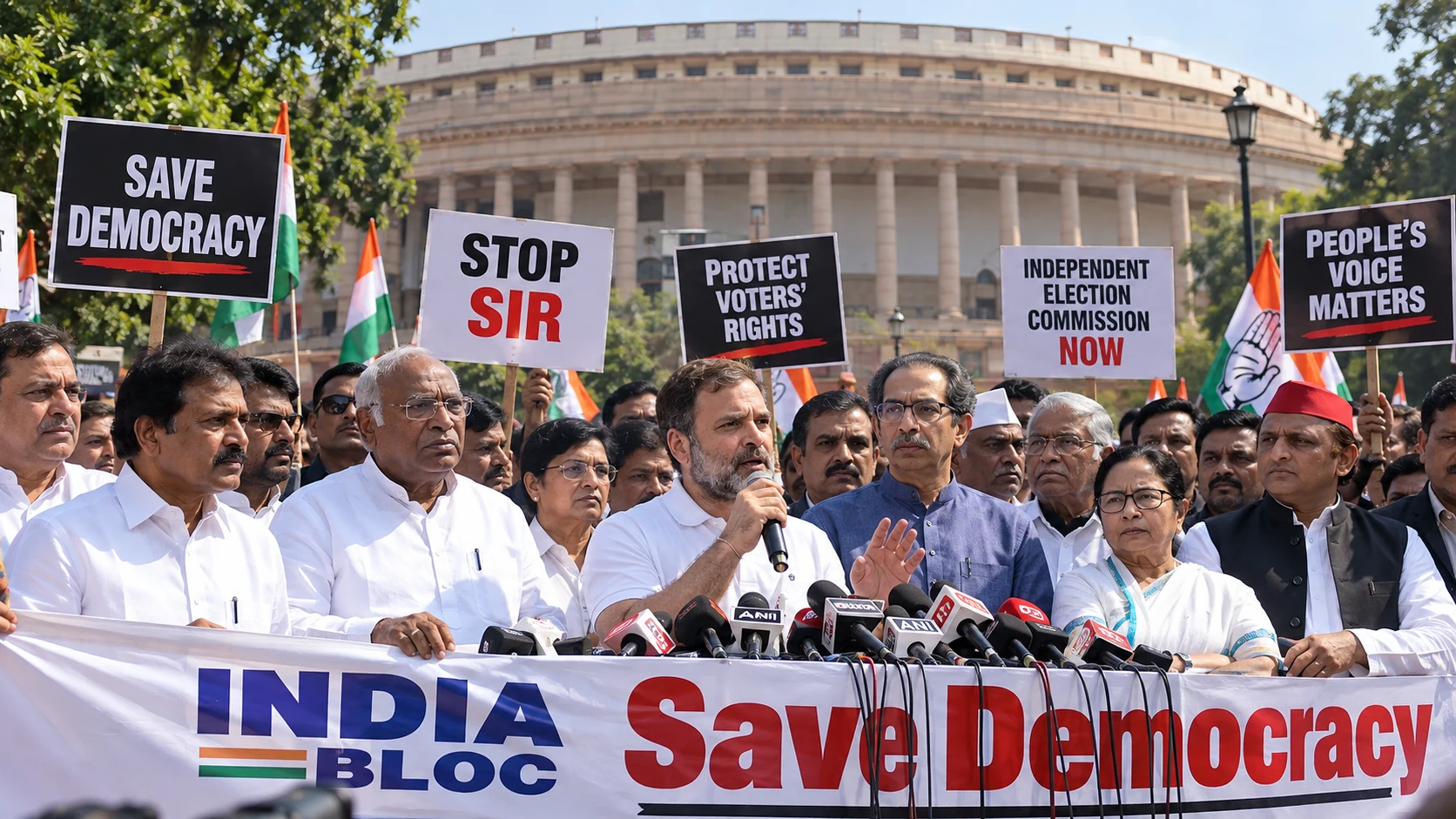
The INDIA bloc has announced nationwide “Save Democracy” marches from Oct. 2–8 over the Election Commission and SIR controversy, with MPs planning an Oct. 6 march to the EC. The BJP has rejected the allegations as political frustration after electoral defeats.
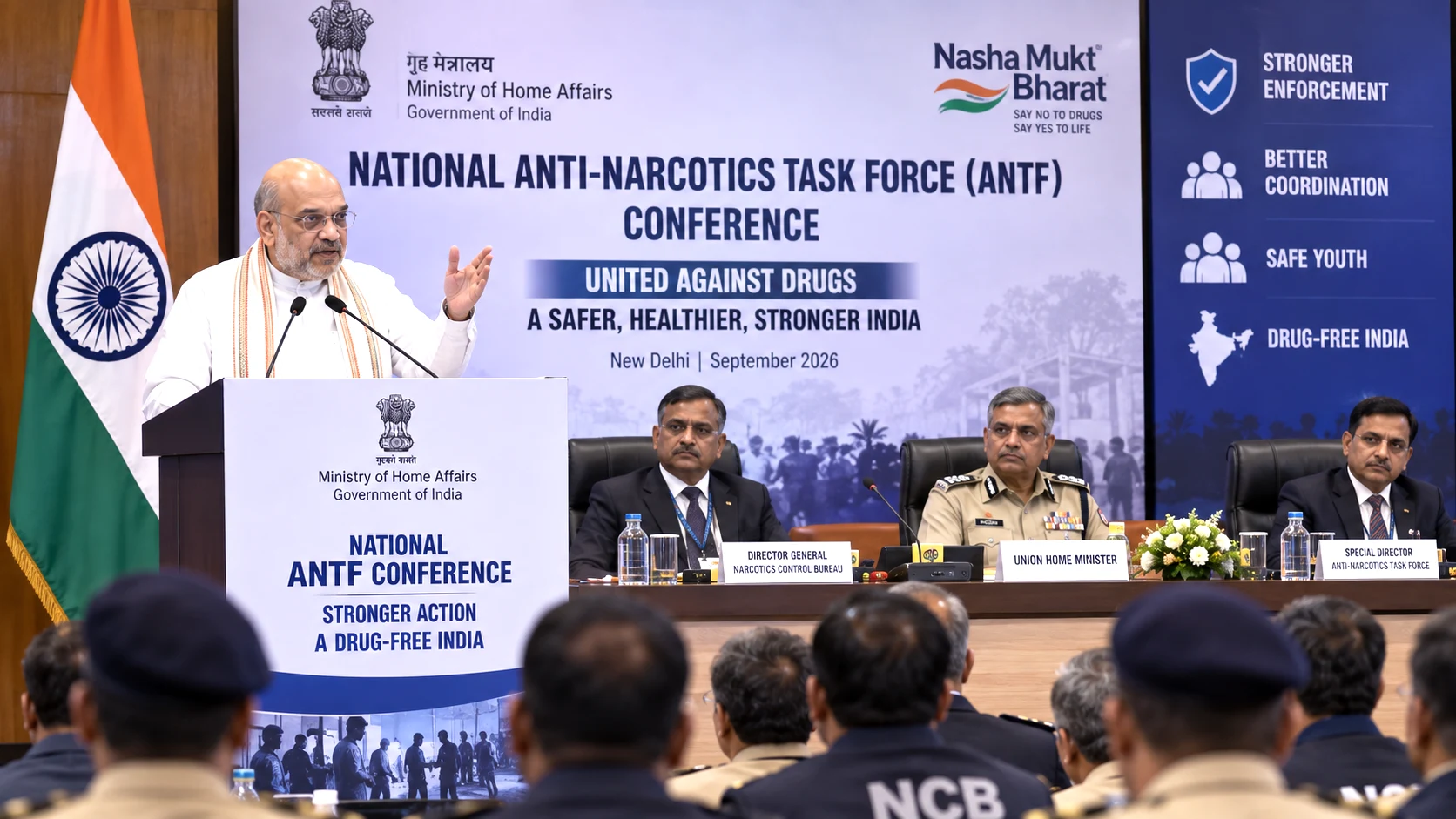
Home Minister Amit Shah has set December 31, 2029 as the government's target for uprooting India's drug trade. Here is what the 2026–29 narcotics roadmap proposes on cartels, synthetic drugs, darknet markets, financial investigations, prevention and rehabilitation.
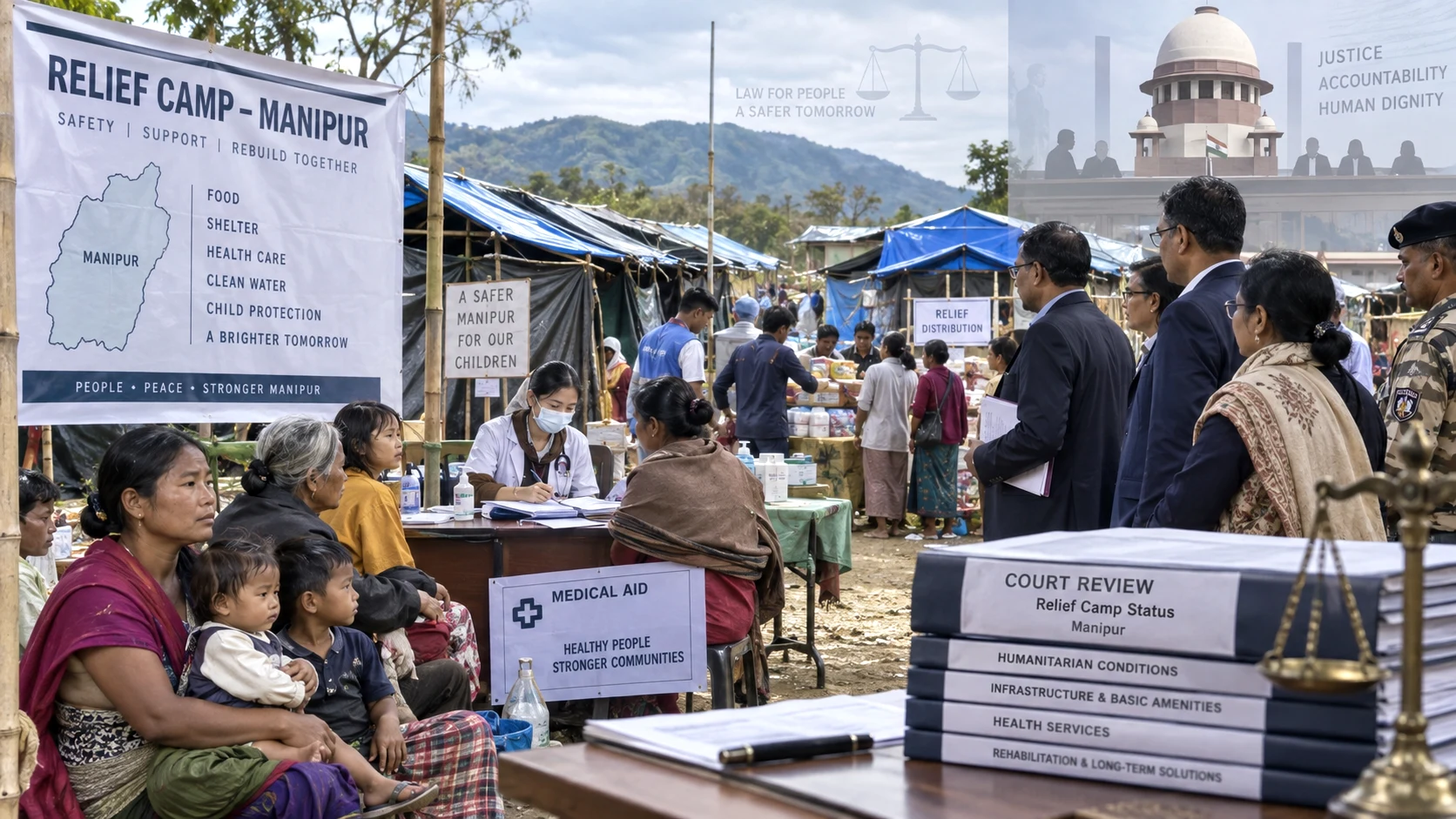
The Supreme Court has directed the Manipur Chief Secretary to provide details of 25 reported unnatural deaths of internally displaced people, including post-mortem findings and preventive measures. Material before the court separately referred to 640 deaths across relief camps in eight districts, of
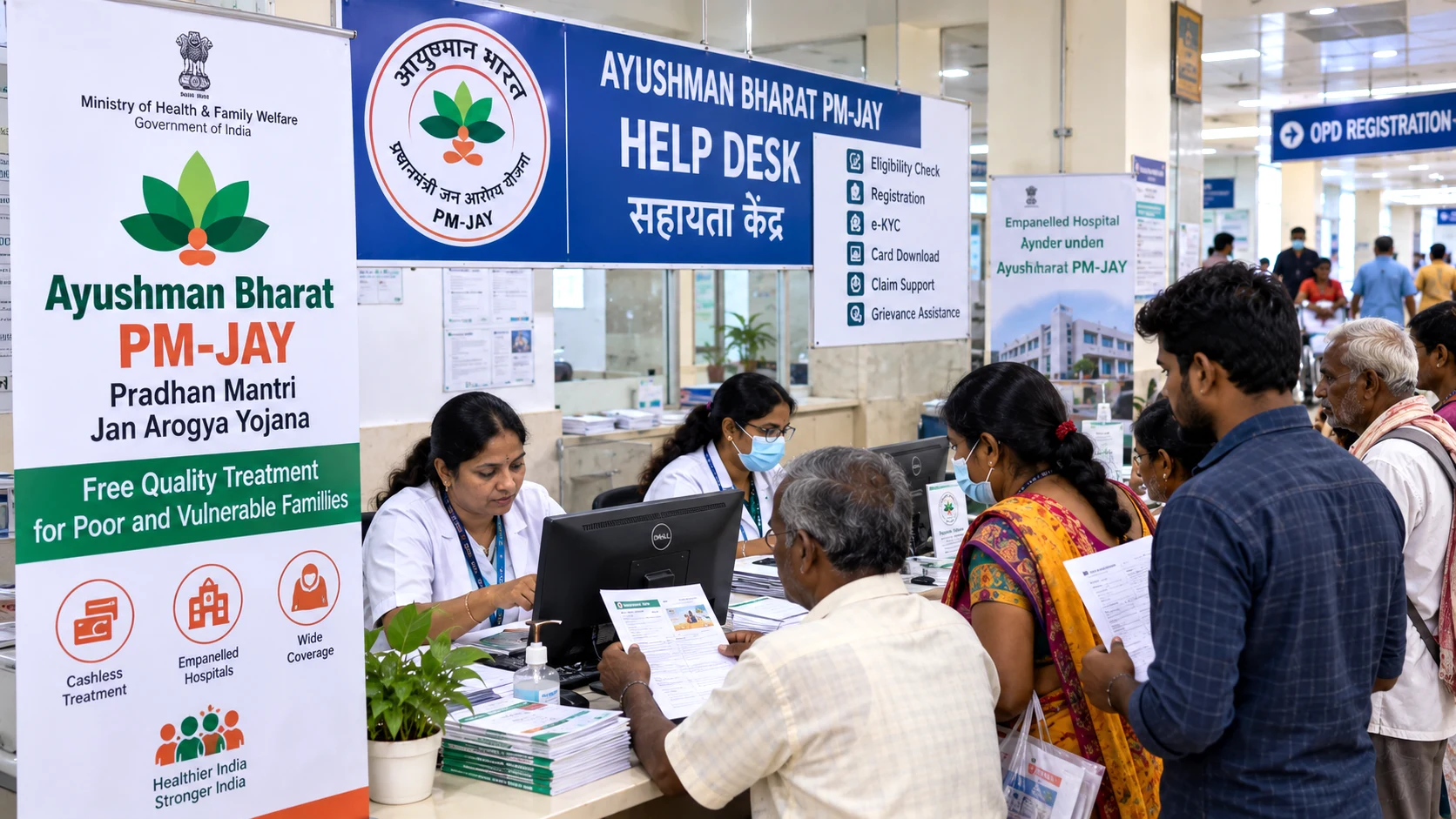
Ayushman Bharat PM-JAY has completed eight years. The government says more than 60 crore people have access to ₹5 lakh annual health cover, while 48.51 crore held Ayushman cards as of September 21. Here are the benefits, eligibility rules and key numbers.
The Supreme Court is scheduled to hear two pleas today challenging CEC Gyanesh Kumar's functioning, seeking his suspension and questioning the nationwide SIR process amid continuing protests and a dispute over internal Election Commission decisions.



0 Comments