Supreme Court Sets POCSO Safeguards in Child Custody Disputes: No Automatic Arrest, Expert Assessment Required
The Supreme Court has laid down safeguards for certain POCSO cases arising from matrimonial disputes, directing expert child assessment before arrest decisions and cautioning that a POCSO FIR alone cannot decide child custody.
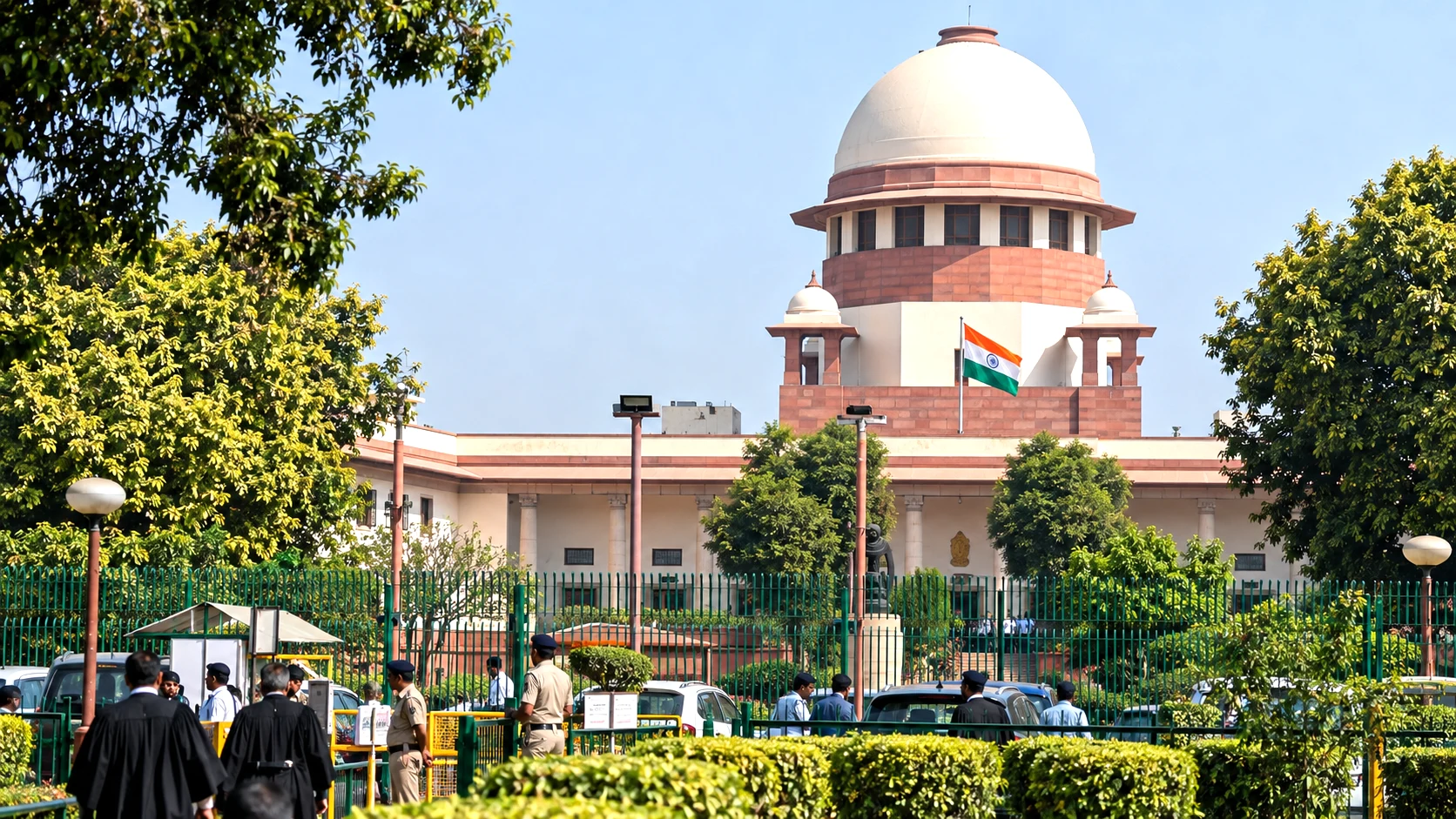
Supreme Court of India, which issued safeguards for certain POCSO cases arising during matrimonial and child-custody disputes
Table of Contents (24 sections)
The Supreme Court has laid down nationwide procedural safeguards for a specific category of cases in which allegations under the Protection of Children from Sexual Offences Act, 2012 (POCSO Act) arise during matrimonial or child-custody disputes.
In a judgment delivered on September 24, 2026, a Bench of Justices J.B. Pardiwala and K.V. Viswanathan said police should not automatically or hastily arrest an accused parent merely because a POCSO FIR has been registered when the allegation emerges against the backdrop of parental conflict.
Recommended Reading
Related Stories & In-Depth Guides
Curated editorial perspectives matching this topic.
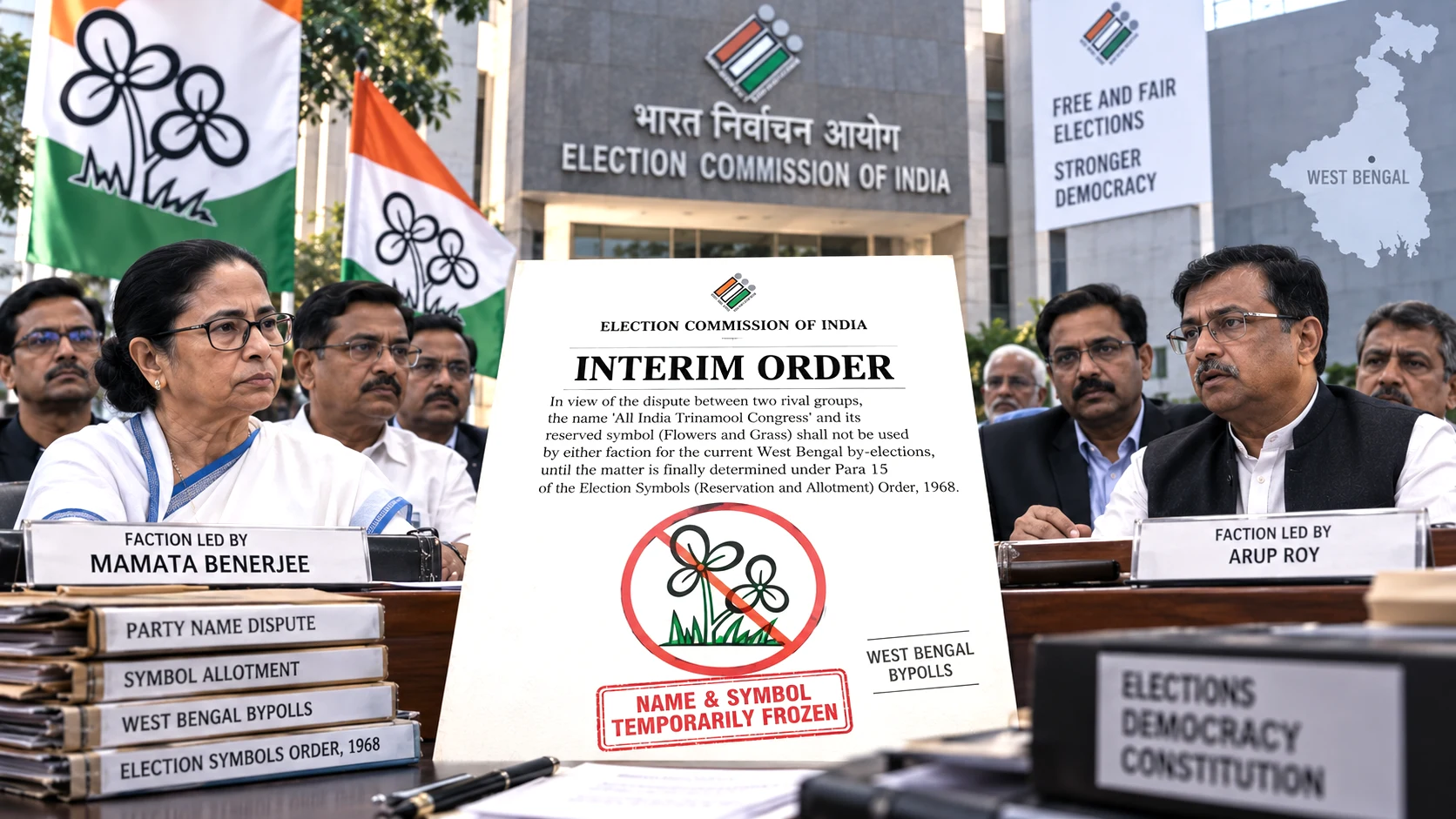
Neither the Mamata Banerjee group nor the rival faction formally represented before the Election Commission by Arup Roy can use the All India Trinamool Congress name or its reserved symbol in the October 6 bypolls. The order is temporary while the ECI decides the larger party-control dispute under P
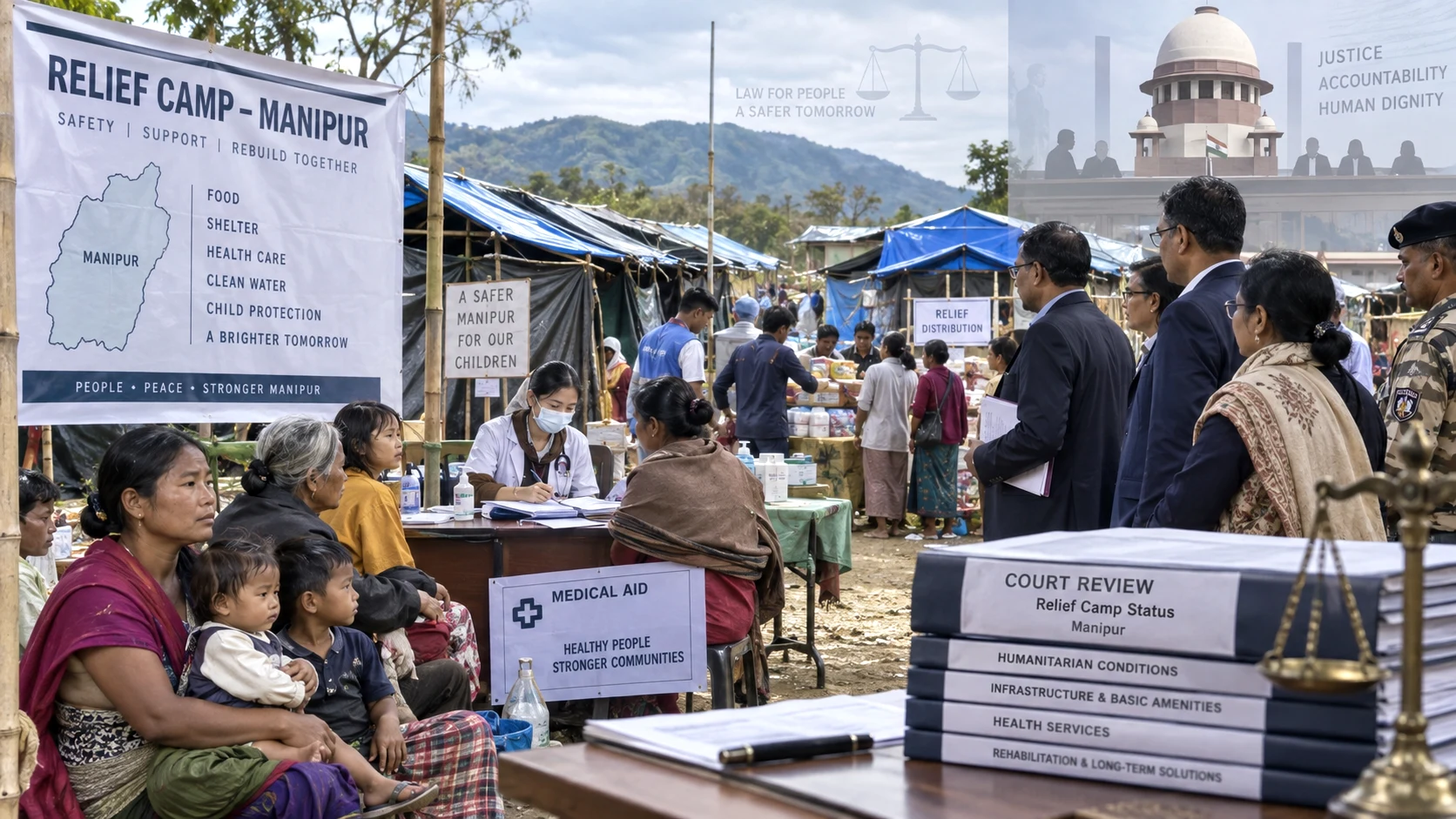
The Supreme Court has directed the Manipur Chief Secretary to provide details of 25 reported unnatural deaths of internally displaced people, including post-mortem findings and preventive measures. Material before the court separately referred to 640 deaths across relief camps in eight districts, of
The Court directed that, in the defined category of cases, the investigating officer or Special Juvenile Police Unit should ordinarily obtain assistance from an expert in child and adolescent psychiatry or clinical psychology before deciding whether there is sufficient legal basis to arrest the accused.
The judgment is ‘R’ v. ‘E’ & Anr. and connected matters, reported as 2026 INSC 1049. Justice K.V. Viswanathan authored the judgment.
The Court was careful to emphasise that its directions are intended to prevent misuse without weakening the protections available to children who genuinely experience sexual abuse. It described the task as a balancing exercise that should neither dilute the purpose of POCSO nor expose an accused parent to irreparable harm from an unwarranted arrest.
The Most Important Point: These Safeguards Do Not Apply to Every POCSO Case
The Supreme Court identified two threshold conditions, both of which must be satisfied before the special safeguards operate.
First, the alleged POCSO offence must have been committed by a parent or another family member living under the same roof as the child.
Second, there must be a matrimonial dispute of some form between the child's parents, whether or not that dispute is already before a court.
The Court also placed a duty on the police officer receiving the complaint to verify at the outset whether such a matrimonial dispute exists.
That distinction is crucial.
The judgment does not create a general rule requiring psychological evaluation before every arrest under the POCSO Act.
Nor does it mean allegations made against a parent during divorce proceedings should automatically be treated as false.
The safeguards operate only in the particular factual setting identified by the Supreme Court.
What Did the Supreme Court Say About Arrest?
The Court's central concern was automatic or hasty arrest.
It referred to Section 35 of the Bharatiya Nagarik Suraksha Sanhita, 2023, which governs circumstances in which police may arrest without a warrant, and reiterated that the existence of a legal power to arrest is different from whether exercising that power is justified in a particular case.
When the two threshold conditions are satisfied, the Court said an investigating officer should not immediately resort to coercive action simply because an FIR has been registered.
Instead, authorities must assess whether there is legally sufficient “reason to believe” that the accused committed the alleged offence before deciding on arrest.
That is not immunity from arrest.
If the evidence and circumstances justify coercive action, police retain the authority to arrest in accordance with law.
Child Psychiatry or Psychology Expert Must Ordinarily Be Involved
The Court introduced an additional safeguard to help authorities assess cases emerging from highly strained family relationships.
The investigating officer or the Special Juvenile Police Unit (SJPU) must ordinarily engage an expert in:
child and adolescent psychiatry, or
clinical psychology.
The expert should be engaged in consultation with the District Child Protection Unit (DCPU). Where a DCPU is unavailable, the District Legal Services Authority may be involved.
Experts should normally be selected from the register maintained under the POCSO Rules, 2020.
If an appropriately qualified expert is unavailable on that register, authorities may engage another suitably qualified specialist after consulting the DCPU.
Can Police Skip the Expert Assessment?
Yes, but only in an exceptional situation.
The Supreme Court said that where the material is sufficiently clear or “palpable”, an investigating officer may dispense with the specialist's involvement.
But the officer must record reasons in writing for doing so.
This exception prevents the safeguard from becoming a procedural obstacle where the circumstances clearly require urgent action.
It also reinforces why the ruling should not be portrayed as preventing police from acting promptly in genuine abuse cases.
How Must the Child Be Assessed?
The judgment places substantial emphasis on protecting the child during the process.
Where the Child Welfare Committee has appointed an eligible support person under the POCSO Rules, that person may accompany the child during the psychological or psychiatric assessment.
The Court said the assessment must be conducted independently and without improper influence from either a disgruntled parent or investigating authorities.
Most importantly, the evaluation must comply with the POCSO Act and POCSO Rules and must not expose the child to:
pressure;
unnecessary discomfort; or
repeated harassment.
The specialist is expected to submit the evaluation report as quickly as reasonably possible.
Does the Psychologist Decide Whether the Parent Is Guilty?
No.
This is another important limitation.
The Supreme Court explicitly said the investigating officer or SJPU is not bound by the expert's findings.
The assessment is only one tool to help police exercise their discretion carefully.
Authorities must consider the expert report together with:
the complaint;
surrounding circumstances;
other evidence collected;
statements;
and the broader investigation.
The specialist does not replace the police, the prosecution or the court.
Can the Expert Report Alone Close a POCSO Case?
No.
The Court specifically stated that an expert psychological or psychiatric assessment cannot be the sole basis for either filing a chargesheet or submitting a closure report.
The investigation must continue according to law.
This protects both sides of the process.
A favourable psychological report does not automatically end a case, while an adverse report does not by itself establish guilt.
What Happens With a Private POCSO Complaint Filed Directly in Court?
The Supreme Court extended a similar protection to private complaints presented directly before a POCSO Special Court under Section 33 of the Act.
Where the same two threshold conditions are satisfied, the Special Court should ordinarily involve an expert in child and adolescent psychiatry or clinical psychology before deciding whether there are sufficient grounds to:
take cognizance and issue summons to the accused.
The Special Court must consider the assessment along with the other circumstances before deciding whether proceedings should continue.
Again, the Court may dispense with expert involvement where the evidence is clear, but reasons must be recorded in writing.
Does a POCSO FIR Automatically Affect Child Custody?
The Supreme Court said it should not.
Where a POCSO allegation is made against a parent during ongoing custody or guardianship litigation, the mere registration of the case cannot automatically be treated as proof that the allegation is true.
A Family Court or other court considering custody must examine the relevant material and assess the circumstances on a case-by-case basis.
The Supreme Court reiterated that a POCSO FIR should not itself become a device for automatically defeating a parent's legitimate claim to custody or guardianship.
That does not mean Family Courts should ignore genuine child-protection concerns.
Rather, courts must apply independent judicial scrutiny instead of treating the existence of an FIR as conclusive evidence.
What Must Remand and Bail Courts Do?
The judgment adds another layer of scrutiny after police action.
Courts dealing with remand and bail in cases falling within the identified category should examine whether the investigating officer complied with the statutory requirements and the safeguards laid down by the Supreme Court.
This includes considering whether police properly evaluated the strained relationship between the parents and whether the decision to arrest was supported by the circumstances.
The Court described this review as an additional safeguard against prolonged harm from an unwarranted arrest.
District Child Protection Units Get a New Responsibility
The Supreme Court directed DCPUs across India to update the expert registers they maintain under Rule 5 of the POCSO Rules, 2020.
Those registers should include qualified experts in:
child and adolescent psychiatry and clinical psychology.
The direction is important because the safeguard can operate effectively only if police and courts can quickly identify appropriately trained professionals.
The judgment is also to be circulated through High Courts and state and Union Territory administrations for implementation.
What Was the Case Before the Supreme Court?
The dispute arose from a prolonged matrimonial and custody battle between parents identified only as ‘R’ and ‘E’ to protect the child's privacy.
Their daughter, identified as ‘M’, was born in 2015. Following years of matrimonial litigation, a Bengaluru Family Court awarded custody to the father in 2022.
The Karnataka High Court upheld that decision in January 2023, while providing visitation rights to the mother. The Supreme Court later declined to interfere with that custody order.
The child was subsequently handed over to the father.
In March 2024, an FIR was registered alleging sexual misconduct against the child by the father, along with other offences involving members of his family.
Why Did the CBI Become Involved?
Given the seriousness of the allegations and the wider custody dispute, the Supreme Court transferred the investigation to the Central Bureau of Investigation in April 2026.
The CBI created a specialist team that included senior investigators as well as experts from NIMHANS in child and adolescent psychiatry and clinical psychology.
The investigation examined people who had interacted regularly with the child, including teachers, a school counsellor, domestic staff and neighbours.
Investigators also reviewed CCTV footage and expert assessments.
The CBI eventually concluded that the allegations were not made out and that the matter was not fit for prosecution.
What Did the Supreme Court Ultimately Do in the Case?
The Supreme Court accepted the CBI's conclusions and quashed the POCSO FIR against the father.
It held that continuing the proceedings would amount to an abuse of process and concluded, on the facts of this particular case, that the FIR had been used as a foundation for attempting to alter the existing custody arrangement.
The Court restored legal custody to the father.
Because the child's physical custody had remained with the mother for a substantial period, however, the Court did not order an abrupt physical transfer.
Instead, it directed the Bengaluru Family Court to supervise a structured re-integration process, assisted by specialists who had participated in the CBI investigation.
That distinction reflects the governing principle in custody cases: the welfare of the child remains central.
Does the Judgment Say POCSO Is Commonly False?
No responsible reading of the ruling should make that claim.
The Supreme Court expressed concern about false allegations being used in some bitter matrimonial disputes and described that pattern as troubling.
But the Court simultaneously stressed that precautions against misuse must not dilute the purpose, protections or stringency of the POCSO Act.
POCSO remains India's principal special law designed to protect children from sexual offences.
The judgment addresses a narrow procedural problem: how authorities should proceed when serious allegations emerge in circumstances where parental conflict may complicate assessment of the complaint.
What Does Section 22 of the POCSO Act Have to Do With This?
The Court noted that POCSO already contains a provision dealing with certain false complaints or false information.
However, it observed that by the time such a provision can operate, substantial harm may already have occurred to a wrongly accused person through detention, stigma or effects on family litigation.
That is why the Court concluded that safeguards were needed at an earlier procedural stage, especially before coercive action such as arrest.
Do These Safeguards Apply to Existing Cases?
Yes, but only at the stages specified by the Court.
For cases arising from FIRs, the safeguards apply where the investigation was still in progress on September 24, 2026, the date of the judgment.
For private complaints filed under Section 33 of the POCSO Act, they apply where summons had not yet been issued as of that date.
The ruling therefore has immediate relevance beyond the particular family whose dispute reached the Supreme Court.
What This Means for Parents in Custody Disputes
For a parent accused under POCSO during a matrimonial dispute, the ruling does not mean that arrest is impossible or that the allegation will be presumed false.
It means police must comply with the law governing arrest and, where the Supreme Court's threshold conditions are satisfied, ordinarily obtain an independent expert assessment before reaching a decision on coercive action.
For a parent reporting genuine suspected abuse, the judgment does not remove the right to make a complaint or weaken the investigative obligation.
The Court's stated objective is to preserve effective child protection while adding procedural safeguards where family conflict creates a particular risk of misuse.
What This Means for Family Courts
Family Courts should not mechanically change custody arrangements merely because a POCSO case has been registered against one parent.
They must examine:
the investigation material;
the circumstances in which the allegation arose;
the child's welfare;
and whether there is a prima facie basis to treat the complaint as genuine or potentially baseless.
No universal custody outcome follows from the judgment.
The Court explicitly recognised that different cases present different facts and that rigid rules would be impractical.
Why This Judgment Matters
The ruling sits at the intersection of three sensitive legal interests:
protecting children from sexual abuse, protecting the integrity of criminal investigations, and ensuring custody litigation is not distorted by untested allegations.
The Supreme Court's answer is procedural rather than substantive.
It has not reduced the offences or punishments contained in POCSO.
It has instead created an additional decision-making safeguard where the accusation arises from a defined family-conflict context.
For parents, police, child-protection units, Family Courts and POCSO Special Courts, the judgment is likely to become an important reference whenever criminal allegations and custody proceedings overlap.
Latest Verified Position
As of September 25, 2026, the Supreme Court's position can be summarised as follows:
Issue
Supreme Court safeguard
Who is covered?
Parent or co-residing family member accused under POCSO where a matrimonial dispute exists between the child's parents
Automatic arrest?
No; police must independently satisfy statutory arrest requirements
Expert involvement
Child psychiatrist or clinical psychologist ordinarily required to aid the arrest decision
Who arranges expert?
IO/SJPU with DCPU, or DLSA where DCPU is unavailable
Can expert be skipped?
Yes, exceptionally, where material is clear and written reasons are recorded
Is expert report binding?
No
Can report alone close or prosecute case?
No
Direct complaint to POCSO Court
Similar expert safeguard before cognizance/summons
Effect on custody
FIR alone cannot automatically defeat a parent's custody claim
Remand/bail courts
Should check compliance with safeguards
Pending FIR investigations
Safeguards apply if investigation was ongoing on Sept. 24, 2026
Pending private complaints
Apply where summons had not yet been issued
Frequently Asked Questions
Did the Supreme Court ban arrests in POCSO cases involving parents?
No. The Court did not create immunity from arrest. It directed police not to make hasty arrests in the defined category and ordinarily to consider an expert child assessment along with other evidence before deciding whether statutory grounds for arrest exist.
Does this rule apply to every POCSO case?
No. Both threshold conditions must exist: the accused must be a parent or family member living with the child, and a matrimonial dispute must exist between the child's parents.
Is a child psychologist mandatory before every arrest?
Not every POCSO arrest. In cases meeting the threshold conditions, expert involvement is the ordinary rule. It may be dispensed with exceptionally where material is clear and reasons are recorded in writing.
Can a psychological assessment prove that abuse did or did not happen?
The Supreme Court did not treat the assessment as conclusive proof. The report is not binding on police and cannot alone justify a chargesheet or closure report.
Does filing a POCSO FIR automatically stop a parent from getting custody?
No. The Court said mere registration of a POCSO case should not automatically be treated as proof of the allegation or used by itself to defeat a custody claim.
What happens if the complaint is genuine?
The POCSO investigation continues under law. The Court expressly said its safeguards should not weaken the Act's purpose or protections for genuine child victims.
What is the case name?
The judgment is ‘R’ v. ‘E’ & Anr. and connected matters, neutral citation 2026 INSC 1049, decided on September 24, 2026.
Who delivered the judgment?
The Bench comprised Justices J.B. Pardiwala and K.V. Viswanathan, with Justice Viswanathan authoring the judgment.
Do the safeguards apply to pending cases?
For FIR-based cases, yes where investigation remained pending on September 24. For private complaints under Section 33, they apply where summons had not yet been issued on that date.
Bottom Line
The Supreme Court has set procedural safeguards for a specific category of POCSO cases arising from matrimonial disputes. Police should not automatically arrest an accused parent and must ordinarily obtain an expert child assessment before deciding on arrest.
A POCSO FIR alone cannot decide child custody. The safeguards apply only when the Court’s threshold conditions are met and do not weaken protections for genuine child victims.
Key Takeaway
No automatic arrest in defined POCSO-custody cases.
The Rajatheertha Team publishes news, explainers, guides and updates across India and the world. Our coverage follows Rajatheertha's editorial, verification and corrections standards.
The Election Commission’s interim freeze on the Trinamool Congress name and ‘Flowers and Grass’ symbol has pushed rival factions to temporary identities. Mamata Banerjee has challenged the order in the Supreme Court, while the October 6 Nandigram bypoll has been further complicated by the withdrawal
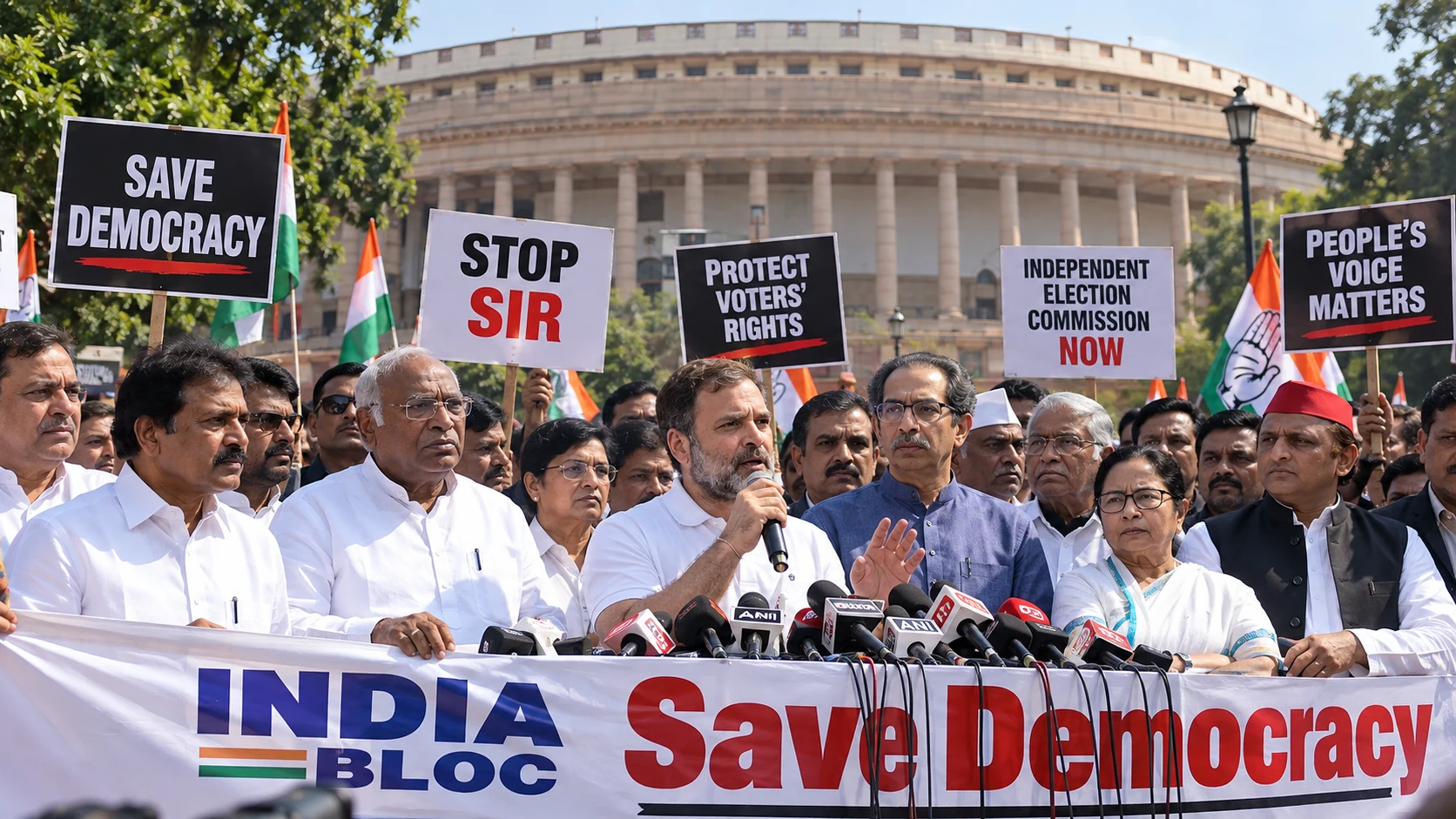
The INDIA bloc has announced nationwide “Save Democracy” marches from Oct. 2–8 over the Election Commission and SIR controversy, with MPs planning an Oct. 6 march to the EC. The BJP has rejected the allegations as political frustration after electoral defeats.
The Supreme Court is scheduled to hear two pleas today challenging CEC Gyanesh Kumar's functioning, seeking his suspension and questioning the nationwide SIR process amid continuing protests and a dispute over internal Election Commission decisions.
Home Minister Amit Shah has set December 31, 2029 as the government's target for uprooting India's drug trade. Here is what the 2026–29 narcotics roadmap proposes on cartels, synthetic drugs, darknet markets, financial investigations, prevention and rehabilitation.
Tata Trusts has intensified its challenge to N. Chandrasekaran’s third term as chairman of Tata Sons, declaring the September 17 board resolution invalid and arguing that the required support of its nominee directors was never obtained. Tata Sons’ board approved the reappointment by 4-1, setting up
Delhi's winter anti-pollution rules will cap physical attendance at 50% in Delhi government and private offices from November 1 to January 31. Essential services are exempt. Parking charges will double, while a separate no-PUCC-no-fuel rule starts across NCR from October 1.





0 Comments