Table of Contents (35 sections)
UPI customers will not be charged the new Merchant Discount Rate, or MDR, when making payments, Finance Minister Nirmala Sitharaman has clarified amid widespread confusion over India's revised UPI payment framework.
Finance Minister Nirmala Sitharaman says the new UPI MDR is not a tax and cannot be passed on to customers. Here is who actually pays, what changes from October 15 and which UPI transactions remain free.

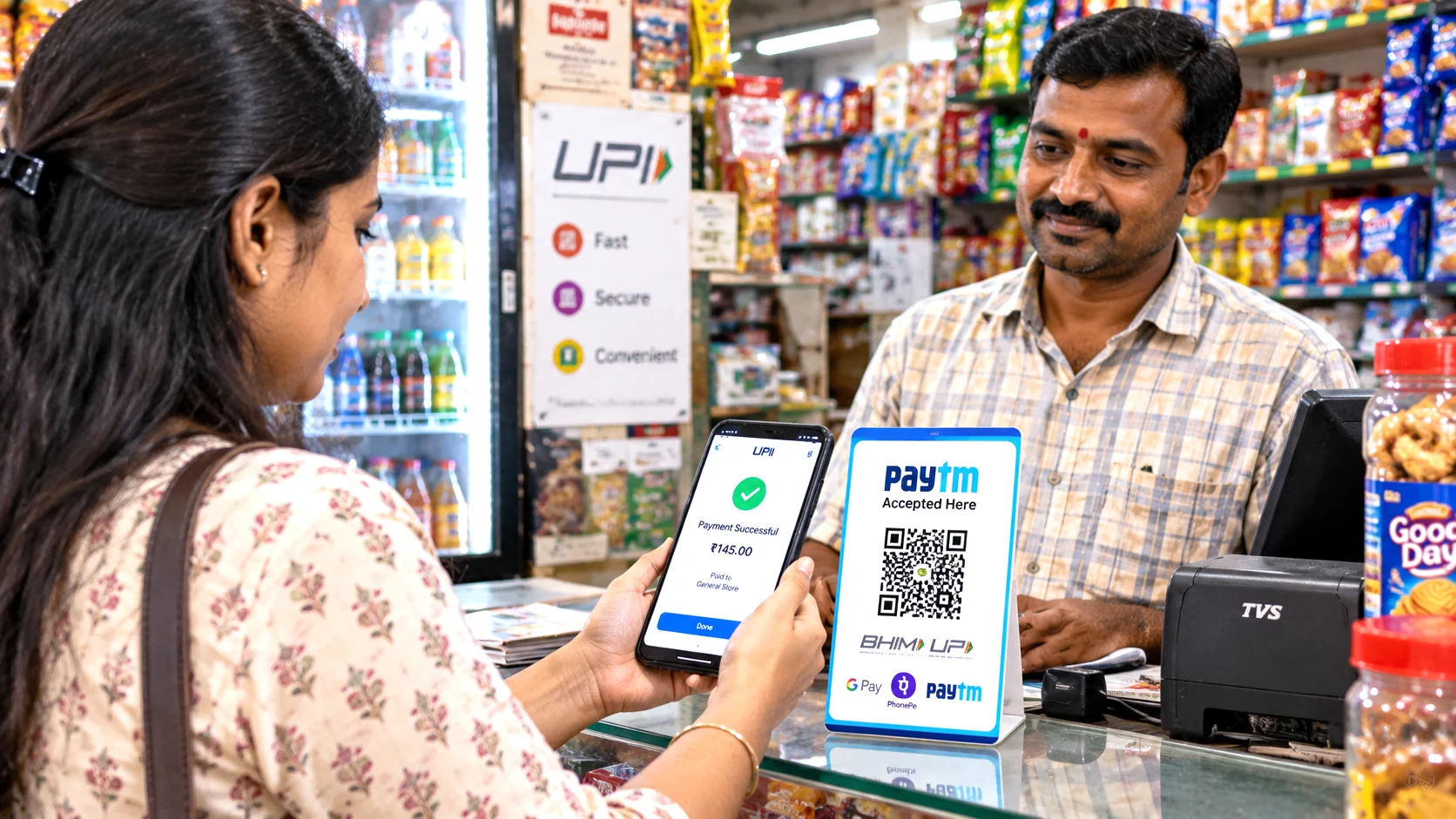
UPI customers will not be charged the new Merchant Discount Rate, or MDR, when making payments, Finance Minister Nirmala Sitharaman has clarified amid widespread confusion over India's revised UPI payment framework.
Curated editorial perspectives matching this topic.
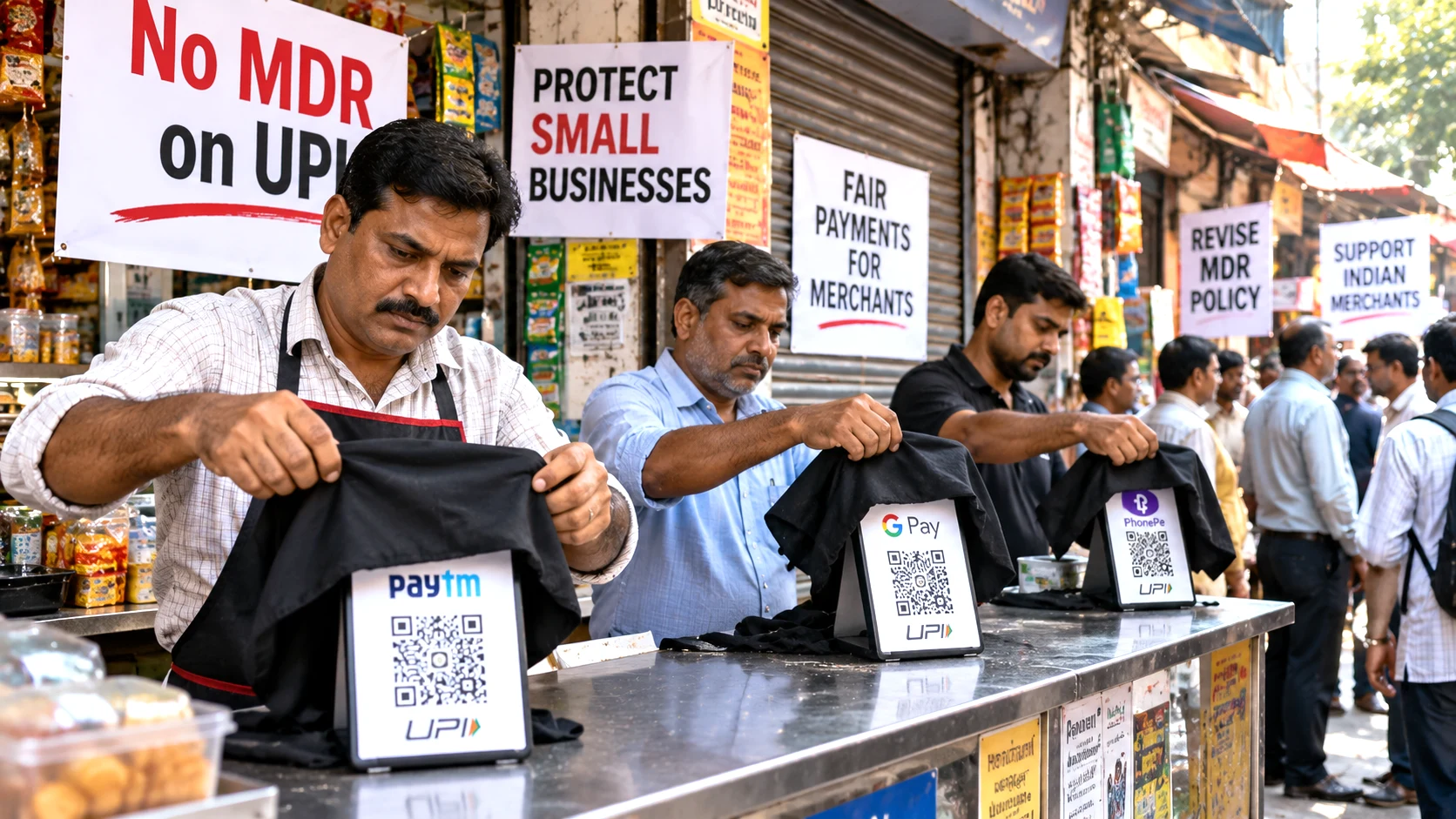
Several trader associations have called for a voluntary “No UPI Day” on October 2 against the new MDR on some merchant UPI payments above ₹2,000. UPI itself will not shut down, customers will not pay the MDR, and most transactions remain free.
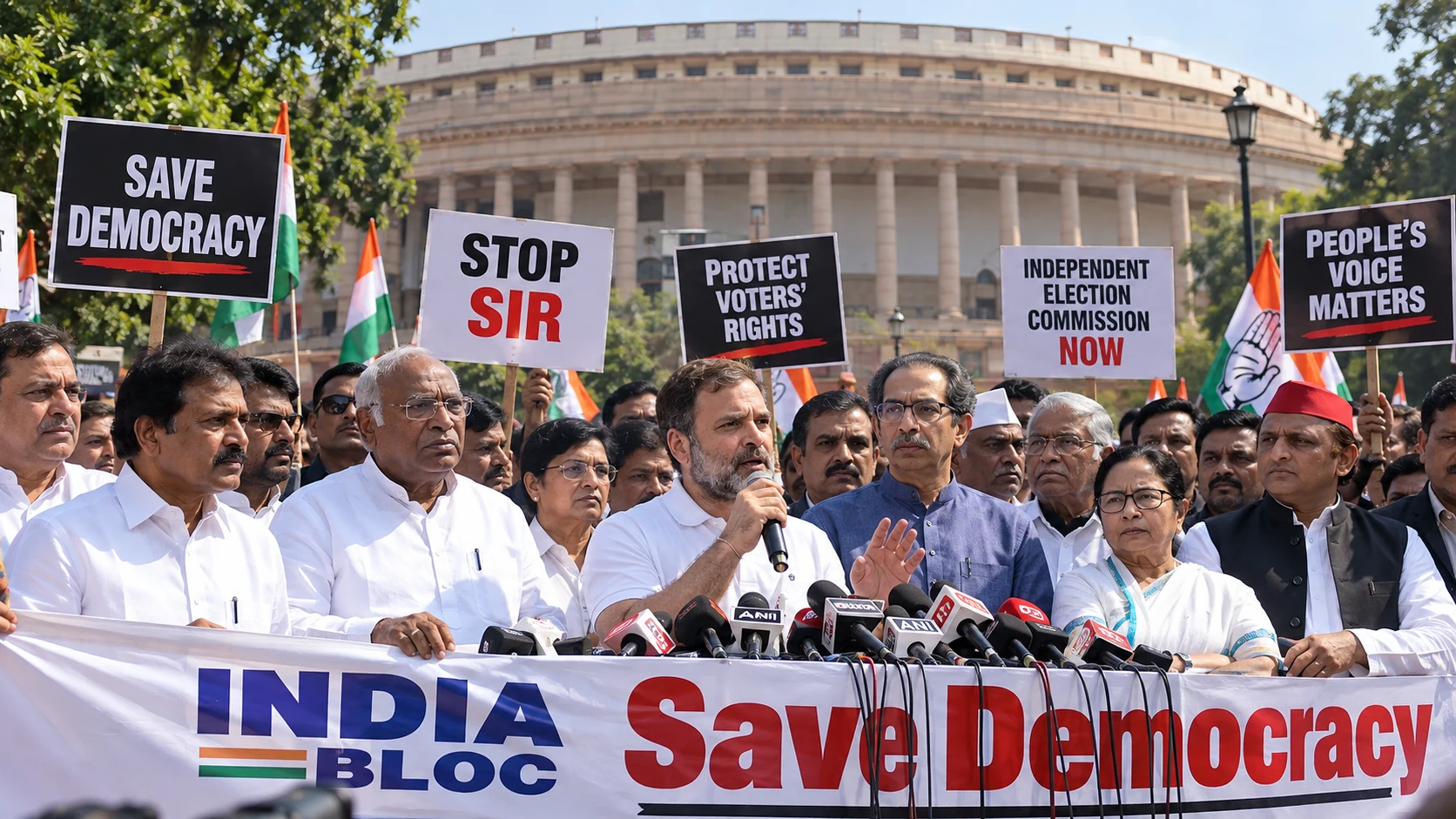
The INDIA bloc has announced nationwide “Save Democracy” marches from Oct. 2–8 over the Election Commission and SIR controversy, with MPs planning an Oct. 6 march to the EC. The BJP has rejected the allegations as political frustration after electoral defeats.
The Finance Minister said the MDR applying to specified merchant transactions is not a tax, cess or surcharge, and the money collected does not go to the Government of India.
Instead, MDR is a payment-processing charge distributed within the digital-payments ecosystem among participating entities such as banks and payment-service providers.
For an ordinary customer, that means the central rule remains straightforward:
You should not be charged an extra UPI transaction fee simply because you pay a merchant using UPI.
The government framework also explicitly says merchants cannot pass the MDR directly to buyers as an additional UPI charge.
The revised MDR framework is scheduled to take effect from October 15, 2026.
| Question | Answer |
|---|---|
| Will customers pay UPI MDR? | No |
| Is MDR a government tax? | No |
| Are P2P UPI transfers charged? | No, they remain free |
| Are merchant payments up to ₹2,000 charged? | No MDR |
| Standard MDR above ₹2,000 | 0.4% for specified P2M transactions |
| Who bears the MDR? | Merchant/payment ecosystem |
| MDR cap | ₹300 for transactions of ₹75,000 and above |
| Small merchant exemption | P2PM merchants receiving up to ₹1 lakh/month remain zero-MDR |
| Effective date | October 15, 2026 |
| Can UPI apps add a platform fee? | No, under the published framework |
Speaking about the controversy surrounding the revised UPI framework, Finance Minister Nirmala Sitharaman said the MDR applicable to specified UPI merchant payments above ₹2,000 is not a government levy.
She said the charge is neither a tax nor a cess, and that the amount does not flow into government revenue.
Sitharaman described it instead as a commercial arrangement within the payment-processing ecosystem.
She also rejected the suggestion that customers would have to pay the charge.
The Finance Minister compared the arrangement with card-payment MDR, where merchants typically bear payment-processing costs rather than adding a separate charge to the consumer's bill.
No, according to the government's published framework.
The Department of Financial Services' official FAQ states that consumers making UPI payments will not face any transaction charges.
It also states that UPI application providers cannot impose a platform fee or another payment charge on ordinary UPI transactions.
That applies whether you use:
The specific app does not change who the MDR is intended to be charged to under the framework.
MDR stands for Merchant Discount Rate.
It is a payment-processing fee associated with a merchant accepting a digital payment.
Rather than the customer paying the fee separately, the merchant-payment ecosystem bears the processing cost.
The government says revenue generated from the UPI MDR will help support:
No.
This is the point the Finance Minister has repeatedly emphasised.
The Ministry of Finance says MDR is neither a tax nor a government charge.
It is distributed among payment-ecosystem participants instead of being collected by the Union government or NPCI as tax revenue.
This distinction matters because social-media posts have sometimes described the new system as a “UPI tax”.
That description is misleading.
No.
The 0.4% rate applies only to specified Person-to-Merchant, or P2M, transactions above ₹2,000.
It does not mean that every UPI payment above ₹2,000 attracts a customer charge.
The payment is still free to the customer.
The merchant-side MDR applies depending on the merchant's classification and transaction category.
For an eligible P2M merchant transaction of ₹3,000, the standard 0.4% MDR works out to:
₹3,000 × 0.4% = ₹12
That ₹12 is the merchant-side MDR.
The official FAQ says the merchant pays ₹12, while the consumer pays the normal ₹3,000 purchase amount.
The customer should not see:
₹3,000 + ₹12 UPI fee
added solely because UPI was chosen.
For an eligible transaction of ₹50,000:
0.4% of ₹50,000 = ₹200
The official example assigns that ₹200 MDR to the merchant, not the customer.
Ordinarily:
0.4% of ₹1,00,000 = ₹400
But the new framework caps standard MDR at ₹300 per transaction for payments of ₹75,000 and above.
So an eligible ₹1 lakh transaction would carry a maximum merchant-side MDR of ₹300 rather than ₹400.
Again, the framework says that charge cannot simply be added to the customer's bill as a UPI surcharge.
Yes.
Merchant transactions of ₹2,000 or less remain zero-MDR under the new framework.
This means common payments such as:
do not attract the new standard merchant MDR.
That remains free.
The revised MDR framework does not apply to Person-to-Person, or P2P, transfers.
The government says all P2P UPI transfers remain free regardless of the amount, subject to normal bank and UPI transaction limits.
So sending:
does not trigger MDR.
No.
This is one of the biggest areas of public confusion.
The ₹2,000 threshold relates to specified merchant transactions, not ordinary person-to-person transfers.
A P2P transfer of more than ₹2,000 does not suddenly become chargeable under the MDR framework.
Many small merchants remain exempt.
Under the P2PM, or Person-to-Person-Merchant, framework, small merchants receiving up to ₹1 lakh per month through UPI QR codes continue to receive zero-MDR protection.
The official FAQ says this is intended to protect categories such as:
Importantly, receiving an individual payment above ₹2,000 does not automatically remove a properly classified small P2PM merchant from the exemption.
The government estimates that only about 4% of merchant UPI transactions will come under the MDR framework.
Approximately 96% of P2M transactions are expected to remain unaffected, either because they fall below ₹2,000 or qualify for exemptions.
That is why the changes should not be described as a blanket fee on UPI.
Under the published framework, no.
The government's FAQ explicitly states that enterprise merchants cannot pass MDR charges on to buyers when accepting UPI payments.
Banks have also been advised to make sure merchants do not shift the MDR directly onto consumers.
Government sources said on September 24 that banks would monitor this issue and that the Indian Banks' Association is expected to develop a mechanism aimed at preventing merchants from collecting an additional UPI payment charge from customers.
A customer should first check whether the merchant is specifically adding an extra amount only because UPI is being used.
The government's position is that customers should not bear the MDR.
The official framework says buyers should pay the posted price rather than an additional MDR surcharge.
Banks and merchant associations are expected to work on implementation and monitoring before the new framework takes effect.
Customers should preserve the bill or payment details if an additional UPI-specific charge is demanded and use the relevant bank/payment-provider grievance channel where appropriate.
That requires a more careful distinction.
The framework says merchants cannot directly pass the MDR on as a UPI-specific customer charge.
The government also says merchants are expected to absorb the relatively small processing cost in the same way that businesses normally account for other operating expenses.
However, general retail pricing decisions can be influenced by many business costs.
Therefore, it would be too broad to claim that MDR can never have any indirect economic effect on business pricing.
The important consumer rule is that there should not be a separate “UPI MDR charge” added at checkout merely because the customer selects UPI.
Not for ordinary UPI payments under this framework.
The official government FAQ says UPI app providers shall not charge a platform fee or another charge for payments made through UPI.
This is separate from fees that could potentially apply to non-UPI services offered inside an app.
For example, an app may provide unrelated financial or commercial services governed by different rules.
The finalised MDR framework and transaction thresholds are scheduled to take effect on October 15, 2026.
The gap between the September announcement and implementation is intended to allow:
to update their systems before the rules take effect.
The standard 0.4% rate does not apply uniformly to every category.
For specified essential or thin-margin sectors such as:
the framework provides for a flat ₹5 merchant MDR on eligible payments above ₹2,000.
This ₹5 is still a merchant-side processing charge.
It is not meant to become an additional customer UPI fee.
Certain capital-market transactions have a different rate.
UPI payments relating to:
are subject to a stated MDR of 0.02%, capped at ₹300 per transaction.
Again, MDR applies within the payment ecosystem rather than as a separate charge imposed on the individual making the UPI payment.
The Department of Financial Services FAQ says automated recurring UPI instructions such as UPI Mandates or AutoPay do not carry the prescribed MDR covered by this framework.
It cites examples including recurring utility payments and subscriptions.
Specific products can still have their own underlying service prices, but the recurring UPI instruction itself is treated separately from the new P2M MDR framework.
Credit-card-linked UPI transactions are different.
The official FAQ states that UPI transactions funded through products such as RuPay credit cards linked to UPI or pre-sanctioned credit lines operate under separate credit-product rules.
The new 0.4% framework discussed here specifically concerns direct account-to-merchant UPI transactions.
Customers should therefore not assume that every type of payment displaying a UPI interface has identical backend pricing rules.
This requires an important distinction.
The MDR itself is not a tax.
The customer's full UPI payment amount is not being turned into a new “UPI tax”.
A separate question concerns the tax treatment of the payment-processing service represented by MDR.
Government sources reported on September 24 that the GST Council may consider the GST treatment of MDR.
That issue is different from imposing GST on the customer's entire UPI transfer.
Readers should therefore be cautious with claims such as “18% GST on all UPI payments above ₹2,000”. That framing is misleading.
The government says UPI has grown to a scale where maintaining the system requires substantial ongoing spending.
The Department of Financial Services' FAQ cites industry estimates of roughly ₹20,000 crore annually for areas such as:
The stated policy objective is to create a more sustainable commercial funding mechanism while keeping ordinary users and most small merchants protected from direct payment charges.
According to the official September FAQ, UPI processed about 2,451 crore transactions worth ₹29.9 lakh crore in August 2026.
That scale explains why even a very small merchant-processing rate can generate substantial ecosystem revenue.
It also explains why changes to UPI pricing attract significant public attention.
The government says MDR will be distributed among entities supporting the UPI transaction chain.
These can include:
The stated purpose is to fund continued improvements in infrastructure, service quality, fraud prevention and cybersecurity.
For the consumer making a normal UPI payment: yes, under the announced framework.
The October 15 change concerns selected merchant-side processing charges.
It does not introduce a blanket transaction fee for individual UPI users.
In simple terms:
| Customer payment | Standard merchant MDR | Customer MDR |
|---|---|---|
| ₹500 | ₹0 | ₹0 |
| ₹2,000 | ₹0 | ₹0 |
| ₹3,000 | ₹12 | ₹0 |
| ₹10,000 | ₹40 | ₹0 |
| ₹50,000 | ₹200 | ₹0 |
| ₹75,000+ | Max ₹300 | ₹0 |
The standard examples assume an eligible P2M transaction and do not override special merchant classifications or sector-specific rates.
A headline saying “UPI transactions above ₹2,000 will be charged 0.4%” leaves out three crucial facts.
First, the rule concerns specified merchant payments, not P2P transfers.
Second, the MDR is charged to the merchant/payment ecosystem rather than the consumer.
Third, small merchants and certain transaction categories receive exemptions or special rates.
A more accurate summary is:
From October 15, specified merchant-side UPI transactions above ₹2,000 will attract MDR, while customers continue to make UPI payments without an MDR charge.
Before the October 15 rollout, several implementation issues remain worth watching.
Government sources say the Finance Ministry plans consultations involving:
The IBA is also expected to develop consumer-awareness measures and mechanisms aimed at preventing direct pass-through of MDR to UPI users.
The treatment of GST on the merchant processing fee is another area to monitor separately.
As of September 25:
Is UPI becoming chargeable from October 15, 2026?
Not for ordinary consumers. The new MDR applies to specified merchant-side transactions. Customers continue to make UPI payments without an MDR transaction charge.
Will I pay 0.4% if I make a UPI payment above ₹2,000?
No. The 0.4% MDR is a merchant-side charge for eligible P2M payments above ₹2,000. It is not a 0.4% consumer fee.
Is UPI MDR a tax?
No. Finance Minister Nirmala Sitharaman and the Ministry of Finance have said MDR is neither a tax nor a government charge.
Will sending money to friends or family cost money?
No. Person-to-person UPI transfers remain free regardless of the amount, within normal transaction limits.
Will UPI payments below ₹2,000 stay free?
Yes. Merchant transactions up to ₹2,000 remain zero-MDR.
Can a shopkeeper charge me 0.4% extra for UPI?
The government's framework says merchants cannot pass MDR charges directly to customers while accepting UPI.
Will PhonePe or Google Pay start charging a UPI platform fee?
The official framework says UPI app providers cannot levy a platform fee or another charge on UPI payments.
What is the maximum UPI MDR?
For standard eligible P2M payments of ₹75,000 or more, MDR is capped at ₹300 per transaction.
Do small merchants have to pay MDR?
Qualifying P2PM merchants receiving up to ₹1 lakh a month through UPI QR continue to enjoy zero MDR.
Does 18% GST apply to every UPI transaction above ₹2,000?
No. There is no 18% GST on the entire UPI transaction simply because the amount exceeds ₹2,000. The separate GST treatment of MDR as a payment-processing service is a different issue, and government sources say the GST Council may consider it.
When does the new MDR framework start?
The revised framework takes effect on October 15, 2026.
Finance Minister Nirmala Sitharaman has clarified that the new UPI MDR is not a tax and will not be charged to customers. From October 15, 2026, specified merchant-side transactions above ₹2,000 will attract 0.4% MDR (capped at ₹300), while P2P transfers and payments up to ₹2,000 remain free.
Small merchants under the P2PM category receiving up to ₹1 lakh per month stay exempt. Merchants cannot pass the MDR directly to buyers as a UPI surcharge.
UPI MDR is not a tax — customers won’t pay extra.
0.4% is a merchant-side charge on specified payments above ₹2,000.
P2P and sub-₹2,000 payments remain free.
Framework starts October 15, 2026.
The Rajatheertha Team publishes news, explainers, guides and updates across India and the world. Our coverage follows Rajatheertha's editorial, verification and corrections standards.
Rajatheertha follows strict editorial standards. If you have corrections, updates or editorial queries, contact our desk.
Submit an Editorial Correction →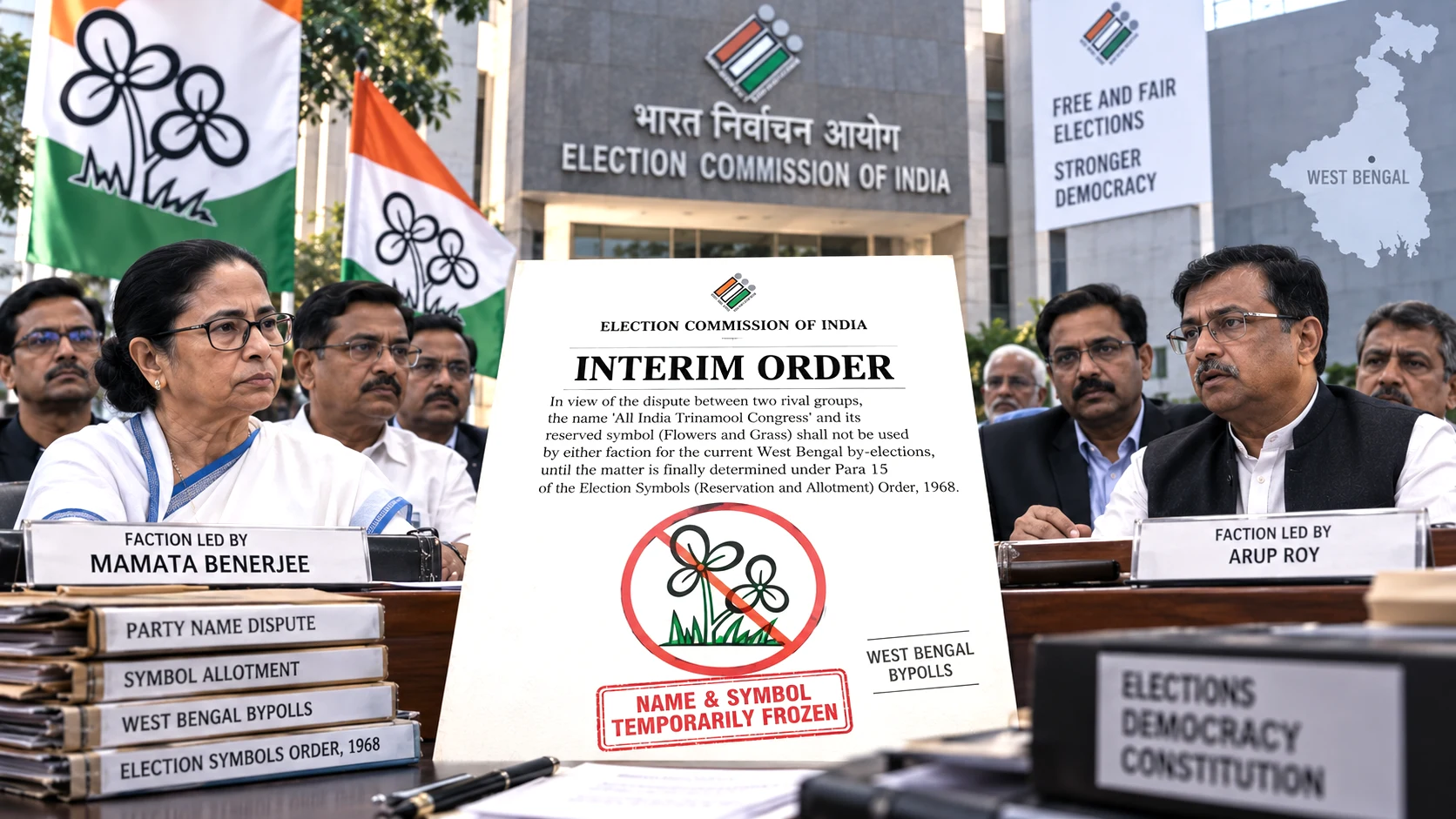
Neither the Mamata Banerjee group nor the rival faction formally represented before the Election Commission by Arup Roy can use the All India Trinamool Congress name or its reserved symbol in the October 6 bypolls. The order is temporary while the ECI decides the larger party-control dispute under P
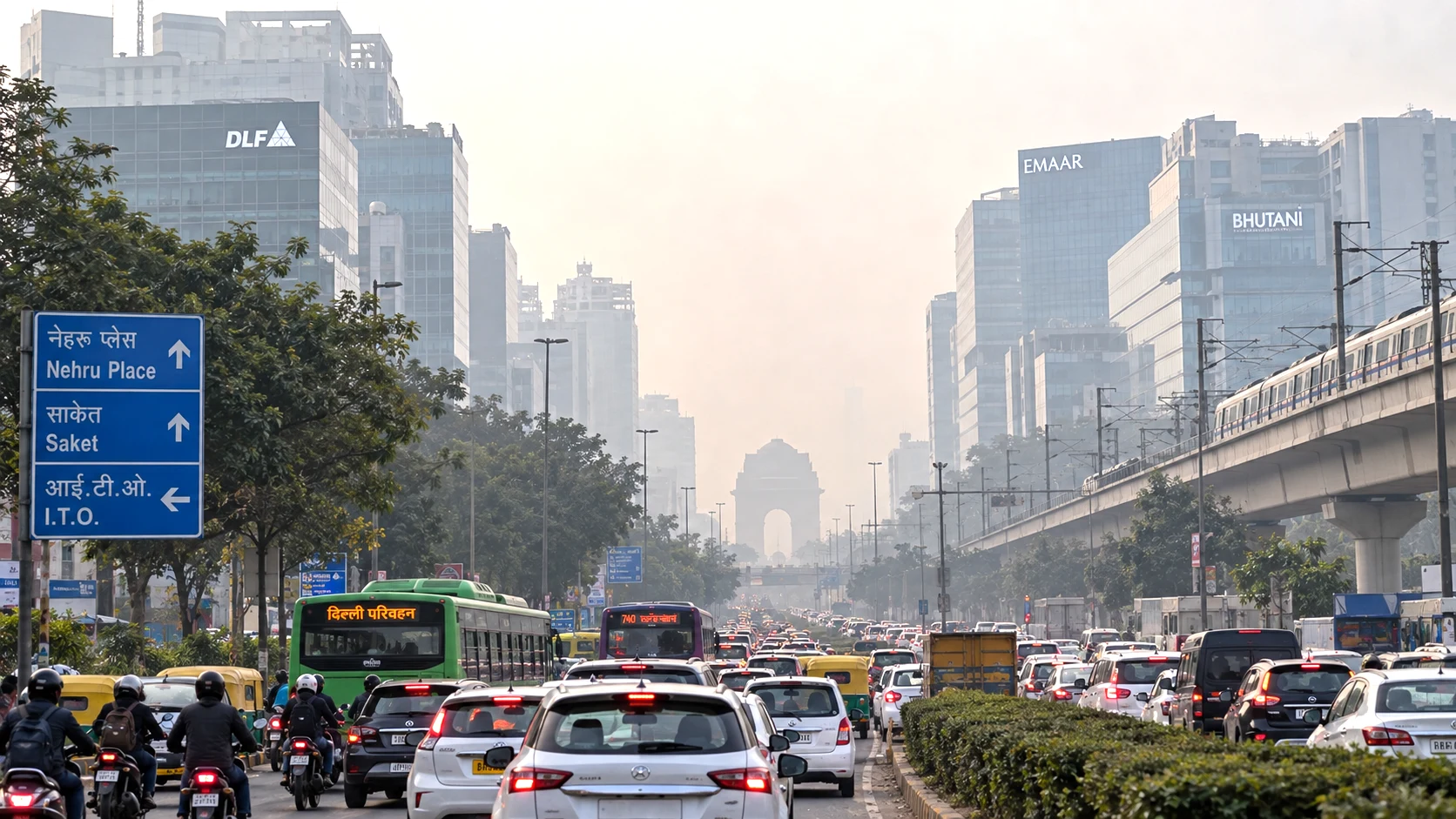
Delhi's winter anti-pollution rules will cap physical attendance at 50% in Delhi government and private offices from November 1 to January 31. Essential services are exempt. Parking charges will double, while a separate no-PUCC-no-fuel rule starts across NCR from October 1.
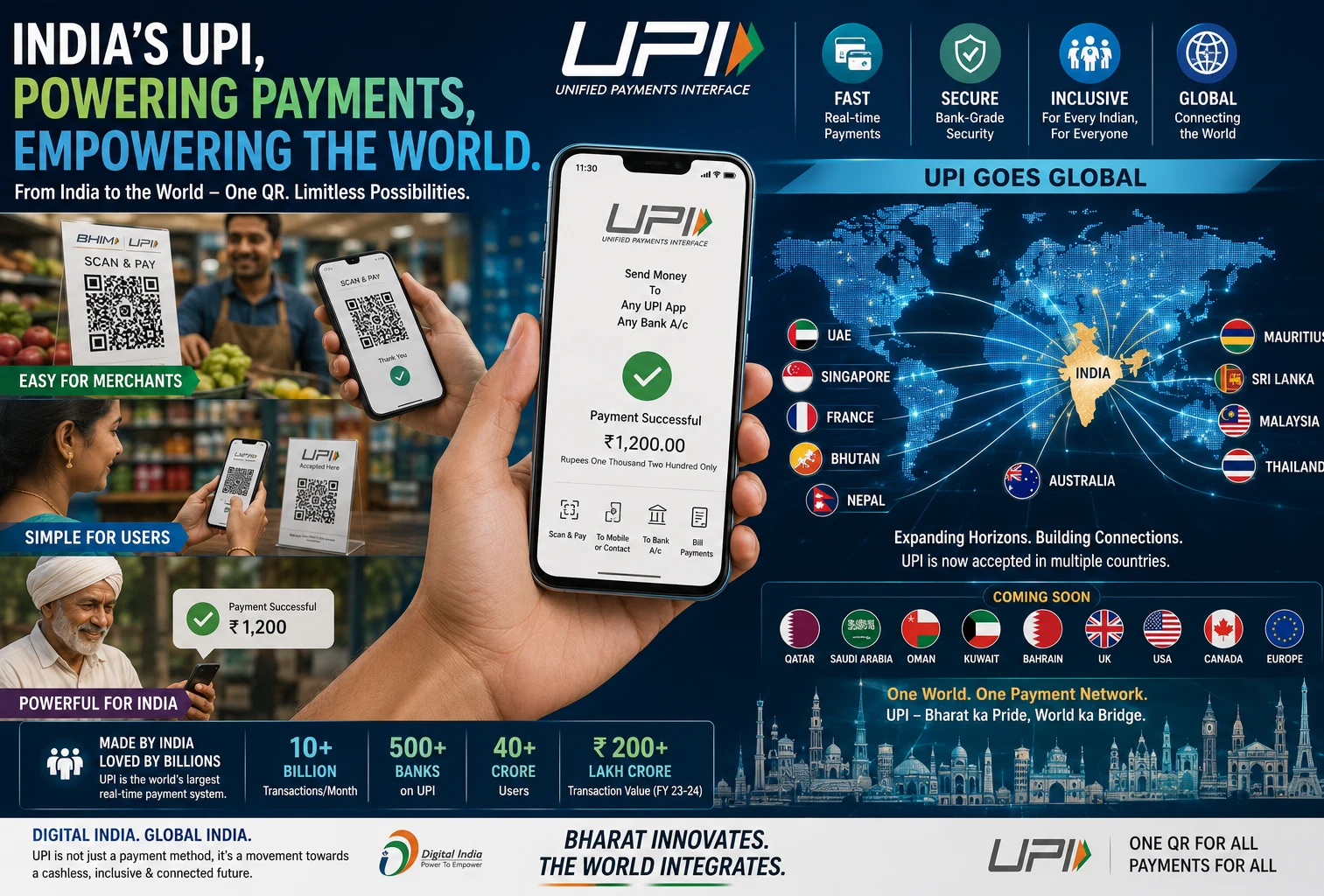
UPI has completed an extraordinary decade — from 1.78 crore annual transactions in its early days to more than 66 crore transactions a day. Now Bharat’s payment revolution is crossing borders, connecting national payment systems and presenting the world with a powerful alternative model for instant
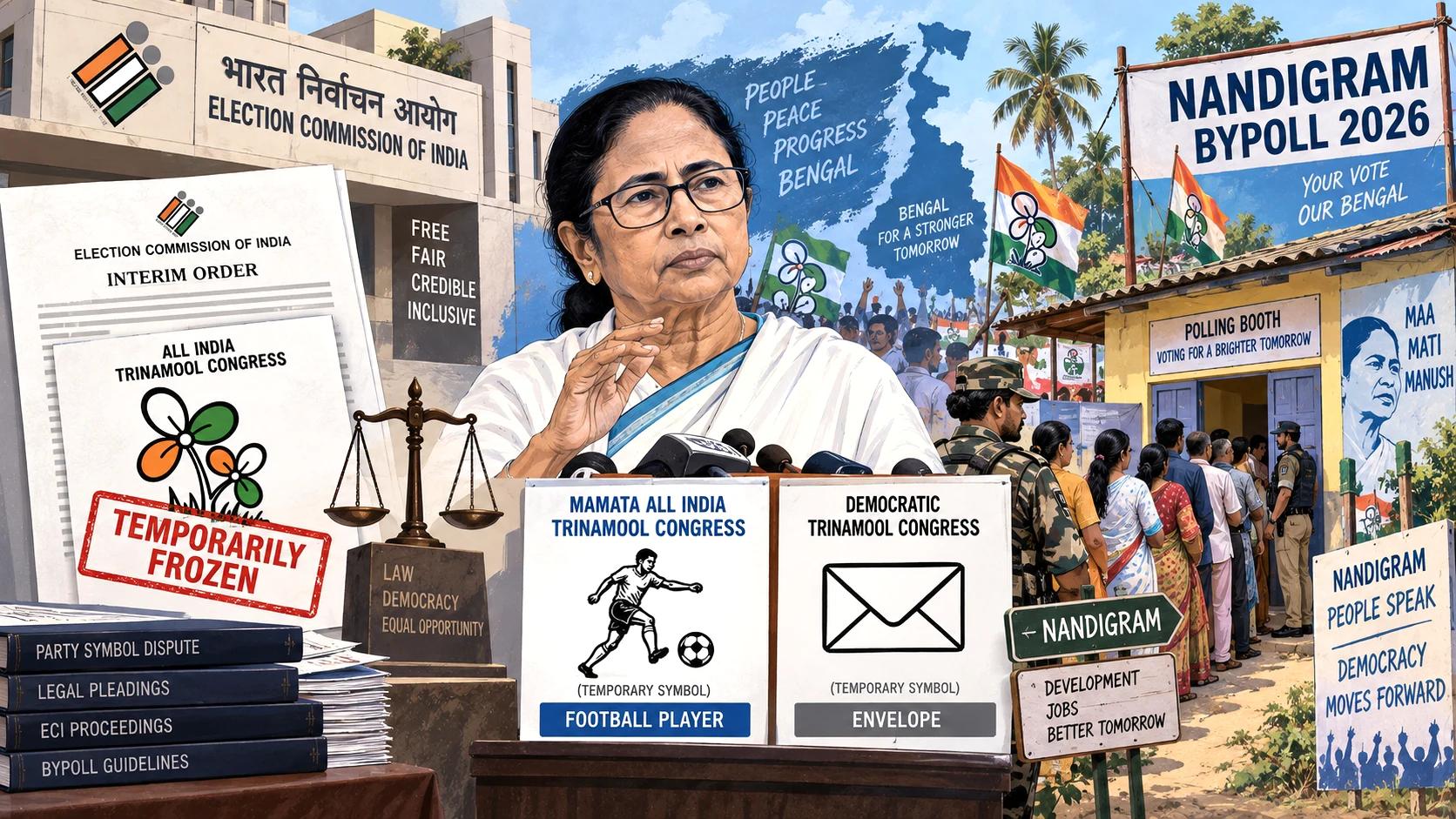
The Election Commission’s interim freeze on the Trinamool Congress name and ‘Flowers and Grass’ symbol has pushed rival factions to temporary identities. Mamata Banerjee has challenged the order in the Supreme Court, while the October 6 Nandigram bypoll has been further complicated by the withdrawal

The 18th BRICS Summit concluded in New Delhi with leaders adopting the New Delhi Declaration by consensus, as India handed the chairship to China for 2027.
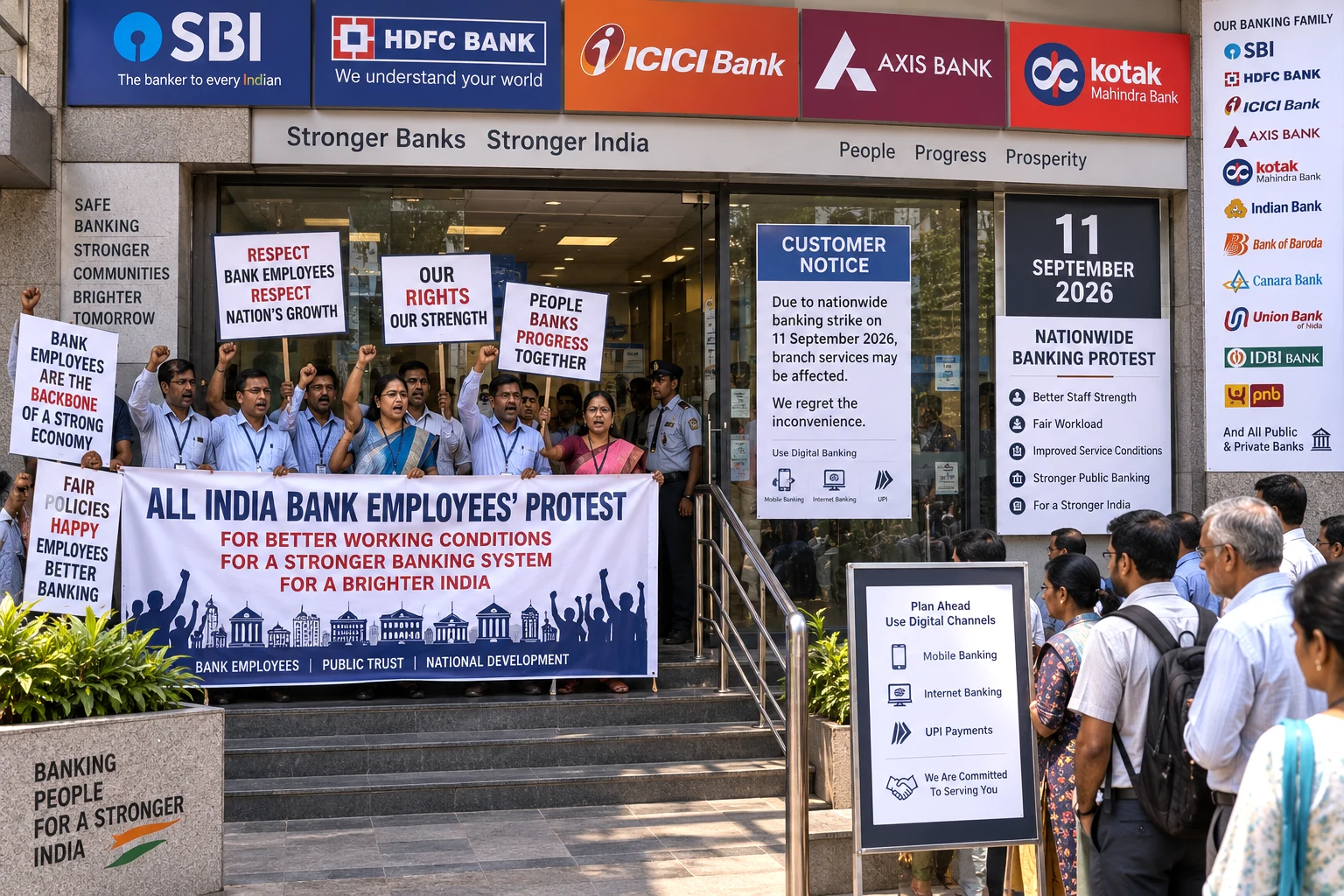
Bank unions will strike nationwide on September 11 over five-day banking and other demands. Here is why employees are protesting, what banks say, how customers may be affected and what happens next.

0 Comments