S&P Global Ratings Raises India FY27 GDP Forecast to 7%: Growth Drivers, RBI Rate Risk Explained
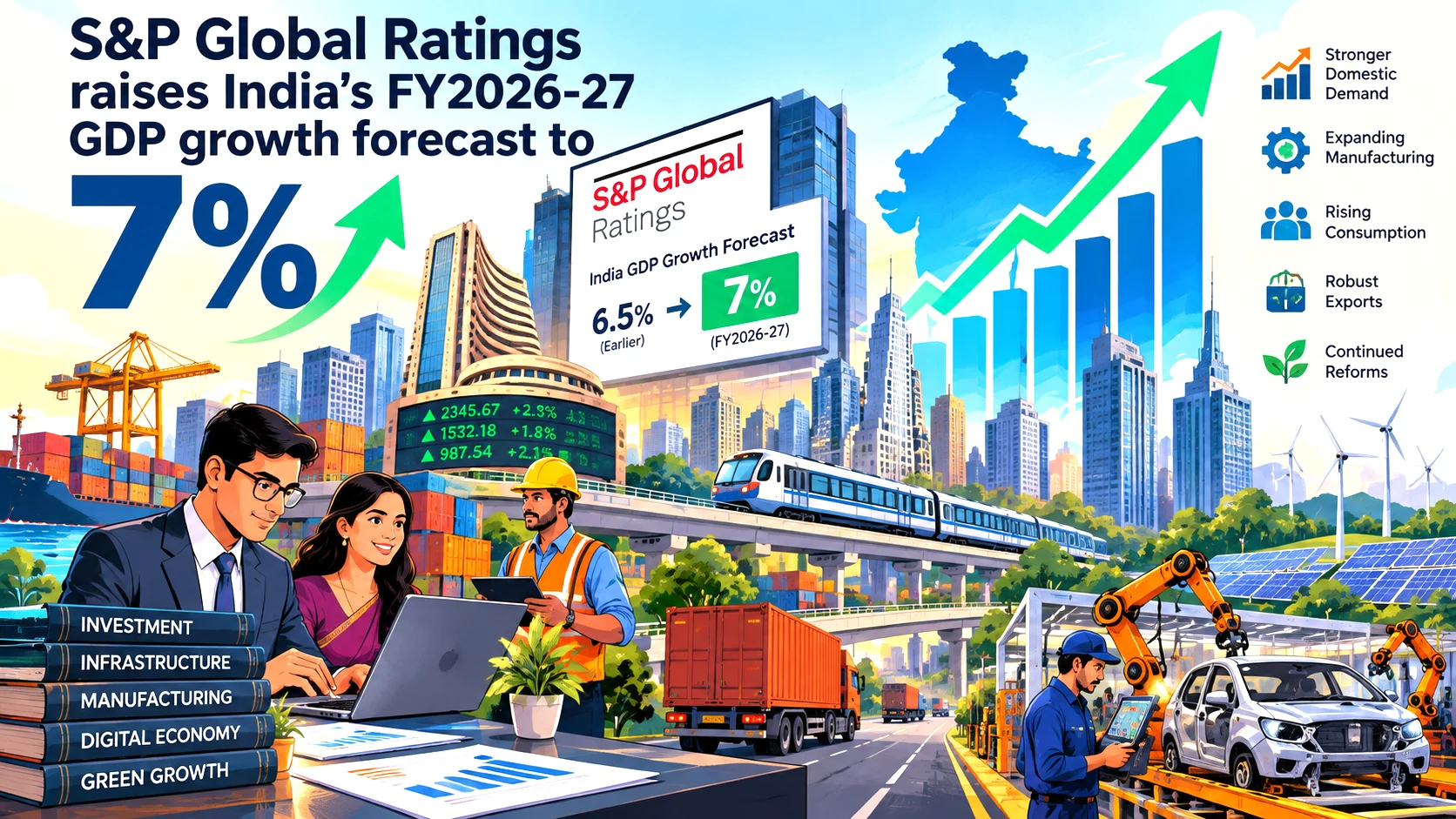
S&P Global Ratings has raised India’s FY2026-27 GDP growth forecast to 7% from 6.6% after stronger industrial activity, consumption, exports and government investment. It also sees inflation averaging 5.1% and a possible 25-bps RBI rate hike.
India’s economy and business activity as S&P Global Ratings raises its FY2026-27 GDP growth forecast to 7%
Table of Contents (27 sections)
S&P Global Ratings has raised its forecast for India’s real GDP growth in financial year 2026-27 to 7.0%, up from its previous estimate of 6.6%, after the economy grew more strongly than expected in the April-June quarter.
The ratings agency said robust industrial activity, healthy consumption, strong goods exports and accelerating government investment pushed growth above its previous expectations.
India’s real GDP expanded 7.8% year-on-year in the first quarter of FY2026-27, according to official government data. Real investment rose 11.9%, household consumption increased 7.1% and exports were up 12% during the quarter.
Recommended Reading
Related Stories & In-Depth Guides
Curated editorial perspectives matching this topic.
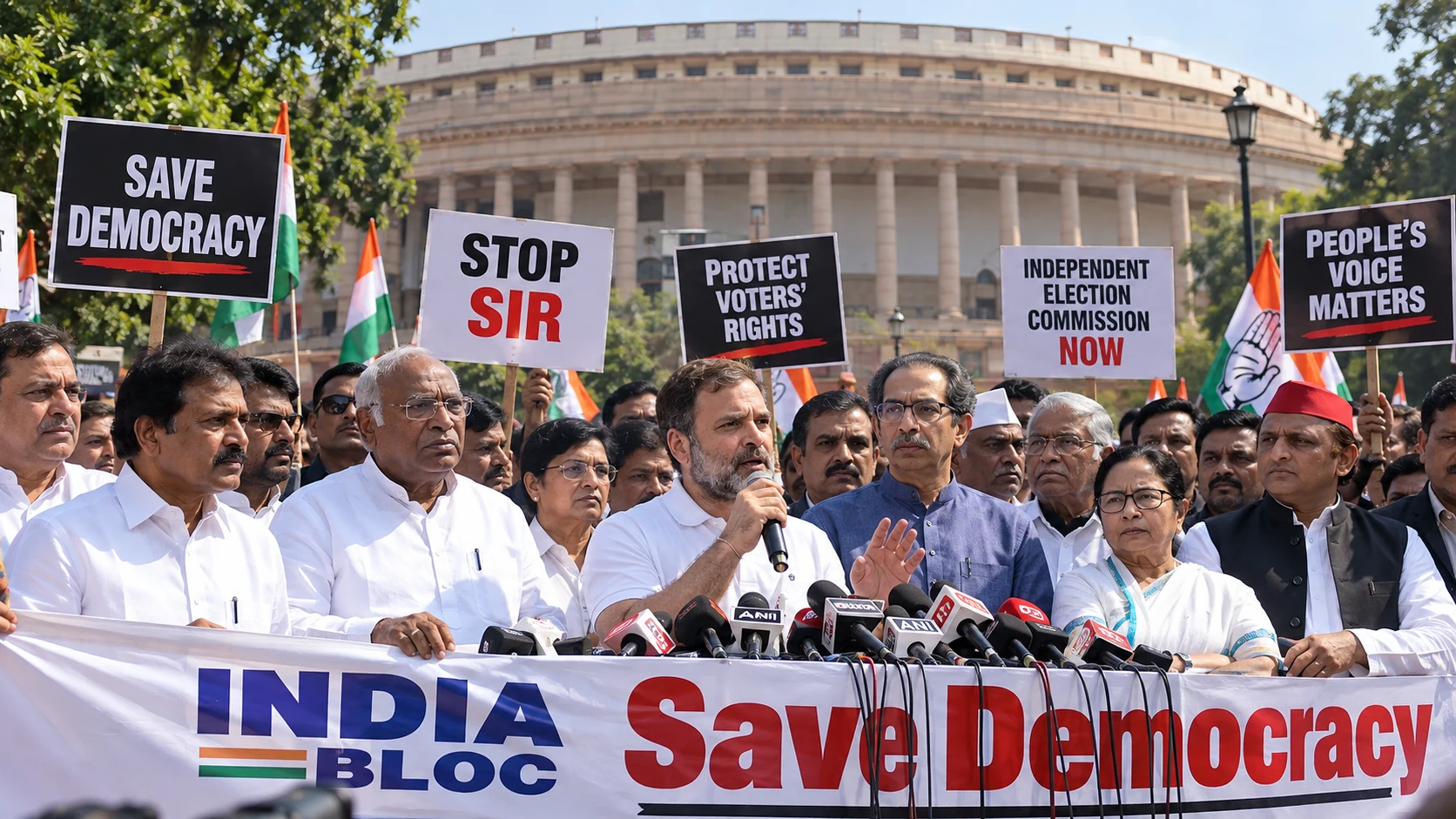
The INDIA bloc has announced nationwide “Save Democracy” marches from Oct. 2–8 over the Election Commission and SIR controversy, with MPs planning an Oct. 6 march to the EC. The BJP has rejected the allegations as political frustration after electoral defeats.
The Election Commission’s interim freeze on the Trinamool Congress name and ‘Flowers and Grass’ symbol has pushed rival factions to temporary identities. Mamata Banerjee has challenged the order in the Supreme Court, while the October 6 Nandigram bypoll has been further complicated by the withdrawal
S&P Global Ratings consequently lifted its full-year forecast by 40 basis points, from 6.6% to 7%.
The upgrade is encouraging for India’s growth outlook, but S&P is not predicting uninterrupted acceleration.
It expects economic growth to moderate during the second half of the fiscal year as support from income-tax changes and GST rationalisation begins to fade. It also identifies rainfall, food inflation, elevated energy costs and the continuing West Asia conflict as risks to the outlook.
S&P additionally expects consumer inflation to average 5.1% in FY27 and forecasts that the Reserve Bank of India could raise its policy rate by 25 basis points during the current fiscal year.
That creates an important two-sided story for households, companies and financial markets:
India’s growth outlook has improved, but stronger growth and inflation pressure could also reduce the scope for lower interest rates.
Key Takeaways
S&P Global Ratings raised India’s FY2026-27 GDP growth forecast to 7.0%.
Its previous forecast was 6.6%.
The revision is an increase of 0.4 percentage point, or 40 basis points.
India’s economy grew 7.8% in April-June 2026.
S&P cited industrial activity, consumption, goods exports and government investment as key growth drivers.
S&P expects growth to moderate during the second half of FY27.
Weather and agricultural output remain important risks.
S&P expects consumer inflation to average 5.1%.
The agency expects the RBI to raise its policy rate by 25 basis points during FY27.
This is the forecast of S&P Global Ratings.
S&P Global Market Intelligence, a different S&P Global business, separately forecast India’s current-fiscal growth at 6.5% in its September outlook.
What Exactly Did S&P Global Change?
S&P Global Ratings’ latest Asia-Pacific economic outlook raised India’s real GDP forecast for the fiscal year ending March 31, 2027 to:
7.0%
from:
6.6% previously.
That represents a 40-basis-point upward revision.
S&P said the change followed economic activity in the June quarter that was stronger than it had anticipated.
The official S&P forecast table shows India growing:
7.0% in FY2026-27
7.2% in FY2027-28
7.0% in FY2028-29
6.8% in FY2029-30
under its current baseline.
These are forecasts rather than guaranteed outcomes and can be revised as new economic data, commodity prices, weather conditions and geopolitical developments emerge.
Why Did S&P Raise India’s Forecast?
S&P identified four major factors behind the stronger-than-expected June-quarter performance.
1. Strong industrial activity
Industrial activity performed better than the agency had expected.
Official government data also showed continued momentum after the quarter, with industrial production rising in July, according to the government’s September review of GDP performance.
2. Healthy consumption
Domestic consumption remained an important source of growth.
Government data show real household consumption grew 7.1% year-on-year in Q1 FY27.
A large domestic market can partly cushion India from periods of weak external demand, although it cannot fully insulate the economy from global energy, trade and financial shocks.
3. Strong goods exports
S&P said goods exports were another contributor to growth exceeding its expectations.
Official data cited by the government showed exports continuing to expand during the opening months of the fiscal year.
4. Accelerating government investment
Government capital expenditure also supported economic activity.
S&P specifically highlighted accelerating government investment among the factors contributing to the forecast upgrade.
Infrastructure spending can support construction and demand for materials while also potentially improving productive capacity over a longer period.
India Grew 7.8% in the June Quarter
The forecast upgrade follows a stronger first-quarter GDP result.
India’s real GDP expanded 7.8% in Q1 FY2026-27, compared with 6.9% in the corresponding quarter a year earlier under the latest official series cited by the government.
Real GDP at constant prices was estimated at around ₹81.36 lakh crore, while nominal GDP at current prices was estimated at approximately ₹88.27 lakh crore.
The strong first-quarter number gives India a higher starting point for achieving full-year growth close to 7%.
But one strong quarter does not automatically mean every remaining quarter will grow at the same pace.
S&P itself expects some cooling later in the fiscal year.
Why S&P Expects Growth to Slow in the Second Half
S&P says some of the economic support currently benefiting households and businesses is likely to become less powerful later in FY27.
It specifically points to diminishing tailwinds from:
GST rationalisation, and
income-tax cuts.
Fiscal measures can lift disposable income or demand initially, but their year-on-year growth effect can become smaller as they move into the comparison base.
S&P therefore expects the economy to remain strong overall without maintaining the same momentum throughout every quarter.
The Monsoon Is an Important Risk
Weather is one of the most important uncertainties in S&P’s forecast.
The ratings agency noted that cumulative rainfall was 15% below normal through September 9 in the current monsoon season.
That matters because weaker or uneven rainfall can affect:
agricultural output;
rural incomes;
food supplies;
food inflation;
rural consumption;
and government support requirements.
S&P therefore identified agricultural output and food inflation as important variables to monitor.
Rainfall conditions can change significantly during a season, so the September 9 deficit should not be treated as a final estimate of the full monsoon outcome.
S&P Forecasts 5.1% Consumer Inflation
S&P Global Ratings expects India’s consumer inflation to average 5.1% during FY2026-27.
Inflation matters because it affects both purchasing power and monetary policy.
Higher prices can reduce how much households can buy with the same income.
Persistent inflation can also make the central bank more reluctant to cut interest rates—or, if pressures become sufficiently strong, increase the likelihood of a rate increase.
S&P believes the balance of risks is moving in that direction.
S&P Expects a 25-Basis-Point RBI Rate Hike
Alongside the stronger GDP forecast, S&P Global Ratings expects the Reserve Bank of India to raise its policy rate by 25 basis points during the current fiscal year.
The agency cited a combination of:
solid economic growth;
persistent inflation pressure;
unresolved conflict in West Asia; and
weather-related risks.
This is S&P’s forecast, not an announced RBI decision.
The Monetary Policy Committee independently decides interest rates based on its assessment of inflation, growth and financial conditions at each meeting.
A 25-basis-point forecast therefore does not mean a rate increase is certain.
Why Energy Prices Matter for India
India is a major importer of crude oil, which makes elevated global energy prices a meaningful macroeconomic risk.
Higher oil costs can affect the economy through several channels:
a larger import bill;
pressure on the rupee;
higher transport costs;
greater inflation;
higher input costs for companies;
and potentially larger subsidy requirements.
S&P’s wider Asia-Pacific outlook says the balance of monetary-policy considerations is shifting toward higher rates partly because of inflation and geopolitical pressures.
Separately, S&P Global Market Intelligence’s September global outlook highlighted Brent crude trading above $100 per barrel and said renewed energy-price pressure had pushed inflation forecasts higher across several economies.
What Does the 7% Forecast Mean for Ordinary People?
A higher GDP growth forecast is broadly positive for the economy, but it does not mean every household will immediately experience a 7% rise in income.
GDP measures the value of goods and services produced across the economy.
Faster growth can potentially support:
employment opportunities;
corporate investment;
government tax receipts;
business revenues;
credit demand;
infrastructure investment;
and household income growth.
But the benefits depend on which sectors grow, employment creation, wage growth and inflation.
If prices rise quickly, households may feel less improvement in real purchasing power even when the economy is expanding strongly.
What Could the Forecast Mean for Home Loans and EMIs?
S&P’s rate forecast may matter more directly for borrowers than the headline GDP number.
If the RBI actually raises its policy rate, borrowing costs could face upward pressure.
For households, that could affect products such as:
floating-rate home loans;
some vehicle loans;
business loans;
and other interest-rate-sensitive credit.
However, bank lending rates also depend on funding costs, liquidity, competition and individual loan structures.
S&P’s projected 25-basis-point hike is not yet an RBI decision, so borrowers should not assume their EMIs will automatically rise.
What Could It Mean for the Stock Market?
A stronger economic-growth outlook can be supportive for corporate revenue and earnings prospects, particularly for businesses exposed to domestic consumption and investment.
At the same time, the same report carries a potentially less favourable message for markets: S&P expects higher interest rates.
Higher rates can:
increase corporate borrowing costs;
affect valuation multiples;
make bonds or deposits relatively more attractive;
and weigh on some rate-sensitive sectors.
The net market effect therefore cannot be predicted from the GDP forecast alone.
Investors also track:
crude-oil prices;
inflation;
the rupee;
foreign portfolio flows;
company earnings;
fiscal policy;
and global interest rates.
A 7% GDP forecast should not by itself be treated as a recommendation to buy or sell any security.
What Could It Mean for the Rupee?
Stronger economic growth can support confidence in an economy, but currencies respond to many competing forces.
S&P noted that Asia-Pacific currencies had faced pressure during 2026 amid global financial and geopolitical developments.
For India, important rupee drivers include:
crude-oil import costs;
US interest rates;
foreign portfolio flows;
trade balances;
inflation differences;
and RBI intervention.
Therefore, a stronger GDP forecast does not automatically imply a stronger rupee.
S&P Global Ratings vs S&P Global Market Intelligence: Why You May See 7% and 6.5%
This is one of the most important details for readers.
Two recent forecasts carrying the S&P Global name show different numbers.
S&P Global Ratings
S&P Global Ratings raised its FY2026-27 India GDP forecast to:
7.0% from 6.6%.
This is the forecast behind the September 23 headline.
S&P Global Market Intelligence
Separately, S&P Global Market Intelligence published a September global economic outlook that raised its India estimate by 0.3 percentage point to:
6.5%.
These are different analytical businesses within S&P Global and can use different models, assumptions and forecasting processes.
Therefore, articles should not imply that S&P Global as a whole has only one single India forecast.
For this story, 7% specifically refers to S&P Global Ratings.
Is FY27 the Same as Calendar Year 2027?
No.
In this report, India’s FY2026-27, often shortened to FY27, runs from:
April 1, 2026 to March 31, 2027.
This is important because S&P’s international forecast tables may label India differently from economies reported on a calendar-year basis.
S&P’s own table states that India figures are shown on a fiscal-year basis.
The 7% number therefore should not be described simply as “India’s 2027 calendar-year growth forecast.”
How Does 7% Compare With India’s Recent Growth?
India entered FY27 with strong momentum.
Official government data show:
Q1 FY2026-27 real GDP growth: 7.8%
household consumption growth: 7.1%
real investment growth: 11.9%
export growth: 12.0%
S&P Global Ratings’ full-year projection of 7% implies that growth is expected to moderate from the Q1 pace over the remaining quarters.
That is consistent with the agency’s warning that some fiscal tailwinds will fade.
Moody’s Has Also Raised India to 7%
S&P is not the only major ratings agency to become more optimistic about India’s current fiscal-year growth.
Moody’s Ratings recently raised its FY27 real GDP forecast to 7% from 6%, citing stronger economic resilience and investment.
The fact that multiple forecasters have upgraded their projections reflects stronger-than-expected recent economic data.
But forecast convergence does not guarantee that actual growth will ultimately equal 7%.
Forecasts remain sensitive to oil prices, global demand, weather conditions and geopolitical shocks.
Why the Forecast Matters for Businesses
For companies, a stronger macroeconomic outlook can influence decisions around:
capacity expansion;
hiring;
inventory;
borrowing;
marketing;
capital expenditure;
and sales expectations.
Domestic-oriented sectors may benefit if consumption and investment remain resilient.
Export-oriented companies may still face a more complicated environment because global trade and geopolitical risks remain significant.
Businesses dependent on fuel, freight or imported raw materials may also face cost pressure even during strong GDP growth.
Why Government Investment Matters
S&P singled out accelerating government investment as one of the reasons India exceeded its earlier growth expectations.
Public capital expenditure can stimulate activity in industries such as:
construction;
steel;
cement;
engineering;
transport;
logistics;
and capital goods.
It can also have longer-term effects if new infrastructure improves productivity and lowers logistics costs.
However, the economic impact depends on project execution, quality and whether public spending encourages additional private investment.
Is India Guaranteed to Grow 7%?
No.
The correct wording is:
S&P Global Ratings forecasts India’s economy to grow 7% in FY2026-27.
A forecast is an estimate based on current economic data and assumptions.
It can change because of:
oil-price shocks;
geopolitical escalation;
weaker global demand;
inflation;
interest rates;
monsoon conditions;
agricultural output;
currency movements;
and domestic policy changes.
S&P explicitly says weather and inflation risks remain important.
Therefore, headlines such as “India economy will definitely grow 7%” would be too absolute.
What Are the Biggest Downside Risks?
Higher crude-oil prices
More expensive energy can increase inflation and India’s import bill.
West Asia conflict
S&P identifies unresolved conflict in the region as an important factor affecting the monetary-policy outlook.
Weak or uneven rainfall
Agricultural output and food prices remain sensitive to monsoon conditions.
Food inflation
Poor crop outcomes can raise food prices and reduce household purchasing power.
Higher interest rates
If inflation forces tighter monetary policy, borrowing and investment could slow.
Global growth weakness
Slower activity in major trading partners could reduce export demand.
None of these risks necessarily means the 7% forecast will be missed; they are factors that could change the outcome.
What Could Push Growth Above 7%?
The forecast could also prove conservative if:
consumption remains stronger than expected;
private investment accelerates;
government capital expenditure remains robust;
exports outperform expectations;
energy prices ease;
agricultural output improves;
or inflation remains contained without tighter monetary policy.
Forecast risk therefore exists in both directions.
What Happens Next?
Investors, businesses and policymakers will now watch several indicators to judge whether India remains on track for S&P’s 7% estimate.
Key data include:
July-September GDP growth
industrial production
GST collections
private consumption
capital expenditure
exports and imports
crude-oil prices
CPI inflation
monsoon and crop data
RBI monetary-policy decisions
The Q2 GDP release will be particularly important because S&P expects growth to begin moderating later in the fiscal year.
Latest Verified Position
As of September 24, 2026:
S&P Global Ratings forecasts India’s FY2026-27 real GDP growth at 7.0%.
The previous forecast was 6.6%.
The revision is 40 basis points higher.
India recorded 7.8% real GDP growth in Q1 FY27.
S&P attributes the upgrade to stronger industry, consumption, goods exports and government investment.
It expects growth to moderate in the second half of FY27.
S&P says rainfall, agriculture and food inflation remain key risks.
Consumer inflation is forecast to average 5.1%.
S&P Global Ratings expects a 25-basis-point RBI rate increase during FY27.
A separate unit, S&P Global Market Intelligence, currently has a different India forecast of 6.5%.
Moody’s Ratings has also raised its FY27 India forecast to 7%.
Frequently Asked Questions
What is S&P Global’s latest India GDP forecast?
S&P Global Ratings forecasts real GDP growth of 7% in FY2026-27, up from 6.6% previously.
Why did S&P raise India’s growth forecast?
It cited stronger-than-expected industrial activity, consumption, goods exports and government investment in the June quarter.
How fast did India grow in Q1 FY27?
India’s real GDP grew 7.8% year-on-year during April-June 2026.
Does S&P expect 7.8% growth for the full year?
No. S&P forecasts 7% for the full fiscal year and expects some moderation during the second half.
What does FY27 mean?
FY27 refers to India’s financial year April 1, 2026 to March 31, 2027.
What inflation does S&P expect?
S&P Global Ratings expects consumer inflation to average 5.1% in FY27.
Does S&P expect the RBI to raise interest rates?
Yes. S&P forecasts a 25-basis-point policy-rate increase during the fiscal year. This is a forecast, not an announced RBI decision.
Will home-loan EMIs rise?
Not automatically. A future RBI rate increase could put upward pressure on some floating lending rates, but S&P’s projected hike has not yet been implemented.
Why does another S&P forecast say 6.5%?
Because S&P Global Ratings and S&P Global Market Intelligence are separate analytical businesses. Ratings forecasts 7%, while Market Intelligence’s September outlook forecasts 6.5%.
Is India guaranteed to grow 7%?
No. Seven per cent is S&P Global Ratings’ current forecast. Actual growth can differ as economic conditions change.
What are the main risks to the forecast?
S&P highlights inflation, weather and agricultural conditions, while geopolitical and energy-price developments also remain important risks.
Has Moody’s also forecast 7% growth?
Yes. Moody’s recently lifted its FY27 India forecast to 7% from 6%.
Bottom Line
S&P Global Ratings has raised India’s FY2026-27 GDP growth forecast to 7% from 6.6%, citing stronger industrial activity, consumption, exports and government investment after a 7.8% Q1 expansion.
The agency expects growth to moderate in the second half, inflation to average 5.1%, and a possible 25-basis-point RBI rate hike. The 7% figure is a forecast, not a guarantee, and differs from S&P Global Market Intelligence’s separate 6.5% estimate.
Key Takeaway
S&P Global Ratings: India FY27 GDP at 7% (was 6.6%).
Driven by industry, consumption, exports and government investment.
The Rajatheertha Team publishes news, explainers, guides and updates across India and the world. Our coverage follows Rajatheertha's editorial, verification and corrections standards.
Home Minister Amit Shah has set December 31, 2029 as the government's target for uprooting India's drug trade. Here is what the 2026–29 narcotics roadmap proposes on cartels, synthetic drugs, darknet markets, financial investigations, prevention and rehabilitation.
RBI's MPC meets October 5–7 with economists increasingly expecting a 25 bp repo-rate hike to 5.50%. Here's what that could mean for floating-rate home loans, EMIs and borrowers.
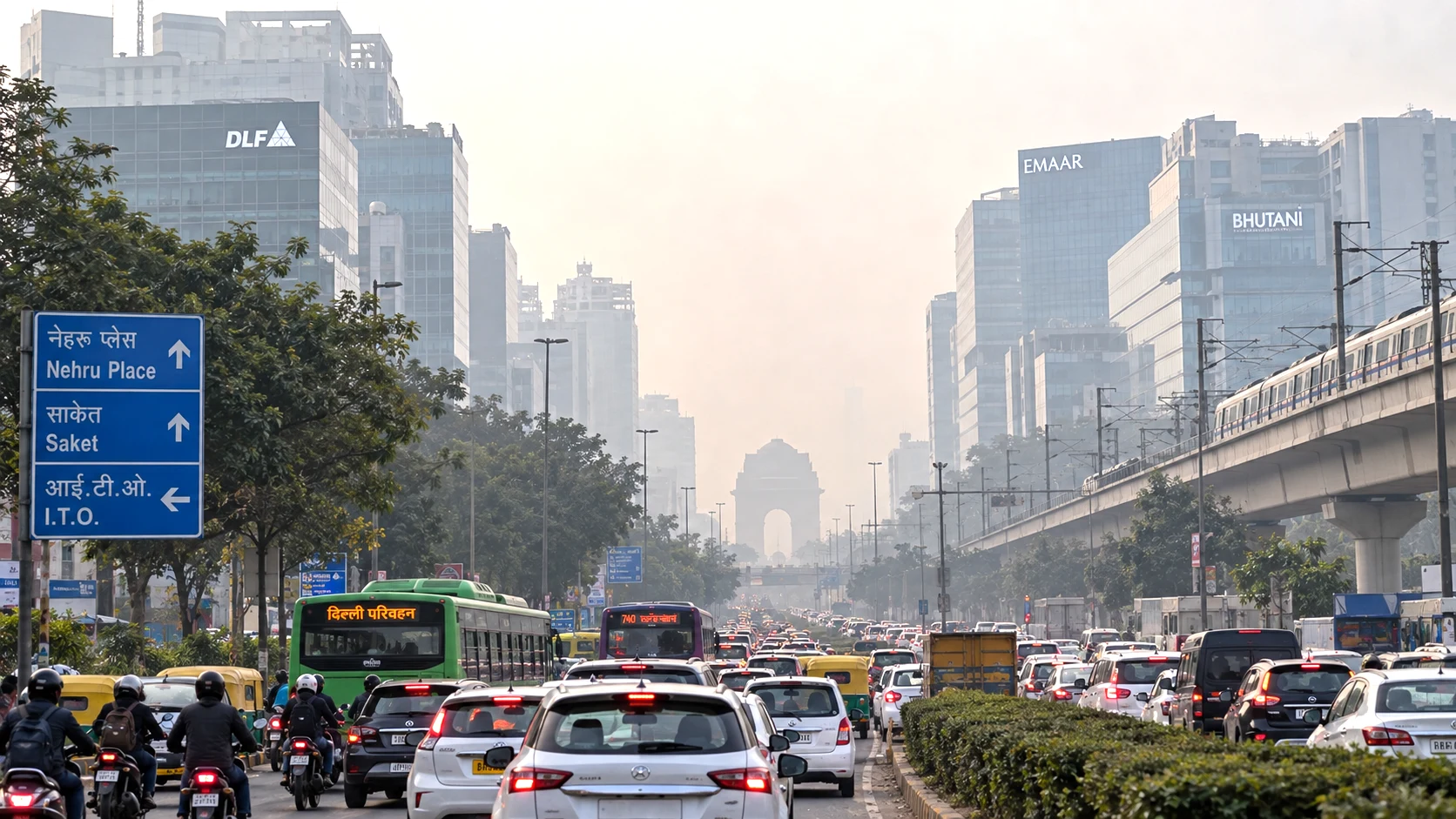
Delhi's winter anti-pollution rules will cap physical attendance at 50% in Delhi government and private offices from November 1 to January 31. Essential services are exempt. Parking charges will double, while a separate no-PUCC-no-fuel rule starts across NCR from October 1.
New Delhi says its oil sourcing will continue to be guided by energy security, market conditions and diversified supplies after the US Congress cleared legislation allowing President Donald Trump to impose tariffs of up to 100% on major buyers of Russian energy. The tariffs are not automatic, and th
Maharashtra has declared drought conditions in 265 of 358 talukas under Trigger-1 for Kharif 2026. Here is the district-wise list, 12 relief measures, crop-loss compensation position, eligibility and panchnama-to-DBT process.
India and Pakistan have summoned each other's diplomats after BSF personnel killed two Pakistani nationals along the Punjab border on October 2. New Delhi says they were infiltrators posing a security threat, while Islamabad says they were unarmed civilians.










0 Comments