Table of Contents (34 sections)
Several business and trader associations have called for a “No UPI Day” on October 2, 2026, escalating opposition to India's new Merchant Discount Rate framework for certain higher-value UPI payments.
Several trader associations have called for a voluntary “No UPI Day” on October 2 against the new MDR on some merchant UPI payments above ₹2,000. UPI itself will not shut down, customers will not pay the MDR, and most transactions remain free.

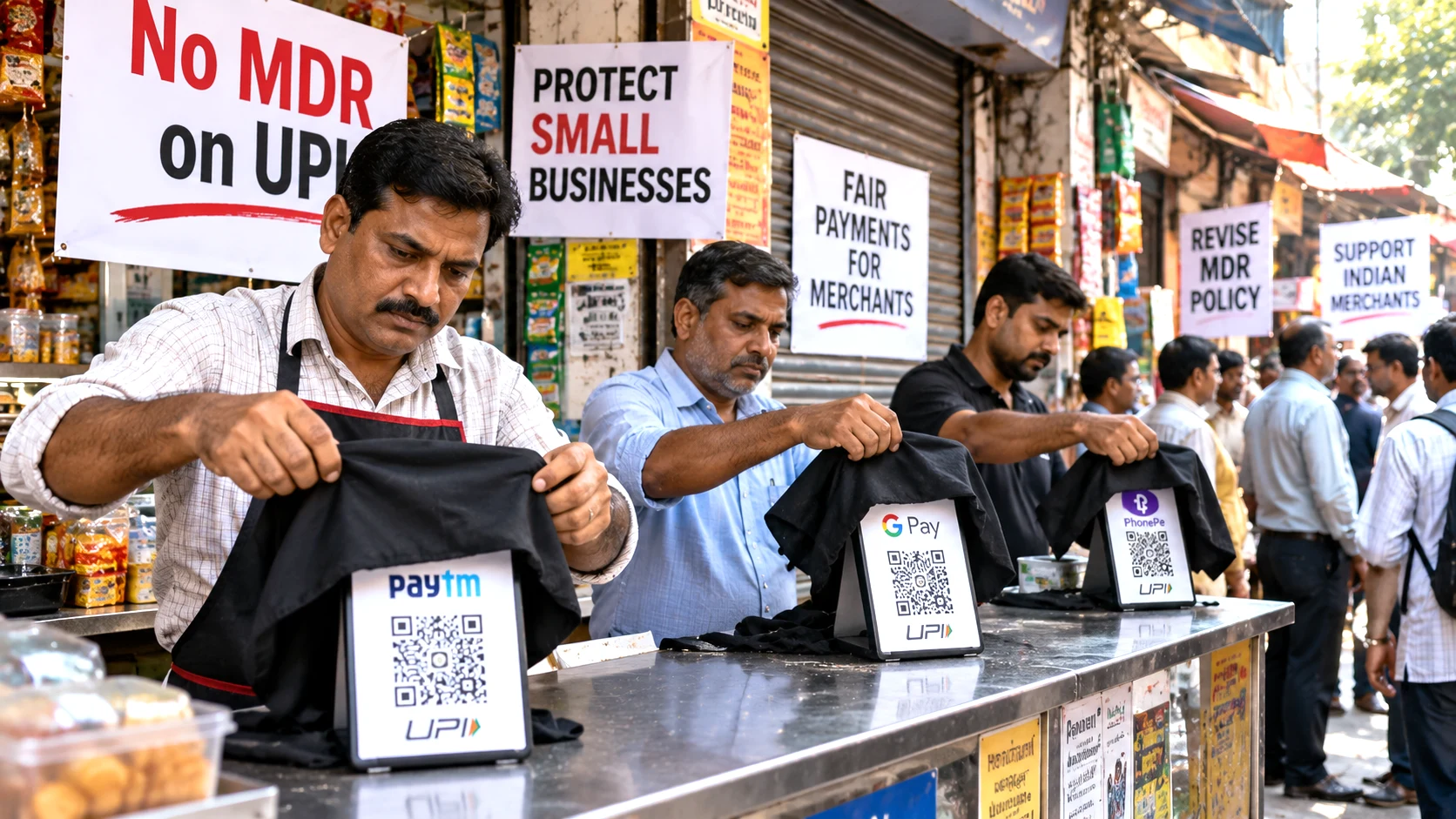
Several business and trader associations have called for a “No UPI Day” on October 2, 2026, escalating opposition to India's new Merchant Discount Rate framework for certain higher-value UPI payments.
Curated editorial perspectives matching this topic.
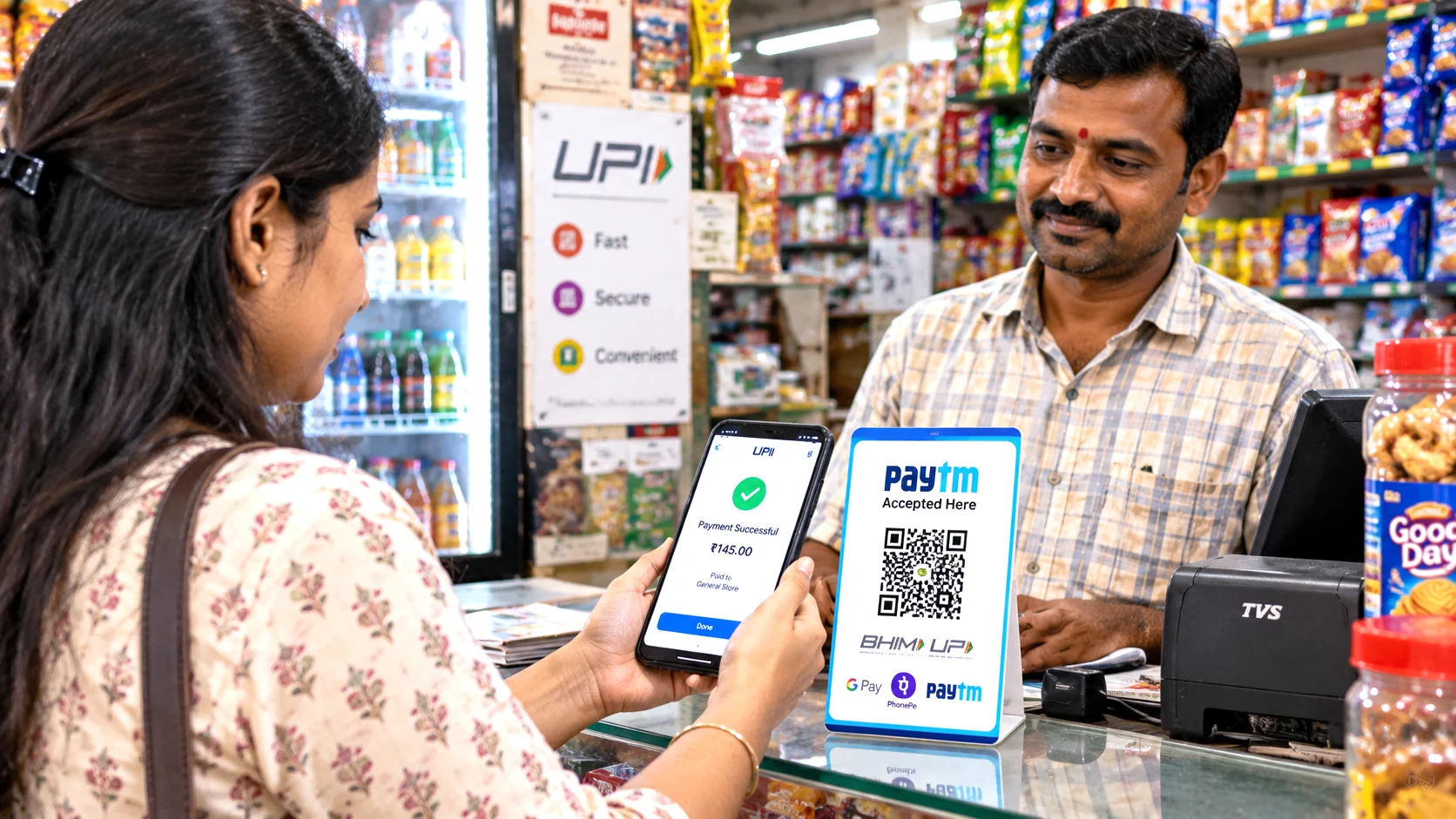
Finance Minister Nirmala Sitharaman says the new UPI MDR is not a tax and cannot be passed on to customers. Here is who actually pays, what changes from October 15 and which UPI transactions remain free.
Delhi's winter anti-pollution rules will cap physical attendance at 50% in Delhi government and private offices from November 1 to January 31. Essential services are exempt. Parking charges will double, while a separate no-PUCC-no-fuel rule starts across NCR from October 1.
The protest is scheduled ahead of October 15, when a new 0.4% MDR is due to apply to specified person-to-merchant, or P2M, UPI transactions above ₹2,000.
But one point needs to be made clear immediately:
UPI is not being switched off across India on October 2.
There is no government, Reserve Bank of India or National Payments Corporation of India announcement suspending UPI services for Gandhi Jayanti.
Instead, participating merchants plan to voluntarily stop accepting UPI for the day, cover QR codes, scanners and sound boxes with black cloth, and encourage customers to use alternative payment methods as a symbolic protest.
The protest is being backed by several trader organisations, but participation will vary by state, city, market and individual business.
Another important clarification is that the new MDR is not a direct charge on customers using UPI.
The Ministry of Finance says consumers will continue to make UPI payments without a transaction charge, while person-to-person transfers remain free regardless of value.
So what exactly is changing from October 15, who pays, which transactions stay free, and why are traders planning a protest?
Here are the verified facts.
“No UPI Day” is a trader-led protest against the introduction of MDR on selected UPI merchant transactions.
The Maharashtra Chamber of Commerce, Industry & Agriculture, or MACCIA, has called for October 2 to be observed as No UPI Day and says hundreds of affiliated associations are being mobilised.
Other organisations reported as supporting the action include:
Participating businesses have been asked to use symbolic forms of protest such as:
The October 2 action follows a similar protest held by traders in parts of Madhya Pradesh on September 23.
No.
This is probably the most important consumer clarification.
There is no nationwide technical shutdown of UPI scheduled for October 2.
UPI apps, bank transfers and the underlying payment infrastructure are not being switched off because of the protest.
Person-to-person transfers should continue normally.
Businesses that are not participating in the protest may also continue accepting UPI normally.
The practical effect may therefore differ from shop to shop.
A participating store may ask customers to use cash or another payment method, while another shop nearby may continue accepting UPI.
The phrase “No UPI Day” describes the traders' protest—not the availability of India's UPI network.
The Government of India announced a revised UPI charging framework in September.
Under the new system, a standard 0.4% Merchant Discount Rate will apply to qualifying person-to-merchant UPI transactions above ₹2,000.
The framework is due to take effect from October 15, 2026.
MDR is effectively a payment-processing charge borne within the merchant-payment ecosystem.
The Finance Ministry says the amount will be distributed among payment-system participants, including banks, payment service providers and UPI app providers, to help finance operation and expansion of UPI.
| Transaction | MDR under new framework |
|---|---|
| Person-to-person UPI transfer | ₹0 |
| Merchant UPI payment up to ₹2,000 | ₹0 |
| Eligible standard P2M payment above ₹2,000 | 0.4% |
| Standard P2M payment of ₹75,000 or above | Maximum ₹300 |
| Eligible small merchant under P2PM framework | ₹0 |
| Certain essential-sector transactions above ₹2,000 | ₹5 flat MDR |
| Eligible capital-market transactions | 0.02%, capped at ₹300 |
These categories matter because the headline “0.4% charge on every UPI payment above ₹2,000” is incorrect.
No, not under the announced framework.
The Ministry of Finance explicitly says MDR is a charge within the merchant-payment ecosystem and not a charge imposed on the customer making a UPI payment.
UPI app providers are prohibited under the framework from imposing additional platform fees or hidden transaction charges on consumers.
Banks have also been advised to ensure merchants do not simply pass the MDR on to customers as an additional UPI charge.
Therefore, if a customer pays ₹5,000 to an eligible merchant through UPI, the government framework does not say that ₹20 should be added to the customer's bill as a UPI fee.
The MDR relates to the merchant side of the transaction.
No.
The Finance Ministry says the UPI MDR is neither a tax nor money collected by the government or NPCI.
It is a payment-processing charge distributed among participants in the payments ecosystem.
That distinction matters because some social-media posts describe it as a “new UPI tax”.
That is not how the government has structured or described the charge.
For an ordinary eligible merchant transaction subject to the standard rate:
| UPI payment | 0.4% MDR |
|---|---|
| ₹2,500 | ₹10 |
| ₹5,000 | ₹20 |
| ₹10,000 | ₹40 |
| ₹25,000 | ₹100 |
| ₹50,000 | ₹200 |
| ₹75,000 | ₹300 |
| ₹1,00,000 | ₹300 cap |
These examples assume the transaction falls under the normal 0.4% P2M category.
Special categories and exempt merchants may be charged differently or remain at zero MDR.
Trader groups argue that many retailers operate on small profit margins and that even a relatively low payment-processing charge can become meaningful when applied repeatedly.
Their concern is particularly strong in sectors where:
Representatives of the protesting associations argue that UPI helped reduce cash handling and improve transaction transparency, and they do not want accepting digital payments to become an additional operating expense.
Their demand is broadly for restoration or continuation of a zero-MDR UPI system.
The government's response is that the new MDR applies only to a small share of transaction volume.
According to the Ministry of Finance, approximately 96% of person-to-merchant UPI transactions will remain outside the new MDR charge.
This is because:
The remaining transactions tend to represent a larger share of transaction value because higher-value purchases naturally account for more rupees even if they represent fewer transactions.
One aspect easily lost in social-media discussions is the P2PM small-merchant exemption.
The government says small merchants—including many street vendors and neighbourhood businesses—receiving up to ₹1 lakh per month through UPI QR codes under the Person-to-Person-Merchant classification will continue to receive zero-MDR treatment.
This means the ₹2,000 headline threshold should not be interpreted in isolation.
Merchant classification also matters.
A customer should therefore not assume that every shop receiving a payment over ₹2,000 automatically incurs 0.4% MDR.
The government has also created a special category for sectors considered essential or characterised by relatively thin operating margins.
For qualifying transactions above ₹2,000 in areas including:
the announced MDR is a flat ₹5 per transaction, rather than the general 0.4% rate.
This substantially changes the cost for large payments in these categories.
For example, a ₹10,000 eligible fuel-related payment would not automatically attract the standard ₹40 MDR if it falls within the ₹5 special framework.
Capital-market transactions have their own rate.
Payments to categories including mutual funds, stockbrokers, dealers and investment advisers are subject to a 0.02% MDR, capped at ₹300.
This is considerably lower than the standard 0.4% P2M rate.
The securities industry has nevertheless raised concerns about the impact on high-value fund transfers, and the issue has been discussed with regulators.
No.
If you send money from your bank account to another individual's bank account using UPI, the new merchant MDR does not apply.
The Finance Ministry says all P2P transactions remain completely free irrespective of the value transferred.
For example:
Bank- and NPCI-imposed daily transaction limits may still apply for security or risk-management purposes, but those are not MDR charging thresholds.
For several years, India's UPI merchant-payment model operated with zero MDR under government policy.
The ecosystem was instead supported through incentives and other mechanisms.
The government now argues that a limited MDR on higher-value merchant payments is necessary to improve the long-term financial sustainability of UPI, while continuing to protect consumers and small merchants.
Payment companies and banks incur costs involving:
An SBI official told Business Standard that the new MDR could help cover the bank's UPI processing costs and potentially generate a modest surplus.
That is an industry assessment, rather than proof of exactly how the economics will work for every bank.
The trader groups selected October 2, Gandhi Jayanti, for a symbolic protest before the October 15 implementation date.
Organisers say merchants will use peaceful forms of protest such as covering QR codes and payment devices with black cloth.
Their aim is to pressure the government to reconsider the new MDR before implementation.
The date also gives the campaign nearly two weeks before the scheduled rollout.
Yes, on a smaller regional scale.
Trader organisations in Madhya Pradesh observed a No UPI Day on September 23, particularly in cities including Indore.
Participating businesses reportedly covered QR codes and encouraged customers to make payments through other methods.
Trade groups said the September 23 protest was intended to build opposition to the MDR.
The October 2 campaign seeks much wider participation.
No such nationwide participation has been confirmed.
Several associations support the campaign, but individual traders may decide whether to participate.
Different business organisations are also taking different positions.
For example, the Retailers Association of India opposes the MDR but has said it will not participate in the October 2 No UPI Day, according to the Free Press Journal.
The Confederation of All India Traders, meanwhile, has been reported as supporting the introduction of MDR on the argument that the payment ecosystem needs funding for infrastructure and cybersecurity.
That is an important nuance.
There is opposition from significant sections of the trading community, but it is not accurate to say every Indian trade organisation unanimously supports the protest.
Participating traders may voluntarily refuse UPI on October 2 and ask customers to use:
That does not mean customers are legally prohibited from using UPI on October 2.
The situation will depend on whether the particular merchant participates.
Anyone planning a high-value purchase on October 2 may therefore want to keep an alternative payment option available.
The government's framework says customers should not be directly charged the MDR.
Banks have been advised to ensure merchants do not pass the fee to customers, while UPI app providers are prohibited from imposing hidden fees or platform charges.
A merchant could potentially change general product pricing in response to higher business costs, just as companies may alter prices for many commercial reasons.
But that is different from an officially authorised customer UPI transaction fee.
The government has explicitly said there is no such direct user charge under the new framework.
This has emerged as one potential behavioural response.
For example, instead of accepting one ₹4,000 merchant payment, some businesses might consider asking for two smaller transfers.
An SBI official told Business Standard that merchants could attempt to split transactions to remain below the MDR threshold.
However, businesses should not assume artificial transaction splitting will necessarily remain acceptable under payment rules or merchant agreements.
NPCI, banks and acquiring institutions may monitor payment patterns and could clarify anti-avoidance rules if the practice becomes widespread.
Customers should follow legitimate merchant payment instructions rather than attempting to manipulate transaction classification.
Under the announced government framework, UPI app providers are not permitted to impose platform fees or hidden charges on users for ordinary UPI payments covered by these rules.
That means the introduction of merchant MDR should not be interpreted as:
“Google Pay will charge customers 0.4%,”
or
“PhonePe users must now pay for every transaction above ₹2,000.”
Those claims are misleading.
The charge applies to qualifying merchant transactions within the payment ecosystem, not directly to the person making the payment.
UPI has become one of India's most important retail-payment systems, but its zero-MDR structure limited direct payment-processing revenue.
Reuters reports that allowing a merchant charge on higher-value UPI transactions could create a substantial new revenue stream for payment platforms and banks, especially the largest players.
PhonePe and Google Pay together account for a very large share of UPI transaction volume, raising broader questions about whether new fee revenue could strengthen the market position of dominant platforms.
That is one policy debate surrounding the change.
Supporters argue sustainable revenue can fund infrastructure and expansion.
Critics argue the arrangement could burden traders and strengthen already-dominant payment companies.
Business Standard reported that UPI processed approximately 15.51 billion P2M transactions in August 2026, representing about ₹8.95 trillion in value.
Transactions above ₹2,000 represented a much larger share of payment value than their share of transaction count.
That helps explain why the government can say around 96% of merchant transactions remain unaffected by count, while the payment industry can still potentially earn meaningful revenue from the relatively small proportion of high-value transactions.
No.
This is another date readers should keep straight.
October 2
Planned No UPI Day protest by participating trade organisations.
October 15
Scheduled effective date of the new MDR framework for eligible transactions.
Therefore, the October 2 protest happens before the new charge comes into force.
The policy has moved beyond the earlier discussion stage.
On September 14, the government notified the framework, and the Ministry of Finance said NPCI issued a detailed circular on September 15 covering operational rules, revenue distribution and categories.
The announced effective date is October 15.
Some trade organisations continue to refer to the measure as “proposed” because they are lobbying for withdrawal before implementation.
From a regulatory-news perspective, however, it is more accurate to say the new framework has been announced/notified and is scheduled to take effect, rather than suggesting the government has merely floated an informal idea.
That remains possible in principle if the government or payment authorities amend the framework.
Trader organisations say the purpose of the October 2 protest is to press for such a change.
But as of September 24, the verified policy position remains that the MDR is scheduled to start on October 15.
Readers should therefore not assume the charge has been withdrawn unless the Finance Ministry, NPCI or another competent authority issues a new notification or circular.
Customers do not need to stop using UPI generally.
However, because some participating merchants may refuse UPI for the day, practical precautions include:
P2P transfers should remain available.
Businesses should verify their classification with their acquiring bank or payment provider.
Questions merchants should ask include:
The precise settlement mechanism will depend on banks, acquiring institutions and payment providers.
Confirmed
Not Confirmed
As of September 24, 2026:
Is UPI shutting down in India on October 2?
No. October 2 is a voluntary protest by participating merchants. UPI itself is not scheduled to shut down.
What is No UPI Day?
It is a protest by trader associations against the new MDR on certain higher-value merchant UPI payments. Participating shops may temporarily stop accepting UPI and cover their QR codes.
Will Google Pay, PhonePe or other UPI apps stop working?
There is no official announcement of a nationwide UPI-app shutdown. P2P transactions and payments to non-participating merchants should continue.
When does the new UPI MDR start?
The new framework is scheduled to take effect on October 15, 2026.
Will customers pay 0.4% on UPI payments above ₹2,000?
No. The Ministry of Finance says customers will not pay the MDR. It is a merchant-payment ecosystem charge.
How much is the new UPI MDR?
The standard rate is 0.4% on qualifying P2M transactions above ₹2,000, capped at ₹300 for transactions of ₹75,000 and above.
Does every UPI payment above ₹2,000 attract MDR?
No. P2P transfers remain free, qualifying small merchants have an exemption, and certain sectors have separate rates.
Are UPI transfers between friends and family still free?
Yes. All person-to-person UPI transfers remain free irrespective of amount under the new framework.
What happens if I pay ₹10,000 to a normal merchant?
If the payment falls within the standard 0.4% P2M category, the MDR would be ₹40. That is a merchant-side charge, not an additional customer transaction fee.
Do small street vendors pay MDR?
Qualifying small merchants receiving up to ₹1 lakh per month under the P2PM category continue to receive zero-MDR treatment.
What is the MDR for fuel or insurance payments?
Specified essential sectors, including fuel and insurance, have a flat ₹5 MDR on eligible payments above ₹2,000.
Why are traders protesting if customers do not pay?
Traders argue that the merchant-side payment-processing cost reduces already-thin business margins and could make digital payments more expensive for retailers.
Will every trader participate on October 2?
No. Participation is voluntary and differs among trade bodies and individual businesses.
Several trader associations have called for a voluntary “No UPI Day” on October 2 against the new MDR on some merchant UPI payments above ₹2,000. UPI itself will not shut down, customers will not pay the MDR, and most transactions remain free.
The new framework is scheduled to take effect from October 15. P2P transfers and payments up to ₹2,000 stay free, while eligible small merchants continue under zero-MDR rules.
No UPI Day on October 2 is a voluntary merchant protest.
UPI will not shut down nationwide.
0.4% MDR applies to specified merchant payments above ₹2,000 from October 15.
Customers do not pay the MDR; most transactions remain free.
The Rajatheertha Team publishes news, explainers, guides and updates across India and the world. Our coverage follows Rajatheertha's editorial, verification and corrections standards.
Rajatheertha follows strict editorial standards. If you have corrections, updates or editorial queries, contact our desk.
Submit an Editorial Correction →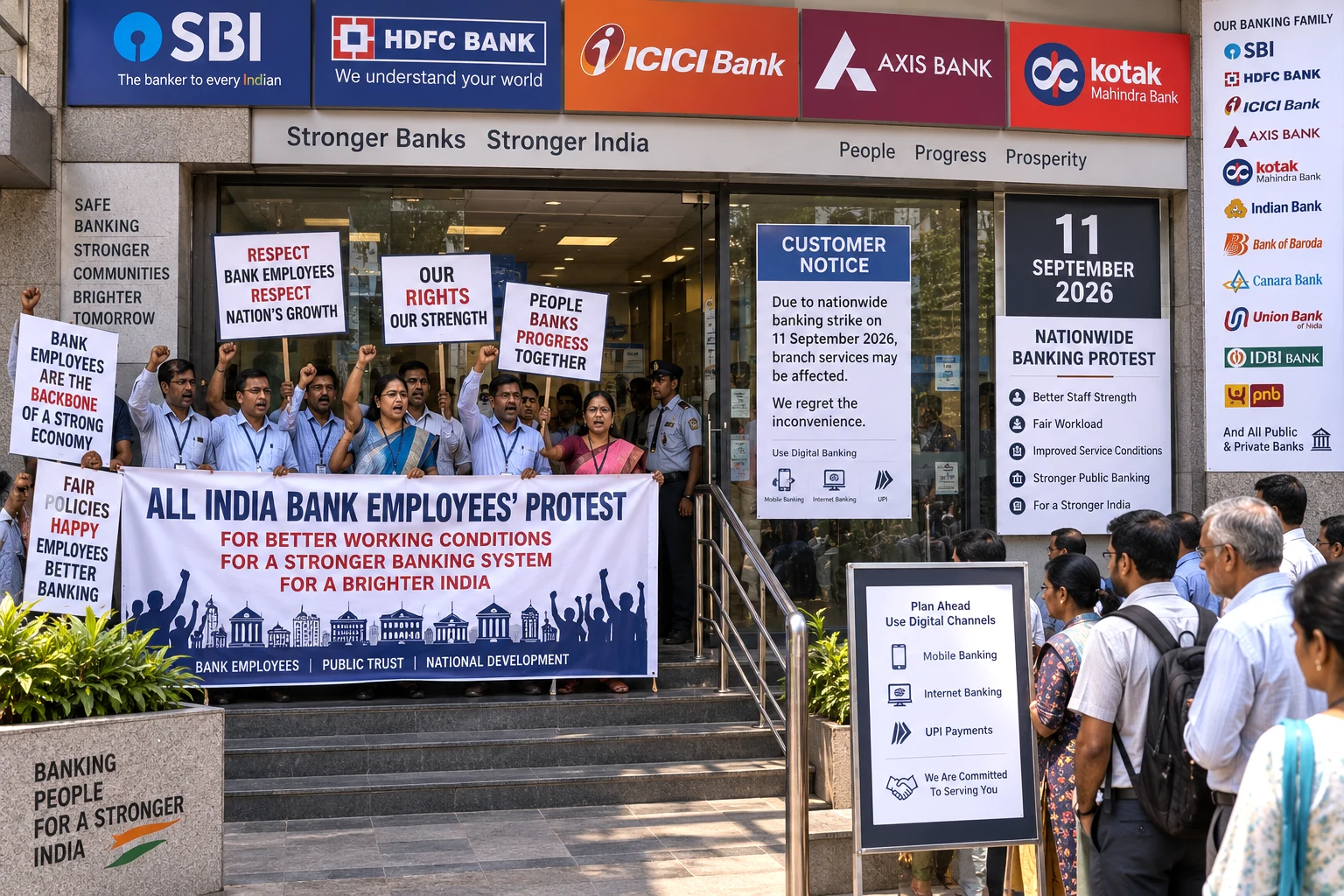
Bank unions will strike nationwide on September 11 over five-day banking and other demands. Here is why employees are protesting, what banks say, how customers may be affected and what happens next.
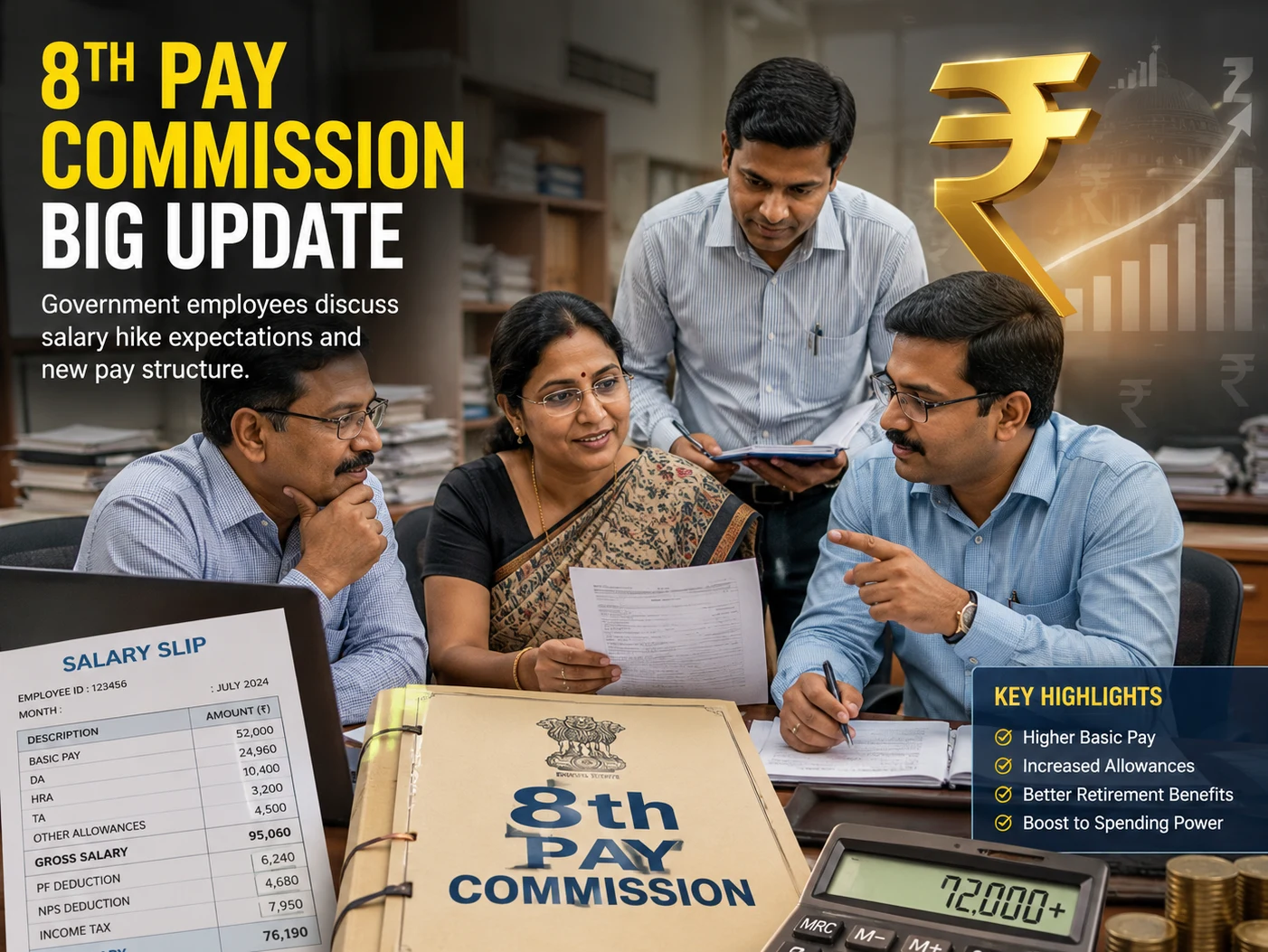
A major demand before the 8th Pay Commission has grabbed the attention of Central Government employees: raise the minimum basic pay from ₹18,000 to ₹72,000 with a fitment factor of 4.0. But is ₹72,000 confirmed? Here’s what employees need to know.
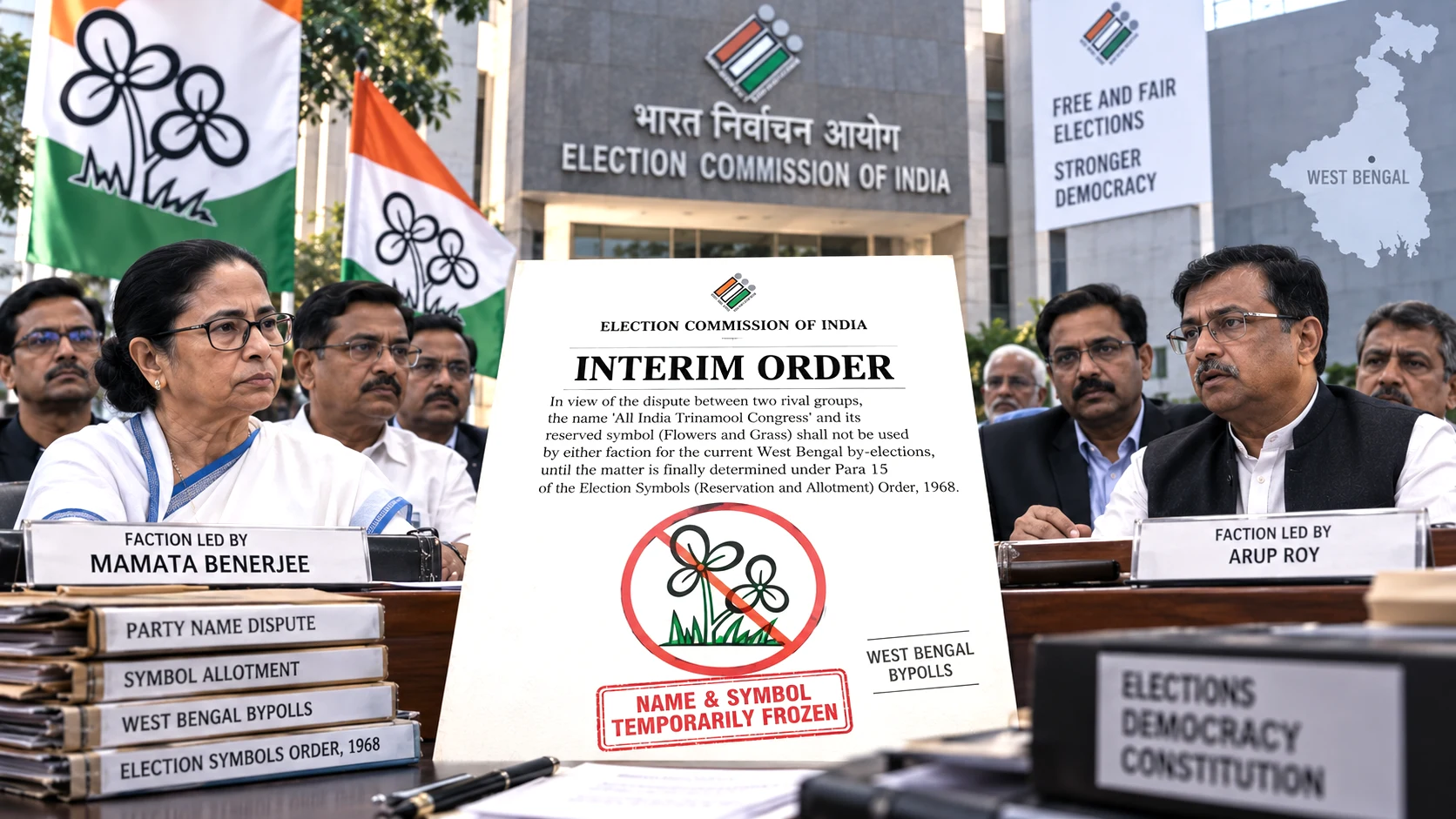
Neither the Mamata Banerjee group nor the rival faction formally represented before the Election Commission by Arup Roy can use the All India Trinamool Congress name or its reserved symbol in the October 6 bypolls. The order is temporary while the ECI decides the larger party-control dispute under P
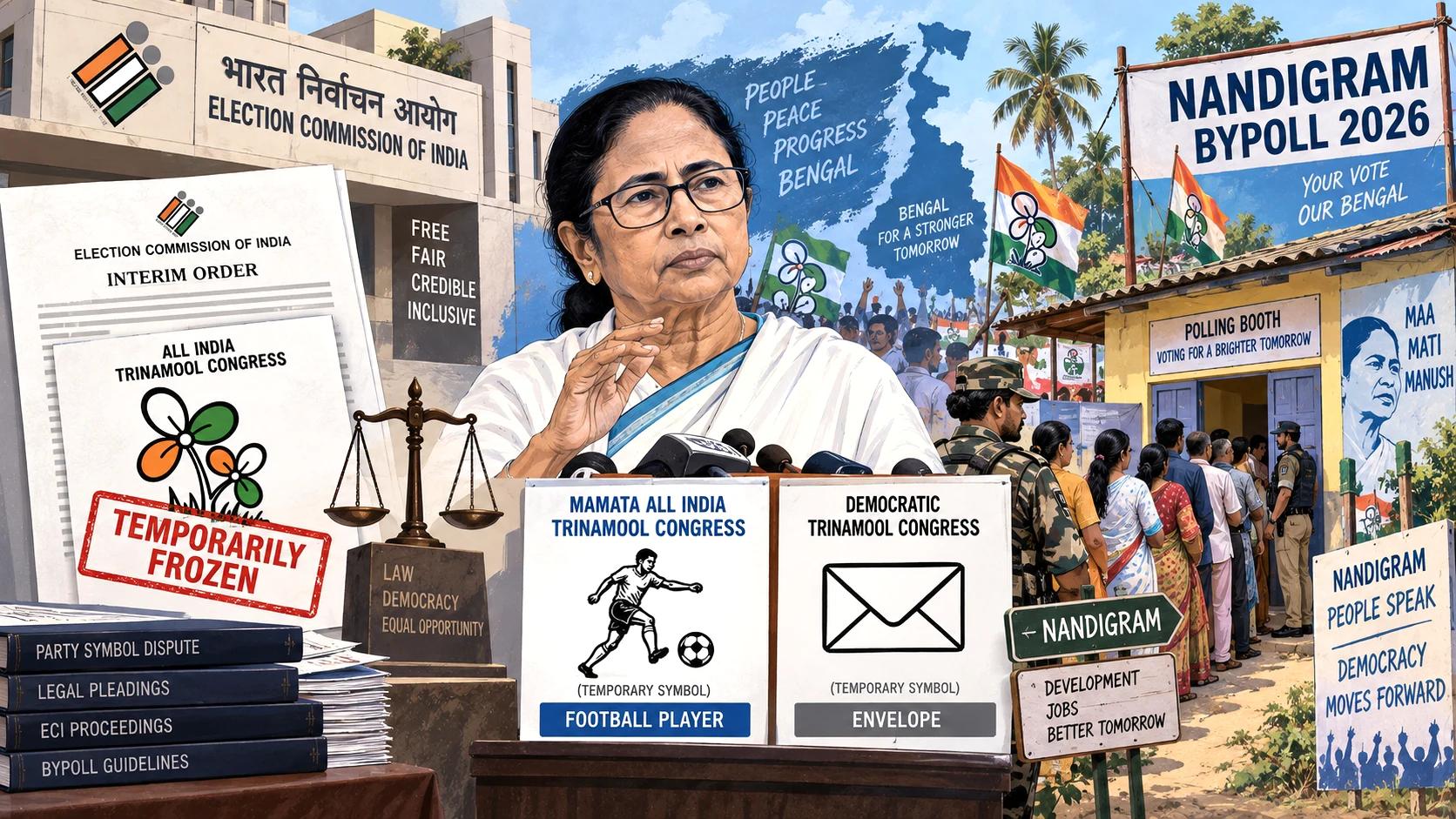
The Election Commission’s interim freeze on the Trinamool Congress name and ‘Flowers and Grass’ symbol has pushed rival factions to temporary identities. Mamata Banerjee has challenged the order in the Supreme Court, while the October 6 Nandigram bypoll has been further complicated by the withdrawal

The 18th BRICS Summit concluded in New Delhi with leaders adopting the New Delhi Declaration by consensus, as India handed the chairship to China for 2027.
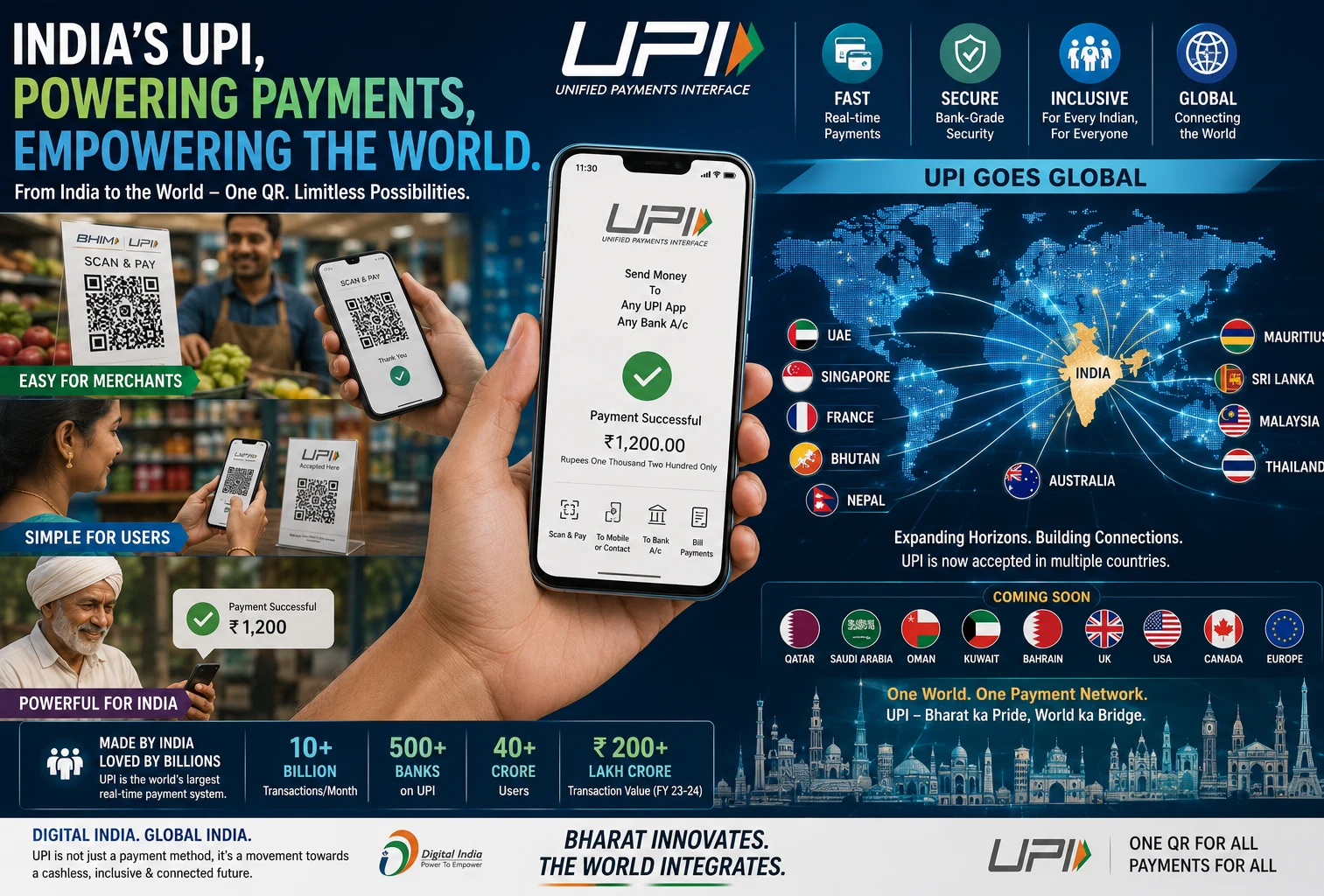
UPI has completed an extraordinary decade — from 1.78 crore annual transactions in its early days to more than 66 crore transactions a day. Now Bharat’s payment revolution is crossing borders, connecting national payment systems and presenting the world with a powerful alternative model for instant
0 Comments