New Rules From October 1, 2026: 5 Changes in LPG, SBI ATM, FD, NPS and Property TDS That Could Affect Your Walle
Five important money and compliance rules take effect from October 1, 2026, covering LPG Aadhaar authentication, SBI ATM limits, bulk FD rates, NPS charges and TDS on property bought from non-residents.
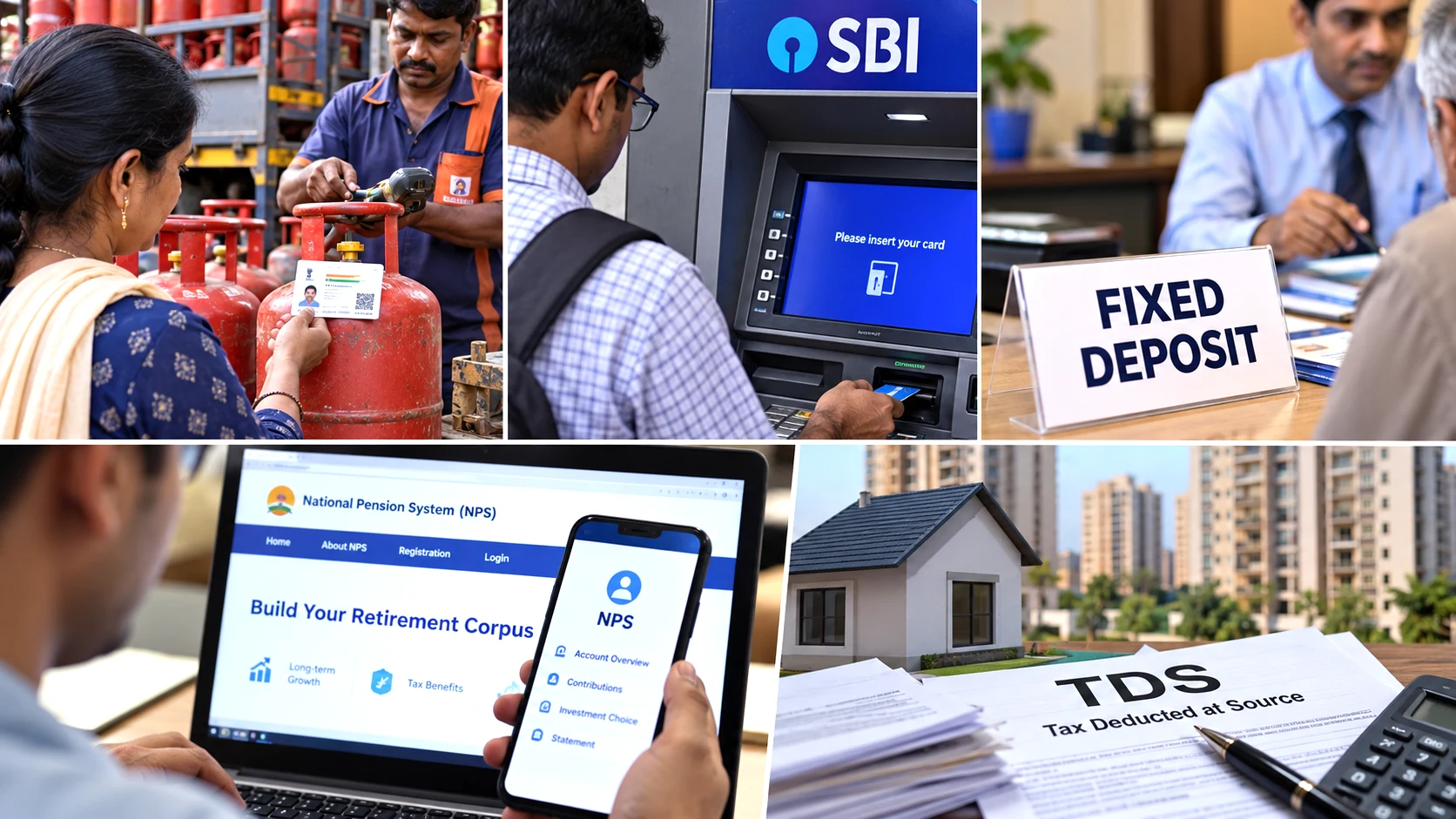
October 1, 2026 brings several financial and household-rule changes across India, affecting everything from subsidised cooking-gas refills and SBI ATM usage to large fixed deposits, National Pension System charges and property transactions involving non-resident sellers.
Some of these changes can have an immediate impact on household spending. Others primarily change fees, transparency or paperwork.
The five changes taking effect from Wednesday, October 1, 2026, are:
Recommended Reading
Related Stories & In-Depth Guides
Curated editorial perspectives matching this topic.
Delhi's winter anti-pollution rules will cap physical attendance at 50% in Delhi government and private offices from November 1 to January 31. Essential services are exempt. Parking charges will double, while a separate no-PUCC-no-fuel rule starts across NCR from October 1.
RBI's MPC meets October 5–7 with economists increasingly expecting a 25 bp repo-rate hike to 5.50%. Here's what that could mean for floating-rate home loans, EMIs and borrowers.
Biometric Aadhaar authentication becomes necessary for subsidised domestic LPG refills at the regulated price.
SBI cuts the free other-bank ATM allowance for Salary Package Account holders from 10 transactions to five per month.
RBI's new disclosure and pricing rules for bulk fixed deposits take effect.
PFRDA's revised Point of Presence charge structure for NPS and NPS Lite begins.
Resident individuals and HUFs buying property from non-resident sellers get a simplified PAN-based TDS process without needing a separate TAN.
Not every rule applies to every consumer, so households should first identify which category they fall into before taking action.
The most widely relevant change concerns domestic LPG consumers.
From October 1, consumers seeking to book domestic LPG refills at the regulated Retail Selling Price with the applicable subsidy must have completed Biometric Aadhaar Authentication, or BAA, according to the Ministry of Petroleum and Natural Gas.
Consumers who have already completed authentication do not need to repeat it.
The government said that as of September 19, 27.43 crore active domestic LPG consumers — about 89.9% — had already completed biometric authentication.
That leaves a relatively smaller group who still need to complete the process if they want to continue accessing subsidised refills under the regulated-price framework.
How can LPG consumers complete Aadhaar authentication?
The government has provided several routes.
Authentication can be carried out when the cylinder is delivered, at the consumer's LPG distributor showroom or through the relevant oil marketing company's mobile application.
Indane customers can use IndianOil ONE, Bharatgas customers can use HelloBPCL and HP Gas customers can use HP PAY.
What happens if you do not complete LPG biometric authentication?
This point is important because some reports can leave the impression that consumers will simply stop receiving cooking gas.
That is not what the Petroleum Ministry says.
Consumers unwilling or unable to complete BAA can register that choice through their oil marketing company's digital channels and continue to receive LPG at the applicable market price without subsidy.
Under the government's announced arrangement, such supplies will be available in 5 kg or 10 kg cylinders, subject to local availability.
So the October 1 change is primarily about continued access to the subsidised regulated-price refill system, rather than a complete ban on obtaining LPG.
How much could the LPG change affect your wallet?
The government said the implicit subsidy on a 14.2 kg domestic cylinder was around ₹210 in September 2026. That figure can change with underlying fuel costs and government support.
For an eligible household that has not completed authentication, losing access to the subsidised-price route could therefore result in a noticeable increase in cooking-fuel expenditure.
Consumers who already completed BAA should see no procedural change to their existing refill process.
2. SBI Cuts Free Other-Bank ATM Transactions for Salary Accounts
State Bank of India is changing an important benefit enjoyed by its Salary Package Account customers.
From October 1, SBI Salary Package Account holders using their SBI debit card at another bank's ATM or Automated Deposit-cum-Withdrawal Machine will receive only five free transactions per month, down from the previous allowance of 10.
The rule applies at all locations and combines both financial and non-financial ATM transactions in the same five-transaction monthly quota.
That means even activities such as checking a balance or requesting certain non-financial services at another bank's ATM can consume part of the allowance.
What happens after five transactions?
After the free limit is exhausted, the reported SBI tariff remains:
₹23 plus GST for each financial transaction such as a cash withdrawal, and ₹11 plus GST for a non-financial transaction.
The amount charged after exceeding the limit is therefore not the new part of the rule.
The major October 1 change is that customers will reach the chargeable stage much sooner because the free allowance has been halved from 10 to five.
What about transactions at SBI's own ATMs?
The restriction concerns other banks' ATMs and ADWMs.
SBI's official Salary Package information continues to list free unlimited transactions across SBI ATMs as a Salary Package benefit.
For salary-account holders who frequently withdraw cash, one straightforward way to avoid the new other-bank ATM charges is therefore to use SBI's own ATM network where practical.
Who is affected?
This specific 10-to-five reduction applies to SBI Salary Package Accounts.
It should not be reported as though every SBI savings-account customer is suddenly losing five free transactions.
Different account categories have their own limits and charging structures.
For example, SBI's Basic Savings Bank Deposit accounts have separate cash-withdrawal rules. Business Standard reports four free cash withdrawals a month under that framework, with ₹15 plus GST charged thereafter.
3. RBI Changes Bulk Fixed Deposit Pricing and Disclosure Rules
A less visible but important banking change also starts October 1.
The Reserve Bank of India's revised deposit-interest framework requires banks to make the pricing of bulk deposits more transparent.
The RBI's July 30 amendment states that applicable bulk-deposit interest rates must be disclosed on a bank's website at 10:00 am on every business day, with a 10-minute grace period allowing publication no later than 10:10 am.
Banks must generally follow the rates disclosed in advance rather than privately quoting undisclosed rates to individual large depositors.
The revised framework also requires similar deposits accepted on the same day to be priced consistently across branches and customers, although RBI permits specified differentiation linked to liquidity-treatment considerations under its regulatory framework.
Does this change your normal ₹1 lakh or ₹5 lakh FD?
For most ordinary retail depositors, probably not directly.
The October 1 rule is especially relevant to large or bulk deposits.
For commercial banks, the widely applicable bulk-deposit threshold is ₹3 crore and above.
Someone investing a normal retail fixed deposit below the bulk threshold does not automatically receive a new interest rate merely because October has begun.
Why does this matter?
The rule increases transparency for companies, institutions, high-net-worth individuals and others placing large deposits.
A depositor should be able to check the bank's published bulk-deposit rate for that business day before committing funds rather than depending entirely on a private branch-level quotation.
It could also make it easier for large depositors to compare competing bank offers.
The rule is therefore less about an immediate charge on consumers and more about reducing opaque pricing in the large-deposit market.
4. New NPS and NPS Lite Point-of-Presence Charges Take Effect
National Pension System subscribers also need to know about a revised PFRDA charge structure taking effect October 1.
The Pension Fund Regulatory and Development Authority issued Circular PFRDA/2026/46/REG-POP/08 on August 28 covering Points of Presence, or PoPs, for schemes under NPS and NPS Lite. PFRDA's own regulatory listing confirms the circular and its publication date.
Under the revised framework, the standard one-time onboarding charge through a PoP is ₹200 per PRAN.
The amount is structured as the equivalent of ₹50 per quarter through unit cancellation by the Central Recordkeeping Agency and payment to the PoP.
An annual PoP charge of 0.20% of assets under management is also provided for applicable non-dormant accounts, adjusted through NAV and payable quarterly.
GST or other applicable taxes are additional.
Does every new NPS account necessarily cost ₹200?
There are exceptions and different channels.
For fully digital, non-face-to-face onboarding, the PFRDA framework allows a reduced onboarding charge of ₹100, where applicable.
The circular also contains separate provisions concerning e-NPS and D-Remit transactions, so subscribers should check the route through which their account was opened rather than assuming every NPS account will incur exactly the same PoP charge.
What about dormant accounts?
The revised annual PoP charge does not apply to accounts classified as dormant under the prescribed definition.
The practical message is that the October 1 NPS change concerns intermediary charges, not a new tax on pension savings.
Subscribers should check their CRA or PoP statement to understand the exact deductions applicable to their account.
5. Buying Property From an NRI Gets Easier: No Separate TAN for Certain Buyers
The fifth change does not necessarily reduce the amount of tax payable, but it could reduce paperwork and compliance costs for some property buyers.
From October 1, resident individuals and Hindu Undivided Families buying immovable property from a non-resident seller no longer need to obtain a separate Tax Deduction and Collection Account Number solely for this transaction under the revised procedure.
Instead, eligible buyers can use their existing PAN and the new Form 141 framework for TDS reporting and payment.
The revised mechanism includes a dedicated schedule for reporting the property transaction.
Does this mean buyers no longer have to deduct TDS?
No.
This is a procedural simplification, not a TDS exemption.
The buyer must still deduct, deposit and report the applicable tax when required.
The change removes the need for an individual or HUF to obtain a TAN merely because they are buying a property from a non-resident seller.
That can save time and administrative effort, particularly for people involved in a one-time residential property transaction.
Why is Form 141 important?
The Income Tax Department describes Form 141 as a consolidated challan-cum-statement used to report and pay TDS for specified transactions through separate schedules.
The October change extends the simplified PAN-based structure to the relevant category of property purchases involving non-resident sellers.
Buyers should still determine the correct TDS rate and consider professional advice for complex NRI property transactions because the tax treatment can depend on the seller's status, capital-gains position and any lower-deduction certificate.
Which October 1 Change Is Most Important for Ordinary Households?
For the largest number of families, the LPG biometric-Aadhaar rule is likely to require the most immediate attention.
Anyone who relies on subsidised domestic LPG should check whether authentication has already been completed.
The government says nearly 90% of active consumers had already completed BAA by September 19, meaning most households should not need to take fresh action.
SBI's ATM change matters mainly to Salary Package customers who regularly use other banks' ATMs.
The RBI bulk-deposit rule primarily affects large depositors.
The NPS rule affects pension subscribers using applicable PoP channels.
The NRI-property rule matters only to resident individuals or HUFs buying property from non-resident sellers.
Don't Confuse October 1 Changes With Rules Starting Later This Month
Several other financial developments are scheduled during October, but they should not be described as rules that start today.
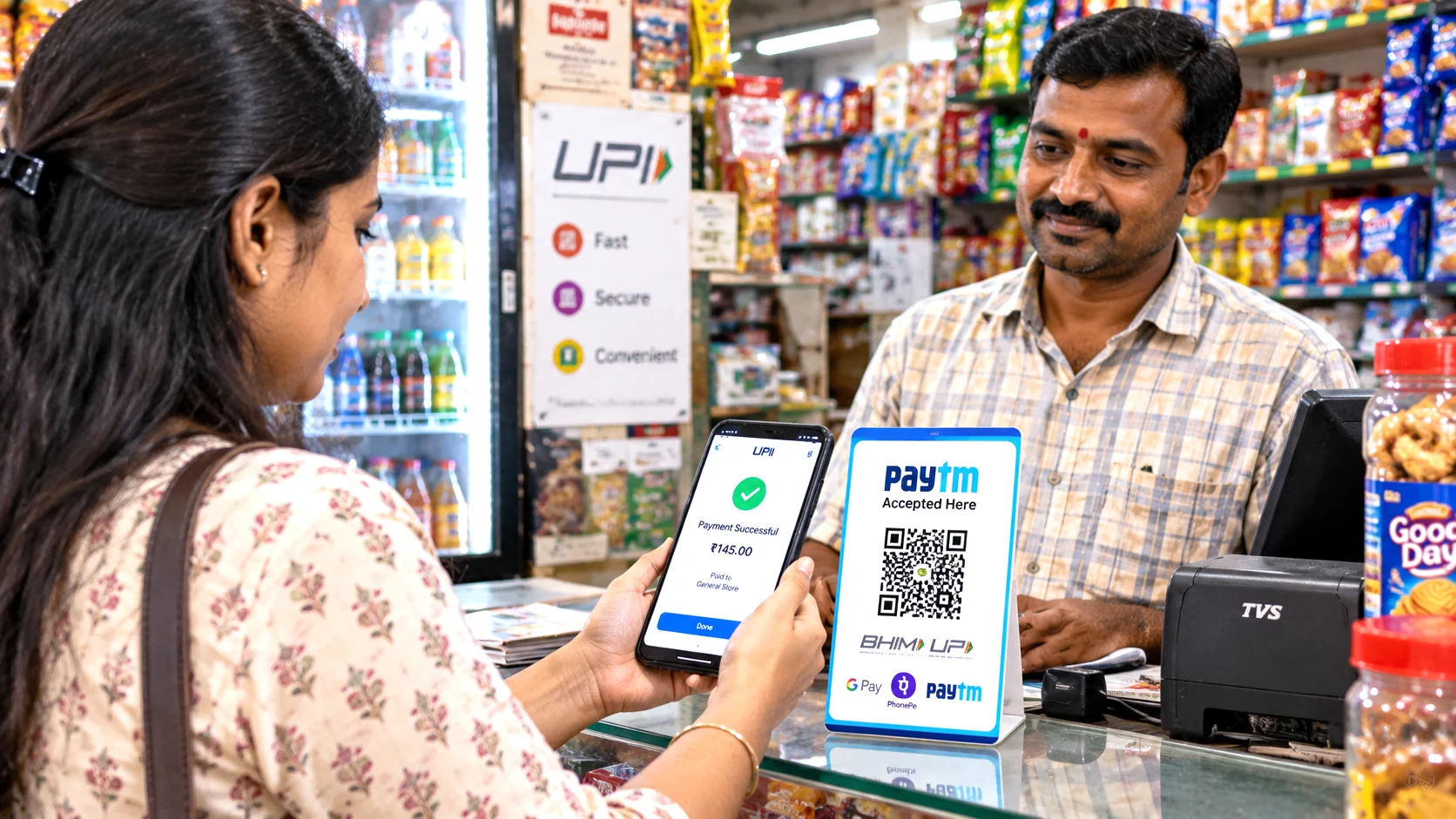
One example is the new Merchant Discount Rate framework for specified UPI person-to-merchant transactions above ₹2,000, which is scheduled to begin on October 15, 2026.
The MDR is also primarily a merchant-payment-system charge rather than an automatic fee debited from every customer making a UPI payment.
Similarly, the Reserve Bank of India's October monetary-policy decision and changes in small-savings rates are separate developments and should not be folded into an October 1 list before they are officially announced.
What Should You Do Today?
For LPG users, check whether Aadhaar biometric authentication is complete before attempting a subsidised refill.
SBI Salary Package customers should begin counting other-bank ATM transactions from the new five-transaction allowance and use SBI ATMs where practical.
Large FD investors should check their bank's published bulk-deposit rate after 10 am before placing funds.
New or existing NPS subscribers should review whether their account uses a PoP and what charges apply under the revised structure.
Anyone buying property from an NRI from October 1 onward should use the new PAN/Form 141 process applicable to their transaction instead of unnecessarily applying for a TAN solely for the property purchase.
Bottom Line
October 1, 2026 does not bring one sweeping financial rule affecting every Indian equally.
Instead, five separate changes target different groups.
For ordinary households, LPG authentication and SBI ATM limits are likely to be the most visible.
For investors and pension subscribers, the RBI bulk-FD and PFRDA rules change how deposits and NPS intermediary charges are handled.
And for resident buyers purchasing property from non-residents, the new PAN-based TDS mechanism removes an administrative step without eliminating the underlying tax obligation.
The best approach is therefore to check which rule actually applies to you rather than assuming every October 1 headline means an immediate new charge.
Frequently Asked Questions
Is Aadhaar biometric authentication mandatory for LPG from October 1, 2026?
It is required to book subsidised domestic LPG refills at the regulated retail selling price. Consumers who have already completed BAA do not need to repeat it.
Will my LPG connection be cancelled if I have not completed BAA?
The government has not said that the connection will automatically be cancelled. Consumers unwilling or unable to authenticate can register their choice to receive market-price LPG without subsidy under the alternative arrangement described by the Petroleum Ministry.
How many free other-bank ATM transactions will SBI salary customers get?
From October 1, SBI Salary Package Account holders receive five free monthly transactions at other-bank ATMs and ADWMs, down from 10. Financial and non-financial transactions are counted together.
How much does SBI charge after the five free transactions?
Reported charges remain ₹23 plus GST for a financial transaction and ₹11 plus GST for a non-financial transaction at another bank's ATM after the free allowance is exhausted.
Are SBI ATM transactions also limited to five?
The reduction specifically concerns other banks' ATMs. SBI's official Salary Package page lists free unlimited transactions across SBI ATMs for qualifying Salary Package customers.
Are normal retail FD interest rates changing on October 1?
The RBI rule primarily changes pricing transparency and disclosure for bulk deposits. It does not automatically change the interest rate on every ordinary retail FD.
What is the new NPS onboarding charge?
The revised standard PoP structure includes a ₹200 one-time onboarding charge per PRAN, with different treatment possible for specified digital onboarding channels.
Do NRI property buyers no longer have to deduct TDS?
No. The TDS obligation remains. The October 1 reform removes the separate TAN requirement for eligible resident individuals and HUFs and introduces a PAN/Form 141-based compliance mechanism.
Is the new UPI MDR rule effective from October 1?
No. The specified UPI merchant MDR framework is scheduled for October 15, 2026, so it should not be presented as an October 1 rule.
Key Takeaway
Five money rules change from Oct 1, 2026.
LPG Aadhaar for subsidised refills; SBI salary ATM free limit cut to 5.
The Rajatheertha Team publishes news, explainers, guides and updates across India and the world. Our coverage follows Rajatheertha's editorial, verification and corrections standards.
India and Pakistan have summoned each other's diplomats after BSF personnel killed two Pakistani nationals along the Punjab border on October 2. New Delhi says they were infiltrators posing a security threat, while Islamabad says they were unarmed civilians.
Finance Minister Nirmala Sitharaman says the new UPI MDR is not a tax and cannot be passed on to customers. Here is who actually pays, what changes from October 15 and which UPI transactions remain free.
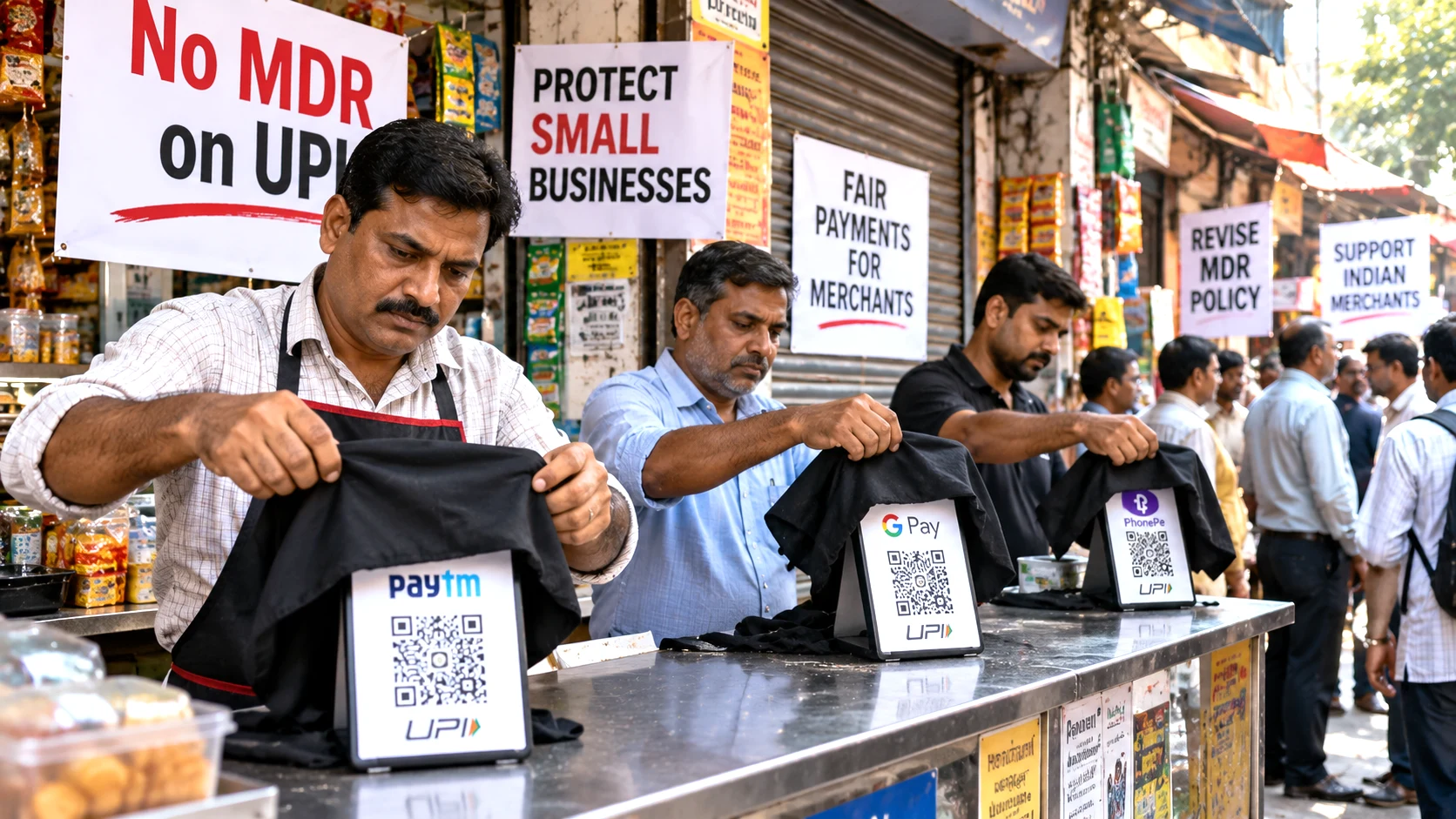
Several trader associations have called for a voluntary “No UPI Day” on October 2 against the new MDR on some merchant UPI payments above ₹2,000. UPI itself will not shut down, customers will not pay the MDR, and most transactions remain free.
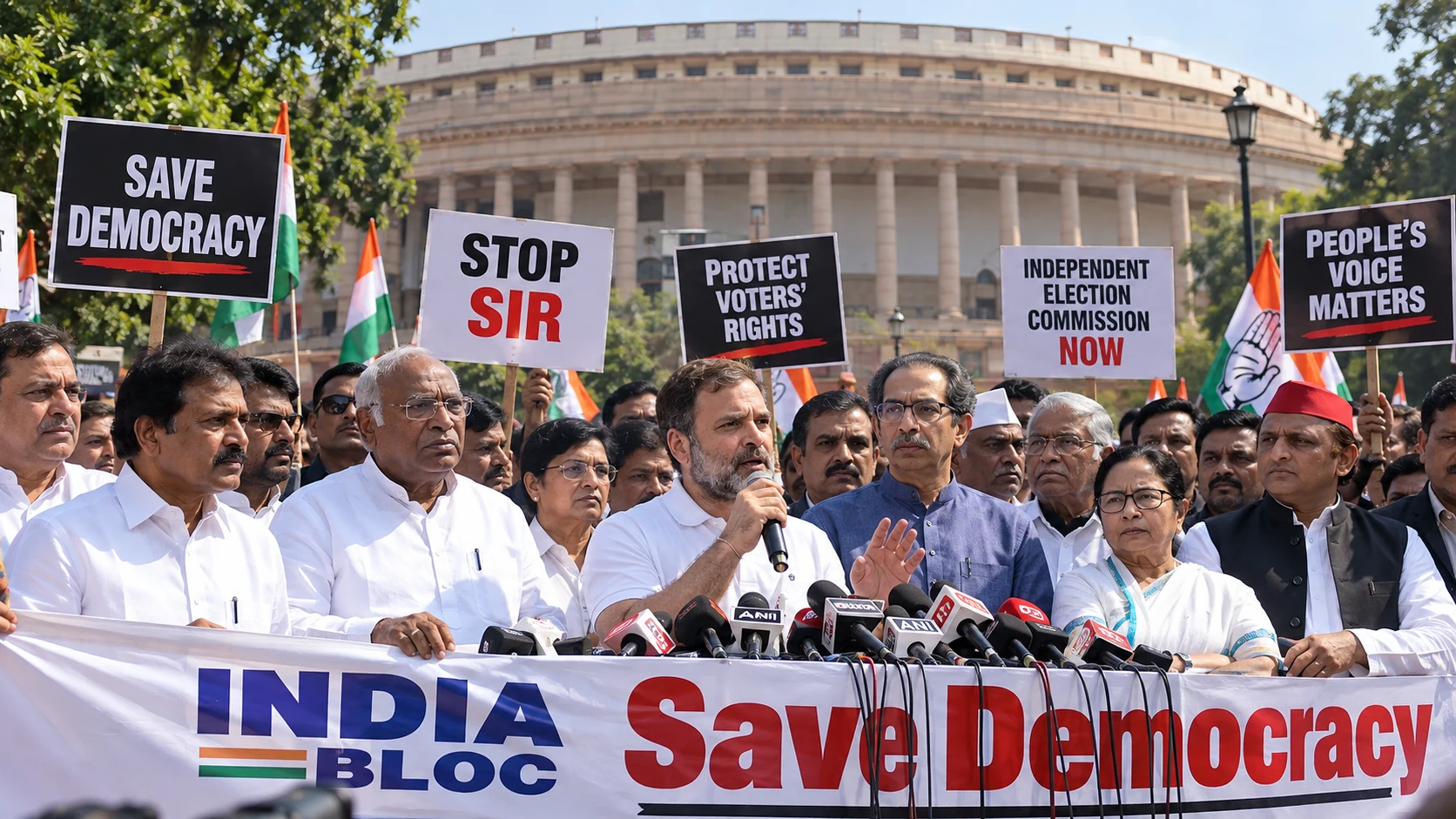
The INDIA bloc has announced nationwide “Save Democracy” marches from Oct. 2–8 over the Election Commission and SIR controversy, with MPs planning an Oct. 6 march to the EC. The BJP has rejected the allegations as political frustration after electoral defeats.
The 18th BRICS Summit concluded in New Delhi with leaders adopting the New Delhi Declaration by consensus, as India handed the chairship to China for 2027.
India celebrates National Space Day 2026 on August 23, remembering Chandrayaan-3’s historic Moon landing while highlighting ISRO’s achievements and the country’s rapidly expanding ambitions in space exploration.







0 Comments