BRICS Summit Concludes in New Delhi with New Delhi Declaration and China Taking Chairship
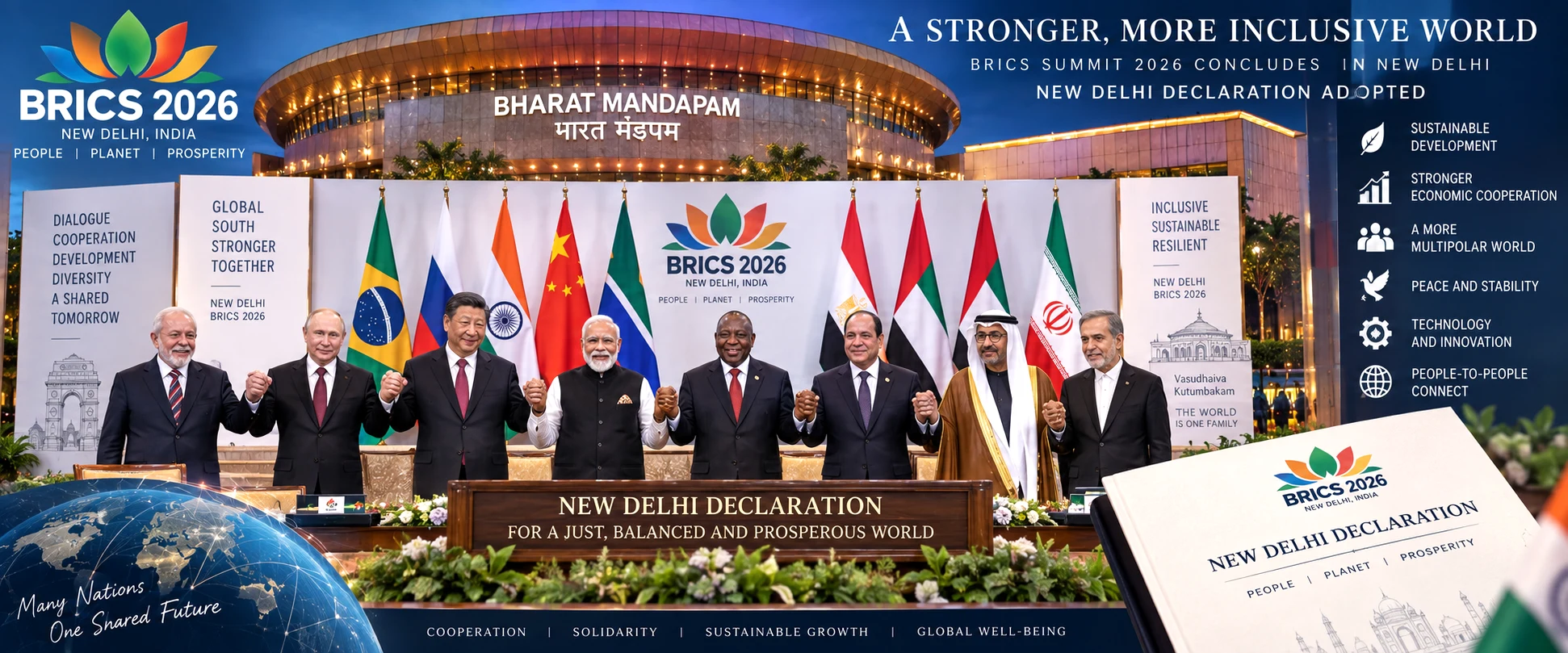
The 18th BRICS Summit concluded in New Delhi with leaders adopting the New Delhi Declaration by consensus, as India handed the chairship to China for 2027.
The 18th BRICS Summit concluded in New Delhi on Sunday with leaders adopting the New Delhi Declaration, bringing India’s 2026 chairship to a close after two days of discussions shaped by geopolitical conflict, trade pressures, demands for global institutional reform and efforts to strengthen cooperation among emerging economies.
Prime Minister Narendra Modi formally passed the BRICS chairship to China for the next term, with Beijing expected to host the 19th summit in 2027.
The summit’s most important collective outcome was the New Delhi Declaration. Reaching consensus carried particular diplomatic weight because BRICS members entered the meeting with different positions on some of the world’s most difficult conflicts, especially the escalating situation in the Middle East.
The final document goes considerably beyond a single geopolitical issue. It sets out common positions and priorities covering multilateral reform, international security, economic cooperation, trade, sustainable development, climate action, technology and cooperation across the Global South.
Recommended Reading
Related Stories & In-Depth Guides
Curated editorial perspectives matching this topic.
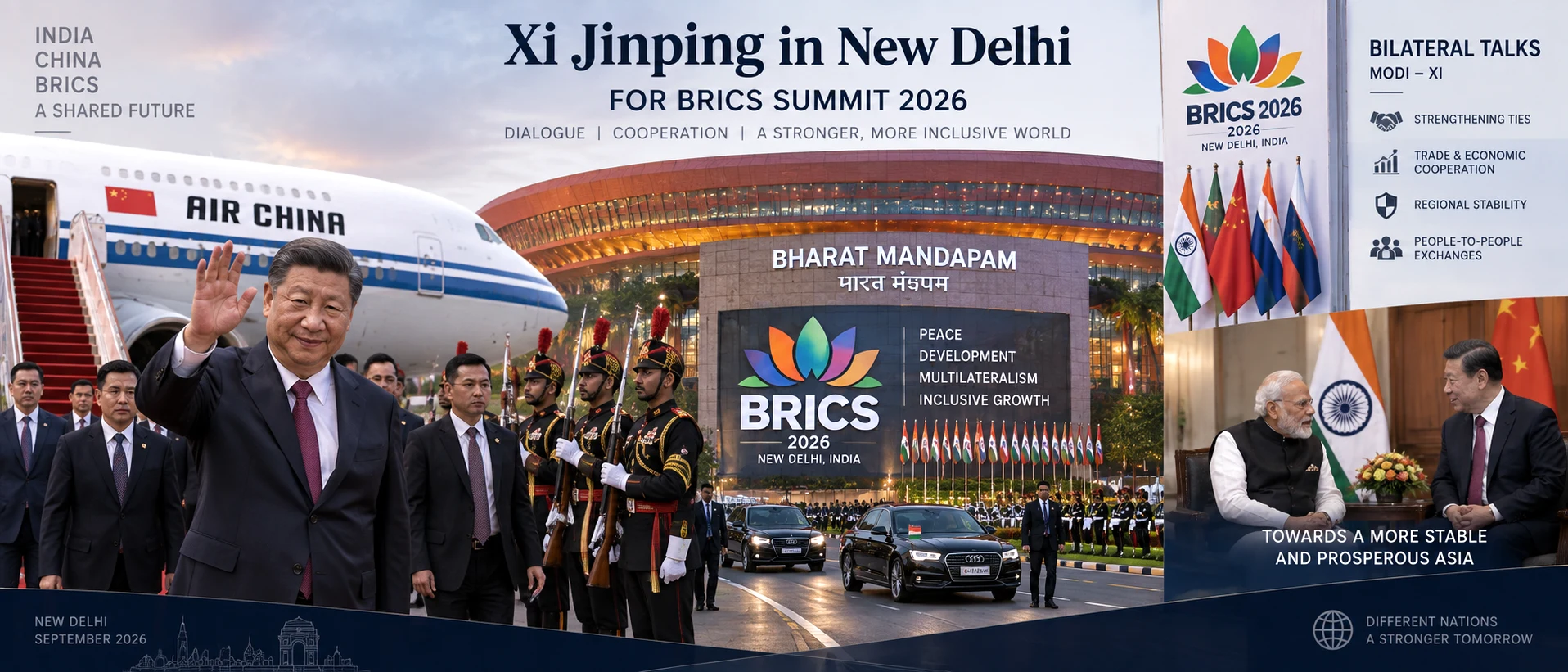
Chinese President Xi Jinping arrived in New Delhi for the 18th BRICS Summit, his first visit to India in nearly seven years, with bilateral talks with Prime Minister Narendra Modi scheduled for Saturday evening.
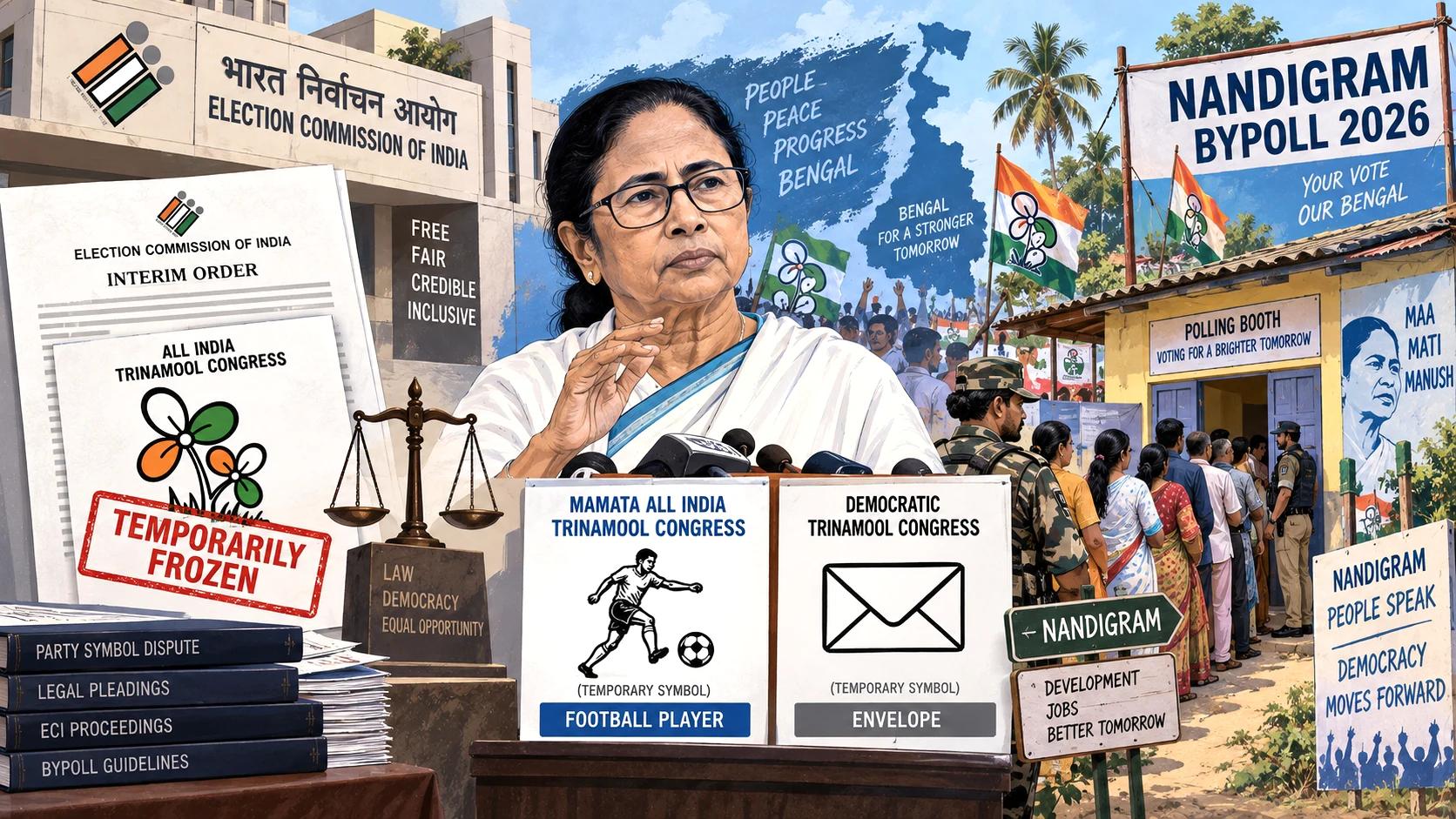
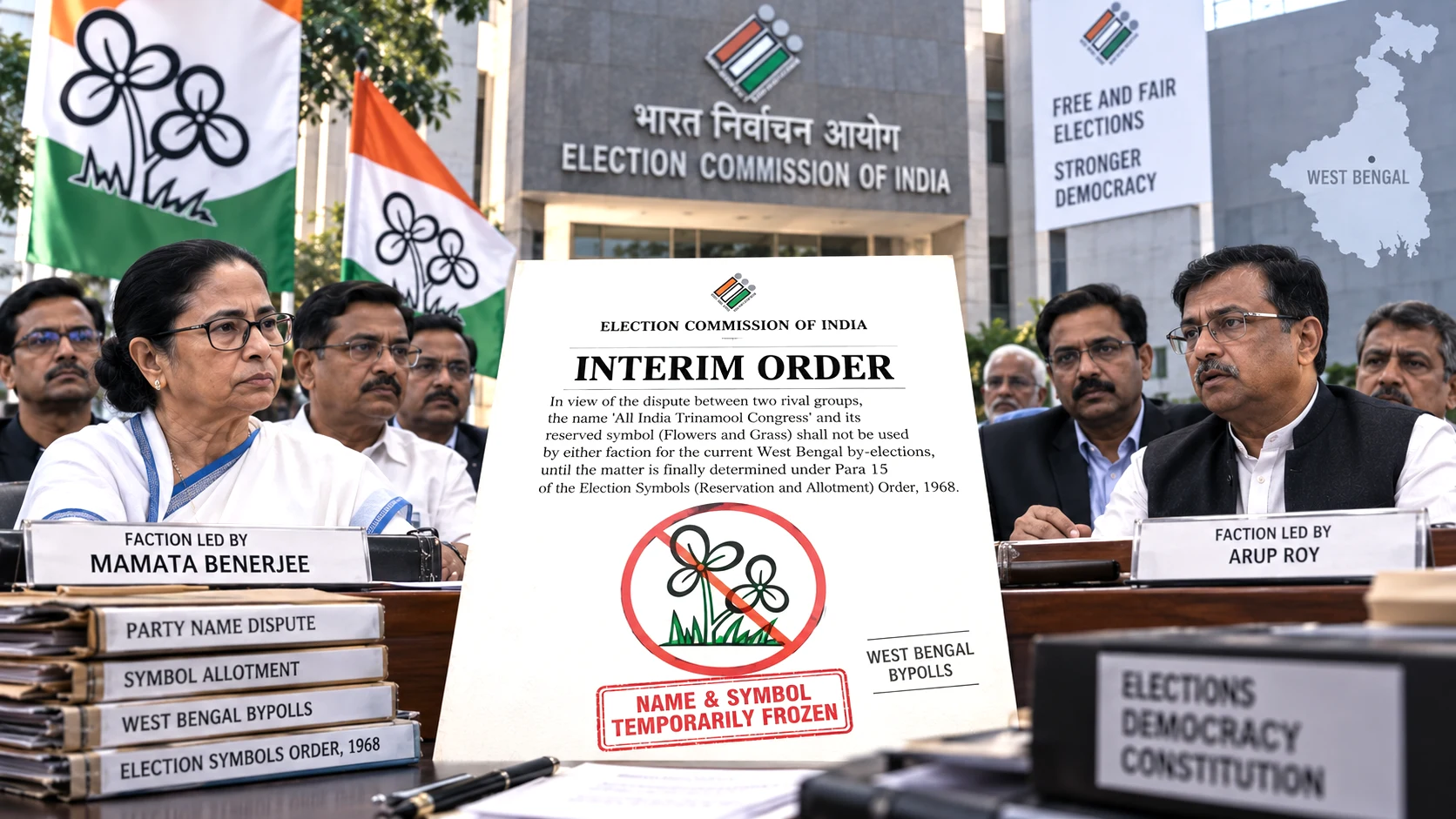
The Election Commission’s interim freeze on the Trinamool Congress name and ‘Flowers and Grass’ symbol has pushed rival factions to temporary identities. Mamata Banerjee has challenged the order in the Supreme Court, while the October 6 Nandigram bypoll has been further complicated by the withdrawal
For India, the summit also provided an opportunity for an intensive round of bilateral diplomacy. Modi met leaders including Chinese President Xi Jinping, Russian President Vladimir Putin and Iranian President Masoud Pezeshkian during the summit period, alongside engagements with other visiting leaders and international representatives.
The result was a summit that combined the formal BRICS agenda with some of India’s most important bilateral relationships.
Key Takeaways
The 18th BRICS Summit concluded in New Delhi on September 13 after two days of leaders’ meetings under India’s 2026 chairship.
BRICS leaders adopted the New Delhi Declaration by consensus. The document covers international security, global governance, trade, development, climate, technology and other areas of cooperation.
The declaration called for restraint and diplomacy amid escalating conflict in the Middle East and raised concerns over unilateral tariff and non-tariff measures affecting trade.
Prime Minister Narendra Modi used the summit to push for a stronger Global South voice, more resilient supply chains and cooperation on emerging challenges including artificial intelligence and critical minerals.
India concluded its BRICS chairship by passing responsibility for the next term to China, which is expected to host the 19th BRICS Summit in 2027.
New Delhi Declaration Becomes the Summit’s Main Collective Outcome
The adoption of the New Delhi Declaration was central to the summit.
BRICS operates through consensus, meaning a common declaration requires members with very different strategic interests to find language all can accept.
That was particularly difficult this year because of conflict in the Middle East.
BRICS includes Iran as well as the United Arab Emirates, a close US partner. Negotiators nevertheless reached agreement, allowing the leaders to unanimously adopt the declaration on the first day of the summit.
The declaration expressed deep concern over escalating tensions in the Middle East and called for maximum restraint.
It also reiterated support for resolving international disputes through dialogue, consultation and diplomacy.
That language is significant precisely because it represents a negotiated BRICS position rather than the foreign policy of any single member.
The declaration should therefore not be interpreted as evidence that all BRICS countries now hold identical positions on the conflicts discussed in New Delhi.
They do not.
The achievement was finding enough common ground to produce a collective statement despite those differences.
Trade Barriers and Sanctions Enter the Declaration
Economic tensions also featured prominently.
The New Delhi Declaration expressed concern about unilateral tariff and non-tariff measures that can distort trade and affect the global economy.
This comes as international trade is increasingly influenced by sanctions, export restrictions, strategic competition and concerns over supply-chain dependence.
For BRICS countries, the issue has several dimensions.
Russia and Iran face extensive Western sanctions. China has been involved in prolonged trade and technology disputes with the United States. India has its own concerns about market access, tariffs and resilient supply chains.
Those national interests are not identical, but they create common interest in discussing how international trade rules are formed and applied.
BRICS leaders also continued discussions around greater use of national currencies and improvements to cross-border payment systems.
That should not be confused with the creation of a single BRICS currency.
The New Delhi summit did not establish a common currency replacing the US dollar.
The practical emphasis remains on expanding payment options, financial cooperation and trade settlement mechanisms among members.
Modi Warns of Geopolitical and Supply-Chain Pressures
On the summit’s second day, Modi focused on the effect of global instability on ordinary people.
He warned that increasing conflicts and geopolitical tensions were producing wider consequences, while supply-chain disruption and climate-related pressures were adding to global uncertainty.
Modi also highlighted the risks created when technology and critical minerals become instruments of geopolitical pressure.
That issue has become increasingly important as countries compete over semiconductors, rare-earth minerals, advanced manufacturing, artificial intelligence infrastructure and other technologies considered essential to economic and national security.
For India, resilient supply chains have both a strategic and economic dimension.
The country wants greater manufacturing capacity at home while maintaining access to the materials, technologies and markets required for growth.
The summit’s discussions therefore connected traditional diplomacy with questions that increasingly affect industries and consumers directly.
Resilience and Innovation Shape India’s BRICS Presidency
India hosted the summit under the theme “Building for Resilience, Innovation, Cooperation and Sustainability.”
Those four areas were intended to frame India’s 2026 chairship.
The New Delhi meetings consequently covered not only security and global governance but also food security, energy, artificial intelligence, climate action, development and economic cooperation.
Modi argued that solutions developed within BRICS should not remain limited to its members.
Instead, he said they should be adaptable and accessible to the wider Global South.
That approach reflects a larger theme in India’s recent diplomacy: presenting the country as a bridge between developing economies and established centres of global power.
BRICS provides one platform for that strategy.
India is simultaneously a member of BRICS and the Quad, works closely with the United States and Europe, maintains longstanding ties with Russia, has expanding relationships across the Gulf and continues to manage a complicated relationship with China.
That makes India’s BRICS policy different from treating the organisation simply as an anti-Western bloc.
Global Governance Reform Remains a Central BRICS Demand
One of the strongest areas of continuity in BRICS is the argument that global institutions need reform.
The New Delhi Declaration reaffirmed support for a more representative international order and a revitalised multilateral system.
The basic argument is that institutions created in an earlier era do not adequately reflect the economic and demographic weight of today’s developing and emerging economies.
India has repeatedly made that case in its campaign for reform of the United Nations Security Council and other multilateral bodies.
At the summit, Modi argued that the Global South should have a stronger role in shaping international rules rather than simply following decisions made elsewhere.
That objective is shared broadly within BRICS, even when members disagree about what a reformed global order should ultimately look like.
Russia, China, India and other members approach international politics from different strategic positions.
BRICS consensus therefore tends to be strongest around the demand for greater representation and weaker when discussions move to specific geopolitical disputes.
Expanded BRICS Makes Consensus More Difficult — and More Important
The BRICS of 2026 is substantially larger and more diverse than the grouping created by Brazil, Russia, India and China two decades ago.
South Africa later joined, and the organisation has since expanded to include additional major emerging economies.
The larger grouping now represents roughly half of the world’s population, giving its collective decisions considerable political visibility.
Expansion has also made agreement harder.
Members differ on relations with the United States, regional conflicts, economic models, security priorities and alliances.
That was visible in New Delhi.
Iran’s involvement in the current Middle East conflict presented one challenge. The UAE’s different strategic relationships presented another.
Yet the members still agreed on a declaration.
That does not erase their disagreements, but it demonstrates that the consensus model can continue to function even when the grouping is dealing with highly contentious issues.
Modi-Xi Meeting Adds Weight to Summit Diplomacy
Beyond the formal BRICS sessions, the Modi-Xi bilateral was one of the summit’s most closely watched meetings.
Xi’s trip marked his first visit to India in seven years.
The meeting came as India and China continue a gradual effort to stabilise relations following the severe deterioration associated with the 2020 border crisis.
Chinese official reporting said the leaders agreed that the two countries should approach their relationship from a strategic and long-term perspective and continue working to maintain peace and tranquillity in border areas.
Economic concerns were also discussed.
The two sides acknowledged issues surrounding trade and market access, while the broader relationship continues to be shaped by India’s substantial trade deficit with China and concerns over supply-chain dependence.
The meeting did not resolve the boundary dispute.
Nor does a leader-level meeting mean India-China relations have returned to their pre-2020 position.
Its importance lies instead in the continuation of high-level political communication and the effort to prevent unresolved disputes from again producing a wider crisis.
Modi-Putin Talks Cover Energy, Defence and Economic Cooperation
Modi also met Russian President Vladimir Putin on the margins of the summit.
According to the Indian Prime Minister’s Office, the leaders reviewed cooperation across political, economic, defence, energy, space, skill mobility and people-to-people areas.
They also discussed cooperation within BRICS under India’s chairship.
The bilateral highlighted another aspect of India’s diplomatic balancing.
New Delhi maintains longstanding relations with Moscow while simultaneously expanding partnerships with the United States and Europe.
Russia remains important to India in areas including defence and energy, even as the geopolitical environment around Moscow has become considerably more difficult.
The BRICS summit gave both governments another setting in which to maintain that relationship.
India Uses Summit for Wider Bilateral Diplomacy
Modi’s diplomatic schedule extended well beyond meetings with Xi and Putin.
He held a series of bilateral meetings over the summit period, including with Iranian President Masoud Pezeshkian and leaders from Africa, Central Asia and Southeast Asia.
The breadth of these meetings matters because major multilateral summits serve two purposes.
The formal sessions produce collective decisions.
The sidelines allow governments to address bilateral issues that may have little direct connection to the summit agenda.
For India, hosting BRICS brought a large number of leaders to New Delhi simultaneously, creating an opportunity to conduct both forms of diplomacy.
The results of individual bilaterals should still be judged separately according to the official readouts and agreements produced.
A high number of meetings is evidence of diplomatic activity, not automatically of substantive breakthroughs.
China Pushes a ‘Greater BRICS’ Agenda
China used the summit to outline its own priorities for the grouping.
Xi called for deeper cooperation across trade, finance, politics and artificial intelligence and promoted the concept of a broader “Greater BRICS” framework.
Among the initiatives described by China were plans connected to AI cooperation, services trade and special economic zones.
China is expected to have greater opportunity to shape those priorities when it assumes the chairship.
That transition will be closely watched.
India and China both support a larger role for developing countries in global governance, but they do not necessarily share identical strategic objectives.
How Beijing develops the agenda inherited from New Delhi will therefore help determine the direction of BRICS in 2027.
Climate, Development and Technology Remain Part of the Agenda
Geopolitical conflicts dominated much of the attention around the summit, but the declaration was broader.
Climate action, sustainable development, food security, energy cooperation and technology all formed part of the wider BRICS agenda.
Modi also announced an initiative for an early-warning system focused on infectious diseases, reflecting India’s effort to frame BRICS cooperation around practical challenges affecting developing countries.
Artificial intelligence is another growing area.
BRICS members differ considerably in technological capacity, regulation and access to computing infrastructure.
Cooperation therefore does not mean the emergence of a single BRICS technology policy.
The immediate emphasis is more practical: knowledge sharing, capacity building and expanding access to emerging technologies.
What India’s BRICS Chairship Achieved
Measuring the success of a summit requires more than counting meetings or reproducing diplomatic statements.
For India’s chairship, several concrete outcomes can be identified.
The summit produced a consensus New Delhi Declaration despite significant geopolitical differences.
India kept global-governance reform and Global South representation near the centre of the agenda.
The programme broadened discussion around resilience, technology, health, trade, climate and development.
New Delhi also used the gathering for extensive bilateral diplomacy with major partners and competitors.
These are tangible diplomatic outcomes.
At the same time, many of the larger ambitions discussed at BRICS remain long-term objectives rather than completed changes.
The summit did not reform the United Nations Security Council.
It did not eliminate international trade disputes.
It did not resolve the Middle East conflicts.
It did not create a common BRICS currency.
And it did not settle the India-China boundary dispute.
A factual assessment therefore requires separating agreements reached in New Delhi from the broader changes BRICS members say they want to achieve.
China Takes Over the BRICS Chairship
The conclusion of the New Delhi summit also marks a transition.
India has handed the BRICS chairship to China, which is due to lead the grouping during the next cycle and host the 19th summit.
Xi has already signalled that Beijing wants to deepen cooperation across economic, technological and political areas.
The next phase will show which New Delhi initiatives continue under China’s leadership and which new priorities Beijing introduces.
For India, the transition does not end its role.
BRICS operates as an ongoing multilateral mechanism, and New Delhi will continue participating in negotiations and initiatives during China’s chairship.
The India-China bilateral at this summit also included mutual support for their respective BRICS presidencies, according to the Chinese official readout.
What the New Delhi Summit Ultimately Shows
The 18th BRICS Summit took place during an unusually difficult period for international diplomacy.
Wars and regional conflicts are affecting energy markets and shipping routes. Trade restrictions are increasing. Competition over technology and critical minerals is intensifying. Developing economies continue to demand greater representation in global institutions.
BRICS does not have a single answer to those problems.
Its members often disagree sharply.
That makes the New Delhi Declaration more significant than a routine closing document, but it should not be exaggerated into evidence of complete geopolitical unity.
The summit demonstrated something narrower and more measurable: a larger and increasingly diverse BRICS was still able to negotiate a common declaration on a wide range of international and development issues despite serious differences among its members.
For India, that consensus was the central multilateral result of its 2026 chairship.
Modi’s bilateral meetings added another layer, particularly the talks with Xi at a sensitive stage in India-China relations.
As the summit closes and China assumes the chairship, attention now moves from declarations to implementation.
The longer-term measure of New Delhi’s success will be whether the commitments made during the summit lead to practical cooperation — and whether BRICS can continue finding consensus when the interests of its expanding membership diverge.
Key Takeaway
The 18th BRICS Summit concluded in New Delhi with the adoption of the New Delhi Declaration by consensus.
The document addresses global governance reform, Middle East tensions, trade barriers, development, climate and technology.
India used the summit for extensive bilateral diplomacy, including key meetings with Xi Jinping and Vladimir Putin.
India has now handed the BRICS chairship to China for 2027.
The summit demonstrated that an expanded and diverse BRICS can still produce consensus, even amid significant geopolitical differences.
The Rajatheertha Team publishes news, explainers, guides and updates across India and the world. Our coverage follows Rajatheertha's editorial, verification and corrections standards.
Neither the Mamata Banerjee group nor the rival faction formally represented before the Election Commission by Arup Roy can use the All India Trinamool Congress name or its reserved symbol in the October 6 bypolls. The order is temporary while the ECI decides the larger party-control dispute under P
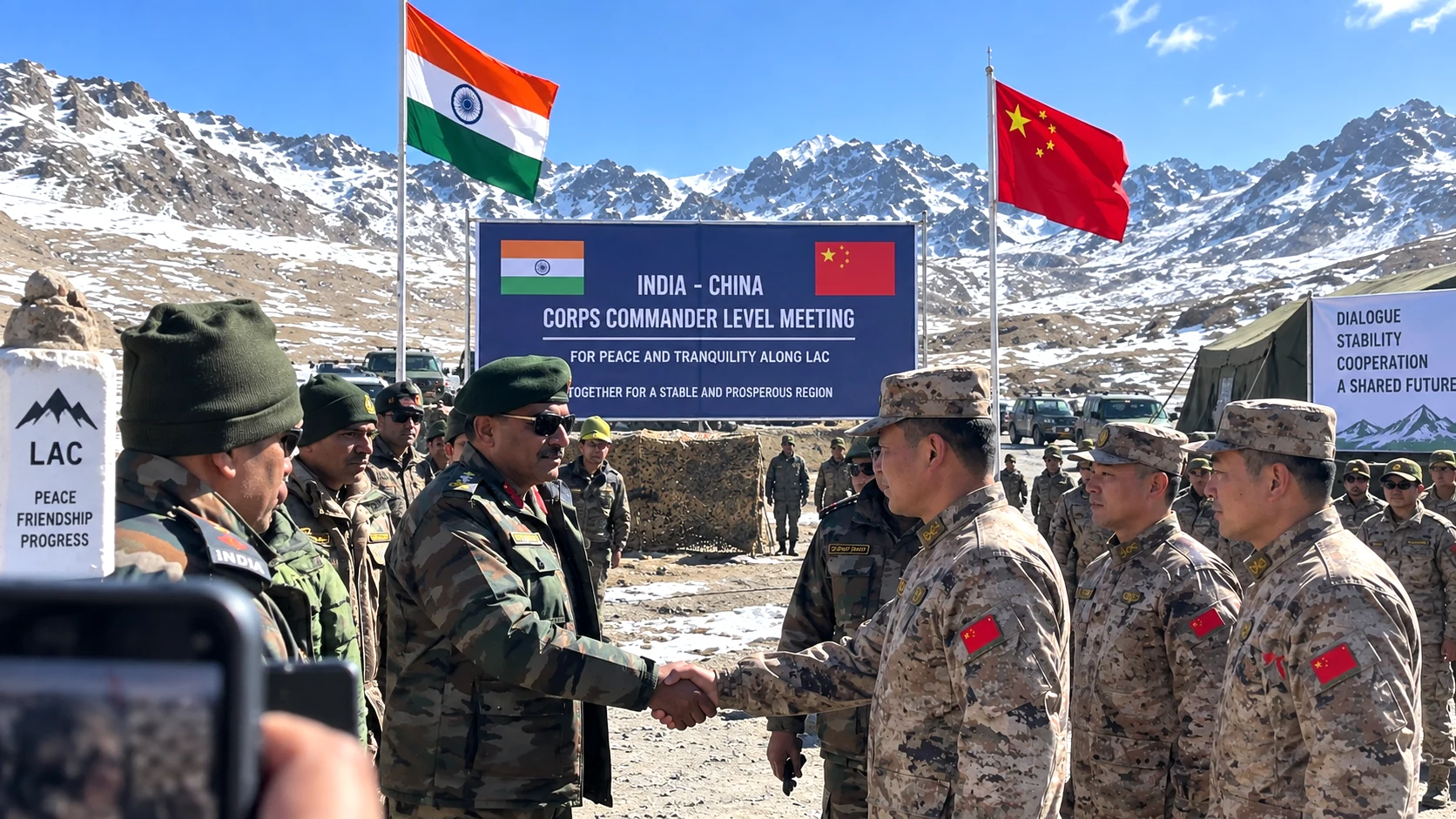
India and China held their first senior commander-level flag talks in the Arunachal sector ahead of the BRICS Summit, as Xi Jinping’s expected India visit draws attention.
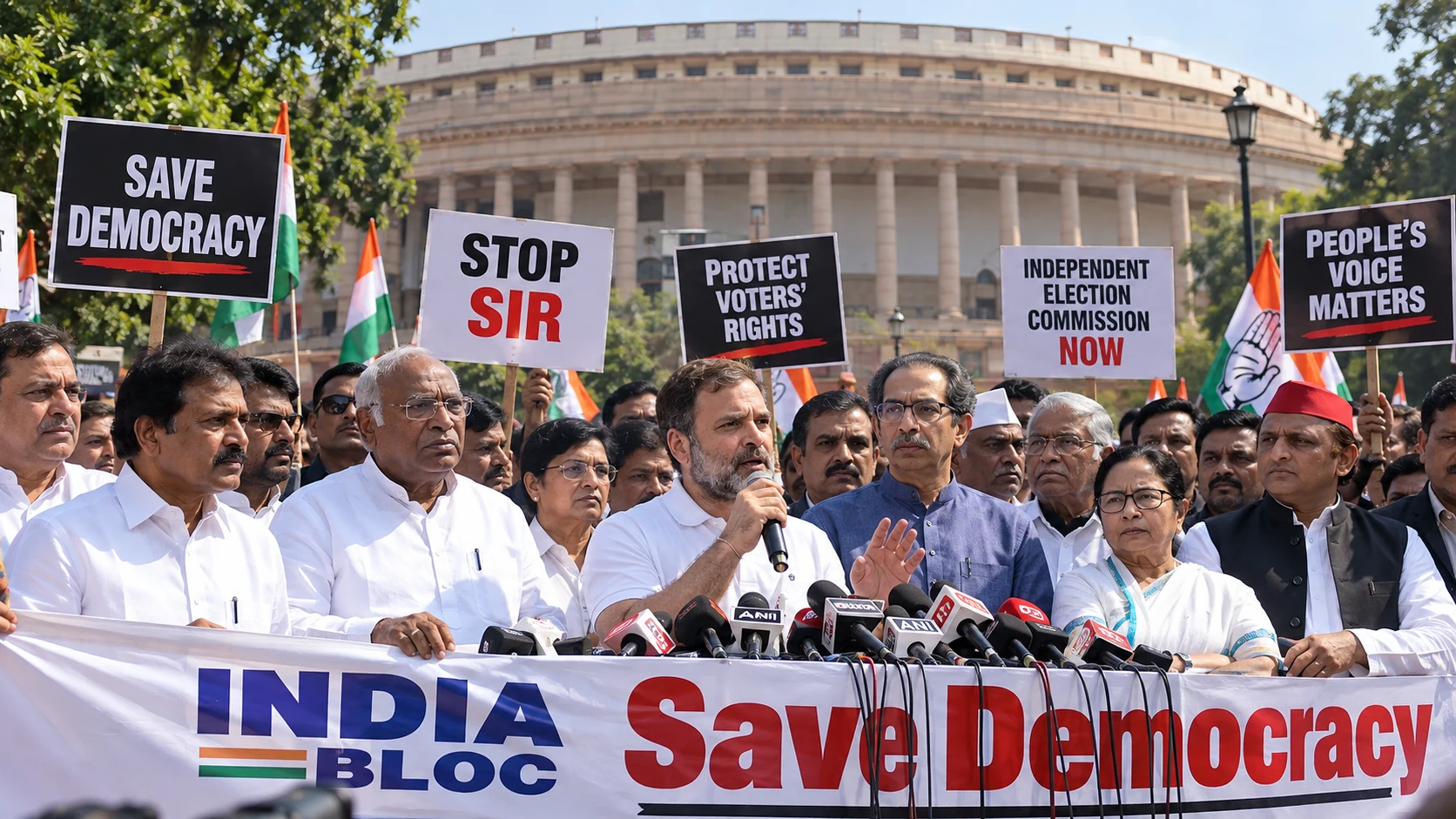
The INDIA bloc has announced nationwide “Save Democracy” marches from Oct. 2–8 over the Election Commission and SIR controversy, with MPs planning an Oct. 6 march to the EC. The BJP has rejected the allegations as political frustration after electoral defeats.
India and Pakistan have summoned each other's diplomats after BSF personnel killed two Pakistani nationals along the Punjab border on October 2. New Delhi says they were infiltrators posing a security threat, while Islamabad says they were unarmed civilians.
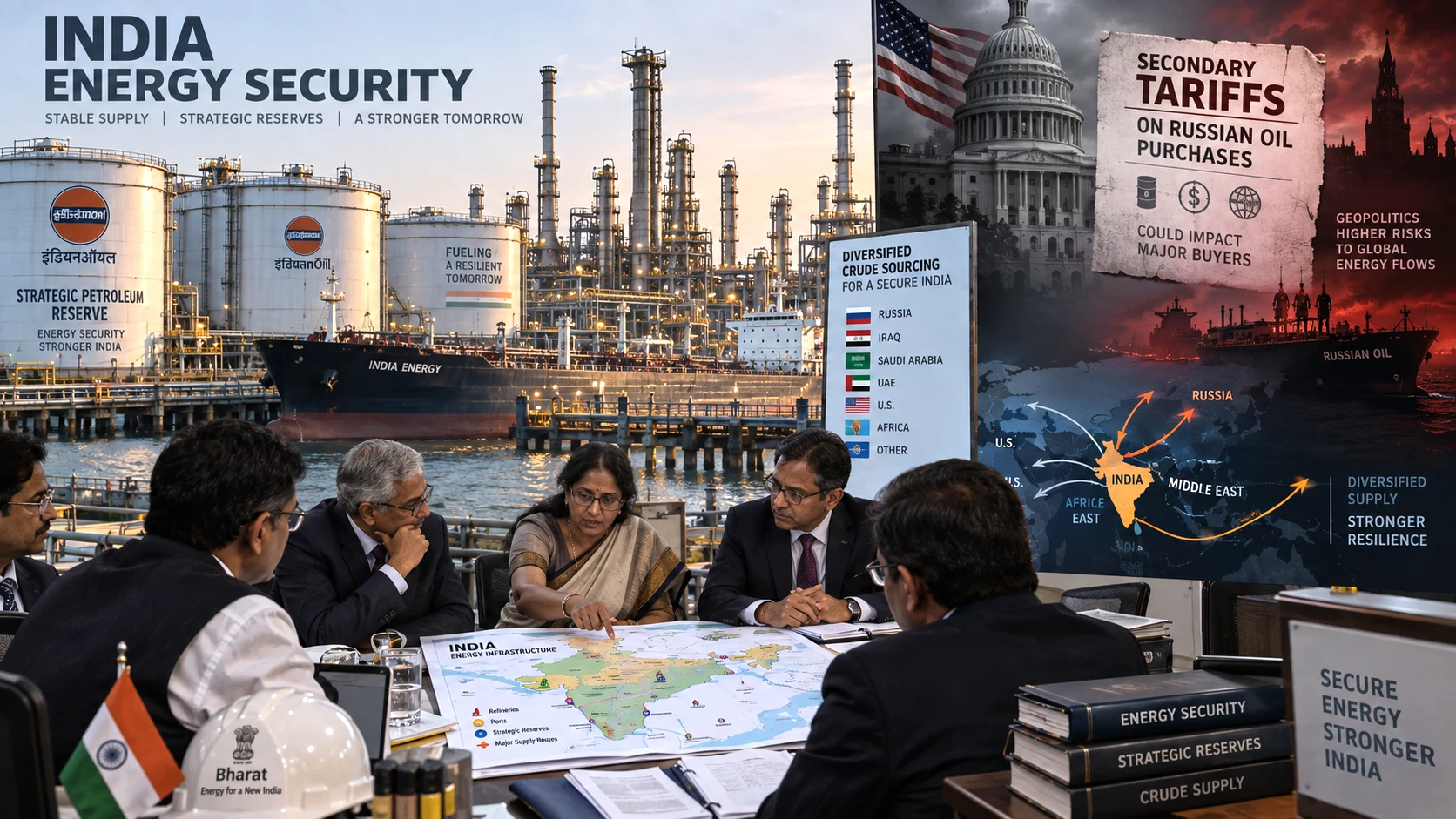
New Delhi says its oil sourcing will continue to be guided by energy security, market conditions and diversified supplies after the US Congress cleared legislation allowing President Donald Trump to impose tariffs of up to 100% on major buyers of Russian energy. The tariffs are not automatic, and th
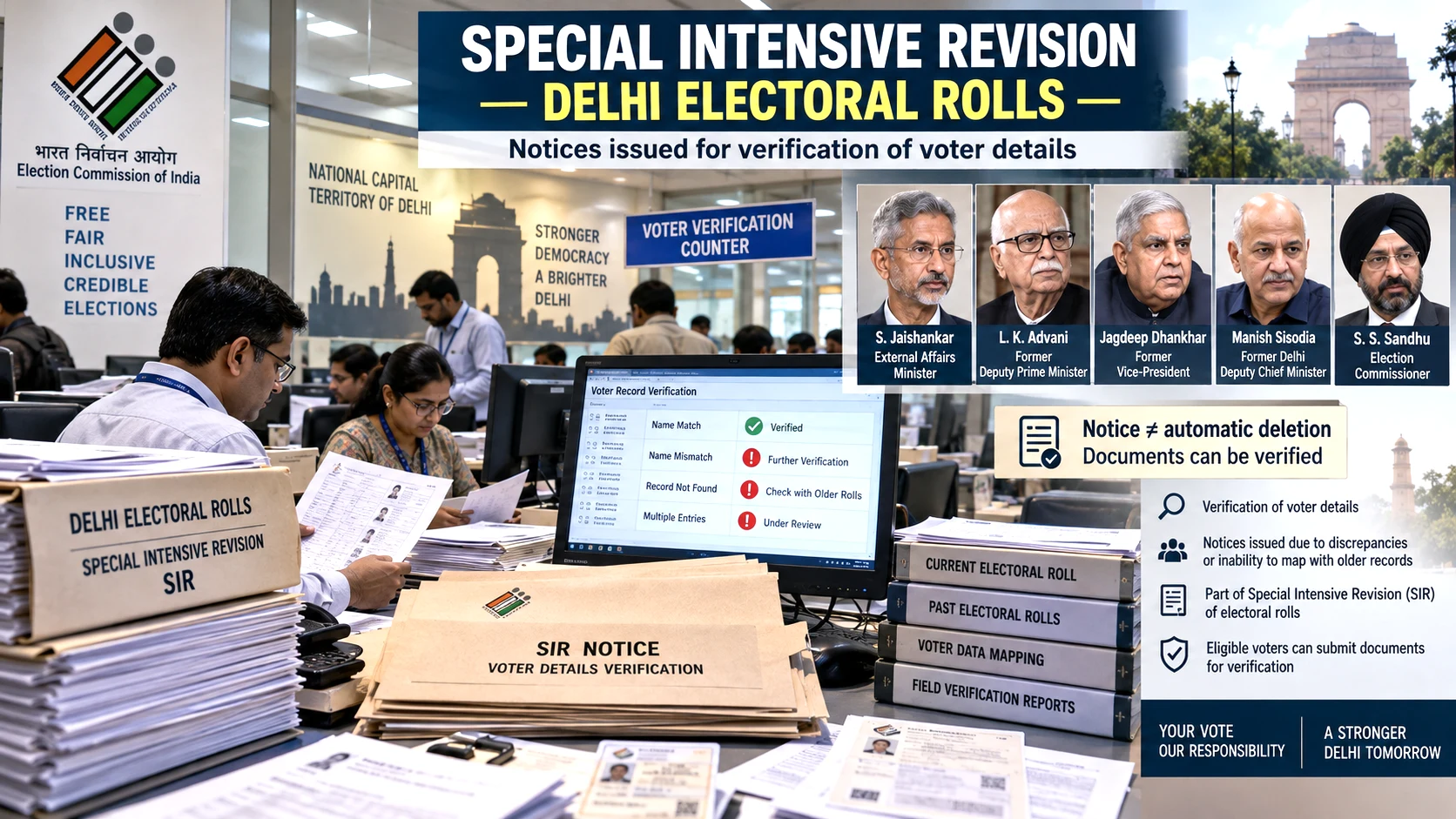
External Affairs Minister S Jaishankar, BJP veteran LK Advani, former Vice-President Jagdeep Dhankhar, former Delhi Deputy Chief Minister Manish Sisodia and several serving constitutional authorities, bureaucrats, politicians and public figures are among prominent Delhi electors issued notices durin



0 Comments