RBI Policy Oct 7: Will Your Home Loan EMI Go Up? What Economists Expect
RBI's MPC meets October 5–7 with economists increasingly expecting a 25 bp repo-rate hike to 5.50%. Here's what that could mean for floating-rate home loans, EMIs and borrowers.
*Home-loan borrowers will be watching the Reserve Bank of India closely next week as its Monetary Policy Committee meets from October 5 to October 7, 2026, with the interest-rate decision due on October 7.**
The key question is straightforward:
Will the RBI increase the repo rate — and, if it does, will your home-loan EMI go up?
As of October 3, the RBI's policy repo rate remains 5.25%. The central bank has kept it unchanged through its recent policy reviews after cutting rates by a cumulative 125 basis points during 2025.
But expectations have shifted sharply ahead of the October meeting.
Recommended Reading
Related Stories & In-Depth Guides
Curated editorial perspectives matching this topic.
RBI's MPC meets October 5–7 with economists increasingly expecting a 25 bp repo-rate hike to 5.50%. Here's what that could mean for floating-rate home loans, EMIs and borrowers.
Several trader associations have called for a voluntary “No UPI Day” on October 2 against the new MDR on some merchant UPI payments above ₹2,000. UPI itself will not shut down, customers will not pay the MDR, and most transactions remain free.
A Business Standard poll published October 2 found that eight of 10 respondents expect the RBI to raise the repo rate by 25 basis points, taking it from 5.25% to 5.50%.
A wider Reuters poll conducted from September 18 to 28 reached a similar conclusion: 35 of 61 economists, or nearly 60%, expected a 25 bp increase at the October 5–7 meeting.
That does not mean a hike is certain. The decision will be made by the six-member MPC after assessing inflation, growth, financial conditions, the rupee, energy prices and other risks.
For borrowers, however, it is worth understanding what could happen if the widely expected 25 bp increase materialises.
The Short Answer: Will Your EMI Go Up?
Possibly — if you have a floating-rate loan whose benchmark moves higher after an RBI rate increase.
But an RBI repo-rate hike does not mean every home-loan EMI across India automatically rises on October 7.
The impact depends on:
whether your loan has a floating or fixed interest rate;
which benchmark your loan is linked to;
your lender's reset schedule;
the remaining loan balance;
remaining tenure;
whether your lender adjusts EMI, tenure, or both;
and whether the entire benchmark increase is transmitted to your lending rate.
For many newer floating-rate bank home loans linked directly to an external benchmark such as the RBI repo rate, transmission can occur relatively quickly.
RBI rules require external benchmark-linked interest rates to be reset at least once every three months.
So even if RBI raises the repo rate on October 7, a borrower's rate may change on the next applicable reset date rather than immediately that morning.
What Are Economists Expecting on October 7?
The dominant forecast currently is a 25 basis point increase.
That would take:
Current repo rate: 5.25%
Possible new repo rate: 5.50%
Possible increase: 0.25 percentage point, or 25 basis points
Business Standard's October 2 poll showed eight out of 10 respondents expecting this move.
The Reuters survey was somewhat less unanimous but still leaned towards tightening, with 35 of 61 economists forecasting 5.50%.
Some analysts also believe October may be the beginning of a relatively short tightening cycle rather than a one-off move.
For example, Nomura has projected a 25 bp increase in October followed by another 25 bp increase in December, which would take the repo rate to 5.75%.
That remains a forecast, not RBI guidance.
Why Is RBI Expected to Raise Rates?
Inflation Has Moved Higher
Inflation is one of the central factors behind the change in market expectations.
India's retail inflation rose to approximately 4.8% in August, remaining above the RBI's medium-term 4% target.
Reuters reported that inflation had exceeded the central bank's 4% target for the third consecutive month by August.
The RBI's inflation framework aims at CPI inflation of 4%, with a tolerance band around that target.
A rate increase is one tool the central bank can use when it believes inflationary pressures are becoming broader or more persistent.
High Crude-Oil Prices Matter for India
Energy prices have also become an important concern.
Recent crude-oil prices have remained elevated amid geopolitical tensions, increasing the risk that India's import bill and domestic fuel-related costs could rise.
India imports most of the crude oil it consumes, so prolonged high prices can feed into:
transport costs;
manufacturing costs;
logistics;
the rupee;
fiscal pressures;
and eventually consumer inflation.
Business Standard's economist poll specifically identified persistent high crude prices as one reason respondents expect RBI tightening.
Growth Has Remained Relatively Resilient
Central banks often face a difficult trade-off when inflation rises while economic growth weakens.
But the current situation is different because Indian growth has remained comparatively resilient.
That could give the MPC more room to raise rates if it concludes inflation risks require action.
Reuters reported that strong growth and rapidly expanding credit were among the factors strengthening the case for a 25 bp move.
What Would a 25 bp Hike Mean for a Home Loan?
Consider a simplified example.
Suppose a borrower has:
Outstanding home loan: ₹50 lakh
Remaining tenure: 20 years
Current interest rate: 8.50%
New rate after full 25 bp transmission: 8.75%
At 8.50%, the EMI is approximately ₹43,391 a month.
At 8.75%, it becomes approximately ₹44,186.
That is an increase of roughly:
₹795 per month
or about:
₹9,500 per year
This is only an illustration using a standard EMI calculation. The actual increase will depend on your loan balance, rate, remaining tenure, reset date and lender policy.
Illustrative EMI Impact
For a 20-year remaining tenure and a rate moving from 8.50% to 8.75%:
Outstanding Loan
Approx. EMI Before
Approx. EMI After
Monthly Increase
₹30 lakh
₹26,035
₹26,511
₹477
₹50 lakh
₹43,391
₹44,186
₹794
₹75 lakh
₹65,087
₹66,278
₹1,192
₹1 crore
₹86,782
₹88,371
₹1,589
These numbers are illustrative and assume the entire 25 bp increase reaches the borrower's lending rate.
Your EMI May Not Necessarily Rise
Some lenders may keep the EMI unchanged and instead extend the repayment period.
Others may increase the EMI.
Some may use a combination of both.
RBI's rules for EMI-based floating-rate personal loans require regulated lenders to give borrowers choices when interest rates reset.
Those options include:
increasing the EMI;
extending the number of instalments while keeping the EMI unchanged;
using a combination of higher EMI and longer tenure;
switching to a fixed rate subject to the lender's policy and applicable charges; or
making a partial or full prepayment.
Borrowers should therefore not assume that the only possible consequence is an immediate EMI increase.
Floating-Rate Borrowers Face the Biggest Immediate Question
Most borrowers watching the October policy need to know what type of loan they have.
Repo-Linked or Other External Benchmark Loans
Banks have been required to link new floating-rate personal and retail loans, including home loans, to approved external benchmarks since October 2019.
These can include the:
RBI repo rate;
three-month Treasury Bill yield;
six-month Treasury Bill yield; or
another eligible market benchmark published by FBIL.
If your loan is directly repo-linked, an RBI hike is particularly relevant.
MCLR-Linked Loans
Older borrowers may still have loans linked to the Marginal Cost of Funds based Lending Rate, or MCLR.
In that case, the impact depends on the bank's MCLR and your loan's contractual reset date.
The relationship with the RBI repo rate is therefore less direct than for a repo-linked external benchmark loan.
Fixed-Rate Loans
If your home loan is genuinely fixed for the applicable period, a repo-rate change does not automatically change the contracted fixed rate.
Borrowers should nevertheless check whether their product is fully fixed or has a fixed period followed by a floating period.
How Can You Check Whether Your Home Loan Is Repo-Linked?
Look at your:
sanction letter;
loan agreement;
latest interest-rate statement;
lender's mobile app or internet banking portal;
or quarterly loan statement.
You may see terms such as:
EBLR;
RLLR;
Repo Linked Lending Rate;
External Benchmark Rate;
MCLR;
Base Rate.
You should also be able to see the current annual interest rate charged on the loan.
RBI requires lenders to communicate increases in EMI or tenure caused by benchmark-rate changes and to provide borrowers with periodic information covering EMI, remaining instalments and the applicable annualised interest rate.
What If You Cannot Afford a Higher EMI?
A rate hike does not mean borrowers should panic or immediately refinance.
First, check the actual revised rate communicated by your lender.
If your EMI or tenure rises materially, possible options include:
Increase EMI Slightly
If household cash flow allows it, voluntarily increasing the EMI can reduce the additional interest created by a longer tenure.
Make a Partial Prepayment
Reducing outstanding principal can lower future interest costs.
The benefit is generally greater when a substantial loan balance and long tenure remain.
Allow Tenure to Increase
This can protect monthly cash flow, but it may increase total interest paid over the life of the loan.
Examine Fixed-Rate Options
RBI's framework requires lenders to make switching options available in applicable EMI-based personal loans, subject to their policies and disclosed charges.
A fixed rate can provide payment certainty, but borrowers should compare the actual rate and switching costs before deciding.
Compare Refinancing Costs Carefully
A lower advertised rate from another lender does not automatically mean refinancing saves money.
Consider:
processing fees;
legal charges;
valuation charges;
insurance bundling;
remaining tenure;
outstanding principal;
and the new lender's spread over its benchmark.
Could RBI Keep the Repo Rate at 5.25%?
Yes.
The October 7 outcome has not yet been decided publicly.
Although the majority of economists in recent surveys expect an increase, the MPC can still choose to:
hold the repo rate at 5.25%;
raise it by 25 bp;
choose a different rate action;
or change its policy communication without changing the repo rate.
That is why headlines stating “RBI will hike rates on October 7” would currently be premature.
The correct formulation is:
Economists increasingly expect the RBI to raise the repo rate by 25 basis points on October 7.
Could RBI Raise Rates Again in December?
Possibly.
The Reuters poll found that a slim majority of respondents also expected at least one additional 25 bp increase by December.
Nomura separately forecasts hikes in both October and December, producing a possible 5.75% terminal rate.
But much can change before December.
Future decisions will depend on:
inflation;
crude oil;
food prices;
the rupee;
economic growth;
global interest rates;
geopolitical developments;
and financial-market conditions.
Borrowers should therefore avoid assuming that a full future rate-hike path is already fixed.
What Home-Loan Borrowers Should Do Before October 7
You do not need to make a major financial decision based only on an economist forecast.
Instead, borrowers can use the next few days to check five things:
Find Your Current Interest Rate
Do not rely on the rate at which your loan originally started.
Identify the Benchmark
Check whether the loan is repo-linked, another external benchmark loan, MCLR-linked or fixed-rate.
Check Your Reset Date
An October 7 RBI decision may not affect your rate on October 7 itself.
Check Outstanding Principal and Tenure
Borrowers with larger outstanding balances and longer remaining tenures generally face a greater cumulative interest effect from higher rates.
Wait for the Official RBI Decision
The official MPC statement, not market speculation, will determine whether the policy repo rate actually changes.
What Else Should You Watch in the RBI Policy?
The October 7 announcement will matter for more than home-loan EMIs.
Markets will closely examine:
The Repo Rate
A move from 5.25% to 5.50% would represent the first rate increase since February 2023.
MPC Voting
Whether the decision is unanimous or divided can indicate how strongly policymakers view the inflation threat.
Policy Stance
The RBI's language on future monetary policy could be as important as the immediate rate decision.
Inflation Forecasts
Any upward revision could affect expectations for another hike in December.
GDP Growth Forecast
Markets will watch whether RBI changes its assessment of India's growth outlook.
Crude Oil and Global Risks
Governor Sanjay Malhotra's comments on energy prices, the rupee and international monetary conditions will be closely followed.
Liquidity
The banking system currently has substantial liquidity, another issue economists and bond markets are monitoring around the policy announcement.
Will FD Rates Also Rise?
Possibly, but not automatically and not necessarily immediately.
If the RBI begins a tightening cycle, banks may eventually adjust deposit rates depending on:
funding requirements;
competition for deposits;
liquidity conditions;
loan growth;
and individual bank strategy.
A repo hike could therefore be negative for floating-rate borrowers while potentially improving some deposit rates over time.
But deposit-rate changes are commercial decisions by individual banks.
What About Car Loans and Personal Loans?
Floating-rate loans can also be affected by changes in their applicable benchmarks.
Fixed-rate personal or auto loans generally do not change simply because the repo rate moves.
Borrowers should check the terms of their individual loan rather than assuming all retail lending rates will move identically.
RBI Policy October 7: What Is the Most Likely Outcome Right Now?
Based on the latest available economist surveys as of October 3, the leading expectation is a 25 bp increase to 5.50%.
Business Standard: 8 of 10 expect a 25 bp hike.
Reuters: 35 of 61 expect a 25 bp hike.
That represents a clear majority view, but it is still a forecast.
The final answer will come from the RBI on October 7, 2026.
For millions of borrowers, the most important question after the announcement will not simply be whether the repo rate changed.
It will be:
How quickly will my lender pass that change through — and will it raise my EMI, lengthen my loan tenure, or both?
Frequently Asked Questions
When is the next RBI monetary policy meeting?
The MPC is scheduled to meet from October 5 to October 7, 2026, with the policy decision expected on October 7.
What is the current RBI repo rate?
The repo rate is currently 5.25%.
Will RBI increase the repo rate on October 7?
It is not confirmed. However, eight of 10 economists in a Business Standard poll expect a 25 bp increase, while 35 of 61 economists in a Reuters poll also forecast a hike to 5.50%.
Will my home-loan EMI rise if RBI hikes rates?
It may, particularly if you have a floating-rate loan linked to the repo rate or another benchmark that increases. The exact timing and amount depend on your lender, reset date and loan terms.
How much can a 25 bp hike increase EMI?
As an illustration, a ₹50 lakh loan with 20 years remaining could see its EMI rise by roughly ₹794 per month if the rate increased fully from 8.50% to 8.75%.
Does the EMI increase immediately on October 7?
Not necessarily. External benchmark-linked bank loans must reset at least once every three months, but the actual reset date depends on the loan terms.
Can the bank increase tenure instead of EMI?
Yes. RBI's framework allows borrowers to be offered options including higher EMI, longer tenure or a combination of both when floating rates reset.
Can I switch my floating home loan to fixed rate?
RBI's framework provides for a fixed-rate switching option for EMI-based personal loans, subject to the lender's policy and applicable disclosed charges.
Could RBI hike again in December?
Some economists expect another 25 bp increase, but that remains dependent on future inflation, growth and global conditions.
Bottom Line
RBI’s MPC meets October 5–7, with the rate decision due on October 7. Economists increasingly expect a 25 bp hike that would take the repo rate from 5.25% to 5.50%.
A hike could raise EMIs or extend tenure for floating-rate home-loan borrowers, depending on the benchmark and reset date. Nothing is confirmed until the official announcement.
Key Takeaway
RBI policy Oct 7: economists lean toward 25 bp hike.
Repo may move 5.25% → 5.50%.
Floating home loans most exposed.
Check benchmark, reset date & wait for official decision.
The Rajatheertha Team publishes news, explainers, guides and updates across India and the world. Our coverage follows Rajatheertha's editorial, verification and corrections standards.
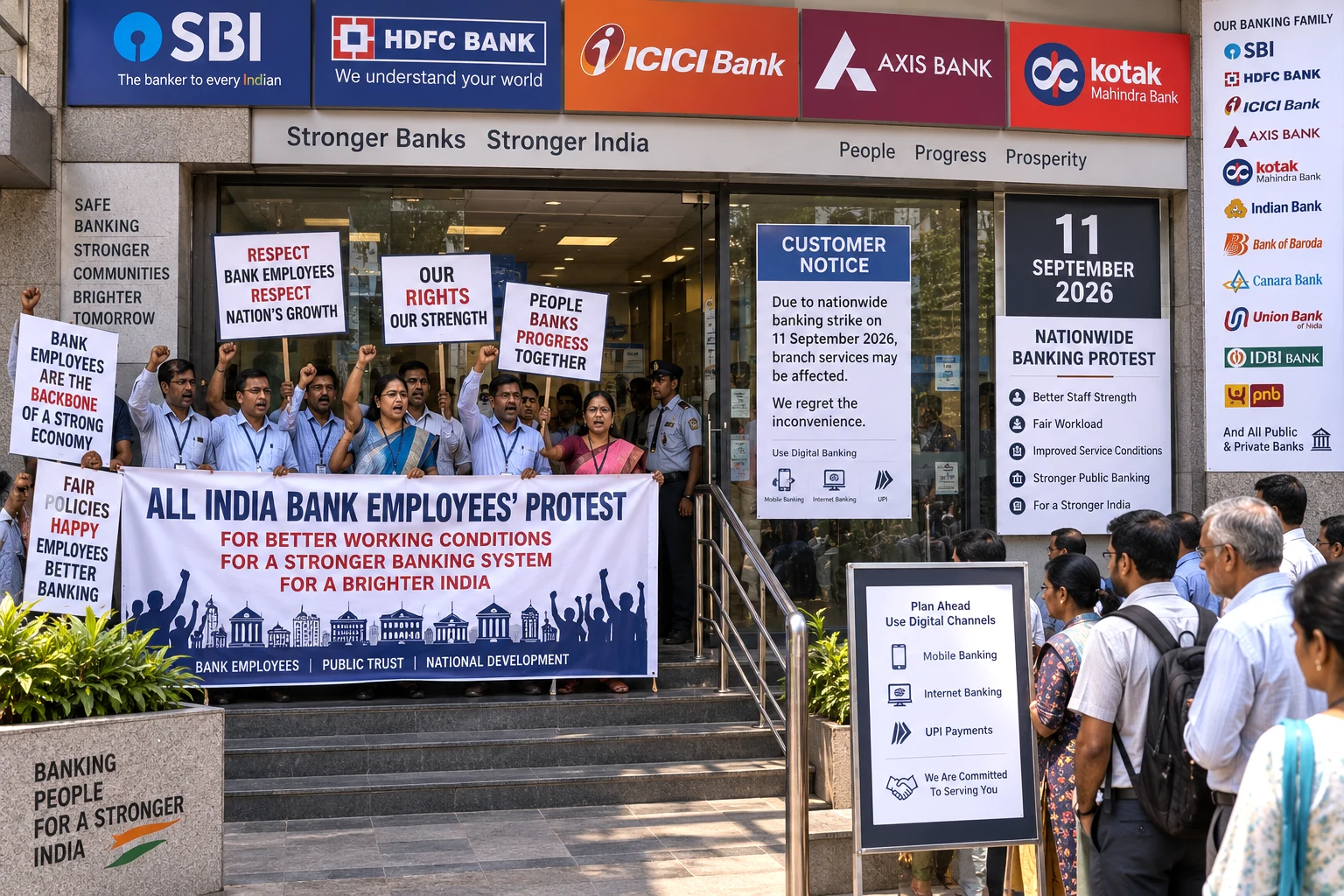
Bank unions will strike nationwide on September 11 over five-day banking and other demands. Here is why employees are protesting, what banks say, how customers may be affected and what happens next.
S&P Global Ratings has raised India’s FY2026-27 GDP growth forecast to 7% from 6.6% after stronger industrial activity, consumption, exports and government investment. It also sees inflation averaging 5.1% and a possible 25-bps RBI rate hike.
Home Minister Amit Shah has set December 31, 2029 as the government's target for uprooting India's drug trade. Here is what the 2026–29 narcotics roadmap proposes on cartels, synthetic drugs, darknet markets, financial investigations, prevention and rehabilitation.
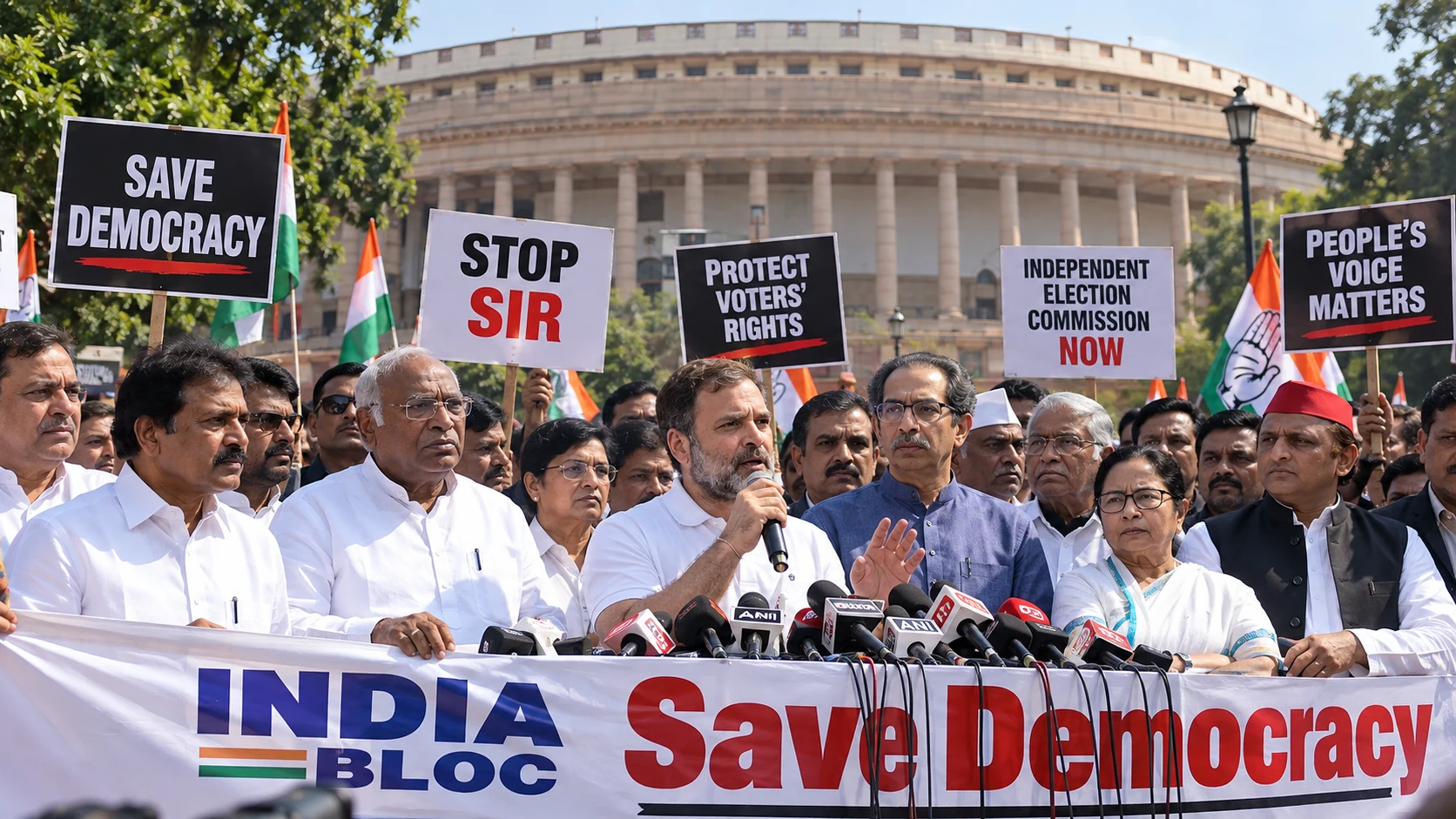
The INDIA bloc has announced nationwide “Save Democracy” marches from Oct. 2–8 over the Election Commission and SIR controversy, with MPs planning an Oct. 6 march to the EC. The BJP has rejected the allegations as political frustration after electoral defeats.
Nagaland State Lottery draws continue today, September 2, with Dear Lottery participants watching for the ₹1 crore top prize. But with unofficial result websites circulating numbers online, here’s how players can verify the genuine government result.
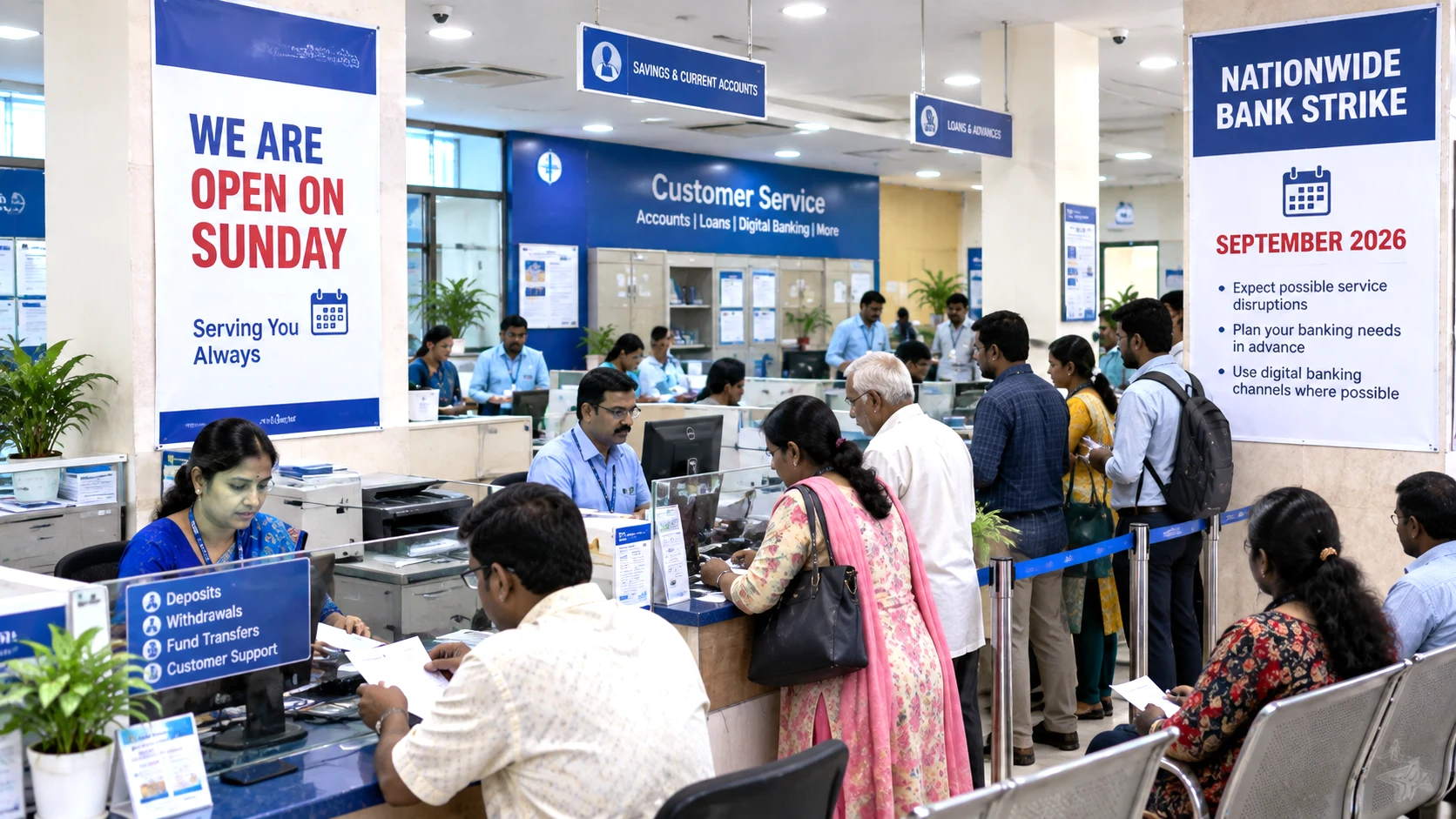
Public Sector Banks and Regional Rural Banks will operate on Sunday, September 27, after RBI approval, ahead of a proposed nationwide bank strike from September 28 to 30. Here is what customers should know.











0 Comments