Trump Waives Major Russia Sanctions and 100% Tariff Duties for Now: What It Means for India
US President Donald Trump has waived major sanctions and tariff measures under the new Graham Act, preventing a 100% tariff mechanism targeting major buyers of Russian energy from taking effect for now. The law remains in force, however, and Washington retains the ability to reconsider the waiver.
Editorial illustration of Trump Russia sanctions waiver and implications for India oil trade
Table of Contents (17 sections)
US President Donald Trump has used a presidential waiver contained in a recently enacted Russia sanctions law to suspend major new sanctions and tariff measures before they could take effect, temporarily easing a potentially serious trade risk for countries that buy large quantities of Russian energy, including India.
The decision does not repeal the Lindsey O. Graham Sanctioning Russia and Iran Act of 2026, nor does it permanently eliminate its tariff powers.
Instead, Trump has invoked Section 115 of the law, which allows the president to waive sanctions, restrictions and duties when the administration certifies to Congress that doing so is in the national interests of the United States.
That distinction is important for India.
The mechanism capable of imposing a 100% additional tariff on goods from major purchasers of Russian crude oil and natural gas now exists in US law and is described in the new executive order, but its application has been waived for the time being.
In practical terms, the immediate 100% tariff threat has receded. The longer-term risk has not disappeared.
Key Takeaways
Recommended Reading
Related Stories & In-Depth Guides
Curated editorial perspectives matching this topic.
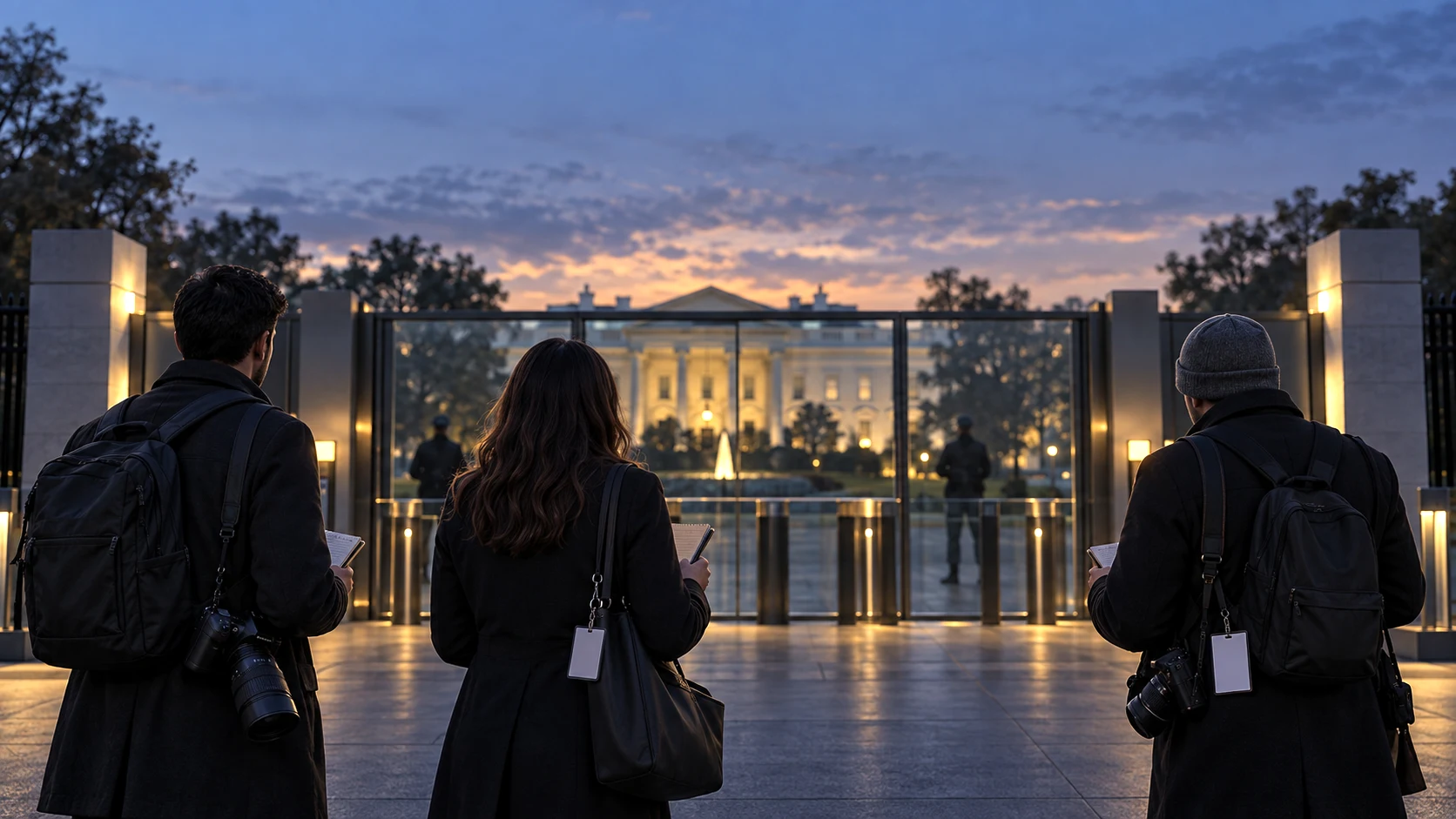
President Donald Trump announced the restrictions on September 18, accusing the three outlets of publishing what he called “fake news”; journalists from all three organizations were turned away from the White House the following day.
The US votes in the 2026 midterms on November 3. Here is what is being elected, why House and Senate control matters, the major campaign issues and how readers abroad can follow the results.
Trump has waived major new Russia-linked sanctions and 100% tariff measures under the Graham Act.
The 100% tariff mechanism targeting major Russian-energy buyers is suspended for now.
The law itself remains in force; the waiver is temporary and can be reconsidered.
Existing US Russia sanctions are unaffected.
Immediate trade risk for India is reduced, but monitoring continues.
What Trump Actually Did
The White House executive order, dated October 16, implements parts of the Lindsey O. Graham Sanctioning Russia and Iran Act of 2026 while simultaneously using the waiver authority built into that law.
The order lays out several major tariff measures.
It provides for a 500% additional duty on goods from Russia, subject to statutory exceptions and waivers.
More importantly for countries such as India, it provides for a 100% additional duty on goods from the five largest importers of Russian crude oil and natural gas if those countries knowingly make new purchases of Russian-origin crude oil or natural gas on or after October 18, 2026.
A separate 100% tariff mechanism applies to the five countries identified as the leading facilitators of Russian oil sanctions evasion.
But Section 4 of Trump's order then waives the application of those duties.
The president also waived the application of numerous sanctions and restrictions contained elsewhere in the new law.
The result is unusual but straightforward: Washington has created the implementation framework required by the legislation while withholding the penalties that framework could impose.
Does This Mean India Avoids a 100% Tariff?
For now, the new Graham Act tariff is not being applied.
That substantially reduces the immediate risk for India and other major purchasers of Russian energy.
It is important, however, not to describe the development as a permanent cancellation of a "100% tariff on India."
The executive order itself does not name India as one of the five countries subject to the Russian-energy buyer provision.
Instead, it establishes a rule covering the five largest importers of Russian crude oil and natural gas that meet the statutory conditions.
India's large purchases of Russian crude have made it an obvious country of concern throughout the debate over the legislation, but any formal determination under the mechanism would depend on US monitoring and implementation.
The tariff also concerns goods entering the United States from a qualifying country. It is not simply a 100% tax on the Russian oil that country buys.
That difference matters because, if activated, the measure could affect a far wider range of exports to the US rather than only energy transactions.
Why the October 18 Date Matters
The executive order identifies October 18, 2026, as an important threshold for the Russian-energy buyer provision.
It says the 100% additional duty would apply to one of the five largest importers if that country knowingly makes new purchases of Russian crude oil or natural gas on or after that date.
Without the waiver, that provision could have created an immediate choice for major Russian-energy buyers: continue qualifying purchases and risk an extraordinary US trade penalty, or adjust sourcing to reduce exposure.
Trump's waiver changes that calculation for the moment.
Countries are not facing the newly prescribed Graham Act duties while the waiver remains in force.
But the monitoring system remains significant.
The US Trade Representative, working with the State Department, Treasury, Energy Department and other officials, is directed to track purchases of Russian-origin oil and gas and report circumstances that could justify further presidential action.
That means the administration is not abandoning the enforcement architecture.
It is keeping it available.
The Waiver Is Not Permanent
Perhaps the most important sentence for governments and businesses is the provision governing how long the waiver lasts.
The executive order does not provide a specific expiration date.
Instead, it says the waivers remain effective until the president or the secretary of state, in consultation with the Treasury secretary and the US Trade Representative where appropriate, determines that further action is warranted.
That gives the administration considerable flexibility.
Trump could continue the present policy if Washington concludes that applying the sanctions would damage US economic or diplomatic interests.
The administration could also reconsider the waiver if relations with Moscow deteriorate, the Russia-Ukraine war changes substantially, energy-market conditions improve, or Washington decides greater pressure is necessary.
For India, therefore, the correct interpretation is temporary relief from the new tariff mechanism rather than permanent immunity.
Existing Russia Sanctions Have Not Disappeared
Another important limitation is contained directly in Trump's executive order.
The waiver does not eliminate every US sanction connected to Russia.
The White House explicitly states that the new order does not affect sanctions and other measures already operating under earlier executive orders addressing specified harmful activities by the Russian government.
That means companies dealing with Russia still need to examine existing US sanctions, designated entities, financial restrictions and other compliance rules separately.
The October decision concerns major provisions of the newly enacted Graham Act.
It should not be interpreted as Washington removing the broader Russia sanctions system.
Why India Is Closely Watching the Decision
India became a major purchaser of Russian crude following the upheaval in global energy markets after Russia's 2022 invasion of Ukraine.
Discounted Russian oil became economically attractive to Indian refiners, while New Delhi consistently argued that its energy policy must account for affordability, supply security and the needs of a very large importing economy.
That created friction with Washington as US lawmakers sought new ways to reduce Russia's energy revenues.
The Graham legislation raised the stakes because it moved beyond sanctions directed only at Russian entities.
Its secondary tariff mechanism potentially placed commercial pressure on countries buying Russian oil and gas by threatening their broader exports to the American market.
That risk was especially relevant to India because the United States is an important destination for Indian exports while Russia has remained an important source of crude.
The October 16 waiver therefore removes, at least temporarily, the prospect of having those two relationships placed into such a direct trade conflict under the new law.
This Is a New Development From the September Story
The latest decision also changes the status of a story Rajatheertha has been following since September.
When Congress passed the legislation, the central uncertainty was whether Trump would sign it and how aggressively its tariff provisions would ultimately be used.
Trump signed the Lindsey O. Graham Sanctioning Russia and Iran Act into law on September 18.
At that point, the important question became implementation.
The October 16 order provides the first major answer.
The administration has formally established the potential penalties but has chosen not to activate major parts of them immediately.
That is materially different from either Congress merely authorising sanctions or Trump merely signing the legislation.
Why Washington Included a Waiver in the First Place
Sanctions legislation often has to balance pressure on a target government against potentially disruptive consequences for the country imposing the sanctions and for its partners.
Russian energy creates an especially difficult version of that problem.
Measures that sharply restrict Russian oil exports can reduce Moscow's revenues, which supporters of tougher sanctions argue would limit resources available for Russia's war effort.
But removing large volumes of oil from global markets can also put upward pressure on energy prices.
That can affect motorists, industries, transportation costs, inflation and governments far beyond Russia.
Secondary tariffs create another complication because they can affect major economies that trade extensively with the United States.
Congress therefore included waiver authority in the law.
Trump has now used it.
The White House says the president submitted the required certification to Congress stating that granting the waiver at this time is in the US national interest.
What the Decision Does Not Prove
The waiver should not automatically be read as evidence that Washington has accepted unrestricted Russian oil purchases indefinitely.
Nor does it mean the United States has abandoned economic pressure on Moscow.
The monitoring provisions remain in place, the Graham Act remains federal law, and previous US sanctions remain applicable.
Similarly, the decision should not be interpreted as proof that India can expand Russian energy purchases without any future trade consequences.
The administration has retained the ability to change course.
There is also an important difference between political descriptions of the decision and its legal effect.
Some headlines may describe Trump as having "scrapped" or "cancelled" the Russia sanctions law.
That is inaccurate.
Congress enacted the law, and it remains law.
Trump is exercising waiver authority specifically provided by Congress.
Political Reaction in Washington
The decision has generated criticism from lawmakers who supported tougher economic pressure on Russia.
Critics argue that failing to activate the new sanctions reduces leverage over Moscow at a time when the Russia-Ukraine war continues.
Supporters of stronger sanctions have long argued that Russia's ability to sell oil and gas internationally remains one of its most important sources of state revenue.
The administration, however, has cited the US national interest in exercising the waiver.
The dispute is therefore likely to continue around a broader policy question: whether Washington can impose stronger pressure on Russian energy revenues without causing unacceptable economic and energy-market consequences elsewhere.
That debate could become important if the administration later considers withdrawing the waiver.
What Happens to India's Russian Oil Purchases Now?
The waiver does not itself direct Indian refiners to buy more or less Russian crude.
Commercial decisions will still depend on factors including price, freight costs, payment arrangements, insurance, shipping risks, availability and sanctions compliance.
Russian crude has remained important to Indian refiners, but the economics of individual cargoes can change rapidly.
New Delhi has repeatedly framed energy sourcing around national energy security and market conditions rather than accepting that purchases should be determined solely by pressure from another government.
The US, meanwhile, has been seeking a larger role in India's energy supply and continues to monitor Russian-origin purchases.
The immediate removal of the Graham Act tariff pressure may therefore give both governments more diplomatic room without settling their underlying disagreement over Russian energy trade.
A Separate India Tariff Issue Should Not Be Confused With This One
The United States has previously used a separate tariff mechanism related to India's Russian oil purchases.
In August 2025, Trump imposed an additional 25% duty on Indian goods under a different executive action after determining that India was directly or indirectly importing Russian oil.
That additional duty was removed in February 2026 after the White House said India had taken significant steps to address US concerns.
The February order nevertheless retained a monitoring mechanism allowing officials to recommend further action if India resumed qualifying Russian oil imports.
The Graham Act is a separate legal instrument.
The October 16 waiver therefore should not be described as simply reversing the earlier 25% India tariff. It concerns a newer and potentially much larger statutory sanctions-and-tariff framework.
What Businesses Should Watch Next
Three developments now matter.
First is the status of the waiver itself.
Because it has no fixed end date, any statement from the White House, State Department, Treasury or US Trade Representative suggesting reconsideration would be significant.
Second is Washington's monitoring of Russian energy purchases.
The executive order specifically directs US agencies to continue tracking which countries buy Russian crude oil and natural gas and which countries facilitate sanctions evasion.
Third is the broader direction of US-Russia and US-Ukraine policy.
A diplomatic breakthrough, deterioration in negotiations, changes in battlefield conditions or a major energy-market shock could alter the administration's assessment of whether the waiver remains in the US national interest.
For India, US-India diplomacy will also matter because energy and trade questions increasingly overlap.
What the Waiver Means for India Right Now
The immediate consequence is straightforward.
India does not presently face the new 100% Graham Act tariff simply because the law has reached its implementation stage.
Trump has waived the application of the duties.
That removes a major near-term uncertainty for Indian exporters and refiners.
But describing the tariff threat as permanently over would go too far.
The legislation remains in force.
The US government will continue monitoring Russian energy purchases.
The president and senior officials can revisit the waiver.
And other US sanctions relating to Russia remain unaffected.
Bottom Line
Donald Trump's October 16 order represents an important change in how the United States is implementing its newest Russia sanctions law.
The administration has chosen not to activate major sanctions and tariff provisions for now, including the 100% additional tariff mechanism aimed at the largest buyers of Russian crude oil and natural gas.
For India, that substantially reduces the immediate risk that its Russian-energy relationship could trigger a sweeping new US tariff under the Graham Act.
But this is a waiver, not a repeal.
The law remains available, monitoring continues, and Washington retains the ability to reconsider the penalties.
The next phase of the story will therefore depend less on what Congress has already authorised and more on whether the Trump administration decides circumstances have changed enough to activate the powers it has temporarily put aside.
Key Takeaway
Trump waives Graham Act 100% tariffs on major Russian-energy buyers for now.
Immediate risk for India eases; the law and monitoring remain in place.
The Rajatheertha Team publishes news, explainers, guides and updates across India and the world. Our coverage follows Rajatheertha's editorial, verification and corrections standards.
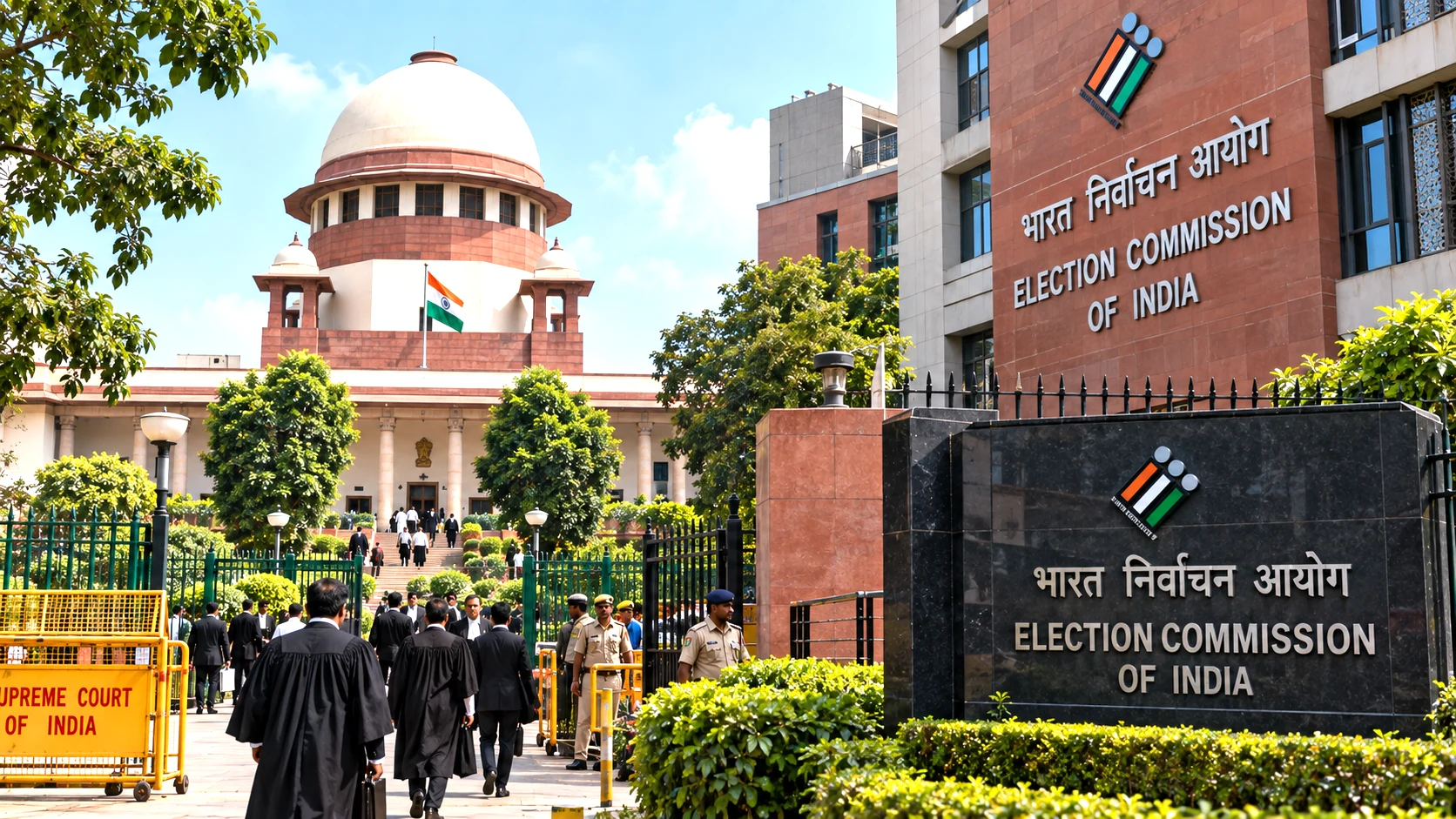
The Supreme Court has delivered differing opinions over whether challenges to the 2023 CEC appointment law require a Constitution Bench. The case now goes to the CJI for consideration of a larger bench, while the law remains in force.
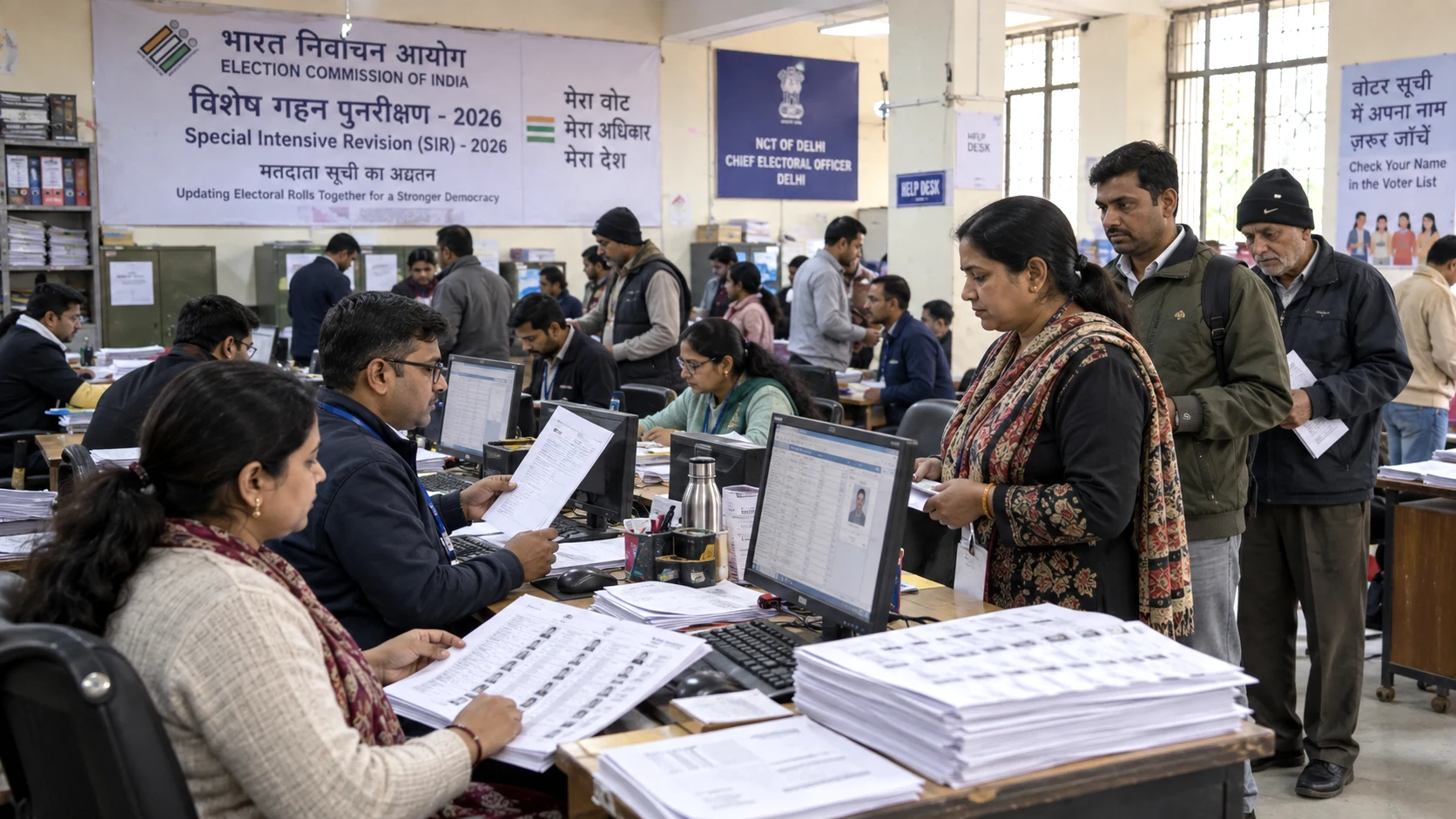
The Supreme Court Registry has flagged 14 procedural defects in an SIR petition filed by Rahul Gandhi and 10 other Opposition leaders. The objections do not amount to rejection of the case. Here is what must be corrected, what the petition seeks and what happens next.
The Supreme Court has issued notice on the opposition leaders’ SIR petition and made it returnable on October 27. The Court has not recorded a stay on the electoral-roll revision, while the Election Commission and other respondents now have an opportunity to reply.
The political confrontation over India’s electoral rolls has moved from statements and parliamentary demands to sustained street protests, with Opposition parties calling for Chief Election Commissioner Gyanesh Kumar to resign and seeking the cancellation of the ongoing Special Intensive Revision of
LK Advani, Jagdeep Dhankhar, S Jaishankar and several other prominent Delhi voters have had their SIR records verified and reserved for inclusion in the final electoral roll. Here is what “cleared” means and what ordinary voters should do before key deadlines.
Bengali actor and former TMC MP Koel Mallick has joined the BJP and filed her nomination for the October 16 Rajya Sabha bypoll in West Bengal, seeking a return to the Upper House months after resigning her seat.








0 Comments