INDIA Bloc Escalates Protest Against CEC Gyanesh Kumar; Rahul Gandhi Vows Stir Until Resignation
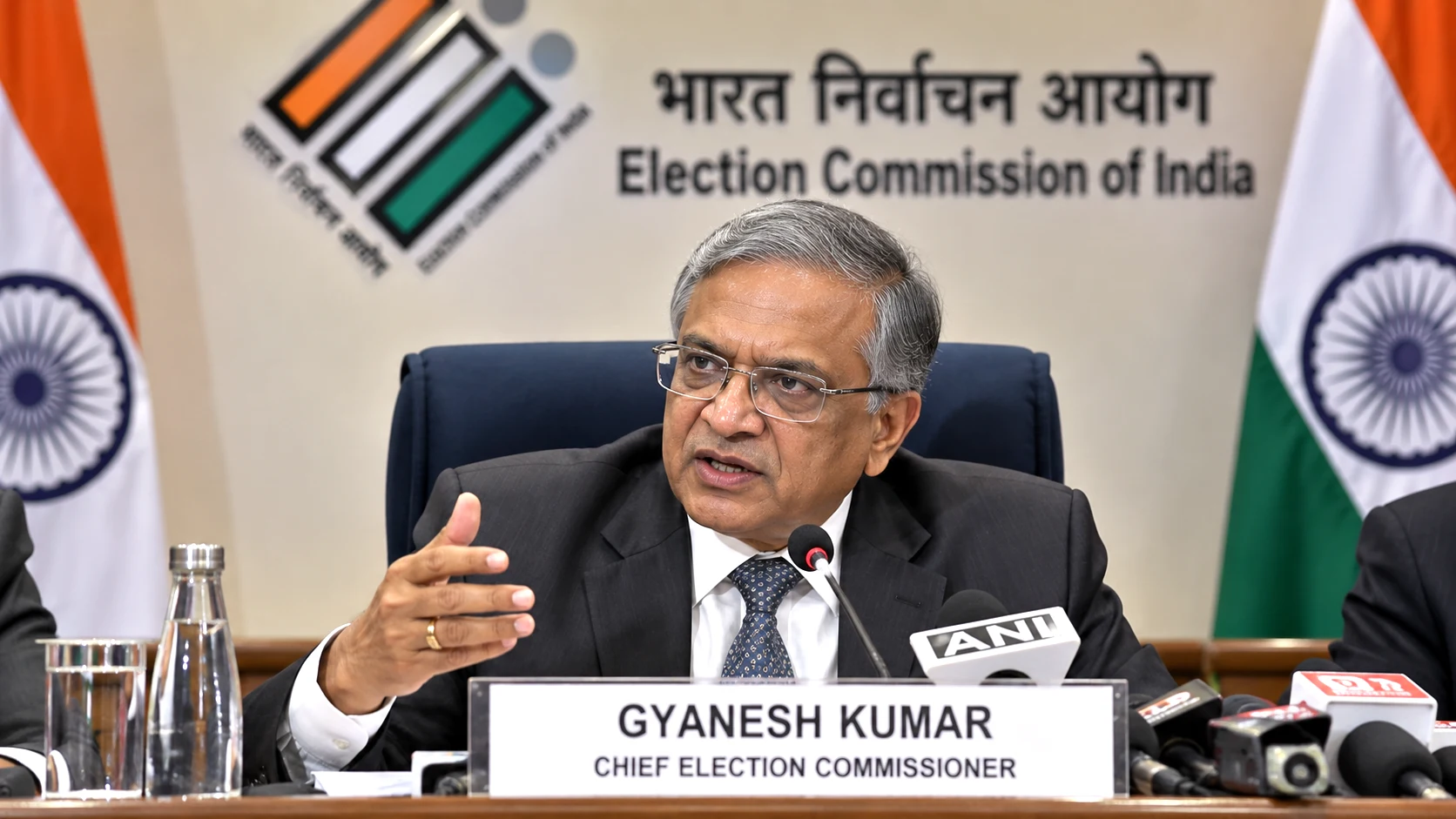
INDIA bloc protests against CEC Gyanesh Kumar have intensified, with Rahul Gandhi saying the agitation will continue until Kumar resigns. The row also centres on Delhi’s SIR, where 47.56 lakh names were excluded from the draft electoral roll.
Rahul Gandhi and INDIA bloc leaders protest in New Delhi demanding CEC Gyanesh Kumar’s resignation amid the SIR electoral-roll controversy
Table of Contents (20 sections)
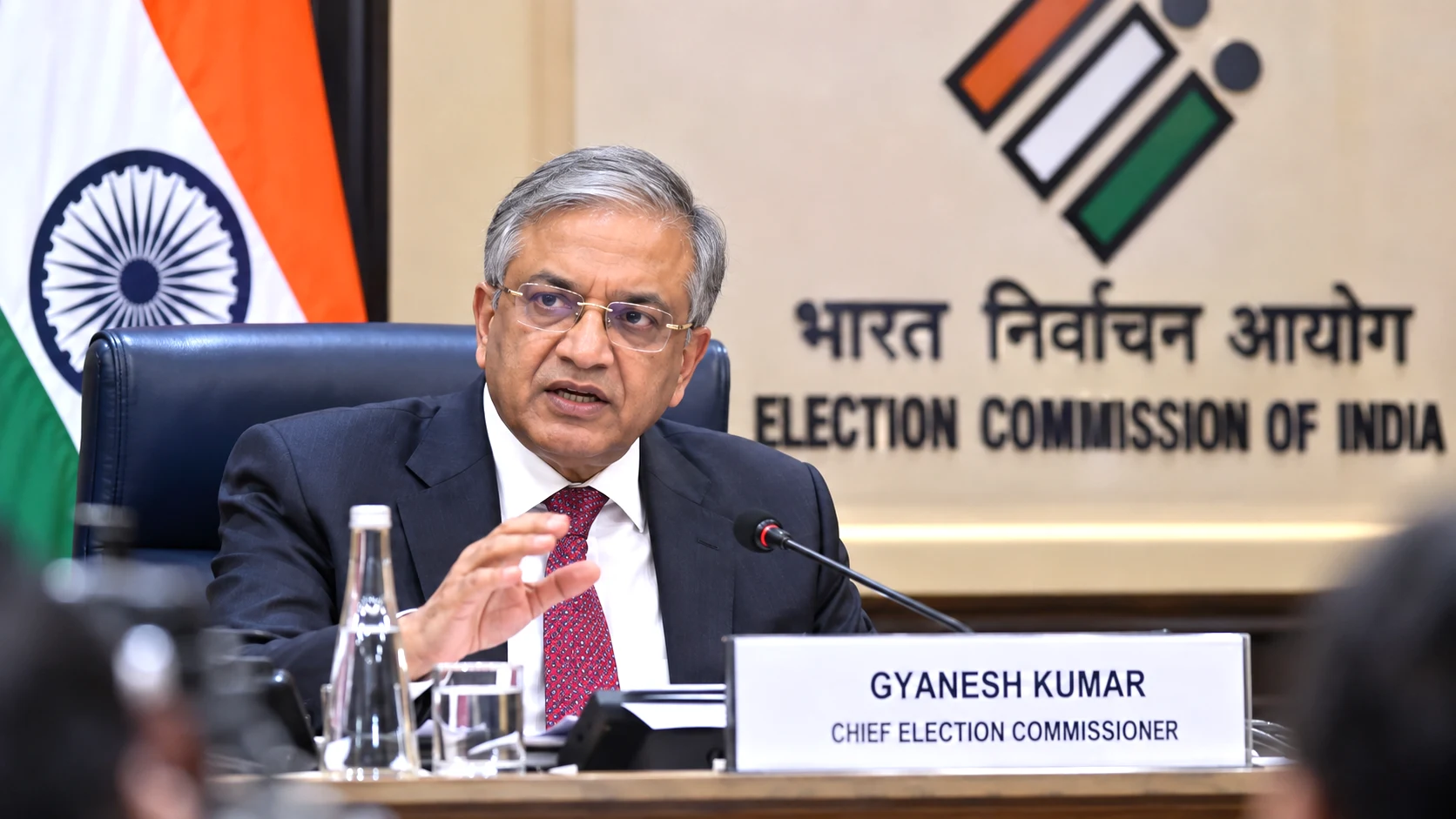
Opposition protests against Chief Election Commissioner Gyanesh Kumar have intensified in New Delhi, with Congress leader and Lok Sabha Leader of the Opposition Rahul Gandhi saying the agitation will continue until the CEC resigns, as the political confrontation over the Election Commission’s Special Intensive Revision of electoral rolls enters a new phase.
Gandhi, Priyanka Gandhi Vadra and several MPs and leaders from INDIA bloc parties were detained on October 7 after attempting to reach Jantar Mantar for a protest demanding Kumar’s resignation.
The demonstration followed another confrontation on October 6, when Opposition MPs attempted to march towards the Election Commission headquarters.
After his October 7 detention, Gandhi said: “We are not going to stop protesting till Gyanesh Kumar resigns.”
Congress subsequently called for demonstrations at state, district and block levels on October 8, expanding the campaign beyond the confrontation in central Delhi.
At the same time, a separate INDIA bloc delegation met Delhi Chief Electoral Officer Ashok Kumar and demanded cancellation of the ongoing Delhi SIR, withdrawal of disputed notices and restoration of eligible voters whose names were excluded from the draft electoral roll.
Recommended Reading
Related Stories & In-Depth Guides
Curated editorial perspectives matching this topic.
Opposition parties have intensified calls for CEC Gyanesh Kumar’s removal after a report said two Election Commissioners raised repeated objections over SIR and electoral-roll decisions. Some leaders have also demanded his arrest, while the ECI says all final decisions were unanimous.
The Supreme Court Registry has flagged 14 procedural defects in an SIR petition filed by Rahul Gandhi and 10 other Opposition leaders. The objections do not amount to rejection of the case. Here is what must be corrected, what the petition seeks and what happens next.
At the centre of that dispute is a politically significant figure: 47.56 lakh names left out of Delhi’s SIR draft roll.
But what exactly does that number mean?
It does not mean that 47.56 lakh legitimate voters have already been conclusively or illegally removed from the final electoral roll.
The figure refers to names excluded at the draft stage, and the claims-and-objections process remains underway.
That distinction is critical to understanding the controversy.
Key Takeaways
Rahul Gandhi says Opposition protests will continue until CEC Gyanesh Kumar resigns.
INDIA bloc MPs staged protests in Delhi on October 6 and October 7.
Gandhi, Priyanka Gandhi Vadra and other Opposition leaders were detained during the October 7 confrontation.
Congress called for wider protests across its organisational network on October 8.
INDIA bloc representatives separately met the Delhi CEO and demanded cancellation of Delhi’s SIR.
They sought restoration of eligible voters among the 47.56 lakh names excluded from the Delhi draft electoral roll.
The 47.56 lakh figure does not mean that every excluded entry represents an eligible voter who was wrongly removed.
Delhi election authorities say excluded eligible voters can seek inclusion during the claims-and-objections process.
The revised deadline for claims and objections is October 30, 2026, with the final electoral roll scheduled for December 4, 2026.
The Election Commission rejects allegations of political manipulation and has said its final institutional decisions were unanimous.
No court has made a final finding that Kumar manipulated electoral rolls or elections.
What Happened During the October 7 Protest?
Opposition leaders met in central Delhi on October 7 before announcing another attempt to demonstrate at Jantar Mantar.
Participants included MPs and leaders from Congress, Trinamool Congress, CPI, CPI(M), RJD and several other Opposition parties.
They were stopped before reaching the planned protest site.
Rahul Gandhi, Priyanka Gandhi Vadra and other participants were subsequently detained and later released.
Delhi Police said restrictions under Section 163 of the Bharatiya Nagarik Suraksha Sanhita were in force and demonstrations could not proceed without the required permission.
Police said 91 leaders and workers were detained during the October 7 confrontation, according to reporting on the protest.
The Congress accused police of using excessive force against elected representatives.
Police, meanwhile, said some personnel alleged that protesters had assaulted or manhandled them and that video footage was being examined.
Those are competing allegations arising from the confrontation and should not be treated as established findings until investigations clarify what occurred.
Rahul Gandhi Says Protest Will Continue
Gandhi used a video message after his detention to make clear that he was treating Kumar’s resignation as a central demand of the campaign.
He said the protests would not stop until the CEC stepped down.
Congress president Mallikarjun Kharge similarly said Opposition parties intended to continue their campaign.
The confrontation therefore goes beyond a single march.
Congress has instructed its state, district and block organisations to stage protests, while INDIA bloc parties are also considering further joint action.
Not every constituent of the INDIA bloc has participated identically in every protest. For example, Samajwadi Party MPs were absent from the October 7 lunch gathering and subsequent action even though SP leaders had joined earlier Opposition activity.
It is therefore more accurate to describe this as an INDIA bloc-led Opposition campaign with varying participation, rather than suggest every alliance party has joined every event.
What Are the Opposition’s Main Demands?
The campaign now includes several overlapping political and electoral demands.
Opposition parties have called for:
the resignation or removal of CEC Gyanesh Kumar;
cancellation or rollback of the disputed SIR exercise;
restoration of eligible voters excluded from electoral rolls;
greater transparency over voter deletions and additions;
scrutiny of decisions taken during the SIR;
withdrawal or reconsideration of disputed voter notices; and
in the Delhi delegation’s memorandum, a return to paper ballots.
The Delhi delegation specifically demanded cancellation of the SIR and restoration of eligible voters among the 47.56 lakh names excluded from the national capital’s draft electoral roll.
What Does the 47.56 Lakh Figure Actually Mean?
This is one of the most important facts in the controversy.
Before the Delhi SIR exercise, the capital had roughly 1.45 crore registered electors.
The draft roll published on August 31 contained approximately 97.53 lakh names, leaving a difference of about 47.56 lakh from the pre-SIR roll.
The excluded entries were placed into categories commonly described as ASDD — Absent, Shifted, Dead and Duplicate.
Reported CEO data gave the approximate breakdown as:
31.59 lakh — permanently shifted;
11.73 lakh — absent or untraceable;
2.82 lakh — dead;
1.41 lakh — duplicate or already enrolled elsewhere.
This means the statement that the Opposition wants “47.56 lakh names restored” requires qualification.
Its memorandum called for all eligible voters whose names were excluded to be restored.
It would not logically mean restoring entries that are correctly established as deceased, duplicated or otherwise legally ineligible.
The political dispute concerns whether large numbers of legitimate voters were incorrectly placed in the excluded categories and whether the SIR procedures provided adequate safeguards.
Are the 47.56 Lakh Names Permanently Deleted?
Not necessarily.
They are absent from the draft electoral roll, but the revision process has not reached its final stage.
Delhi’s Chief Electoral Officer has continued to invite eligible electors whose names are missing to apply for inclusion.
The CEO website states that eligible voters absent from the draft roll may use Form 6 to claim inclusion.
The Election Commission has also extended Delhi’s claims-and-objections period.
The current schedule provides:
October 30, 2026: deadline for claims and objections;
November 30, 2026: deadline for disposal of notices, claims and objections;
December 4, 2026: scheduled publication of the final electoral roll.
The final number of electors therefore could differ from the August 31 draft.
What About the 33.13 Lakh Notices?
The 33.13 lakh notices frequently mentioned in reports are a different issue from the 47.56 lakh draft exclusions.
More than 33 lakh electors whose names were present in the draft were issued notices over issues such as inability to match their records with the previous intensive-revision roll or other reported discrepancies.
Election authorities have emphasised that receiving a notice does not itself mean the voter’s name will be deleted.
The voter is given an opportunity to respond and provide supporting information before a final decision is made.
For readers, keeping these two numbers separate is essential:
47.56 lakh: names excluded from Delhi’s draft roll.
33.13 lakh: voters in the draft process who were issued discrepancy-related notices.
They should not be added together or described as the same category of deletion.
Why Is Gyanesh Kumar Personally at the Centre of the Protest?
The current campaign intensified following reporting that Election Commissioners Sukhbir Singh Sandhu and Vivek Joshi had recorded objections on multiple occasions concerning voter-registration procedures, deletions, restorations, Form 6 and electoral-roll systems.
The Indian Express reported that objections or concerns were placed on record at least 14 times over roughly 10 months.
Opposition parties argue that those reported disagreements raise questions about how important electoral-roll decisions were taken under Kumar’s leadership.
The Election Commission disputes that interpretation.
It has said differing views, observations and technical suggestions are a normal part of institutional deliberation and maintains that the Commission’s final decisions over the previous year were unanimous.
These two propositions are not necessarily mutually exclusive.
Commissioners can raise objections during internal discussions and later participate in a unanimous final decision.
The unresolved political and legal question concerns what happened between those internal objections and the eventual institutional decisions.
Has Wrongdoing by the CEC Been Proven?
No.
Opposition parties have made serious allegations against Kumar and the Election Commission, including claims of political bias and manipulation of voter rolls.
The Election Commission and BJP have rejected those allegations.
No final judicial finding establishing that Gyanesh Kumar manipulated an election or illegally altered voter rolls has been identified.
That distinction is especially important because phrases such as “vote chori” are Opposition political allegations, not established judicial findings.
Rajatheertha should continue attributing those claims explicitly rather than presenting them as facts.
What Has the BJP Said?
BJP leaders have accused the Opposition of undermining constitutional institutions and creating disorder through the protests.
BJP president Nitin Nabin argued that the SIR was intended to remove ineligible entries and accused Opposition parties of defending their political interests.
Those are BJP’s political claims and should also be treated as attributed arguments rather than independent factual conclusions.
The dispute therefore has sharply competing political narratives:
The Opposition says SIR risks disenfranchising legitimate voters and has damaged confidence in the Election Commission.
The BJP and Election Commission reject allegations of political manipulation and defend the revision as an exercise intended to maintain accurate electoral rolls.
What Has the Supreme Court Done?
The legal dispute is also active.
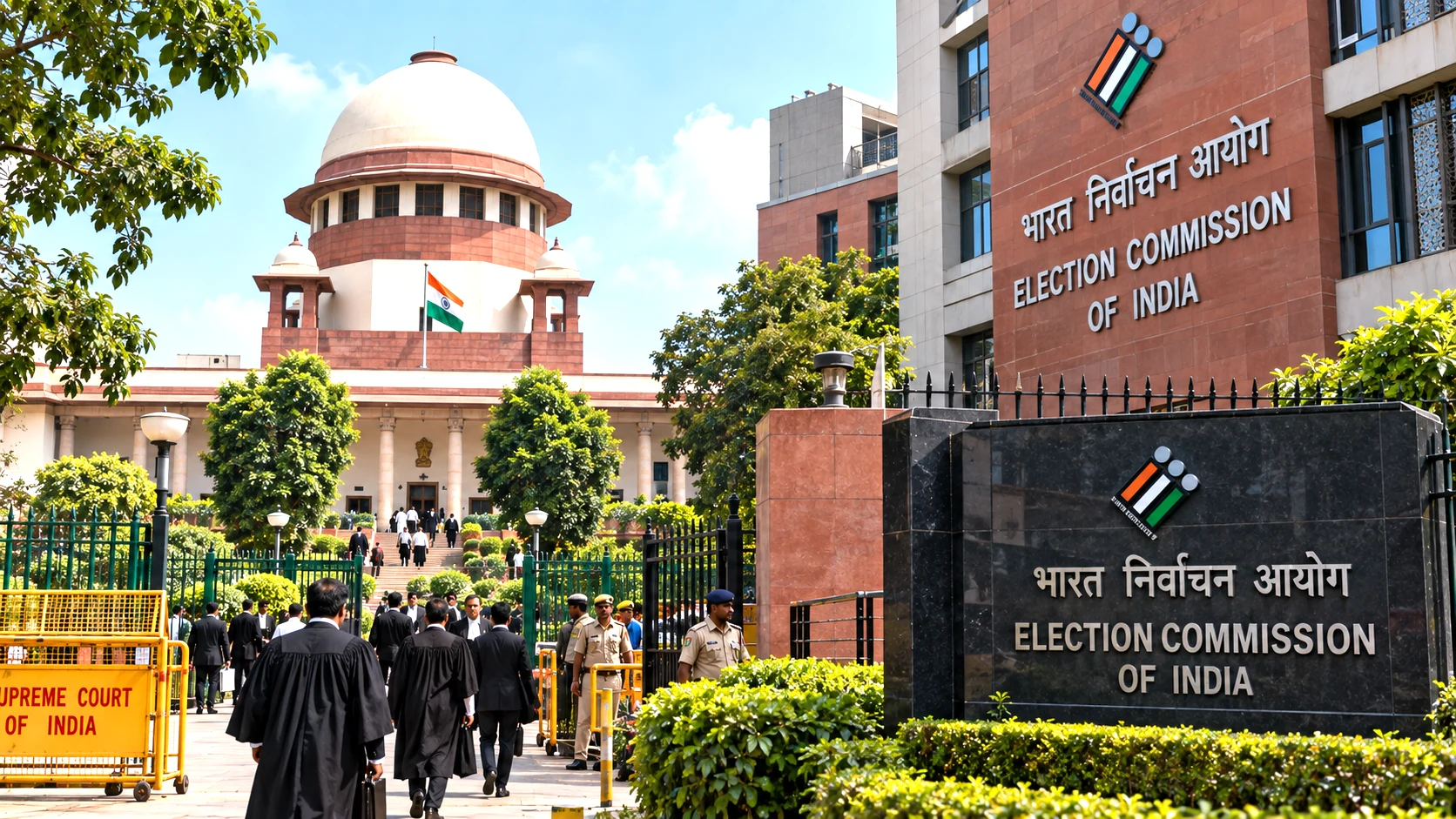
On October 5, the Supreme Court declined to immediately suspend Gyanesh Kumar while considering a petition linked to Election Commission and SIR-related decisions.
The Court issued notices in the matter but did not make a final finding of wrongdoing against the CEC.
That means political protests and litigation are proceeding simultaneously.
A notice from the Court should not be described as a finding that the allegations are correct.
Can Rahul Gandhi or the INDIA Bloc Force the CEC to Resign?
They can politically demand his resignation, but they cannot directly compel a resignation through protest alone.
Gyanesh Kumar could resign voluntarily.
Formal removal is different.
Article 324(5) of the Constitution provides that the Chief Election Commissioner cannot be removed except in the same manner and on the same grounds as a judge of the Supreme Court.
That constitutional protection is designed to insulate the office from ordinary executive removal.
Therefore:
Resignation means the CEC voluntarily leaves office.
Removal requires the constitutionally prescribed process.
The two terms should not be used interchangeably.
Why Has Congress Expanded the Protest on October 8?
Following the October 7 police action, Congress announced demonstrations across the country at state, district and block or mandal levels.
The party characterised the previous day’s events as a “Black Day” and instructed its organisational units to protest on October 8.
This represents an escalation from a Delhi-based confrontation to a wider party mobilisation.
However, turnout and participation at individual October 8 demonstrations should be reported only after they occur and should not be assumed in advance.
What Is SIR?
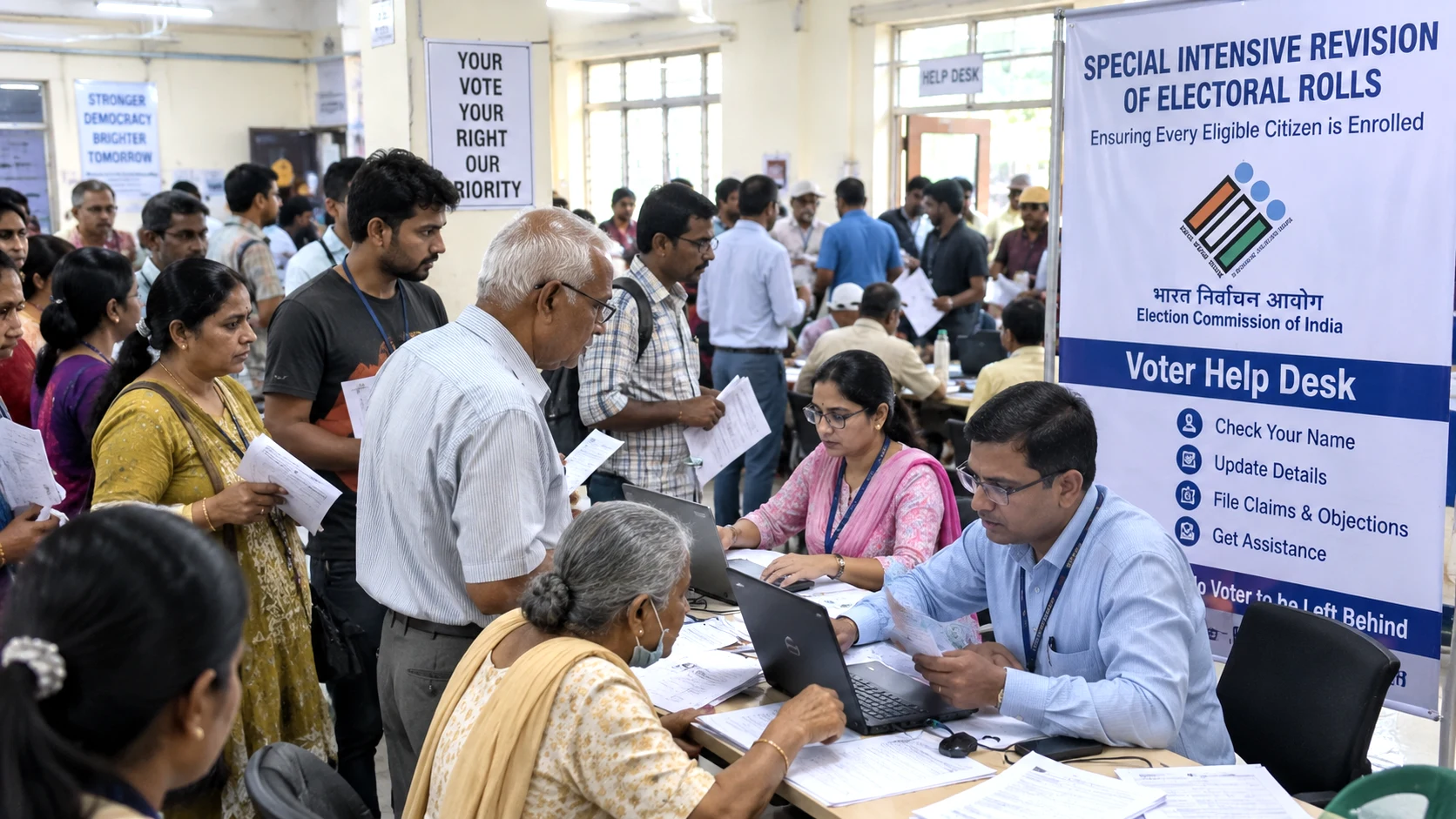
SIR stands for Special Intensive Revision.
It is a more extensive revision of electoral rolls than routine summary updating.
The exercise seeks to verify who should remain registered, remove entries considered dead, duplicated, shifted or otherwise ineligible, and add eligible citizens who are missing.
The controversy is not principally over whether voter rolls should be accurate.
The dispute is over how the verification is being conducted, the documentation required, the scale of exclusions, the operation of Election Commission systems and whether eligible voters are receiving sufficient procedural protection.
What Should Delhi Voters Do Now?
The political dispute should not prevent voters from checking their own electoral status.
Delhi voters can currently:
check whether their name appears in the SIR draft electoral roll;
verify their voter details through the Election Commission voter portal;
check whether their name appears on an ASDD list;
respond promptly to an official notice;
file Form 6 where eligible and seeking inclusion;
use Form 8 where correction or shifting of an existing entry is required; and
retain acknowledgement details for forms and representations submitted.
The Election Commission’s citizen portal continues to provide SIR and electoral-roll search facilities.
For Delhi, the revised claims-and-objections deadline is October 30.
What Happens Next?
Several developments now matter.
First, the scale and participation in the October 8 protests will show whether the campaign develops beyond Delhi.
Second, INDIA bloc leaders have sought further institutional engagement, including a meeting with President Droupadi Murmu.
Third, Delhi’s electoral-roll process continues towards the December 4 final roll.
Fourth, the Supreme Court proceedings could become significant if the Court seeks additional records or passes substantive directions.
And fifth, the Election Commission’s response to demands for meetings, documents or procedural changes will determine whether the controversy remains primarily political or moves further into institutional and judicial scrutiny.
Latest Verified Position — October 8, 2026
As of the morning of October 8:
Rahul Gandhi has publicly said protests will continue until CEC Gyanesh Kumar resigns.
Opposition MPs were stopped and detained during protests in Delhi on October 6 and October 7.
Congress has called for broader protests at state, district and block levels on October 8.
An INDIA bloc delegation has demanded cancellation of Delhi’s SIR and restoration of eligible voters among the 47.56 lakh names excluded from the draft roll.
The 47.56 lakh figure represents draft exclusions, not a judicial finding that all those names were improperly deleted.
Delhi’s claims-and-objections period has been extended until October 30, and the final roll is scheduled for December 4.
The Election Commission says its final decisions were unanimous and rejects the Opposition’s interpretation of reported internal objections.
The Supreme Court has not ordered Gyanesh Kumar’s suspension or made a final finding of misconduct against him.
Kumar remains Chief Election Commissioner.
Frequently Asked Questions
Why is Rahul Gandhi demanding Gyanesh Kumar’s resignation?
Rahul Gandhi and other Opposition leaders allege that problems in the SIR process, voter-roll exclusions and reported internal objections within the Election Commission raise serious questions about the poll body’s functioning. The Election Commission rejects allegations of manipulation and says its final decisions were unanimous.
Did Rahul Gandhi say protests will continue until Gyanesh Kumar resigns?
Yes. Gandhi said on October 7 that the protests would not stop until Kumar resigns.
What are the 47.56 lakh names in the Delhi SIR controversy?
They are names that did not appear in Delhi’s August 31 SIR draft electoral roll compared with the pre-SIR electorate. They were classified principally as shifted, absent/untraceable, dead or duplicate.
Is the INDIA bloc demanding that all 47.56 lakh names be restored?
The delegation said eligible voters whose names were excluded should be restored. It would be misleading to imply that every entry classified as dead, duplicate or otherwise ineligible is being demanded back without verification.
Have 47.56 lakh voters permanently lost their voting rights?
Not necessarily. This figure concerns the draft roll. Eligible electors can seek inclusion during the claims-and-objections process, which currently runs until October 30.
What are the 33.13 lakh Delhi SIR notices?
They are notices issued to voters over discrepancies or verification issues. A notice does not itself constitute a final deletion decision.
When will Delhi’s final SIR voter list be published?
The current schedule says the final electoral roll is due on December 4, 2026.
Has SIR been cancelled?
No. Opposition parties are demanding cancellation or rollback, but the exercise remains in force.
Has Gyanesh Kumar resigned?
No. He remains Chief Election Commissioner as of the latest verified reporting.
Has the Supreme Court suspended the CEC?
No. The Supreme Court declined to grant immediate suspension while considering the matter.
Can the CEC simply be removed by the government?
No. Article 324(5) gives the Chief Election Commissioner special constitutional protection and provides for removal in the same manner and on the same grounds as a Supreme Court judge.
How can a Delhi voter check whether their name is on the roll?
The Election Commission’s voter services provide electoral-roll searches and SIR-related facilities. Eligible voters missing from the draft roll can use the prescribed registration process, including Form 6 where applicable.
Bottom Line
INDIA bloc protests against CEC Gyanesh Kumar have intensified. Rahul Gandhi says the agitation will continue until Kumar resigns. The dispute also centres on Delhi’s SIR draft roll, which excluded 47.56 lakh names. The claims-and-objections process is still open until October 30.
The Rajatheertha Team publishes news, explainers, guides and updates across India and the world. Our coverage follows Rajatheertha's editorial, verification and corrections standards.
The political confrontation over India’s electoral rolls has moved from statements and parliamentary demands to sustained street protests, with Opposition parties calling for Chief Election Commissioner Gyanesh Kumar to resign and seeking the cancellation of the ongoing Special Intensive Revision of
Politics/ National Politics / Election Commission13 min read
Delhi Police registered an FIR against Rahul Gandhi, Priyanka Gandhi Vadra and others over their alleged unauthorised entry into Akashvani Bhavan during an October 6 INDIA bloc protest. Congress says the case is an attempt to suppress its campaign against the Election Commission.
The Supreme Court has issued notice on the opposition leaders’ SIR petition and made it returnable on October 27. The Court has not recorded a stay on the electoral-roll revision, while the Election Commission and other respondents now have an opportunity to reply.
Receiving a Delhi SIR notice does not automatically remove a voter from the electoral roll, the CEO's office has clarified. Voters can respond, submit documents and receive a hearing before any decision is taken.
BJP candidate Hasi Rani Rath won the Nandigram Assembly bypoll by 122,753 votes, while the party also secured Rejinagar. Here are the verified results from all six October 2026 bypoll contests.
Opposition parties are preparing a fresh parliamentary notice seeking CEC Gyanesh Kumar’s removal amid the SIR controversy. Here is what Article 324 says, how many MPs are needed and why removal requires a high constitutional threshold.








0 Comments