Rahul Gandhi’s SIR Petition: Supreme Court Registry Flags 14 Defects, What Happens Next
The Supreme Court Registry has flagged 14 procedural defects in an SIR petition filed by Rahul Gandhi and 10 other Opposition leaders. The objections do not amount to rejection of the case. Here is what must be corrected, what the petition seeks and what happens next.
Editorial illustration representing the Supreme Court Registry scrutiny of Rahul Gandhi’s SIR petition
Table of Contents (17 sections)
The Supreme Court has not rejected Rahul Gandhi and other INDIA bloc leaders’ petition challenging aspects of the Special Intensive Revision of electoral rolls.
What has happened is procedural.
The Supreme Court Registry has identified 14 defects in the petition filed by Leader of the Opposition in the Lok Sabha Rahul Gandhi, Congress president Mallikarjun Kharge and nine other Opposition leaders. Until those filing problems are corrected and the papers clear registry scrutiny, the petition cannot proceed in the ordinary way towards listing before a bench.
That distinction is important because a registry objection is not a judgment on whether the allegations in the petition are true, whether the Election Commission acted lawfully, or whether the relief sought by the Opposition should be granted.
No bench has dismissed the case on its merits.
The immediate task for the petitioners’ legal team is to correct the filing defects, submit the required documents and clarifications and have the petition scrutinised again.
Recommended Reading
Related Stories & In-Depth Guides
Curated editorial perspectives matching this topic.
The Supreme Court has issued notice on the opposition leaders’ SIR petition and made it returnable on October 27. The Court has not recorded a stay on the electoral-roll revision, while the Election Commission and other respondents now have an opportunity to reply.
The Election Commission says all final decisions taken by the full Commission over the past year, including SIR-related measures, were unanimous despite reported objections raised during internal deliberations. Here is what the dispute means for voters.
Meanwhile, the political campaign surrounding the SIR controversy is continuing. Rahul Gandhi has invited INDIA bloc MPs, civil society representatives and student organisations to his New Delhi residence for high tea at 4 pm on Tuesday, October 13. A joint press conference of Opposition leaders is also scheduled earlier in the afternoon.
As of the morning of October 13, those events are still ahead. Any statement describing the meeting as already completed would therefore be premature.
Key Takeaways
SC Registry has flagged 14 procedural defects in the INDIA bloc SIR petition.
Defects are filing/documentation issues — not a merits rejection.
Petition seeks independent audit of electoral-roll changes, interim suspension of SIR, and safeguards against voter deletion.
Petitioners must cure defects for the matter to proceed to listing.
Political campaign continues; 4 pm gathering at Rahul Gandhi’s residence still ahead.
What does “14 defects” actually mean?
The word “defect” can sound much more serious than it usually is in court-filing terminology.
When a petition reaches the Supreme Court, Registry officials scrutinise whether the documents comply with filing rules and administrative requirements before the matter is formally processed for hearing.
That scrutiny can identify problems ranging from missing signatures and incorrect party descriptions to deficient court fees, unclear annexures, incomplete authorisations or improperly formatted documents.
Such objections normally have to be corrected by the lawyer or petitioner.
They are different from a judge examining the legal arguments and deciding that a petition should be dismissed.
In the present case, the Registry has identified 14 objections concerning the way the INDIA bloc petition has been filed and documented.
The petition remains at that procedural stage.
What are the main problems flagged by the Registry?
The objections reported from the Supreme Court filing scrutiny cover several categories.
One concerns the manner in which respondents have been identified.
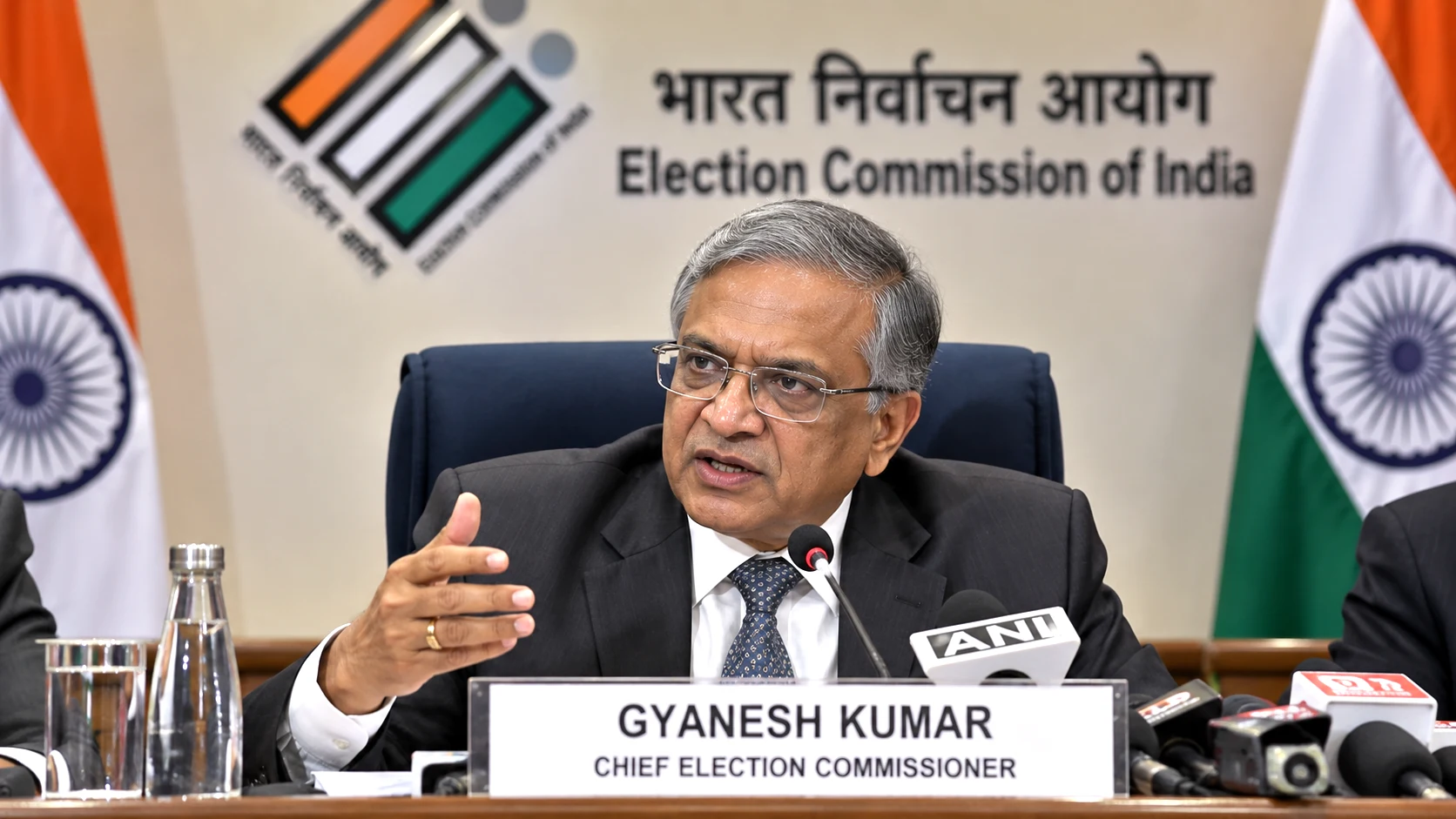
The petition names the Election Commission of India as well as Chief Election Commissioner Gyanesh Kumar and Election Commissioners Sukhbir Singh Sandhu and Vivek Joshi.
The Registry has sought clarification concerning the inclusion of the individual Election Commissioners as respondents in a petition brought under Article 32 of the Constitution. Corrections have also been sought in respondent names, numbering and the prayer portion of the petition.
Another issue concerns lawyer authorisation.
A vakalatnama is the document through which a litigant formally authorises an advocate to act and appear on his or her behalf.
The Registry has reportedly found missing or incomplete vakalatnamas relating to petitioners numbered three to eleven.
Those petitioners include Saugata Roy, Akhilesh Yadav, Tejashwi Prasad Yadav, Sanjay Raut, M A Baby, D Raja, Mahua Majhi, Supriya Sule and E T Mohammed Basheer.
The Registry has also sought a clearer copy of Congress president Mallikarjun Kharge’s identity document.
Several objections concern annexures and supporting papers.
These include the need to supply or clarify documents referred to in the petition, correct inconsistencies connected with annexure dates and case details and provide a digital copy of material required as part of the filing.
Officials have also reportedly flagged pages that are dim, difficult to read or inconsistently paginated, along with other presentation and document-quality issues.
There is also a court-fee deficiency.
The Registry has asked the petitioners to deposit an additional ₹220.
Taken together, these are filing and documentation issues that have to be rectified before the case can move ahead normally.
Why the number 14 does not mean 14 findings against Rahul Gandhi
It would be misleading to describe the Registry’s objections as “14 findings against Rahul Gandhi” or “14 charges”.
They are neither.
The Registry is not adjudicating the political dispute over the Election Commission, determining whether voter deletions were unlawful or deciding whether the SIR exercise should continue.
Its role at this point is administrative scrutiny of the documents filed with the court.
A defect may be something as straightforward as a missing signature, an unclear photocopy, a numbering mismatch or insufficient court fee.
Some defects can require more detailed clarification, particularly when they concern the way parties have been named or the legal form in which relief has been sought.
But the existence of filing defects by itself does not establish that the underlying constitutional case is weak or strong.
That question can arise only if and when the matter is properly before judges for consideration.
Who filed the petition?
The petition was filed by 11 Opposition leaders.
They include Rahul Gandhi and Mallikarjun Kharge along with leaders representing several INDIA bloc parties.
The other petitioners include Saugata Roy, Akhilesh Yadav, Tejashwi Prasad Yadav, Sanjay Raut, M A Baby, D Raja, Mahua Majhi, Supriya Sule and E T Mohammed Basheer.
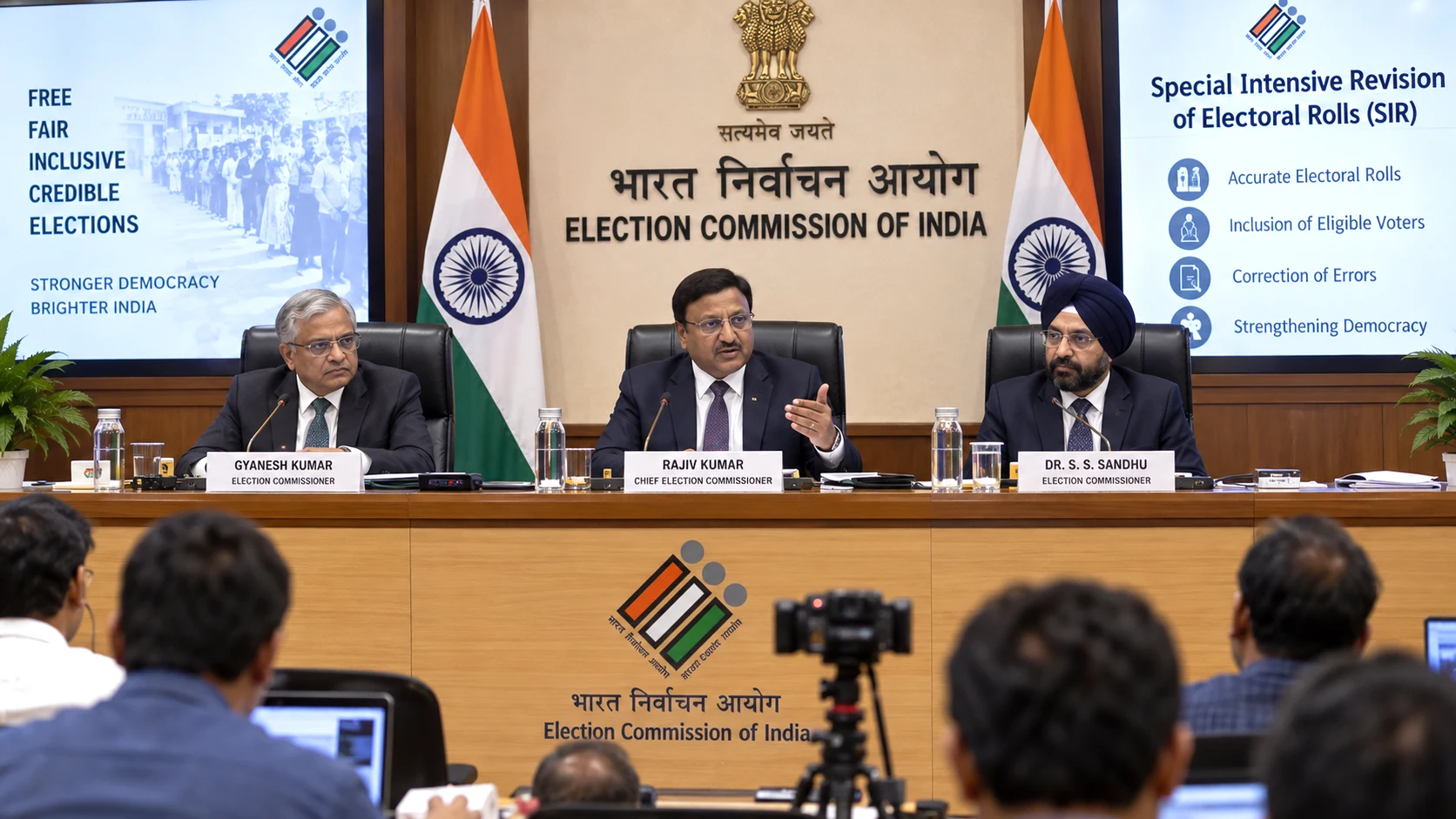
The Election Commission of India, Chief Election Commissioner Gyanesh Kumar and Election Commissioners Sukhbir Singh Sandhu and Vivek Joshi have been named as respondents.
The filing came after Opposition leaders and supporters held a march in New Delhi as part of their continuing campaign against the Election Commission’s handling of the Special Intensive Revision and wider allegations concerning electoral rolls.
Those allegations remain allegations unless established through evidence and adjudication.
What is the petition asking the Supreme Court to do?
The petition goes considerably further than seeking a general review of the Election Commission.
One of its principal requests is for an independent examination of electoral-roll deletions and modifications carried out during the SIR process.
The petitioners have sought an independent committee headed by a retired Supreme Court judge and assisted by technical experts and other members.
They want that mechanism to audit changes made to electoral rolls within a defined period.
The petition also seeks an interim suspension of the continuing SIR exercise while the issues raised before the court are considered.
Another major demand relates to voter deletion.
The petitioners want safeguards ensuring that an elector is not removed from the roll without prior notice and a reasonable opportunity to respond.
They have also sought greater disclosure surrounding deletions, including information at booth level and the reasons recorded for removing names.
The petition further seeks access to Election Commission records connected with important SIR decisions.
The requested material reportedly includes files, agendas, minutes, internal notes and other records concerning the Commission’s decision-making.
The petition also raises issues involving ECINET and ERONET, the digital systems used in electoral-roll administration, and seeks access to relevant records and logs.
These are requests made by the petitioners.
The Supreme Court has not yet ruled that these demands are legally justified.
Why the June 24, 2025 Election Commission order matters
The current SIR process has its administrative foundation in an Election Commission order dated June 24, 2025.
The Commission subsequently relied on that framework while extending or conducting intensive revision exercises in states and Union Territories.
The Election Commission says the exercise falls within its constitutional and statutory powers relating to preparation and revision of electoral rolls.
Its official voter services continue to provide facilities associated with SIR, electoral-roll searches and voter-registration processes.
Opposition parties have challenged several aspects of the exercise, particularly the treatment of deletions, documentation, database controls and the procedures used when voter records are questioned.
The petition now before the Registry seeks judicial scrutiny of some of those issues.
That does not mean the court has accepted the Opposition’s interpretation.
Similarly, the existence of the SIR process does not by itself answer whether every disputed deletion or administrative decision complied with law.
Those are among the issues that the petitioners want examined.
The Election Commission’s position is also important
Rajatheertha has previously reported on a related dispute over internal Election Commission deliberations concerning the SIR process.
Reports had said Election Commissioners Sukhbir Singh Sandhu and Vivek Joshi raised objections on several occasions concerning electoral-roll administration and SIR-related decisions.
The Election Commission rejected the interpretation that those internal observations meant its final institutional decisions were divided.
It maintained that differing observations can arise during deliberations and that final decisions of the full Commission were unanimous.
The Opposition has used the reported internal disagreements to intensify its criticism of Chief Election Commissioner Gyanesh Kumar.
Those competing positions remain relevant background to the new petition.
A Supreme Court hearing, if the petition clears procedural scrutiny and is listed, would provide a judicial forum in which the legal claims and responses can be examined rather than treated simply as competing political assertions.
What happens after the petitioners correct the defects?
The lawyers representing the petitioners can cure the Registry objections by filing corrected documents, supplying missing papers, completing authorisations, paying the additional court fee and providing the requested clarifications.
The matter can then return to Registry scrutiny.
If the Registry is satisfied that the defects have been removed, the case can move through the process required for registration and listing.
That still does not guarantee any particular judicial outcome.
Listing means the matter can be placed before the court according to its procedural and listing arrangements. Judges may then consider questions including maintainability, urgency, interim relief, notice to respondents and the substantive constitutional issues raised.
If filing defects are allowed to remain unresolved for an extended period, Supreme Court procedure also provides a mechanism for defective matters to be placed before a Judge in Chambers through an office report on default.
The purpose of that rule is to prevent defective filings from remaining indefinitely unresolved.
For the present case, however, the petitioners’ lawyers are expected to try to cure the defects rather than allow the matter to remain dormant.
Does the Registry objection delay a possible hearing?
At least temporarily, yes.
The petition has not yet been cleared for ordinary listing.
A matter that still has outstanding filing objections generally has to clear those administrative requirements before it can proceed normally.
How long that takes depends on how quickly the defects are corrected and whether the Registry identifies further issues during re-scrutiny.
That is why headlines suggesting that the Supreme Court has already begun deciding Rahul Gandhi’s petition would be inaccurate as of Tuesday morning.
The important current status is simpler:
The petition has been filed.
The Registry has scrutinised it.
Fourteen defects have been flagged.
Those defects have to be cured.
No ruling on the merits has yet been delivered.
Why Article 32 is relevant
The petition has been filed under Article 32 of the Constitution.
Article 32 allows a person to approach the Supreme Court for enforcement of fundamental rights.
Because the petitioners are asking the court to examine electoral-roll procedures through a constitutional-rights framework, the precise manner in which the respondents are identified and the relief is framed matters.
That explains why the Registry has sought clarification regarding the inclusion and description of individual Election Commissioners.
Whether the petition ultimately satisfies the legal requirements for relief under Article 32 is a judicial question.
A Registry objection asking lawyers to correct the filing should not be confused with a bench deciding that constitutional question.
What is happening politically today?
While the lawyers deal with the filing process, the Opposition’s political campaign is continuing.
Rahul Gandhi has invited INDIA bloc MPs as well as civil society and student representatives to his residence at 5, Sunehri Bagh Road in New Delhi at 4 pm on October 13.
A joint press conference is expected earlier in the afternoon.
The gathering follows the Opposition march and filing of the petition on Monday.
Opposition parties have been demanding greater scrutiny of SIR, safeguards surrounding voter deletion and action concerning the leadership of the Election Commission.
Some leaders have also demanded the resignation or removal of Chief Election Commissioner Gyanesh Kumar.
These remain political demands.
They should not be reported as court findings or as steps already ordered by the judiciary.
What could change later today?
There are two separate tracks to watch.
The first is legal.
The petitioners’ lawyers could submit corrections addressing some or all of the 14 Registry objections. If that happens, the next important development would be whether the Registry clears the petition and whether a listing date follows.
The second is political.
The INDIA bloc’s afternoon press conference and 4 pm gathering could produce a new joint statement, protest programme or announcement concerning the Election Commission and SIR.
Until those events take place, their outcome should not be predicted.
Any later update should distinguish clearly between what Opposition parties announce politically and what has actually happened in the Supreme Court process.
Why the distinction matters for readers
A phrase such as “Supreme Court flags defects” can easily be interpreted as meaning judges have found something wrong with the substance of a case.
That is not what has happened here.
The objections were identified by the Registry during filing scrutiny.
The Election Commission has not won the case.
The Opposition petition has not been judicially dismissed.
The allegations concerning voter deletions have not been proved.
And the SIR exercise has not been suspended by this filing.
Each of those questions belongs to a later stage of the legal process.
What happens next
The immediate next step is therefore administrative rather than dramatic.
The petitioners must correct the defects.
If the papers are accepted after re-scrutiny, attention will shift to listing and to what the Supreme Court decides to do with the petition.
The court could eventually consider whether notice should be issued to the respondents, whether any interim order is necessary and what parts of the wider challenge require substantive examination.
Until that happens, the legally accurate description is that Rahul Gandhi and 10 other Opposition leaders have filed an Article 32 petition concerning SIR and electoral-roll administration, but the filing remains under Registry scrutiny because 14 procedural defects have been identified.
The political contest is continuing outside the courtroom.
The judicial contest has not yet reached the stage at which the Supreme Court has ruled on the merits.
Latest verified position — October 13, 2026 morning
The Supreme Court Registry has flagged 14 procedural defects in the petition filed by Rahul Gandhi and 10 other Opposition leaders.
The petition has not yet been cleared for listing.
The objections include document, authorisation, respondent-description, annexure, legibility and court-fee issues, including an additional ₹220 in court fees.
These objections do not constitute rejection of the petition on merits.
The petition seeks scrutiny of SIR-related electoral-roll decisions, safeguards against allegedly arbitrary voter deletion, production of Election Commission records and an independent audit mechanism.
The Election Commission’s underlying SIR exercise remains in operation; the new petition has not itself suspended it.
The petitioners must now cure the Registry defects and submit the corrected filing for scrutiny.
A joint INDIA bloc press conference is scheduled for October 13 afternoon, followed by Rahul Gandhi’s high tea meeting at 4 pm.
Any developments from that gathering should be treated as a later update rather than written into the morning report as though they have already occurred.
Key Takeaway
SC Registry flags 14 filing defects in Rahul Gandhi-led SIR petition — not a merits rejection.
Petitioners must correct documents for the case to proceed.
The Rajatheertha Team publishes news, explainers, guides and updates across India and the world. Our coverage follows Rajatheertha's editorial, verification and corrections standards.
The political confrontation over India’s electoral rolls has moved from statements and parliamentary demands to sustained street protests, with Opposition parties calling for Chief Election Commissioner Gyanesh Kumar to resign and seeking the cancellation of the ongoing Special Intensive Revision of
Politics/ Election Commission & Electoral Rolls13 min read
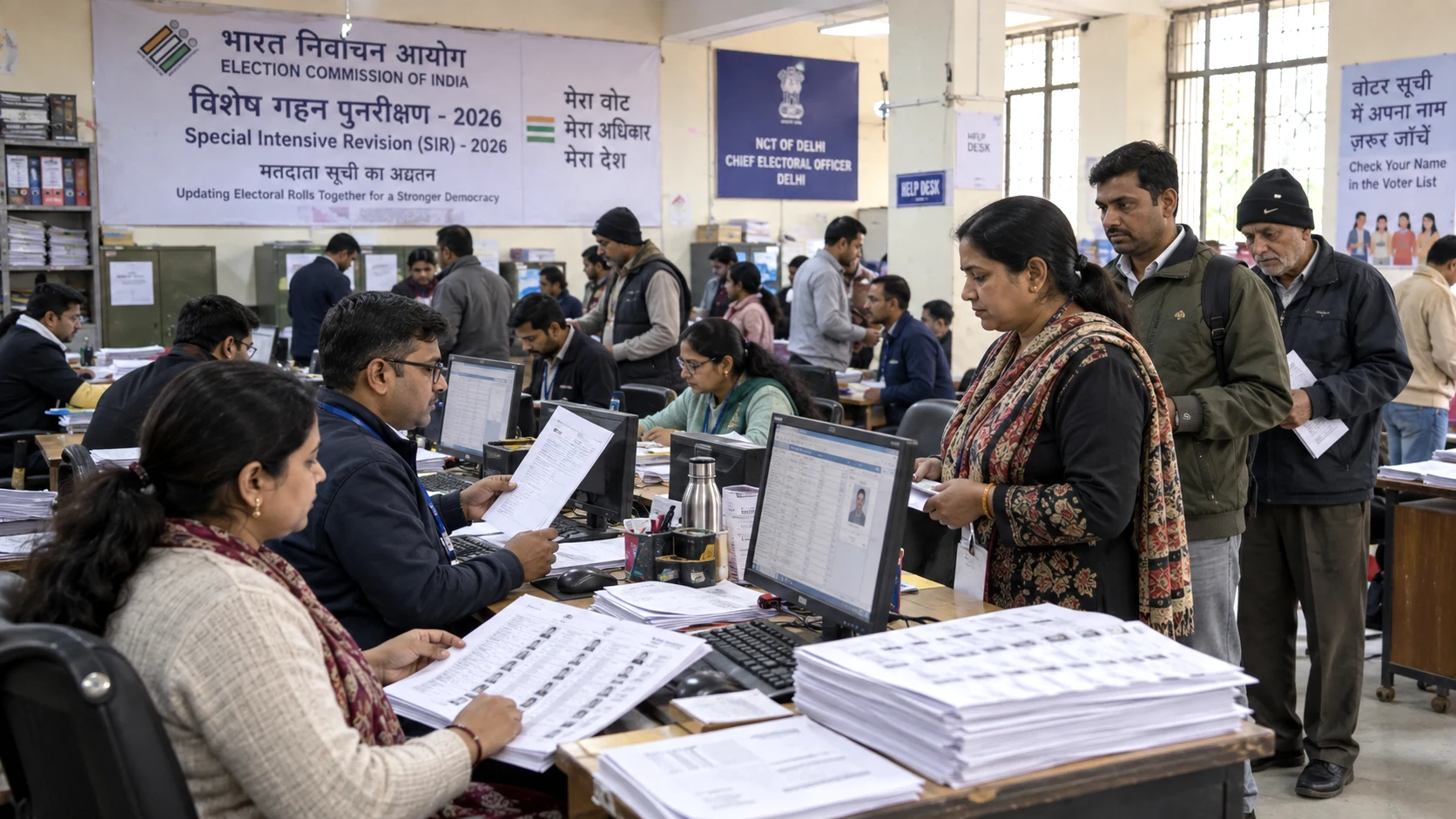
INDIA bloc protests against CEC Gyanesh Kumar have intensified, with Rahul Gandhi saying the agitation will continue until Kumar resigns. The row also centres on Delhi’s SIR, where 47.56 lakh names were excluded from the draft electoral roll.
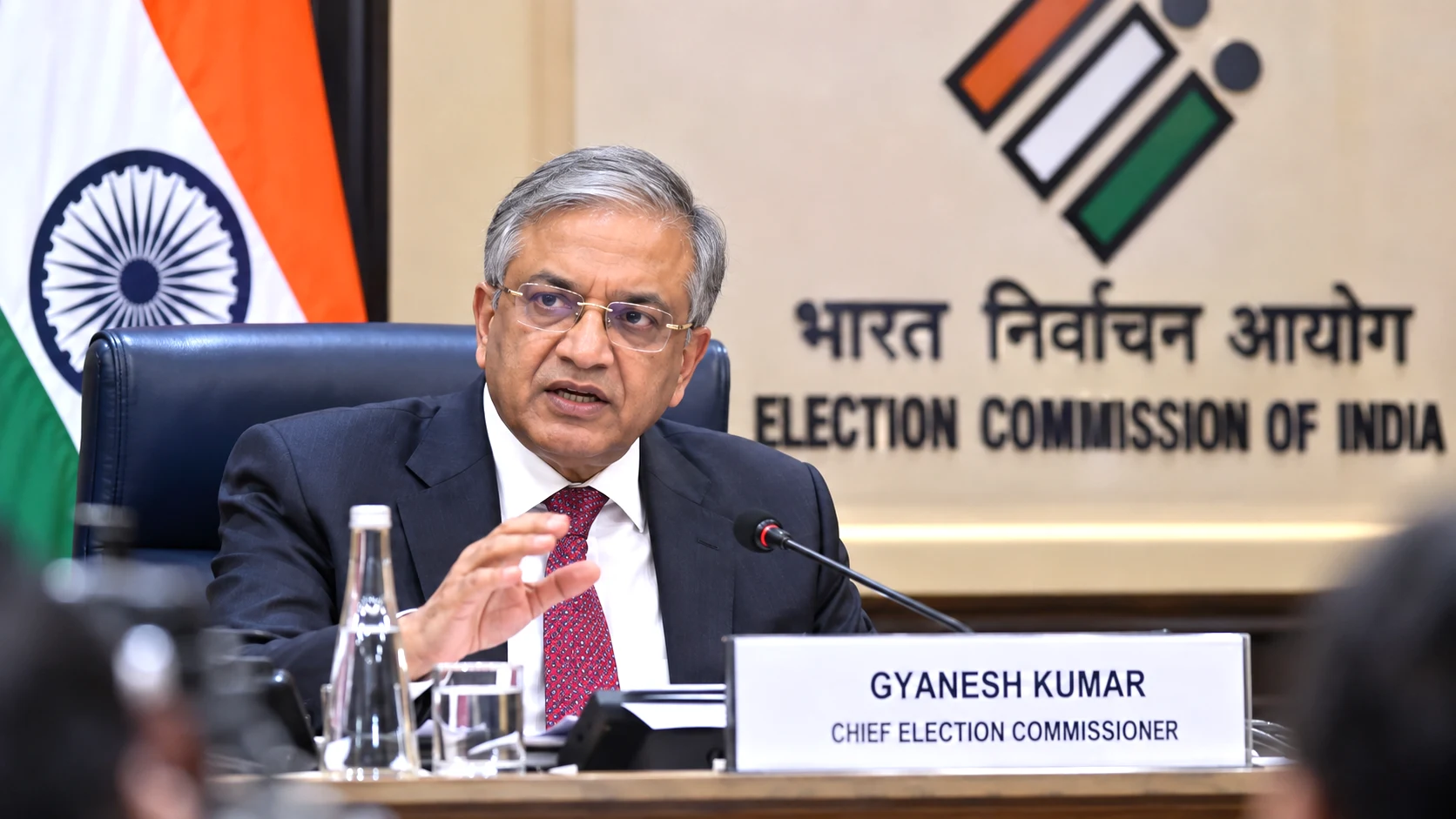
Opposition parties have intensified calls for CEC Gyanesh Kumar’s removal after a report said two Election Commissioners raised repeated objections over SIR and electoral-roll decisions. Some leaders have also demanded his arrest, while the ECI says all final decisions were unanimous.
Politics/ National Politics / Election Commission13 min read
Delhi Police registered an FIR against Rahul Gandhi, Priyanka Gandhi Vadra and others over their alleged unauthorised entry into Akashvani Bhavan during an October 6 INDIA bloc protest. Congress says the case is an attempt to suppress its campaign against the Election Commission.
LK Advani, Jagdeep Dhankhar, S Jaishankar and several other prominent Delhi voters have had their SIR records verified and reserved for inclusion in the final electoral roll. Here is what “cleared” means and what ordinary voters should do before key deadlines.
Opposition parties are preparing a fresh parliamentary notice seeking CEC Gyanesh Kumar’s removal amid the SIR controversy. Here is what Article 324 says, how many MPs are needed and why removal requires a high constitutional threshold.









0 Comments