FIR Against Rahul, Priyanka Gandhi Over Akashvani Bhavan Entry: What Police and Congress Say
Delhi Police registered an FIR against Rahul Gandhi, Priyanka Gandhi Vadra and others over their alleged unauthorised entry into Akashvani Bhavan during an October 6 INDIA bloc protest. Congress says the case is an attempt to suppress its campaign against the Election Commission.
Rahul Gandhi and Priyanka Gandhi Vadra during the Opposition protest near Akashvani Bhavan in New Delhi
Table of Contents (20 sections)
Delhi Police have registered an FIR against Leader of the Opposition in the Lok Sabha Rahul Gandhi, Congress MP Priyanka Gandhi Vadra and others following a complaint alleging that they entered the Akashvani Bhavan premises in New Delhi without permission during an INDIA bloc protest against Chief Election Commissioner Gyanesh Kumar.
The case relates to events on October 6, 2026, when Opposition MPs attempted to march from Parliament towards the Election Commission of India headquarters at Nirvachan Sadan.
Police stopped the march in central Delhi, after which Rahul Gandhi, Priyanka Gandhi and several other Opposition leaders entered the Akashvani Bhavan complex and continued their protest there for several hours. The FIR was reported on October 7, after a complaint concerning the alleged unauthorised entry.
The allegations in the FIR remain allegations under investigation. Registration of an FIR does not establish criminal guilt, and no judicial finding against Rahul Gandhi, Priyanka Gandhi or the other protesters has been reported in connection with the Akashvani Bhavan case.
Recommended Reading
Related Stories & In-Depth Guides
Curated editorial perspectives matching this topic.
The Supreme Court Registry has flagged 14 procedural defects in an SIR petition filed by Rahul Gandhi and 10 other Opposition leaders. The objections do not amount to rejection of the case. Here is what must be corrected, what the petition seeks and what happens next.
The October 9 withdrawal deadline will determine whether voting is required for 12 Rajya Sabha seats across Uttar Pradesh, Uttarakhand and West Bengal. The Election Commission has scheduled polling for October 16 wherever a contest remains.
Congress has rejected the political implication of the police action and accused the Narendra Modi government of attempting to suppress its protest campaign against the Election Commission.
Rahul Gandhi, responding to the case, said he regarded every FIR against him as a “medal” and would continue what he described as his fight to protect the Constitution.
The controversy has since widened further.
By the morning of October 8, Delhi Police sources told The Indian Express that at least three additional FIRs had been registered against Rahul Gandhi, Priyanka Gandhi and others over alleged assault and obstruction of police officers during a separate protest held on October 7. Those cases concern different events and should not be confused with the Akashvani Bhavan FIR.
Key Takeaways
The Akashvani Bhavan incident occurred on October 6, not October 7.
Delhi Police registered an FIR after receiving a complaint alleging unauthorised or forcible entry into the government premises.
Rahul Gandhi, Priyanka Gandhi and other Opposition MPs had entered Akashvani Bhavan after police stopped their march towards the Election Commission headquarters.
Reports say the sit-in continued for more than eight hours before protesters were detained.
Congress says the FIR represents an attempt to pressure the Opposition over its campaign against Chief Election Commissioner Gyanesh Kumar and the SIR process.
Rahul Gandhi said the cases would not stop his political campaign.
A separate October 7 protest resulted in additional police cases, according to reports published on October 8.
None of the allegations should be reported as proven criminal conduct unless established through the legal process.
What Does the Akashvani Bhavan FIR Allege?
According to police officials quoted in multiple reports, the case was registered after a complaint alleged that Rahul Gandhi, Priyanka Gandhi, their supporters and other MPs accompanying them entered the Akashvani Bhavan premises without permission.
Some reports, citing officials, described the entry as “forcible”.
That wording represents the complainant's or police account of the incident and should not be presented as an independently established legal finding.
The complaint reportedly came from Akashvani personnel following the protest.
As of the latest reports reviewed for this article, authorities had not publicly released a complete copy of the Akashvani FIR detailing every legal section invoked.
For that reason, it would be premature to list specific Bharatiya Nyaya Sanhita provisions unless Delhi Police formally confirms them or the FIR itself becomes publicly available.
Why Were Rahul Gandhi and Priyanka Gandhi at Akashvani Bhavan?
The confrontation began as part of an INDIA bloc march towards the Election Commission headquarters.
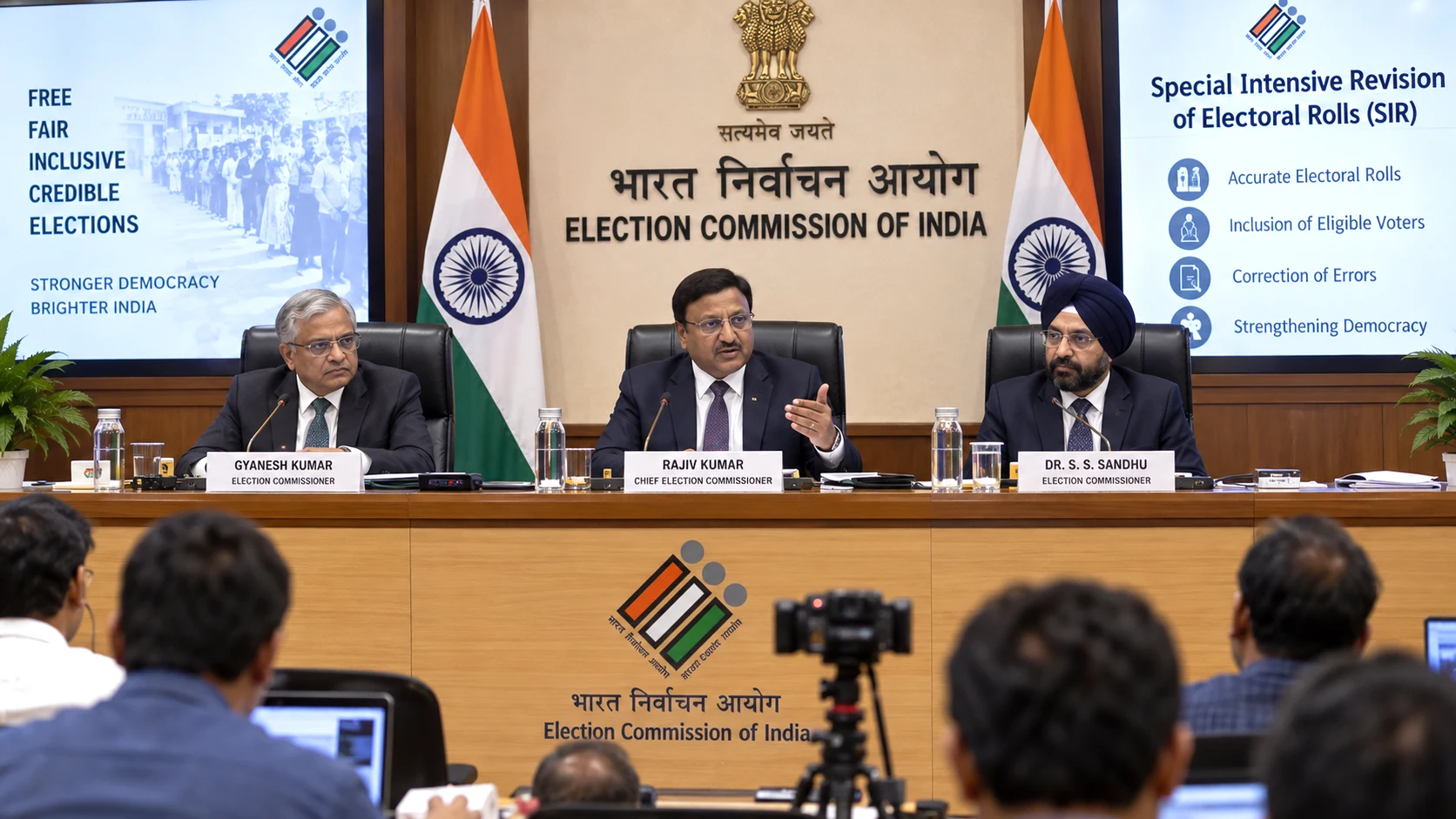
Opposition parties have been demanding the resignation of Chief Election Commissioner Gyanesh Kumar over disputes surrounding the Special Intensive Revision, or SIR, of electoral rolls and reported disagreements within the Election Commission concerning voter-list administration.
Rajatheertha previously reported that the alliance had announced district-level “Save Democracy” programmes from October 2 to October 8, with Opposition MPs specifically planning a march to the Election Commission on October 6.
Police stopped the October 6 march before the protesters reached Nirvachan Sadan.
Rahul Gandhi and Priyanka Gandhi subsequently entered the Akashvani Bhavan campus, where they and several other leaders continued their demonstration.
Reports said the protest lasted for more than eight hours before police removed and detained participants.
Did the Opposition Have Permission for the March?
Delhi Police said permission had not been granted for the proposed march towards the Election Commission.
A PTI report citing police officials said no application seeking permission for the march had been submitted to the office of the Deputy Commissioner of Police, New Delhi.
This is separate from the question of whether Opposition MPs had attempted to arrange a meeting with Election Commission officials.
The Election Commission later said that no political party had formally sought an appointment before 4 pm on October 6.
According to the Commission, Delhi Police informed it at around 4 pm that a delegation led by Rahul Gandhi wanted to meet the poll body.
The ECI said its normal procedure requires an authorised political-party representative to formally seek an appointment.
It also said it offered to send a senior serving officer to receive the Opposition MPs' memorandum, but that option was not accepted.
Opposition leaders, however, maintained that they wanted the commissioners themselves to hear their concerns.
These competing accounts form part of the wider political dispute.
What Happened Inside Akashvani Bhavan?
After police blocked the march, several Opposition leaders entered the Akashvani Bhavan compound.
Hindustan Times reported that Rahul Gandhi, Priyanka Gandhi and around 20 other leaders continued their protest inside the campus until the evening.
Reports said the leaders sat inside the premises while demanding engagement with the Election Commission.
Police later asked the demonstrators to vacate the complex.
After they remained, police moved in and detained Rahul Gandhi, Priyanka Gandhi and other protesters.
Around 260 people were detained during the events, according to reports citing officials.
Those detained were subsequently released.
What Has Rahul Gandhi Said About the FIR?
Rahul Gandhi responded defiantly to the case.
Speaking on October 7, he said he had numerous FIRs against him and described each new case as a “medal”, adding that he intended to continue what he called his fight to protect the Constitution.
His statement was political rhetoric rather than a legal response to the specific allegations contained in the Akashvani complaint.
He has continued demanding the resignation of Chief Election Commissioner Gyanesh Kumar.
Rahul Gandhi and other Opposition leaders allege that the SIR process and other voter-roll decisions have undermined electoral fairness.
Those are contested political allegations.
The Election Commission has rejected claims of manipulation, while the BJP has also denied the Opposition's accusations.
What Has Congress Said About the FIR?
Congress general secretary Jairam Ramesh accused the central government of using the police case to respond to Rahul Gandhi's campaign against the Election Commission.
Ramesh argued that Rahul Gandhi was using “satyagraha” to highlight what Congress considers injustices linked to the SIR exercise and accused Prime Minister Narendra Modi and Home Minister Amit Shah of being politically unsettled by the Opposition campaign.
Those claims represent Congress's political position and are not independently established findings about why Delhi Police registered the FIR.
The police position is that the case followed a complaint alleging unauthorised entry into Akashvani Bhavan.
Keeping these two accounts separate is important:
Police position: a complaint alleged that protesters entered government premises without permission.
Congress position: the FIR is being used to pressure leaders protesting against the Election Commission.
Neither political motive nor criminal liability should be stated as established fact without supporting evidence or a judicial finding.
Why Is Congress Protesting Against CEC Gyanesh Kumar?
The immediate dispute stems from controversy surrounding the Election Commission's management of electoral rolls and its Special Intensive Revision exercise.
An Indian Express investigation previously reported that Election Commissioners Sukhbir Singh Sandhu and Vivek Joshi raised objections on multiple occasions regarding matters including voter registration, deletion, restoration, Form 6 and election-related digital systems.
Rajatheertha has previously covered those reports and the Election Commission's response.
The Commission maintains that internal observations and differences are a normal part of institutional deliberation and says that all final decisions taken by the full Commission, including SIR-related decisions, were unanimous.
Opposition parties argue that the reported internal objections raise wider questions about electoral-roll administration.
Some Opposition leaders have demanded Kumar's resignation or removal.
The BJP and Election Commission reject the Opposition's broader claims of electoral manipulation.
No court ruling reviewed for this article establishes that the CEC manipulated an election.
What Happened on October 7?
The protest did not end with the Akashvani Bhavan incident.
On October 7, Opposition MPs again attempted to demonstrate in central Delhi.
Reuters reported that Rahul Gandhi and several lawmakers were detained as they attempted to continue their protest demanding Gyanesh Kumar's resignation.
The MPs initially sought to reach Jantar Mantar, an established protest location.
Security restrictions led to another confrontation between demonstrators and Delhi Police.
Priyanka Gandhi was seen lying on the road holding a copy of the Constitution, while other MPs and party workers gathered around her.
Police and protesters later became involved in scuffles.
Three Additional FIRs Reported on October 8
This is the most important update for readers following the original Akashvani FIR.
The Indian Express reported on October 8, citing Delhi Police sources, that at least three FIRs had been registered against Rahul Gandhi and Priyanka Gandhi Vadra following the October 7 protest.
Police sources alleged that officers were assaulted and obstructed from carrying out their duties during the confrontation.
The report said the cases involved provisions relating to assault and obstruction of police officers.
One police constable was reported to have suffered bruising during the confrontation.
Videos from the scene were also being examined, according to reports.
The Congress and Opposition leaders, meanwhile, alleged that police used force against protesters.
These competing allegations require investigation.
A video appearing to show a physical confrontation does not by itself establish the complete circumstances, individual intent or criminal responsibility of every person shown.
Are the October 6 and October 7 FIRs the Same Case?
No.
This distinction is particularly important for accurate reporting.
October 6 incident
This concerns the entry into Akashvani Bhavan after the Opposition march to the Election Commission was stopped.
The resulting FIR concerns alleged unauthorised or forcible entry into the premises.
October 7 incident
This concerns the second day of protests, when Opposition politicians and police again confronted each other near the Jantar Mantar/Windsor Place area.
At least three further FIRs were subsequently reported in connection with alleged assault and obstruction of police officers.
Combining these into a single “Akashvani FIR” would be inaccurate.
Does an FIR Mean Rahul or Priyanka Gandhi Is Guilty?
No.
An FIR records information concerning an alleged cognisable offence and begins or supports a police investigation.
It is not a conviction.
The legal process can involve several separate stages, including:
investigation;
collection of statements and video evidence;
identification of specific accused persons;
filing of a police report or chargesheet;
consideration by a court;
trial, where applicable;
and a final judicial decision.
The allegations should therefore continue to be described using terms such as “alleged”, “according to the complaint” and “police say” unless a competent court makes findings establishing criminal responsibility.
Was Rahul Gandhi Arrested?
Reports describe Rahul Gandhi, Priyanka Gandhi and several other politicians as being detained during the protests and later released.
Detention during crowd-control or protest policing should not automatically be described as an arrest in the underlying FIR case unless police formally confirm an arrest under that case.
Reuters reported that Gandhi and other MPs were detained during both days of protest.
What Has the Election Commission Said About the Wider Allegations?
The Election Commission has rejected the broader suggestion that reported internal disagreements establish electoral manipulation.
It says observations by individual commissioners form part of institutional deliberation and maintains that final Commission decisions were unanimous.
The Commission has also disputed claims that it refused to engage with the Opposition without cause.
Regarding October 6, it said a formal appointment had not been sought through its established procedure before police informed it of the delegation later in the day.
Those statements do not resolve the political disagreement, but they are essential context when reporting Congress's accusations.
Why This FIR Matters Politically
The legal case arrives during an escalating confrontation between the Opposition and the Election Commission over voter rolls.
Congress and other INDIA bloc parties are attempting to turn the SIR dispute into a wider national political campaign.
Their previously announced programme included demonstrations from October 2 to October 8, the October 6 march to the Election Commission and further political action.
The Akashvani Bhavan FIR has now added a separate legal dispute to that political conflict.
For Congress, the police cases are being presented as evidence of what it describes as suppression of dissent.
For police, the question is whether protesters crossed legal boundaries governing access to government property and interaction with public officials.
Those are distinct issues and should be reported separately.
What Happens Next?
The most important developments to watch are:
whether Delhi Police publicly releases or confirms the full legal sections in the Akashvani FIR;
whether investigators issue notices or summon Rahul Gandhi, Priyanka Gandhi or other MPs;
whether additional individuals are identified through CCTV or protest footage;
whether the October 7 FIRs result in further investigative action;
whether Congress challenges any police action in court;
whether Akashvani officials provide additional statements;
whether the INDIA bloc continues its protest programme;
and whether the Election Commission offers or holds a formal meeting with Opposition representatives.
Until those steps occur, it would be premature to describe the cases as having established wrongdoing by any named political leader.
Latest Verified Position — October 8, 2026
As of the morning of October 8:
Delhi Police have registered an FIR arising from the October 6 Akashvani Bhavan protest.
The complaint alleges that Rahul Gandhi, Priyanka Gandhi, supporters and other MPs entered the premises without permission.
The protesters had been attempting to march towards the Election Commission headquarters.
Rahul Gandhi and Priyanka Gandhi later participated in an hours-long sit-in inside the Akashvani compound.
Congress rejects the political implication of the police action and says its protest against the SIR process will continue.
Rahul Gandhi has described FIRs against him as “medals” and said they will not stop his campaign.
At least three additional FIRs were reported on October 8 concerning alleged assault and obstruction during the separate October 7 protest.
Opposition leaders have also accused police of excessive force during the October 7 confrontation.
The allegations in all these cases remain subject to investigation.
No criminal guilt should be inferred merely from registration of an FIR.
Frequently Asked Questions
Why was an FIR filed against Rahul Gandhi and Priyanka Gandhi?
Delhi Police say the case followed a complaint alleging that Rahul Gandhi, Priyanka Gandhi and others entered the Akashvani Bhavan premises without permission during the October 6 Opposition protest.
When did the Akashvani Bhavan incident happen?
The protest and entry occurred on October 6, 2026. The FIR was reported on October 7.
Was the FIR filed over the October 7 protest?
The original Akashvani Bhavan FIR relates to October 6. Separate FIRs were subsequently reported over incidents during the October 7 protest.
What does Congress say about the Akashvani FIR?
Congress says the case is part of an attempt to pressure Opposition leaders over their campaign against the Election Commission and SIR. That is Congress's political allegation, while police say the FIR arose from a complaint about unauthorised entry.
What did Rahul Gandhi say?
Rahul Gandhi said every FIR against him was like a “medal” and that he would continue his campaign to defend what he describes as constitutional and electoral rights.
Have Rahul Gandhi and Priyanka Gandhi been convicted?
No. An FIR is the beginning of a criminal-investigation process and does not establish guilt.
Were more FIRs filed later?
Yes. The Indian Express reported on October 8 that at least three additional FIRs were filed over alleged assault and obstruction of police during the October 7 protest.
Why is the INDIA bloc protesting?
Opposition parties are protesting over the Election Commission's Special Intensive Revision of electoral rolls, reported internal disagreements concerning voter-list administration and wider allegations about electoral integrity. The Election Commission and BJP reject allegations of manipulation.
Did the Election Commission refuse to meet the Opposition?
The ECI says no political party formally sought an appointment through the established procedure before 4 pm on October 6. It says police later informed it about the delegation and that the Commission offered to send a senior official to receive the MPs' memorandum.
Bottom Line
Delhi Police registered an FIR against Rahul Gandhi, Priyanka Gandhi and others over alleged unauthorised entry into Akashvani Bhavan on October 6. Separate FIRs were later reported over the October 7 protest. All remain under investigation. Congress calls the cases an attempt to suppress its campaign against the Election Commission.
The Rajatheertha Team publishes news, explainers, guides and updates across India and the world. Our coverage follows Rajatheertha's editorial, verification and corrections standards.
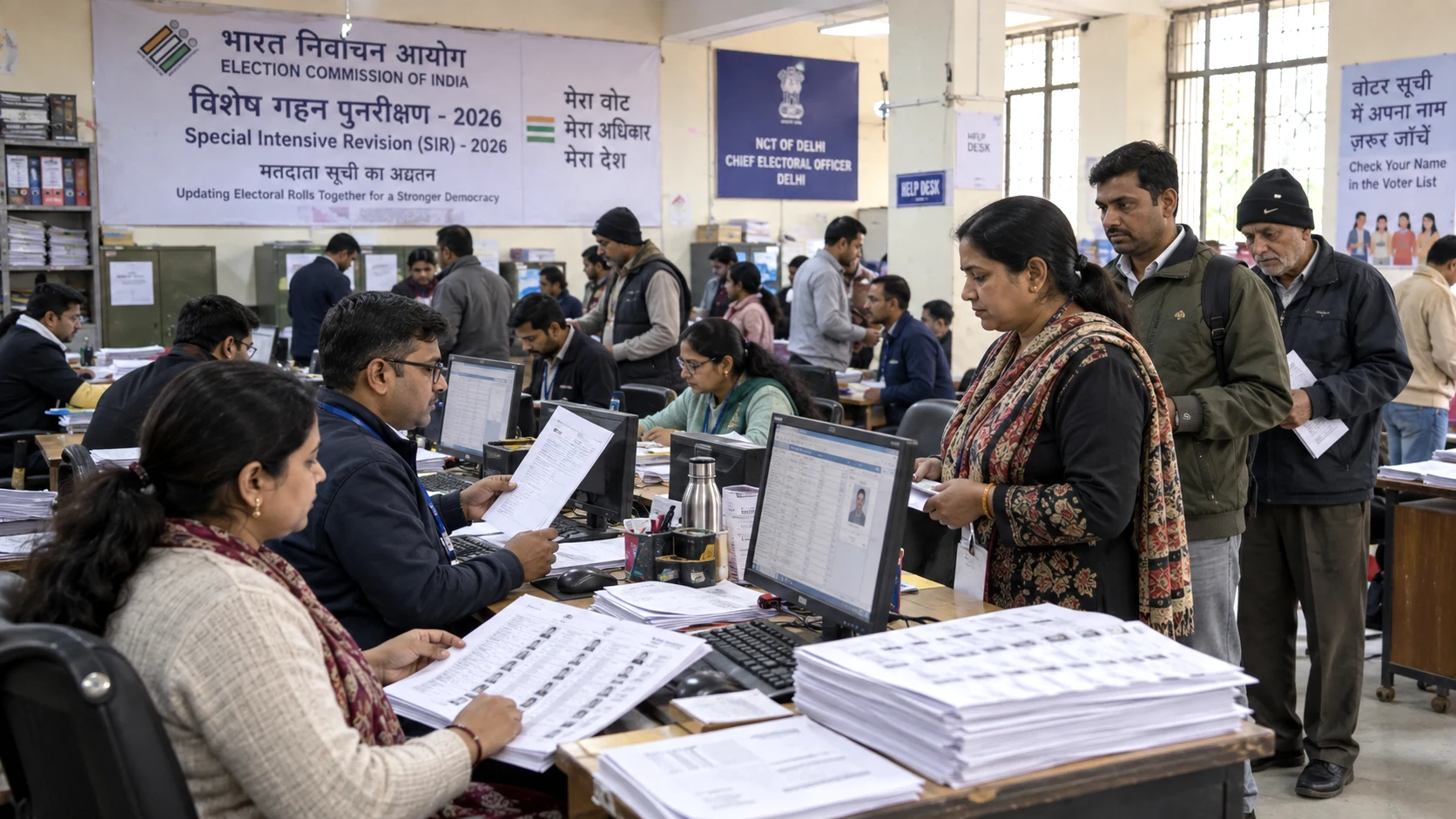
INDIA bloc protests against CEC Gyanesh Kumar have intensified, with Rahul Gandhi saying the agitation will continue until Kumar resigns. The row also centres on Delhi’s SIR, where 47.56 lakh names were excluded from the draft electoral roll.
The Election Commission says all final decisions taken by the full Commission over the past year, including SIR-related measures, were unanimous despite reported objections raised during internal deliberations. Here is what the dispute means for voters.
The Supreme Court has issued notice on the opposition leaders’ SIR petition and made it returnable on October 27. The Court has not recorded a stay on the electoral-roll revision, while the Election Commission and other respondents now have an opportunity to reply.
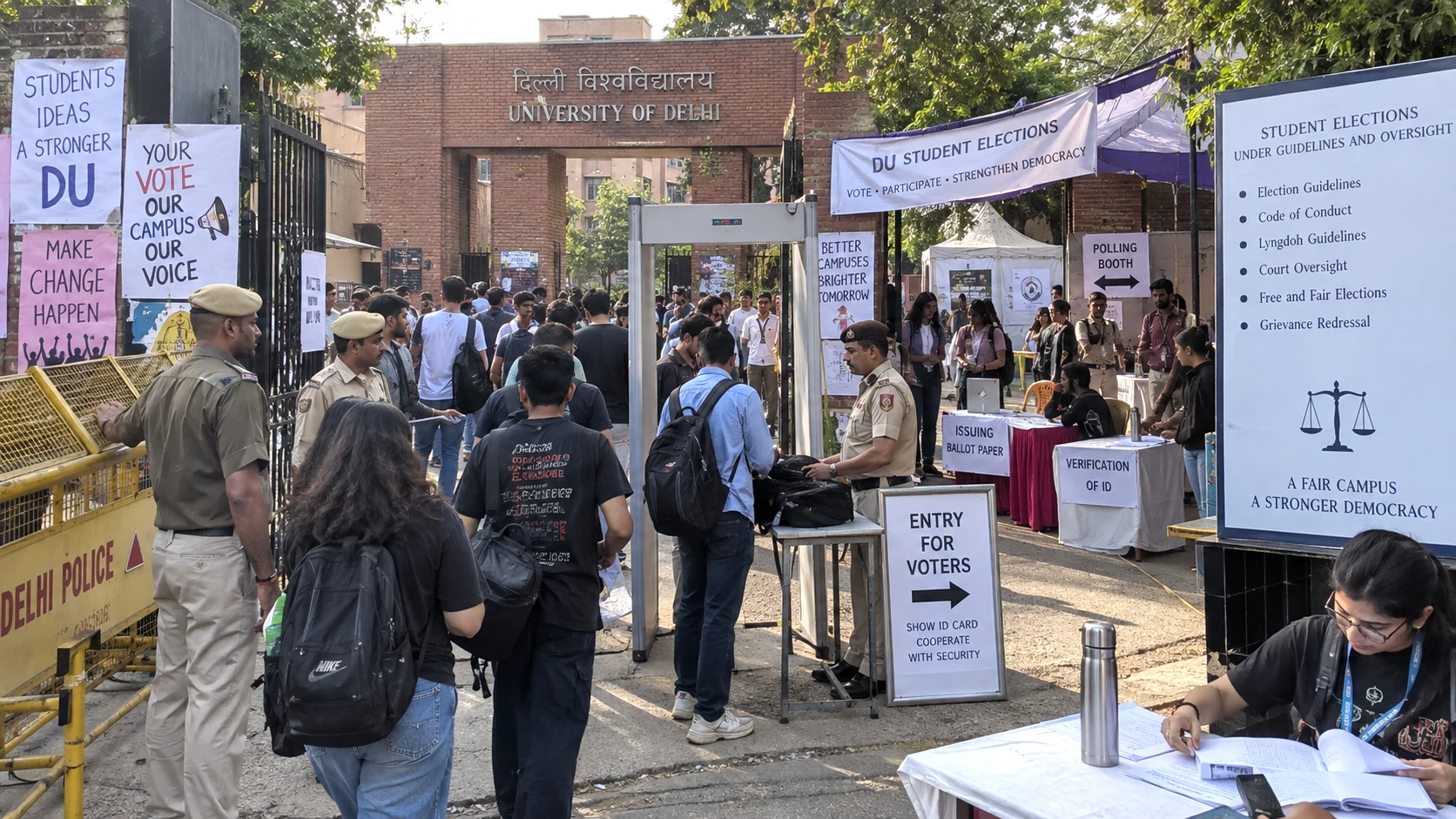
More than 1.51 lakh Delhi University students are eligible to vote for four DUSU posts on September 18. Over 2,000 police and paramilitary personnel have been deployed, while the Delhi High Court has sought reports on alleged campaign violence and election-code violations before deciding whether fur
The US votes in the 2026 midterms on November 3. Here is what is being elected, why House and Senate control matters, the major campaign issues and how readers abroad can follow the results.
LK Advani, Jagdeep Dhankhar, S Jaishankar and several other prominent Delhi voters have had their SIR records verified and reserved for inclusion in the final electoral roll. Here is what “cleared” means and what ordinary voters should do before key deadlines.








0 Comments