Supreme Court Issues Notice on SIR Petition; Next Hearing October 27
The Supreme Court has issued notice on the opposition leaders’ SIR petition and made it returnable on October 27. The Court has not recorded a stay on the electoral-roll revision, while the Election Commission and other respondents now have an opportunity to reply.
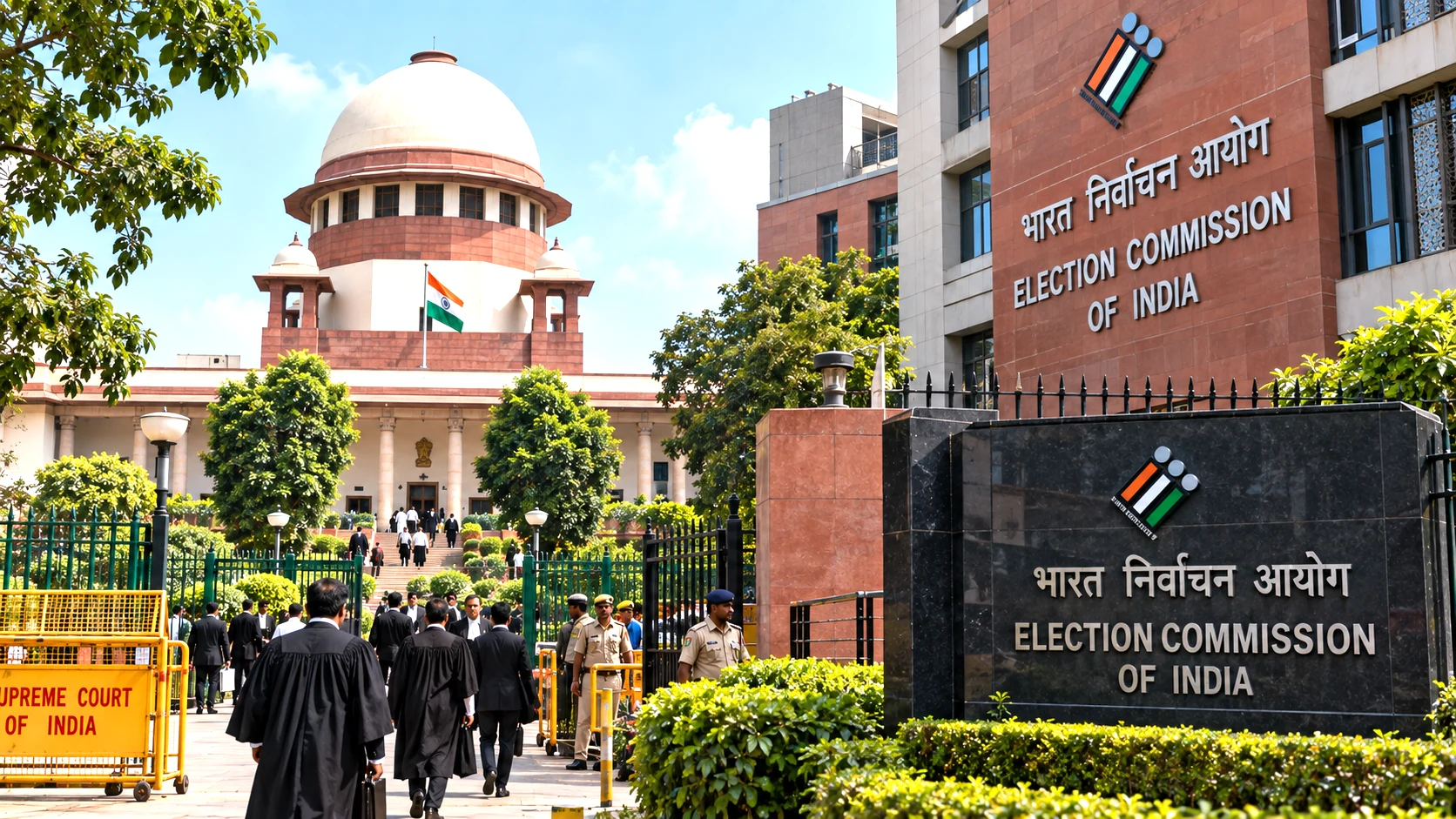
Editorial illustration of Supreme Court notice on SIR petition
Table of Contents (19 sections)
NEW DELHI, October 16, 2026: The Supreme Court has issued notice on a petition led by Lok Sabha Leader of the Opposition Rahul Gandhi and other opposition leaders questioning decisions and procedures connected with the Election Commission of India’s Special Intensive Revision of electoral rolls.
The important development is procedural but significant: the Court has now moved the petition beyond its filing stage, sought responses and fixed October 27, 2026 as the returnable date.
The October 15 order does not record any interim suspension of the Special Intensive Revision.
That distinction matters. The Supreme Court agreeing to hear the case and issuing notice does not mean it has accepted the petitioners’ allegations. Equally, the Election Commission’s objections to those allegations do not end the judicial examination. The next stage is for the respondents to place their position before the Court.
Key Takeaways
Supreme Court issued notice on Rahul Gandhi-led SIR petition on Oct 15.
Recommended Reading
Related Stories & In-Depth Guides
Curated editorial perspectives matching this topic.
The Supreme Court Registry has flagged 14 procedural defects in an SIR petition filed by Rahul Gandhi and 10 other Opposition leaders. The objections do not amount to rejection of the case. Here is what must be corrected, what the petition seeks and what happens next.
The Supreme Court has delivered differing opinions over whether challenges to the 2023 CEC appointment law require a Constitution Bench. The case now goes to the CJI for consideration of a larger bench, while the law remains in force.
Notice returnable on October 27, 2026; replies may be filed by then.
Petition tagged with related SIR case W.P.(C) No. 1246/2026.
No stay on ongoing Special Intensive Revision recorded.
Court has not accepted allegations or ordered independent audit.
SIR in Three Plain Lines
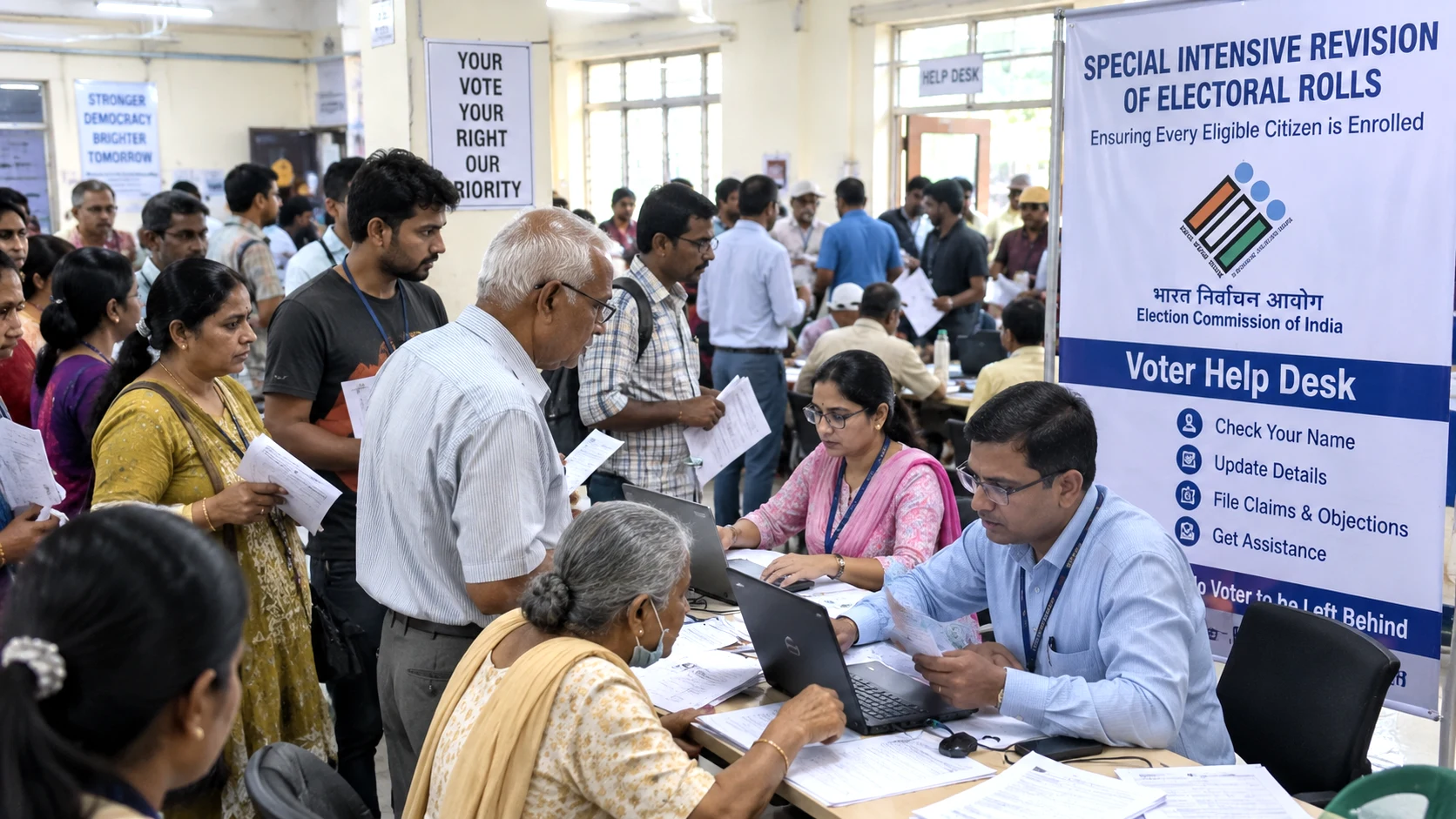
SIR, or Special Intensive Revision, is an Election Commission exercise for verifying and updating electoral rolls.
It can involve enumeration, document verification, claims and objections, notices and decisions concerning inclusion, correction or deletion of names.
The present Supreme Court petition does not simply ask whether SIR can exist; it raises questions about how later SIR-related decisions were made, implemented and documented.
Update After Hearing
Update after hearing: The Supreme Court issued notice on October 15, made the notice returnable on October 27, tagged the opposition leaders’ petition with an already pending SIR-related case and allowed replies to be filed by the next hearing. The order did not record a stay on the ongoing SIR exercise.
The matter is Rahul Gandhi and Others v Election Commission of India and Others, W.P.(C) No. 1351/2026.
It was heard by a bench comprising Chief Justice of India Surya Kant and Justice Joymalya Bagchi.
The case had only days earlier faced procedural objections at the Registry stage. Rajatheertha reported on October 13 that filing defects had been flagged. Those defects did not amount to dismissal of the petition, and the case subsequently reached the Court for hearing.
The October 15 proceeding therefore marks a genuine new stage in the litigation.
What Exactly Did the Supreme Court Order?
The Court’s Record of Proceedings provides a clearer picture than political statements made outside the courtroom.
For W.P.(C) No. 1351/2026 and certain connected matters, the Court directed:
notice to be issued;
the notice to be returnable on October 27, 2026;
the matter to be tagged with W.P.(C) No. 1246/2026;
and replies, if any, to be filed by the next date of hearing.
This means the petition is now proceeding alongside related litigation concerning Election Commission decisions and the SIR process.
The Court has not, at this stage, delivered a judgment on whether the allegations raised by the opposition leaders are correct.
It has also not ordered the Election Commission to stop SIR pending the next hearing.
What Does “Issue Notice” Mean?
A notice at this stage means the Court considers that the respondents should have an opportunity to answer the petition.
It is not the same as a finding that the petitioners have proved their case.
The Election Commission and other respondents can contest the facts, the legal interpretation, the relief sought or all three.
After those replies are before the Court, the bench can decide what further examination is necessary.
Depending on the issues before it, a court may later consider documents, affidavits, interim applications and legal arguments before deciding whether any direction is required.
No final conclusion about the legality of the challenged conduct should therefore be drawn from the issuance of notice alone.
What the Opposition Petition Is Asking the Court to Examine
The petition raises several strands of the continuing SIR controversy.
One concerns the internal decision-making process of the Election Commission.
The petitioners want the Court to examine records including files, agendas, minutes, notings and objections connected with disputed electoral-roll decisions.
They argue that the Election Commission is a multi-member constitutional body and that decisions attributed to the Commission must comply with the legal framework governing collective decision-making.
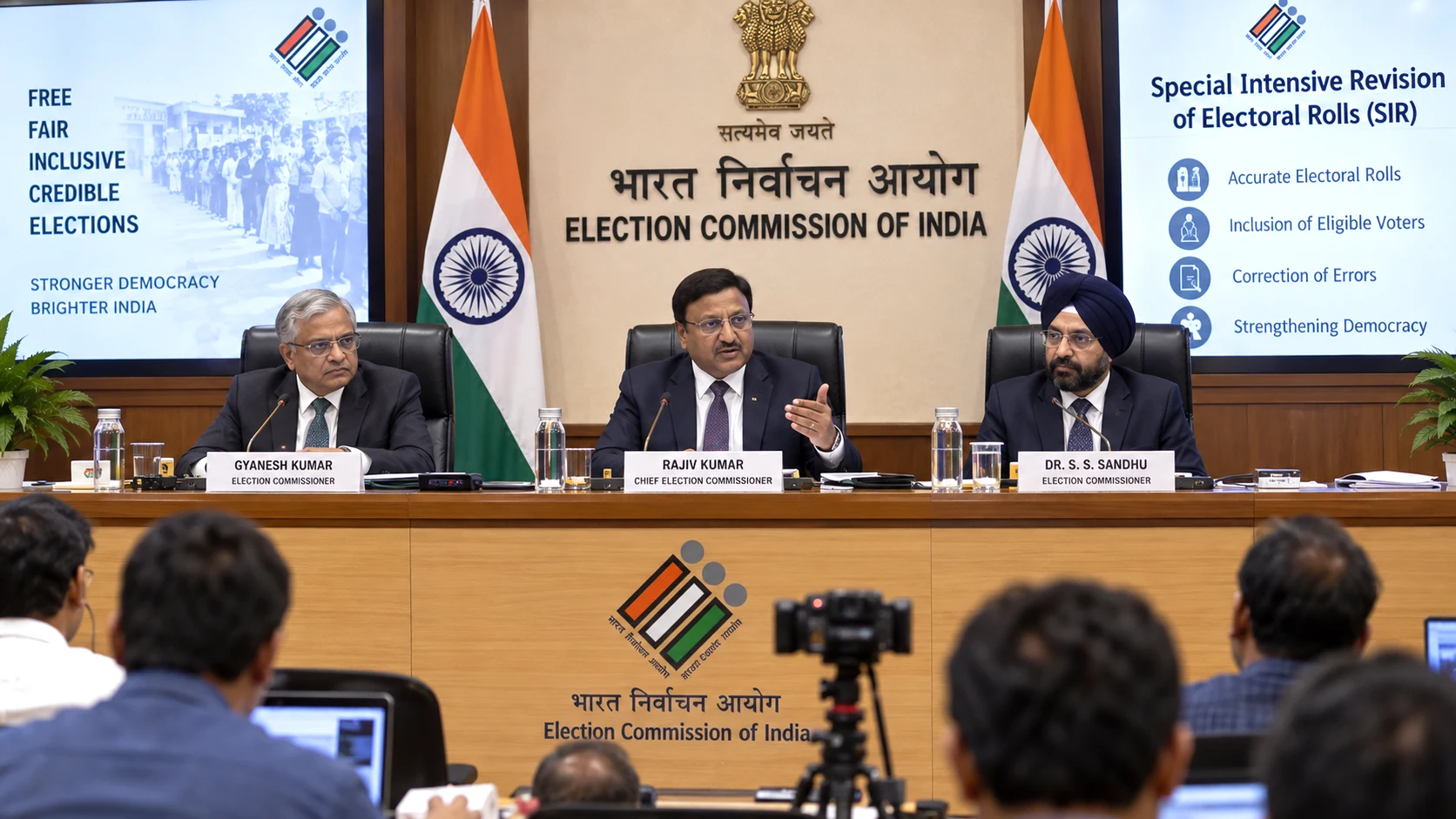
The controversy intensified after reports that Election Commissioners Sukhbir Singh Sandhu and Vivek Joshi had raised objections or questions on a number of electoral-roll matters.
Those reports have been used by opposition parties to question whether some decisions were implemented without proper approval.
The Election Commission disputes that interpretation and has maintained that its final SIR decisions were taken with the approval of the Commission.
The Supreme Court has not yet resolved that dispute.
Electoral-Roll Deletions Are Another Major Part of the Case
The petition also seeks scrutiny of voter deletions and modifications made during the SIR process.
The petitioners have requested an independent audit led by a retired Supreme Court judge, with technical assistance, to examine deletions and changes to electoral-roll databases.
They also seek greater public disclosure, including booth-wise information concerning deleted electors and the reasons recorded for deletion.
These are requests contained in the litigation.
The Court has not ordered such an audit in the October 15 order.
That distinction is important because numbers circulated during the political controversy have often mixed different categories — including people identified as absent, shifted, deceased, duplicate, unmapped or subject to additional verification — with final deletion figures.
A person appearing in an intermediate verification category should not automatically be described as having permanently lost voting rights.
The Petitioners’ Argument
The petitioners’ central legal position is that the issue is not merely whether the Election Commission has the power to revise electoral rolls.
Their case focuses on whether that power was exercised in accordance with constitutional, statutory and procedural safeguards.
Among the questions they want examined are whether disputed Commission decisions complied with Article 324 of the Constitution and the law governing the functioning of the Chief Election Commissioner and Election Commissioners.
The petition also raises concerns relating to ECINET and ERONET, the technology systems involved in electoral-roll administration.
It seeks scrutiny of access controls, records and changes associated with electoral data.
Another part of the case concerns Form 6, the statutory form used for inclusion of names in electoral rolls.
The petitioners want the Court to ensure that the form and procedures used by election authorities comply with the applicable rules.
They have also asked that no eligible elector be deleted without prior notice and a reasonable opportunity to respond.
The petition goes further by seeking a mechanism to restore eligible voters whose names may have been wrongly excluded.
These remain the petitioners’ claims and requested remedies. They have not been accepted as established facts by the Court.
What the Election Commission Says
The Election Commission has publicly defended the SIR exercise and its institutional decision-making.
In its September 26 press note, the Commission said decisions concerning SIR were taken with the approval of the full Commission.
It has also maintained that internal questions, comments or deliberations should not automatically be interpreted as proof that final institutional decisions were divided or unlawful.
The Commission announced an ECINet review mechanism involving a senior election official and an independent IIT or IIIT expert to examine whether the system operates consistently with applicable laws and rules.
It also announced procedural measures for voters who received notices for being unmapped or having what authorities call logical discrepancies.
Under those measures, Booth Level Officers can collect documents from affected voters at their homes and upload them for consideration by the Electoral Registration Officer, reducing the need for voters to attend an office hearing in ordinary cases.
The Election Commission’s voter-services portal continues to display SIR-2026 facilities.
However, it is important to separate those public positions from the formal response in the new Supreme Court case.
The Court has now given respondents an opportunity to file replies. Their affidavits and legal submissions in the proceeding will be important in determining precisely how they answer the opposition leaders’ allegations.
What the Court Has Not Decided
Several points should be kept clear.
The Supreme Court has not held that SIR is illegal.
It has not found that the opposition’s allegations about voter deletions are proved.
It has not ordered an independent audit through the October 15 order.
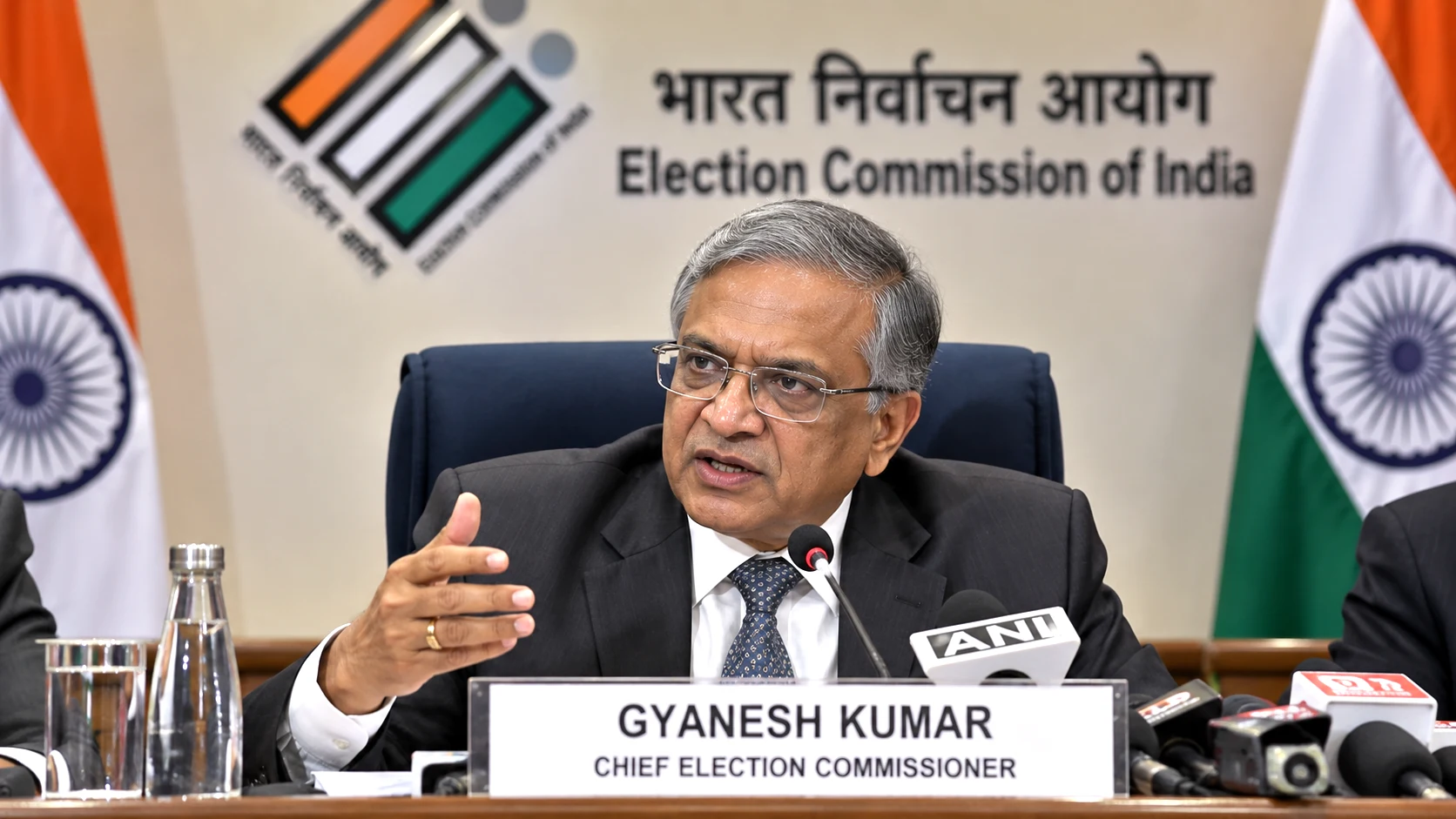
It has not directed the resignation or removal of Chief Election Commissioner Gyanesh Kumar.
It has not recorded an interim suspension of the SIR process.
And it has not delivered a final ruling on whether disputed Election Commission decisions violated the requirements governing collective decision-making.
Those questions remain part of continuing litigation.
Why the Earlier Supreme Court Ruling Still Matters
The legal dispute must also be distinguished from the broader question of whether the Election Commission possesses authority to conduct an intensive revision at all.
The Supreme Court earlier upheld the Election Commission’s authority to undertake the SIR process in litigation arising from the Bihar exercise.
The latest opposition petition acknowledges that legal background and focuses more narrowly on later implementation, institutional decision-making, database administration, deletions and procedural safeguards.
That means the current case should not be described simply as another attempt to decide from scratch whether any SIR can legally occur.
The questions now before the Court are more specific.
A court can recognise an institution’s general legal power while still examining whether particular actions taken under that power followed the law.
Petition Tagged With an Existing SIR Case
The October 15 order also directs that the opposition leaders’ petition be tagged with W.P.(C) No. 1246/2026.
That existing proceeding concerns related allegations about decisions made during the SIR process and the functioning of the Election Commission.
Tagging allows overlapping legal questions to be considered together instead of being examined in isolation through multiple proceedings.
It does not mean every allegation or prayer in the different petitions is identical.
The individual cases retain their own pleadings and requested reliefs, but the Court can examine common questions in a coordinated way.
Separate Issue Concerning One Petitioner
The October 15 Record of Proceedings also contains a separate direction concerning Petitioner No. 6.
It says the petition on behalf of that petitioner is being entertained on a provisional basis, subject to him explaining his conduct.
Legal reporting identifies Petitioner No. 6 as Shiv Sena (UBT) Rajya Sabha MP Sanjay Raut.
The issue relates to remarks he made concerning the Chief Justice and judiciary after the Chief Justice declined an out-of-court meeting request from opposition leaders.
That controversy should be kept separate from the merits of the SIR challenge.
The Court’s direction regarding one petitioner’s conduct is not a finding on the legality of the electoral-roll revision itself.
Timeline: How the Petition Reached This Stage
October 12:
Rahul Gandhi and other opposition leaders moved the Supreme Court with a petition raising concerns about SIR-related Election Commission decisions and electoral-roll administration.
October 13:
The case moved through the Registry process after procedural defects became a public issue. Rajatheertha reported that such filing defects did not amount to rejection of the substantive case.
October 15:
The matter came before Chief Justice Surya Kant and Justice Joymalya Bagchi. The Court issued notice, tagged the petition with connected SIR litigation and made the notice returnable on October 27.
That progression is important because it shows why the latest story is materially different from the earlier debate over Registry objections.
The question is no longer whether the petition will get past the filing stage.
The case is now before the Court, and the respondents have been asked to answer it.
What Happens on October 27?
October 27 is the returnable date stated in the Supreme Court’s order.
By then, replies may be filed.
Those responses could clarify how the Election Commission and other respondents answer claims relating to institutional decision-making, voter deletions, databases, Form 6 and the safeguards sought by the petitioners.
The next hearing could also provide greater clarity about whether the Court wants additional records or considers any interim application.
It would be premature to predict what the bench will decide.
The present verified position is narrower: notice has been issued, replies have been invited and the matter remains pending.
Does the Case Stop SIR for Voters?
No such stay is recorded in the October 15 order.
For voters, that means the ongoing legal challenge should not be treated as a reason to ignore an electoral-roll notice, claim deadline, document request or registration procedure.
The Election Commission’s voter portal continues to provide facilities relating to SIR, voter searches, registration and responses to notices.
A voter who receives a notice should check the reason stated, respond through the applicable process and retain acknowledgement or submission records where possible.
A notice requiring clarification is also not automatically the same thing as final deletion from the electoral roll.
Rajatheertha has previously explained that distinction in its Delhi SIR coverage.
Why This Hearing Matters Beyond Party Politics
The dispute is politically charged, but the legal questions go beyond individual political parties.
Electoral rolls determine who is formally registered to participate in elections.
At the same time, the Election Commission has a constitutional responsibility to maintain accurate rolls by adding eligible voters and addressing duplicate, deceased, shifted or otherwise ineligible entries according to law.
The core legal tension is therefore not between “accurate rolls” and “voter rights” as if only one can be protected.
A credible electoral-roll system must achieve both.
It needs mechanisms for correcting inaccurate entries while providing fair procedures to eligible voters whose registrations are questioned.
The Supreme Court proceedings will now examine whether the challenged actions met the constitutional and statutory standards applicable to that process.
Bottom Line
The opposition leaders’ SIR petition has moved into a new stage.
The Supreme Court has issued notice, linked the matter with related SIR litigation and fixed October 27 as the returnable date.
The Court has not recorded a stay on SIR and has not accepted the allegations in the petition as proved.
The petitioners want scrutiny of Election Commission decision-making, electoral-roll deletions, database administration, Form 6 and voter safeguards.
The Election Commission has publicly defended its decisions, maintained that key SIR decisions had full Commission approval and introduced additional voter-facing and ECINet review measures.
The next meaningful development will be the respondents’ replies and the October 27 hearing.
Until then, the accurate description is straightforward: the Supreme Court is examining the challenge, but it has not yet decided its merits.
Key Takeaway
Supreme Court issues notice on SIR petition; next hearing October 27.
No stay on electoral-roll revision; respondents to reply.
The Rajatheertha Team publishes news, explainers, guides and updates across India and the world. Our coverage follows Rajatheertha's editorial, verification and corrections standards.
The political confrontation over India’s electoral rolls has moved from statements and parliamentary demands to sustained street protests, with Opposition parties calling for Chief Election Commissioner Gyanesh Kumar to resign and seeking the cancellation of the ongoing Special Intensive Revision of
Politics/ Election Commission & Electoral Rolls13 min read
INDIA bloc protests against CEC Gyanesh Kumar have intensified, with Rahul Gandhi saying the agitation will continue until Kumar resigns. The row also centres on Delhi’s SIR, where 47.56 lakh names were excluded from the draft electoral roll.
Opposition parties have intensified calls for CEC Gyanesh Kumar’s removal after a report said two Election Commissioners raised repeated objections over SIR and electoral-roll decisions. Some leaders have also demanded his arrest, while the ECI says all final decisions were unanimous.
Receiving a Delhi SIR notice does not automatically remove a voter from the electoral roll, the CEO's office has clarified. Voters can respond, submit documents and receive a hearing before any decision is taken.
Politics/ National Politics / Election Commission13 min read
Delhi Police registered an FIR against Rahul Gandhi, Priyanka Gandhi Vadra and others over their alleged unauthorised entry into Akashvani Bhavan during an October 6 INDIA bloc protest. Congress says the case is an attempt to suppress its campaign against the Election Commission.
The Election Commission says all final decisions taken by the full Commission over the past year, including SIR-related measures, were unanimous despite reported objections raised during internal deliberations. Here is what the dispute means for voters.









0 Comments