PM Modi’s ₹13,000 Crore Tamil Nadu Projects: Full List, Cost and Timeline
Prime Minister Narendra Modi launched and laid foundation stones for more than ₹13,000 crore worth of projects in Tamil Nadu on October 11, 2026. Here is the verified sector-wise list covering Chennai Metro, highways, railways, ports, petroleum and IIT Madras, along with the costs disclosed by the g
Editorial illustration representing PM Modi’s ₹13,000 crore Tamil Nadu infrastructure projects including Chennai Metro and highways
Table of Contents (14 sections)
Prime Minister Narendra Modi on October 11, 2026 inaugurated completed works, dedicated infrastructure to the nation and laid foundation stones for a package of development projects valued at more than ₹13,000 crore in Tamil Nadu.
The programme in Chennai brought together projects from several sectors rather than representing a single ₹13,000 crore scheme. The package covers Chennai Metro Rail, national highways, conventional railways and stations, three major ports, a petroleum project at the Manali refinery and scientific research infrastructure at IIT Madras.
That distinction matters because some of the projects are already completed and were opened or dedicated on October 11, while others only reached the foundation-stone stage and will require further construction.
The Press Information Bureau has disclosed costs for several major components, but it has not published an individual rupee value for every port or scientific project in the combined package. Where a separate official cost has not been announced, it should not be estimated or inferred from the ₹13,000 crore headline figure.
Here is what was officially included.
Key Takeaways
Recommended Reading
Related Stories & In-Depth Guides
Curated editorial perspectives matching this topic.
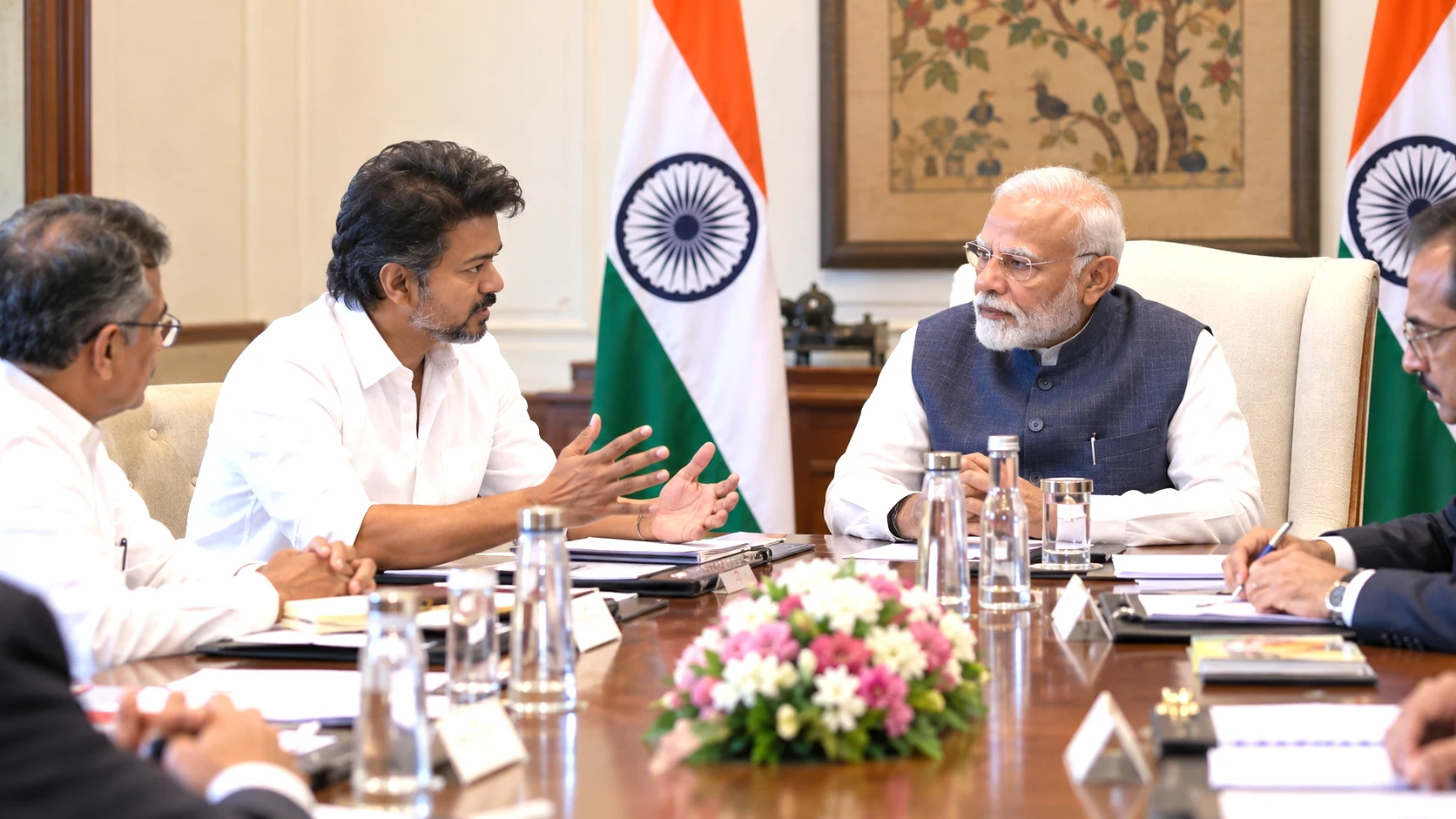
Prime Minister Narendra Modi is in Chennai on October 11 for a Metro ride and the launch of development projects worth over ₹13,000 crore. The programme also puts the spotlight on his first major joint public engagement with Tamil Nadu Chief Minister C Joseph Vijay after TVK’s recent bypoll victorie
The October 9 withdrawal deadline will determine whether voting is required for 12 Rajya Sabha seats across Uttar Pradesh, Uttarakhand and West Bengal. The Election Commission has scheduled polling for October 16 wherever a contest remains.
Total package: Over ₹13,000 crore (Metro, highways, railways, ports, petroleum, IIT Madras).
Largest individual project: Chennai Metro Phase II Poonamallee–Vadapalani stretch (~₹4,900 crore) — inaugurated.
Highways: ~₹3,700 crore (mix of inaugurations and foundation).
Railways: >₹750 crore including five Amrit Stations.
Some projects already open; others still under construction.
Tamil Nadu Projects: Sector-Wise List
Sector
Project
Announced Cost
Status on October 11, 2026
Metro Rail
Poonamallee–Vadapalani stretch of Chennai Metro Phase II
Around ₹4,900 crore
Inaugurated
National Highways
Combined highway package
Around ₹3,700 crore
Mix of inaugurations and foundation laying
Highway
36-km four-lane Vadugapatti–Therkuvenganallur section of NH-744
Included in highway package
Inaugurated
Highway
Around 30-km four-lane Madurai Ring Road section of NH-744A
Included in highway package
Inaugurated
Highway
Four-lane Thiruvarur Bypass on Nagapattinam–Thanjavur section of NH-83
Included in highway package
Foundation stone laid
Railways
Railway infrastructure package
More than ₹750 crore
Dedicated/inaugurated
Railway
Karaikal–Peralam railway line
Included in rail package
Dedicated
Railway
Three rail flyovers in Coimbatore and surrounding areas
Included in rail package
Dedicated
Railway Stations
Palani Amrit Station
Included in rail package
Inaugurated
Railway Stations
Vellore Cantonment Amrit Station
Included in rail package
Inaugurated
Railway Stations
Ambasamudram Amrit Station
Included in rail package
Inaugurated
Railway Stations
Paramakkudi Amrit Station
Included in rail package
Inaugurated
Railway Stations
Namakkal Amrit Station
Included in rail package
Inaugurated
Chennai Port
Paved Storage Yard
Cost not separately stated in PIB project brief
Inaugurated
Chennai Port
Four EXIM godowns
Cost not separately stated
Inaugurated
Chennai Port
Upgraded Cruise Terminal
Cost not separately stated
Inaugurated
Chennai Port
Seafarers Club
Cost not separately stated
Inaugurated
V.O. Chidambaranar Port
Eight development projects
Individual costs not stated in PIB project brief
Mix of inaugurations and foundation laying
Kamarajar Port
Coal Berth-3
Cost not separately stated
Inaugurated
Kamarajar Port
Capital dredging for Container Terminal Phase-I, Stage-II
Cost not separately stated
Foundation stone laid
Petroleum
Group II/III Lube Oil Base Stocks project at CPCL’s Manali Refinery
Around ₹1,620 crore
Foundation stone laid
Science / Research
Sudha Gopalakrishnan Brain Centre at IIT Madras
Cost not stated in the project brief
Dedicated to the nation
Science / Research
Mission to map more than 100 human brains in 3D at cellular resolution
Cost not separately stated
Launched
Science / Research
C-STROKE human ischaemic stroke atlas
Cost not separately stated
Released
The four large components for which PIB gave an overall figure — Chennai Metro at about ₹4,900 crore, national highways at around ₹3,700 crore, railway infrastructure at more than ₹750 crore and the CPCL petroleum project at around ₹1,620 crore — together account for at least about ₹10,970 crore.
That does not mean the remaining difference can simply be labelled as the cost of the port and IIT projects. The government's overall description is “over ₹13,000 crore”, several of the component figures are themselves rounded, and the PIB announcement does not provide a complete project-by-project financial breakup for every remaining work.
Chennai Metro Phase II: The Largest Individually Priced Project
One of the most visible projects inaugurated during the visit was the Poonamallee–Vadapalani section of Chennai Metro Rail Phase II.
The approximately ₹4,900 crore stretch is the largest individual project for which a cost was stated in the official programme announcement.
The operational section runs for roughly 15 km and forms part of Chennai Metro’s larger Phase II expansion. It includes a distinctive 3.7-km double-decker structure and advanced signalling designed to support driverless train operations.
The immediate importance of the opening is practical: western Chennai has expanded rapidly through residential, industrial and employment corridors, placing heavy pressure on road transport.
The new Metro section is intended to give commuters an alternative to congested road journeys and improve access between the western suburbs and central parts of the city.
Prime Minister Modi also travelled on the Metro during the visit, accompanied by Tamil Nadu Chief Minister C. Joseph Vijay.
For passengers, this project differs from several others in the ₹13,000 crore package because it was not merely announced or given a ceremonial foundation stone. The section has reached the inauguration stage and is part of the operational expansion of Chennai Metro Phase II.
Around ₹3,700 Crore for National Highways
The national highway component is valued at approximately ₹3,700 crore and covers both completed roads and a new bypass entering the construction stage.
Three major works were identified.
Vadugapatti–Therkuvenganallur section of NH-744
The Prime Minister inaugurated a 36-km four-laned section between Vadugapatti and Therkkuvenganallur on NH-744.
The corridor is intended to improve movement between pilgrimage, commercial and industrial centres and allow faster movement of both passengers and freight.
Madurai Ring Road
A roughly 30-km four-laned section of NH-744A forming part of the Madurai Ring Road was also inaugurated.
The purpose of a ring-road corridor is particularly important for a city such as Madurai because vehicles that do not need to enter the urban core can bypass heavily congested central roads.
Separating through-traffic, including commercial vehicles, from local city traffic can reduce travel delays and improve logistics reliability.
Thiruvarur Bypass
The Prime Minister laid the foundation stone for a four-lane bypass at Thiruvarur on the Nagapattinam–Thanjavur section of NH-83.
Unlike the first two highway projects, this was not an inauguration of a completed road.
The project now moves through its implementation and construction period. The PIB programme note did not announce a specific completion date, so a definitive opening year should not be stated until the implementing authority publishes one.
More Than ₹750 Crore in Railway Projects
Rail infrastructure worth more than ₹750 crore formed another part of the package.
The Karaikal–Peralam railway line was dedicated to the nation, strengthening rail connectivity in the region.
Three rail flyovers in Coimbatore and nearby areas were also dedicated. Such structures are intended to reduce delays at busy crossings, improve road safety and separate road traffic from railway movements.
The Prime Minister also inaugurated five stations redeveloped under the Amrit Bharat Station Scheme:
Palani
Vellore Cantonment
Ambasamudram
Paramakkudi
Namakkal
The redevelopment programme is aimed at upgrading passenger facilities and station infrastructure rather than building entirely new railway networks.
For travellers in these towns, the impact is therefore likely to be seen primarily in station accessibility, passenger circulation, waiting facilities and the overall quality of railway infrastructure.
Major Port Works Across Chennai, Kamarajar and V.O. Chidambaranar Ports
Port infrastructure formed a substantial but less precisely itemised part of the October 11 package.
At Chennai Port, four completed facilities were inaugurated:
a paved storage yard
four EXIM godowns
an upgraded cruise terminal
a Seafarers Club
The storage yard and export-import warehouses are intended to improve cargo storage and handling, while the upgraded cruise terminal is designed to strengthen passenger-handling capacity.
The Seafarers Club provides welfare, support and recreational infrastructure for maritime personnel using the port.
At V.O. Chidambaranar Port, the programme covered eight major development projects. The government said these are intended to expand cargo and container capacity, improve cargo evacuation and logistics, and support the port’s transition towards cleaner maritime energy.
The official October 10 project brief described the VOC Port package as a combination of projects being inaugurated and projects for which foundation stones were being laid. It did not provide a single completion date covering all eight works.
At Kamarajar Port, Coal Berth-3 was inaugurated.
A separate foundation stone was laid for capital dredging connected with Container Terminal Phase-I, Stage-II.
Dredging is particularly important for large ports because adequate channel and berth depth determines the size and loading of vessels that can safely use a terminal.
₹1,620 Crore CPCL Lubricant Base-Oil Project
Another major foundation stone was laid at Chennai Petroleum Corporation Limited’s existing Manali Refinery.
The Group II/III Lube Oil Base Stocks project carries an announced investment of approximately ₹1,620 crore and a planned production capacity of 270 thousand metric tonnes per annum.
Base oils are a core input used to manufacture lubricants for vehicles, machinery and industrial applications.
The government's stated objective is to increase domestic production of premium lubricant base stocks and reduce dependence on imports.
Because October 11 marked the foundation-stone stage rather than commissioning of the plant, the production capacity should be treated as planned capacity, not current output.
The government announcement did not provide a definitive commissioning date in the overall Tamil Nadu project brief.
IIT Madras Brain Centre and C-STROKE Atlas
Not every component of the ₹13,000 crore programme was conventional transport or industrial infrastructure.
Prime Minister Modi also dedicated the Sudha Gopalakrishnan Brain Centre at IIT Madras to the nation.
The centre is undertaking advanced human-brain research using high-resolution mapping.
A scientific mission was launched to map more than 100 human brains into three-dimensional atlases at cellular resolution across different stages of the human lifespan.
The programme also included the release of C-STROKE, described as a human ischaemic stroke atlas containing more than 1,000 annotated microscopic sections from a stroke-affected brain.
The research is intended to give scientists detailed reference material for studying brain structure, ageing and disease and for identifying possible future therapeutic targets.
PIB did not give a separate monetary value for the Brain Centre in the ₹13,000 crore project announcement, so attaching an estimated share of the overall package to it would be misleading.
What Is Already Open and What Still Has to Be Built?
The headline value can make it appear that ₹13,000 crore worth of entirely new construction was announced in one day. That is not what happened.
The October 11 programme combined three different stages of development.
First were completed projects that were inaugurated or dedicated to the nation.
These include the Poonamallee–Vadapalani Chennai Metro stretch, completed highway sections, railway infrastructure, five redeveloped railway stations, several port facilities, Coal Berth-3 and the IIT Madras Brain Centre.
Second were projects entering a new construction phase after foundation-stone ceremonies.
These include the Thiruvarur Bypass, the ₹1,620 crore CPCL lubricant base-oil project, Kamarajar Port dredging and some of the VOC Port works.
Third were scientific initiatives launched alongside physical infrastructure, including IIT Madras’s brain-mapping mission and the C-STROKE atlas.
This means there is no single completion date for the entire ₹13,000 crore programme.
Some assets are available now; others may take several years to complete.
Where the government has not announced a project-specific deadline, readers should be cautious about unofficial completion dates circulating online.
Tamil Nadu Government Welcomes Projects but Makes More Demands
Chief Minister C. Joseph Vijay used the Chennai event both to welcome the infrastructure being commissioned and to press the Union government for additional approvals and financial support.
Vijay said his government is targeting a $1.5 trillion Tamil Nadu economy by 2036 and argued that infrastructure-led development should extend beyond Chennai to other parts of the state.
Among his requests were early clearance and financial support for Chennai Metro Phase III.
He also asked the Centre to reconsider Metro proposals for Coimbatore and Madurai and support the proposed cross-border Metro connection between the Bengaluru metropolitan region and Hosur.
Other requests raised by the Chief Minister included progress on the Godavari–Cauvery river-linking proposal, high-speed rail corridors from Chennai towards Coimbatore and Kanniyakumari, highway projects and the use of Tamil in Madras High Court proceedings.
Vijay also sought the release of ₹5,110 crore which the state says is pending under the Samagra Shiksha education programme.
These requests are separate from the ₹13,000 crore package inaugurated or launched on October 11 and should not be added to its headline value.
Opposition Parties Compete Over Credit for Chennai Metro
The opening of the Phase II Metro stretch also produced a political contest over who deserves credit for the project.
DMK president and former Chief Minister M.K. Stalin argued before the inauguration that the opening reflected work carried forward during his party's period in government and said the DMK's contribution to Chennai's Metro expansion should not be erased by subsequent political changes.
AIADMK general secretary and former Chief Minister Edappadi K. Palaniswami made a different claim.
He said the Detailed Project Report, approval process and early funding decisions for the project were advanced while the AIADMK was in office. Palaniswami welcomed the opening of the line while arguing that the project demonstrated the long-term impact of work undertaken by his government.
The competing claims are politically significant but do not change the operational status of the project.
Large infrastructure projects frequently span several governments because feasibility studies, financing, land acquisition, construction, systems installation, testing and commissioning can take many years.
For readers, it is more useful to separate that political debate from the question of what infrastructure is actually available and what still has to be completed.
Why the ₹13,000 Crore Package Matters
The programme is notable for the range of sectors involved.
The Metro and road projects focus primarily on passenger mobility and congestion.
Rail investments combine regional connectivity with station redevelopment.
Port projects are aimed at improving cargo capacity and logistics efficiency, which matters for an industrial and export-oriented state such as Tamil Nadu.
The CPCL project has a different economic objective: producing a higher-value industrial input domestically and reducing import dependence.
The IIT Madras component adds scientific research to what otherwise would have been a largely transport-and-logistics infrastructure announcement.
Taken together, the package reflects a development model centred on connecting cities, industrial areas, ports and supply chains while also investing in manufacturing and scientific capacity.
But the ₹13,000 crore figure should still be read carefully.
It represents the value of a collection of completed, ongoing and newly initiated projects. It is not ₹13,000 crore of new spending released on October 11, and it does not mean every project will be completed on the same timetable.
What Happens Next
For Chennai commuters, the immediate focus will be how the newly opened Phase II Metro section performs in daily service and how quickly the rest of the Phase II network progresses.
For the highway programme, attention will shift towards construction of the Thiruvarur Bypass and the performance of newly opened road sections in reducing congestion and travel time.
Rail passengers will begin using the redeveloped Amrit stations and other completed infrastructure.
The next milestones at the ports will depend on execution of the foundation-stone projects, particularly capacity expansion and dredging works.
At Manali, the key future milestone will be completion and commissioning of CPCL's ₹1,620 crore base-oil project.
Politically, the October 11 event also opened a second conversation.
Tamil Nadu's government has presented the Prime Minister with a broader list of requests covering Metro expansion, education funding, highways, river linking and high-speed rail. Whether those requests receive approvals and funding will determine whether the Chennai event becomes the start of a larger Centre-state infrastructure programme or remains primarily a milestone for projects already in the pipeline.
For now, the verified position is clear: more than ₹13,000 crore worth of projects were inaugurated, dedicated or moved into their next stage on October 11, but the programme combines infrastructure that is already operational with projects whose construction and completion still lie ahead.
Key Takeaway
Over ₹13,000 crore in Tamil Nadu projects inaugurated/dedicated/foundation-laid on Oct 11.
Chennai Metro Phase II stretch (~₹4,900 cr) is the largest inaugurated component.
Highways (~₹3,700 cr), railways (>₹750 cr), ports, CPCL (₹1,620 cr) and IIT Madras research included.
Some assets open now; others still under construction.
The Rajatheertha Team publishes news, explainers, guides and updates across India and the world. Our coverage follows Rajatheertha's editorial, verification and corrections standards.
Tamil Nadu Chief Minister C Joseph Vijay's first official meeting with Prime Minister Narendra Modi focused on issues ranging from Mekedatu and fishermen to state funds and Tamil identity. With the two leaders expected to share a Chennai stage on October 11, here is what the meetings mean politicall
Counting is underway for the Nagaon Lok Sabha bypoll and five Assembly by-elections in Tamil Nadu, West Bengal and Puducherry. Track the latest seat-wise leads, margins and winners here.
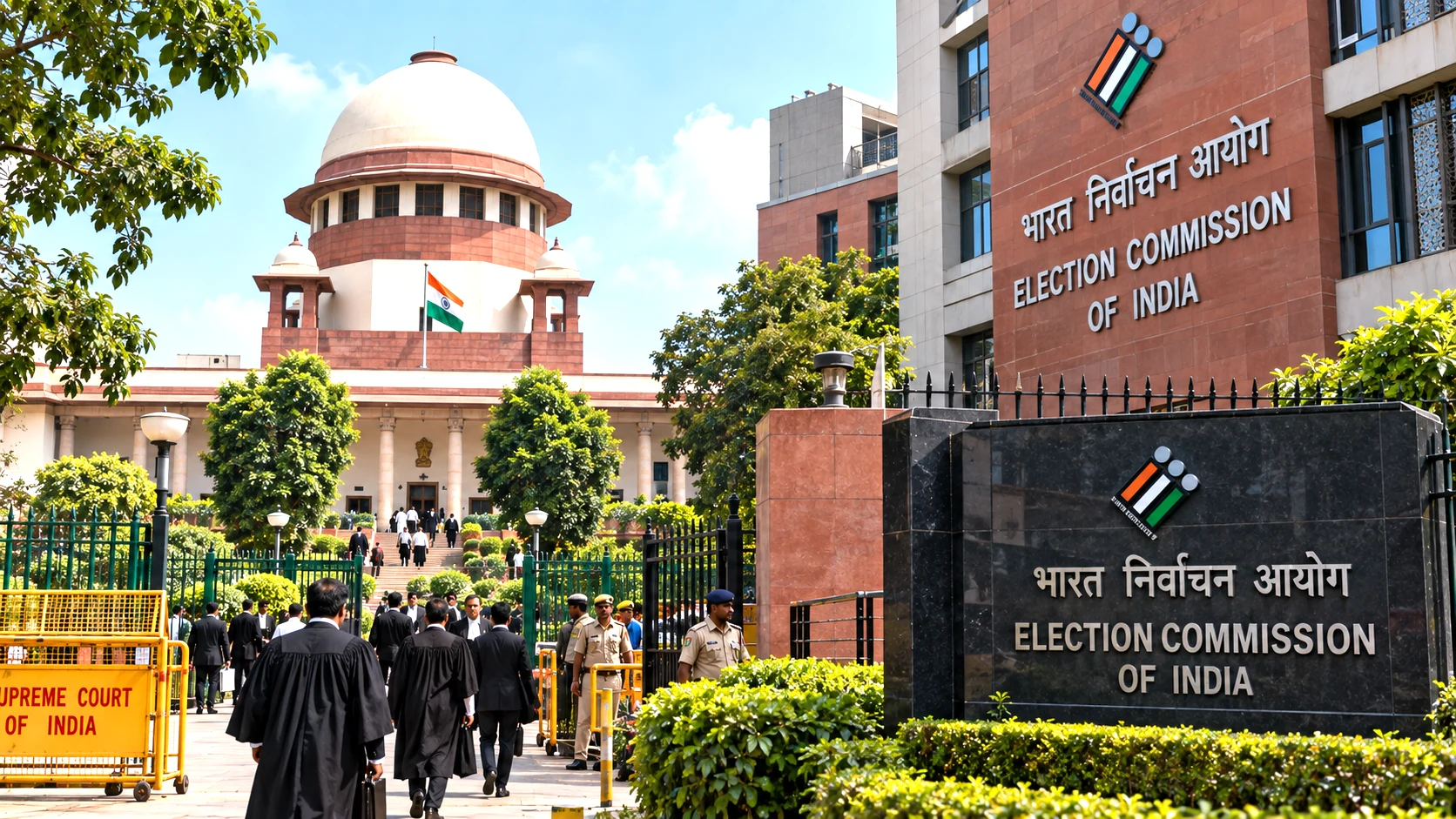
The Supreme Court has issued notice on the opposition leaders’ SIR petition and made it returnable on October 27. The Court has not recorded a stay on the electoral-roll revision, while the Election Commission and other respondents now have an opportunity to reply.
The US votes in the 2026 midterms on November 3. Here is what is being elected, why House and Senate control matters, the major campaign issues and how readers abroad can follow the results.
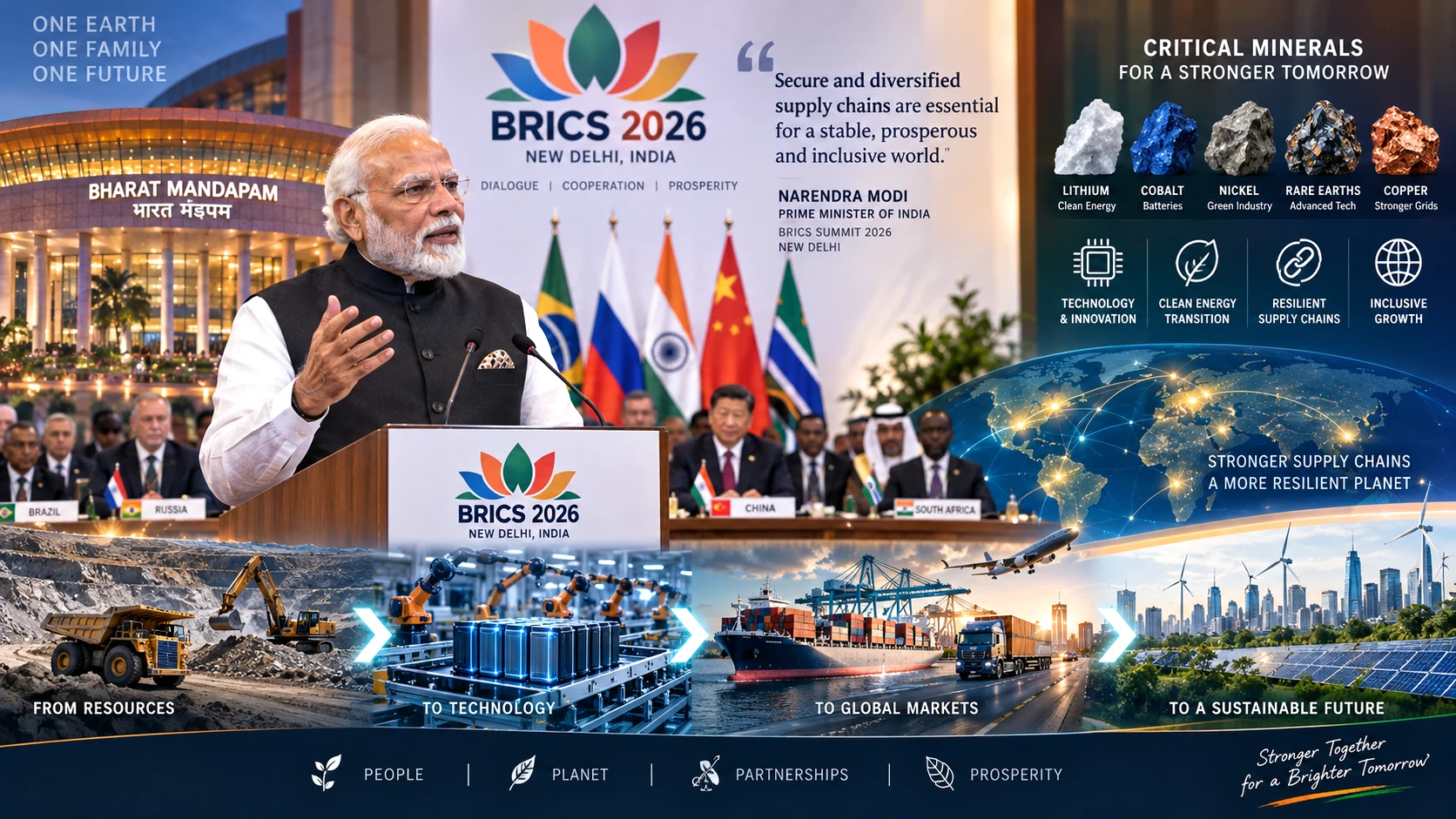
Prime Minister Narendra Modi warned BRICS leaders that the “weaponisation of technology and critical minerals” could obstruct shared development, as the New Delhi Declaration backed resilient supply chains and wider technology cooperation.
BJP candidate Hasi Rani Rath won the Nandigram Assembly bypoll by 122,753 votes, while the party also secured Rejinagar. Here are the verified results from all six October 2026 bypoll contests.








0 Comments