Why the Opposition Wants CEC Gyanesh Kumar to Resign: Explained in 10 Points
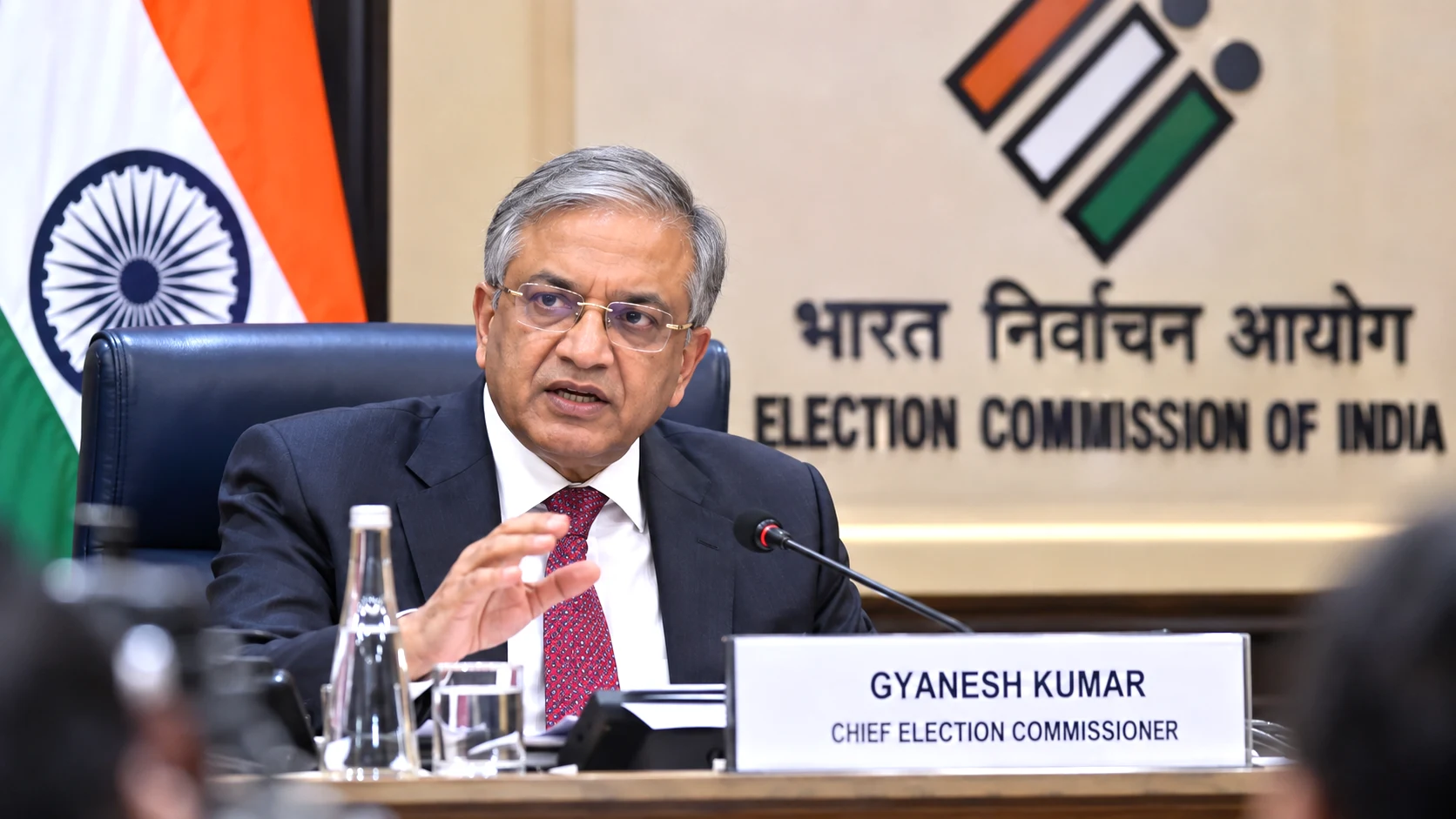
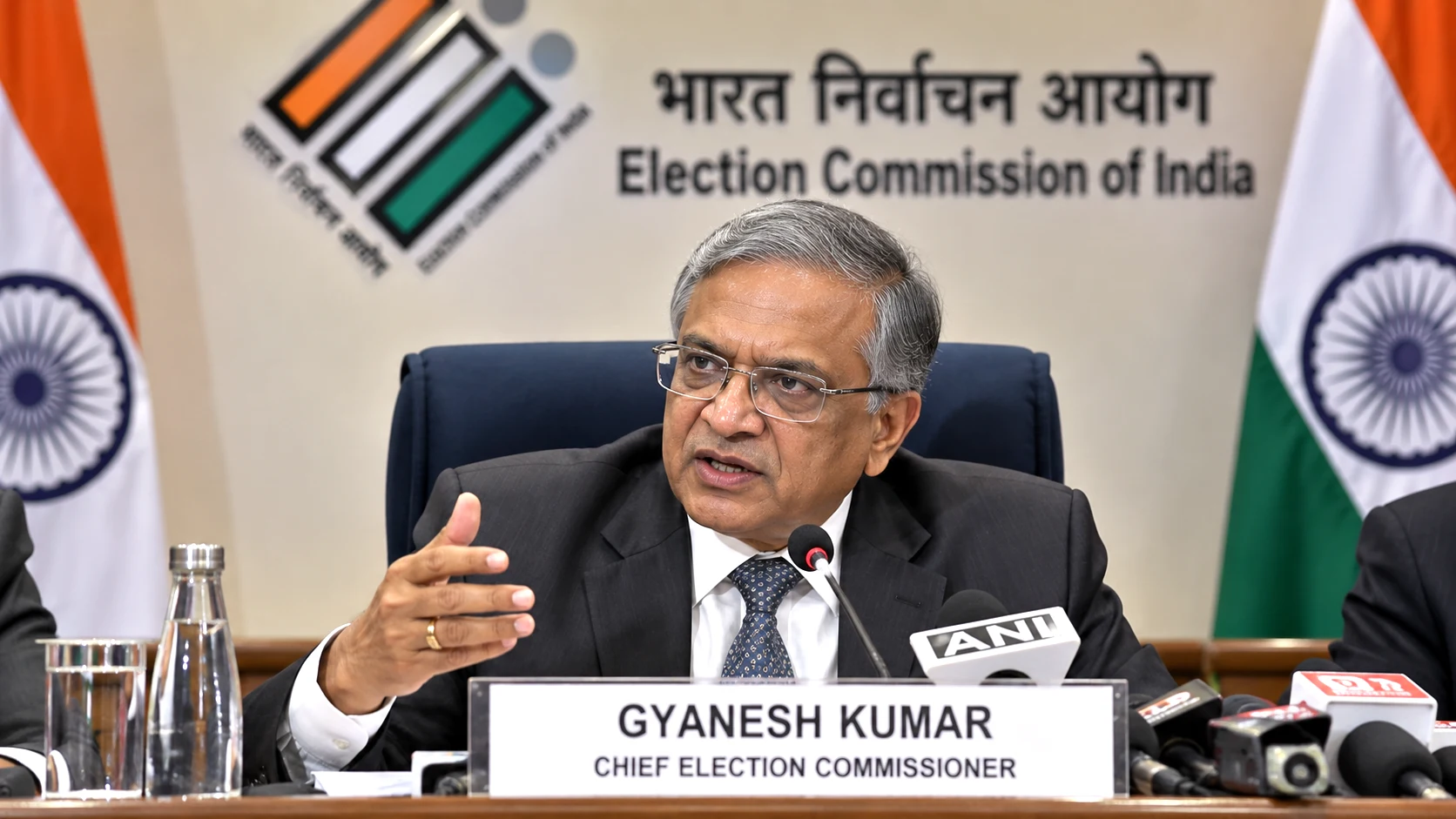
The political confrontation over India’s electoral rolls has moved from statements and parliamentary demands to sustained street protests, with Opposition parties calling for Chief Election Commissioner Gyanesh Kumar to resign and seeking the cancellation of the ongoing Special Intensive Revision of
The political confrontation over India’s electoral rolls has moved from statements and parliamentary demands to sustained street protests, with Opposition parties calling for Chief Election Commissioner Gyanesh Kumar to resign and seeking the cancellation of the ongoing Special Intensive Revision, or SIR, of electoral rolls.
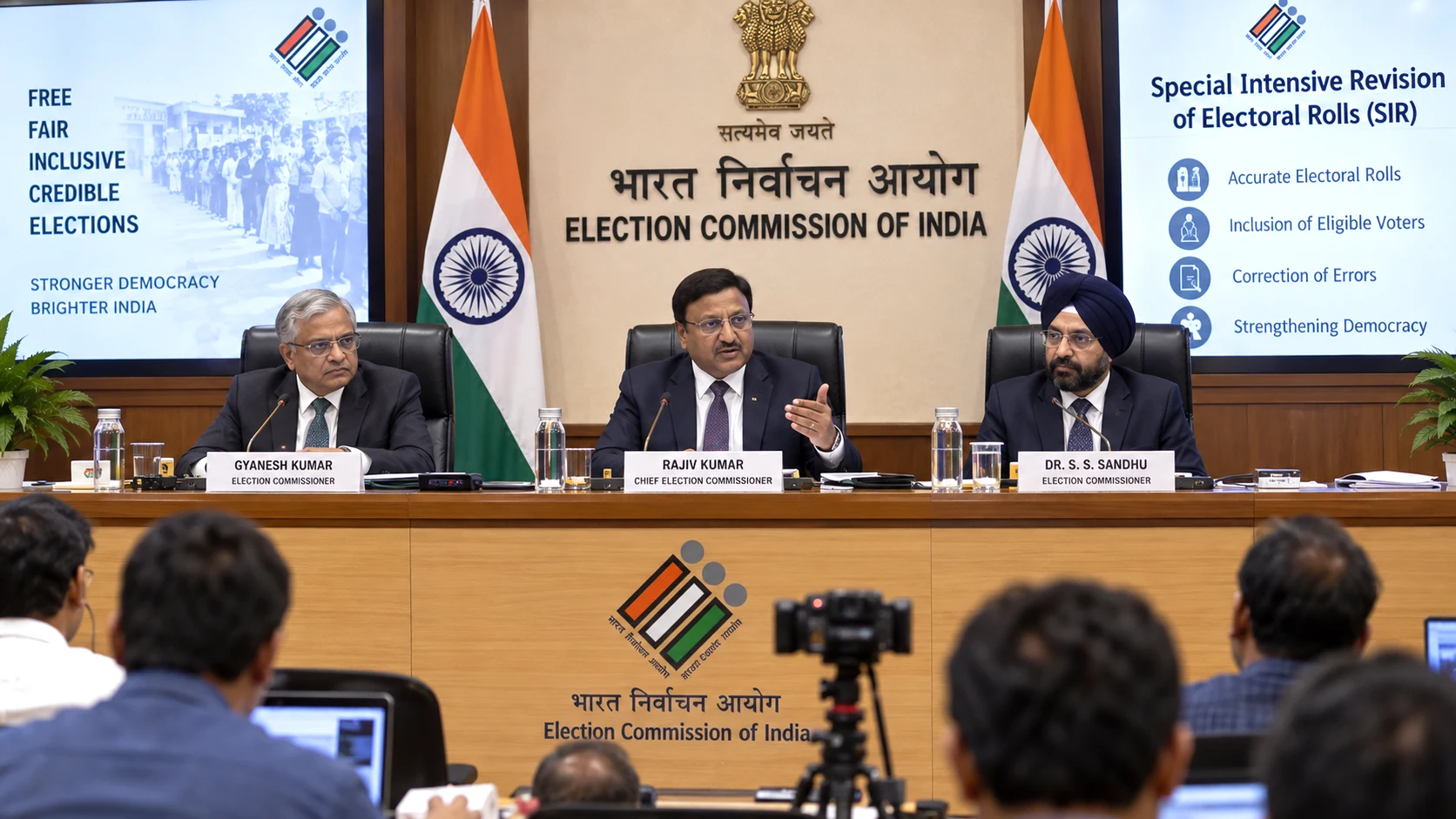
The dispute has several layers. Opposition parties have questioned voter deletions, changes in electoral-roll procedures and the way decisions were taken within the Election Commission of India. Their criticism intensified after reporting showed that Election Commissioners Sukhbir Singh Sandhu and Vivek Joshi had recorded objections on multiple occasions to aspects of electoral-roll administration and SIR-related decisions.
Recommended Reading
Related Stories & In-Depth Guides
Curated editorial perspectives matching this topic.
Politics/ Election Commission & Electoral Rolls13 min read
INDIA bloc protests against CEC Gyanesh Kumar have intensified, with Rahul Gandhi saying the agitation will continue until Kumar resigns. The row also centres on Delhi’s SIR, where 47.56 lakh names were excluded from the draft electoral roll.
Delhi Police registered an FIR against Rahul Gandhi, Priyanka Gandhi Vadra and others over their alleged unauthorised entry into Akashvani Bhavan during an October 6 INDIA bloc protest. Congress says the case is an attempt to suppress its campaign against the Election Commission.
The Election Commission, however, has rejected the suggestion that these internal exchanges prove improper decision-making. It says differing views, suggestions and written observations are part of the functioning of a multi-member institution and maintains that the final decisions of the full Commission were unanimous.
The BJP has separately rejected the Opposition’s allegations of electoral manipulation and accused rival parties of attacking the Election Commission because of political and electoral setbacks.
The dispute is therefore not simply over one official. It concerns how electoral rolls are revised, how voters are added or removed, how decisions inside the Election Commission are made and whether the safeguards around those processes are sufficient.
Here is the controversy explained in 10 points.
Key Takeaways
Opposition parties are demanding the resignation of Chief Election Commissioner Gyanesh Kumar over the Special Intensive Revision of electoral rolls.
Reports indicate the other two Election Commissioners recorded objections on 14 occasions related to SIR and electoral-roll processes.
The Election Commission says internal differences are normal and final decisions were unanimous.
Large-scale changes to voter lists, including in Delhi, have intensified political concerns.
The dispute has moved to street protests, with a major mobilisation planned at Jantar Mantar on October 10.
Neither the resignation demand nor the call to cancel SIR has been accepted as of October 9.
What is SIR?
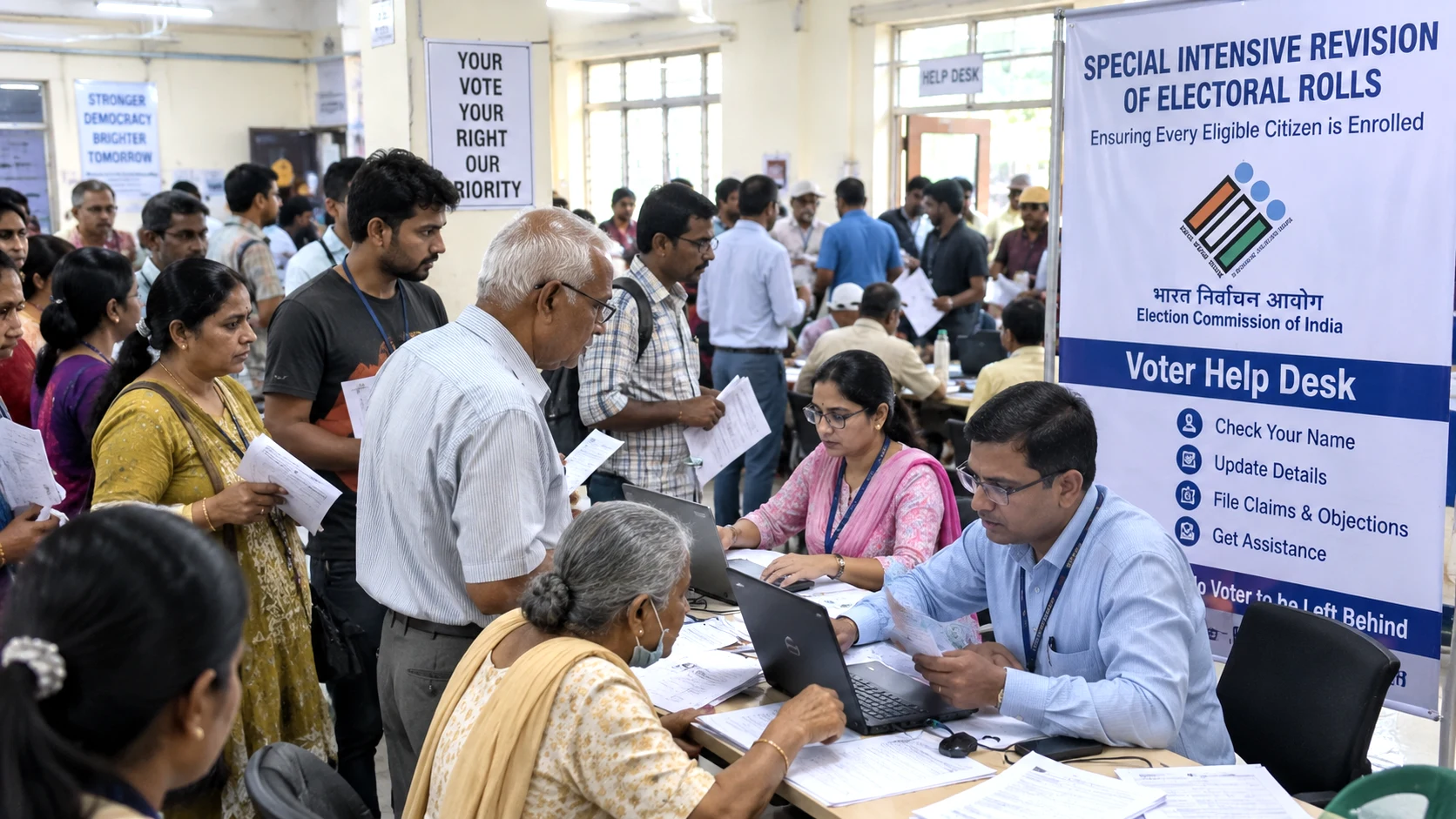
SIR stands for Special Intensive Revision of electoral rolls.
In simple terms, it is a detailed Election Commission exercise to verify and update voter lists.
The Commission says the objective is to ensure that eligible citizens are included while duplicate, deceased, shifted or otherwise ineligible entries do not remain on electoral rolls.
Unlike routine updating of voter lists, an intensive revision can involve wider verification of existing entries, enumeration work, documentation, publication of draft rolls and a subsequent process for claims, objections and corrections.
The controversy is not over whether electoral rolls can ever be revised. The dispute is principally over how the current SIR has been designed and implemented, the scale of exclusions, documentation and verification procedures, and whether decisions were taken with sufficient legal and institutional safeguards.
1. The Immediate Trigger Was Reported Disagreement Inside the Election Commission
The most significant recent trigger for the resignation demand was reporting that the Election Commission’s two other members — Sukhbir Singh Sandhu and Vivek Joshi — had placed objections on record on 14 occasions over roughly 10 months.
Those objections reportedly concerned several aspects of electoral administration, including voter inclusion and deletion, Form 6 used for new voter registration, restoration of names, electoral-roll databases and other SIR-related processes.
For Opposition parties, the significance of the report is that the questions did not originate only from political parties outside the Election Commission. They were reportedly raised within the three-member constitutional body itself.
That distinction has become central to the Opposition’s argument for accountability.
It is equally important, however, not to overstate what the reported objections establish. They do not by themselves prove that an election was rigged, that every SIR decision was opposed by the two Commissioners or that a particular election result was altered.
The Election Commission says internal observations are part of normal institutional deliberation and that its eventual decisions were unanimous.
2. The Opposition Says the Dispute Is Now About the Election Commission’s Decision-Making Process
Opposition parties argue that the reported internal objections raise a broader question: how were important decisions relating to electoral rolls made inside a three-member Election Commission?
Their criticism focuses particularly on allegations that some administrative steps were taken without adequate consultation with the other Commissioners.
This is one reason the political argument has shifted from criticism of SIR as a policy to criticism of Gyanesh Kumar personally as Chief Election Commissioner.
Opposition parties say that, as the head of the Commission, Kumar should accept responsibility for decisions taken during the disputed period.
The Election Commission disputes the implication that the organisation was functioning under unilateral control. Its stated position is that observations and differences can arise while a proposal is being considered, but the decisions ultimately taken by the Commission were unanimous.
Both propositions need to be kept separate: internal objections have been reported, while the ECI says its final institutional decisions were unanimous.
3. Changes Connected with Form 6 Became One of the Flashpoints
Form 6 is the statutory application used by eligible citizens seeking inclusion in an electoral roll.
One area of reported disagreement concerned additional information being sought in connection with previous intensive-revision voter rolls.
The reported internal objections questioned whether changes affecting the prescribed voter-registration process could be introduced administratively without following the appropriate legal procedure.
That issue matters because voter registration is governed not merely by internal administrative convenience but by election law and rules.
Opposition parties have cited the Form 6 controversy as evidence for their argument that the SIR process requires closer scrutiny.
The Election Commission, on the other hand, has maintained more broadly that its final decisions complied with the institutional process and were unanimously approved.
The existence of a disagreement over procedure should therefore not be presented as a judicial finding that the SIR as a whole is illegal. That conclusion has not been established merely by the reported internal correspondence.
4. Large Changes to Voter Lists Have Made the Issue Politically Sensitive
Electoral-roll revision inevitably involves additions, corrections and removals. The political dispute has intensified because the current SIR has affected a very large number of voter records across different states.
The immediate Delhi dispute illustrates the concern.
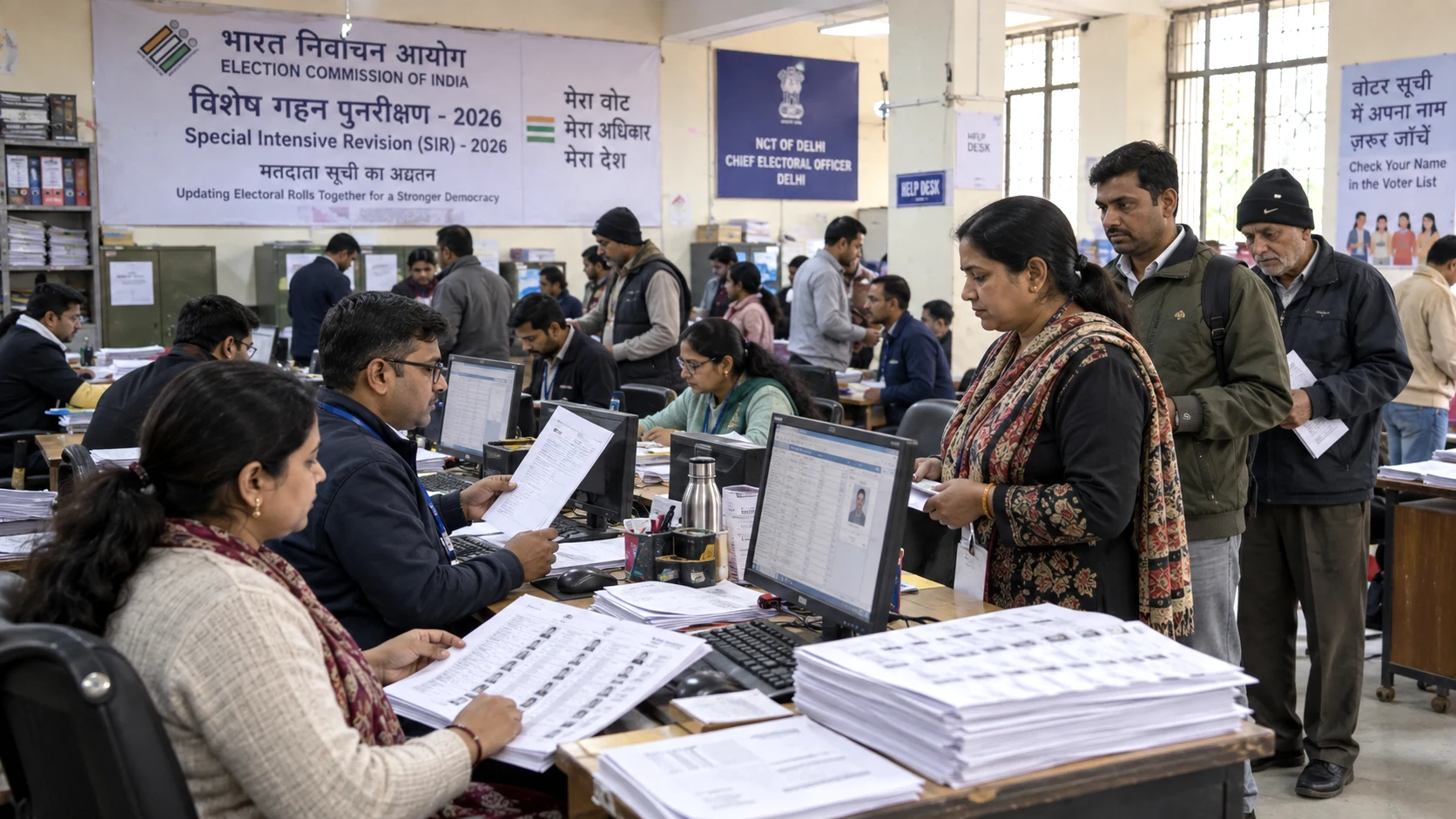
On October 7, representatives of INDIA bloc parties met Delhi Chief Electoral Officer Ashok Kumar and demanded cancellation of the SIR and restoration of 47.56 lakh names that they said had been excluded from Delhi’s draft voter list.
They also sought withdrawal of notices and restoration of eligible voters.
For the Opposition, figures on this scale create the risk that eligible citizens could lose their place on the electoral roll unless verification and correction mechanisms work effectively.
The Election Commission’s position is different: revision is necessary precisely because electoral rolls can contain duplicate, shifted, deceased or otherwise ineligible entries, while eligible voters must remain registered.
There is also an important distinction between exclusion from a draft roll during a revision and a final determination that a citizen cannot vote. Electoral-roll revision provides procedures for claims, objections, verification and inclusion before finalisation.
5. Opposition Parties Say the Burden on Eligible Voters Is Too High
A recurring Opposition criticism is that the documentation and verification requirements associated with SIR can place a heavier burden on voters who may have difficulty locating older records or proving connections to earlier electoral rolls.
This concern is particularly important for people who have moved, changed addresses, lack easy access to documentation or depend on administrative assistance to correct electoral records.
Opposition parties argue that an electoral-roll cleaning exercise should not create a situation in which a legitimate voter has to overcome disproportionate procedural barriers simply to remain registered.
The Election Commission says the purpose of SIR is the opposite: no eligible voter should be left out and no ineligible entry should remain.
That is one of the central factual questions surrounding implementation of the exercise — whether the procedures are effectively achieving that stated objective in practice.
For voters, the practical implication is straightforward: appearing on an earlier electoral roll does not eliminate the need to check the current roll. Voters affected by the revision should verify their status through the Election Commission’s official voter services and use the prescribed correction or registration process where necessary.
6. Questions Over Electoral-Roll Data and Centralisation Added Another Layer
The internal Election Commission dispute was not confined to individual voter deletions.
Reported concerns also involved access to electoral-roll information, technology systems and the increasing centralisation of voter-related databases.
These questions may sound technical, but they matter because electoral rolls are the foundation of who is allowed to vote in a constituency.
Opposition parties argue that systems handling additions, deletions and voter verification require clear oversight, traceable decision-making and safeguards against improper changes.
The Election Commission has defended its institutional processes and has not accepted the Opposition’s allegation that the systems were used to manipulate elections.
No neutral explanation should therefore treat claims of deliberate electoral manipulation as established fact merely because disagreements existed over database administration.
The documented issue is that questions were raised over processes and systems. The allegation that those systems were deliberately used to benefit a political party remains contested.
7. The Opposition Says the CEC Should Take Responsibility as Head of the Institution
The demand for Gyanesh Kumar’s resignation is ultimately a demand for institutional accountability.
Congress and several INDIA bloc constituents argue that the controversies surrounding the SIR, the reported internal objections and disputes over voter-list procedures occurred while Kumar headed the Election Commission.
Their position is that even without waiting for a finding of criminal wrongdoing, the scale of the controversy has damaged confidence in the Commission sufficiently for the CEC to step down.
That is a political argument for resignation, not a legal finding requiring his removal.
A resignation would be voluntary.
Removing a Chief Election Commissioner against his will is a separate constitutional process. Article 324(5) of the Constitution provides the CEC with significant protection from removal, requiring the same manner and grounds that apply to the removal of a Supreme Court judge.
That high threshold is intended to protect the independence of the office from routine political pressure.
Therefore, repeated Opposition demands that Kumar “resign” should not be confused with a completed constitutional process removing him from office.
8. The Election Commission Says Internal Disagreement Does Not Mean Institutional Breakdown
The Election Commission’s central defence is important to understanding the other side of the controversy.
Following reports about objections from Sandhu and Joshi, the Commission said differing observations, notes and suggestions are part of the normal decision-making process of a multi-member constitutional body.
Its position is that debate can occur before a final decision without meaning that the institution has split or that the eventual decision lacks authority.
The Commission has maintained that final decisions taken by the full Commission during the period in question were unanimous.
That creates a distinction at the heart of the controversy.
The Opposition points to what happened during the decision-making process and asks whether individual actions occurred without adequate approval.
The Commission points to the final institutional decisions and says they ultimately had the agreement of all three members.
The reported internal objections therefore raise questions that can be investigated and scrutinised, but they should not automatically be described as proof that the final Commission decisions were divided.
9. The BJP Rejects the Allegation That SIR Was Designed to Help It
Opposition leaders have repeatedly alleged that voter-roll changes have benefited the ruling BJP and have used terms such as “vote chori” while campaigning against the Election Commission.
Those are political allegations.
The BJP rejects them.
The ruling party has argued that the Opposition is blaming the Election Commission for its electoral setbacks and is undermining public confidence in democratic institutions without establishing that election results were manipulated.
The Election Commission and the government have also rejected the claim that the revision has a partisan objective, maintaining that voter-list verification is intended to remove invalid entries while retaining eligible voters.
The crucial distinction for readers is therefore between documented procedural controversies and the much broader allegation that elections were deliberately manipulated.
Reported objections inside the Election Commission establish that disagreements and concerns existed over aspects of electoral administration.
They do not, on their own, establish that a particular election result was fraudulent.
10. The Dispute Has Now Moved into Sustained Protests — with Oct. 10 the Next Major Date
The resignation demand has now moved well beyond press conferences.
INDIA bloc MPs have staged consecutive protests in New Delhi, including attempts to march towards the Election Commission and Jantar Mantar and a subsequent sit-in at Rajghat.
As of the morning of October 9, Opposition leaders were also preparing their next course of action and seeking a meeting with President Droupadi Murmu to raise their concerns.
A separate but closely connected mobilisation is scheduled for October 10.
The Cockroach Janta Party, or CJP, together with student organisations including AISA, has announced a demonstration at Jantar Mantar demanding Gyanesh Kumar’s resignation and opposing the SIR. Several Opposition parties are expected to participate.
This distinction matters: the October 10 call originates with the CJP and participating student organisations, rather than being solely an INDIA bloc programme, although Opposition parties and the youth-led movement are campaigning around overlapping demands.
Delhi Police has said permission for the Jantar Mantar gathering has not been granted amid prohibitory orders and has made extensive security preparations.
The political pressure is therefore likely to continue even though neither of the Opposition’s two principal demands has, as of October 9, been met: Gyanesh Kumar remains Chief Election Commissioner, and the SIR has not been cancelled.
What Exactly Does the Opposition Want?
Across different parties and protests, some demands vary, but the central demands have become increasingly consistent.
The INDIA bloc wants Gyanesh Kumar to resign or be removed, the disputed SIR exercise to be cancelled or rolled back, and eligible voters excluded during the process to be restored to electoral rolls.
Opposition parties are also seeking greater scrutiny of the Election Commission’s internal decision-making, including the issues raised by the two other Commissioners.
Some leaders have made broader allegations about past election results and the ruling BJP. Those claims remain contested and should not be treated as established findings unless supported by competent judicial or other authoritative findings.
What Is the Election Commission’s Position?
The Election Commission says SIR is intended to improve the accuracy of electoral rolls by ensuring eligible voters are registered and ineligible entries are removed.
It has rejected the inference that internal notes from Commissioners Sandhu and Joshi prove that the CEC imposed final decisions unilaterally.
Its position is that discussion, suggestions and differing opinions are legitimate parts of institutional decision-making and that final decisions of the full Commission were unanimous.
The Commission has not accepted the Opposition’s allegations that the revision process was designed to favour the BJP.
What Is the BJP’s Position?
The BJP has rejected allegations of “vote theft” and electoral manipulation.
It argues that Opposition parties are targeting the Election Commission after electoral defeats and are turning administrative questions about voter rolls into a political campaign against a constitutional institution.
The BJP’s rejection of the allegations does not, by itself, resolve the procedural questions raised about SIR. Equally, Opposition allegations do not become established facts simply because they are repeatedly made during protests.
Both distinctions are necessary in reporting the controversy accurately.
What Happens Next?
There are now several parallel tracks.
The INDIA bloc is continuing political protests and seeking to take its concerns to President Droupadi Murmu.
The CJP and student organisations are preparing for the October 10 Jantar Mantar mobilisation, with participation expected from Opposition parties.
Legal and constitutional questions surrounding Election Commission decisions can continue separately from street protests.
Voters affected by the SIR can also use the Election Commission’s registration, verification, claims and correction mechanisms.
And the question of Gyanesh Kumar’s position remains distinct from the future of SIR itself: a resignation would not automatically determine the legal validity of every electoral-roll decision, while cancelling or modifying parts of SIR would not automatically remove the CEC.
Bottom Line
The Opposition’s demand for Chief Election Commissioner Gyanesh Kumar’s resignation rests on a combination of issues rather than one single allegation: large-scale changes to electoral rolls, concerns about eligible voters being excluded, disputes over Form 6 and electoral databases, reported objections from the other two Election Commissioners and wider questions about how decisions were taken inside the poll panel.
The Election Commission rejects the conclusion that those issues prove unilateral or politically motivated decision-making and says its final decisions were unanimous. The BJP rejects allegations that the electoral-roll exercise was designed to benefit it.
As protests intensify ahead of the October 10 mobilisation in Delhi, the core disagreement remains unresolved: the Opposition says the controversy has damaged confidence sufficiently for the CEC to step down and for SIR to be cancelled, while the Election Commission continues to defend both its institutional decision-making and the stated purpose of the voter-roll revision.
Key Takeaway
Opposition demands CEC Gyanesh Kumar’s resignation over SIR and internal EC disagreements.
Election Commission says final decisions were unanimous.
Large-scale voter-list changes and Form 6 issues are key flashpoints.
Protests continue, with a major mobilisation planned for October 10.
The Rajatheertha Team publishes news, explainers, guides and updates across India and the world. Our coverage follows Rajatheertha's editorial, verification and corrections standards.
The Supreme Court has issued notice on the opposition leaders’ SIR petition and made it returnable on October 27. The Court has not recorded a stay on the electoral-roll revision, while the Election Commission and other respondents now have an opportunity to reply.
Opposition parties are preparing a fresh parliamentary notice seeking CEC Gyanesh Kumar’s removal amid the SIR controversy. Here is what Article 324 says, how many MPs are needed and why removal requires a high constitutional threshold.
Opposition parties have intensified calls for CEC Gyanesh Kumar’s removal after a report said two Election Commissioners raised repeated objections over SIR and electoral-roll decisions. Some leaders have also demanded his arrest, while the ECI says all final decisions were unanimous.
The Election Commission says all final decisions taken by the full Commission over the past year, including SIR-related measures, were unanimous despite reported objections raised during internal deliberations. Here is what the dispute means for voters.
Receiving a Delhi SIR notice does not automatically remove a voter from the electoral roll, the CEO's office has clarified. Voters can respond, submit documents and receive a hearing before any decision is taken.
Bengali actor and former TMC MP Koel Mallick has joined the BJP and filed her nomination for the October 16 Rajya Sabha bypoll in West Bengal, seeking a return to the Upper House months after resigning her seat.






0 Comments