US Completes Troop Withdrawal From Iraq, Ending Anti-ISIS Military Mission as Iran Influence Concerns Grow
The United States has completed the withdrawal of its remaining troops from Iraq, ending Operation Inherent Resolve there. Baghdad now assumes primary security responsibility as concerns persist over ISIS remnants and Iran-aligned armed groups.
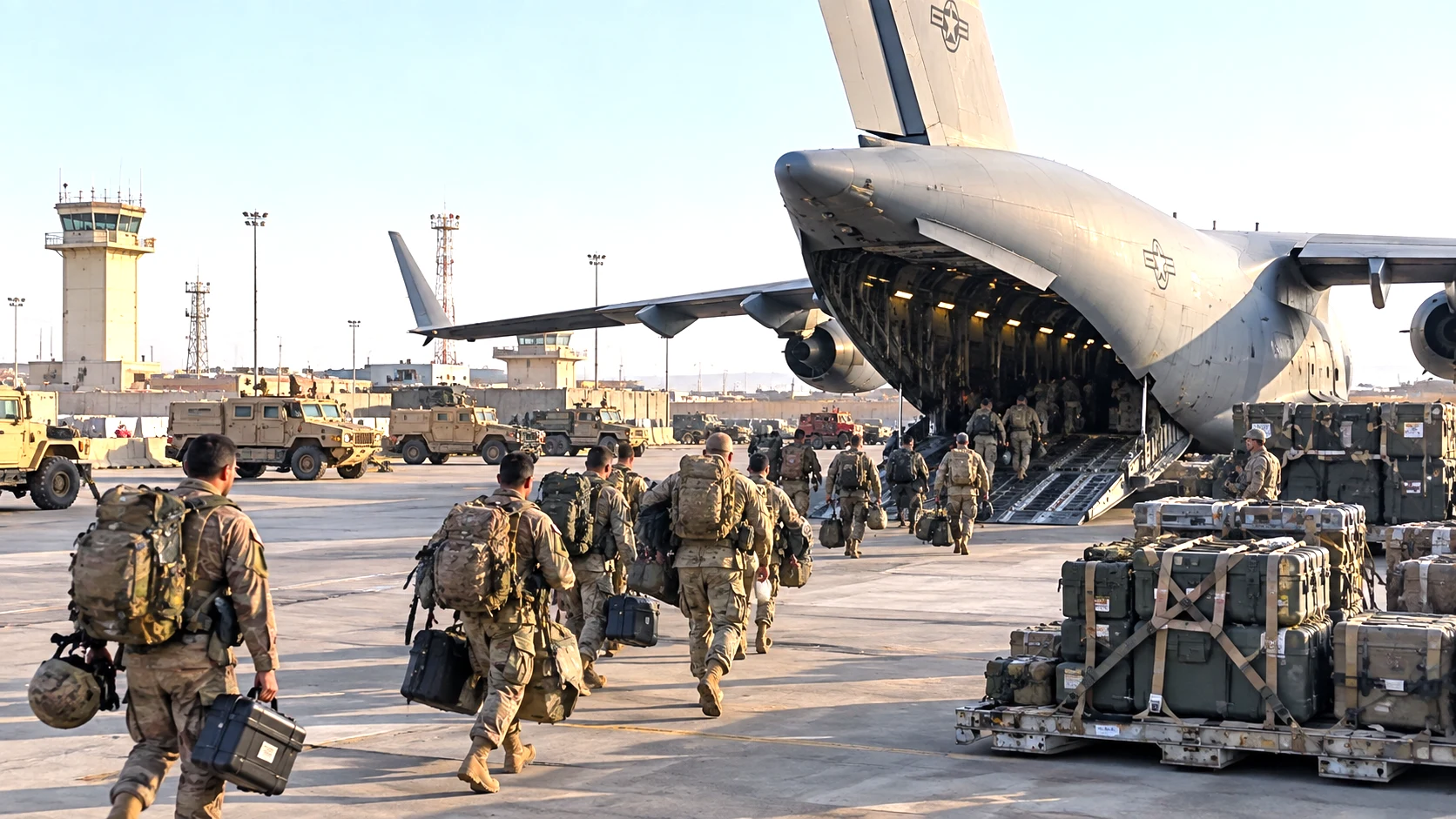
US military personnel and equipment departing Erbil Air Base as the American troop withdrawal from Iraq concludes
Table of Contents (22 sections)
The United States has completed the withdrawal of its remaining military forces from Iraq, formally ending its current anti-Islamic State military mission in the country and transferring primary responsibility for Iraqi security to Baghdad.
US Central Command said on September 30, 2026 that American forces and military equipment had completed an orderly departure from Erbil Air Base in Iraq's semi-autonomous Kurdistan Region, marking the end of the Operation Inherent Resolve mission inside Iraq.
The Associated Press separately reported that the US military described the withdrawal of American troops from Iraq as complete, with the final contingent leaving the northern Iraqi air base under the withdrawal arrangement agreed between Baghdad and Washington.
The development closes the latest chapter of a US military involvement in Iraq that began with the 2003 invasion, although the American presence was not uninterrupted: US forces withdrew at the end of 2011 before returning in 2014 after Islamic State seized large areas of Iraq and Syria.
Recommended Reading
Related Stories & In-Depth Guides
Curated editorial perspectives matching this topic.
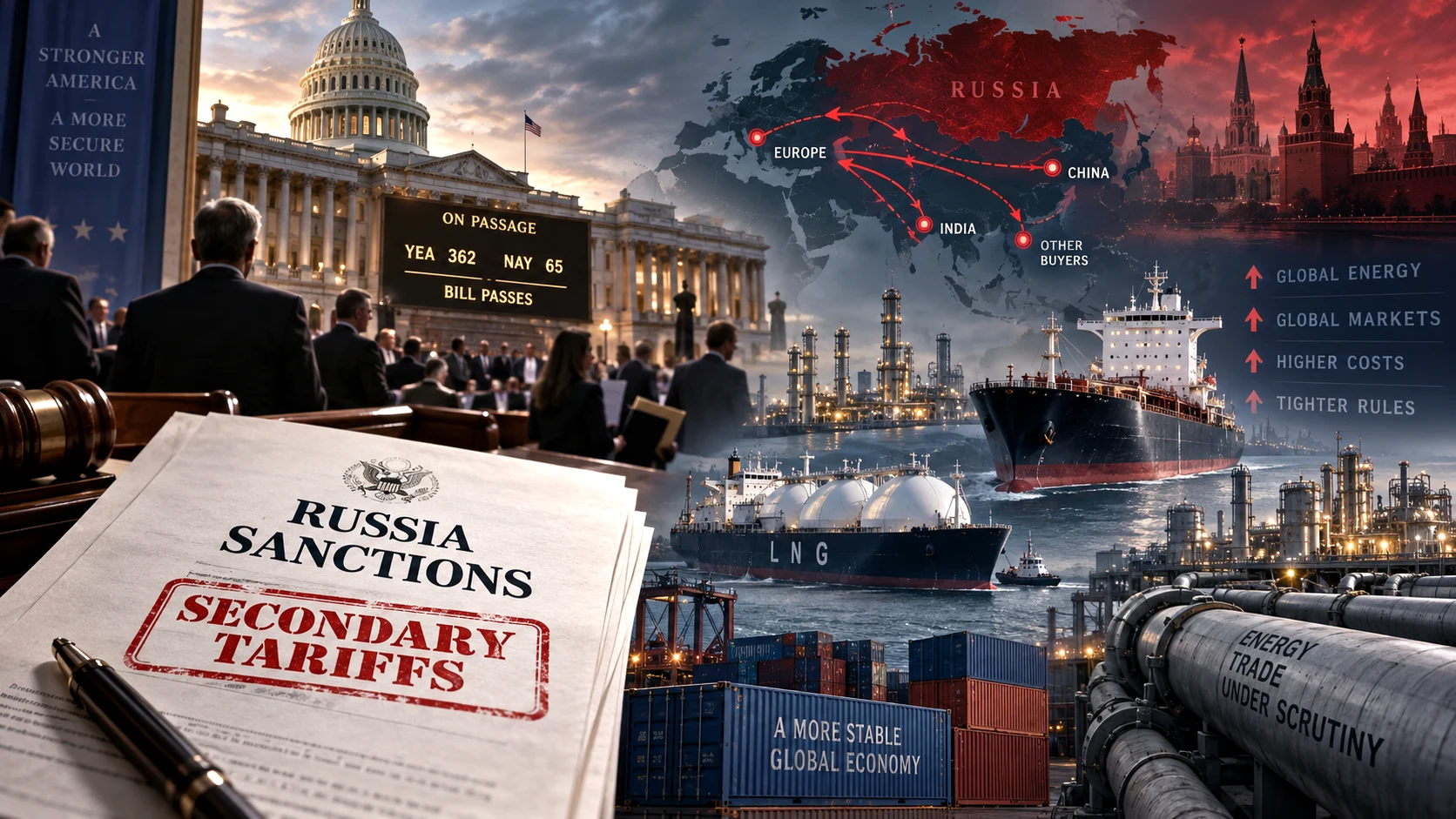
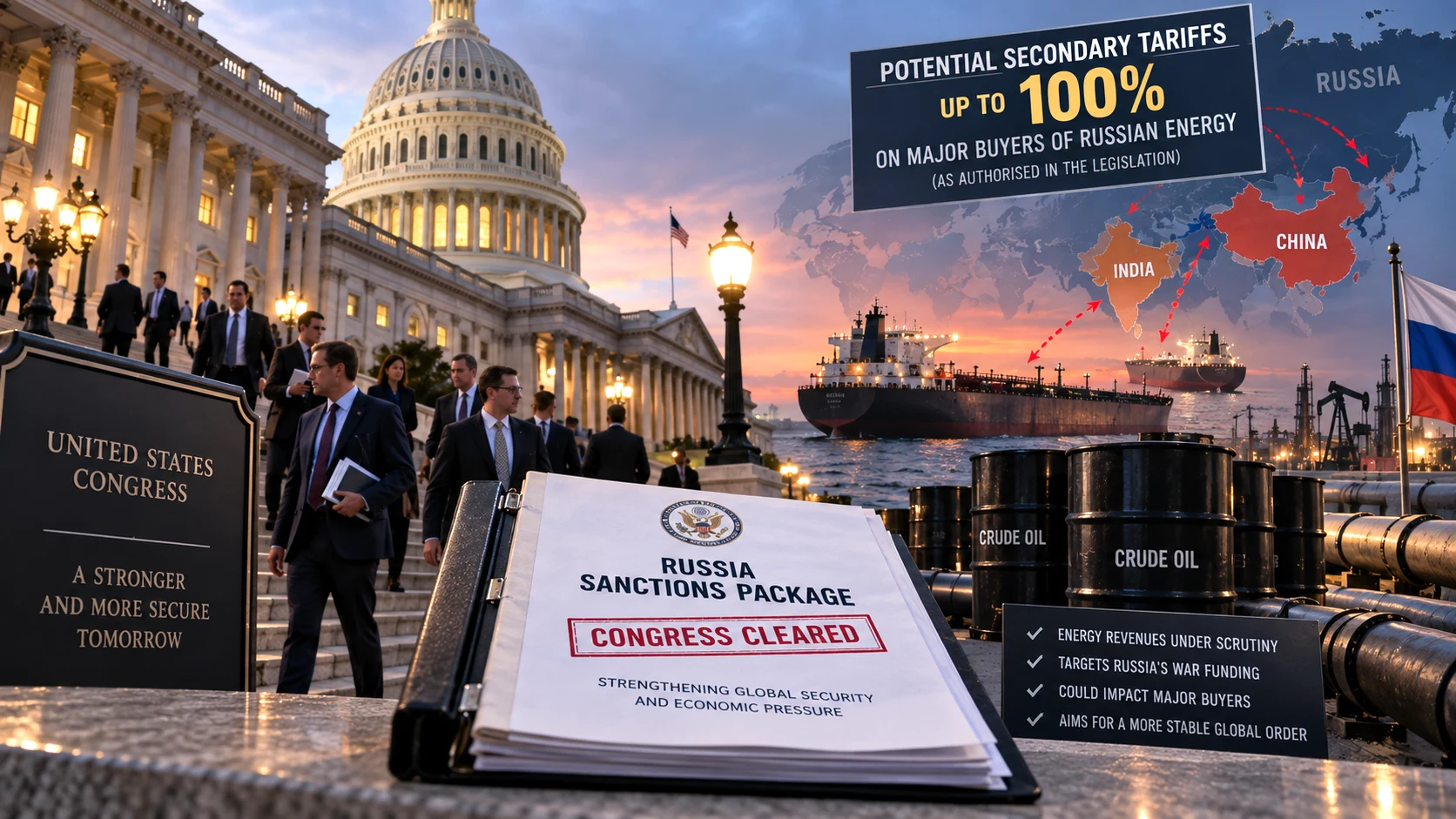
The House voted 262-159 to approve the Lindsey O. Graham Sanctioning Russia and Iran Act of 2026 after the Senate backed it 86-11 in August. The bill targets Russian banks, energy, defence and its “shadow fleet” while creating secondary tariffs for major buyers of Russian oil and gas. It now goes to
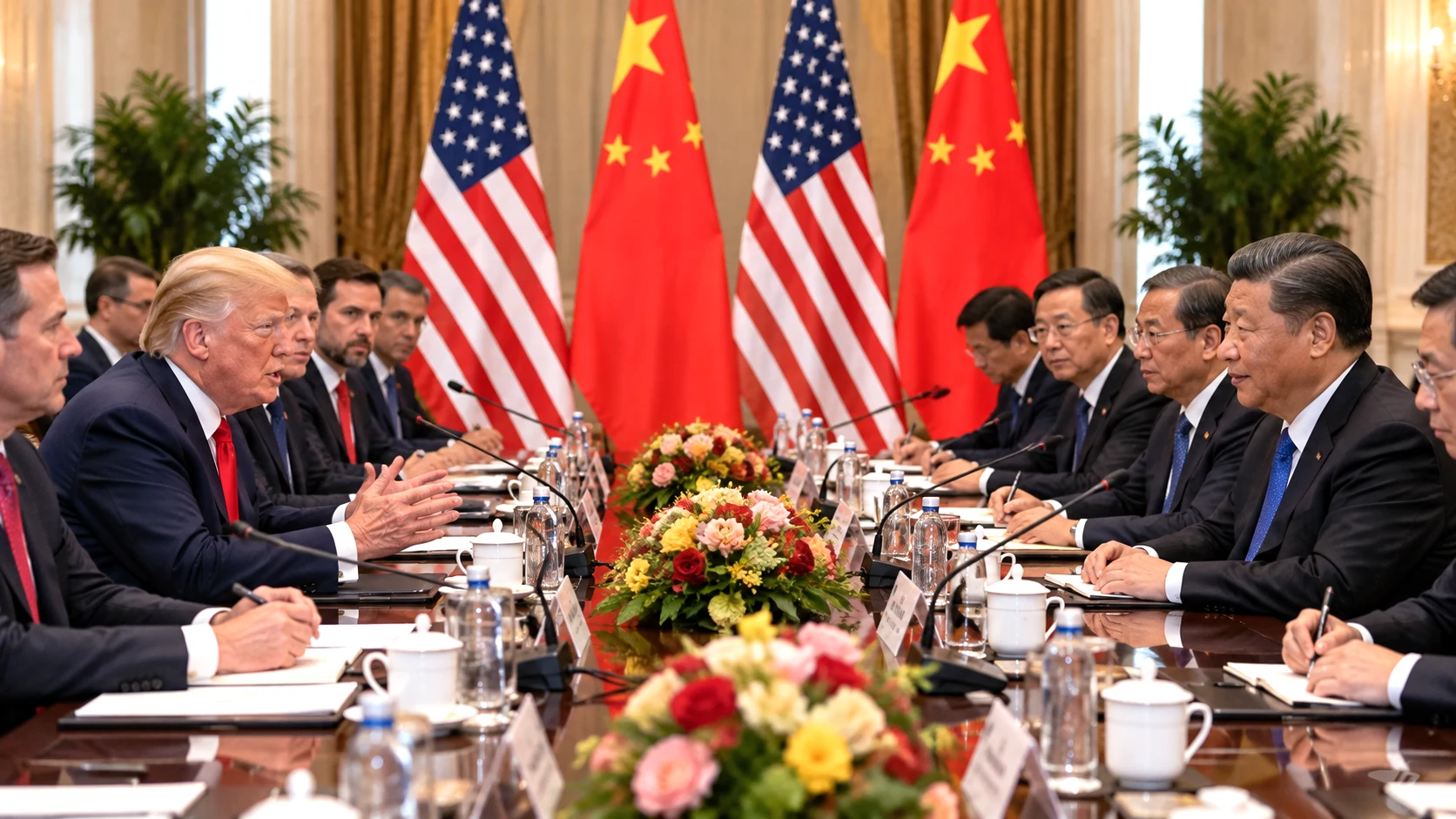
The United States and China have extended their trade truce from November 10 to January 10, 2027, giving negotiators two more months to pursue a broader deal. Existing tariffs remain, while rare earths, agriculture and tariff cuts remain under negotiation.
The departure is being celebrated by the Iraqi government as an assertion of sovereignty and by Iran-aligned groups as the end of an American military presence they had long opposed.
At the same time, it is raising questions over whether Iraqi security forces can independently contain remaining Islamic State cells, control powerful armed groups operating outside normal state structures and prevent the withdrawal from increasing Tehran's influence.
Key Points
CENTCOM says US forces and equipment completed their departure from Erbil Air Base on September 30.
Operation Inherent Resolve's military mission inside Iraq has ended.
The US military says the withdrawal of American troops from Iraq is complete.
The US invasion began in 2003, but troops left in 2011 and returned in 2014 to combat ISIS.
The current anti-ISIS deployment therefore lasted approximately 12 years.
Operation Inherent Resolve itself continues outside Iraq, with its headquarters relocated to Jordan.
US and coalition forces elsewhere in the region remain available for counter-ISIS missions.
Washington says it will maintain a bilateral defence relationship with Baghdad, including targeted training and intelligence support.
Baghdad now assumes primary responsibility for national security.
Iran-backed groups have portrayed the withdrawal as a political and strategic victory.
Iraqi and Kurdish officials remain concerned about ISIS sleeper cells, militias and gaps in air defence.
The withdrawal does not mean US-Iraq diplomatic or security cooperation has ended.
What Exactly Happened on September 30?
CENTCOM announced that its forces had completed the departure of personnel and equipment from Erbil Air Base.
Erbil had become the principal remaining hub for the coalition mission after American and coalition personnel began leaving other parts of Iraq in October 2025.
According to CENTCOM, Erbil Air Base had hosted most of approximately 1,500 American and coalition personnel who continued supporting anti-ISIS operations during the final stage of the transition.
The September 30 departure therefore completed the final phase of the withdrawal.
The Pentagon characterised the change as a transition away from a wartime coalition mission and towards an Iraqi-led security model supported through a more conventional bilateral relationship.
Does This Mean Every US Military Mission Against ISIS Has Ended?
No.
The withdrawal ends Operation Inherent Resolve's mission inside Iraq, but the broader counter-ISIS operation continues elsewhere in the region.
CENTCOM says Combined Joint Task Force–Operation Inherent Resolve has moved its headquarters to Jordan and remains operational as US and coalition forces continue counter-ISIS activity in Syria.
That distinction is important.
The United States has withdrawn its deployed Iraq mission, but it has not abandoned the wider regional campaign against Islamic State.
CENTCOM Commander Admiral Brad Cooper said US and coalition forces stationed elsewhere in the region would remain prepared to respond if ISIS again presented a serious threat.
Why Did US Troops Leave Iraq?
The withdrawal stems from an agreement negotiated between Washington and Baghdad.
In September 2024, the two governments announced a phased transition from the coalition's military mission towards a bilateral security relationship.
The original plan provided for the coalition military mission in much of Iraq to conclude first while some forces remained temporarily to support operations against Islamic State in neighbouring Syria. That second phase was scheduled to continue through September 2026, depending on conditions and consultations.
The process began under then-President Joe Biden and was completed under President Donald Trump.
Did the US Have Troops in Iraq Continuously Since 2003?
No.
This is an important correction to some simplified descriptions of the withdrawal.
US-led forces invaded Iraq in March 2003, overthrowing Saddam Hussein's government.
American troops remained through years of insurgency and sectarian violence before the United States withdrew its forces at the end of 2011.
American troops returned less than three years later in 2014 after Islamic State captured Mosul and large areas of northern and western Iraq.
The military mission now ending therefore represents approximately 12 years of the post-2014 anti-ISIS deployment, while the broader history of US military intervention in Iraq stretches back more than two decades.
A headline saying simply “23 years of continuous US troops” would therefore be inaccurate.
What Did Iraq Say?
Iraqi Prime Minister Ali al-Zaidi presented the withdrawal as the beginning of a new sovereignty-focused phase for the country.
At a ceremony marking the end of the coalition mission, he said Iraq would now take full responsibility for its own security while continuing its fight against terrorism.
Iraqi security vehicles also took part in public convoys in Baghdad and Najaf marking the end of the US-led military presence. Reuters reported celebrations among Iraqis who saw the withdrawal as an important sovereignty milestone.
However, public and political reaction is not uniformly celebratory.
Some Iraqis remain worried about whether national institutions are sufficiently prepared for the post-coalition period.
Is ISIS Defeated?
Islamic State no longer controls the large territorial “caliphate” that it held at its peak, but the organisation has not completely disappeared.
CENTCOM says ISIS no longer poses the kind of systemic national-security threat to Iraq that it once did and argues that Iraqi security forces and Kurdish forces now possess considerably greater capability to address threats independently.
Reuters, however, reports that Iraqi officials and analysts continue to warn about ISIS sleeper-cell networks.
The distinction matters:
ISIS has lost its territorial state in Iraq, but extremist cells and insurgent activity remain a security concern.
That is why Washington says intelligence cooperation and other forms of security assistance will continue after the troop withdrawal.
Could the Withdrawal Create a Security Vacuum?
It could create new vulnerabilities, but describing a security vacuum as inevitable would go beyond the available evidence.
Iraqi security analyst Jassim al-Bahadli told Reuters that security vacuums had proved dangerous during Iraq's recent history.
Other Iraqi analysts and residents expressed concern that militias operating beyond full government control and remaining ISIS cells could take advantage if Iraqi institutions fail to fill capabilities previously supported by US forces.
The major capabilities at issue include:
intelligence collection;
aerial surveillance;
reconnaissance;
air defence;
counterterrorism coordination; and
support against sophisticated militant threats.
Iraqi forces have substantially greater experience and capability than they had when ISIS captured Mosul in 2014, but their performance in the coming years will ultimately determine whether the transition remains stable.
Why Is the Kurdistan Region Particularly Concerned?
The Kurdistan Regional Government has expressed concerns about the timing of the withdrawal.
Its Ministry of Peshmerga Affairs said the departure comes during a period of significant regional instability and highlighted the absence of a replacement air-defence system after US forces leave.
The ministry said the Kurdistan Region had been struck by more than 1,000 drones and ballistic missiles during the recent US-Iran conflict and argued that Baghdad remains responsible for protecting Iraqi airspace.
AP also reported Kurdish concern over the removal of American air-defence capabilities from the region.
Those concerns do not establish that instability will necessarily follow, but they illustrate the different security calculations inside Iraq.
Why Is Iran Central to This Story?
Iran has developed considerable political and security influence in Iraq since the overthrow of Saddam Hussein.
Several influential Iraqi Shiite armed organisations have longstanding political, ideological or operational links with Tehran.
Reuters reports that Iran and its allies have celebrated the American withdrawal as a victory, while analysts say the absence of a Western military counterweight could increase the freedom of action of some Iran-aligned groups.
That outcome is possible rather than certain.
Iraq maintains relationships with both Washington and Tehran and has repeatedly sought to avoid becoming simply an arena for competition between the two powers.
The key question will be whether Baghdad can strengthen state institutions sufficiently to prevent armed groups—regardless of their foreign ties—from exercising authority outside government control.
What Happens to Iran-Backed Militias?
This remains one of the largest unresolved questions.
The Iraqi government had previously linked the American withdrawal deadline with efforts to bring non-state armed organisations under government control.
But the disarmament process has encountered resistance.
AP reports that some smaller groups have agreed to surrender weapons while more powerful Iran-aligned organisations have resisted or attached conditions to disarmament.
Prime Minister al-Zaidi has subsequently moved the deadline for militia disarmament to June 2027.
The coming months will therefore test whether Baghdad can consolidate control over weapons and security policy now that the coalition presence has ended.
What Role Will the United States Still Have in Iraq?
Military withdrawal does not mean the end of the US-Iraq relationship.
CENTCOM says the two governments are moving towards a bilateral defence relationship rather than a wartime coalition deployment.
Reuters reports that Washington intends to continue providing targeted training and intelligence support to Iraqi partners.
The relationship may also continue through:
military education and training;
intelligence sharing;
defence equipment and maintenance;
diplomatic cooperation;
counterterrorism coordination; and
economic and political ties.
The precise scope of those arrangements could evolve over time.
What Happened to Operation Inherent Resolve?
Operation Inherent Resolve was established in 2014 after Islamic State captured extensive territory across Iraq and Syria.
US and coalition forces trained, advised and supported Iraqi security forces and Kurdish Peshmerga while conducting military operations against ISIS.
CENTCOM says the task force has now ended its Iraq-based mission and relocated its headquarters to Jordan, from where regional counter-ISIS operations continue.
The Iraq withdrawal therefore represents an organisational transition rather than the dissolution of the entire coalition effort.
How Significant Was the US War in Iraq?
The Iraq war became one of the most consequential US military interventions of the 21st century.
Reuters reports that more than 4,500 American service members died in Iraq, while the Iraq Body Count project has documented more than 200,000 Iraqi civilian deaths over the broader conflict period.
The 2003 invasion overthrew Saddam Hussein but was followed by insurgency, sectarian conflict, political fragmentation and expanding Iranian influence.
The eventual rise of Islamic State led Washington back into Iraq in 2014 after its earlier withdrawal.
The September 2026 departure therefore closes another chapter in a conflict whose political and security consequences continue to shape the Middle East.
Is Iran Now the “Winner” in Iraq?
That is a political interpretation rather than an established fact.
Iran and allied organisations describe the US withdrawal as a strategic victory.
Analysts cited by Reuters also believe Tehran could benefit because the departure removes a military presence that had acted as a counterweight to Iran-linked armed groups.
But Iraq is not simply under Iranian control.
Baghdad retains its own government, armed forces, economic interests and relationships with the United States, Gulf states, Turkey and other international partners.
The more defensible conclusion is that the withdrawal may alter the balance of influence in ways favourable to Tehran unless Iraq's central institutions fill the resulting security and political space.
Does the Withdrawal Mean Iraq Is Free of All Foreign Military Forces?
The US-led Operation Inherent Resolve deployment has ended, but foreign military questions in Iraq are broader than the American mission alone.
For example, Turkey and Iraq recently agreed to begin transferring control of the Turkish Bashiqa-Zelikan military camp near Mosul to Iraqi authorities, with the process expected to proceed separately.
It is therefore better to describe September 30 specifically as the completion of the US and US-led coalition withdrawal under the agreed mission, rather than making an overly broad claim about every possible foreign security presence.
Why September 30, 2026 Matters
September 30 marks several transitions simultaneously.
For Washington, it closes the Iraq-based phase of the campaign that began in 2014.
For Baghdad, it moves full primary responsibility for domestic security to Iraqi institutions.
For Kurdish authorities, it removes a longstanding American military presence during a period of heightened regional danger.
For Iran and allied groups, it removes a foreign force they have sought to expel for years.
For ISIS, it creates a new security environment in which Iraqi forces must prevent scattered cells from exploiting any weaknesses.
The real significance of the withdrawal may therefore become clearer only over the next several years.
What Happens Next?
The immediate issues to watch are Iraq's ability to suppress remaining ISIS cells, whether Baghdad can bring powerful militias fully under state authority, how the Kurdistan Region addresses air-defence concerns, whether Iran-aligned groups increase their political or security influence, and how effectively US-Iraq intelligence and training cooperation works without permanently deployed American forces.
Another major test will be whether Iraq can avoid repeating the security failures that followed the previous US withdrawal.
The circumstances are not identical to 2011: Iraqi forces today have considerably more counterterrorism experience, and ISIS no longer controls major cities.
But the history of 2014 explains why the security transition is being watched so closely.
Latest Verified Status — September 30, 2026
US Central Command has confirmed that American personnel and equipment have completed their departure from Erbil Air Base, formally ending the Operation Inherent Resolve mission in Iraq. The remaining anti-ISIS task force has moved its headquarters to Jordan. Iraqi authorities now hold primary responsibility for the country's security, while Washington plans to continue a bilateral relationship including targeted training and intelligence cooperation.
The withdrawal is complete, but its longer-term consequences for ISIS, Iran-aligned militias and Iraq's internal balance of power remain uncertain.
Frequently Asked Questions
Has the US completely withdrawn its troops from Iraq?
Yes. The US military announced on September 30, 2026 that the withdrawal of American troops assigned to the Iraq mission had been completed, with the final contingent departing Erbil Air Base.
When did the last US troops leave Iraq?
The final withdrawal was completed on September 30, 2026.
Did US troops stay in Iraq continuously from 2003 to 2026?
No. US forces invaded in 2003 and withdrew at the end of 2011. American troops returned in 2014 after Islamic State captured large parts of Iraq.
Why did the United States return to Iraq in 2014?
American forces returned after Islamic State captured Mosul and other large areas of Iraq. The US-led coalition subsequently supported Iraqi and Kurdish forces against the group.
Is Operation Inherent Resolve over?
Its mission inside Iraq has ended, but the task force continues operating regionally and is now headquartered in Jordan, with continuing counter-ISIS operations in Syria.
Is ISIS completely gone from Iraq?
No. ISIS no longer controls its former territorial caliphate, but sleeper cells remain a security concern.
Will the United States still help Iraq?
Yes. Washington says the relationship is transitioning to a bilateral defence partnership, and targeted training and intelligence support are expected to continue.
Could Iran gain more influence after the US withdrawal?
It could. Analysts say Iran-aligned groups may become more influential without the US military presence, but the extent will depend heavily on Iraqi government policy and the strength of state institutions.
Why are Kurdish officials concerned?
Kurdish authorities have highlighted continuing drone and missile threats and the absence of a replacement for US air-defence capabilities after the withdrawal.
Are Iran-backed militias being disarmed?
Baghdad is pursuing militia disarmament, but powerful groups have resisted. The government's deadline has reportedly been moved to June 2027.
Bottom Line
The United States has completed the withdrawal of its remaining troops from Iraq, ending Operation Inherent Resolve’s mission there. Baghdad now holds primary security responsibility.
ISIS sleeper cells, Iran-aligned militias and air-defence gaps remain concerns. The broader counter-ISIS campaign continues from Jordan, and US-Iraq bilateral security cooperation is expected to continue.
The Rajatheertha Team publishes news, explainers, guides and updates across India and the world. Our coverage follows Rajatheertha's editorial, verification and corrections standards.
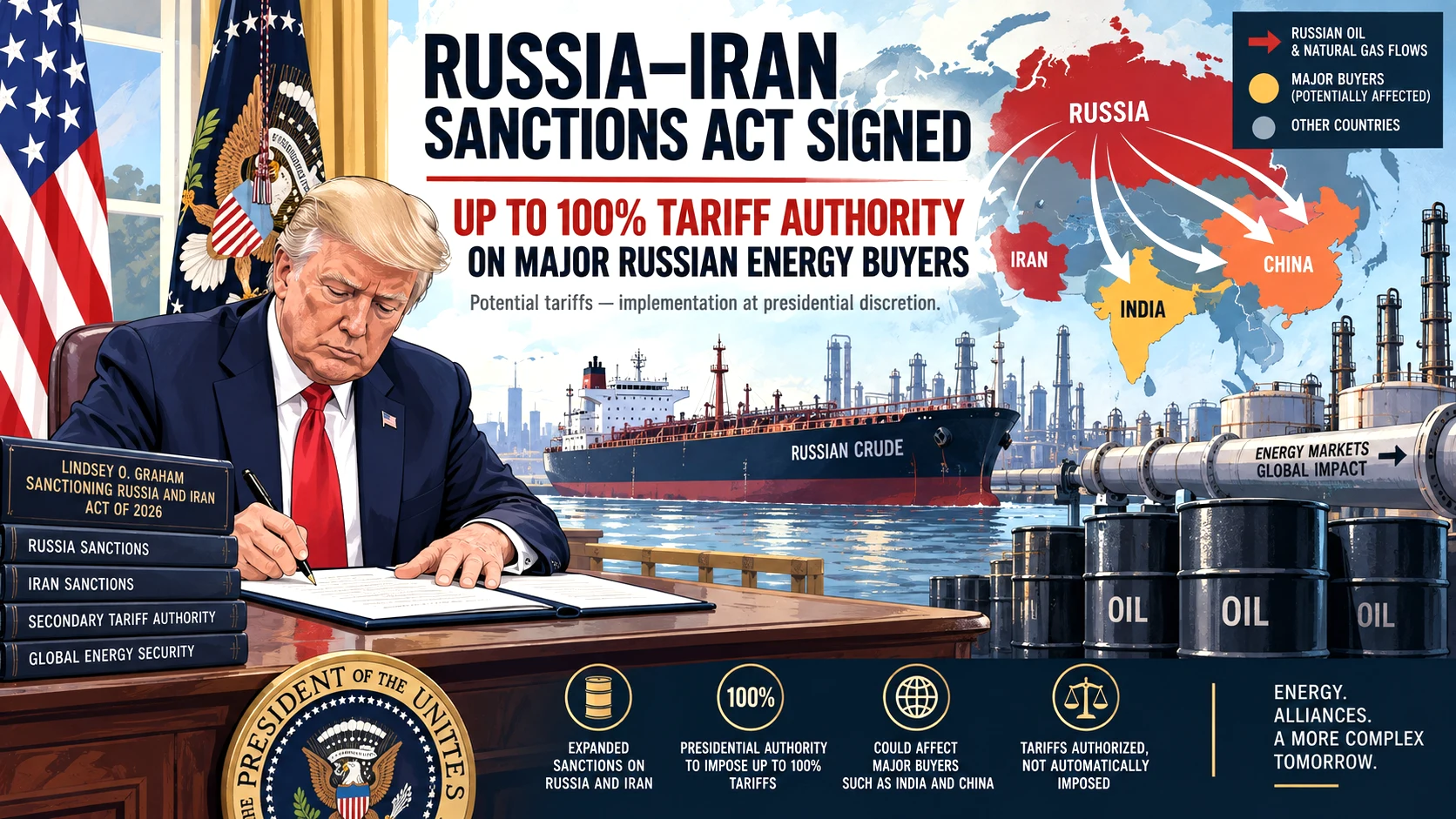
The House approved the Lindsey O. Graham Sanctioning Russia and Iran Act of 2026 by 262-159 after the Senate passed it 86-11. The measure now awaits President Donald Trump’s signature and could subject major buyers of Russian oil or gas to additional US tariffs of up to 100%, although India and Chin
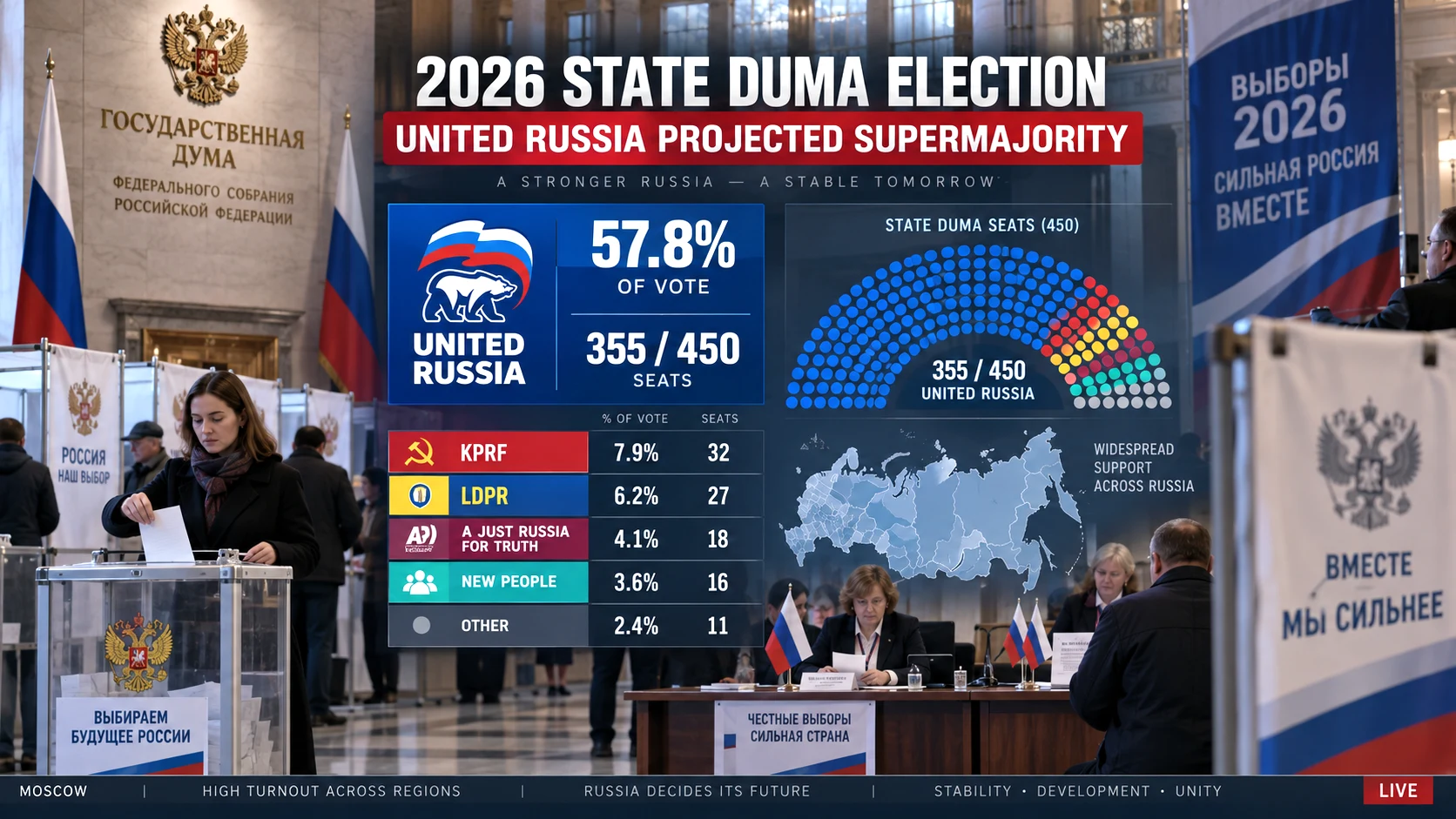
Russia’s ruling United Russia party has secured a decisive victory in the country’s 2026 parliamentary election, according to near-complete official results, putting the Kremlin-aligned party on course for a record 355 seats in the 450-member State Duma. The vote was Russia’s first parliamentary ele
The new US law targets Russia’s energy, financial and defence networks and allows additional tariffs of up to 100% on goods from the largest buyers of Russian oil and gas. India faces significant exposure because of its large Russian crude imports, but a 100% tariff on Indian goods has not been impo
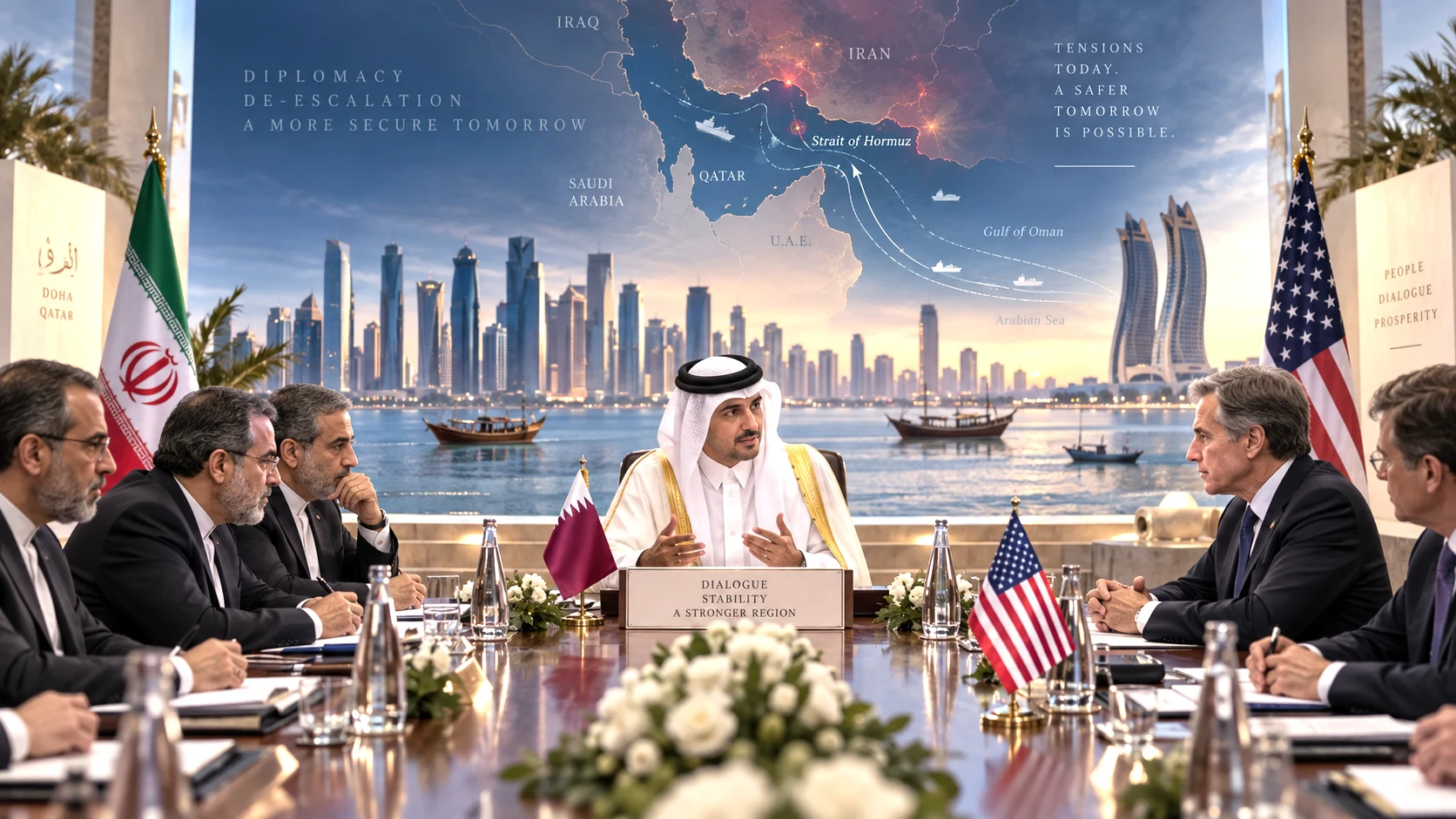
Qatar has launched an intensified diplomatic push to revive negotiations between Iran and the United States, shuttling proposals between Tehran and Washington as both sides combine threats of further military action with signals that a negotiated settlement remains possible. Iran has conveyed condit
A federal judge has temporarily blocked Donald Trump's White House ban on CNN, MS NOW and Politico, ordering their press credentials restored for 14 days. The ruling focuses on due process while the wider press-freedom case continues.
Donald Trump, Denmark and Greenland have signed a new Arctic security agreement expanding US military access, allowing new defence areas and strengthening Pituffik Space Base while preserving Danish sovereignty and Greenland's right to self-determination.

0 Comments