Best Foods Rich in Iron: Vegetarian and Non-Vegetarian Sources Plus Absorption Tips
Iron is found in meat, seafood, lentils, beans, leafy greens, nuts and fortified foods — but absorption differs. Learn how vitamin C can help and why anaemia needs proper diagnosis.
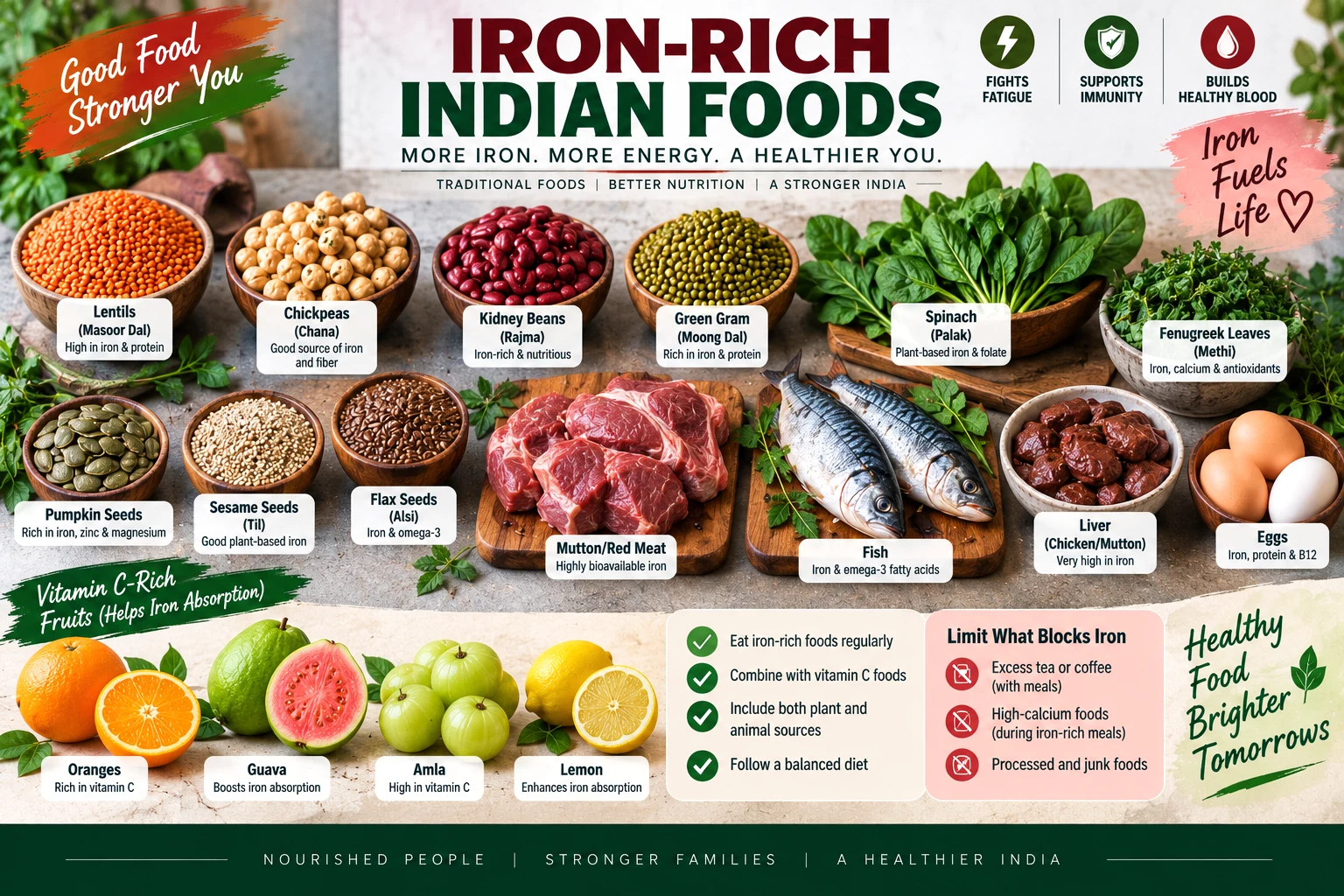
Iron-rich Indian foods including lentils, chickpeas, spinach, seeds, meat, fish and vitamin C-rich fruits
Table of Contents (22 sections)
Feeling tired does not automatically mean you have iron deficiency.
And eating a handful of raisins every day does not automatically cure anaemia.
Iron is an essential mineral needed for important functions in the body, including the production of haemoglobin, the protein in red blood cells that carries oxygen.
When iron intake or stores become inadequate, iron deficiency can develop. If deficiency becomes severe enough, it can contribute to iron-deficiency anaemia.
But anaemia has multiple possible causes.
That is why persistent fatigue, weakness, breathlessness, paleness, dizziness or other concerning symptoms should not be self-diagnosed from social media.
From a nutrition perspective, however, there is a lot we can do.
Both vegetarian and non-vegetarian foods provide iron, and understanding how iron is absorbed can make food choices more effective.
Table of Contents
Recommended Reading
Related Stories & In-Depth Guides
Curated editorial perspectives matching this topic.
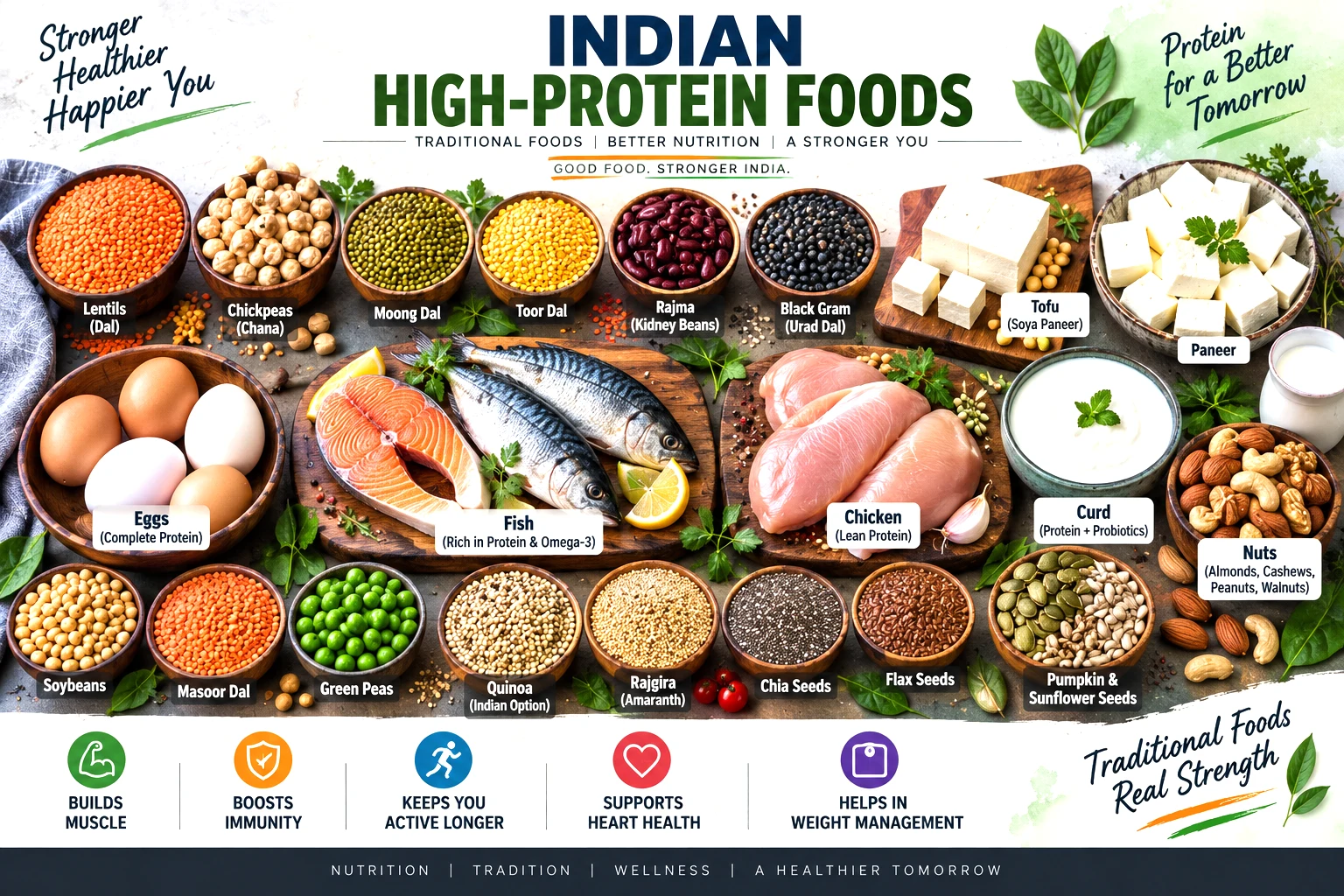
From dal, soy and paneer to eggs, fish and chicken, Indian diets offer plenty of protein options. Here’s how to build balanced meals without depending entirely on supplements.
Learn normal cholesterol, LDL, HDL and triglyceride levels, which foods can help lower LDL, practical Indian diet swaps, exercise tips and when cholesterol medicine may be needed.
Why iron matters
Heme vs non-heme iron
Meat
Fish and seafood
Lentils and dal
Chickpeas and beans
Leafy green vegetables
Soy foods
Nuts and seeds
Dried fruit
Fortified foods
Vitamin C and iron absorption
Tea and coffee timing
Practical Indian meals
Iron supplements
When to seek medical advice
Key takeaway
Why Does the Body Need Iron?
Iron contributes to haemoglobin production and oxygen transport.
It is also involved in numerous cellular processes.
Iron requirements differ according to age, sex, pregnancy status and other factors.
People who menstruate can have greater requirements because iron is lost through blood.
Pregnancy substantially changes iron needs.
Children and adolescents also require adequate iron during growth.
A varied diet is the usual foundation. Special groups may need additional medical or dietetic advice.
Heme Iron vs Non-Heme Iron
This is one of the most important concepts in the article.
Food contains iron in different forms.
Heme iron is found in animal foods such as meat and seafood.
Non-heme iron is found in plant foods and iron-fortified foods.
The body generally absorbs heme iron more efficiently.
That does not mean vegetarians cannot obtain enough iron.
It means vegetarian diets need attention to:
Total iron intake
Dietary variety
Vitamin C
Other factors affecting absorption
Understanding this difference helps explain why pairing plant foods with vitamin C is so practical.
1. Lean Meat
Meat provides heme iron along with protein, zinc and vitamin B12.
People who eat meat can obtain iron from appropriately selected lean, unprocessed meats.
However, “high in iron” does not mean unlimited red meat is advisable.
Overall dietary quality still matters, and processed meats should not become a routine iron strategy.
Lean, unprocessed options used occasionally as part of balanced meals are more useful than relying on heavily processed products marketed around protein or strength.
2. Fish and Seafood
Fish and seafood can contribute iron as well as protein.
The amount varies by species.
Some seafood can be relatively rich in iron, while other fish provide smaller amounts.
Fish can also contribute other nutrients such as vitamin B12 and, in fatty fish, omega-3 fats.
Choose safe, properly cooked seafood and vary the species consumed.
Preparation matters. Grilled, steamed, baked or moderate-oil curry preparations differ substantially from deep-fried seafood eaten frequently.
3. Lentils and Dal
For Indian vegetarians, lentils are among the most practical everyday iron sources.
Options include:
Masoor dal
Moong dal
Toor dal
Urad dal
Chana dal
They also provide protein, fibre and folate.
Because plant iron is non-heme iron, pairing dal with vitamin C-rich foods can help improve absorption.
A simple example:
Dal + tomato + vegetables + lemon
is more useful than obsessing over an expensive “iron superfood.”
Making dal a substantial part of the meal, rather than a thin side, also improves overall nutrient density.
4. Chickpeas, Rajma and Other Beans
Chickpeas, kidney beans, peas and other legumes also contribute non-heme iron.
Try:
Chana salad with lemon
Rajma with tomato-based gravy
Chickpea curry with vegetables
Bean salad with capsicum
The combination of legumes and vitamin C-rich vegetables is particularly practical.
These foods are widely available, relatively affordable and already familiar in many Indian kitchens, which makes them realistic for everyday use.
5. Leafy Green Vegetables
Spinach and other leafy greens contain iron.
But the popular idea that spinach is the ultimate iron food needs perspective.
Plant iron is not absorbed as efficiently as heme iron, and spinach contains compounds that can reduce mineral absorption.
That does not make spinach unhealthy.
It means you should not rely on spinach alone to correct iron deficiency.
Rotate leafy greens with legumes, beans, seeds and other iron-containing foods.
Variety across the week is more effective than depending on one green vegetable every day.
6. Soybeans and Tofu
Soy foods provide protein and non-heme iron.
Tofu can be combined with:
Capsicum
Tomato
Broccoli
Lemon-based dressings
Other vegetables
This simultaneously increases dietary variety and adds vitamin C-containing foods.
Soy can be especially useful in vegetarian and vegan patterns where concentrated plant protein is needed.
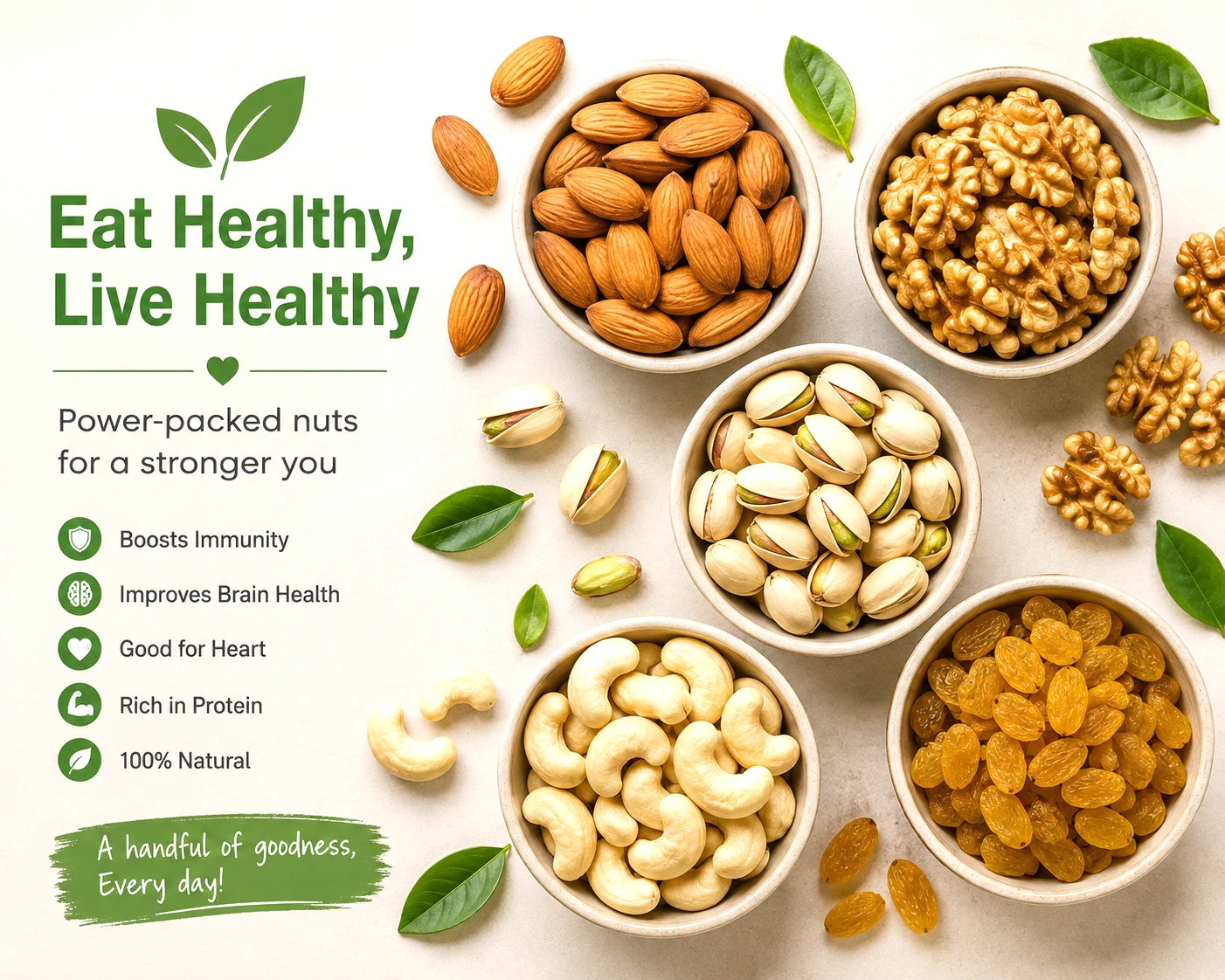
7. Nuts and Seeds
Seeds can make a useful contribution.
Options include:
Sesame
Pumpkin seeds
Cashews
Peanuts
Other nuts and seeds
They also provide healthy fats, protein, magnesium and other minerals.
But nuts and seeds are energy-dense, so enormous portions are unnecessary.
Use them as one component of a varied diet.
A small daily portion is usually enough when the rest of the plate already includes legumes, grains and vegetables.
8. Raisins and Other Dried Fruits
Raisins contain some iron.
This has led to many exaggerated claims, such as:
“Eat soaked raisins every morning and anaemia disappears.”
That is not responsible advice.
Raisins can contribute a modest amount of iron, fibre and carbohydrate, but they should not be treated as therapy for clinically significant iron deficiency.
Dried fruits also contain concentrated natural sugars, so portion size matters.
9. Iron-Fortified Foods
Some cereals and other foods are fortified with iron.
The amount can vary considerably, so check the nutrition label.
Fortified foods can be useful, particularly where dietary intake is limited.
But a product containing added iron is not automatically healthy if it also contains excessive sugar or other undesirable ingredients.
Read the entire label.
Vitamin C Can Improve Plant-Iron Absorption
This is one of the easiest practical changes vegetarians can make.
Vitamin C helps improve absorption of non-heme iron.
Useful combinations include:
Dal + lemon
Chana + tomato + capsicum
Rajma + tomato-based salad
Leafy vegetables + lemon
Iron-fortified breakfast + guava/orange
Vitamin C-rich foods include:
Amla
Guava
Oranges
Sweet lime
Lemon
Capsicum
Tomatoes
Broccoli
You do not need a vitamin C supplement simply to achieve this effect if suitable foods are available.
What About Tea and Coffee?
Tea and coffee contain polyphenols that can reduce absorption of non-heme iron when consumed with meals.
For someone who is struggling with iron deficiency, drinking strong tea immediately alongside an iron-rich meal may therefore be less helpful.
Spacing tea or coffee away from iron-rich meals can be a practical strategy, particularly when iron status is a concern.
This does not mean everyone needs to stop drinking tea.
Health Disclaimer: This article is general nutrition information, not medical advice. Anaemia has multiple causes. Do not self-diagnose iron deficiency or take high-dose iron supplements without appropriate medical guidance, particularly during pregnancy or when unexplained symptoms are present.
The Rajatheertha Team publishes news, explainers, guides and updates across India and the world. Our coverage follows Rajatheertha's editorial, verification and corrections standards.
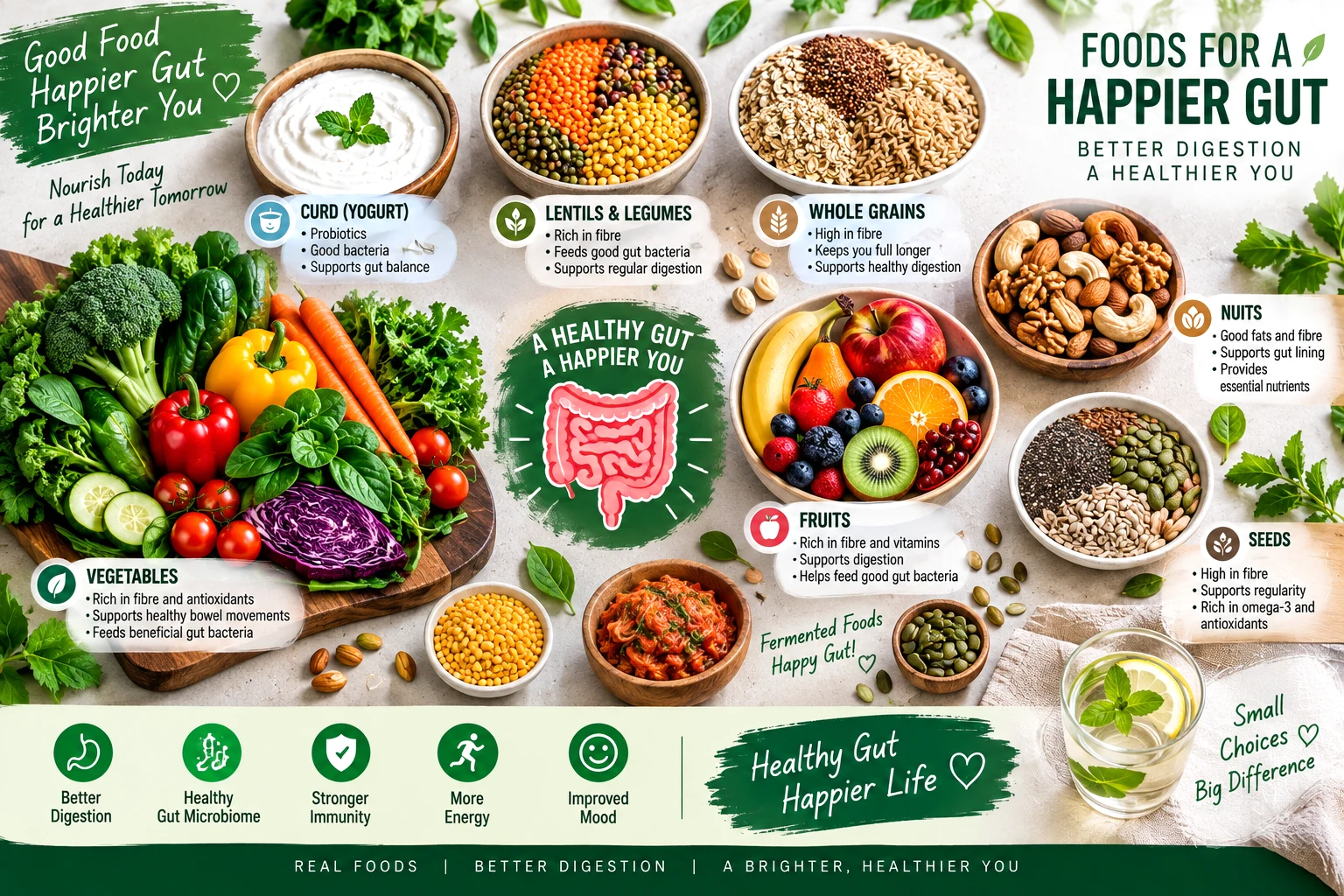
Good digestion is about more than probiotics. Learn how fibre-rich foods, curd, whole grains, fruits, vegetables and adequate fluids can support a healthy digestive system.
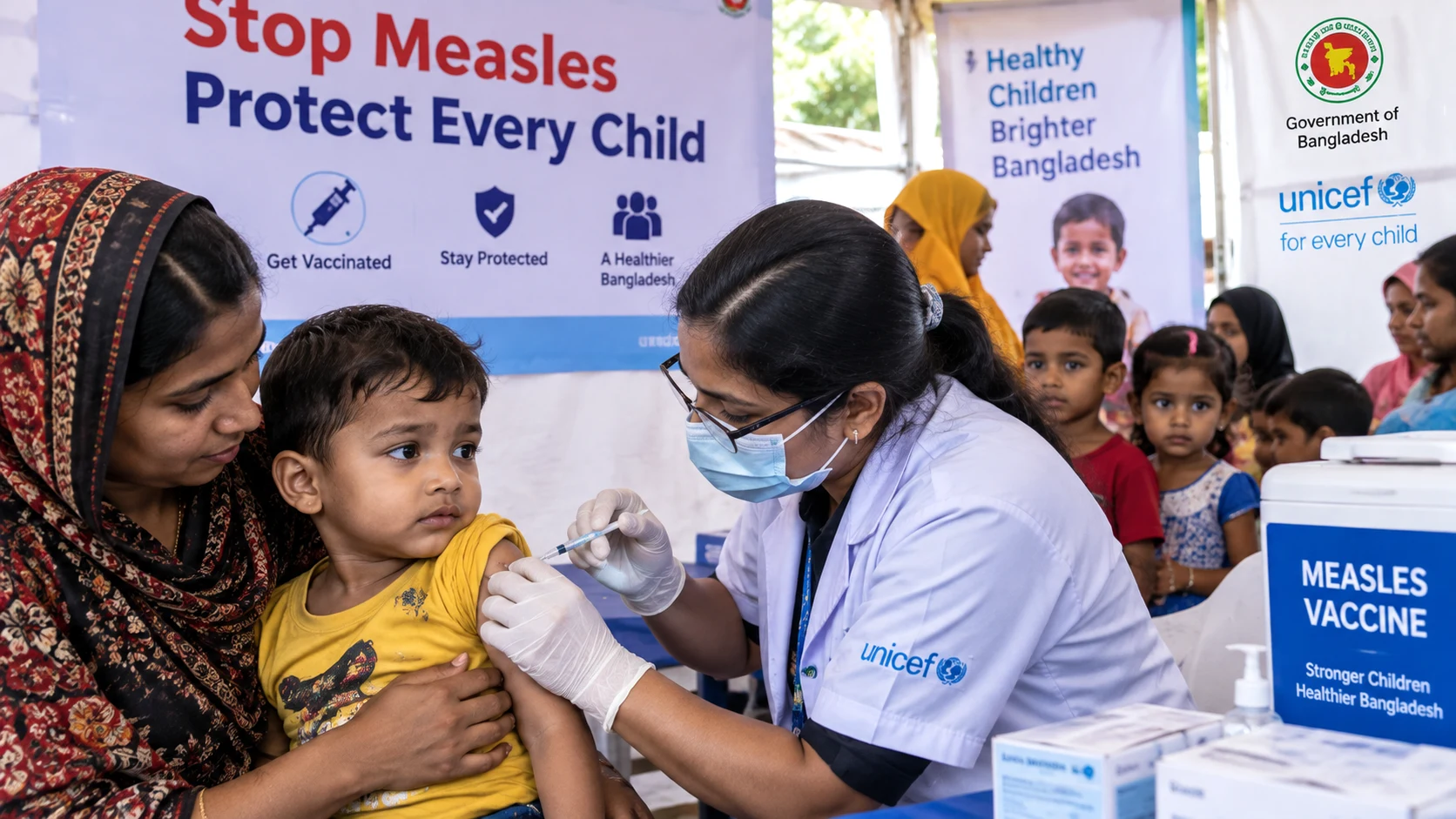
Bangladesh’s measles outbreak has been linked to more than 1,000 confirmed and suspected deaths as vaccination gaps leave young children particularly vulnerable.
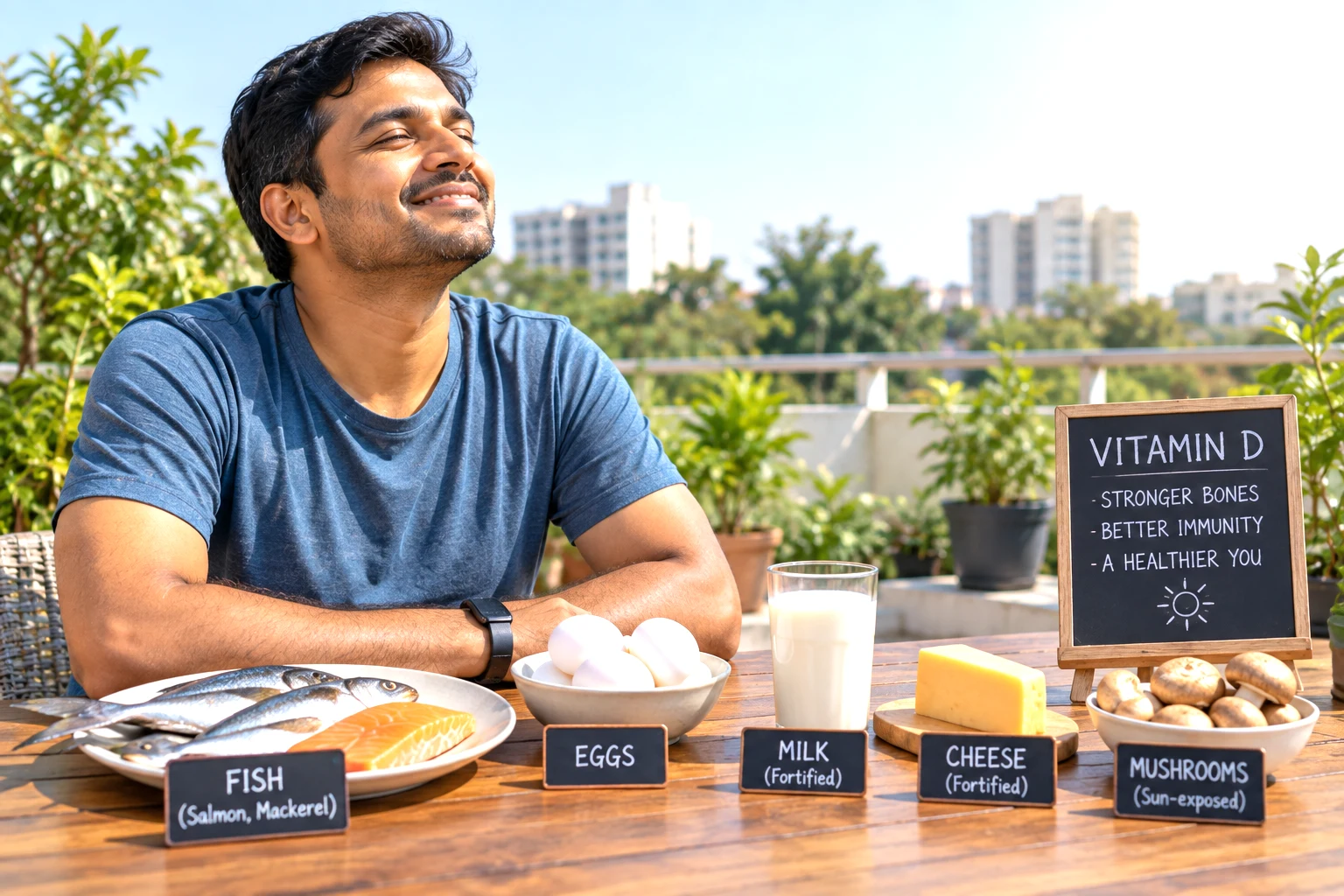
Learn the common signs and causes of vitamin D deficiency, how the 25(OH)D blood test is interpreted, vitamin D-rich foods available in India, sunlight basics and when supplements or medical advice may be needed.
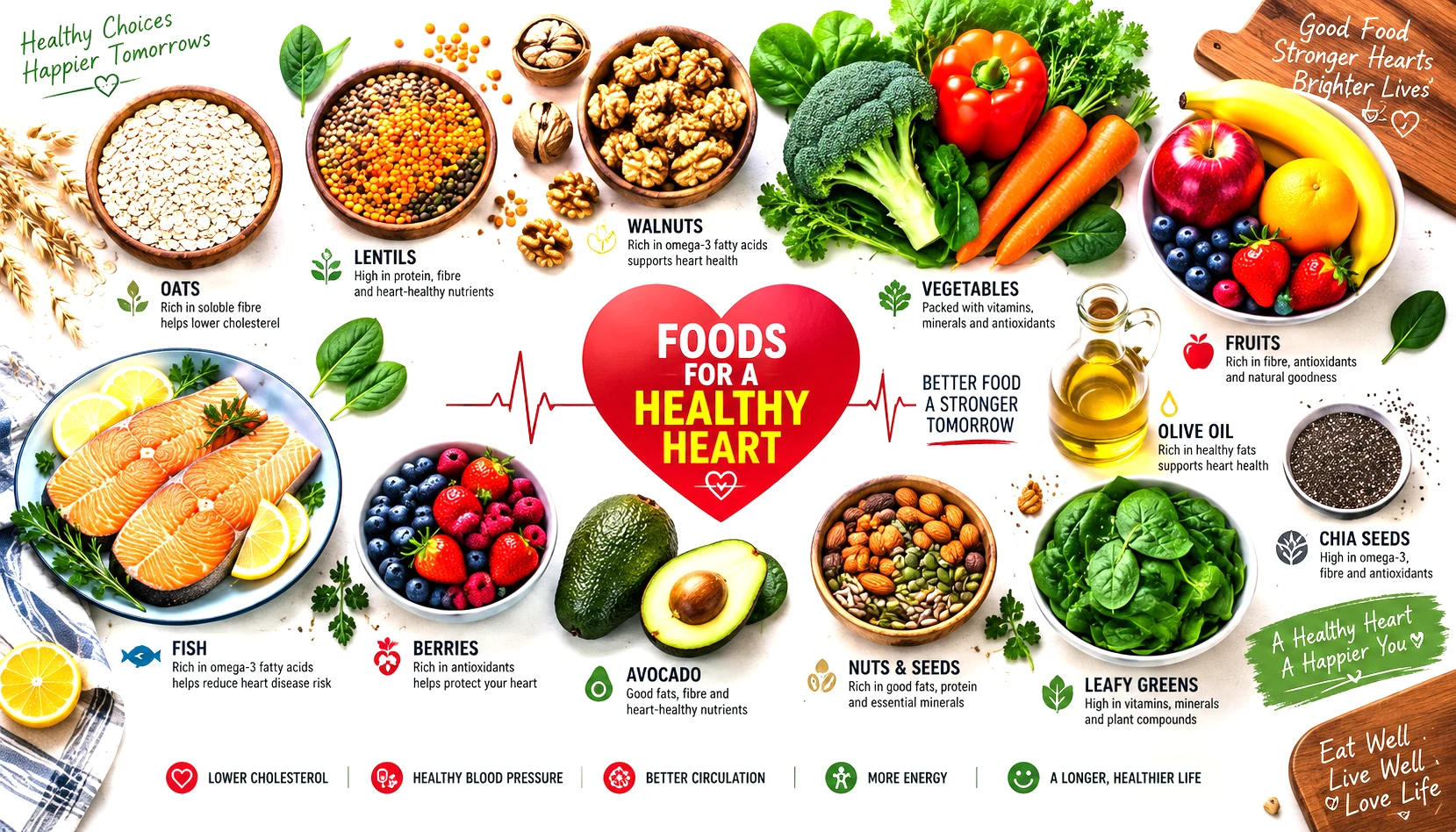
A heart-friendly diet does not depend on one superfood. Discover 12 everyday foods—from oats and dal to nuts, vegetables and fish—that can form part of a balanced, heart-healthy eating pattern.
Struggling to sleep well? Learn practical, evidence-based habits for better sleep, including a consistent schedule, less screen time, a relaxing bedtime routine, a cool bedroom, smarter caffeine timing and better daytime habits.
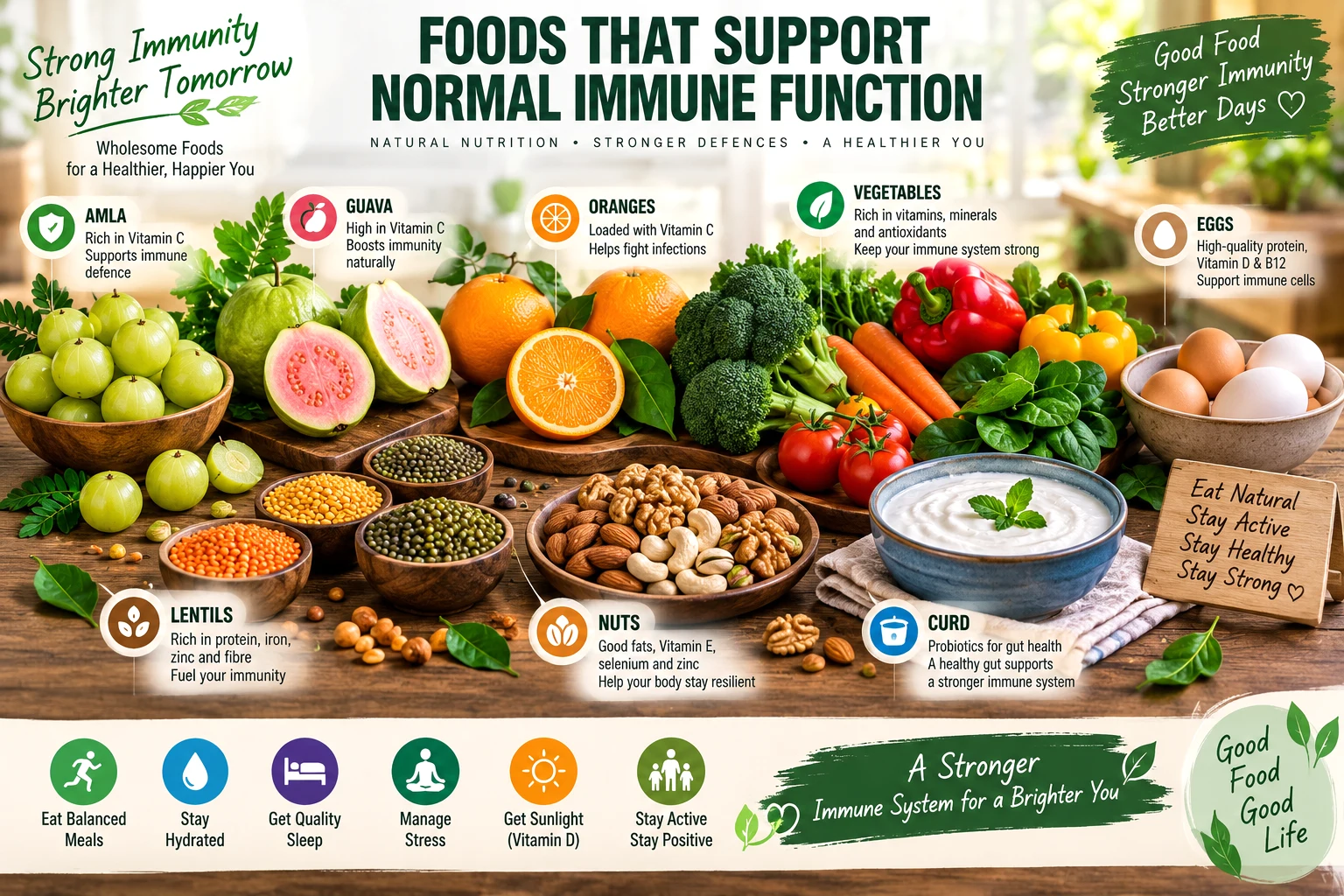
No food can instantly “boost” immunity, but adequate protein, vitamins A, C, D and E, zinc, selenium and other nutrients help normal immune function. Here are practical foods to include.


0 Comments