UK Hospital Heatwave Crisis: 96°F Summer Exposes Overheating Risks as Heat-Associated Deaths Rise
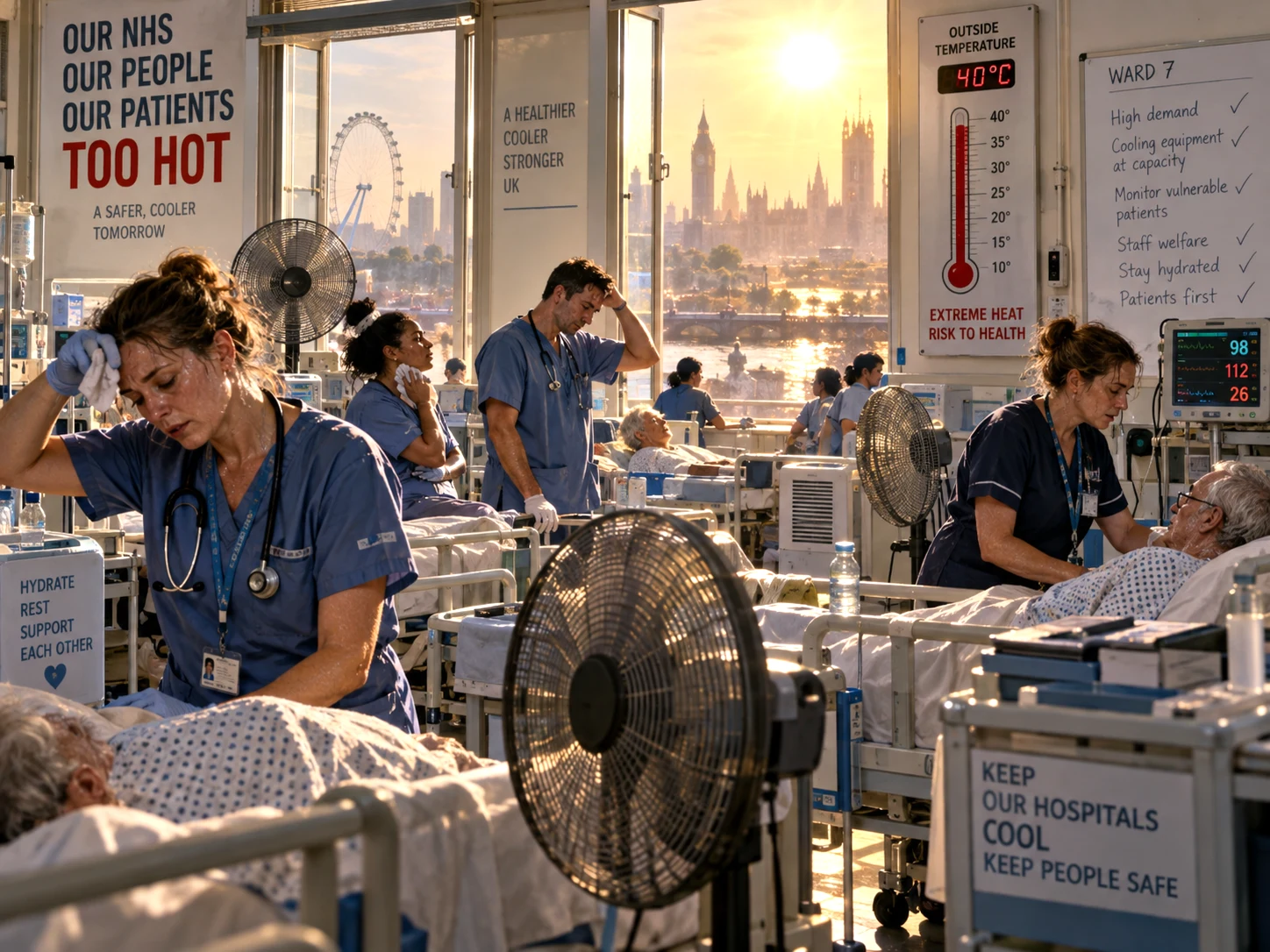
Britain's record-breaking 2026 summer has exposed a growing weakness in its health system: hospitals designed to retain warmth during cold winters are increasingly struggling with extreme summer heat. Patients and medical workers have faced sweltering wards, record emergency-department demand and di
A summer of repeated heatwaves has intensified concerns over whether Britain's ageing hospitals can safely cope with temperatures that were once considered exceptional but are becoming increasingly frequent.
Attention has focused this week on conditions at Queen's Medical Centre in Nottingham, one of the country's largest hospitals, after patients and staff described uncomfortable conditions during the August heatwave.
Nottingham experienced temperatures around 96°F, or roughly 36°C, during the extreme-heat episode.
But an important distinction is necessary.
The widely circulated “96-degree hospital” description does not mean that every ward — or even Queen's Medical Centre itself — was officially measured at 96°F indoors.
Rather, it describes the extreme outdoor conditions hospitals were trying to operate through.
Separate reporting from the severe June heatwave found some geriatric hospital wards elsewhere reaching approximately 35°C, or 95°F, demonstrating that indoor temperatures can also become dangerously high.
Key Takeaways
Summer 2026 provisionally confirmed as the hottest UK summer on record.
Preliminary UKHSA estimate: 2,877 heat-associated deaths in England during May and June heat episodes.
Recommended Reading
Related Stories & In-Depth Guides
Curated editorial perspectives matching this topic.
BRICS leaders have backed stronger cooperation on tuberculosis, obesity, mental health and other non-communicable diseases, while also supporting resilient health systems, disease surveillance and wider access to medicines and vaccines.
Always feeling tired even after sleeping? Learn common causes of constant fatigue, including poor sleep, anaemia, thyroid problems, diabetes, vitamin deficiencies and sleep apnoea, plus when to get tested or see a doctor.
At least five hospital groups declared critical incidents amid extreme heat.
NHS recorded its busiest summer for A&E attendances.
Many older hospital buildings struggle to shed heat.
Indoor ward temperatures have reached dangerous levels in some cases.
Britain’s Hottest Summer on Record
The wider context is unprecedented heat.
The Met Office confirmed that summer 2026 was provisionally the hottest UK summer since national records began in 1884.
The UK's average summer temperature reached approximately 16.5°C, surpassing the previous record set only in 2025.
England, Wales and Northern Ireland also recorded their warmest summers by mean temperature.
The national summer temperature peaked at 38.2°C at Hartpury College on August 13, according to revised Met Office data.
A new June daily temperature record was also established when 38.0°C was measured at Lingwood in Norfolk.
The NHS says the country experienced five heatwaves between May and August.
That sustained heat placed pressure on hospitals over a much longer period than a single unusually hot day.
Queen’s Medical Centre Struggles with Extreme Heat
Queen's Medical Centre in Nottingham illustrates the structural problem confronting many NHS facilities.
Much of the sprawling hospital complex dates from an era when buildings were designed primarily to retain warmth through Britain's traditionally cool and damp climate.
During the August heatwave, patients and staff described rooms with limited ventilation and heavy reliance on portable fans.
Some offices lacked windows, while staff switched off lights and adjusted uniforms in an effort to reduce heat.
Portable air-conditioning was available in certain areas, but not throughout the hospital.
Hospital leaders have acknowledged that older NHS buildings were simply not designed for the temperatures Britain is increasingly experiencing.
Parts of Hospitals Have Had to Close
The consequences go beyond discomfort.
Sections of Queen's Medical Centre have reportedly had to close temporarily during periods of overheating.
During the June heatwave, Nottingham University Hospitals declared a critical incident because its services were facing severe and sustained pressure.
On June 29, the trust reported:
188 patients in its emergency department
20 ambulances waiting outside
rising numbers of patients with dehydration and other heat-related conditions
long corridor waits for patients needing admission
exceptionally difficult working conditions for staff
The trust explicitly said the prolonged period of extreme heat was partly responsible for the pressure.
The critical incident was stood down on July 1 after conditions improved, although the hospitals remained busy and some patients were still waiting in corridors.
At Least Five Hospital Groups Reportedly Declared Critical Incidents
The pressure was not limited to Nottingham.
A review of Britain's 2026 summer hospital experience found that at least five hospital groups in England declared critical incidents as extreme heat combined with already high patient demand.
A critical incident is an escalation used when pressures become severe enough that an NHS organisation may struggle to maintain normal services.
It does not necessarily mean an entire hospital shuts down.
Instead, hospitals may postpone non-urgent activity, reorganise staff, seek outside support or take other emergency measures to protect essential care.
NHS Summer Demand Reached a Record
The heatwave also coincided with unprecedented demand for emergency services.
NHS England says there were 7,268,445 A&E attendances during June, July and August, making summer 2026 the busiest summer on record.
That was more than 240,000 additional attendances compared with the same three months in 2025.
Ambulance services also experienced a record summer, handling approximately 2.46 million incidents between June and August.
July alone saw approximately 2.5 million A&E attendances, then the highest monthly total recorded.
Ambulance teams responded to 829,675 incidents during July.
NHS officials have linked some of the additional demand to heat aggravating existing medical conditions, respiratory problems, dehydration and outdoor injuries.
2,877 Heat-Associated Deaths Estimated in May and June
The mortality figures are even more concerning.
The UK Health Security Agency estimates that 2,877 heat-associated deaths occurred in England during two major heat episodes in May and June 2026.
Its preliminary assessment breaks the figure down as follows:
May 24-27 heat episode: approximately 753 heat-associated deaths
June 21-28 heat episode: approximately 2,124 heat-associated deaths
The June episode therefore accounted for almost three-quarters of the estimated total.
The figure was already approaching the largest annual heat-mortality totals previously recorded in England.
What Does “Heat-Associated Death” Mean?
The 2,877 figure requires careful interpretation.
It does not mean 2,877 death certificates necessarily stated “heat” as the direct cause of death.
UKHSA uses mortality-monitoring methods to compare the number of deaths occurring during identified heat periods with the number expected under normal conditions.
The difference is used to estimate mortality associated with the heat episode.
Extreme heat can contribute to deaths by worsening:
cardiovascular disease
respiratory illness
kidney problems
dehydration
electrolyte disorders
existing chronic illnesses
Older adults and people with serious underlying health conditions are particularly vulnerable.
UKHSA says the 2026 figures are interim estimates.
Final heat-associated mortality figures for the year are expected in early 2027.
Why Britain’s Hospitals Overheat
The fundamental problem is the design of much of the NHS estate.
Many hospitals were constructed decades ago when retaining warmth was considered a greater architectural priority than shedding heat.
Air-conditioning is not routinely installed across entire NHS hospitals.
The UK Health Alliance on Climate Change says approximately 90% of hospital buildings in England are vulnerable to overheating.
Some wards have reportedly exceeded 30°C indoors even when outdoor temperatures were only about 22°C.
NHS guidance generally recommends ward temperatures within a range of approximately 18°C to 28°C, with even tighter temperature ranges appropriate for some sensitive clinical environments.
When wards substantially exceed those levels, maintaining comfortable and safe conditions becomes increasingly difficult.
Overheating Incidents Have Risen Sharply
The problem predates the record 2026 summer.
Recorded overheating incidents at NHS sites in England rose from approximately 2,980 in 2016-17 to 5,554 in 2021-22, according to figures compiled by health and climate organisations.
Excessive temperatures have previously been associated with:
failures of essential equipment
disrupted IT systems
laboratory problems
cancellation of clinical procedures
occupational risks for health workers
difficulty keeping patients comfortable and safe
The 2026 summer has intensified concerns that these vulnerabilities are becoming systemic rather than exceptional.
Bottom Line
Britain’s record-breaking 2026 summer has exposed a structural weakness in the NHS: hospitals designed for cold winters are increasingly unable to cope with extreme heat.
Preliminary estimates show 2,877 heat-associated deaths in England during the May and June heat episodes alone. Multiple hospital groups declared critical incidents, emergency demand reached record levels, and indoor ward temperatures in some facilities approached dangerous thresholds.
The crisis underscores the growing need for climate-resilient healthcare infrastructure as extreme heat becomes more frequent.
Key Takeaway
Hottest UK summer on record strains ageing NHS hospitals.
2,877 heat-associated deaths estimated in May–June episodes.
Critical incidents declared; record A&E demand recorded.
Overheating risks highlight urgent need for hospital adaptation.
The Rajatheertha Team publishes news, explainers, guides and updates across India and the world. Our coverage follows Rajatheertha's editorial, verification and corrections standards.
Fiji recorded 2,016 new HIV diagnoses in 2025, up 27% from the previous year, while UNAIDS estimates around 9,100 people were living with HIV. The government is expanding testing, treatment, PrEP and harm-reduction services as health authorities call for a coordinated national response.
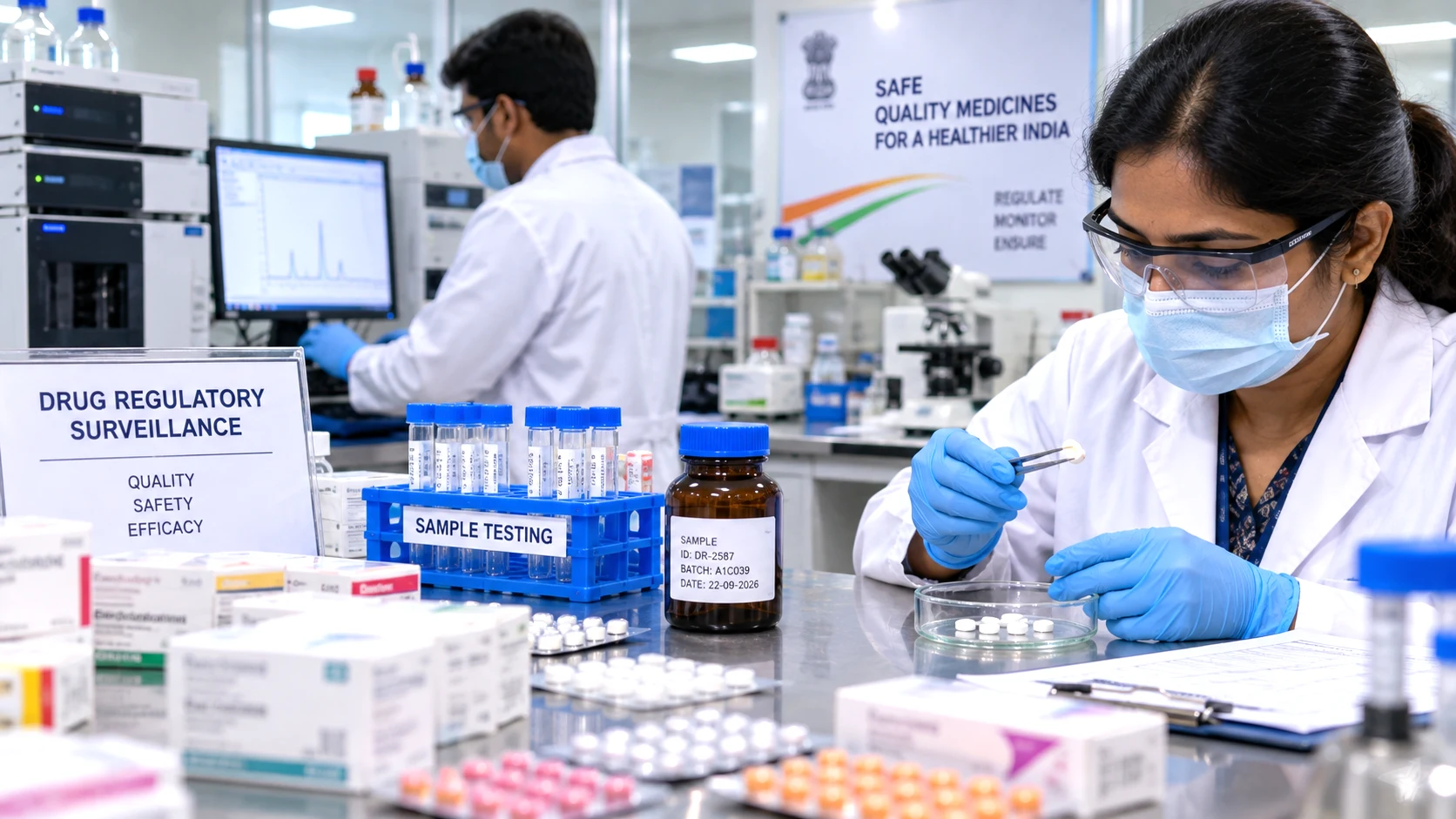
CDSCO's August 2026 surveillance identified 220 drug samples as Not of Standard Quality—29 through central laboratories and 191 through state laboratories. One spurious sample was also detected in Delhi.
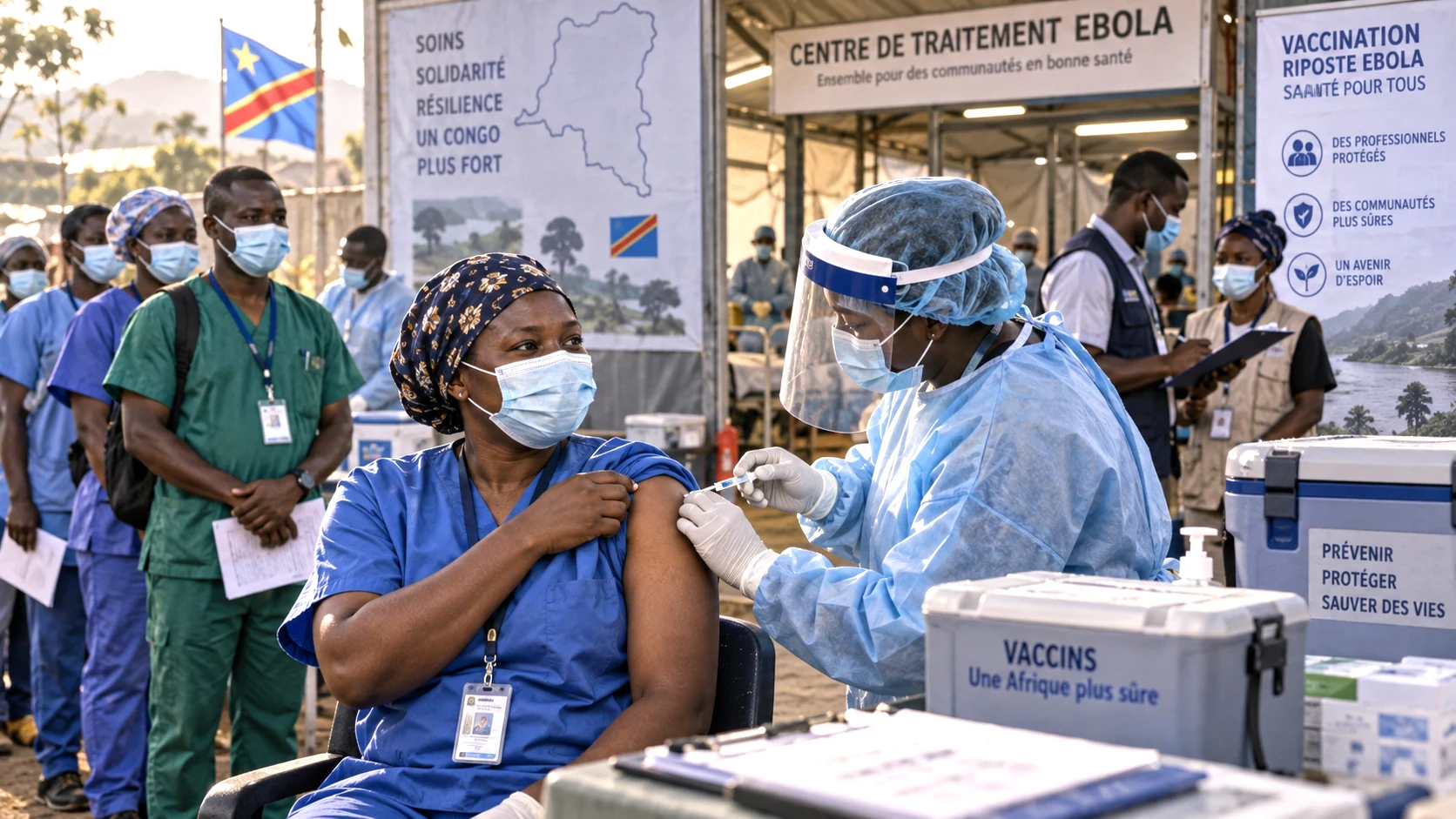
The Democratic Republic of the Congo has expanded Ebola vaccination among frontline health workers as a major study begins in Bunia to test whether the Ervebo vaccine can provide protection against the Bundibugyo virus driving the country’s largest recorded Ebola outbreak. The programme will follow
Learn the common signs and causes of vitamin D deficiency, how the 25(OH)D blood test is interpreted, vitamin D-rich foods available in India, sunlight basics and when supplements or medical advice may be needed.
Learn normal cholesterol, LDL, HDL and triglyceride levels, which foods can help lower LDL, practical Indian diet swaps, exercise tips and when cholesterol medicine may be needed.
Good digestion is about more than probiotics. Learn how fibre-rich foods, curd, whole grains, fruits, vegetables and adequate fluids can support a healthy digestive system.










0 Comments