Best Foods for Gut Health and Digestion: Fibre, Fermented Foods and Daily Habits
Good digestion is about more than probiotics. Learn how fibre-rich foods, curd, whole grains, fruits, vegetables and adequate fluids can support a healthy digestive system.
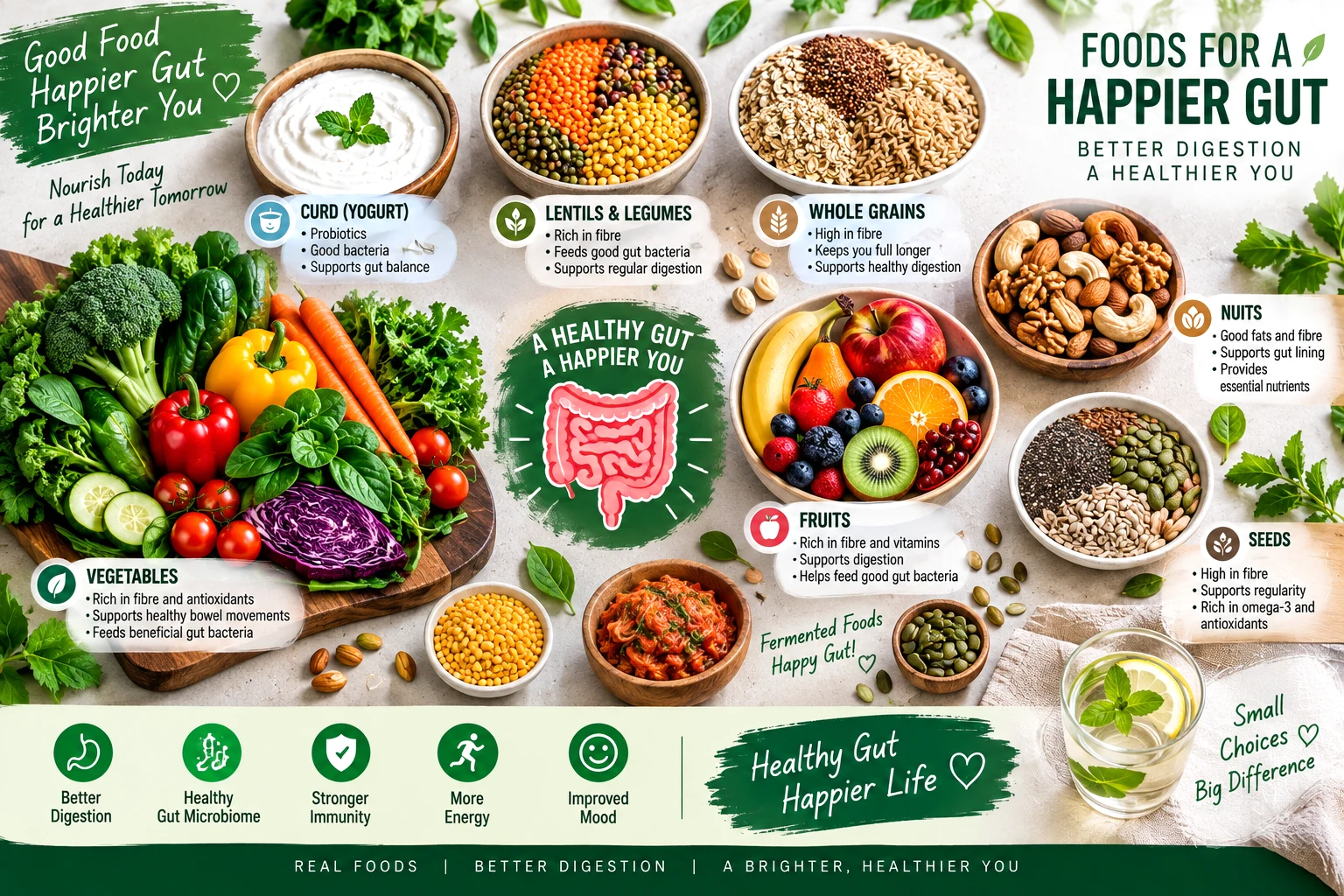
Curd, lentils, whole grains, vegetables, fruits, nuts and seeds representing foods for gut health and digestion
Table of Contents (17 sections)
“Gut health” has become one of the biggest nutrition trends.
Supermarket shelves are filled with probiotic drinks, powders, capsules, fermented products and foods claiming to improve the microbiome.
But a healthy digestive system does not depend on one expensive probiotic.
The human gut contains a complex community of microorganisms, and diet can influence this environment. Fibre-rich plant foods are particularly important because different types of fibre reach the large intestine and can be used by gut microorganisms.
Fermented foods may also contain useful microorganisms, but not every fermented product automatically qualifies as a proven probiotic.
For most healthy people, the practical foundation is simpler:
Eat a diverse range of plant foods, obtain adequate fibre, drink enough fluids, and include suitable fermented foods if you tolerate them.
Table of Contents
Fibre and the gut
Curd and yogurt
Dal, beans and chickpeas
Whole grains
Fruits
Vegetables
Onions and garlic
Nuts and seeds
Fermented Indian foods
Recommended Reading
Related Stories & In-Depth Guides
Curated editorial perspectives matching this topic.
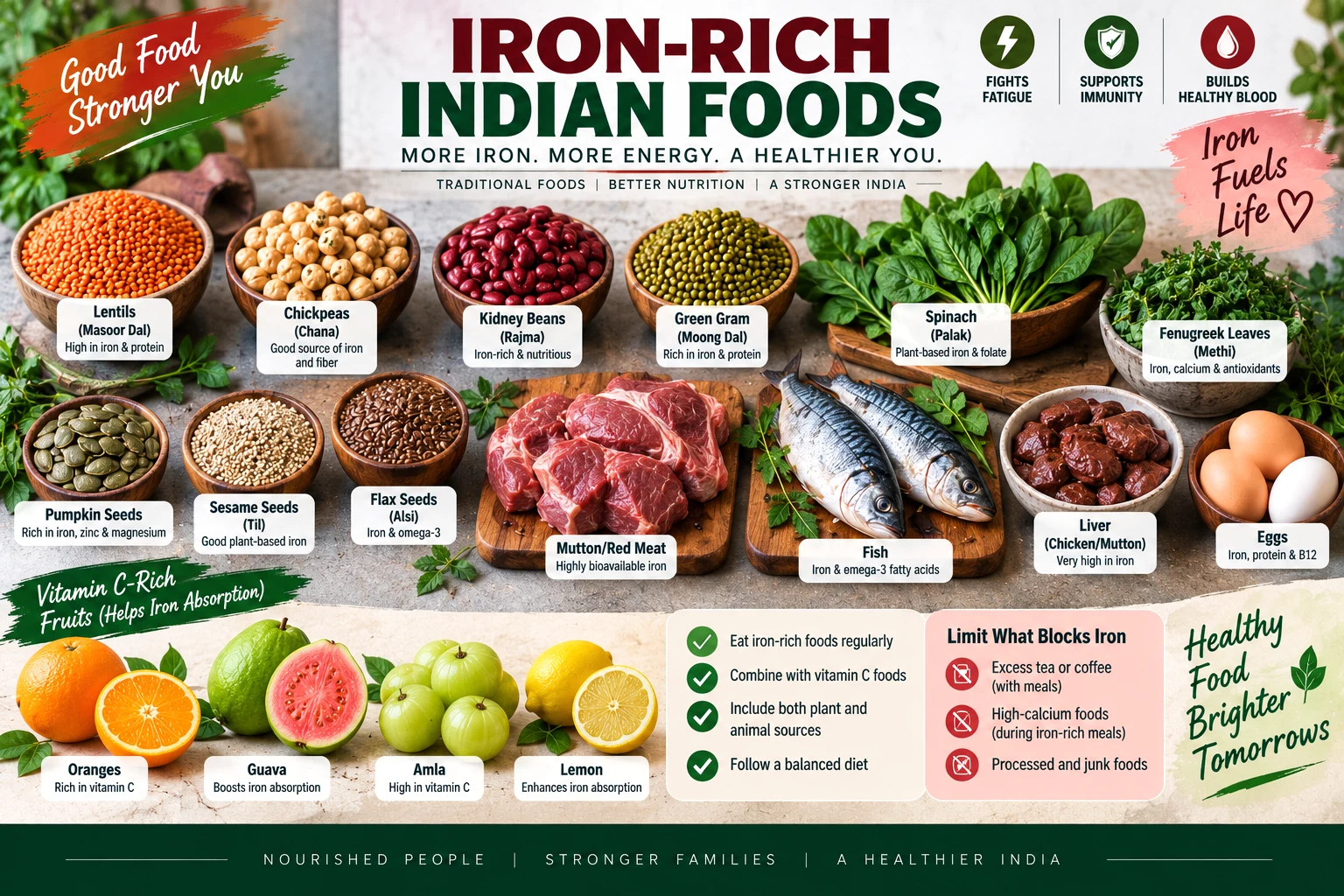
Iron is found in meat, seafood, lentils, beans, leafy greens, nuts and fortified foods — but absorption differs. Learn how vitamin C can help and why anaemia needs proper diagnosis.
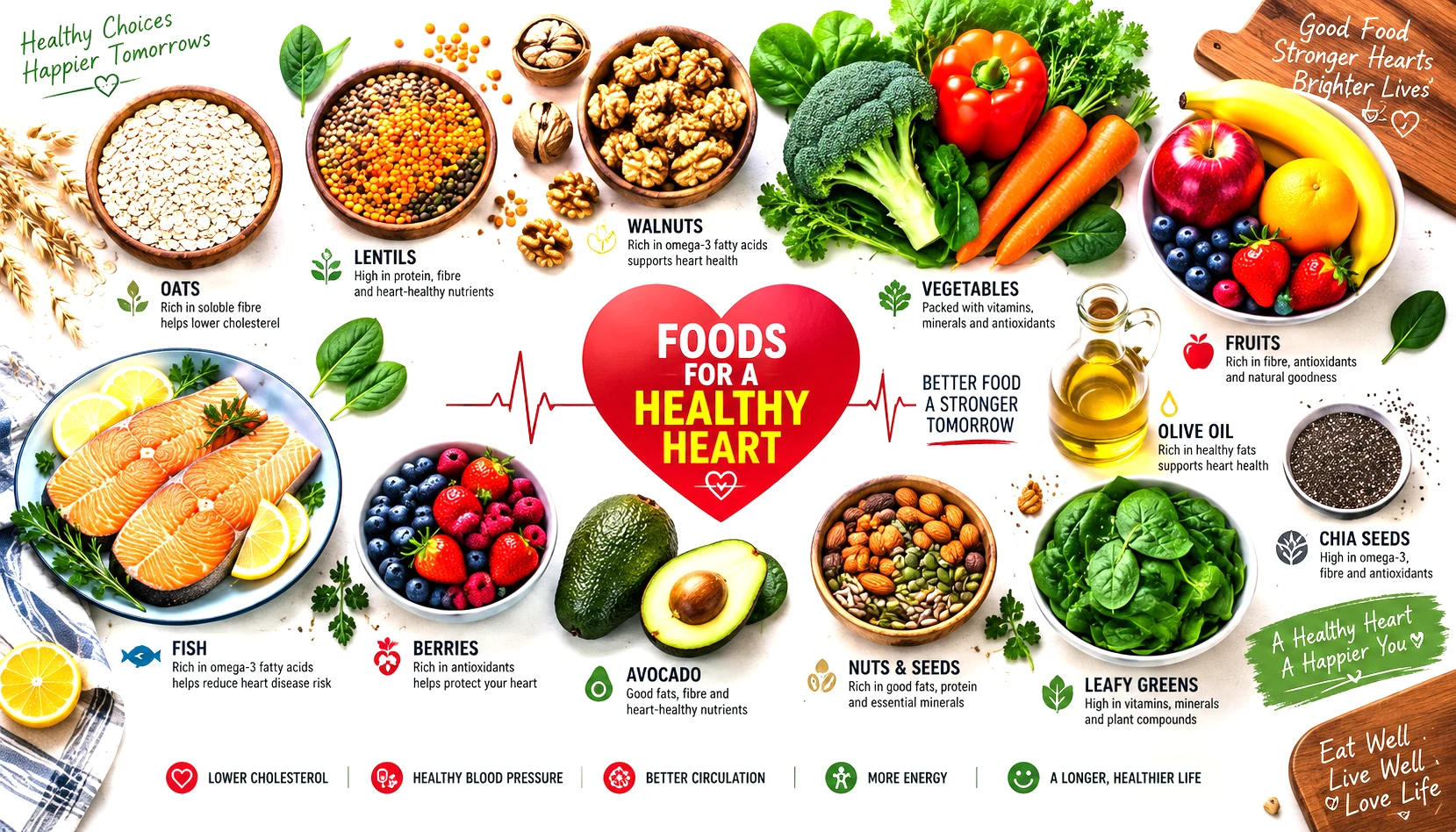
A heart-friendly diet does not depend on one superfood. Discover 12 everyday foods—from oats and dal to nuts, vegetables and fish—that can form part of a balanced, heart-healthy eating pattern.
Water and digestion
Foods that may trigger symptoms
Increasing fibre safely
When digestive symptoms need medical attention
Key takeaway
1. Fibre Is the Foundation
Dietary fibre is found mainly in plant foods.
Different fibres behave differently in the digestive tract.
Some add bulk to stools.
Some hold water.
Some are fermented by intestinal microorganisms.
Fibre-rich foods include:
Lentils
Beans
Chickpeas
Whole grains
Vegetables
Fruits
Nuts
Seeds
Instead of searching for a single “gut superfood,” eating a broad range of these foods is generally more sensible.
Variety matters because different plant foods feed different microbial communities. Rotating dal, vegetables, fruits and whole grains across the week is usually more useful than depending on one marketed product.
2. Plain Curd and Yogurt
Curd is one of the easiest fermented foods to include in an Indian diet.
Depending on preparation and storage, fermented dairy can contain live microorganisms.
Curd also provides protein and calcium.
A practical serving can be eaten alongside lunch, incorporated into raita, or combined with fruit.
However, heavily sweetened flavoured yogurt can contain substantial added sugar.
Plain curd with fruit is often a simpler everyday choice.
People with lactose intolerance may tolerate some fermented dairy differently from milk, but individual responses vary.
Are All Fermented Foods Probiotics?
No.
This distinction matters.
A probiotic is generally understood as a live microorganism that, when administered in adequate amounts, confers a health benefit.
Fermentation alone does not prove that a food contains a particular clinically beneficial probiotic strain in an effective amount.
Processing, heating and storage can also affect whether microorganisms remain alive.
So avoid claiming: “Every bowl of curd repairs the gut.”
Nutrition science is more nuanced.
3. Dal, Beans and Chickpeas
Legumes are excellent sources of fibre and plant protein.
Useful choices include:
Moong dal
Masoor dal
Chana
Rajma
Black-eyed peas
Green peas
For people who are not accustomed to high-fibre diets, suddenly eating large quantities can cause gas or discomfort.
Start gradually.
Soaking dried beans appropriately, cooking them thoroughly and increasing portions over time may improve tolerance.
Dal is already central to many Indian meals. Keeping it consistent while adding more vegetables and moderating excess oil or salt is often a realistic path toward better digestive habits.
4. Whole Grains
Whole grains retain more of the grain structure and fibre than highly refined grains.
Options can include:
Oats
Barley
Whole wheat
Brown rice
Millets
You do not have to replace every grain overnight.
Start by making practical substitutions.
For example, use whole-wheat roti more often than refined-flour breads, or introduce oats or another whole grain at breakfast.
Whole grains also contribute steady energy. For many people, that combination of fibre and complex carbohydrate supports more comfortable digestion than relying heavily on highly refined snacks.
5. Fruits
Whole fruits provide fibre, water, vitamins, minerals and plant compounds.
Useful everyday options include:
Guava
Papaya
Apples
Oranges
Pears
Bananas
Berries when available
Papaya is often described online as a magical digestive food.
It is nutritious, but it is not a treatment for every digestive disorder.
Likewise, bananas can suit many people but may affect individuals differently depending on ripeness and gastrointestinal condition.
The goal is variety.
Whole fruit is generally preferable to fruit juice because juice removes much of the fibre and makes sugar easier to consume quickly.
6. Vegetables
Vegetables are one of the simplest ways to increase dietary diversity.
Include combinations of:
Leafy greens
Carrots
Beans
Gourds
Tomatoes
Cabbage
Cauliflower
Brinjal
Okra
Different vegetables provide different fibres and plant compounds.
Rather than eating the same vegetable every day, rotate what is available seasonally and locally.
A practical target is to make vegetables a visible part of both lunch and dinner, not just a small garnish on the side of the plate.
7. Onions and Garlic
Onions and garlic contain certain fermentable carbohydrates that gut microorganisms can use.
This is why they are sometimes called “prebiotic” foods.
But there is an important catch.
The same fermentable carbohydrates can trigger bloating or abdominal symptoms in some people, particularly those with irritable bowel syndrome.
Therefore:
A food that supports one person’s gut may irritate another person’s gut.
Personal tolerance matters.
If onions or garlic consistently cause discomfort, that does not mean your diet has failed. It means your individual response needs attention, ideally with professional guidance if symptoms persist.
8. Nuts and Seeds
Almonds, walnuts, peanuts, chia, flax and other nuts and seeds contribute fibre and unsaturated fats.
A modest portion can be added to:
Oats
Curd
Salads
Fruit
Homemade snacks
Ground flax or chia can also increase fibre.
But introduce high-fibre seeds gradually and drink adequate fluids.
Nuts and seeds are nutrient-dense and calorie-dense. A small daily portion is usually enough; large uncontrolled handfuls can quickly raise total energy intake.
9. Fermented Indian Foods
India already has a rich fermented-food tradition.
Examples include:
Curd
Some fermented batters
Idli
Dosa
Dhokla
Certain regional fermented foods
However, cooking can kill many live microorganisms.
That means a cooked fermented batter can still be nutritious without necessarily delivering the same live microorganisms as an unheated fermented product.
Fermentation can affect taste, texture and nutrient availability even when the final product is cooked.
The value of these foods is not limited to “live bacteria” marketing. They remain useful, culturally familiar and often easier to digest for many people when prepared well.
10. Water Matters
Increasing fibre without adequate fluids can sometimes worsen constipation.
Water supports normal digestive function and helps stool remain appropriately hydrated.
There is no universal requirement that every adult drink exactly eight glasses.
Fluid needs vary with:
Body size
Climate
Activity
Pregnancy
Illness
Diet
In India’s hot climate, needs can increase substantially during outdoor activity.
Tea, coffee and other beverages contribute to fluid intake, but water remains the simplest everyday foundation.
What About Probiotic Supplements?
Probiotic supplements are heavily marketed.
But probiotics are not one uniform treatment.
Different products contain different microorganisms, strains, doses and combinations.
Evidence for one strain and one condition cannot automatically be applied to every product.
People with serious illnesses or weakened immune systems should be particularly careful and should discuss probiotic supplements with a healthcare professional.
For many healthy people, improving diet quality is a more useful first step than buying an expensive capsule.
Common Gut-Health Mistakes
Mistake 1: Increasing fibre overnight
Going from a low-fibre diet to enormous salads, beans and seeds in one day may cause discomfort. Increase gradually.
Mistake 2: Assuming bloating always means “toxins”
Persistent bloating has many possible causes. It is not proof that your body needs a detox.
Mistake 3: Buying expensive probiotics before fixing the diet
A supplement cannot substitute for an overall diet lacking vegetables, fruits, legumes and other fibre-rich foods.
Mistake 4: Ignoring individual tolerance
Foods such as milk, onions, garlic, wheat or certain legumes may trigger symptoms in susceptible individuals.
When Should You See a Doctor?
Do not attempt to solve persistent digestive symptoms entirely through social-media diets.
Seek medical evaluation for symptoms such as:
Blood in stool
Unexplained weight loss
Persistent vomiting
Severe abdominal pain
Persistent diarrhoea
Ongoing constipation
Difficulty swallowing
Symptoms that repeatedly disturb sleep
These can require proper medical investigation.
Home dietary changes may support comfort, but they are not a substitute for diagnosis when symptoms are significant or persistent.
Key Takeaway
Gut health is not about drinking one probiotic product every morning.
A more realistic foundation is:
diverse plant foods + adequate fibre + appropriate fermented foods + enough fluids + regular movement + attention to individual tolerance.
Your gut is an ecosystem.
Feed it with dietary variety rather than marketing promises.
If your current diet already includes dal, vegetables, fruit, curd and whole grains, you may already be supporting digestive health more effectively than many trend-driven products suggest.
Related Reading
[Best High-Protein Foods for Indian Diets]
[Best Foods Rich in Iron]
[Best Foods for Heart Health]
Health Disclaimer: This guide provides general information, not diagnosis or treatment. Persistent abdominal pain, bleeding, unexplained weight loss, severe diarrhoea, vomiting or other significant digestive symptoms require professional medical assessment.
The Rajatheertha Team publishes news, explainers, guides and updates across India and the world. Our coverage follows Rajatheertha's editorial, verification and corrections standards.
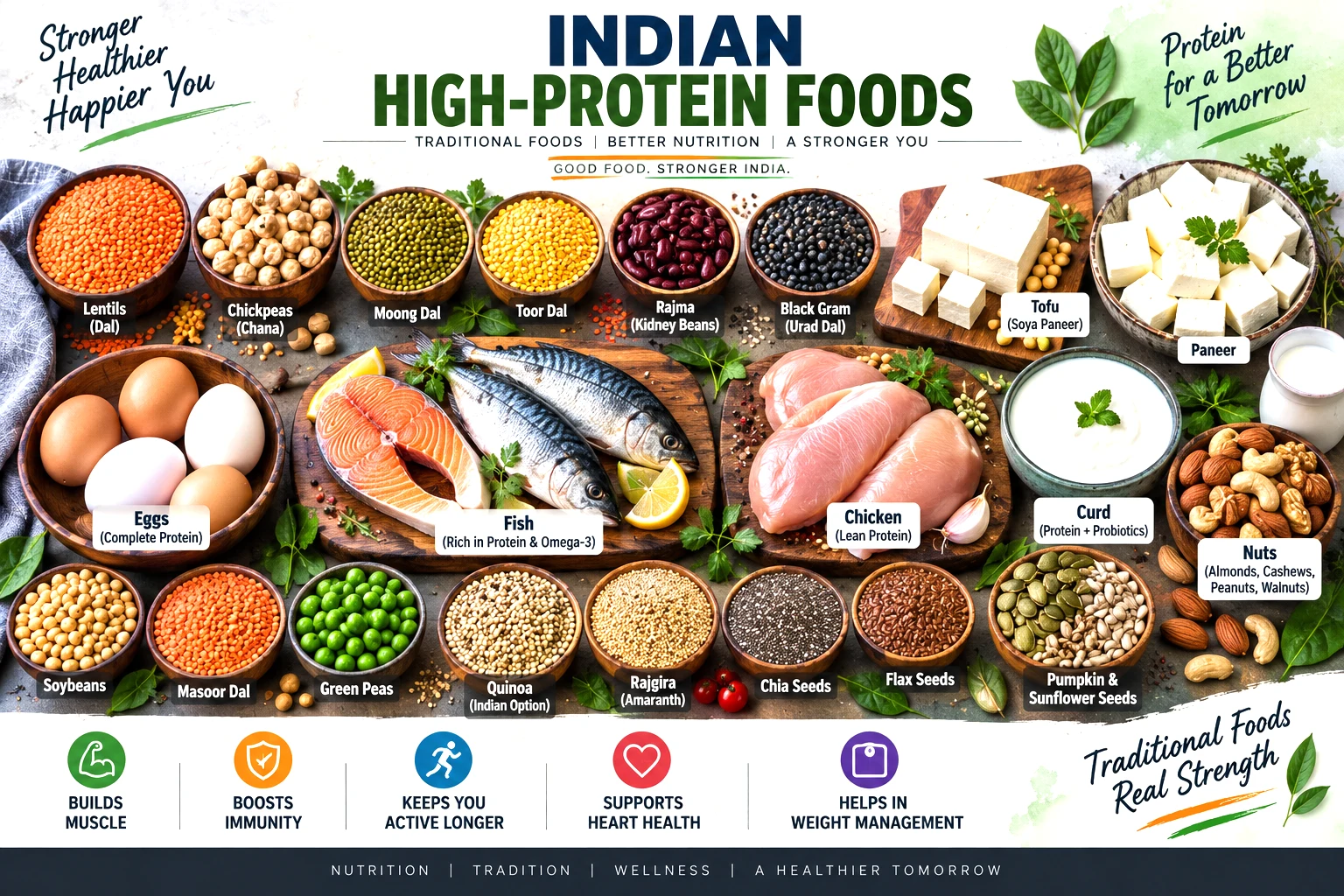
From dal, soy and paneer to eggs, fish and chicken, Indian diets offer plenty of protein options. Here’s how to build balanced meals without depending entirely on supplements.
Bangladesh’s measles outbreak has been linked to more than 1,000 confirmed and suspected deaths as vaccination gaps leave young children particularly vulnerable.
Struggling to sleep well? Learn practical, evidence-based habits for better sleep, including a consistent schedule, less screen time, a relaxing bedtime routine, a cool bedroom, smarter caffeine timing and better daytime habits.
Feeling stressed or anxious? Simple habits such as slow breathing, short walks, journaling, better sleep and regular breaks from social media may help. Here are practical ways to manage everyday stress—and signs that it may be time to seek professional support.
Learn the common signs and causes of vitamin D deficiency, how the 25(OH)D blood test is interpreted, vitamin D-rich foods available in India, sunlight basics and when supplements or medical advice may be needed.
No food can instantly “boost” immunity, but adequate protein, vitamins A, C, D and E, zinc, selenium and other nutrients help normal immune function. Here are practical foods to include.








0 Comments