Best Foods for Heart Health: 12 Everyday Foods Worth Adding to Your Diet
A heart-friendly diet does not depend on one superfood. Discover 12 everyday foods—from oats and dal to nuts, vegetables and fish—that can form part of a balanced, heart-healthy eating pattern.
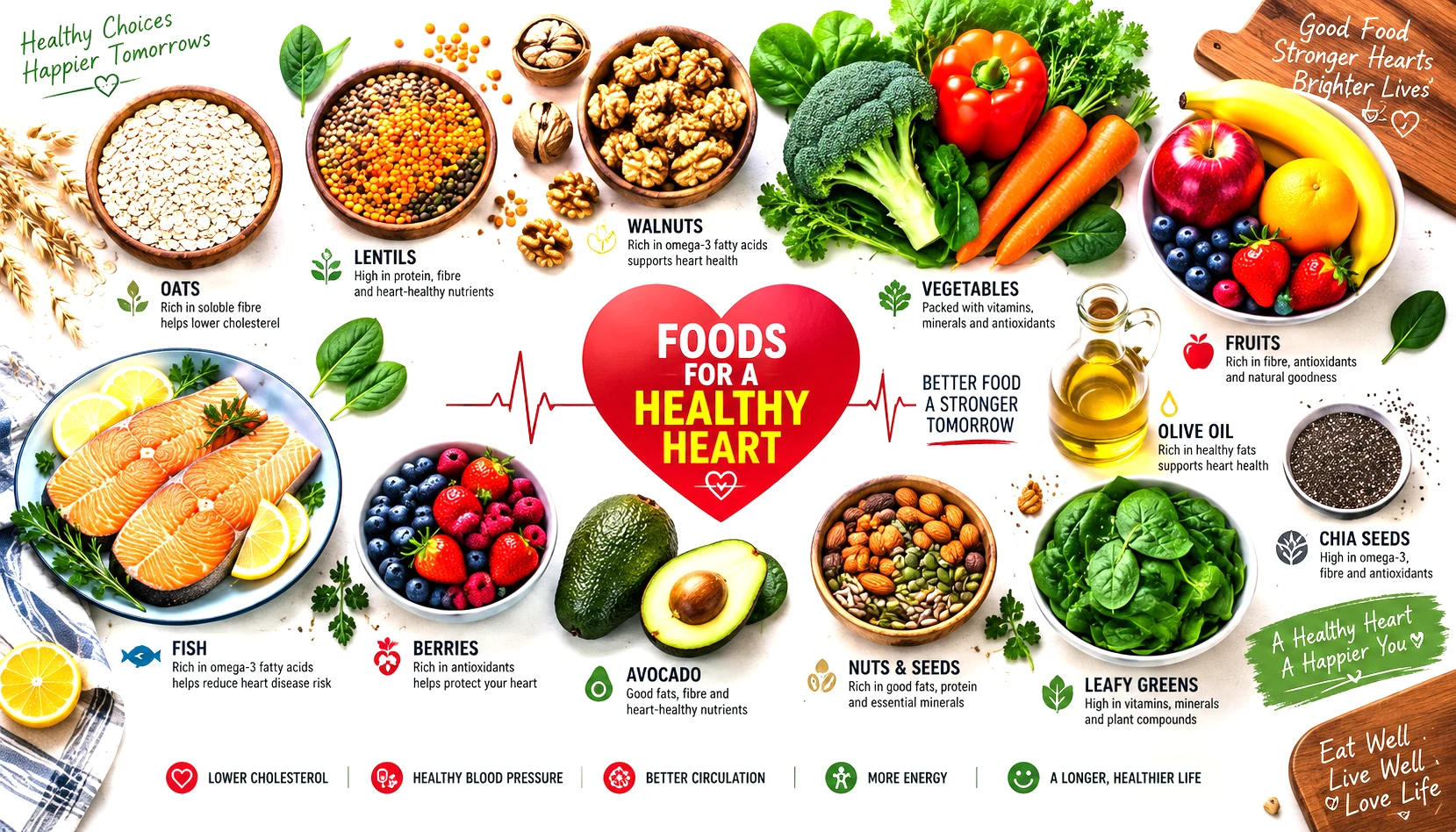
Heart-friendly foods including oats, lentils, walnuts, vegetables, fruits and fish arranged on a table
Table of Contents (18 sections)
Heart health is not built around one expensive supplement, one “superfood,” or one morning drink.
What matters much more is the overall pattern of food you eat regularly.
Current cardiovascular nutrition guidance emphasizes vegetables, fruits, whole grains, beans and lentils, nuts, healthy protein sources, fish and seafood, and unsaturated fats. It also recommends limiting excess sodium, added sugars, processed meats and foods high in saturated fat.
For Indian households, this does not require abandoning familiar meals.
Oats, dal, rajma, chana, vegetables, fruit, curd, nuts, seeds, whole grains and appropriately prepared fish can all fit into a heart-friendly eating pattern.
The important question is not simply, “Which food is good for the heart?”
It is:
What can this healthier food replace in my everyday diet?
Replacing a highly processed snack with nuts, refined grains with whole grains, or frequently consumed processed meat with beans or fish may be more useful than simply adding “healthy foods” to an otherwise unbalanced diet.
Recommended Reading
Related Stories & In-Depth Guides
Curated editorial perspectives matching this topic.
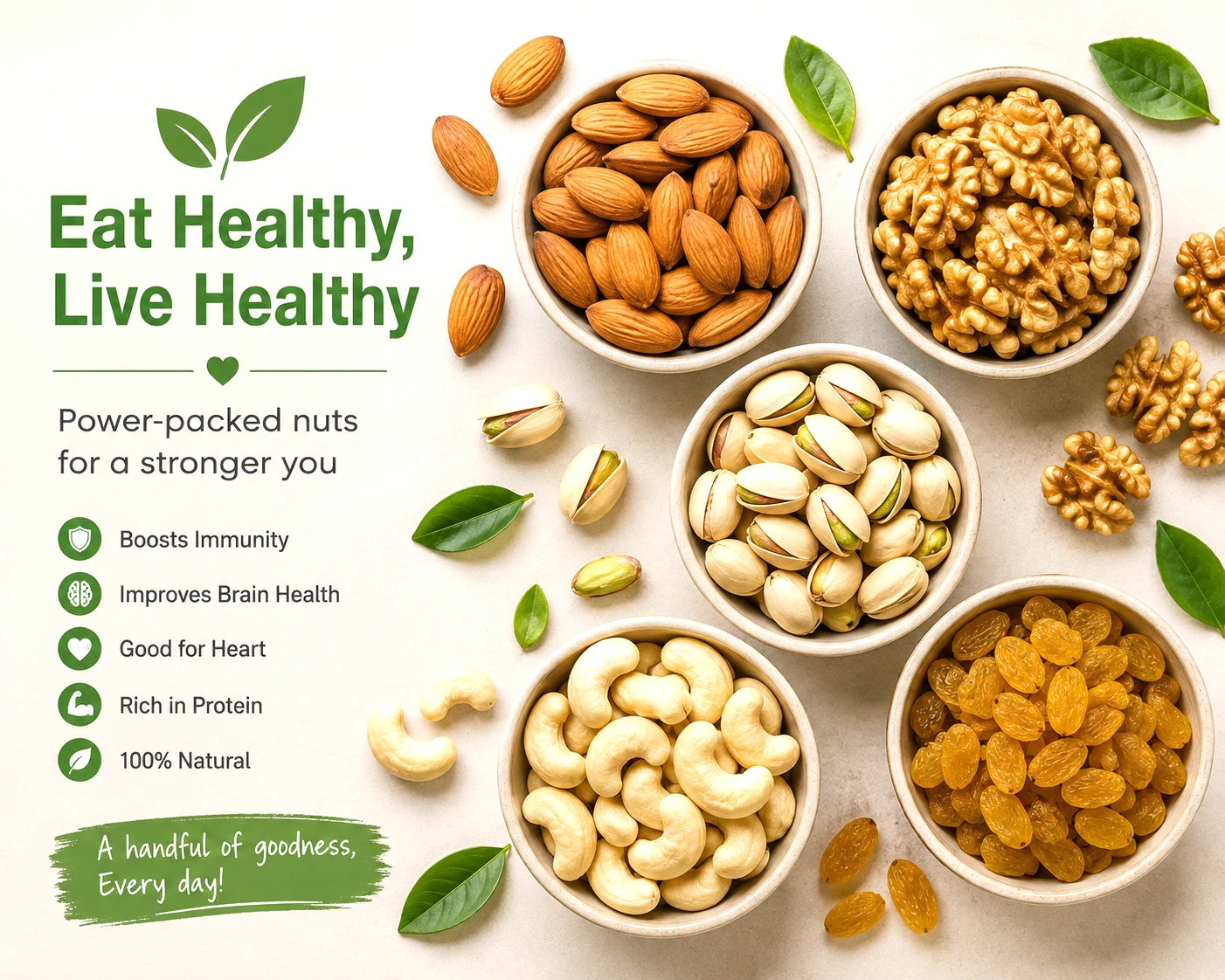
Almonds, walnuts, pistachios, cashews and raisins all provide different nutrients. Here’s what each one contains, how much to eat, whether soaking is necessary, the best ways to include them in your diet, and what to watch out for.
BRICS leaders have backed stronger cooperation on tuberculosis, obesity, mental health and other non-communicable diseases, while also supporting resilient health systems, disease surveillance and wider access to medicines and vaccines.
Table of Contents
Oats and whole grains
Beans, dal and lentils
Walnuts
Almonds and pistachios
Fatty fish
Leafy green vegetables
Tomatoes
Berries and colorful fruits
Apples and citrus fruits
Seeds
Unsaturated plant oils
Plain curd and lower-fat dairy
A practical Indian heart-friendly day
Foods to limit
Key takeaway
1. Oats and Whole Grains
Oats are particularly useful because they contain soluble fiber, including beta-glucan.
Whole grains more broadly provide fiber and nutrients that are reduced when grains are heavily refined.
Instead of thinking that everyone must eat oats every morning, focus on increasing whole-grain choices where practical.
Options can include:
Oats
Barley
Whole wheat
Brown rice
Millets
Other minimally processed whole grains
A simple breakfast could be vegetable oats, oats with fruit and nuts, or another whole-grain meal that suits your household.
Whole wheat roti can also be paired with dal and vegetables rather than relying heavily on refined-flour foods.
Small and consistent changes matter more than perfect meals. Swapping one refined-grain meal for a whole-grain option a few times a week is a realistic starting point for many families.
2. Beans, Dal and Lentils
For Indian diets, this is one of the easiest heart-friendly categories to use regularly.
Dal, chickpeas, rajma, peas and other legumes provide plant protein and dietary fiber.
They can help replace some meals based heavily on fatty or processed meats.
Practical choices include:
Moong dal
Masoor dal
Toor dal
Chana
Rajma
Black-eyed peas
Green peas
Preparation matters.
A bowl of dal can be nutritious, but repeatedly adding large amounts of ghee, butter, cream or salt changes the overall nutritional profile.
Use spices, garlic, ginger, tomato, coriander, lemon and other flavoring ingredients to make legumes enjoyable without depending on excessive salt or saturated fat.
Legumes also help with satiety. When lunch includes dal and vegetables, many people find it easier to avoid heavy evening snacks.
3. Walnuts
Walnuts stand out among common nuts because they contain alpha-linolenic acid (ALA), a plant omega-3 fatty acid.
They also provide unsaturated fats, fiber, protein and several micronutrients.
That does not mean walnuts “clean arteries.”
They do not remove existing arterial blockages, and they should never replace prescribed cholesterol, blood pressure or cardiovascular treatment.
A practical serving can be a few walnut halves as part of the day’s overall nut intake.
Try them with oats, curd, fruit, or as part of a small unsalted mixed-nut snack.
4. Almonds and Pistachios
Almonds and pistachios are other useful nut choices.
They provide combinations of:
Unsaturated fats
Protein
Fiber
Magnesium
Other vitamins and minerals
The important word is portion.
Nuts are nutrient-dense but also energy-dense.
Rather than repeatedly eating from a large packet, take a small portion.
Choose plain or dry-roasted varieties and preferably unsalted or lightly salted options.
A better swap might be:
Biscuits → small portion of nuts
rather than:
Biscuits + a large portion of nuts.
Pistachios can also work well as an afternoon snack when the alternative would otherwise be fried namkeen or packaged chips.
5. Fatty Fish
For people who eat non-vegetarian food, fish can be an important heart-friendly protein source.
Fish such as sardines, salmon and some varieties of mackerel provide long-chain omega-3 fatty acids.
The American Heart Association encourages regular fish and seafood intake as part of a heart-healthy eating pattern.
But preparation changes the equation.
Grilled, baked, steamed or lightly cooked fish is very different from fish that is heavily battered, deep-fried or served with large amounts of salt.
For Indian households, fish curry prepared with vegetables and moderate oil can be another practical option.
Vegetarians do not need to start eating fish merely because it appears on a heart-health list. Plant-based diets can also be constructed around legumes, nuts, seeds, whole grains, vegetables and fruit.
6. Leafy Green Vegetables
Spinach, amaranth leaves, methi and other leafy greens provide fiber, folate, potassium and numerous plant compounds.
But do not fall into the trap of treating one green vegetable as medicine.
The goal should be vegetable variety.
Try rotating leafy greens alongside carrots, beans, gourds, capsicum, tomatoes, cauliflower, cabbage and other locally available vegetables.
A practical target is to make vegetables a visible part of lunch and dinner rather than using them only as a garnish.
If your plate currently has mostly rice or roti with little vegetable, start by increasing the vegetable portion first. That single change often improves meal quality more than adding a new supplement.
7. Tomatoes
Tomatoes provide potassium, vitamin C and the carotenoid lycopene.
They are also inexpensive and extremely easy to incorporate into Indian cooking.
Use tomatoes in:
Dal
Curries
Sambar
Salads
Chutneys with controlled salt
Vegetable dishes
There is no requirement to consume tomato juice or concentrated supplements for heart health.
Ordinary food is enough.
Fresh, cooked and even canned tomatoes (with lower sodium where possible) can all contribute to vegetable intake across the week.
8. Berries and Other Colorful Fruits
Berries receive considerable attention because they contain fiber and polyphenols, including anthocyanins.
But imported berries can be expensive in India.
You do not need expensive blueberries to eat a heart-friendly diet.
Use locally available fruits such as guava, pomegranate, papaya, oranges, watermelon, grapes or seasonal berries where available.
Different fruits provide different combinations of nutrients and plant compounds.
Whole fruit is generally a better everyday choice than sugary fruit drinks.
When dessert is expected after a meal, a piece of fruit is often a better default than sweets eaten every day.
9. Apples and Citrus Fruits
Apples provide fiber, while oranges, sweet limes and other citrus fruits provide vitamin C and various plant compounds.
Again, the important idea is not that one apple “keeps heart disease away.”
It is that whole fruits can replace less nutritious desserts and snacks while contributing fiber and micronutrients.
Whenever practical, choose the whole fruit rather than routinely converting it into juice.
Juice removes much of the fiber and makes it easier to consume sugar quickly. Whole fruit usually supports better portion control and more gradual digestion.
10. Seeds
Flaxseed, chia seeds, sesame and other seeds can add fiber, unsaturated fats, minerals and plant compounds to meals.
Ground flaxseed is particularly easy to mix into oats, curd or other foods.
Start with modest quantities.
Seeds do not need to be consumed by the bowlful to contribute nutrients.
Sesame can also appear in chutneys, dry powders and simple home recipes. The goal is regular inclusion in small amounts, not extreme consumption.
11. Unsaturated Plant Oils
Fat is not automatically unhealthy.
The type and quantity matter.
Current heart-health guidance supports replacing sources high in saturated fat with foods containing unsaturated fats.
Depending on cooking style and availability, households may use suitable liquid plant oils in moderate amounts.
This does not mean unlimited oil becomes healthy simply because it is plant-based.
Deep-frying still substantially increases the energy content of food.
A practical approach is to measure oil rather than pouring freely, and to reserve deep-fried foods for occasional use instead of daily habit.
12. Plain Curd and Appropriate Dairy Choices
Dairy can contribute protein, calcium and other nutrients.
Plain curd can be included with meals, provided it suits the individual’s diet and tolerance.
The bigger issue is what accompanies dairy.
Sweetened flavored yogurt can contain substantial added sugar.
Likewise, frequently consuming foods loaded with butter, cream or ghee is different from including sensible portions of dairy within a balanced diet.
If you enjoy curd, plain curd with cucumber, roasted jeera or a little fruit can be a better everyday option than sugar-heavy commercial desserts marketed as “healthy yogurt.”
A Practical Indian Heart-Friendly Day
A heart-friendly day does not have to look foreign or complicated.
Breakfast: Vegetable oats with a small portion of nuts and one fruit.
Lunch: Whole-wheat rotis or an appropriate portion of rice, dal, two vegetable preparations, salad and plain curd.
Snack: Fruit or a small handful of unsalted nuts instead of biscuits or fried namkeen.
Dinner: Vegetable-rich dal or grilled/lightly cooked fish, vegetables and whole grains.
Drinks: Water should be the main source of hydration. Limit sugar-sweetened drinks.
This is only an example, not an individual diet prescription.
Household preferences, budget, region, medical conditions and cultural practices all influence what is realistic. The value lies in the pattern: more plants, better fats, fewer ultra-processed defaults.
What Should You Limit?
Heart-friendly eating is also about what appears less often.
Pay attention to frequent consumption of:
Processed meats
Deep-fried foods
Foods high in saturated fat
Very salty packaged snacks
Sugar-sweetened drinks
Excess sweets and desserts
Highly processed foods
You do not need to label every food “good” or “bad.”
Frequency, quantity and the overall dietary pattern matter.
A festival sweet once in a while is not the same as daily excess sugar. Occasional fried food is not the same as deep-fried snacks every evening. Consistency over months is more important than perfection for one week.
Key Takeaway
There is no single food capable of protecting your heart by itself.
A much stronger strategy is to build meals around vegetables, fruits, whole grains, legumes, nuts, appropriate protein sources and mostly unsaturated fats, while reducing excessive sodium, added sugar and highly processed foods.
Small replacements made consistently can matter more than occasional “superfoods.”
If you change only three things this month — more dal and vegetables, fewer packaged snacks, and a modest portion of unsalted nuts instead of biscuits — you will already be moving in a useful direction.
Related Reading
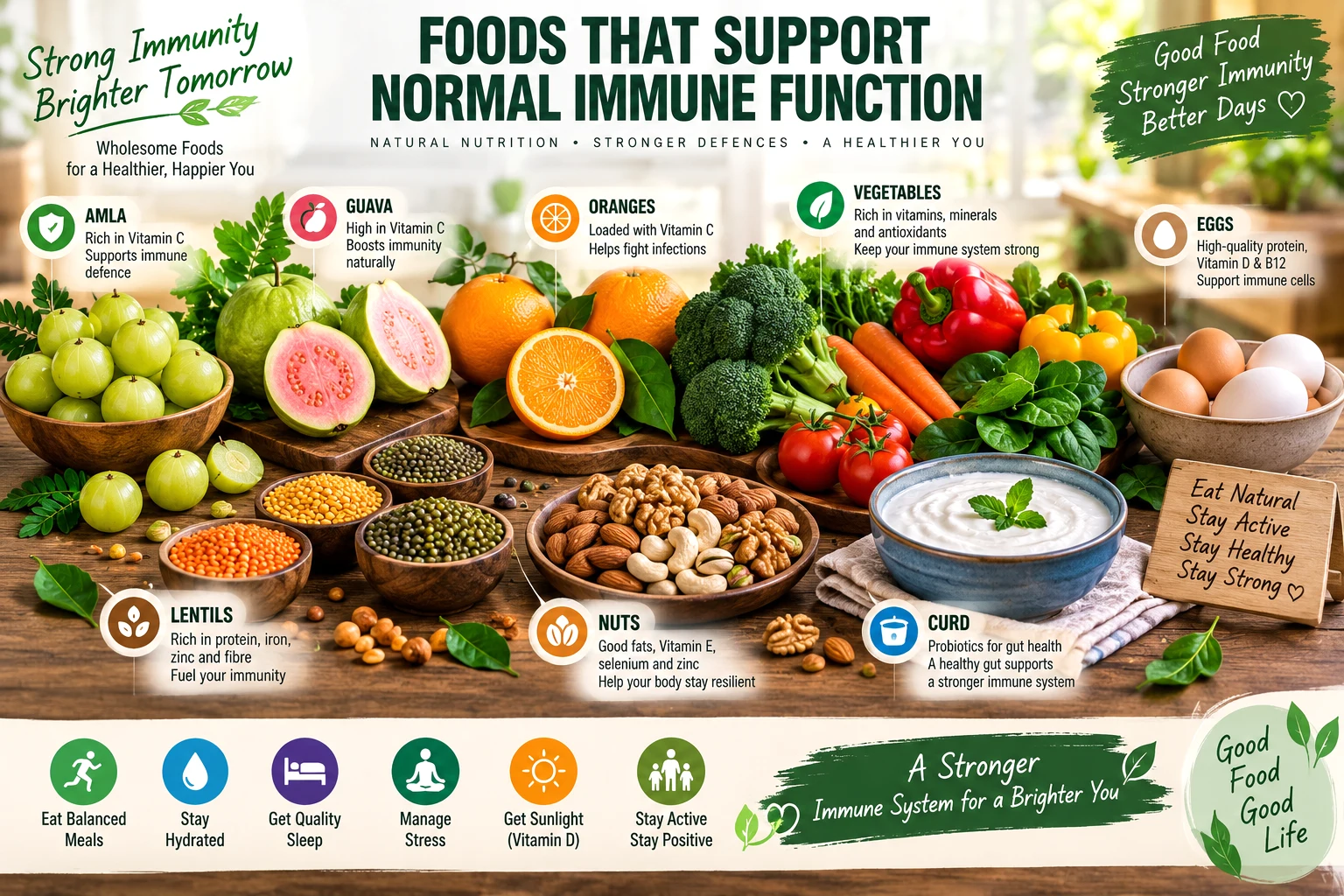
[Best Foods to Support Immune Function]
[Best High-Protein Foods for Indian Diets]
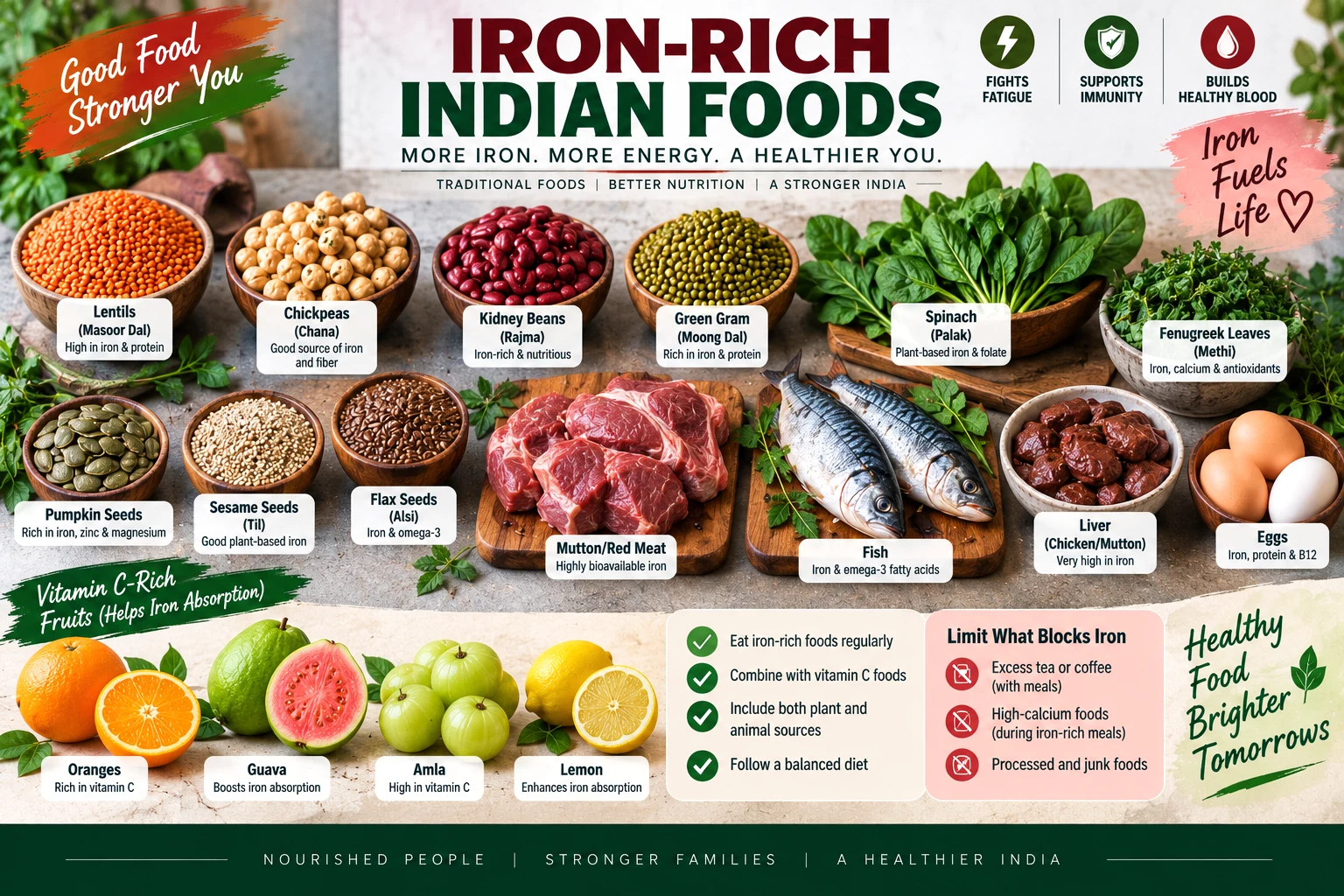
[Best Foods Rich in Iron]
Health Disclaimer: This article provides general nutrition information and is not medical advice. Food cannot replace treatment for heart disease, high blood pressure, diabetes or high cholesterol. People with diagnosed medical conditions should follow advice from their qualified healthcare professional.
The Rajatheertha Team publishes news, explainers, guides and updates across India and the world. Our coverage follows Rajatheertha's editorial, verification and corrections standards.
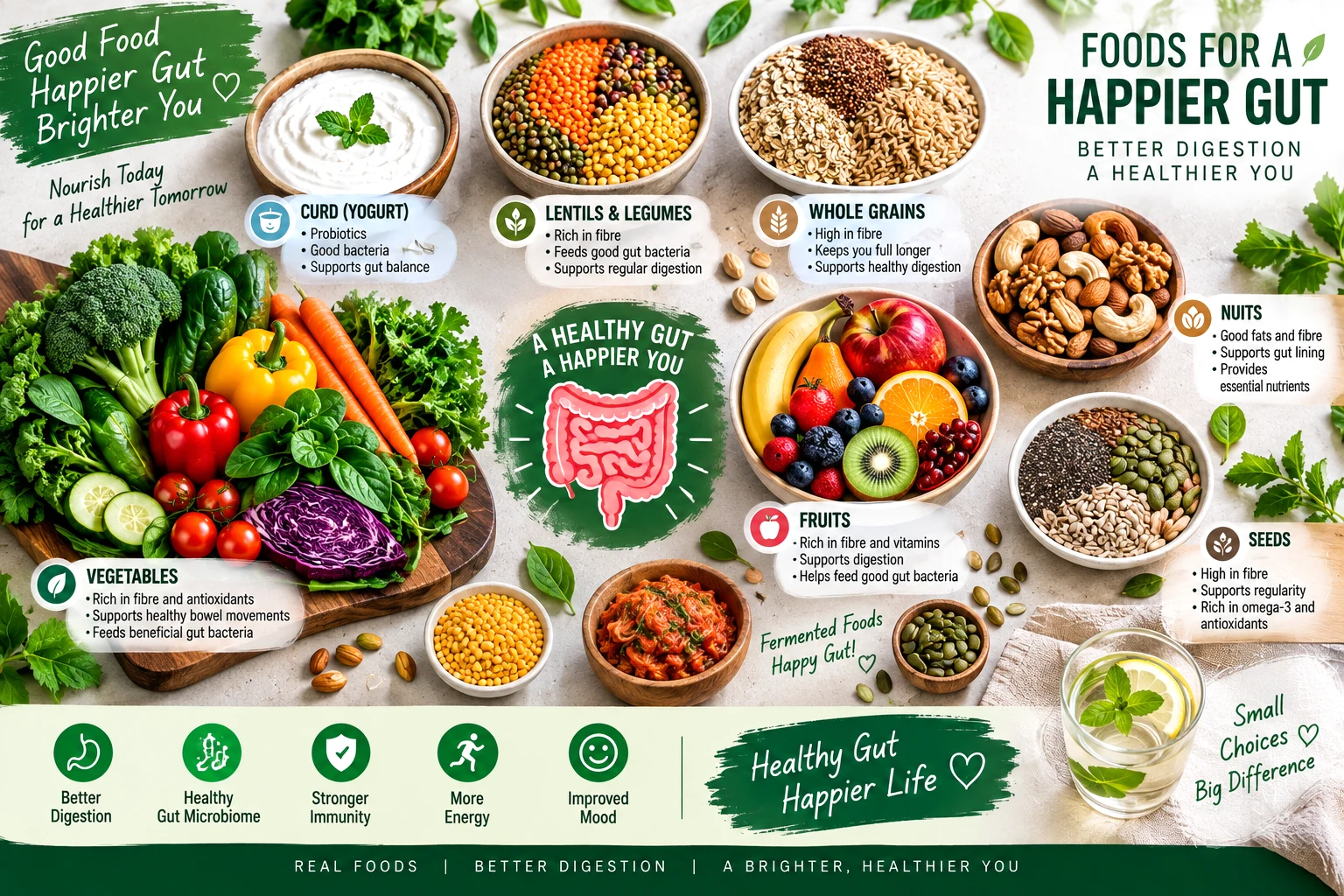
Good digestion is about more than probiotics. Learn how fibre-rich foods, curd, whole grains, fruits, vegetables and adequate fluids can support a healthy digestive system.
Feeling stressed or anxious? Simple habits such as slow breathing, short walks, journaling, better sleep and regular breaks from social media may help. Here are practical ways to manage everyday stress—and signs that it may be time to seek professional support.
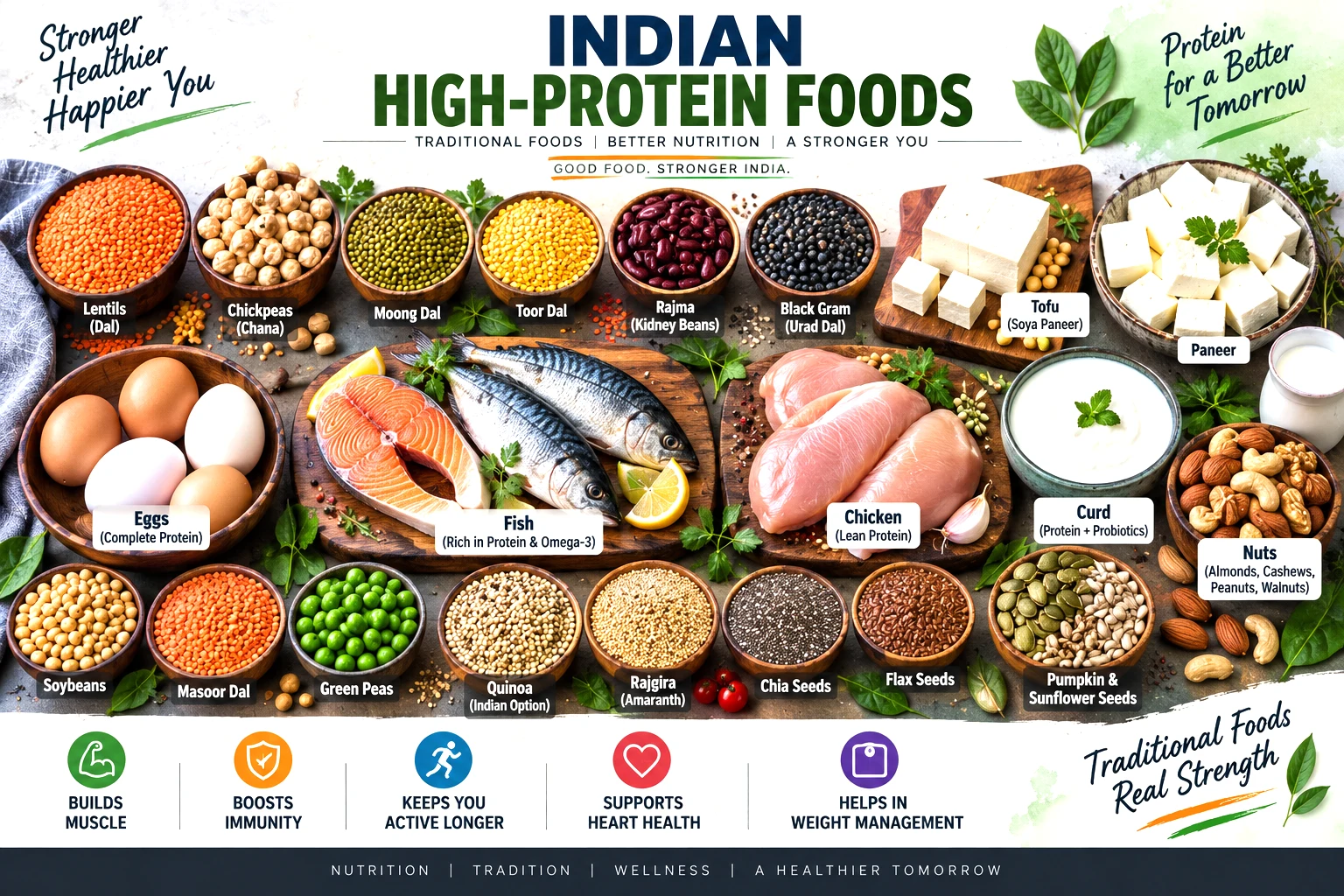
From dal, soy and paneer to eggs, fish and chicken, Indian diets offer plenty of protein options. Here’s how to build balanced meals without depending entirely on supplements.
Iron is found in meat, seafood, lentils, beans, leafy greens, nuts and fortified foods — but absorption differs. Learn how vitamin C can help and why anaemia needs proper diagnosis.
No food can instantly “boost” immunity, but adequate protein, vitamins A, C, D and E, zinc, selenium and other nutrients help normal immune function. Here are practical foods to include.
Starting fitness at home does not require expensive equipment or hour-long workouts. This beginner-friendly guide explains a simple bodyweight routine, a four-week progression plan and practical ways to make exercise a habit you can maintain.








0 Comments