Fiji Declares National HIV Emergency as Cases Surge, With About 1 in 60 Adults Estimated to Be Living With Virus
Fiji recorded 2,016 new HIV diagnoses in 2025, up 27% from the previous year, while UNAIDS estimates around 9,100 people were living with HIV. The government is expanding testing, treatment, PrEP and harm-reduction services as health authorities call for a coordinated national response.
Fiji’s national HIV emergency response and expanded public-health measures
Table of Contents (14 sections)
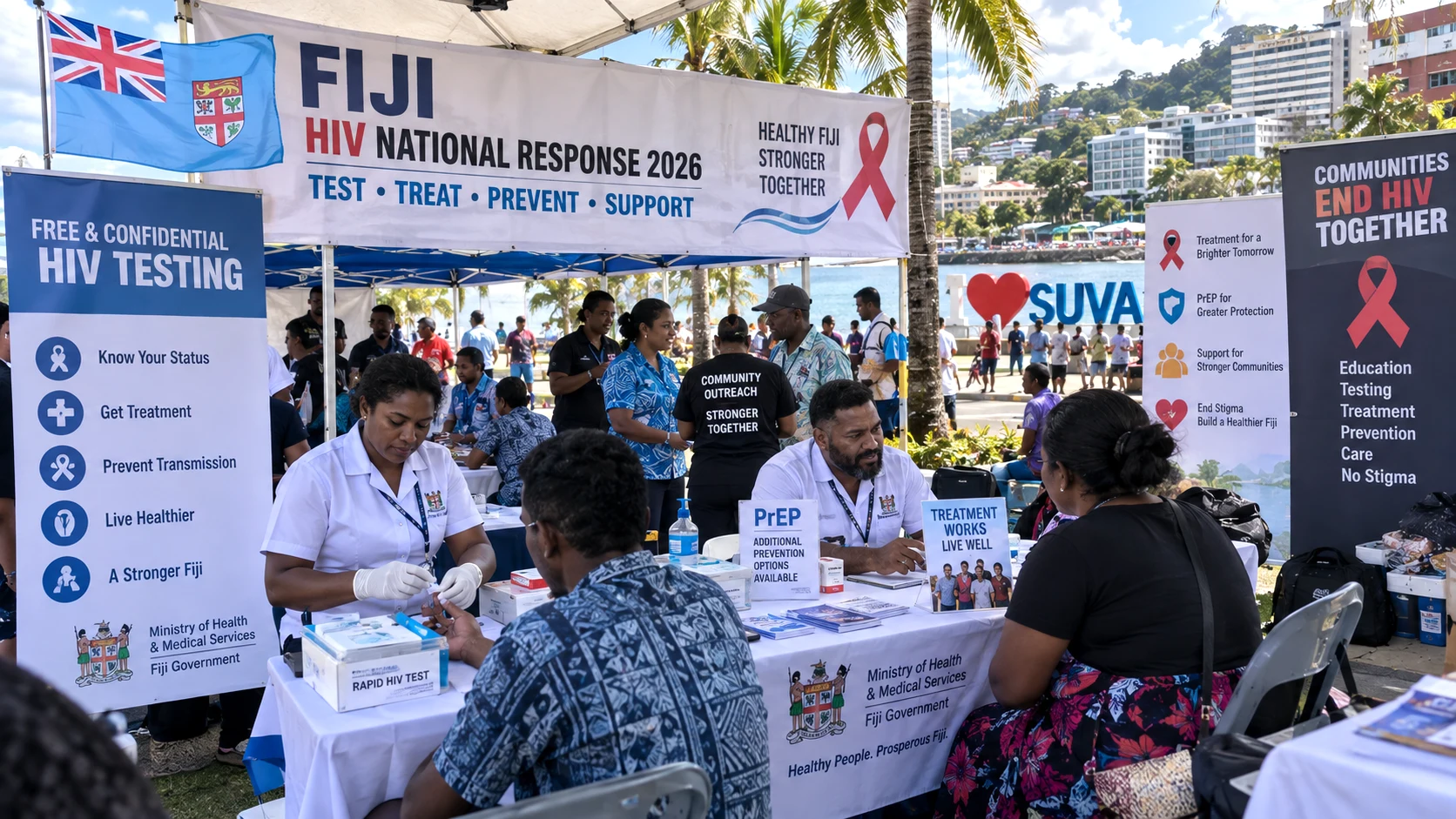
Fiji has declared HIV a national emergency after new data showed a sharp and sustained rise in infections, prompting the Pacific nation to expand testing, treatment and prevention measures across the country.
Health Minister Ratu Atonio Lalabalavu said the scale of the epidemic now required action beyond the outbreak-level response already in place, calling for a coordinated effort involving government agencies, health services, communities and other partners.
An estimated one in every 60 adults in Fiji is now living with HIV, according to government figures. Five years ago, the comparable estimate was about one in 167 adults.
The latest figures place Fiji among countries experiencing some of the fastest growth in new HIV infections globally. UNAIDS estimates that new infections in the country increased twelvefold between 2010 and 2025.
Key Takeaways
Fiji has formally declared HIV a national emergency following a steep rise in infections and diagnoses.
Government figures estimate about one in every 60 adults is living with HIV, compared with roughly one in 167 five years earlier.
Recommended Reading
Related Stories & In-Depth Guides
Curated editorial perspectives matching this topic.
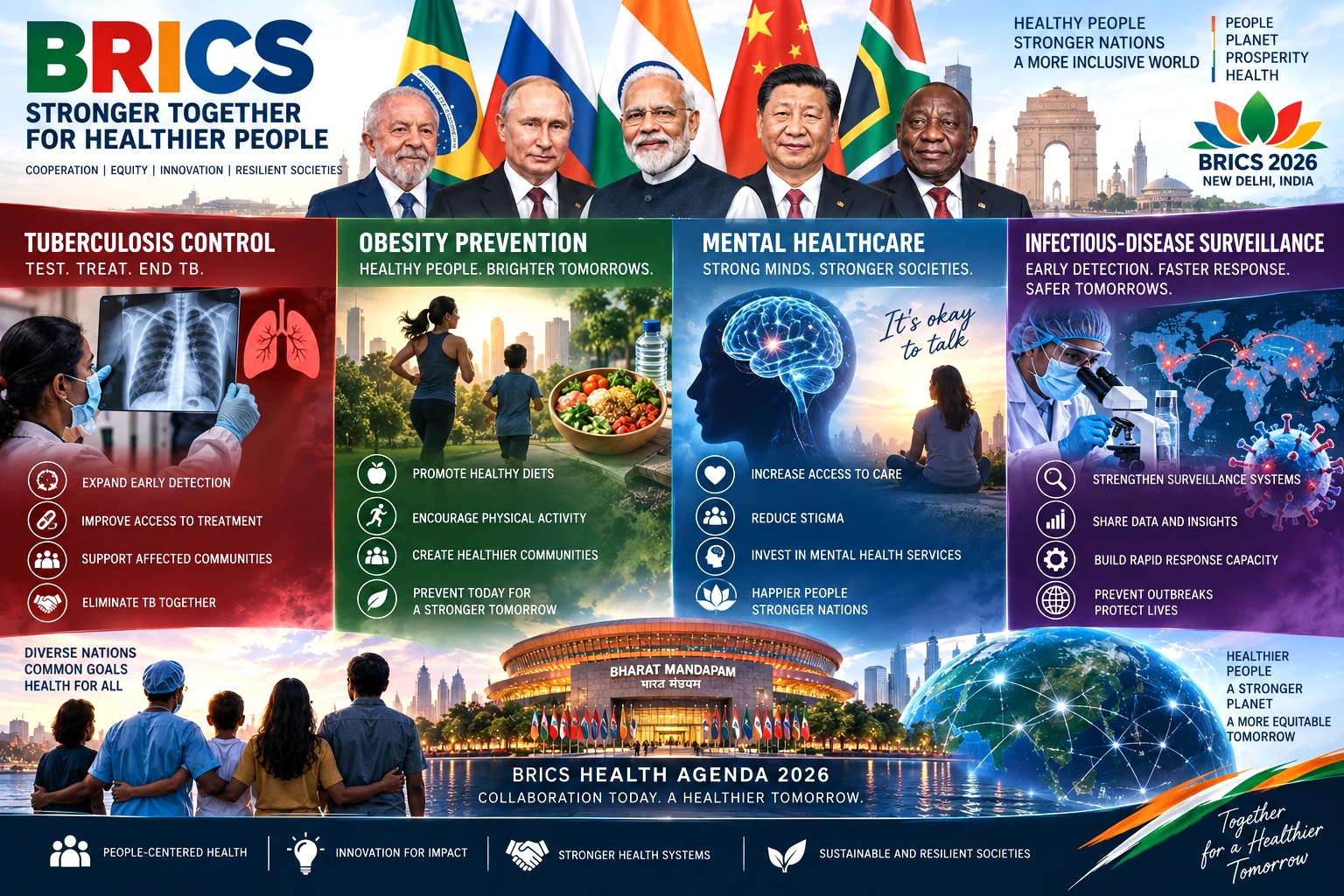
BRICS leaders have backed stronger cooperation on tuberculosis, obesity, mental health and other non-communicable diseases, while also supporting resilient health systems, disease surveillance and wider access to medicines and vaccines.
Learn the common signs and causes of vitamin D deficiency, how the 25(OH)D blood test is interpreted, vitamin D-rich foods available in India, sunlight basics and when supplements or medical advice may be needed.
Fiji recorded 2,016 newly diagnosed HIV cases in 2025, a 27% increase from 1,583 cases in 2024.
UNAIDS estimates around 9,100 people were living with HIV in Fiji in 2025, but only 39% knew their HIV status and about 22% were receiving antiretroviral treatment.
More than half of cases with a known transmission route were linked to sexual transmission, while more than 42% were associated with injecting drug use.
The government plans to expand free confidential testing, PrEP, treatment and needle-and-syringe harm-reduction programmes.
Fiji Recorded More Than 2,000 New HIV Diagnoses in 2025
Fiji's Ministry of Health and Medical Services recorded 2,016 newly diagnosed HIV cases during 2025 — the highest annual total in the country's surveillance data.
That represented a 27% increase from 1,583 diagnoses in 2024. The ministry cautions that the rapid rise reflects both continuing transmission and improvements in HIV testing, case detection and surveillance, meaning an increase in diagnoses cannot be interpreted solely as an identical increase in newly acquired infections.
The ministry's 2025 surveillance summary recorded 5,676 cumulative HIV diagnoses between 1989 and the end of 2025. It also identified a particularly sharp rise from 2022 onwards, including substantial growth in reported cases in Fiji's Central and Eastern areas.
The latest national emergency declaration represents a significant escalation of Fiji's response to those trends.
"We have acted on that evidence," Lalabalavu said while announcing the stronger response, according to Fiji Broadcasting Corporation. He said the Ministry of Health could not address the epidemic alone and that broader government and community participation was required.
About 9,100 People Estimated to Be Living With HIV
The number of people diagnosed in a particular year is different from the estimated total number of people currently living with HIV.
UNAIDS estimated that approximately 9,100 people were living with HIV in Fiji during 2025. Only about 39% were estimated to know their HIV status, while approximately 22% were accessing antiretroviral treatment.
Those figures help explain why authorities are placing greater emphasis on testing.
People who have HIV but do not know their status may not receive treatment and can unknowingly transmit the virus. Earlier diagnosis allows people to begin antiretroviral therapy and receive appropriate medical care.
Modern HIV treatment can allow people living with the virus to lead long and healthy lives, and effective treatment that achieves and maintains an undetectable viral load prevents sexual transmission of HIV.
The immediate challenge for Fiji is therefore not simply identifying more cases, but ensuring that people who test positive remain connected to treatment and continuing care.
Why “One in 60 Adults” Needs Context
The government's estimate that approximately one in every 60 adults is living with HIV illustrates the seriousness of Fiji's epidemic, but it should not be confused with saying that one in 60 people received a new diagnosis in 2025.
It is a prevalence estimate — an estimate of how many adults are living with HIV at a given time.
The figure has worsened considerably from the estimate of around one in 167 adults five years earlier.
Fiji has a population of fewer than one million people, so even numbers that may appear modest compared with those of much larger countries can represent a significant public-health burden.
UNAIDS described Fiji as experiencing one of the sharpest increases in new HIV infections globally and said the situation demonstrated that HIV epidemics can change rapidly when prevention and treatment systems do not keep pace.
Sexual Transmission and Injecting Drug Use Are Major Factors
Fiji's epidemic has several transmission pathways.
According to UNAIDS figures cited in current reporting, more than half of infections for which the transmission route was known were associated with sexual transmission. More than 42% were linked to injecting drug use.
Health authorities have raised particular concern about the sharing of injecting equipment amid increased use of illicit drugs, including methamphetamine.
Shared needles and syringes can transmit HIV because contaminated blood may pass directly from one person's bloodstream to another.
The public-health response is therefore increasingly combining conventional HIV prevention with harm-reduction measures aimed at people who inject drugs.
That approach is intended to reduce transmission rather than punish or stigmatise people seeking health services.
Government Plans Needle-and-Syringe Programme
One of the most significant measures announced as part of the emergency response is the planned expansion of access to sterile needles and syringes.
Fiji intends to introduce a formal needle-and-syringe programme as part of its harm-reduction strategy. UNAIDS has welcomed the move.
Jason Mitchell, chair of Fiji's National HIV Outbreak Response, told ABC that wider availability of sterile injecting equipment was necessary to reduce needle sharing among people who inject drugs.
Needle-and-syringe programmes are designed to reduce transmission of HIV and other blood-borne infections by ensuring that people who inject drugs can obtain sterile equipment.
Fiji's response will also include wider access to HIV prevention medicines.
Testing and PrEP to Be Expanded
The government says it will expand free, voluntary and confidential HIV testing.
It also intends to increase access to pre-exposure prophylaxis, commonly known as PrEP. PrEP is medicine taken by people who do not have HIV but may have a higher likelihood of exposure, substantially reducing the risk of acquiring the virus when used as prescribed.
Treatment services for people diagnosed with HIV are also being expanded, along with systems aimed at ensuring patients remain connected to care.
The government has established a five-minister Cabinet subcommittee to address barriers that have slowed parts of the national response.
Authorities say the response will involve not only medical services but also community organisations, faith groups and traditional institutions.
HIV Among Pregnant Women Raises Further Concern
Government figures also indicate a significant HIV burden among pregnant women.
Authorities estimate that approximately two in every 100 pregnant women in Fiji are living with HIV — equivalent to around one in 50.
Officials reported that 59 babies were born with HIV in 2025 and that 18 died before reaching their first birthday.
These figures have increased concern about mother-to-child transmission and the need for HIV testing and treatment during pregnancy.
Antiretroviral treatment during pregnancy and appropriate care for mothers and infants can sharply reduce the risk of HIV being transmitted from mother to child.
The numbers also underline why Fiji's response is being expanded beyond particular high-risk groups to the wider health system.
Stigma Could Undermine Testing and Treatment
Another major challenge identified by authorities is stigma.
Fear of discrimination can discourage people from getting tested, disclosing their status or remaining in treatment.
Fiji's government has stressed that discrimination against people living with HIV is unlawful and has urged the public to respect their privacy and rights.
Public-health officials are also emphasising that HIV is a treatable chronic infection.
It is not transmitted through ordinary social contact such as shaking hands, sharing meals, hugging or using the same workplace or public facilities.
Reducing misinformation is particularly important during a rapidly developing epidemic because fear can push people away from the services intended to protect them.
UNAIDS Says Fiji's Situation Is a Global Warning
UNAIDS has backed Fiji's decision to intensify its national response.
The UN agency said Fiji's estimated number of new HIV infections increased twelvefold between 2010 and 2025 and described the country's experience as a warning that progress against HIV cannot be taken for granted.
"Fiji has recognized the urgency of the moment and is stepping up its response," UNAIDS Executive Director Winnie Byanyima said.
She added that the situation was a reminder that the global AIDS epidemic was not over and that countries needed health and community systems capable of responding quickly when HIV transmission patterns changed.
The international agency has pledged support for Fiji as the country expands its prevention, testing and treatment programmes.
More Testing Is Finding Previously Undiagnosed Cases
The sharp increase in reported diagnoses needs to be interpreted carefully.
Fiji has substantially expanded HIV testing and surveillance. As more people are tested, health services will identify infections that previously went undiagnosed.
The Ministry of Health explicitly states that recent increases reflect a combination of greater transmission and better case detection.
That does not diminish the seriousness of the epidemic.
Instead, it means reported diagnosis numbers alone cannot tell researchers exactly when every infection occurred.
UNAIDS modelling, prevalence estimates, testing data and transmission information are therefore used alongside confirmed diagnoses to understand the wider epidemic.
Fiji Faces a Long-Term Public-Health Challenge
There is unlikely to be a rapid solution.
Mitchell said controlling the epidemic could take more than five years because of the complexity of reaching affected communities, increasing treatment coverage and reducing transmission.
The national emergency designation is intended to accelerate those efforts.
Immediate priorities include identifying people who are unaware they have HIV, connecting diagnosed patients to treatment, preventing sexual transmission, reducing infections associated with needle sharing and improving prevention during pregnancy.
Longer term, Fiji will need to maintain treatment availability, strengthen surveillance and ensure that people at greater risk can access health services without fear of discrimination.
Bottom Line
Fiji's HIV emergency is supported by a substantial body of official data.
The country recorded 2,016 new HIV diagnoses in 2025, up 27% from 1,583 in 2024.
The government estimates that roughly one in 60 adults is now living with HIV, compared with about one in 167 five years ago. UNAIDS estimates approximately 9,100 people were living with the virus in 2025, while only 39% knew their status and about 22% were accessing antiretroviral treatment.
Sexual transmission remains a major route of infection, while injecting drug use has become an important contributor to the epidemic.
Fiji is responding by expanding confidential testing, antiretroviral treatment, PrEP and harm-reduction services, including a planned needle-and-syringe programme.
The declaration does not mean casual contact with people in Fiji poses an HIV risk. HIV is transmitted through specific exposures involving blood, sexual fluids and certain other body fluids — not through normal everyday contact.
For Fiji's health system, the central challenge is now to find infections earlier, prevent new transmission and ensure that substantially more people living with HIV receive effective treatment.
Key Takeaway
Fiji declares national HIV emergency amid sharp rise in cases.
About 1 in 60 adults estimated to be living with HIV.
2,016 new diagnoses in 2025; treatment coverage remains low.
Government expands testing, PrEP, treatment and harm-reduction services.
The Rajatheertha Team publishes news, explainers, guides and updates across India and the world. Our coverage follows Rajatheertha's editorial, verification and corrections standards.
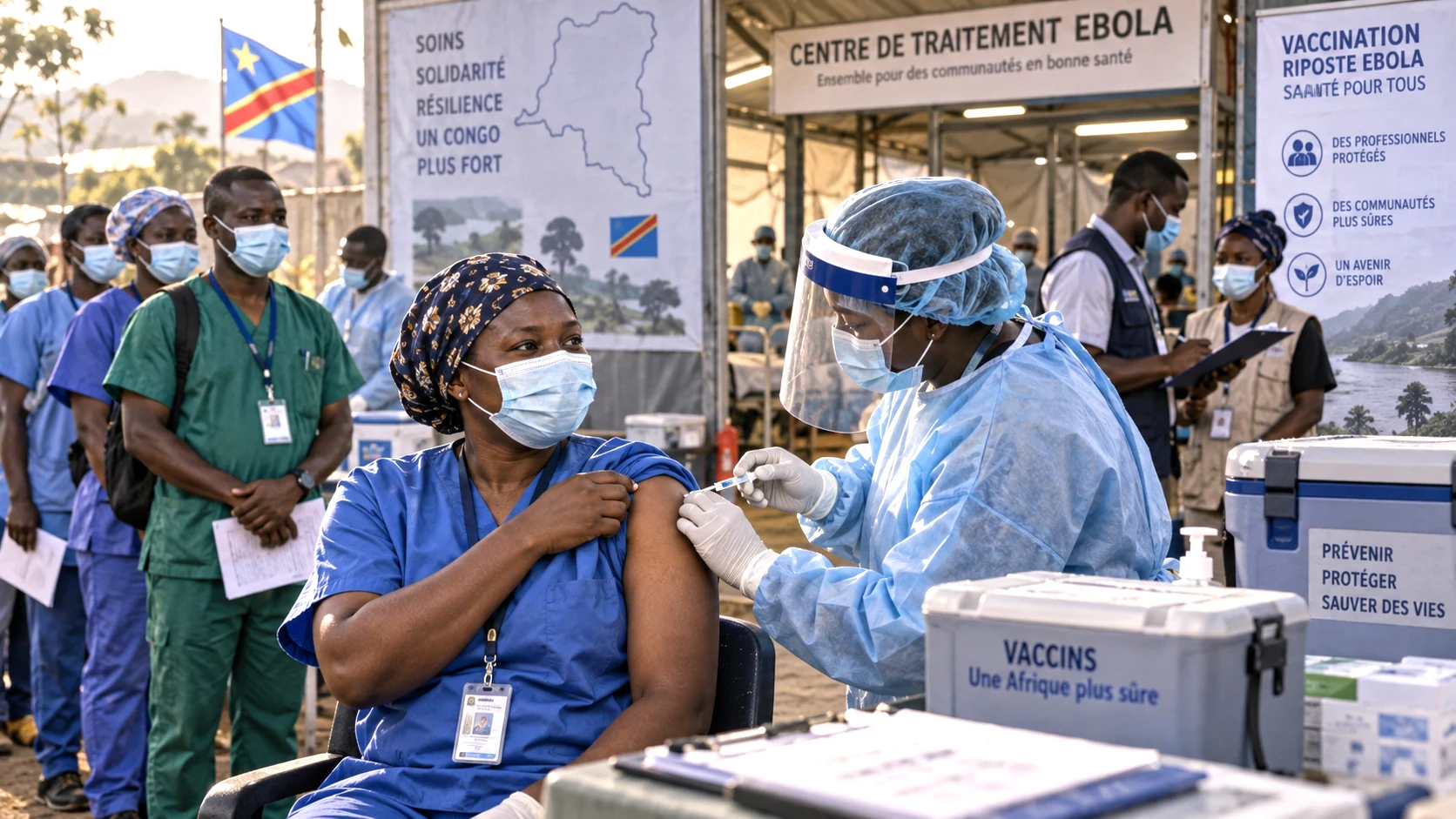
The Democratic Republic of the Congo has expanded Ebola vaccination among frontline health workers as a major study begins in Bunia to test whether the Ervebo vaccine can provide protection against the Bundibugyo virus driving the country’s largest recorded Ebola outbreak. The programme will follow
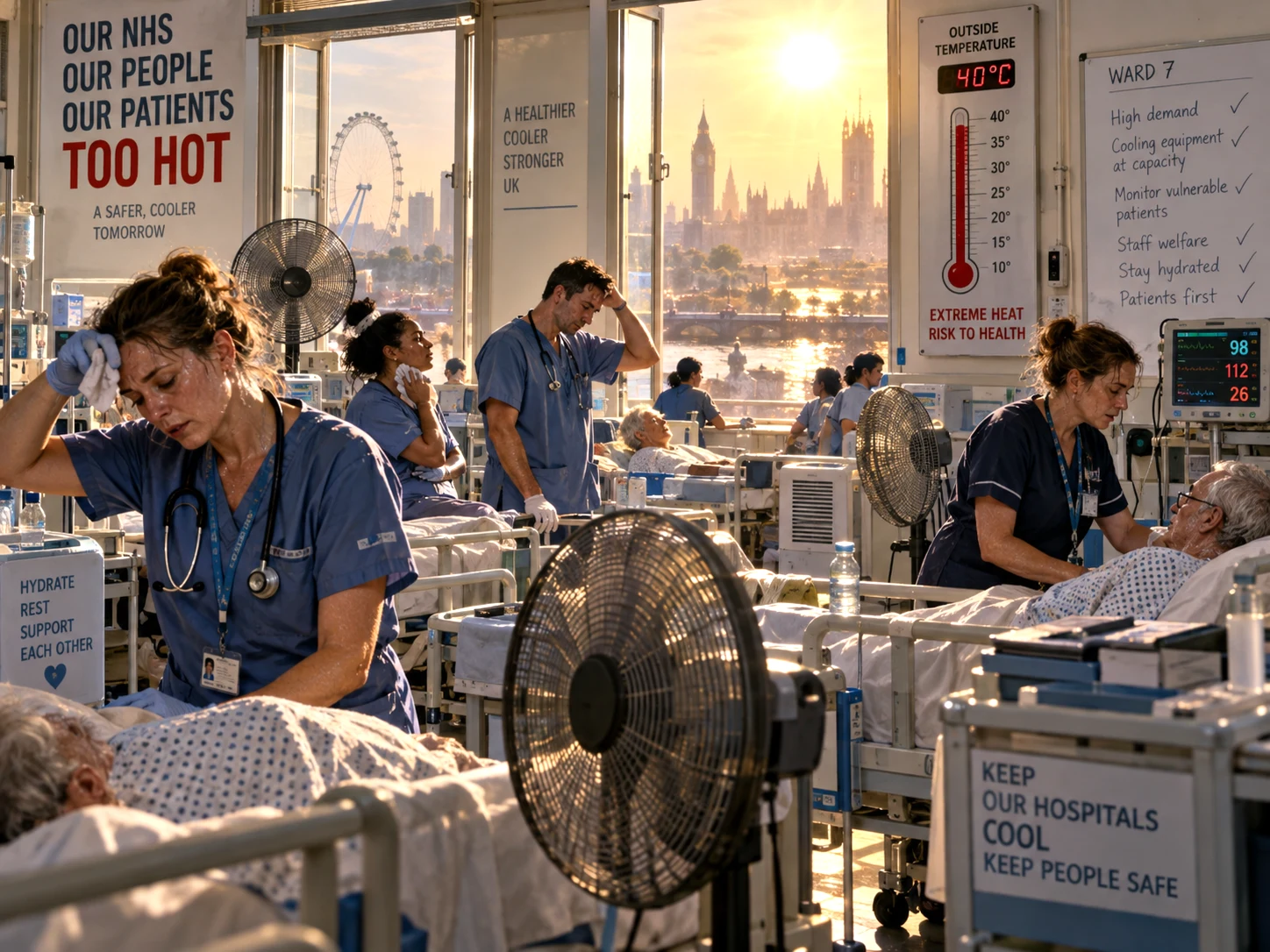
Britain's record-breaking 2026 summer has exposed a growing weakness in its health system: hospitals designed to retain warmth during cold winters are increasingly struggling with extreme summer heat. Patients and medical workers have faced sweltering wards, record emergency-department demand and di
Always feeling tired even after sleeping? Learn common causes of constant fatigue, including poor sleep, anaemia, thyroid problems, diabetes, vitamin deficiencies and sleep apnoea, plus when to get tested or see a doctor.
CDSCO's August 2026 surveillance identified 220 drug samples as Not of Standard Quality—29 through central laboratories and 191 through state laboratories. One spurious sample was also detected in Delhi.
Learn normal cholesterol, LDL, HDL and triglyceride levels, which foods can help lower LDL, practical Indian diet swaps, exercise tips and when cholesterol medicine may be needed.
Feeling stressed or anxious? Simple habits such as slow breathing, short walks, journaling, better sleep and regular breaks from social media may help. Here are practical ways to manage everyday stress—and signs that it may be time to seek professional support.









0 Comments