US 2026 Midterms: Trump’s Mail-In Voting Push Reaches Supreme Court as Battle for Congress Intensifies
The 2026 US midterms have entered a crucial phase as voting begins and Trump’s administration asks the Supreme Court to allow new restrictions affecting mail ballots.
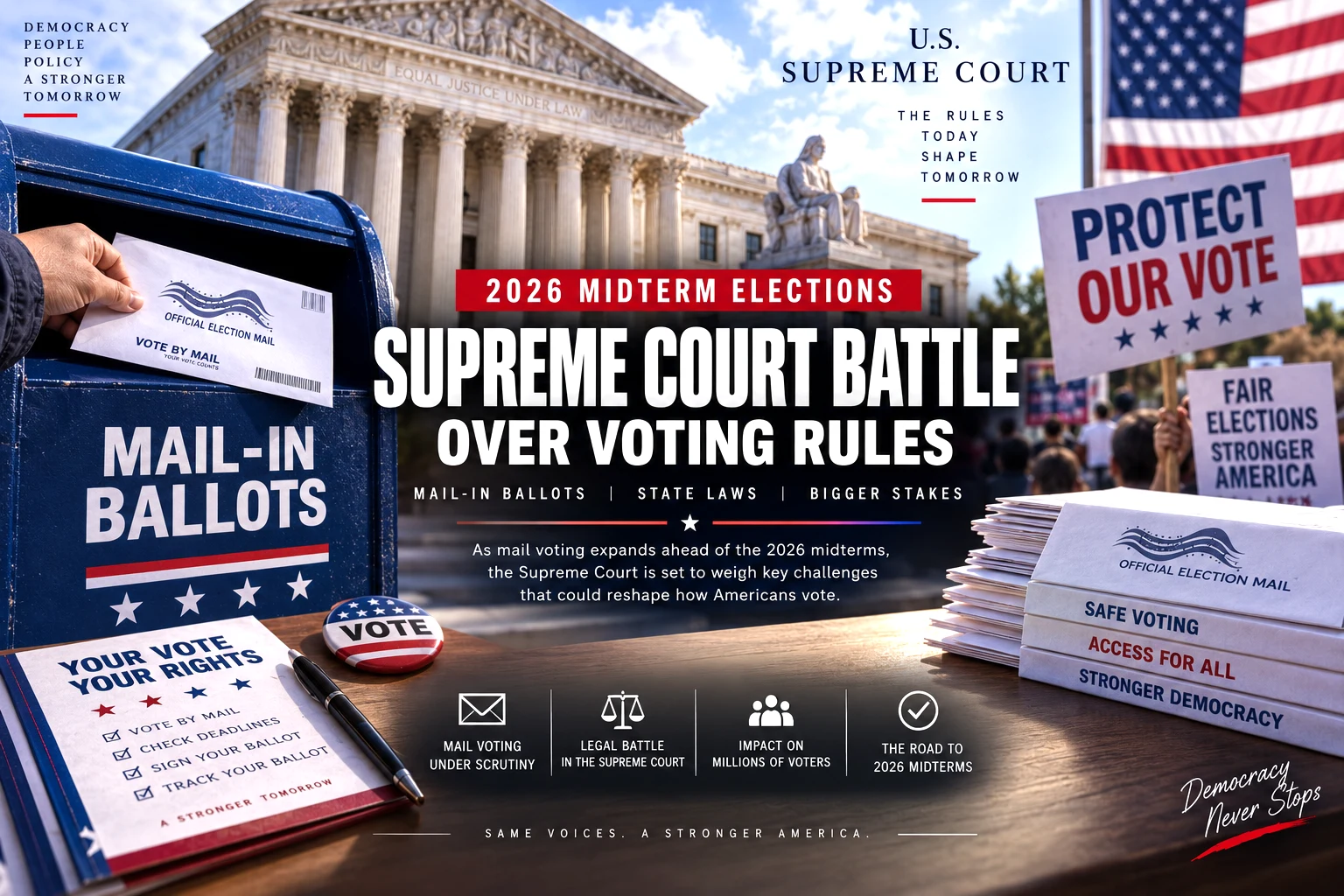
US mail-in ballots and election materials representing the Supreme Court battle over voting rules ahead of the 2026 midterm elections
Table of Contents (27 sections)
Voting in the 2026 United States midterm elections has begun, but a major legal battle over how millions of Americans can receive and return ballots by mail is still unfolding.
North Carolina became the first state to begin broadly sending absentee ballots on 4 September, marking the practical start of voting ahead of Election Day on 3 November 2026.
At almost the same moment, President Donald Trump’s administration returned to the US Supreme Court, seeking emergency permission to implement a new US Postal Service system governing mail ballots.
Recommended Reading
Related Stories & In-Depth Guides
Curated editorial perspectives matching this topic.
Voting has begun in the 2026 US midterm elections as North Carolina sends the first mail ballots, while control of Congress, mail-voting rules and redistricting dominate the campaign.
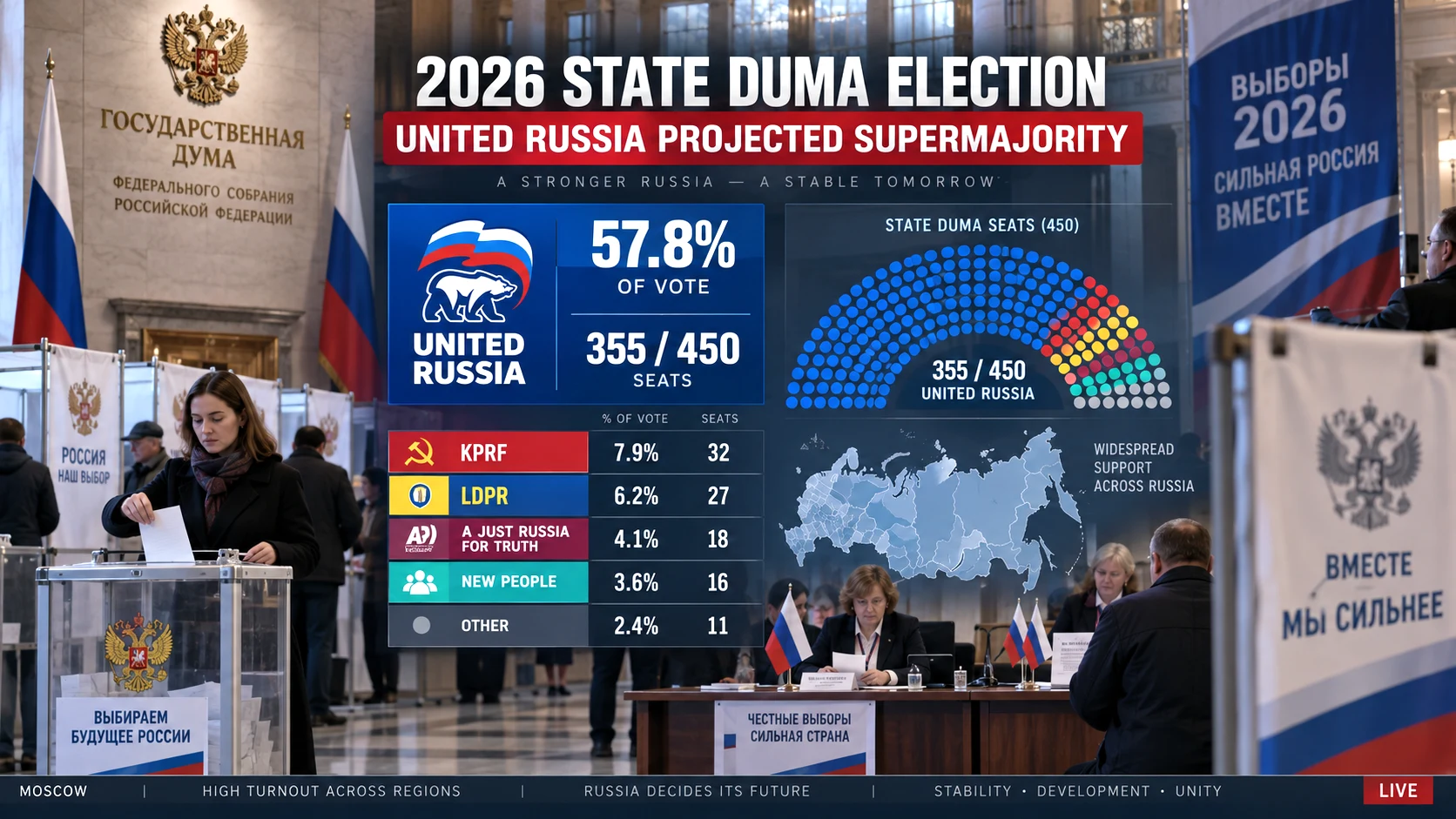
Russia’s ruling United Russia party has secured a decisive victory in the country’s 2026 parliamentary election, according to near-complete official results, putting the Kremlin-aligned party on course for a record 355 seats in the 450-member State Duma. The vote was Russia’s first parliamentary ele
The disputed rules would require states to provide USPS with lists of voters receiving mail ballots and require outbound and return ballot envelopes to carry unique barcodes. USPS could refuse to transmit ballot mail that does not comply with the new standards.
The administration argues that the measures are legitimate safeguards designed to protect the integrity of ballot mail.
Democratic-led states and voting-rights groups challenging the policy argue that the federal government is intruding into state administration of elections and that implementing new requirements after voting has effectively begun could prevent eligible voters from receiving or returning ballots.
The Supreme Court has not yet finally resolved the latest dispute.
And the legal battle is unfolding while control of both chambers of Congress hangs in the balance.
Table of Contents
Voting in the 2026 US midterms has begun
What Americans will decide on November 3
Republicans hold a narrow House majority
Why Democrats have a path to the House
The Senate is a harder contest
What Trump wants to change about mail voting
How the new USPS ballot system would work
Why the rules are being challenged
What the Supreme Court already decided
Why the case returned to the Supreme Court
Another battle over voter citizenship checks
How common is mail voting in America?
Why Trump has targeted mail-in voting
Redistricting could reshape the House result
Key House and Senate battlegrounds
Why the economy could decide the election
What happens next
Key takeaway
Voting in the 2026 US Midterms Has Begun
The November election may still be weeks away, but Americans have already started entering the voting process.
On 4 September, North Carolina’s 100 county boards of elections began sending absentee-by-mail ballots to voters who had requested them.
The North Carolina State Board of Elections said this made the state the first in the country to begin sending absentee ballots for the 2026 general election.
North Carolina allows any registered voter to request an absentee ballot without providing a special reason.
Its in-person early-voting period begins on 15 October and runs through 31 October.
Election Day is Tuesday, 3 November.
That timing is particularly important because the rules governing ballot mail are simultaneously being fought over in federal courts.
What Is America Voting For?
The midterms will determine who controls Congress during the final two years of Trump’s current presidential term.
All 435 seats in the US House of Representatives are on the ballot.
Senate elections are being held in 35 states, with roughly one-third of the 100-member chamber being contested.
Voters will also elect governors, state legislators and numerous other state and local officials.
But nationally, the biggest question is straightforward:
Will Republicans retain control of Congress, or will Democrats capture one or both chambers?
The answer could fundamentally alter the second half of Trump’s term.
Republicans Hold a Very Narrow House Majority
Republicans enter the final campaign period with a fragile House advantage.
Current reporting puts the House at approximately:
Republicans: 218 seats
Democrats: 214 seats
That means Democrats need a net gain of only three seats to take control under the current composition.
All 435 districts will be contested on November 3.
However, only around 50 races are currently considered genuinely competitive.
Those battleground districts will therefore carry disproportionate importance.
Why Winning the House Would Matter
Control of the House is about much more than passing legislation.
The majority party controls committees, committee chairmanships, much of the legislative calendar and significant congressional investigative authority.
If Democrats take the House, they could conduct investigations into the Trump administration and make it more difficult for the White House to advance major legislation without Democratic cooperation.
Republican control of the House would give Trump a much stronger position for the final two years of his presidency.
That makes the 2026 House election a major test of public sentiment towards the administration.
Democrats Currently Have Reasons for Optimism
The political environment currently presents challenges for Republicans.
Recent Reuters/Ipsos polling cited in election analysis puts Trump’s approval rating at a low point, with dissatisfaction over the economy and other major issues weighing on his standing.
Registered voters in that polling preferred Democratic congressional candidates by five percentage points.
Democratic voters have also shown comparatively strong enthusiasm in recent primary and special elections.
History adds another obstacle for the president’s party.
The party holding the White House has lost House seats in all but two midterm elections since 1938.
But none of these factors guarantees a Democratic majority.
Republicans have structural advantages that could substantially reduce the effect of a national swing.
Redistricting Gives Republicans an Important Advantage
One of those advantages is mid-decade redistricting.
Several Republican-controlled states have redrawn congressional boundaries in ways expected to improve Republican prospects.
Reuters estimates that Republicans could gain as many as 10 seats from newly drawn maps.
Democrats have responded with redistricting of their own in states including California.
The result is an unusually complicated House battlefield.
A party could perform well nationally but still struggle to translate its popular-vote advantage into enough individual district victories to control the chamber.
That makes individual House races in states including Arizona, California, Colorado, Florida, Iowa, Michigan, New York, Ohio, Pennsylvania, Texas, Virginia and Wisconsin particularly important.
The Senate Is Harder for Democrats
The Senate presents a different challenge.
Democrats need to gain four Republican-held seats to win control of the 100-member chamber under the current alignment.
Independent analysts currently identify around nine Senate contests as genuinely competitive.
Those include races in:
North Carolina
Michigan
Texas
Alaska
Iowa
Maine
Georgia
Ohio
New Hampshire
The problem for Democrats is geography.
Even if they perform strongly in traditional battleground states, they may still need to win in states Trump carried comfortably in the 2024 presidential election.
That makes control of the Senate considerably less predictable than control of the House.
Trump’s Mail-In Voting Push Becomes a Major Election Battle
Against that political backdrop, the administration is pursuing significant changes to ballot mail.
Trump signed an executive order in March addressing election procedures.
The US Postal Service subsequently adopted a rule imposing new requirements on mail ballots used in federal elections.
The system is based partly around state voter lists and unique Intelligent Mail barcodes.
The Postal Service says the requirements concern the handling and transmission of ballot mail rather than deciding who is legally eligible to vote.
Nevertheless, the rules have triggered a major constitutional and election-administration dispute.
How Would the New USPS System Work?
Under the disputed rules, states would provide USPS with lists identifying people receiving mail ballots.
Outbound ballot envelopes would use unique barcodes.
Return envelopes would also carry unique identifiers.
The Postal Service would then use the information to match ballot mail against the relevant state lists.
Under the rule challenged in court, USPS could refuse to transmit ballots that do not comply with the standards or are associated with voters who do not appear on the supplied lists.
That possibility is at the centre of the controversy.
The administration argues that the requirements improve security and tracking.
Opponents argue that technical errors, outdated records or implementation problems could interfere with legitimate voting.
USPS Says the Rules Do Not Make It an Election Administrator
The Postal Service has separately addressed concerns that the system would give it control over state elections.
In a Federal Register notice, USPS said the rules do not allow it to inspect the contents of ballots, determine voter eligibility or audit state voter rolls.
States remain responsible for deciding who is registered and who qualifies to vote by mail.
USPS describes its role as focusing on external ballot-envelope standards, data reporting and barcode scans.
That distinction is important when describing the dispute.
The controversy is not about postal workers opening ballots or deciding how people voted.
It concerns whether the federal postal system can impose these conditions on the transmission of election mail and what happens when ballots fail to satisfy them.
Why Are States Challenging the Rules?
A coalition of mostly Democratic-governed states, Washington, D.C., and voting-rights organisations challenged the administration’s approach.
They argue, among other things, that states have constitutional authority to administer elections and that the federal government cannot impose the disputed requirements in this manner.
Timing is another major concern.
States began preparing their 2026 ballot systems long before the November election.
Some had already purchased millions of dollars’ worth of ballot envelopes.
Introducing new barcode and data requirements close to voting could require election administrators to redesign materials, change software and retrain staff.
Opponents argue that this creates a risk of legitimate ballots being delayed or rejected.
The administration disputes that assessment and says the new standards are important safeguards.
What Did the Supreme Court Decide in August?
This is one of the most easily misunderstood parts of the story.
On 24 August, the Supreme Court lifted an earlier injunction blocking portions of Trump’s executive order.
The court’s conservative majority concluded that the states had brought their challenge too early in relation to the Postal Service’s implementation of the policy.
The three liberal justices dissented.
But the ruling did not amount to a final Supreme Court judgment that every part of Trump’s mail-voting policy is lawful.
That distinction became important almost immediately.
After USPS adopted its final rule, challengers returned to court.
A Federal Judge Blocked the New USPS Rule
US District Judge Indira Talwani in Boston subsequently blocked implementation of the USPS regulation.
Her initial temporary order prevented the rule from taking effect while the new challenge proceeded.
On 4 September, Talwani extended the prohibition.
That meant the Postal Service could not immediately begin enforcing the disputed requirements just as North Carolina started mailing ballots.
The Trump administration then returned to the Supreme Court.
Trump Administration Renews Supreme Court Request
On Sunday, 6 September, administration lawyers filed a new emergency application asking the Supreme Court to let the USPS rules take effect.
Solicitor General John Sauer argued that leaving the lower court’s injunction in place as states begin distributing ballots risks creating confusion.
Justice Ketanji Brown Jackson set Wednesday as the deadline for responses to the administration’s application.
That means the dispute remains live.
As of this article’s preparation on 8 September, the safest description is:
The Trump administration is asking the Supreme Court for emergency relief that would allow the new USPS mail-ballot rules to take effect, while a lower-court injunction currently blocks them.
A final resolution has not yet been announced.
A Whistleblower Allegation Adds Another Layer
The dispute has also attracted congressional attention.
Democratic Senator Richard Blumenthal said a whistleblower had raised concerns about USPS implementation procedures that could potentially result in large batches of legitimate ballot mail being rejected.
One example described a situation in which a problem matching a single voter in a batch could potentially cause the entire batch to fail.
These are whistleblower allegations, not established findings.
USPS had not responded to Reuters’ request for comment on those specific allegations at the time of its report.
They should therefore not be presented as proof that thousands of ballots will be discarded.
They do, however, add to the questions lawmakers and courts are examining as voting begins.
Another Court Fight Concerns Citizenship Data
Mail ballots are not the administration’s only election-related legal battle.
A federal appeals court has also refused to lift a prohibition on the administration using the Department of Homeland Security’s Systematic Alien Verification for Entitlements, or SAVE, database to check citizenship information on state voter rolls ahead of the election.
The US Court of Appeals for the District of Columbia Circuit ruled 2-1 against the administration on 4 September.
The majority cited legal and privacy concerns, as well as the possibility that inaccurate information could force eligible citizens to prove their citizenship or risk problems with their registrations.
The administration has argued that citizenship verification is necessary to protect election integrity.
The legal disputes demonstrate that the broader fight extends beyond how ballots travel through the mail.
It also concerns voter-registration verification and the respective authority of federal and state governments.
How Common Is Mail-In Voting?
Mail voting is an established component of American elections.
All US states permit some form of voting by mail.
According to Reuters, 29 states allow voters to request a mail ballot without providing a special reason, while eight states conduct their elections entirely by mail.
Nearly one-third of voters used mail ballots during the 2024 election.
That means even technical changes to postal-ballot procedures can potentially affect millions of voters.
But mail-voting rules vary substantially from state to state.
There is no single nationwide system governing every detail of how Americans request, complete and return absentee ballots.
Why Has Trump Targeted Mail Voting?
Trump has criticised mail voting for years.
He has repeatedly argued that widespread postal voting creates opportunities for fraud and has called for major restrictions.
The administration describes its 2026 measures as election-integrity safeguards.
However, Trump’s broader claims that widespread fraud caused his 2020 presidential election defeat were not substantiated by evidence sufficient to overturn that result.
Evidence of voter fraud in US elections is rare.
That does not mean election administrators should ignore security.
The actual political and legal debate is over which safeguards are justified, who has authority to impose them, and whether new restrictions risk preventing legitimate voters from participating.
That distinction is essential for neutral reporting.
Why Mail Voting Could Have Political Consequences
Mail voting has also become politically polarised.
Democratic voters have tended in recent election cycles to use mail ballots at higher rates than Republicans.
Critics of Trump’s policy therefore argue that restrictions could disproportionately affect Democratic voters.
Republicans dispute accusations that the policy is designed to suppress Democratic votes and frame it instead as an election-security measure.
The courts are being asked to resolve legal questions rather than determine which party might benefit politically.
But with control of Congress potentially turning on a handful of closely contested states and districts, even relatively small changes in voting procedures can attract enormous political attention.
The House Could Turn on Only a Few Districts
The extraordinary closeness of the House makes these election-administration disputes even more politically significant.
Democrats need only a small net gain to take the chamber.
Reuters estimates that only around 50 of 435 House races are truly competitive.
Several could be decided by narrow margins.
Battleground districts are spread across states including Arizona, California, Colorado, Florida, Iowa, Michigan, New Jersey, New York, Ohio, Pennsylvania, Texas, Virginia and Wisconsin.
Local factors will matter.
But national questions — including Trump’s approval, affordability, immigration, healthcare, tariffs and foreign policy — will shape many of those contests.
Nine Senate Races Could Decide the Chamber
The Senate map is similarly concentrated.
Current analysis identifies nine especially important races.
North Carolina has an open seat after Republican Senator Thom Tillis decided to retire.
Former Democratic Governor Roy Cooper faces Republican Michael Whatley.
Michigan has a competitive contest between Democrat Abdul El-Sayed and Republican Mike Rogers.
Texas has unexpectedly become competitive between Democrat James Talarico and Republican Ken Paxton.
Alaska, Iowa, Maine, Georgia, Ohio and New Hampshire also feature contests that could affect control of the chamber.
But polls taken two months before Election Day are snapshots, not predictions.
Candidate performance, turnout and late-breaking events can still substantially change individual races.
Economy and Affordability Could Decide the Midterms
Despite the intense focus on election rules, the issue most likely to shape voter behaviour may be much simpler:
the economy.
Current Reuters election analysis identifies affordability as a central concern.
Voters are evaluating the cost of living, inflation, jobs and broader economic conditions.
Trump’s approval rating has also become a problem for Republican candidates in some competitive races.
Midterm elections frequently operate as a referendum on the president.
Republican candidates therefore face the challenge of motivating Trump’s supporters while persuading dissatisfied voters to judge individual congressional races separately from their views of the president.
Democrats, meanwhile, must convert dissatisfaction into actual turnout.
Republicans Still Have Major Advantages
It would be premature to assume the House or Senate has already shifted towards Democrats.
Republicans have important advantages.
Redistricting has improved their position in multiple House districts.
Republican national committees and aligned political groups have significant financial resources.
Trump’s own super PAC reportedly has approximately $400 million available.
The Democratic Party also faces internal ideological divisions between centrist and progressive factions.
The election remains competitive.
What Happens Next?
The most immediate development to watch is the Supreme Court’s response to the administration’s emergency application.
Justice Jackson has asked challengers to respond by Wednesday.
The court could then decide whether the USPS rules can take effect while litigation continues.
Meanwhile, more states will begin distributing absentee ballots.
Campaign advertising will intensify.
Early in-person voting will begin across the country on different schedules.
And polling will continue to change as voters react to economic, domestic and international developments.
Key Takeaway
The 2026 US midterm elections are now underway, with North Carolina becoming the first state to broadly send absentee ballots on September 4.
At the same time, President Trump’s administration is fighting to implement new USPS requirements for mail voting.
Those rules would require states to provide lists of mail-ballot recipients and use uniquely barcoded ballot envelopes, while allowing USPS to refuse to transmit ballot mail that does not comply with the new standards.
The administration says the measures protect election integrity.
Democratic-led states and voting-rights groups argue that they could interfere with state authority and risk legitimate voters’ ballots.
A federal judge has blocked the new rule, and the Trump administration renewed its emergency request to the Supreme Court on September 6.
The Supreme Court has not yet finally resolved the latest dispute.
Politically, the stakes are enormous.
Republicans currently hold narrow majorities in Congress. Democrats need only a small net gain to take the House, while they face a significantly more difficult path to Senate control.
With Election Day scheduled for 3 November 2026, the fight over who controls Congress is now unfolding alongside a potentially consequential legal battle over how Americans vote.
Editorial Update Note: This is a developing legal and political story. The status of the USPS mail-ballot rule could change following further action by the US Supreme Court. Update the article if the court issues an order.
The Rajatheertha Team publishes news, explainers, guides and updates across India and the world. Our coverage follows Rajatheertha's editorial, verification and corrections standards.
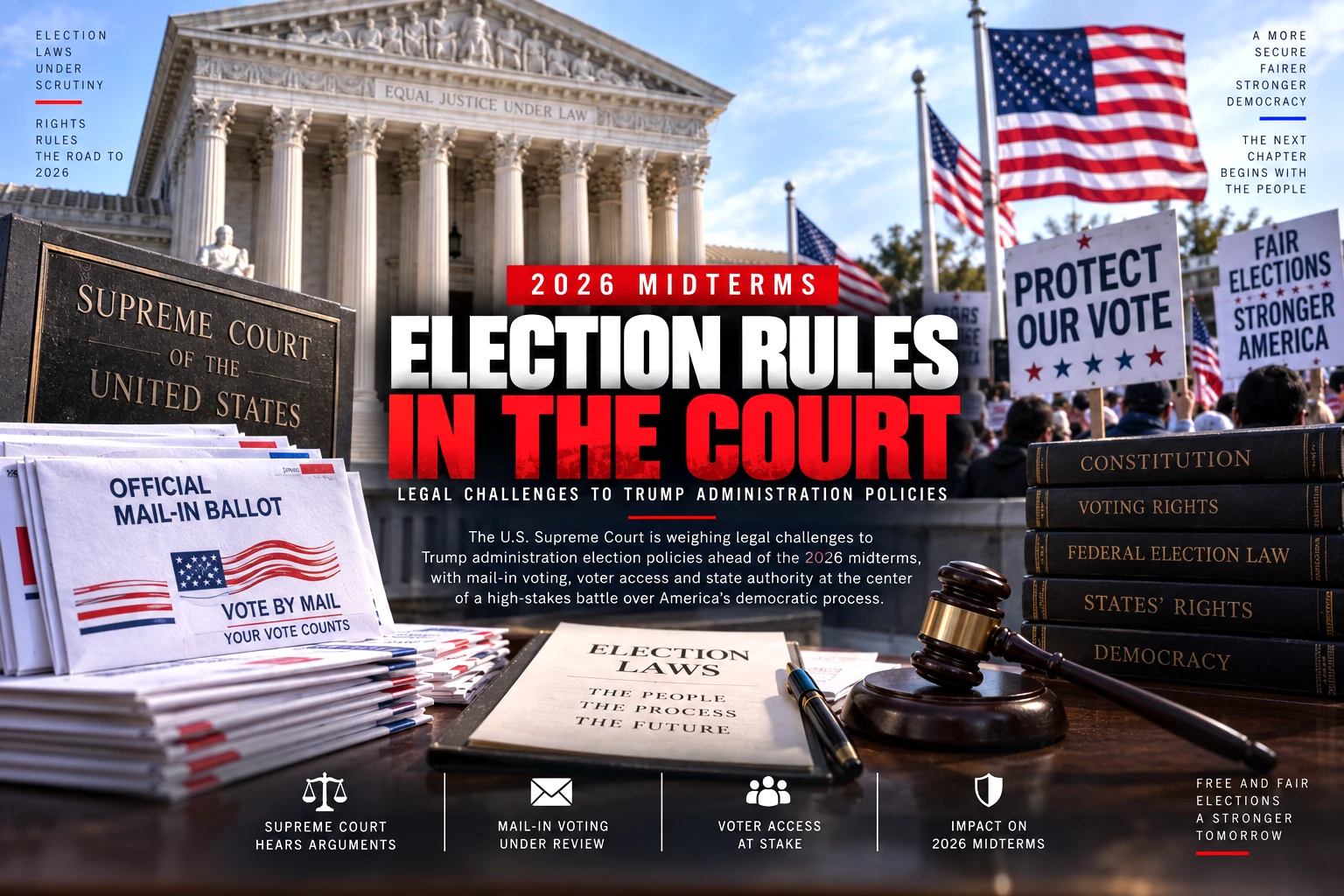
The Trump administration faces multiple legal battles over mail voting, citizenship checks, voter data and election authority as the November 2026 midterms approach.
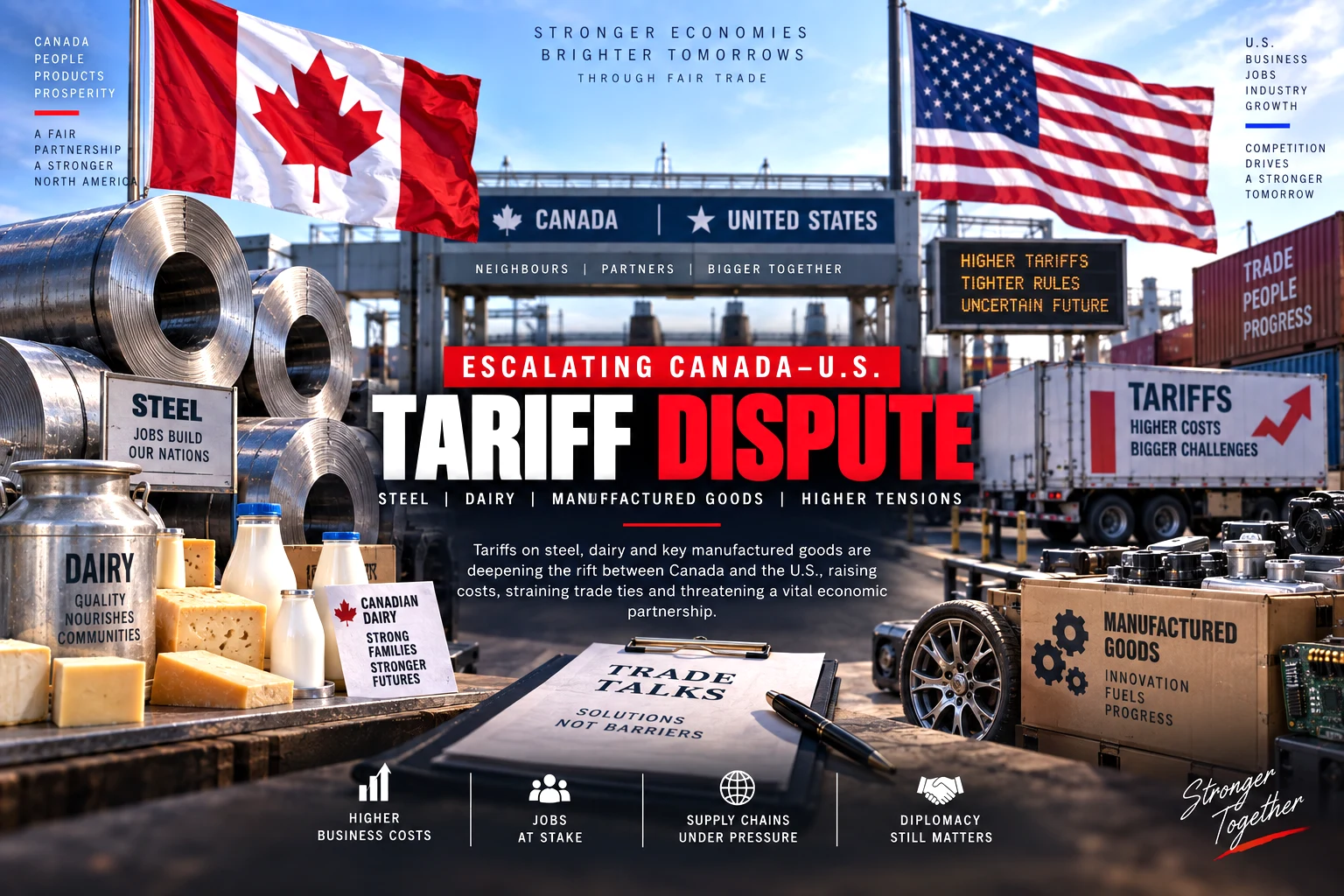
Canada has imposed new retaliatory tariffs of up to 50% on U.S. goods after trade negotiations with the Trump administration collapsed, escalating the Canada-US trade war.
U.S. envoys Steve Witkoff and Jared Kushner have met Vladimir Putin and Volodymyr Zelenskyy in a renewed push for Ukraine peace talks, but major differences remain as Russia resumes ballistic missile attacks on Kyiv.
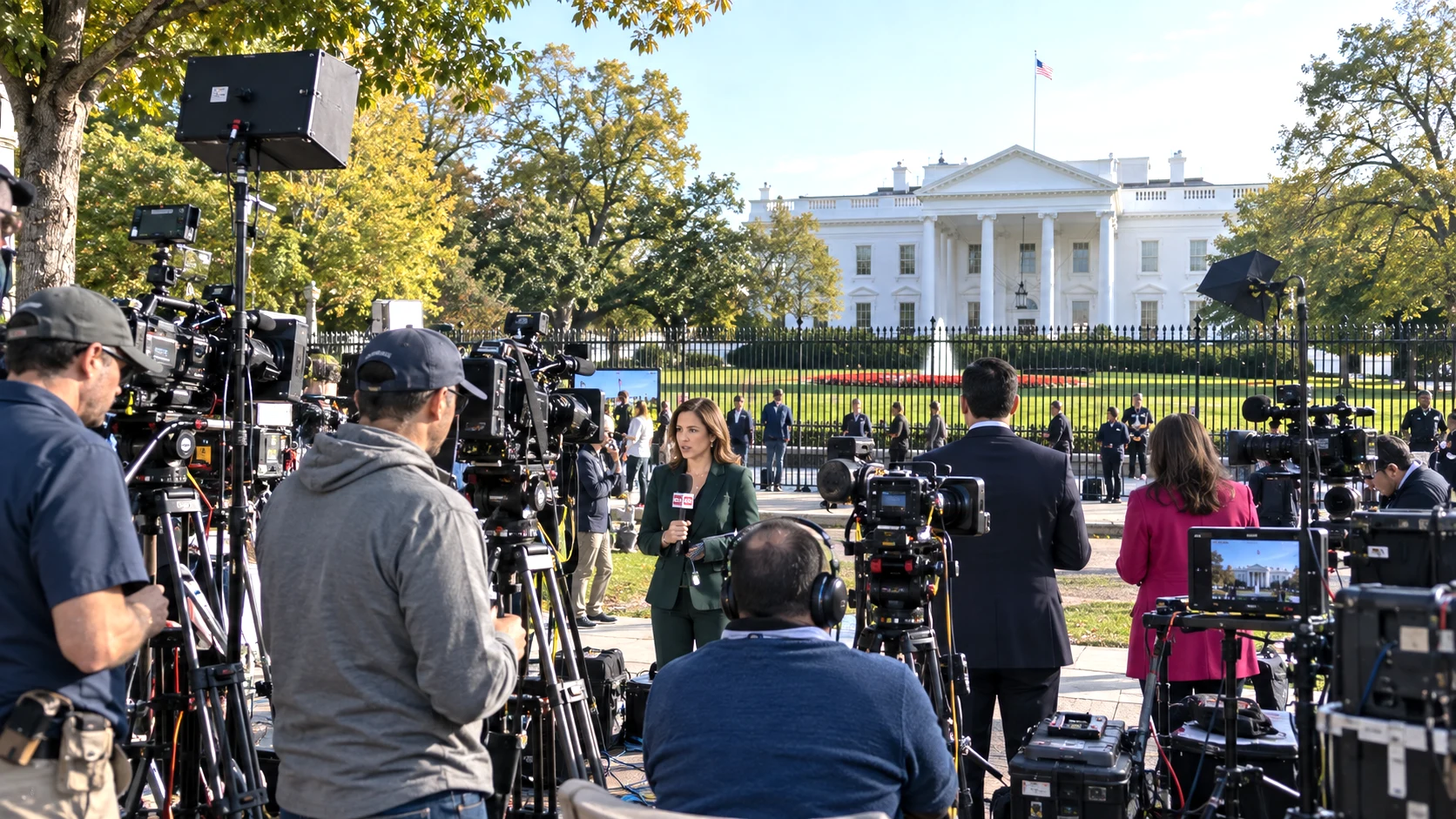
Major US television networks have suspended shared pool coverage of President Donald Trump after CNN was blocked from its scheduled duties, while CNN, MS NOW and Politico have sued over their White House access ban.
The EU has announced a €200 million Greenland partnership covering minerals, energy and connectivity as Trump’s push for US control keeps Arctic sovereignty in focus.
The US-Iran conflict has entered another dangerous phase as strikes on tankers, missile attacks and renewed disruption in the Strait of Hormuz threaten global energy supplies.






0 Comments