10 Years of UPI: From ₹10 Chai to a Global Payments Powerhouse — How Bharat Could Reshape the Way the World Pays
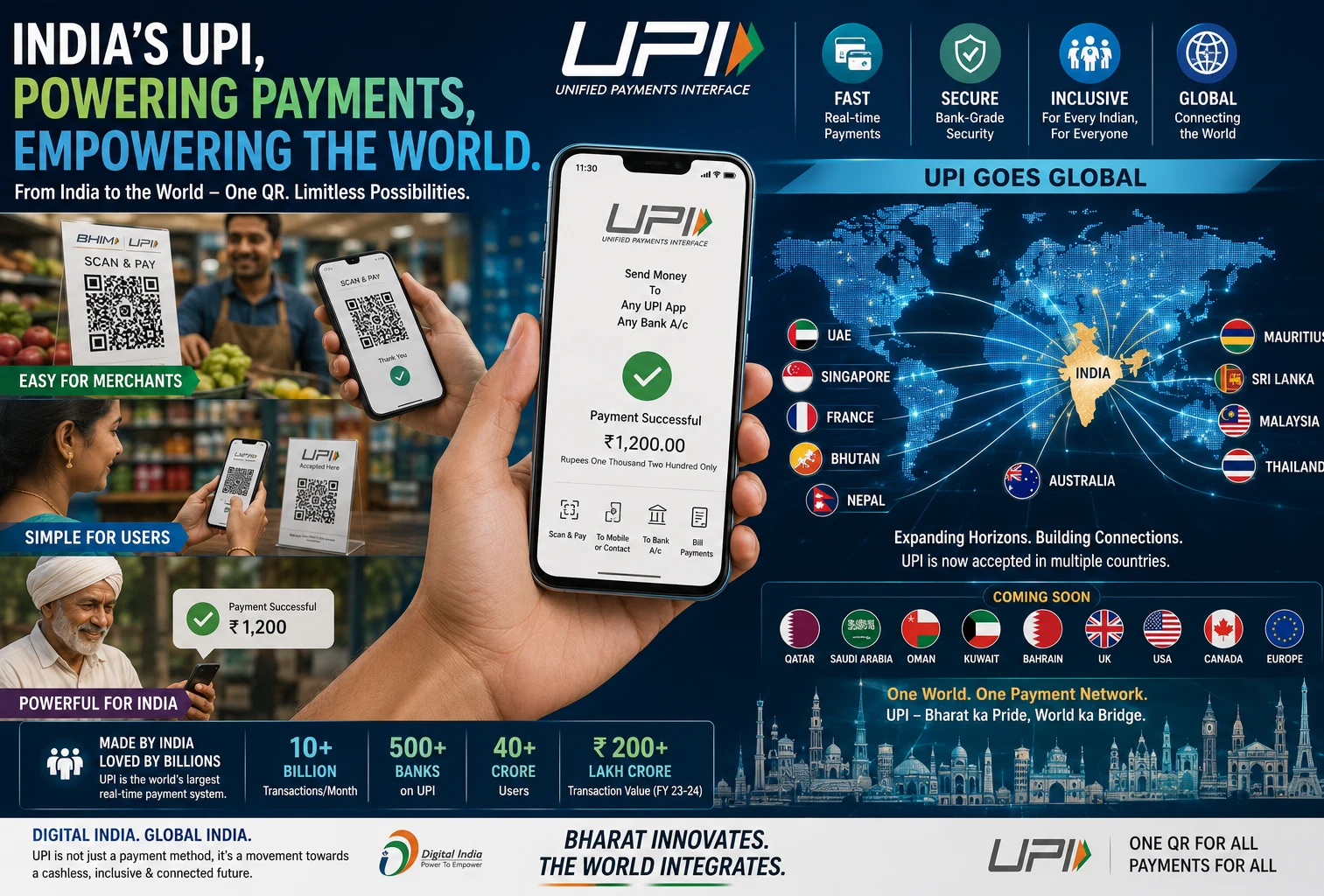
UPI has completed an extraordinary decade — from 1.78 crore annual transactions in its early days to more than 66 crore transactions a day. Now Bharat’s payment revolution is crossing borders, connecting national payment systems and presenting the world with a powerful alternative model for instant
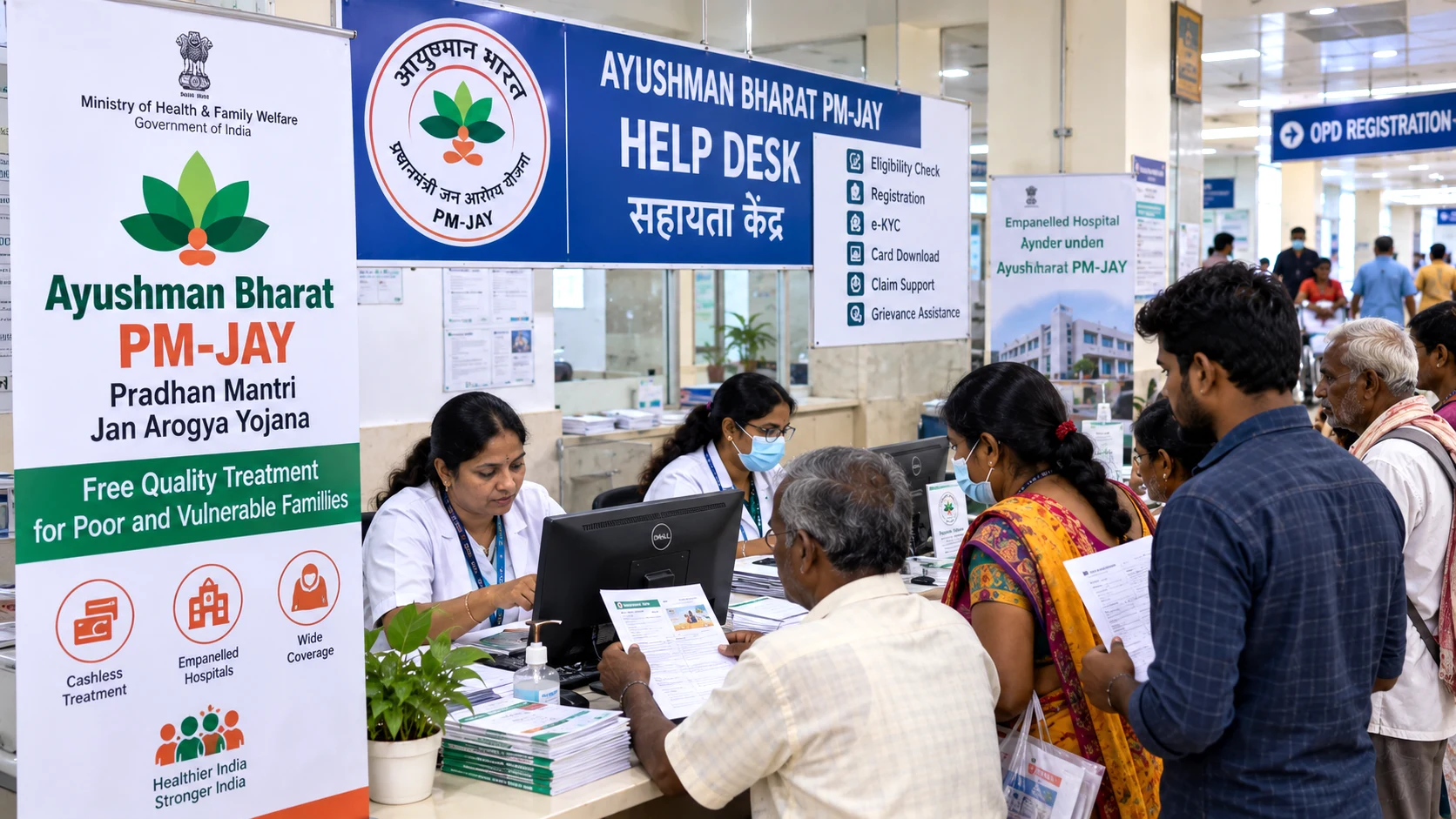
Ayushman Bharat PM-JAY has completed eight years. The government says more than 60 crore people have access to ₹5 lakh annual health cover, while 48.51 crore held Ayushman cards as of September 21. Here are the benefits, eligibility rules and key numbers.
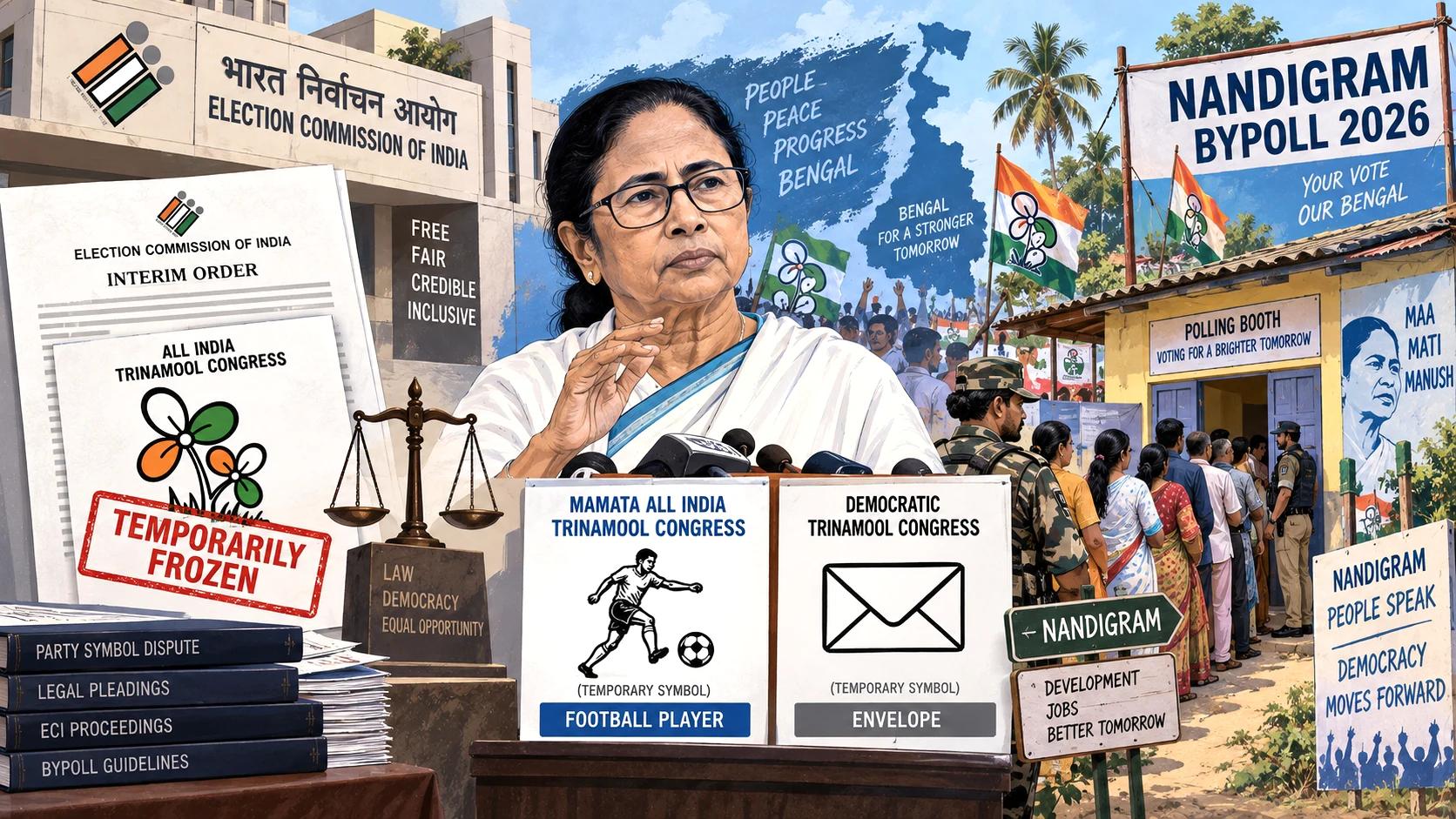
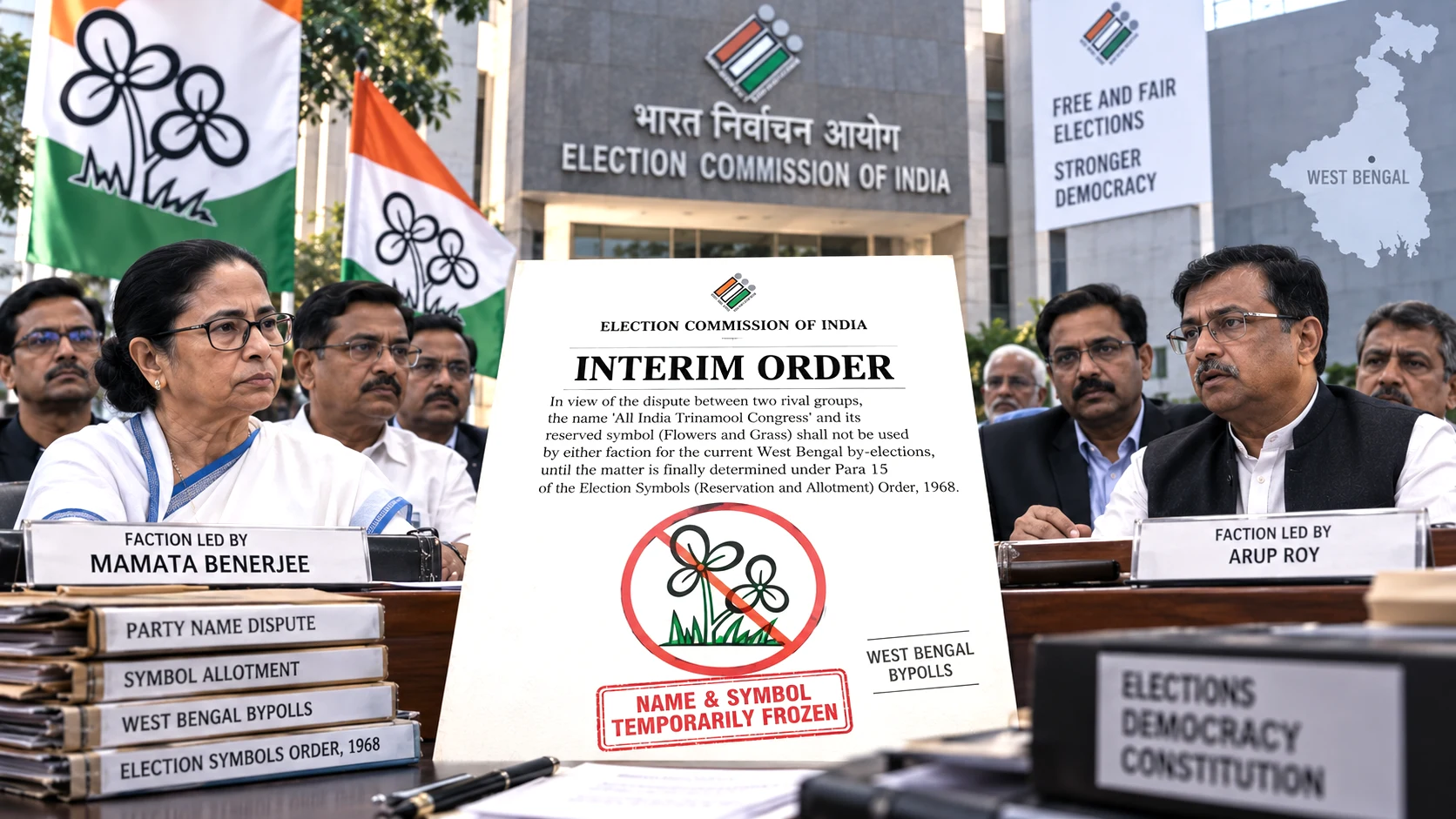
The Election Commission’s interim freeze on the Trinamool Congress name and ‘Flowers and Grass’ symbol has pushed rival factions to temporary identities. Mamata Banerjee has challenged the order in the Supreme Court, while the October 6 Nandigram bypoll has been further complicated by the withdrawal
It changed how street vendors collect payments.
It changed how restaurants, supermarkets, taxis, petrol pumps and online businesses accept money.
And now, after transforming domestic payments, UPI is beginning another journey:
From Bharat to the world.
The Unified Payments Interface has completed ten years.
But this anniversary should not be viewed simply as a celebration of the past.
It should also raise a much bigger question:
Could the next 10 years of UPI change global payments?
The answer may turn out to be one of the most important financial-technology stories of the coming decade.
From 1.78 Crore to 24,162 Crore Transactions
The scale of UPI’s rise is extraordinary.
In its early year, UPI processed only around 1.78 crore transactions annually.
By FY2025-26, that figure had exploded to approximately 24,162 crore transactions.
That’s roughly a 13,000-fold increase.
UPI now processes more than 66 crore transactions every day.
And in July 2026 alone, the system handled:
2,365.8 crore transactions
Worth approximately ₹29.87 lakh crore
The ecosystem now includes 741 live banks.
These aren’t numbers accumulated over ten years.
₹29.87 lakh crore moved through UPI in one month.
That is the scale Bharat has built.
Nearly One in Every Two Real-Time Payments Globally
Perhaps the most powerful statistic comes from UPI’s position in global real-time payments.
Government information citing international research says that UPI accounted for approximately 49% of global real-time payment transaction volume in 2024.
Nearly half.
That deserves to be understood properly.
UPI isn’t simply popular by Indian standards.
It operates at a scale that has made Bharat the world’s dominant market for real-time digital payments by transaction volume.
For decades, the global payments conversation was dominated by financial institutions and payment companies headquartered outside Bharat.
Today, any serious conversation about the future of instant payments has to include a system designed and built in Bharat.
UPI vs Visa and Mastercard: A New Kind of Competition
This is where the story becomes particularly interesting.
For decades, global electronic payments have been closely associated with card networks such as Visa and Mastercard.
You swipe or tap a card.
The transaction moves through a card-payment ecosystem.
Merchants generally pay processing-related fees.
Consumers depend on cards issued through participating banks.
Then Bharat built a different model.
Instead of requiring a card for everyday digital payments, UPI allows money to move directly between participating bank accounts through interoperable applications.
A QR code can become the merchant’s payment acceptance point.
That fundamentally changes the economics and architecture of digital payments.
UPI doesn’t need to become another Visa or Mastercard.
It can compete by being something different:
Instant
Bank-to-bank
Interoperable
Mobile-first
QR-friendly
Built to operate at enormous population scale
UPI Already Processes More Daily Transactions Than Visa
This comparison shows just how large the network has become.
Government information previously highlighted UPI processing more than 640 million transactions daily, putting its daily transaction count ahead of Visa’s reported transaction volume.
UPI has subsequently continued growing and now processes more than 66 crore transactions per day.
However, there is an important technical distinction.
Visa and Mastercard are global card networks operating across many currencies, countries and types of transactions.
UPI is primarily an instant bank-to-bank payment infrastructure whose international expansion is still developing.
So transaction counts aren’t a perfect apples-to-apples comparison.
But the broader conclusion is impossible to ignore:
Bharat has demonstrated that a domestic instant-payment network can reach a scale comparable with — and on some transaction-volume measures exceed — the world’s most famous payment networks.
Ten years ago, that would have sounded extraordinarily ambitious.
Today, it is reality.
The ₹10 Chai Is UPI’s Greatest Advertisement
UPI’s strength isn’t really demonstrated by someone transferring ₹1 lakh.
It is demonstrated by someone transferring ₹10.
Walk to a tea stall.
Order chai.
Scan QR.
₹10.
Paid.
Go to a vegetable vendor.
₹87.
Paid.
Take an auto.
₹163.
Paid.
Buy groceries.
₹1,480.
Paid.
Split dinner among four friends.
Paid.
No cash.
No change.
No card terminal.
No complicated account details.
No waiting to add a beneficiary for an ordinary merchant payment.
This is how infrastructure becomes revolutionary:
When people stop noticing that they are using infrastructure.
A Street Vendor and a Luxury Hotel Can Use the Same Payment Rail
This may be one of UPI’s greatest achievements.
Consider the two extremes.
On one side: A roadside coconut seller.
On the other: A five-star hotel.
Both can display a QR code.
Both can receive a digital payment through the UPI ecosystem.
That is extraordinary financial democratisation.
Traditional digital payment acceptance could require merchant accounts, terminals and other infrastructure.
UPI helped dramatically simplify the experience for millions of small merchants.
A printed QR code became a gateway into Bharat’s digital economy.
UPI Is Not Just an App — And That’s the Secret
People sometimes talk about UPI as though it were another payment application.
It isn’t.
UPI is the underlying interoperable payment infrastructure.
Different banks and payment applications can participate in the ecosystem.
A customer doesn’t necessarily need to use the same app as the merchant.
The customer’s bank doesn’t need to be the merchant’s bank.
The system connects them.
That interoperability is one of the reasons UPI became so powerful.
Instead of forcing every consumer into one closed ecosystem, Bharat created infrastructure on top of which multiple companies and banks could compete.
Bharat Built Infrastructure, Not Just Another Fintech Company
This distinction matters enormously for the rest of the world.
A successful fintech app can create a valuable company.
A successful interoperable payment rail can transform an economy.
UPI belongs to a larger story about Digital Public Infrastructure.
Bharat built foundational digital systems capable of supporting private-sector innovation on top.
That model is increasingly attracting international attention.
And it challenges an old assumption:
That advanced digital financial infrastructure must first emerge from the world’s richest economies.
UPI demonstrates otherwise.
Bharat Is Showing Developed-World Digital Capability at Billion-Person Scale
Bharat still has economic and social challenges.
Every major economy does.
But the simplistic idea that “developing country” means technologically behind the developed world does not survive contact with UPI.
In digital public infrastructure, Bharat has already demonstrated developed-world-class capability at a scale few developed countries have ever had to manage.
More importantly, in real-time payments, Bharat isn’t merely following an international standard.
It is increasingly helping establish the benchmark.
That distinction matters.
The new Bharat story isn’t:
“Can Bharat catch up?”
Increasingly, in areas such as digital payments, the question is:
“Can the rest of the world learn from what Bharat has already built?”
UPI Has Already Left Bharat
The global phase isn’t merely a future dream.
It has already started.
As of August 2026, official Government of India information says UPI is live in 11 foreign countries for UPI acceptance and/or cross-border remittances.
The international footprint includes established UPI connectivity across markets such as:
Bhutan
Nepal
Singapore
United Arab Emirates
France
Sri Lanka
Mauritius
Qatar
Cambodia
Greece
Maldives
UPI’s Global Expansion Has Three Different Layers
When people hear “UPI is available overseas,” they often assume every country has exactly the same integration.
That’s not correct.
UPI’s international expansion can take several forms:
Merchant Acceptance — An Indian traveller uses a supported UPI app to pay a participating foreign merchant.
Cross-Border Remittances — People can send money between Bharat and another country through connected payment infrastructure.
Payment-System Integration — Bharat’s UPI architecture or technology can help another country build or connect its own instant-payment infrastructure.
The third category could ultimately have the greatest global impact.
Because then Bharat isn’t merely exporting a payment method.
Bharat is exporting payment architecture.
The Next Battle Isn’t UPI vs Visa. It’s About the Architecture of Global Payments.
It is tempting to frame the story simply as UPI vs Visa vs Mastercard.
But the real transformation could be much bigger.
Visa and Mastercard built enormously successful global networks connecting banks, merchants and consumers.
UPI demonstrates another model:
Interoperable instant bank payments built around national payment infrastructure.
The next era could therefore contain both systems.
Cards may remain enormously important.
UPI-style instant payments may grow alongside them.
Wallets will continue.
Central-bank and domestic fast-payment systems will expand.
And consumers may simply choose whichever method is cheapest, fastest and easiest.
The competition is therefore not merely between company logos.
It is competition between payment architectures.
And Bharat has created one of the world’s most important new architectures.
What Could UPI Look Like in 2036?
The first ten years were about proving that UPI works.
The next ten years could be about proving that the model travels.
Imagine 2036.
An Indian lands in Europe.
No need to exchange large amounts of currency.
No need to worry whether every merchant accepts a particular Indian-issued card.
Open a UPI-enabled app.
Scan.
Pay.
Done.
Now imagine the reverse.
A European visitor arrives in Bharat.
Their country’s instant-payment application communicates with Bharat’s UPI infrastructure.
Scan.
Pay.
Done.
Different countries.
Different currencies.
Different banks.
But interoperable payment rails underneath.
UPI’s First 10 Years Changed Bharat. Its Next 10 Could Help Change the World.
From 1.78 crore annual transactions to 24,162 crore.
From a new payment experiment to more than 66 crore transactions every day.
From domestic QR codes to international acceptance.
From merchant payments to cross-border remittances.
From bilateral links to emerging multilateral payment connectivity.
And from following global payment models to creating one of its own.
That is what ten years of UPI represents.
But Bharat should not treat this anniversary as the finish line.
It is the starting point for the next chapter.
The next ten years should be about:
Global interoperability
Cross-border instant payments
Cheaper remittances
International merchant acceptance
Connected national payment systems
Stronger financial inclusion
More competition in global payments
Bharat becoming one of the architects of the world’s digital financial infrastructure
Ten years ago, Bharat asked:
Can instant digital payments work for more than a billion people?
Bharat answered that question.
Now comes the bigger one:
Can technology built for Bharat help redefine how the world moves money?
The journey has already begun.
UPI @ 10 is not merely the story of how Bharat learned to pay digitally.
It is the story of how Bharat earned a seat at the table where the future of global payments is being designed.
The Rajatheertha Team publishes news, explainers, guides and updates across India and the world. Our coverage follows Rajatheertha's editorial, verification and corrections standards.
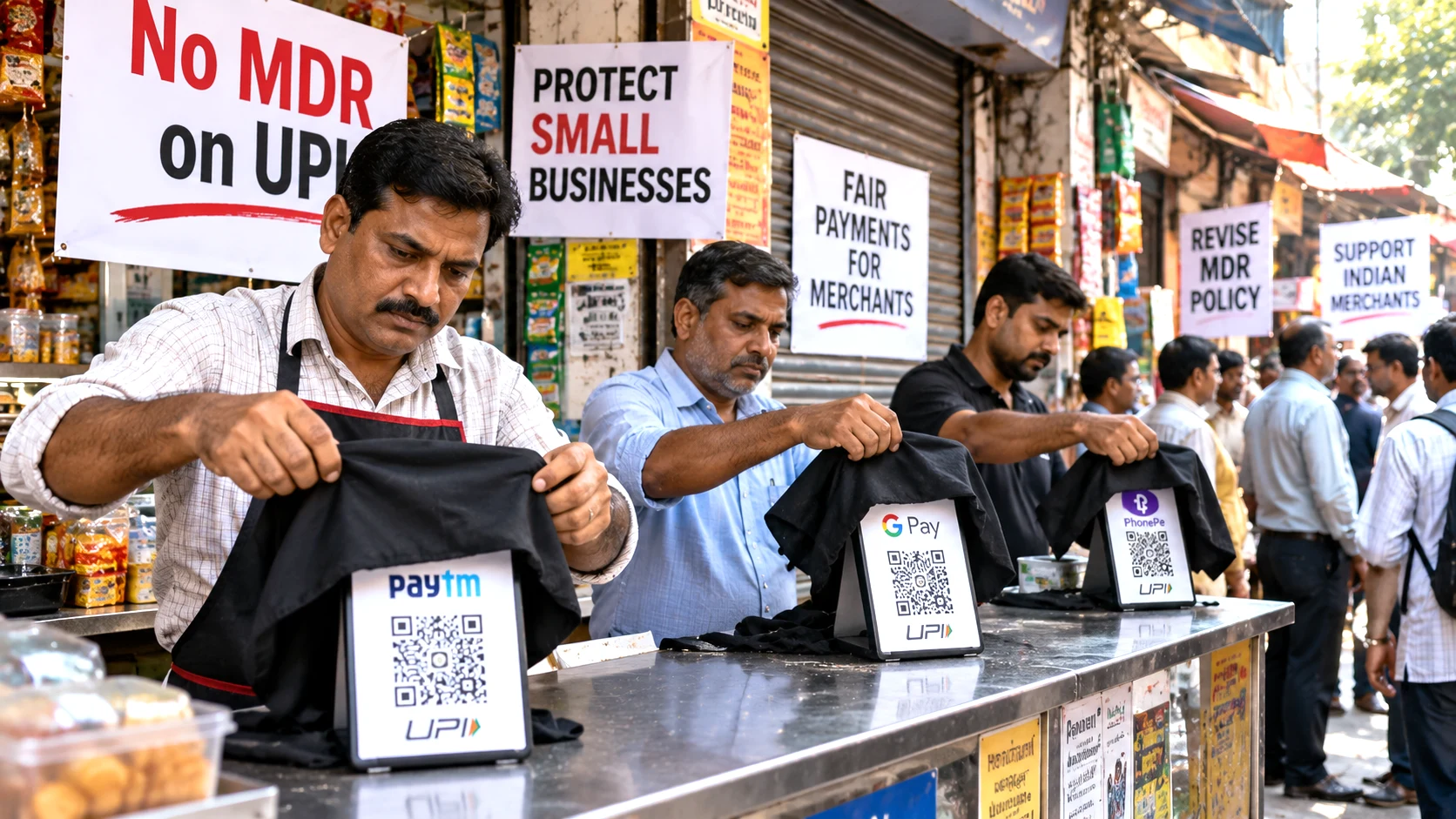
Several trader associations have called for a voluntary “No UPI Day” on October 2 against the new MDR on some merchant UPI payments above ₹2,000. UPI itself will not shut down, customers will not pay the MDR, and most transactions remain free.
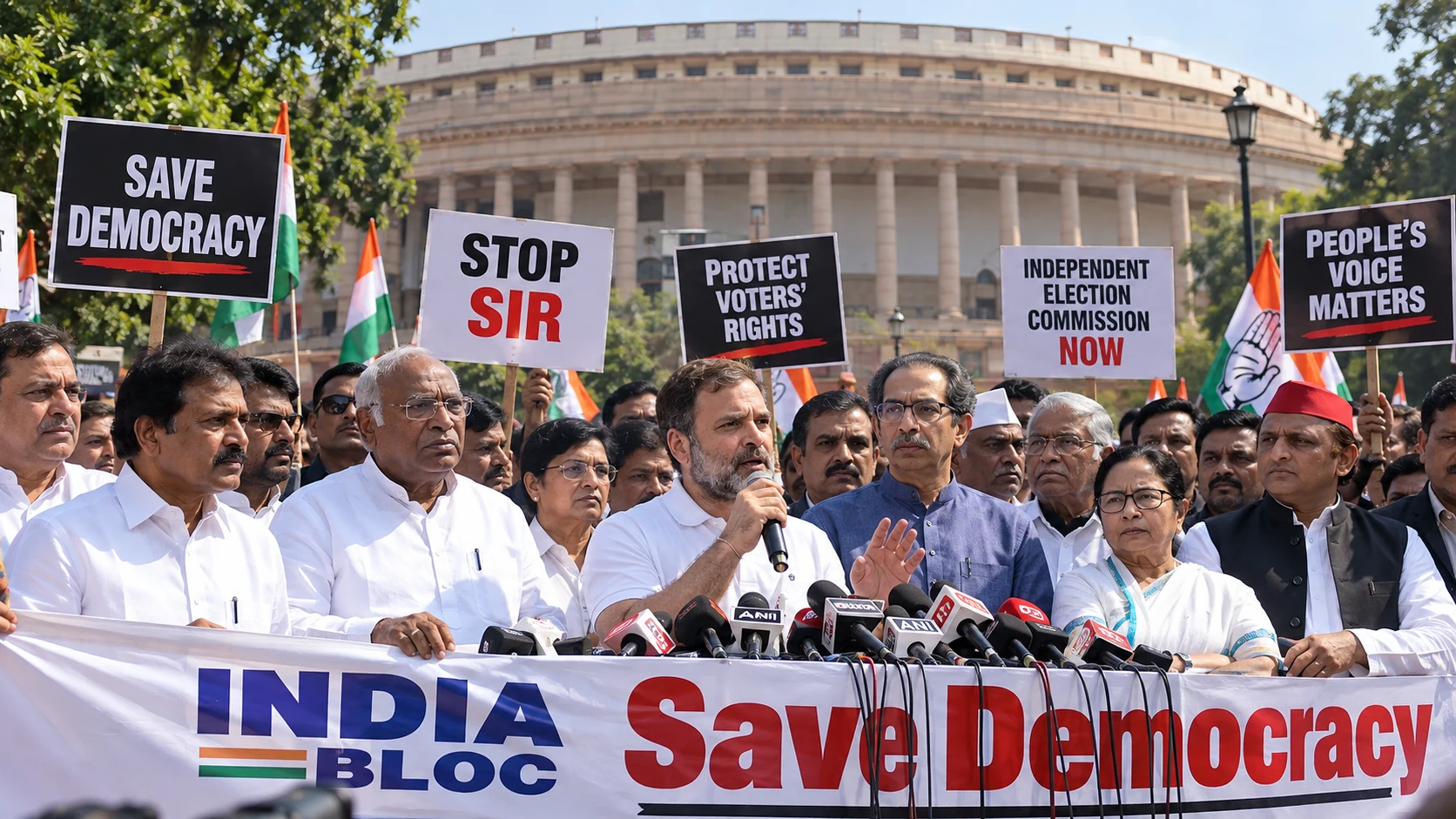
The INDIA bloc has announced nationwide “Save Democracy” marches from Oct. 2–8 over the Election Commission and SIR controversy, with MPs planning an Oct. 6 march to the EC. The BJP has rejected the allegations as political frustration after electoral defeats.
Neither the Mamata Banerjee group nor the rival faction formally represented before the Election Commission by Arup Roy can use the All India Trinamool Congress name or its reserved symbol in the October 6 bypolls. The order is temporary while the ECI decides the larger party-control dispute under P
India/ Politics | Election Commission | Supreme Court10 min read
The Supreme Court has listed Rahul Gandhi and other INDIA bloc leaders’ petition over the Election Commission’s Special Intensive Revision of electoral rolls. The plea seeks disclosure of ECI records, an independent audit of voter deletions, safeguards against removal without notice and an interim s
Seriously wounded inside the cockpit of flydubai Flight FZ1073, Captain Smit Machchhar realised the aircraft was descending and forced himself towards the door release. That decision allowed others to enter the cockpit and intervene. Now the Mumbai-born pilot’s actions are drawing recognition from t
Which is the busiest railway station in India? Railway Board FY 2023–24 data puts Thane at No. 1 with 9.30 crore originating passengers. See the top 10 ranking, where New Delhi, Howrah, CSMT, Sealdah and Chennai Central stand, and what “busiest” actually means.




0 Comments