Iran Says IRGC Struck Togo-Flagged Tanker Trend in Strait of Hormuz; Independent Verification Pending
Iran’s Revolutionary Guards Navy says the Togo-flagged oil-products tanker caught fire and stopped after attempting what Tehran called an “illegal passage” on September 17. No independent confirmation of the strike, casualties or cargo damage was immediately available as shipping through the strateg
a maritime security incident involving a tanker in the Strait of Hormuz amid ongoing regional tensions
Table of Contents (17 sections)
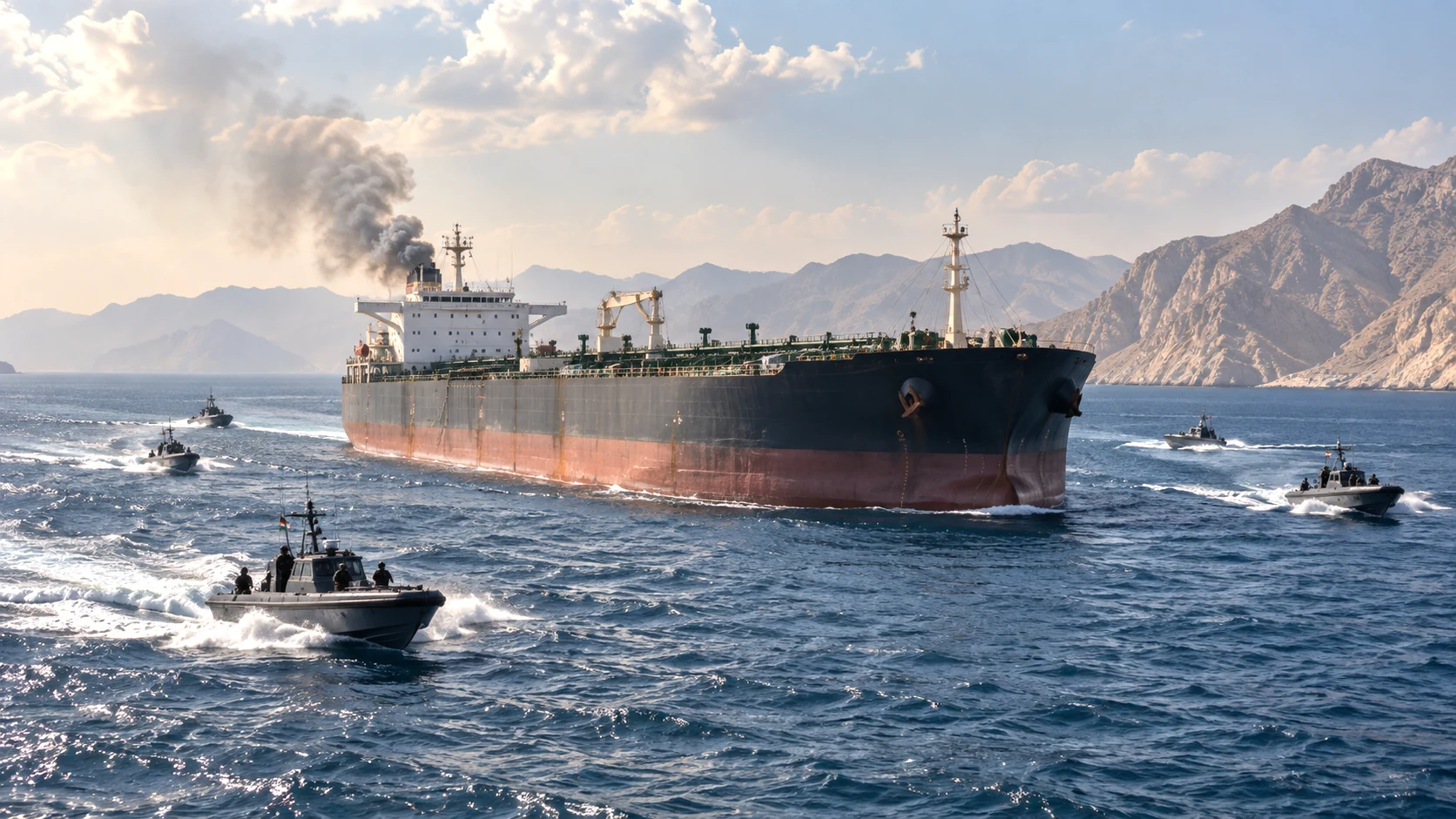
Iran’s Islamic Revolutionary Guard Corps Navy says it struck a Togo-flagged oil tanker in the Strait of Hormuz, adding another dangerous maritime incident to a conflict that has disrupted one of the world’s most important energy routes.
The tanker was identified by Iranian authorities as the Trend.
In a statement carried by Iranian state media early on Friday, September 18, IRGC Navy commander Rear Admiral Ali Ozmaei said the vessel had attempted what Iran described as an “illegal passage” through the strait during the previous night.
According to the Iranian account, the tanker was hit and stopped after a fire broke out aboard the vessel.
However, the central fact requires an important qualification: the reported strike had not been independently verified at the time of publication.
The Associated Press said it could not immediately confirm Iran’s account. Iran had also not publicly provided verified information about the crew, cargo, casualties, exact location of the strike or the tanker’s condition beyond saying that it had stopped after catching fire.
Recommended Reading
Related Stories & In-Depth Guides
Curated editorial perspectives matching this topic.
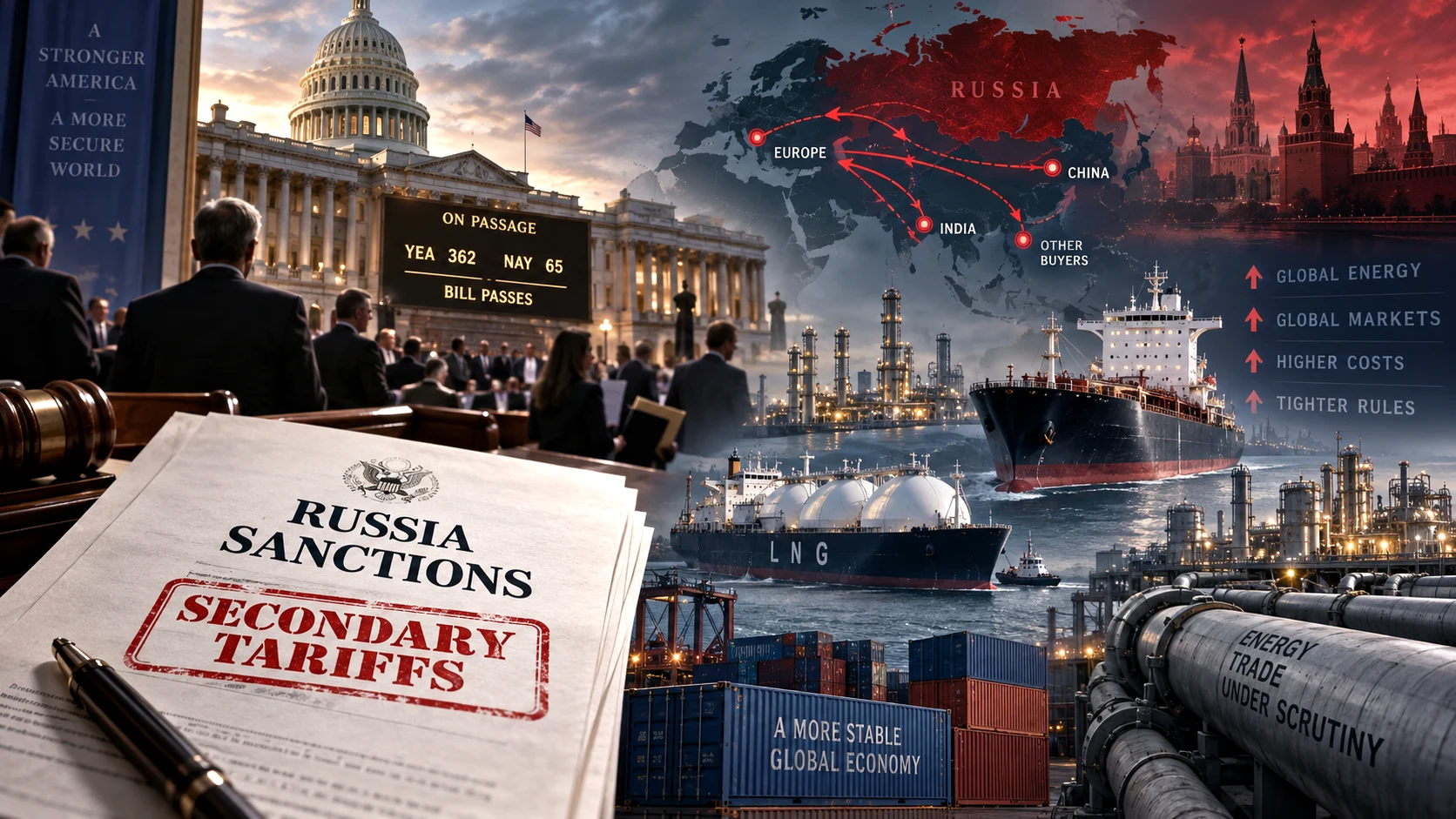
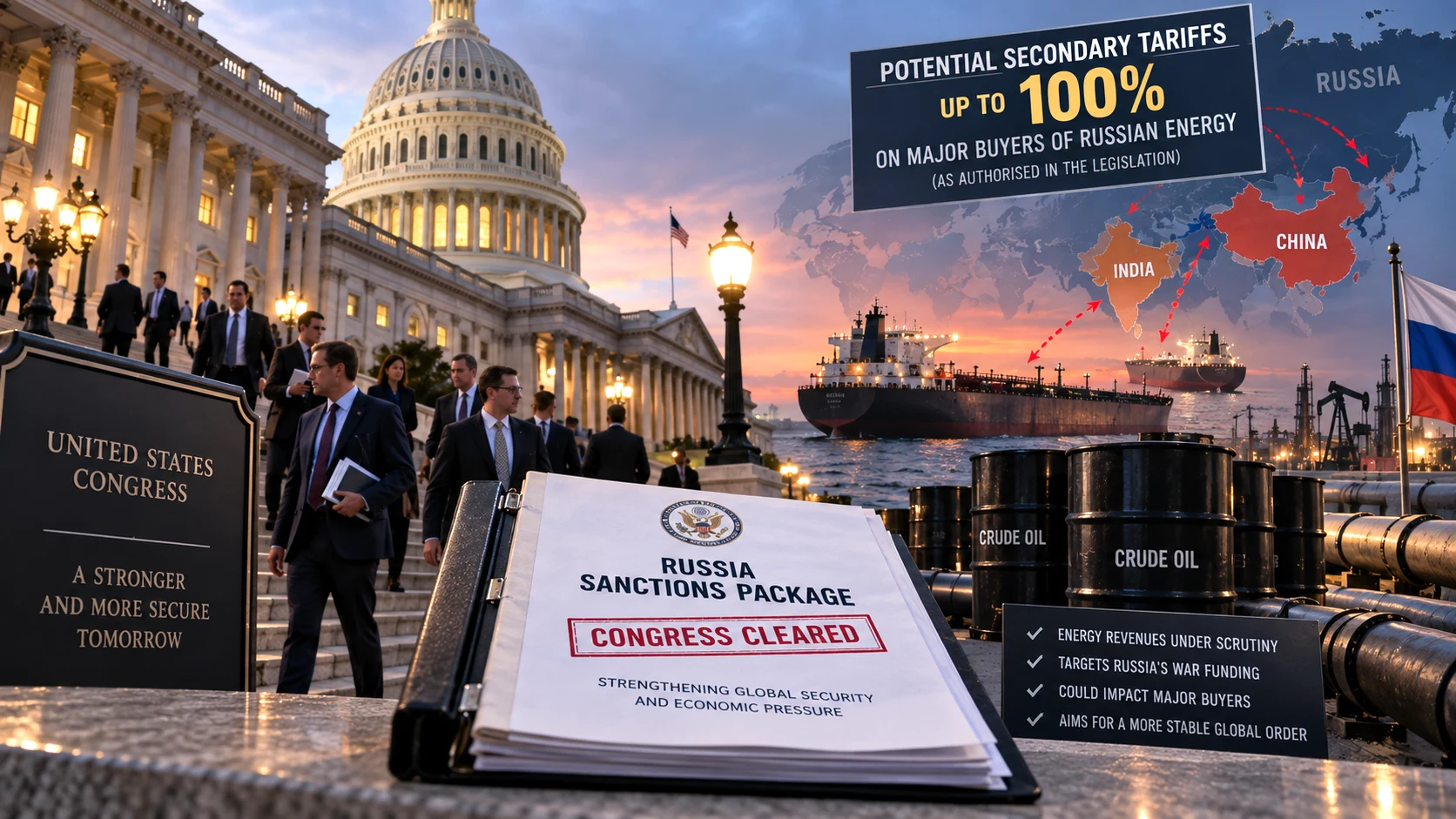
The House voted 262-159 to approve the Lindsey O. Graham Sanctioning Russia and Iran Act of 2026 after the Senate backed it 86-11 in August. The bill targets Russian banks, energy, defence and its “shadow fleet” while creating secondary tariffs for major buyers of Russian oil and gas. It now goes to
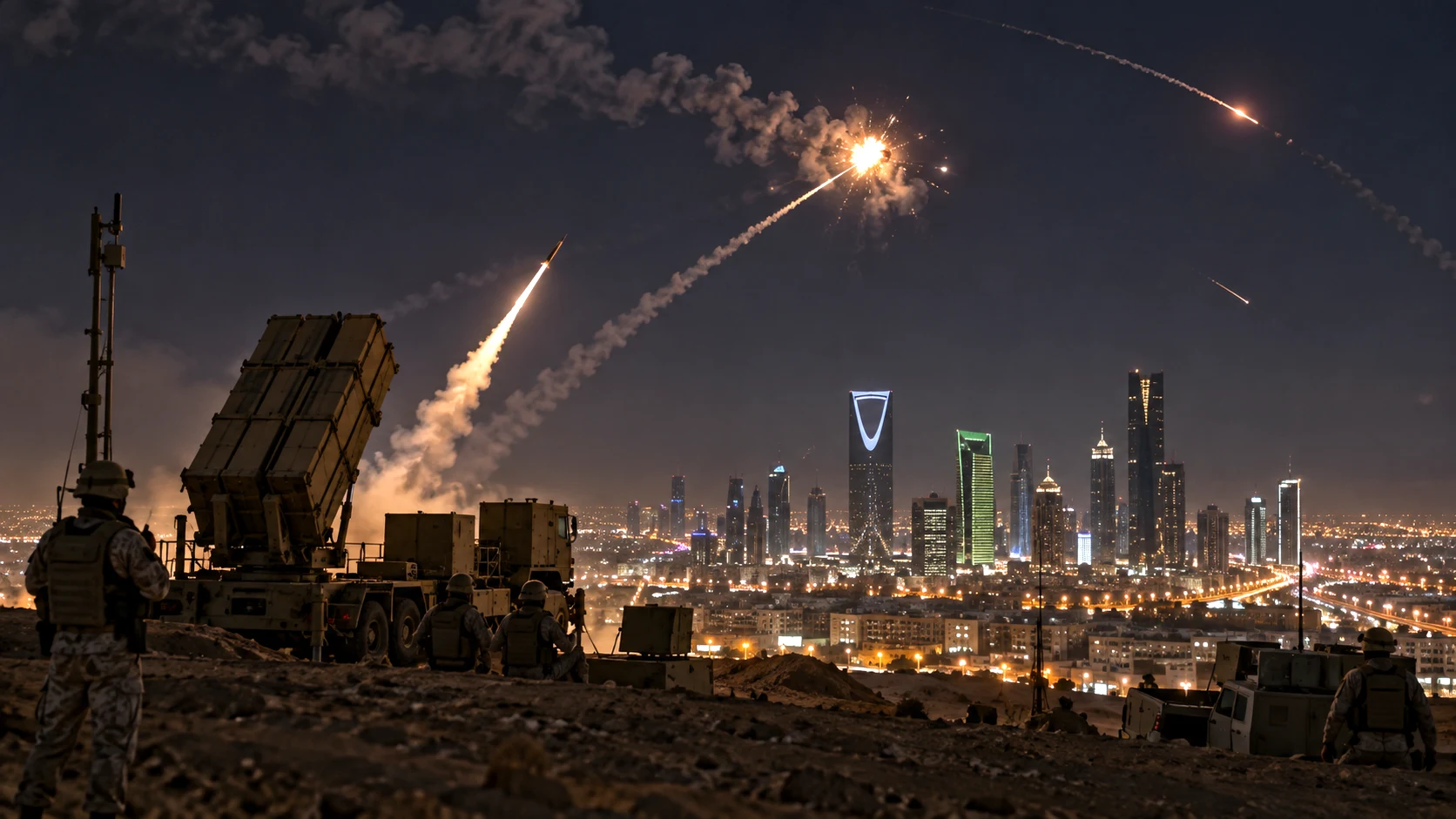
A Houthi ballistic missile aimed at Riyadh was intercepted by Saudi air defences as explosions and smoke were reported near the Saudi capital’s main airport, marking a sharp escalation in the renewed Saudi-Houthi confrontation. The attack comes alongside strikes on Saudi energy infrastructure, inten
That makes the accurate formulation “Iran says it struck the tanker” rather than stating as independently established fact that the IRGC attack occurred exactly as described.
Key Takeaways
Iran’s Islamic Revolutionary Guard Corps Navy says it struck the Togo-flagged tanker Trend in the Strait of Hormuz on Thursday, September 17.
The IRGC alleged that the vessel was attempting an “illegal passage” and said it stopped after a fire broke out.
AP reported that it could not independently confirm Iran’s account. No verified information was immediately available on casualties, crew condition, cargo or the precise location of the tanker.
The Trend is independently listed by vessel trackers as a Togo-flagged oil-products tanker, IMO 9477177.
A separate UK Maritime Trade Operations report described a maritime-security incident about 16 nautical miles northeast of Khasab, Oman, but authorities had not established that it involved the Trend.
Strait of Hormuz commodity traffic remains severely reduced: preliminary Kpler data showed only four commodity vessels crossing on September 17, compared with a 10-day average of about 16.
Formal U.S.-Iran peace talks have not resumed since a June interim agreement collapsed within weeks.
China is urging Washington and Tehran to return to negotiations, while a planned Oman-hosted regional meeting on Hormuz was postponed amid disagreements.
The Iran conflict is expected to be a major subject at next week’s United Nations General Assembly.
What Iran Says Happened
The IRGC Navy said the Trend, sailing under the Togolese flag, attempted to travel through the Strait of Hormuz on Thursday night without complying with the maritime system Iran is seeking to enforce in the waterway.
Iranian authorities also alleged that the vessel had acted after being encouraged by the U.S. military.
No independent evidence supporting that allegation was immediately presented publicly.
The IRGC said the tanker was subsequently hit and that a fire broke out, forcing the ship to stop. It also issued a warning that vessels attempting what Tehran regards as unauthorised transit could face military action.
The description of the passage as “illegal” is Iran’s characterization and should not be presented as an uncontested international finding.
The Strait of Hormuz has become one of the central military and political flashpoints of the conflict, with Iran asserting greater control over navigation while U.S. forces have been helping commercial vessels transit parts of the waterway.
What Is Known About the Tanker Trend?
Independent vessel-tracking databases confirm the existence of a tanker named Trend sailing under the flag of Togo.
MarineRadar lists the vessel as:
Name: Trend
Type: Tanker
Flag: Togo
IMO number: 9477177
MMSI: 671446100
MyShipTracking classifies it more specifically as an oil-products tanker built in 2008, approximately 118 metres long with a deadweight capacity of about 7,119 tonnes.
Tracking information had placed the vessel in the Persian Gulf before the reported incident.
Those records corroborate the basic vessel identity and Togolese registration, but they do not independently prove that the tanker was struck by Iran on September 17.
No Confirmed Casualty or Cargo Information Yet
Iran’s initial statement did not disclose how many crew members were aboard the Trend, their nationalities or whether anyone was injured.
It also did not identify the tanker’s cargo or provide an independently verifiable assessment of the damage.
There was no immediate confirmation from the U.S. military supporting or disputing Iran’s account of this particular tanker incident.
Until maritime authorities, the vessel operator, flag state or another independent source provides further information, reports claiming confirmed casualties, a sinking, detention of the crew or destruction of the cargo would go beyond the available evidence.
Separate UKMTO Incident Should Not Automatically Be Linked to Trend
Another maritime alert was reported overnight in the same broader area.
The United Kingdom Maritime Trade Operations, which monitors merchant-shipping security incidents, reported an incident about 16 nautical miles northeast of Khasab, Oman.
AP reported that the crew involved in that incident was safe and that no environmental impact had been confirmed.
But authorities had not established that this incident involved the Trend.
The two reports should therefore remain separate unless UKMTO or another authoritative maritime source confirms they concern the same ship.
This distinction is particularly important during an active conflict, when multiple incidents can occur in the same shipping corridor within hours of one another.
Strait of Hormuz Traffic Remains Far Below Normal
Whatever the final findings regarding the Trend, the wider disruption to shipping through the Strait of Hormuz is already clear.
Preliminary Kpler data cited by Reuters showed that only four commodity vessels passed through the strait on Thursday, September 17.
Three were travelling into the Gulf and one was leaving.
That compares with a 10-day average of about 16 commodity vessels a day.
The figure may not capture every vessel because ships operating in conflict zones sometimes disable their Automatic Identification System transponders to make themselves harder to track.
Before the current Iran conflict, the Strait of Hormuz carried roughly one-fifth of global oil and gas flows, according to Reuters.
That explains why even individual tanker attacks or threats can quickly affect global energy markets.
U.S. Military Is Helping Some Ships Transit
The United States has been facilitating commercial shipping through sections of the Strait of Hormuz amid the continuing threat to vessels.
AP reported that the U.S. military has been guiding some commercial ships through waters off Oman.
The maritime confrontation has also produced direct encounters between American and Iranian forces.
Earlier this week, U.S. Central Command confirmed that Iranian small boats had attempted to take control of a U.S. unmanned surface vessel in the strait before American forces intervened.
The Iranian and U.S. accounts of that incident differed significantly.
Such episodes show why commercial shipping remains exposed even as both sides continue to discuss possible diplomatic exits from the wider conflict.
Conflict Has Continued for More Than Six Months
The present war began on February 28, 2026, when the United States joined Israel in military action against Iran.
The conflict has since extended far beyond the initial strikes.
Iran has retaliated against U.S. interests and regional states, maritime traffic has been disrupted, and the conflict has increasingly intersected with fighting involving Iran-aligned groups elsewhere in the Middle East.
Reuters reported on September 18 that the conflict has settled into an uneasy military stalemate despite heavy damage to Iran and intensified U.S. economic pressure.
Iran has continued to use its geographic position around the Strait of Hormuz as strategic leverage.
Meanwhile, instability around Yemen and the Bab el-Mandeb has added pressure to the alternative Red Sea shipping route.
Global oil markets remain highly sensitive to developments in the Gulf.
Brent crude fell about 2.2% to $102.53 a barrel during Friday trading, while U.S. West Texas Intermediate was around $100.04, according to Reuters.
Prices declined as fears of prolonged disruption to Saudi Arabia’s oil-export infrastructure eased, but they remained above $100 amid continuing regional risks.
The reported Trend incident underscores why the geopolitical risk premium has not disappeared.
A sustained improvement in actual tanker traffic through Hormuz would be required before markets could confidently treat the shipping disruption as easing.
Peace Talks Remain Stalled
Despite continued diplomatic activity, there has been no full restoration of U.S.-Iran peace negotiations.
Reuters reported on September 18 that Washington and Tehran have held no peace talks since the interim agreement reached in June collapsed within weeks.
That distinction is important.
There are active diplomatic contacts involving third countries, but there is not currently a functioning U.S.-Iran peace process comparable with the negotiations that produced the June framework.
The continuing military confrontations at sea demonstrate the gap between diplomatic initiatives and conditions on the ground.
China Urges Washington and Tehran Back to Negotiations
China is among the countries trying to revive diplomacy.
Chinese Foreign Minister Wang Yi met Iranian Foreign Minister Abbas Araqchi in Beijing on September 16.
According to the Chinese Foreign Ministry account reported by Reuters, Wang urged Iran and the United States to exercise restraint, return to the interim peace arrangement reached in June and begin substantive consultations.
China also called for the Strait of Hormuz to be reopened.
Wang discussed the Middle East situation again in a September 17 telephone call with U.S. Secretary of State Marco Rubio.
These contacts show that diplomatic channels remain active even though direct U.S.-Iran negotiations are stalled.
Oman Talks on Hormuz Were Postponed
Oman has played another major mediating role.
A meeting involving Iran and other regional countries had been planned in Muscat to discuss management of shipping through the Strait of Hormuz.
However, Oman postponed the talks.
Omani Foreign Minister Badr Albusaidi said the meeting was delayed “in the interests of consensus”, while an Iranian Foreign Ministry official said the postponement followed requests from some regional countries.
AP reported that Saudi Arabia had raised concerns over proposed changes connected with an emerging Iran-Oman arrangement and their possible implications for other Gulf Cooperation Council countries.
The delay illustrates how difficult a regional maritime agreement remains even among countries that share a strong economic interest in restoring stable shipping.
BRICS Countries Have Also Called for Restraint
Diplomatic efforts were also visible at the BRICS summit in New Delhi.
Iran and the United Arab Emirates backed a joint BRICS declaration calling for maximum restraint, protection of civilians and respect for maritime security, global trade, energy supplies and national sovereignty.
Iranian President Masoud Pezeshkian also met Abu Dhabi Crown Prince Sheikh Khaled bin Mohamed bin Zayed Al Nahyan in what Reuters described as the highest-level Iran-UAE meeting since the present war began.
The talks represented an important diplomatic contact, but no settlement to the conflict emerged.
UN General Assembly Becomes Next Major Diplomatic Venue
Attention is now shifting to New York.
The Iran war is expected to feature prominently when world leaders gather for the United Nations General Assembly next week.
Reuters reported that Iranian representatives will be able to attend and that U.S. President Donald Trump is expected to face pressure from international leaders concerned about the prolonged war, disruption of oil supplies and wider regional instability.
Trump said earlier this week that he hoped the conflict was moving toward its end, but there is currently no confirmed ceasefire agreement.
Military activity and maritime confrontations are continuing.
Why Hormuz Matters to the Rest of the World
The Strait of Hormuz connects the Persian Gulf with the Gulf of Oman and Arabian Sea.
Oil and gas exports from several major Gulf producers depend heavily on the route.
Before the current conflict disrupted traffic, roughly a fifth of global oil and gas moved through the strait.
That makes the waterway economically important far beyond Iran, the United States and the Gulf states.
Prolonged disruption can affect:
International crude-oil prices
Petrol and diesel costs
Liquefied natural gas supplies
Shipping and insurance premiums
Freight rates
Inflation
Trade routes between Asia, Europe and the Middle East
The increasing instability around Bab el-Mandeb creates an additional complication because that route has served as an important alternative for Gulf exports while Hormuz traffic remains restricted.
Bottom Line
Iran’s Revolutionary Guards Navy says it struck the Togo-flagged oil-products tanker Trend during an attempted passage through the Strait of Hormuz on September 17.
The vessel itself and its Togolese registration are independently documented, but the reported Iranian strike, fire and resulting damage had not yet been independently confirmed when this report was prepared.
There was also no verified public information on casualties, the crew, cargo or the tanker’s precise condition.
The incident comes amid severely constrained maritime traffic through Hormuz. Preliminary shipping data showed just four commodity vessels using the strait on Thursday compared with a recent daily average of about 16.
At the diplomatic level, direct U.S.-Iran peace talks remain stalled following the collapse of June’s interim agreement. China is pressing the sides to resume negotiations, Oman continues efforts to develop a regional shipping arrangement, and the war is expected to be a major issue at next week’s UN General Assembly.
For now, the military confrontation and the diplomatic process are moving in parallel — with no confirmed settlement and continued risk to commercial shipping through one of the world’s most important energy corridors.
Key Takeaway
Iran claims IRGC struck Togo-flagged tanker Trend in Strait of Hormuz.
Incident remains independently unverified; no confirmed casualties.
Hormuz shipping traffic sharply reduced.
Diplomatic efforts continue but direct U.S.-Iran talks stalled.
The Rajatheertha Team publishes news, explainers, guides and updates across India and the world. Our coverage follows Rajatheertha's editorial, verification and corrections standards.
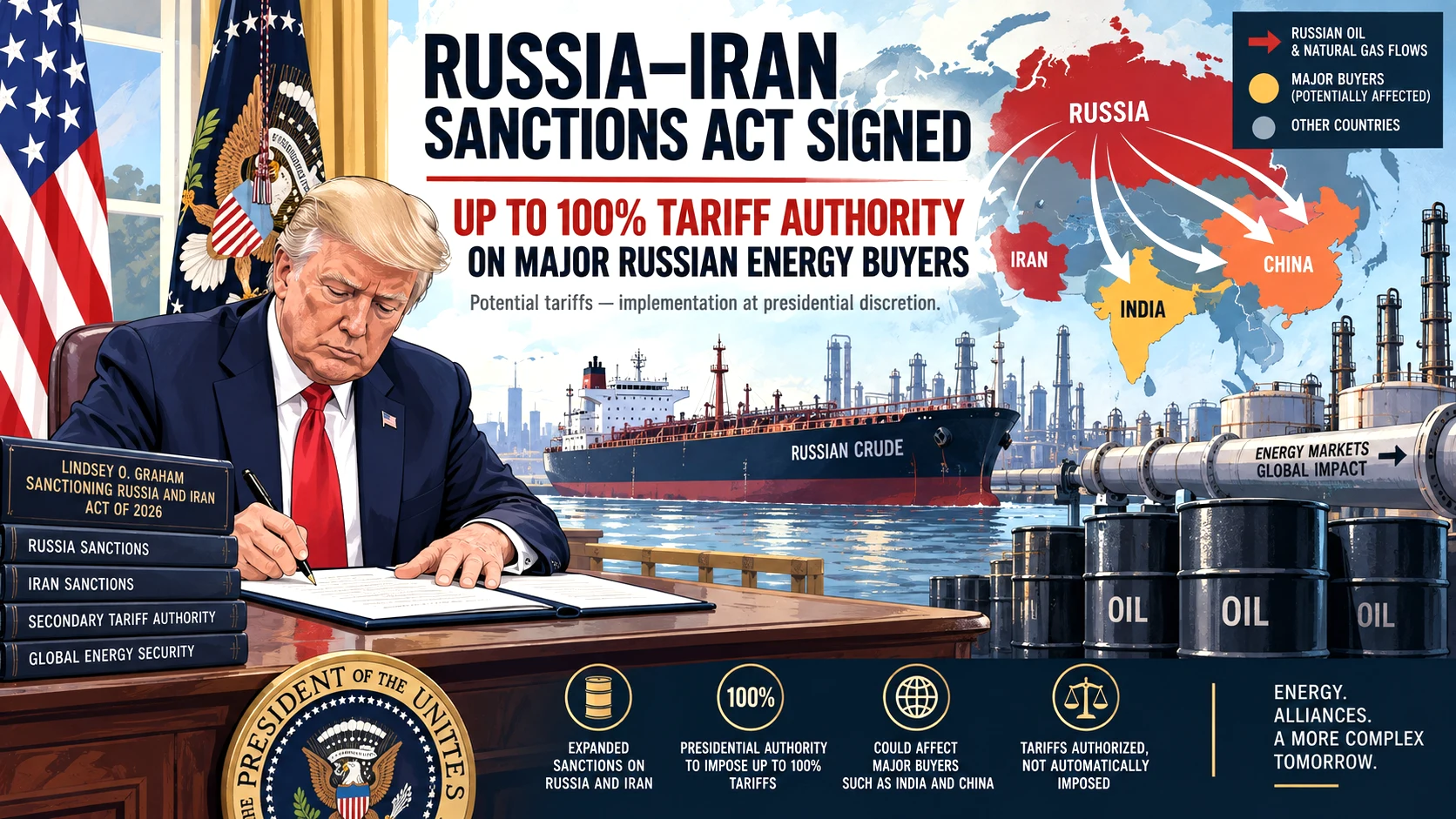
The House approved the Lindsey O. Graham Sanctioning Russia and Iran Act of 2026 by 262-159 after the Senate passed it 86-11. The measure now awaits President Donald Trump’s signature and could subject major buyers of Russian oil or gas to additional US tariffs of up to 100%, although India and Chin
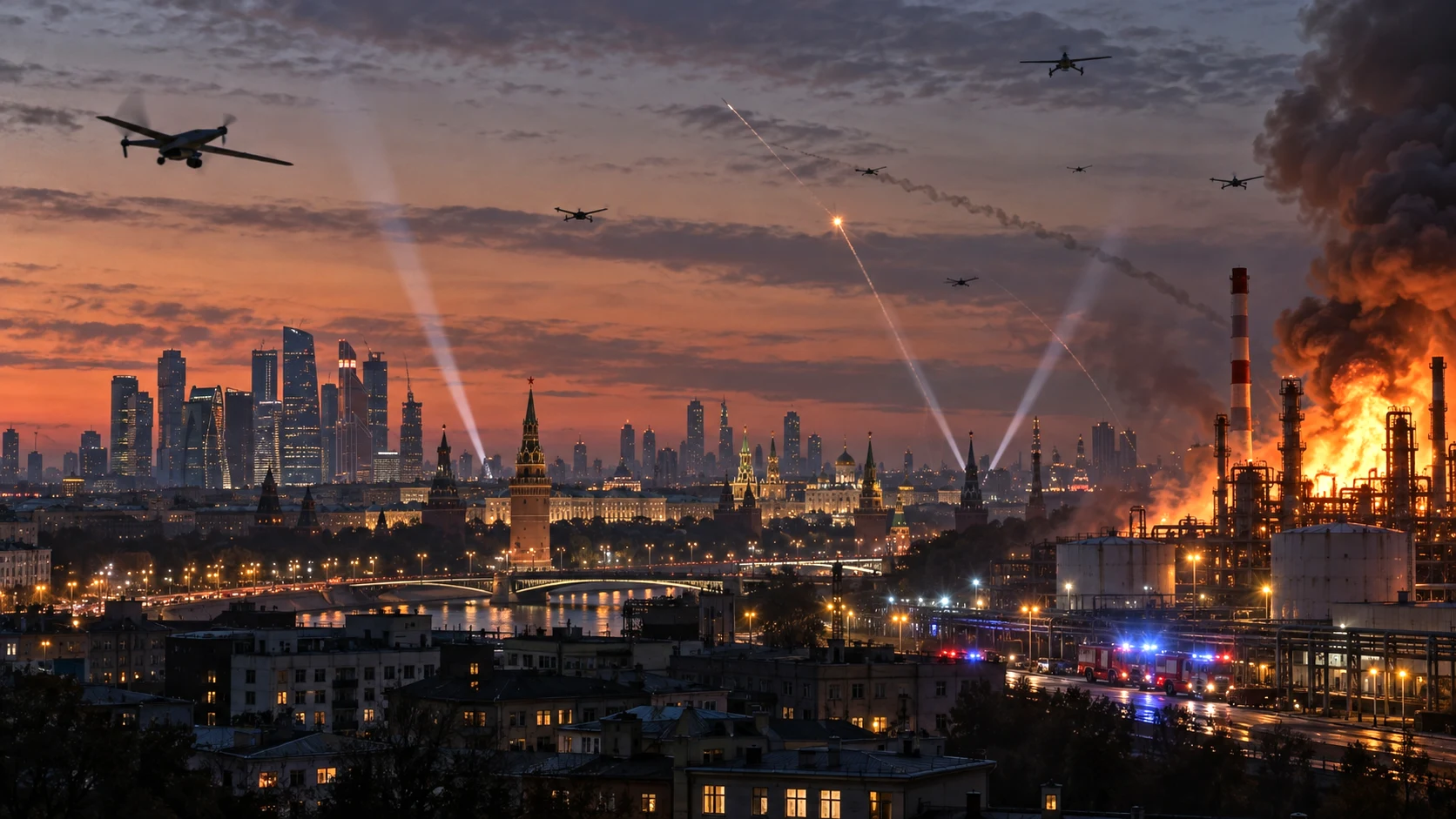
A huge Ukrainian long-range attack sent hundreds of drones toward Moscow and other parts of Russia early Sunday, damaging the Moscow Oil Refinery, disrupting civilian areas and putting Russian air defences under intense pressure. Russian officials described it as the largest drone attack yet directe
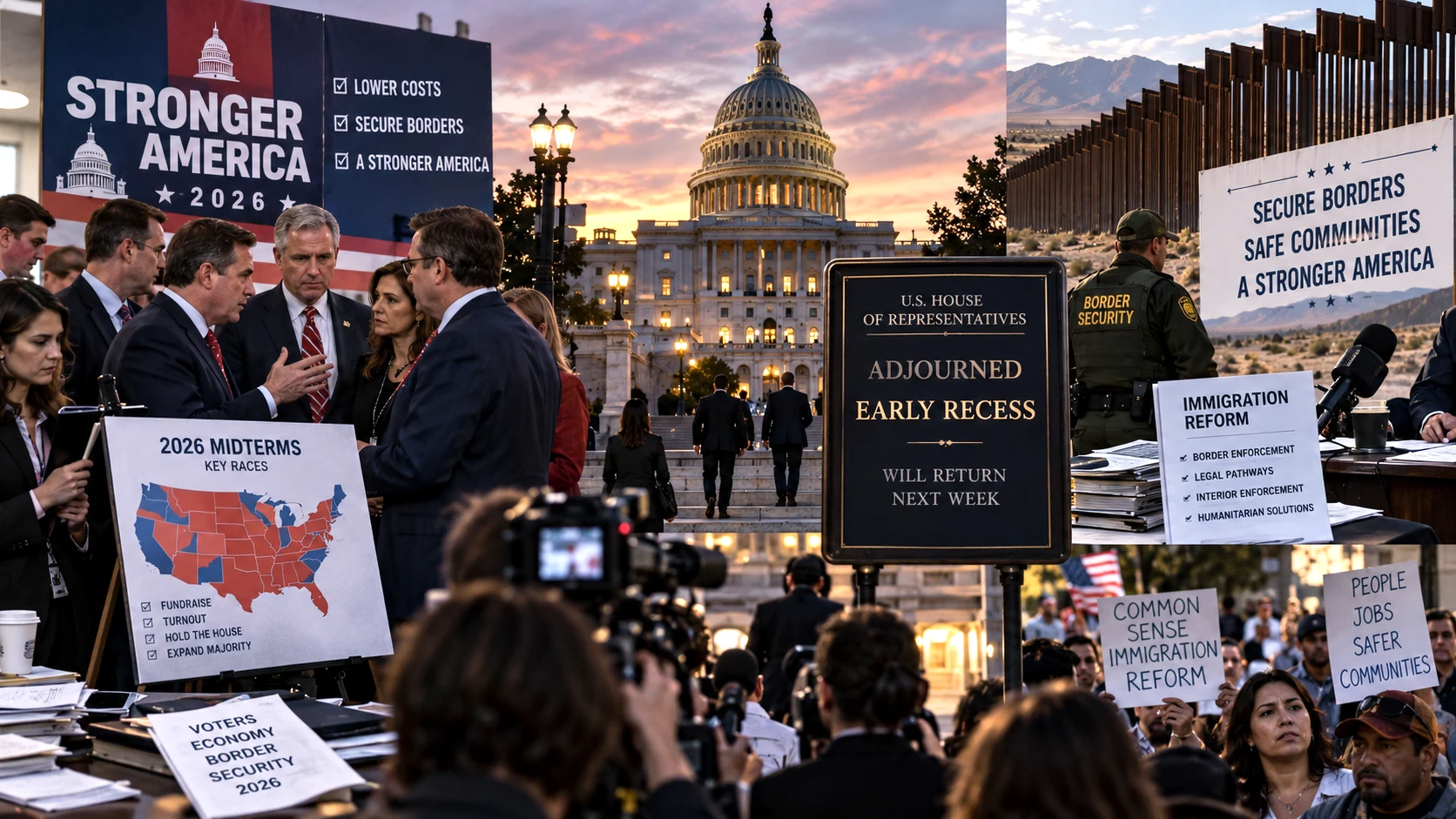
The Florida Republican says Hispanic voters who helped return Donald Trump to the White House now “feel betrayed,” while polling shows broader erosion in support for the president’s immigration approach. Separately, Speaker Mike Johnson has sent the House home early for the campaign season, drawing
The new US law targets Russia’s energy, financial and defence networks and allows additional tariffs of up to 100% on goods from the largest buyers of Russian oil and gas. India faces significant exposure because of its large Russian crude imports, but a 100% tariff on Indian goods has not been impo
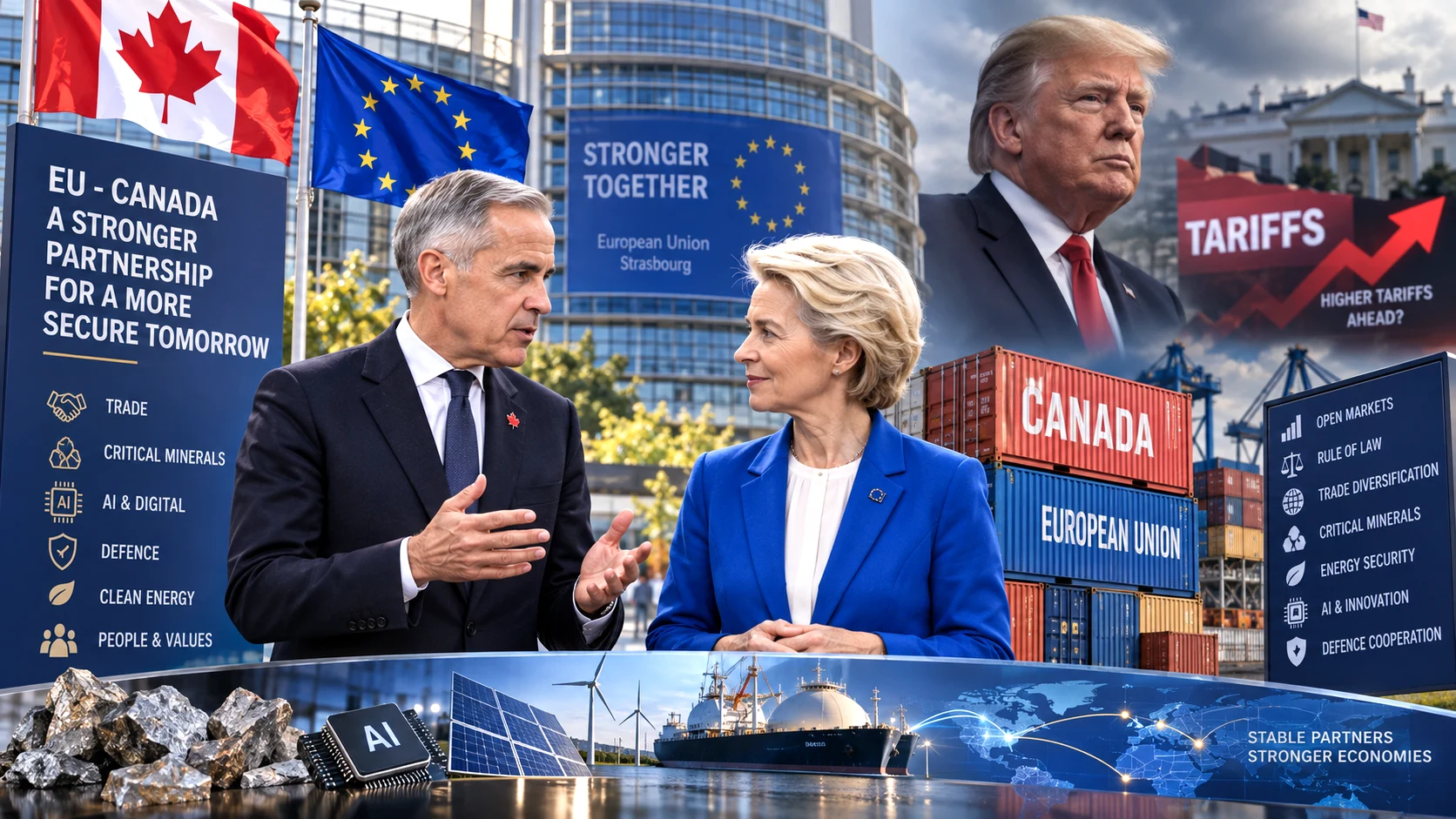
European Commission President Ursula von der Leyen has proposed opening the door for Canada to become the EU’s first “associate member,” but the status does not yet legally exist and has not been approved by the bloc’s 27 governments. Mark Carney welcomed the ambition in Strasbourg as Donald Trump w
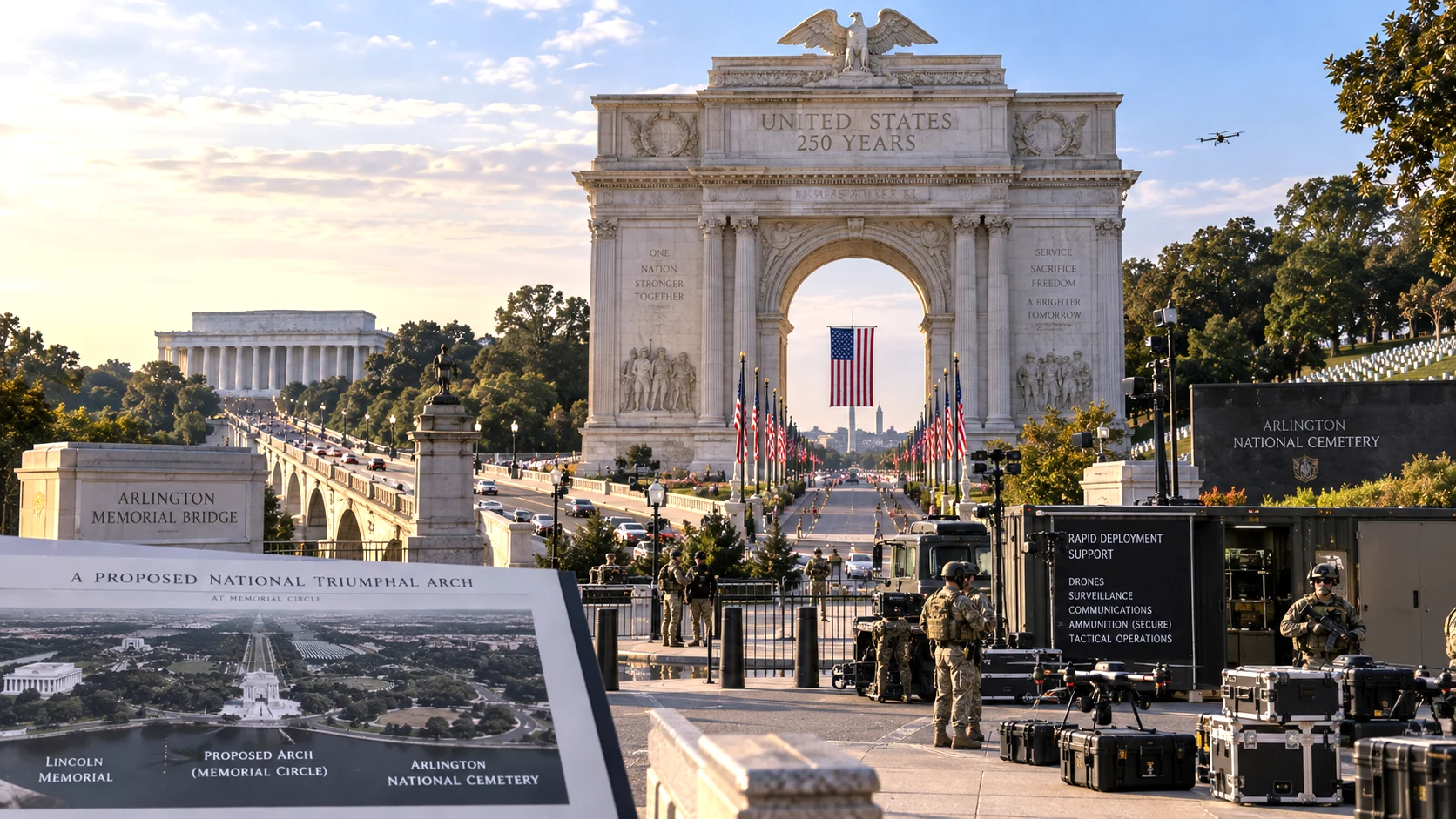
President Donald Trump says his proposed 250-foot triumphal arch near Arlington National Cemetery will now be designed as a dual-purpose military facility capable of housing drones, sniper positions and ammunition. The announcement adds a national-security dimension to an already controversial Washi

0 Comments