Canada-US Trade War Intensifies as New Retaliatory Tariffs Hit Steel, Dairy and Other Goods
Canada has imposed new retaliatory tariffs of up to 50% on U.S. goods after trade negotiations with the Trump administration collapsed, escalating the Canada-US trade war.
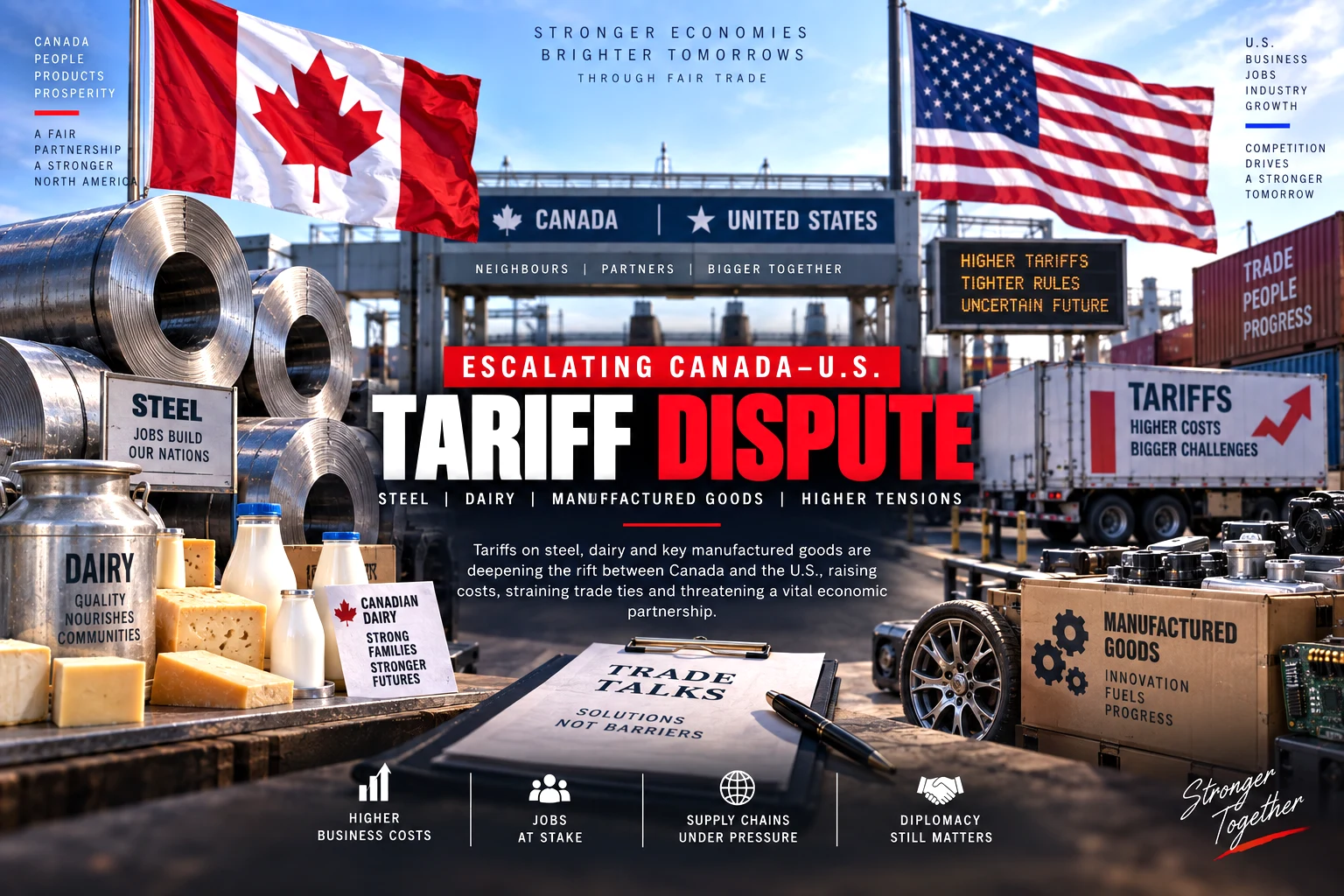
The Canada-US trade war escalated sharply on 8 September 2026, as Prime Minister Mark Carney’s government imposed a new round of retaliatory tariffs on American goods following the breakdown of negotiations with President Donald Trump’s administration.
Canada’s latest countermeasures apply tariffs of 15%, 25% and 50% across products including steel, aluminum, dairy goods, appliances, furniture, clothing, electronics, agricultural equipment and other American imports.
Recommended Reading
Related Stories & In-Depth Guides
Curated editorial perspectives matching this topic.
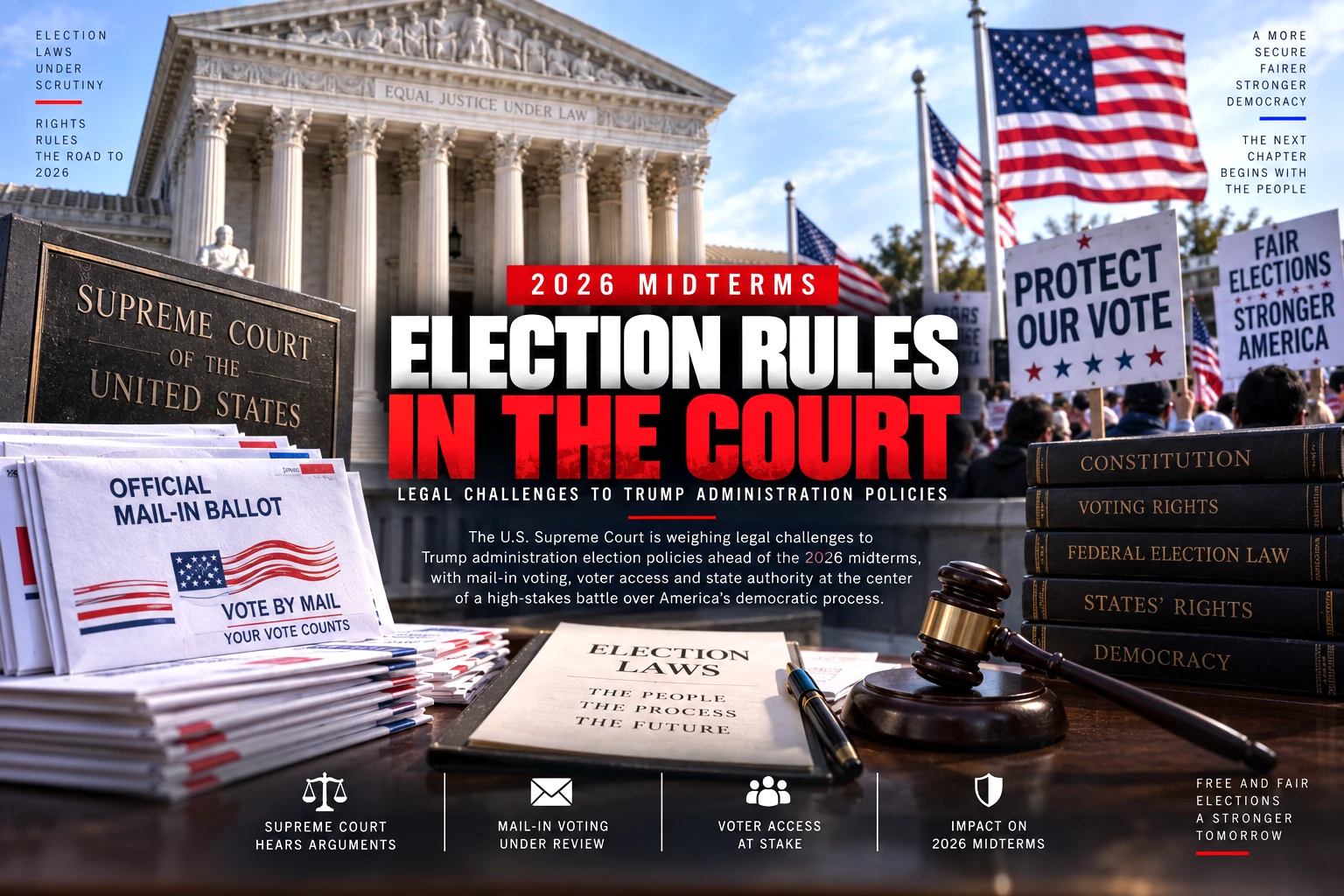
The Trump administration faces multiple legal battles over mail voting, citizenship checks, voter data and election authority as the November 2026 midterms approach.
Voting has begun in the 2026 US midterm elections as North Carolina sends the first mail ballots, while control of Congress, mail-voting rules and redistricting dominate the campaign.
The Canadian government says the measures cover approximately C$27.6 billion worth of imports from the United States and are designed to match Washington’s latest tariffs “dollar for dollar” and, where applicable, “rate for rate.”
The move responds to new U.S. tariffs that took effect on 22 August, including duties as high as 50% on approximately C$27.6 billion worth of Canadian products.
The escalation comes after Canada-U.S. negotiations collapsed in August despite earlier indications that an agreement might be possible.
The consequences could extend well beyond the products immediately facing tariffs.
Canada and the United States operate one of the world’s most deeply integrated trading relationships, particularly in automobiles, energy, agriculture and manufacturing. Goods and components can cross the border multiple times before reaching consumers.
That means a prolonged tariff confrontation risks increasing costs for businesses and households on both sides of the border.
Table of Contents
What happened on September 8?
How large are Canada’s new tariffs?
Which American products are affected?
Why is steel facing 50% tariffs?
Dairy products become part of the dispute
What tariffs did Trump impose on Canada?
Why did Canada-US negotiations collapse?
What happened to USMCA protections?
Why the auto industry is particularly vulnerable
Trump threatens 50% tariffs on Canadian vehicles
Bombardier becomes another flashpoint
How the tariffs could affect consumers
Canada announces support for workers and businesses
Can Canada withstand a prolonged trade war?
Canada’s economic leverage
Political consequences for Trump and Carney
What happens to USMCA?
Could negotiations restart?
What happens next?
Key takeaway
Canada’s Retaliatory Tariffs Take Effect
Canada’s latest counter-tariffs became effective at 12:01 a.m. on Tuesday, September 8.
The Canadian Department of Finance says the new duties apply exclusively to qualifying goods originating in the United States.
The tariffs are divided into three levels:
15%
25%
50%
The rate depends on the product and the corresponding American tariff Canada is attempting to match.
Canada describes the measures as targeted retaliation rather than a general tariff on every product imported from the United States.
That distinction matters.
It would be inaccurate to say that Canada has placed a 50% tariff on all American goods.
Only particular products face the highest rate.
How Much US Trade Is Affected?
Canada’s government values the targeted imports at approximately C$27.6 billion.
Reuters describes the affected U.S. exports at approximately US$20 billion.
The apparent difference largely reflects the currencies being used.
According to Associated Press reporting, the measures affect hundreds of American products and represent roughly 6% of the US$333.6 billion in goods the United States exported to Canada last year.
The Canadian government says the retaliation was designed to match the latest American measures dollar for dollar.
That makes this more than a symbolic response.
Ottawa is attempting to impose a comparable economic cost on American exporters.
Which American Products Are Facing Tariffs?
Canada’s official tariff schedule covers a wide range of goods.
Major categories include:
Steel and aluminum
Dairy products
Appliances
Agricultural equipment
Electronics
Furniture
Clothing and apparel
Pulp and paper products
Selected agricultural goods
Individual tariff classifications determine the exact duty.
Some American steel and aluminum products face 50% tariffs.
Certain dairy products face rates of either 25% or 50%.
Other manufactured and consumer goods face 15%, 25% or 50%, depending on their classification.
The Canadian government says it selected products from sectors affected by American tariffs to put Canadian manufacturers and producers on a more competitive footing in their home market.
Steel Becomes a Major Battleground
Steel is one of the most important areas of the dispute.
Canada has raised tariffs on a range of U.S. steel products to 50%.
The official tariff schedule includes various forms of iron, non-alloy steel, stainless steel, wire and structural steel products.
Steel is particularly sensitive because manufacturing supply chains across Canada and the United States are highly integrated.
Construction companies, machinery manufacturers, automobile producers and infrastructure projects all depend on steel.
Tariffs may protect domestic producers from cheaper imported competition.
But they can also increase costs for companies that use imported steel as an input.
The final economic impact therefore depends on whether businesses can switch suppliers and how much of the tariff cost importers pass on to customers.
Dairy Is Also Caught in the Trade Fight
Dairy has become another significant part of Canada’s retaliation.
Canada’s official list places 50% tariffs on several milk, cream and whey products imported from the United States.
Many cheeses face 25% duties.
The list includes classifications covering products such as cheddar, mozzarella, Parmesan, Brie, Gouda and other cheeses.
This is politically significant because agricultural trade has long been a sensitive issue between Canada and the United States.
Canada operates a supply-management system for dairy products, and American politicians have repeatedly criticised Canadian restrictions on market access.
The current dispute goes beyond that longstanding disagreement, however.
The new Canadian duties are explicitly part of Ottawa’s response to Washington’s broader tariff measures.
What Did the United States Do First?
The latest Canadian action responds to another escalation by the Trump administration.
According to Canada’s Department of Finance, the United States imposed 50% tariffs on C$27.6 billion of Canadian goods effective August 22.
Reuters reports that Washington’s measures hit approximately US$20 billion — or around 5% — of Canadian exports to the United States.
Affected sectors include products such as wine, furniture, dairy, cement, clothing, fishing equipment and hockey equipment.
Canada subsequently suspended trade negotiations rather than accept Washington’s proposed terms.
Ottawa says the American demands would have damaged important Canadian industries and weakened the country’s economic independence.
The Trump administration has taken a very different view, arguing that Canada benefits excessively from access to the U.S. market and maintains unfair trade barriers.
Why Did Trade Negotiations Collapse?
The two governments had spent weeks attempting to negotiate a broader agreement.
At one point, reports suggested a deal could be close.
But talks collapsed on August 21.
Canada says Washington introduced terms that were not in Canada’s national interest.
The Canadian government described the U.S. position as demanding too much while offering too little.
American officials have blamed Canada for failing to make sufficient concessions.
This disagreement is important because the current tariffs are not simply the result of a single policy decision.
They are part of a wider deterioration in a trade relationship that has been under pressure for roughly 18 months.
What Happened to USMCA?
The United States-Mexico-Canada Agreement, or USMCA, remains one of the most important questions surrounding the dispute.
The agreement replaced NAFTA and was negotiated during Trump’s first presidency.
For much of the current trade conflict, USMCA-compliant goods have benefited from exemptions from some American tariffs.
That protection has been extremely important to Canada.
Reuters reports that approximately 68% of Canada’s total exports have gone to the United States this year, with roughly 80% of those shipments moving duty-free because of USMCA exemptions.
But the latest U.S. tariffs were imposed under legal authorities that do not provide the same exemptions.
That has weakened one of Canada’s major protections against Trump’s tariff strategy.
Why USMCA Matters So Much
Canada and the United States do not operate like two economies trading only finished products.
Their supply chains are intertwined.
A vehicle assembled in Canada can contain components manufactured in the United States and Mexico.
Some parts can cross international borders several times during production.
The same is true across agriculture, energy, machinery and other manufacturing industries.
That means tariffs can create cumulative costs.
A tariff imposed at one stage of production can increase the cost of the next stage.
Businesses may respond by changing suppliers, reducing investment or increasing prices.
This is why uncertainty over USMCA has become a major concern for companies planning long-term investments.
Auto Industry Faces an Even Bigger Threat
Automobiles could become the most consequential front in the trade war.
Trump has threatened to raise U.S. tariffs on Canadian cars, trucks and automotive parts to 50% beginning January 1.
If implemented, that would be a major escalation.
Canada’s automotive sector is closely connected to factories in Michigan and other U.S. states.
Engines, transmissions, electronics and other components move across the border as part of continental production networks.
A 50% tariff could make some Canadian-built vehicles significantly more expensive in the American market.
But U.S. manufacturers using Canadian components could also face higher costs.
That creates risks for employment and consumer prices on both sides.
Trump Says He Wants More Cars Made in America
Trump has made his objective explicit.
He wants more vehicle manufacturing moved from Canada into the United States.
The president has argued that cars sold to American consumers should increasingly be produced in states such as Michigan, South Carolina and Tennessee.
Canada sees the policy as a direct threat to its industrial base.
Carney has argued that accepting Washington’s terms could result in Canadian industries gradually being reduced or eliminated.
That helps explain why Ottawa chose retaliation rather than accepting the latest American proposal.
For Canada, the dispute has become not only about tariffs but also about protecting domestic manufacturing capacity.
Bombardier Becomes Another Flashpoint
Aircraft manufacturing has also entered the confrontation.
Trump threatened this week to block sales of aircraft made by Canadian manufacturer Bombardier unless more production is moved to the United States.
The threat illustrates how the dispute is expanding beyond the original tariff lists.
But aerospace supply chains are also integrated.
Canadian industry representatives have pointed out that Bombardier aircraft use American-made components, including engines and systems supplied by U.S. companies.
Bombardier also employs workers in the United States.
A restriction intended to punish a Canadian company could therefore affect American suppliers and jobs as well.
No final blanket ban should be treated as implemented unless the U.S. government formally enacts one.
Canada Already Has Other Countermeasures
The September 8 tariffs are not Canada’s only response.
Existing Canadian counter-tariffs — including measures involving automobiles — remain in force.
Several Canadian provinces have also restricted or banned sales of American alcohol.
Associated Press reports that eight of Canada’s 10 provinces continue to maintain restrictions on U.S. alcohol sales.
The Distilled Spirits Council says American spirits exports to Canada have fallen more than 70% year over year since those measures began.
Canadian consumers have also participated in informal boycotts of American products.
Travel from Canada to the United States has declined as political tensions have increased.
These effects demonstrate how trade disputes can extend beyond formal tariff policy.
Canada Announces C$7.5 Billion Support Package
Ottawa is also attempting to protect businesses and workers from the economic consequences.
The Canadian government announced a C$7.5 billion package of new and expanded support measures alongside its retaliatory tariffs.
That comes on top of nearly C$25 billion in previous support, according to Canada’s Department of Finance.
The measures are intended to assist workers, farmers and businesses affected by American tariffs and trade disruptions.
Canada is also establishing a Canada Strong Diversification Fund aimed at helping companies adapt and reduce exposure to trade shocks.
This points towards a broader strategy.
Canada is not merely retaliating.
It is also trying to make its economy less dependent on the U.S. market over time.
Canada Remains Highly Dependent on the US
That diversification will not be easy.
The United States is by far Canada’s largest trading partner.
Reuters reports that roughly 68% of Canadian exports have gone to the U.S. this year.
The American economy is also around 13 times larger than Canada’s.
That gives Washington enormous structural leverage.
Canadian manufacturers cannot quickly replace the U.S. market with buyers elsewhere.
Geography also matters.
Canada and the United States share the world’s longest international land border and have developed integrated infrastructure over decades.
Replacing that relationship would require significant time and investment.
But the United States Also Depends on Canada
Economic dependence is not entirely one-sided.
American refineries rely heavily on Canadian crude oil.
The Associated Press reports that the United States receives approximately 4 million barrels of Canadian oil per day.
American agriculture also depends significantly on Canadian potash, a crucial fertilizer input.
Canada is an important supplier of electricity, metals, minerals, timber and other resources.
That gives Ottawa potential leverage.
However, Canada has so far avoided using some of its most powerful energy and critical-resource tools.
Restricting exports could also damage Canadian producers, making such measures economically risky for both countries.
Could Tariffs Raise Consumer Prices?
Tariffs are legally paid by importers when goods enter a country.
Those companies then decide how to absorb the additional cost.
They can accept lower profit margins.
They can seek alternative suppliers.
Or they can pass some or all of the cost to consumers.
As a result, Canadian consumers could see higher prices on certain American products affected by Ottawa’s tariffs.
American consumers could similarly face higher costs on Canadian goods subject to U.S. tariffs.
The actual impact will vary by product.
If domestic alternatives are readily available, price increases may be limited.
If supply chains depend heavily on cross-border goods, costs could be more significant.
The Trade War Creates Investment Uncertainty
Tariffs themselves are only one economic problem.
Uncertainty can be equally damaging.
A company deciding whether to build a factory needs to know whether it will have reliable access to its main market.
If tariff rates can suddenly rise from zero to 25% or 50%, long-term planning becomes more difficult.
Companies may delay investment.
Manufacturers may reconsider where factories should be located.
Banks may become more cautious about financing projects exposed to cross-border trade.
That is why uncertainty surrounding the future of USMCA matters even for businesses not currently covered by the tariff lists.
Canada’s Economy Has Shown Some Resilience
Despite the trade confrontation, Canada’s economy entered the latest escalation with some positive momentum.
Associated Press reports that Canada’s economy grew at an annualised rate of approximately 3.2% in the second quarter.
The U.S. economy grew at approximately 1.5% over the comparable period cited in the report.
One quarter does not establish a long-term trend.
A prolonged trade war could still weaken Canadian investment, employment and growth.
But the figures help explain why Ottawa believes it has some capacity to resist U.S. pressure rather than immediately accept Washington’s demands.
Carney Gains Political Support From the Dispute
The confrontation has also reshaped Canadian politics.
Trump’s tariff threats and repeated comments about Canada’s sovereignty have generated strong public opposition in Canada.
Prime Minister Mark Carney has positioned himself as defending Canadian economic independence.
Current polling cited by Reuters indicates that Carney retains broad public support.
That creates an unusual political dynamic.
Economic pressure intended to force concessions from the Canadian government has, at least so far, strengthened public backing for resistance.
Whether that continues will depend partly on the economic consequences.
If unemployment rises or consumer prices increase substantially, political attitudes could change.
Trump’s Canada Tariffs Are Unpopular With Many Americans
The dispute also carries domestic political risks for Trump.
A Reuters/Ipsos poll found that only around 20% of Americans approved of Trump’s tariffs on Canadian goods.
That matters because the United States is approaching the November 2026 midterm elections.
If tariffs contribute to higher consumer prices or disruption in manufacturing, Democrats are likely to make trade policy part of their campaign.
Trump argues that tariffs encourage companies to manufacture in the United States and protect American workers.
The economic and political debate will ultimately depend on whether new investment and jobs offset the costs imposed on importers and consumers.
The Fight Has Expanded Beyond Economics
The relationship has also become unusually personal and symbolic.
Trump has repeatedly criticised Canada and Carney.
He has renewed rhetoric about Canadian dependence on the United States and threatened additional economic consequences.
Those comments have generated anger in Canada and helped transform what might otherwise have remained a technical trade dispute into a broader argument about national sovereignty.
For businesses, however, the central question remains practical:
Will the two governments eventually return to negotiations?
Are Canada-US Negotiations Happening Now?
According to Reuters, there are currently no active ministerial or official negotiations between the two governments.
That does not mean diplomacy has permanently ended.
Carney has said Canada remains prepared to sign a trade agreement that benefits both countries.
Canadian officials and business groups have also emphasised the importance of keeping communication channels open.
But a restart would require one or both governments to modify their negotiating positions.
For now, tariffs — not a new trade agreement — are defining the relationship.
What Happens to USMCA?
The longer-term concern is the future of the North American free-trade system.
Trump declined to simply extend USMCA for another decade, leaving the agreement subject to its scheduled review process.
Businesses in Canada, the United States and Mexico will watch that process closely.
If the three countries fail to maintain a predictable trade framework, companies may reconsider supply chains built around tariff-free North American commerce.
That could affect investment decisions for years.
The stakes therefore extend far beyond today’s C$27.6 billion Canadian retaliation.
Could the Trade War Escalate Further?
Yes.
Several potential escalation points remain.
The biggest is Trump’s threatened 50% tariff on Canadian vehicles and auto parts from January 1.
Aircraft could become another battleground if Washington follows through on threats involving Bombardier.
Canada could expand its own retaliatory list.
Provinces could impose additional restrictions on American products.
Ottawa could also consider stronger measures involving sectors where the United States depends heavily on Canadian resources.
None of those outcomes is inevitable.
They are risks rather than confirmed future policies.
Why Both Countries Have an Incentive to Find a Deal
Despite the aggressive rhetoric, both sides have substantial reasons to negotiate.
Canada cannot easily replace the enormous American market.
The United States benefits from Canadian oil, minerals, agricultural inputs, manufactured components and a stable continental supply chain.
A prolonged trade war could increase costs for companies and consumers in both countries.
It could also weaken North America’s competitive position against other major manufacturing regions.
That creates an economic argument for compromise even if the political relationship remains difficult.
Key Takeaway
The Canada-US trade war escalated on September 8, 2026, when Canada’s latest retaliatory tariffs officially took effect.
Ottawa is imposing duties of 15%, 25% and 50% on targeted American imports worth approximately C$27.6 billion.
Products affected include steel, aluminum, dairy, furniture, clothing, appliances, electronics and agricultural equipment.
The Canadian government says its measures match Washington’s latest tariffs dollar for dollar and, where applicable, rate for rate.
The Trump administration’s latest measures had imposed tariffs as high as 50% on C$27.6 billion of Canadian goods beginning August 22.
Negotiations subsequently collapsed.
The dispute could become considerably more serious if Trump follows through with his threat to impose 50% tariffs on Canadian vehicles, trucks and automotive parts beginning January 1.
For now, neither side appears ready to back down.
But because the two economies are so deeply integrated, an extended trade war would not create costs for Canada alone.
American manufacturers, farmers, exporters and consumers could also feel the consequences.
The biggest question is therefore no longer whether the Canada-US trade dispute has escalated.
It has.
The question is whether Ottawa and Washington can return to negotiations before today’s tariff retaliation develops into an even broader North American economic confrontation.
Editorial Note: Tariff values should always identify their currency. Canada’s official figure for the latest countermeasures is approximately C$27.6 billion, while international reporting commonly describes the same affected trade as roughly US$20 billion. Proposed future tariffs, including the threatened January automobile measures, should not be described as already in effect.
The Rajatheertha Team publishes news, explainers, guides and updates across India and the world. Our coverage follows Rajatheertha's editorial, verification and corrections standards.
The 2026 US midterms have entered a crucial phase as voting begins and Trump’s administration asks the Supreme Court to allow new restrictions affecting mail ballots.
Qatar has launched an intensified diplomatic push to revive negotiations between Iran and the United States, shuttling proposals between Tehran and Washington as both sides combine threats of further military action with signals that a negotiated settlement remains possible. Iran has conveyed condit
The EU has announced a €200 million Greenland partnership covering minerals, energy and connectivity as Trump’s push for US control keeps Arctic sovereignty in focus.
Major US television networks have suspended shared pool coverage of President Donald Trump after CNN was blocked from its scheduled duties, while CNN, MS NOW and Politico have sued over their White House access ban.
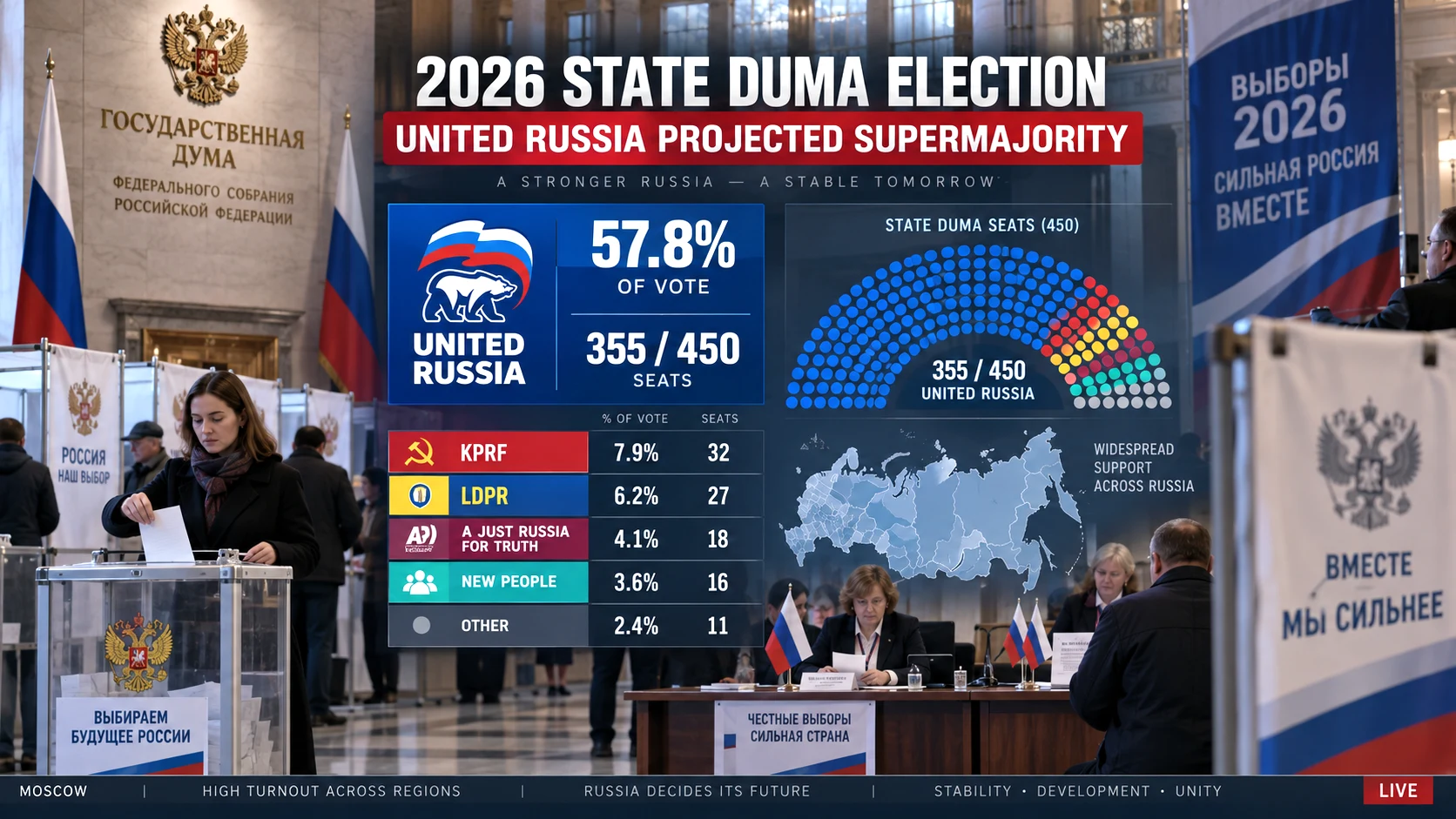
Russia’s ruling United Russia party has secured a decisive victory in the country’s 2026 parliamentary election, according to near-complete official results, putting the Kremlin-aligned party on course for a record 355 seats in the 450-member State Duma. The vote was Russia’s first parliamentary ele
Anti-migration protests at Dover and Portsmouth have intensified Britain’s border debate after masked demonstrators blocked roads and clashed with police.









0 Comments