
Table of Contents (29 sections)
The Trump administration is facing an expanding series of legal challenges over voting rules and presidential power just as Americans begin casting ballots in the 2026 midterm elections.
The Trump administration faces multiple legal battles over mail voting, citizenship checks, voter data and election authority as the November 2026 midterms approach.

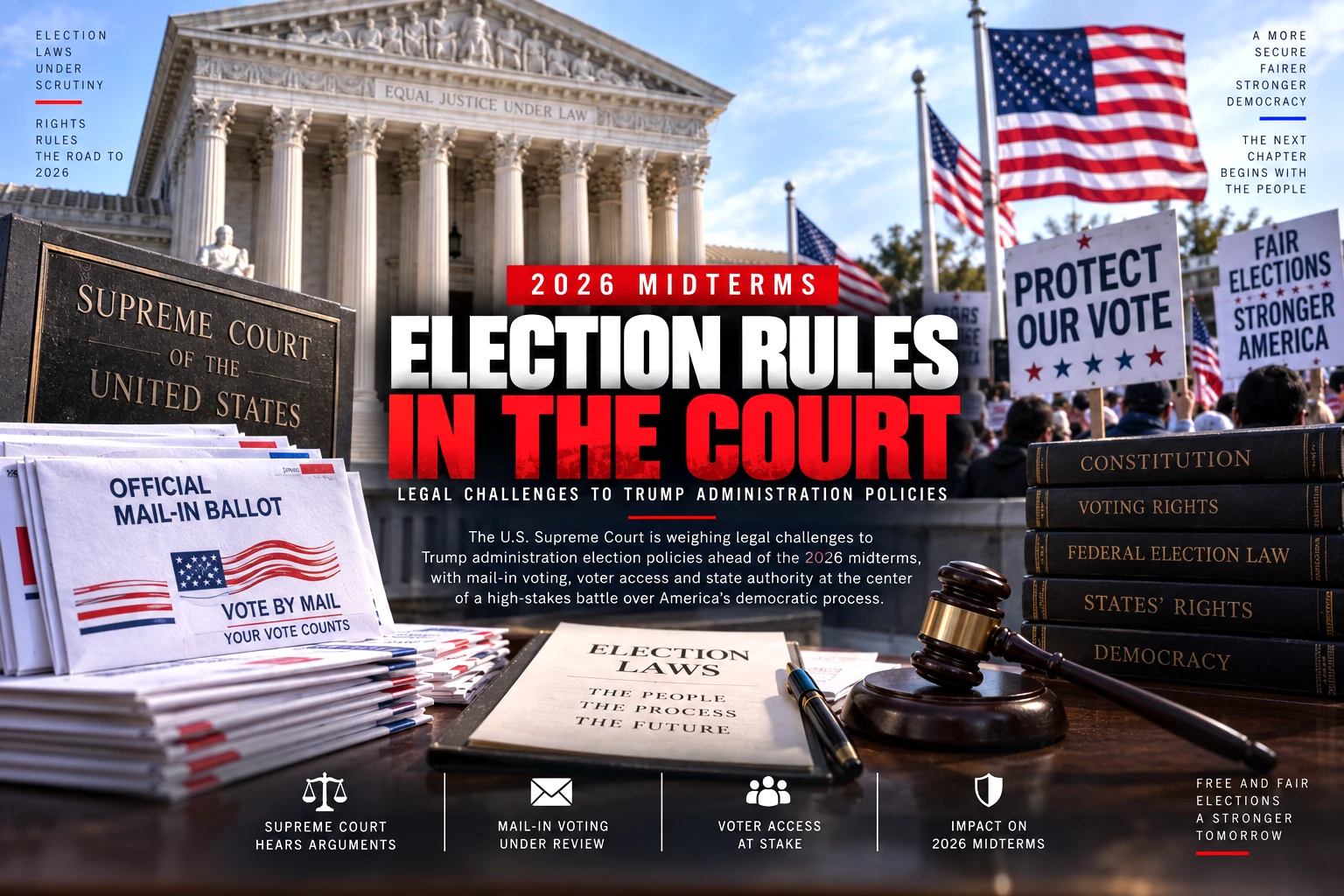
The Trump administration is facing an expanding series of legal challenges over voting rules and presidential power just as Americans begin casting ballots in the 2026 midterm elections.
Curated editorial perspectives matching this topic.
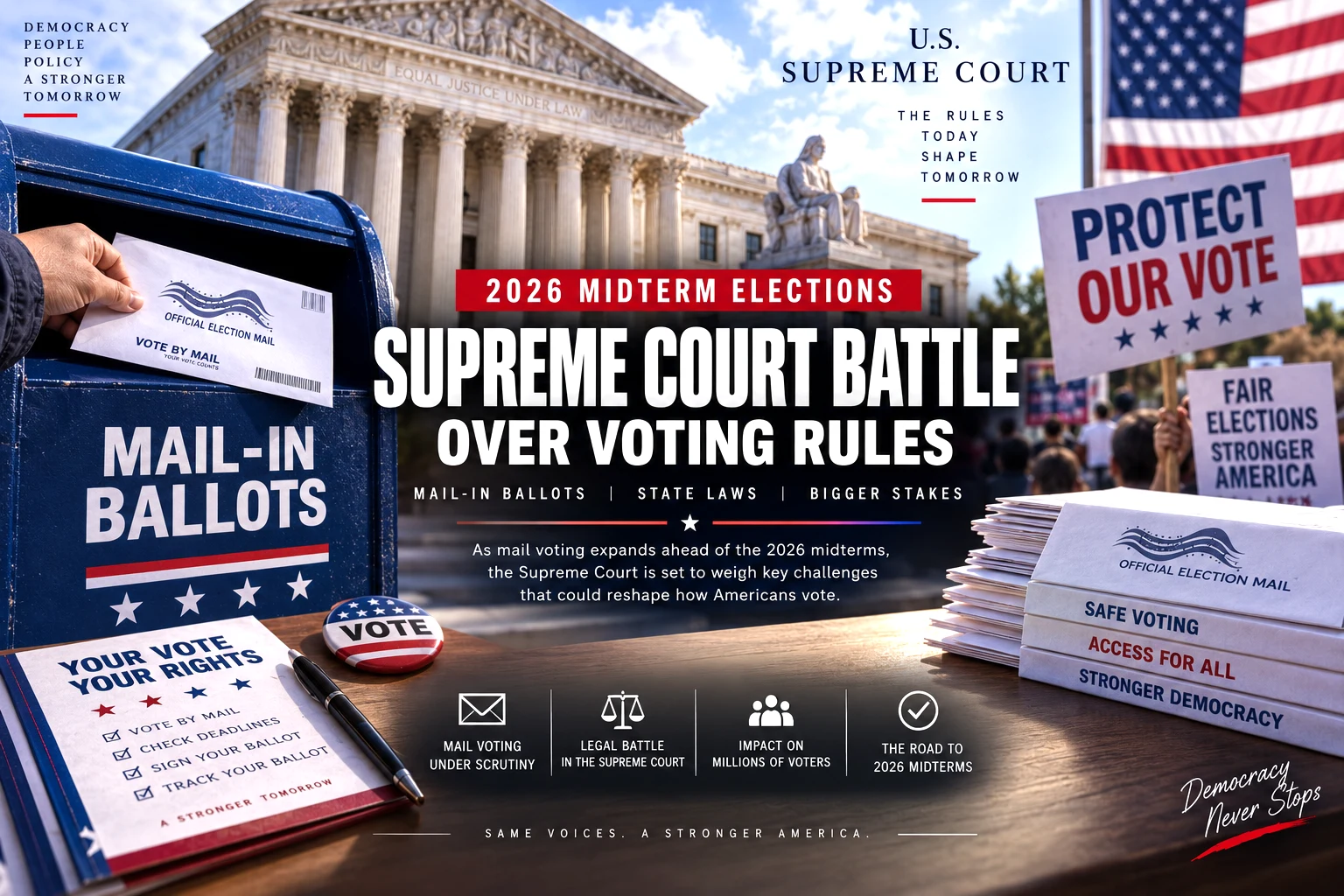
The 2026 US midterms have entered a crucial phase as voting begins and Trump’s administration asks the Supreme Court to allow new restrictions affecting mail ballots.
Canada has imposed new retaliatory tariffs of up to 50% on U.S. goods after trade negotiations with the Trump administration collapsed, escalating the Canada-US trade war.
The disputes involve some of the most fundamental questions in the U.S. electoral system: Who has authority to regulate federal elections? How far can a president go through executive action? Can federal databases be used to verify state voter rolls? And can the U.S. Postal Service refuse to handle mail ballots that fail to satisfy new federal requirements?
President Donald Trump’s administration argues that its measures are necessary to strengthen election integrity, citizenship verification and confidence in voting.
Democratic-led states, voting-rights organisations and other challengers argue that several measures exceed presidential authority, intrude on powers traditionally exercised by states and Congress, and could prevent eligible Americans from voting.
Those allegations remain contested.
Courts — not political campaigns — will determine the legality of the challenged policies.
But the timing makes the litigation particularly consequential.
Voting for the 3 November 2026 midterms has already begun, while Republicans are defending narrow congressional majorities.
One of the biggest disputes has now returned to the U.S. Supreme Court, potentially putting the justices in a position to decide whether controversial new mail-ballot requirements can be implemented while the election is already underway.
The current litigation is not one single case.
It is a collection of lawsuits involving different policies, plaintiffs and constitutional questions.
Among the major disputes are challenges involving:
Some cases are directly against the Trump administration.
Others involve Republican-controlled states pursuing election changes supported by Trump or his political allies.
They should not all be treated as legally identical.
But together, they illustrate how courts have become increasingly important to the rules governing the 2026 election.
At the heart of several disputes is the U.S. Constitution’s division of election authority.
Article I gives state legislatures authority over the “Times, Places, and Manner” of congressional elections while allowing Congress to alter those rules.
The Constitution does not provide the president with an equivalent general power to administer elections.
That does not mean the federal executive branch has no election-related role.
Federal agencies administer laws enacted by Congress, enforce civil rights statutes and operate systems — including the Postal Service — that are important to elections.
The legal dispute concerns how far executive authority can extend without additional congressional legislation.
Critics of Trump’s election orders argue that the administration is attempting to exercise powers constitutionally assigned to states and Congress.
The administration argues that its measures operate through lawful federal authority and are necessary to protect election integrity.
One of the most consequential disputes concerns mail voting.
Trump signed an executive order in March directing changes involving mail ballots and citizenship verification.
The U.S. Postal Service subsequently developed a rule to implement part of that order.
Under the rule, states would have to provide USPS with lists of people approved to receive mail ballots.
Outbound and return ballot envelopes would also need unique barcodes.
The Postal Service could refuse to transmit ballot mail that does not comply with the standards or is associated with someone not appearing on the state’s approved list.
The administration says states — not the USPS — would continue deciding who is eligible to vote.
That distinction is central to the government’s defence.
Trump has criticised mail voting for years.
He has repeatedly argued that postal voting creates opportunities for fraud.
The administration says stronger verification and tracking procedures would improve confidence in elections.
But Trump’s broader claims that widespread fraud caused his defeat in the 2020 presidential election were not supported by evidence sufficient to overturn the election result.
Voting by noncitizens and other forms of election fraud can occur and are illegal, but documented cases are rare relative to the enormous number of votes cast in American elections.
The political disagreement therefore concerns not simply whether elections require safeguards — they do — but whether the administration’s proposed safeguards are lawful, proportionate and capable of being implemented without preventing eligible voters from participating.
The disputed system would create a closer connection between state election databases and postal processing.
States would supply USPS with lists of approved mail-ballot recipients.
Election officials would use unique barcode identifiers on ballot envelopes.
USPS would then process ballot mail according to those lists and identifiers.
The administration says this would improve verification and tracking.
Critics identify a different risk.
If databases contain errors, names do not match correctly, or technical systems fail, they argue that legitimate ballots could be delayed or rejected.
Election administrators have also warned about the timing.
Many states had already printed election materials before the final USPS rule was released.
Timing is particularly important because the election process has already begun.
North Carolina became the first state to begin broadly sending absentee ballots on 4 September.
Other states will follow.
Election offices have spent months preparing ballot envelopes, software and procedures.
Some state officials argue that forcing them to redesign systems only weeks before Election Day could create administrative confusion.
The administration rejects that argument.
The Justice Department says USPS can assist states in complying with the requirements and argues that delaying implementation creates its own uncertainty.
That disagreement has repeatedly returned to federal court.
U.S. District Judge Indira Talwani in Massachusetts has played a central role in the litigation.
She initially blocked implementation of parts of Trump’s executive order.
After procedural litigation reached the Supreme Court, USPS finalised its implementation rule, and challengers returned to Talwani’s court.
On 4 September, she issued a preliminary injunction preventing implementation of the USPS rule for the midterm election.
That ruling triggered another emergency appeal.
The Trump administration argues the injunction improperly prevents a lawful federal policy from taking effect.
The challengers argue the injunction is necessary to protect voting access while the constitutional questions are litigated.
On 6 September, the administration filed a new emergency application at the U.S. Supreme Court.
The case is docketed as United States Postal Service v. California, No. 26A305.
The administration wants the Supreme Court to stay Talwani’s preliminary injunction.
If the justices grant the request, the USPS requirements could potentially take effect during the current election period.
If the request is denied, the injunction would remain in place while the litigation continues.
Justice Ketanji Brown Jackson ordered responses to the government’s application by 4 p.m. EDT on September 9.
That makes the case one of the most immediate election-law disputes to watch.
The Supreme Court had already considered an earlier stage of the controversy.
On 24 August, the court lifted an earlier injunction.
That decision was important — but it did not finally decide that Trump’s mail-ballot policy is constitutional.
The majority focused on procedural questions surrounding the states’ ability to challenge the policy before USPS had completed its final rule.
Once USPS finalised the rule, challengers returned to court.
That produced the new injunction and the new Supreme Court application.
So a headline saying:
“The Supreme Court already approved Trump’s mail-voting restrictions.”
would be misleading.
The underlying legal dispute remains unresolved.
Justice Jackson strongly disagreed with the August decision.
In her dissent, she argued that the Constitution assigns responsibility for conducting federal elections to the states and that the president lacks authority to impose his own preferred election procedures.
Her language was unusually forceful.
But it is important to identify it correctly:
It was a dissenting judicial opinion, not the holding of the Supreme Court majority.
The majority’s procedural decision controlled the case at that stage.
The constitutional questions now continue through the renewed litigation.
Mail ballots are only part of the dispute.
The administration has also focused heavily on identifying potential noncitizens on voter rolls.
Noncitizens are prohibited from voting in federal elections.
The policy disagreement concerns how government agencies should identify potential violations without incorrectly flagging eligible U.S. citizens.
The Department of Homeland Security has used federal data to compare information with state voter records.
The administration says this is a straightforward election-security measure.
Voting-rights organisations argue that federal databases were not designed for mass voter-roll verification and may contain outdated or incomplete information.
On 2 September, the Coalition for Humane Immigrant Rights filed a federal lawsuit challenging the administration’s use of government databases.
The group argues that the process could disproportionately affect naturalised U.S. citizens, who have exactly the same federal voting rights as other citizens once naturalisation is complete.
The lawsuit alleges that inaccurate data matching could wrongly identify eligible citizens as noncitizens.
It asks the court to stop aspects of the administration’s review of California’s voter records.
The administration rejects those allegations.
DHS says it is comparing publicly available state voter data with information on people known to be noncitizens.
It says the purpose is to prevent unlawful voting and protect legitimate citizens’ votes.
The administration has made significant claims about possible noncitizen registrations.
According to AP reporting, DHS has suggested that more than 250,000 potential noncitizens may appear on voter rolls across four states, including more than 190,000 in California.
Those figures are disputed.
California Secretary of State Shirley Weber has questioned their reliability and said her office had not supplied its statewide voter-registration list to DHS.
Federal officials had not publicly produced evidence establishing that all people flagged by the data were actually noncitizens registered unlawfully.
That distinction is essential.
A database match or flag is not proof of illegal registration or illegal voting.
Records can contain outdated citizenship information, duplicate identities or other inconsistencies.
Another important dispute involves the federal Systematic Alien Verification for Entitlements, or SAVE, system.
SAVE was originally designed for government agencies to verify immigration or citizenship information in connection with benefits and licensing.
The Trump administration expanded its use.
By May, AP reported that at least 67 million voter registrations, largely from Republican-controlled states, had been processed through an enhanced verification program.
Tens of thousands were flagged as potential noncitizens or deceased individuals.
Critics argued that the expanded system effectively created a centralised federal voter-verification database without sufficient congressional authorisation.
A federal judge blocked use of the revamped system for voter eligibility verification.
That litigation is another major part of the 2026 election-law landscape.
The administration’s strategy also involves obtaining voter information directly from states.
According to AP, the Justice Department has sued to obtain detailed voter information from 30 states and the District of Columbia.
The federal government argues that the information is necessary to ensure compliance with federal election law and identify potentially ineligible registrations.
Several states have resisted.
They cite privacy concerns, federalism and questions about the federal government’s authority to demand detailed state voter records.
These cases have not produced a final nationwide ruling establishing that the administration is entitled to all of the requested information.
They remain part of the wider legal struggle.
Democratic politicians, voting-rights organisations and some legal advocates have described the administration’s election program in highly critical terms.
They argue that the combined effect of:
could make voting more difficult and expand presidential influence over an area traditionally administered by states.
Some critics describe that as an “assault on democracy,” an “attack on voting rights,” or voter suppression.
Those are political and legal characterisations.
They should be attributed rather than written as objective facts.
The White House and Justice Department frame the policies as election-integrity measures.
Their argument begins with a simple principle:
Only eligible U.S. citizens should vote in federal elections, and every legal ballot should be handled securely.
The administration says states retain the authority to decide who is eligible to vote.
It argues that federal agencies are simply using their lawful powers to help enforce election rules.
Republican officials also argue that opponents exaggerate the risk of disenfranchisement while resisting measures intended to improve voter verification.
That defence needs to be represented in any neutral account of the controversy.
Voting procedures are not the only election issue reaching the Supreme Court.
Congressional district boundaries are also being litigated.
On 5 September, Missouri asked the Supreme Court to revive a Republican-backed congressional map for use in November.
The map could improve Republican prospects in the House.
It would dismantle the Kansas City-area district represented by Democratic Congressman Emanuel Cleaver.
The Missouri Supreme Court had blocked the map from automatically taking effect and ruled that voters should have an opportunity to decide its future through a referendum process.
Republican state officials have now asked the U.S. Supreme Court to intervene.
Normally, a single congressional district might not attract enormous national attention.
The 2026 House is different.
Republicans hold only a very narrow majority.
That means even one or two districts can affect which party controls the chamber.
Trump has encouraged Republican-controlled states to redraw congressional boundaries in ways that improve GOP prospects.
Democratic-controlled states have pursued their own redistricting responses.
The result has been an unusual mid-decade battle over the maps that will determine representation in Washington.
The Missouri dispute therefore has consequences extending beyond state politics.
It is important not to combine every election lawsuit into one allegation.
The Missouri case concerns congressional maps and state referendum procedures.
The USPS cases concern presidential authority and mail ballots.
The SAVE litigation concerns citizenship data and voter-registration verification.
Other cases concern federal access to state voter records.
Each must be evaluated under different statutes and constitutional principles.
Calling them all one coordinated legal case would be inaccurate.
What connects them is timing.
They are all unfolding as control of Congress is being decided.
The November 3 election will determine all 435 House seats and 35 Senate seats.
Republicans currently hold a narrow House majority.
Democrats therefore need only a small number of net gains to take control.
The Senate presents a more difficult path for Democrats, with nine races currently attracting particular attention and Democrats needing to flip four Republican-held seats under the current alignment.
That makes voting rules, congressional boundaries and turnout particularly important.
A procedural change affecting even a relatively small number of ballots can become politically significant when individual congressional races are close.
Court battles over elections did not begin with Trump.
American political parties, candidates, advocacy groups and state governments have repeatedly litigated questions involving:
What makes 2026 unusual is the combination of an extremely close Congress, presidential executive action and major election rules being litigated only weeks before Election Day.
Courts are therefore being asked to make decisions while election administrators are already operating.
Whatever the eventual outcomes, the litigation demonstrates the role of judicial review in the U.S. constitutional system.
The administration has issued policies.
States and organisations have challenged them.
Federal judges have blocked some measures.
The administration has appealed.
The Supreme Court has intervened in some procedural disputes and is being asked to intervene again.
That process itself is part of the American separation-of-powers system.
A lower court ruling against Trump does not automatically prove an attack on democracy.
Nor does a Supreme Court procedural victory automatically establish that every administration policy is constitutional.
The final legal status depends on what courts actually decide.
Several facts are clear.
Trump has issued executive directives affecting election administration.
USPS has developed new mail-ballot requirements.
Federal agencies are using or seeking access to voter and citizenship data.
Multiple states and advocacy groups have sued.
Federal judges have blocked important parts of those programs.
The administration has appealed.
The Supreme Court is currently considering another emergency request involving the mail-ballot rules.
What remains contested is the interpretation.
The administration calls the program election security.
Opponents call important parts of it voter suppression and an unconstitutional expansion of executive power.
Those competing claims should not be converted into established facts before courts resolve the legal questions.
The biggest practical issue may be time.
Election officials need predictable rules.
Ballots need to be printed.
Databases need to function.
Postal procedures need to be established.
Workers need training.
Voters need clear instructions.
Changing rules during the voting period creates administrative risks regardless of which political party ultimately benefits.
That is why courts traditionally consider the timing of election-law changes particularly carefully.
The November election is no longer a distant event.
Voting has started.
The most immediate deadline comes on 9 September.
Justice Jackson has ordered responses to the Trump administration’s latest Supreme Court application by 4 p.m. Eastern Time.
The justices could then determine whether the USPS rule remains blocked while litigation continues.
Other cases will continue separately.
The lawsuit involving federal citizenship databases will proceed.
Disputes over state voter data remain active.
Missouri’s congressional-map request is also before the Supreme Court.
Additional litigation is possible as Election Day approaches.
That means the rules governing parts of the 2026 election may continue to be contested even while Americans are casting ballots.
The Trump administration is facing a major collection of legal challenges over election rules and executive power ahead of the November 3, 2026, midterms.
The most immediate fight concerns mail voting.
Trump’s administration wants states to provide USPS with approved mail-ballot recipient lists and use unique barcodes on ballot envelopes.
A federal judge has blocked implementation.
The administration returned to the Supreme Court on September 6, asking the justices to allow the rule to take effect.
Responses are due on September 9.
Separately, voting-rights organisations are challenging the federal government’s use of citizenship databases and voter information, arguing that inaccurate matches could affect eligible citizens.
The administration says those measures are necessary to identify unlawful registrations and protect election integrity.
Congressional redistricting has created another set of disputes, including Missouri’s emergency Supreme Court request involving a Republican-backed House map.
Calling all of this an “assault on democracy” as an established fact would be inappropriate for neutral news reporting.
That phrase represents the position of critics.
Likewise, describing every challenged policy as proven election fraud prevention would go beyond the evidence.
The factual story is more important:
The United States is entering its 2026 midterm election with fundamental questions about presidential power, state election authority, voter verification, mail ballots and congressional maps simultaneously being decided in federal and state courts.
And because control of Congress could turn on only a handful of seats, those legal decisions may have consequences extending far beyond the courtroom.
Editorial Note: “Assault on democracy,” “voter suppression,” and similar descriptions should be attributed to the politicians, organisations or litigants making those claims. Administration policies should likewise not be described as proven election-integrity improvements unless evidence establishes their effect. Clearly distinguish allegations, court findings, government arguments and final judgments.
The Rajatheertha Team publishes news, explainers, guides and updates across India and the world. Our coverage follows Rajatheertha's editorial, verification and corrections standards.
Rajatheertha follows strict editorial standards. If you have corrections, updates or editorial queries, contact our desk.
Submit an Editorial Correction →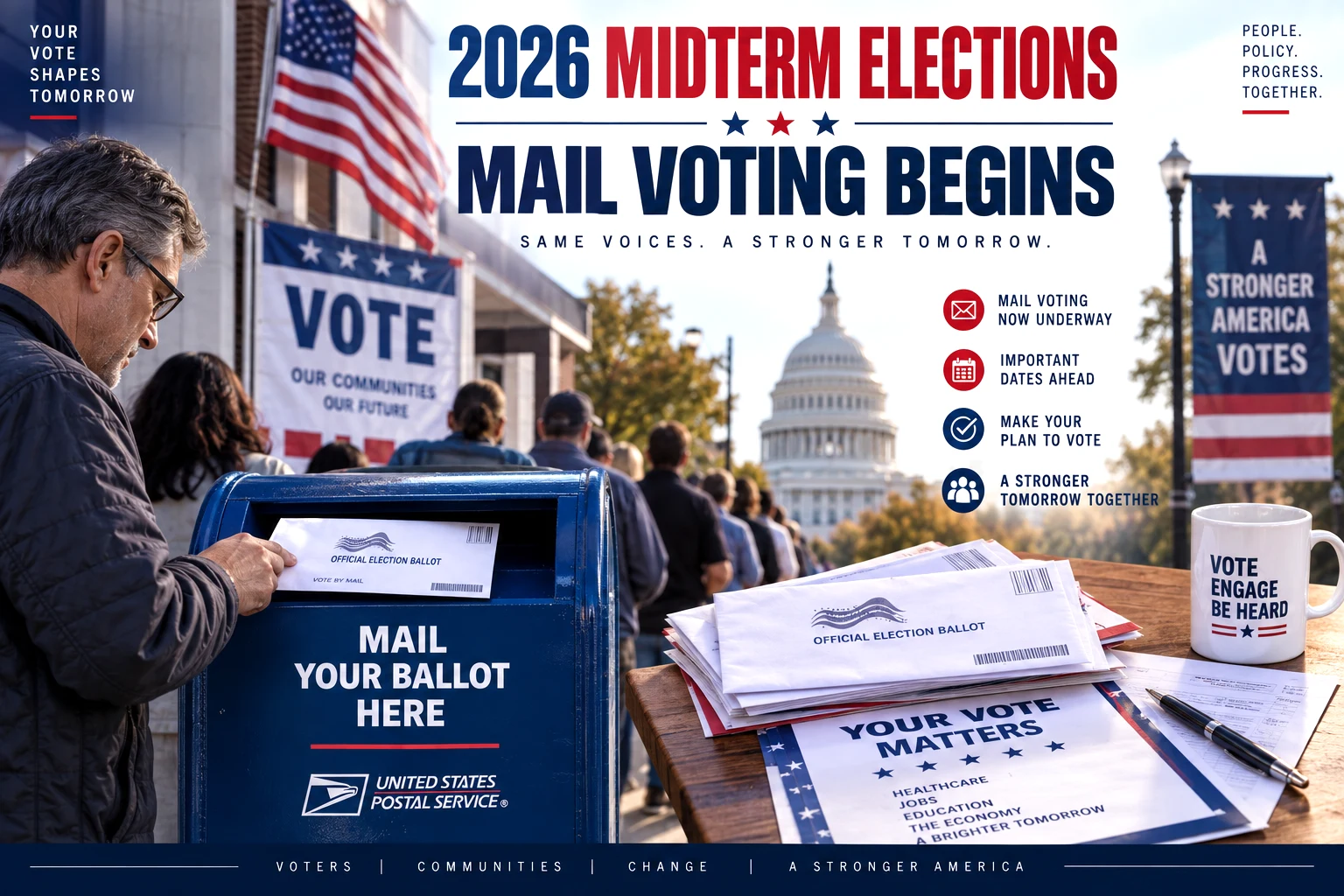
Voting has begun in the 2026 US midterm elections as North Carolina sends the first mail ballots, while control of Congress, mail-voting rules and redistricting dominate the campaign.
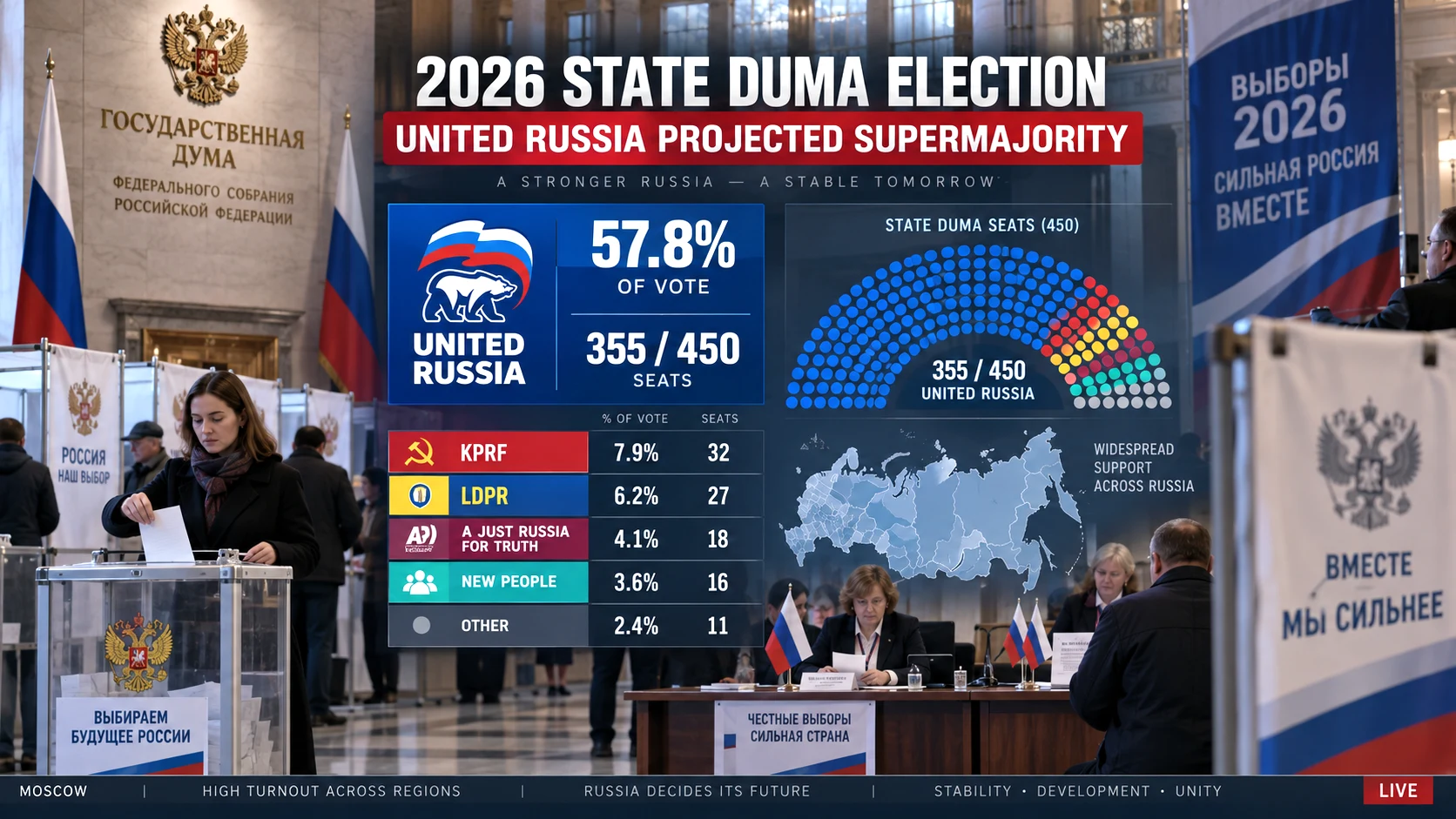
Russia’s ruling United Russia party has secured a decisive victory in the country’s 2026 parliamentary election, according to near-complete official results, putting the Kremlin-aligned party on course for a record 355 seats in the 450-member State Duma. The vote was Russia’s first parliamentary ele
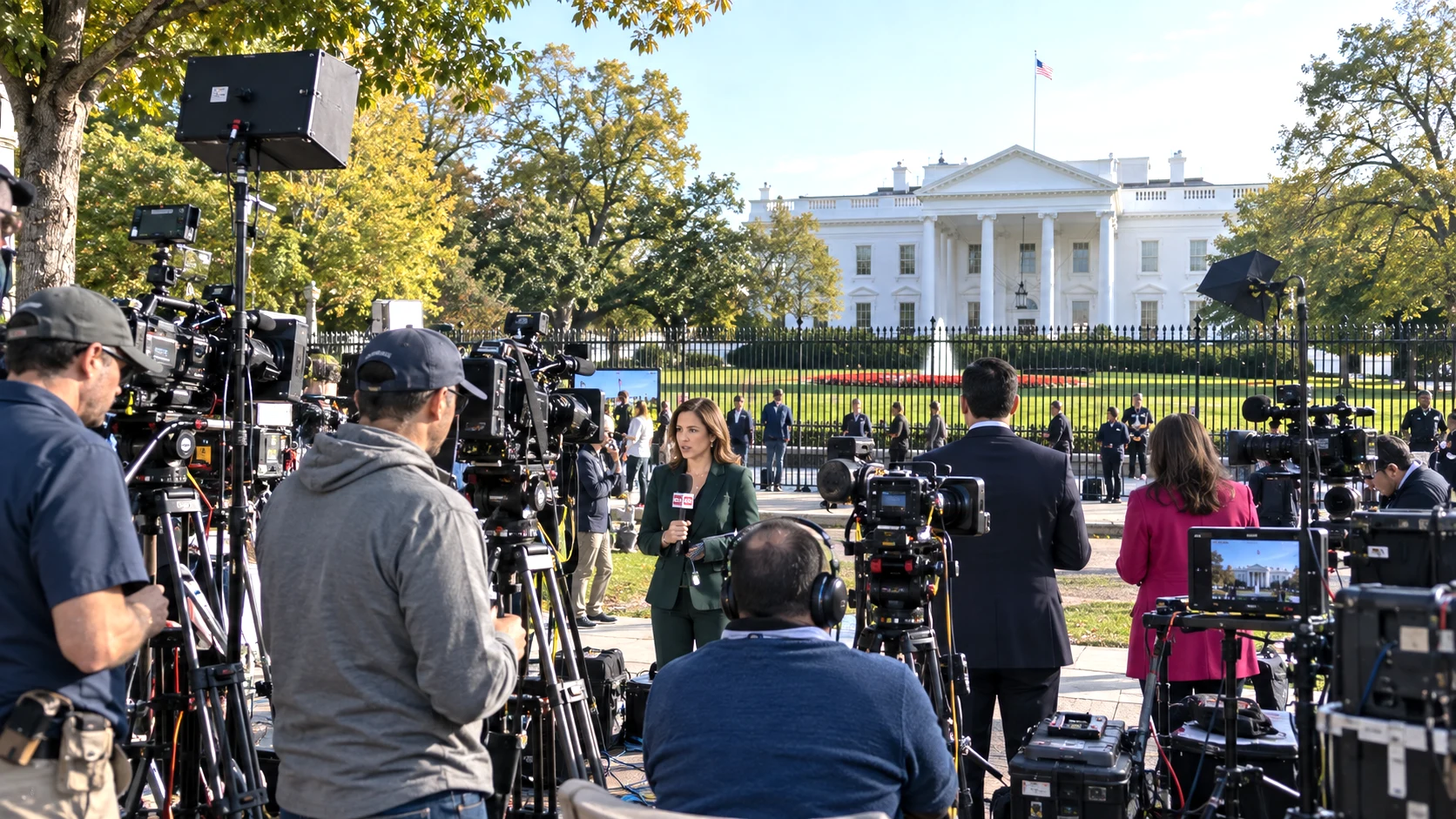
Major US television networks have suspended shared pool coverage of President Donald Trump after CNN was blocked from its scheduled duties, while CNN, MS NOW and Politico have sued over their White House access ban.

The EU has announced a €200 million Greenland partnership covering minerals, energy and connectivity as Trump’s push for US control keeps Arctic sovereignty in focus.

U.S. envoys Steve Witkoff and Jared Kushner have met Vladimir Putin and Volodymyr Zelenskyy in a renewed push for Ukraine peace talks, but major differences remain as Russia resumes ballistic missile attacks on Kyiv.

Harrison Butker drilled a 40-yard field goal at the final second of overtime as Patrick Mahomes and the Kansas City Chiefs survived a dramatic Indianapolis Colts challenge 33-30 on Sunday Night Football. Mahomes threw for 382 yards and three touchdowns, while Kenneth Walker III produced 178 yards fr

0 Comments