Ratko Mladić Funeral in Serbia Draws EU Condemnation and Renews Balkan Tensions
Thousands attended Ratko Mladić’s funeral in Belgrade despite EU warnings against glorifying convicted war criminals, renewing tensions over Serbia’s wartime legacy.
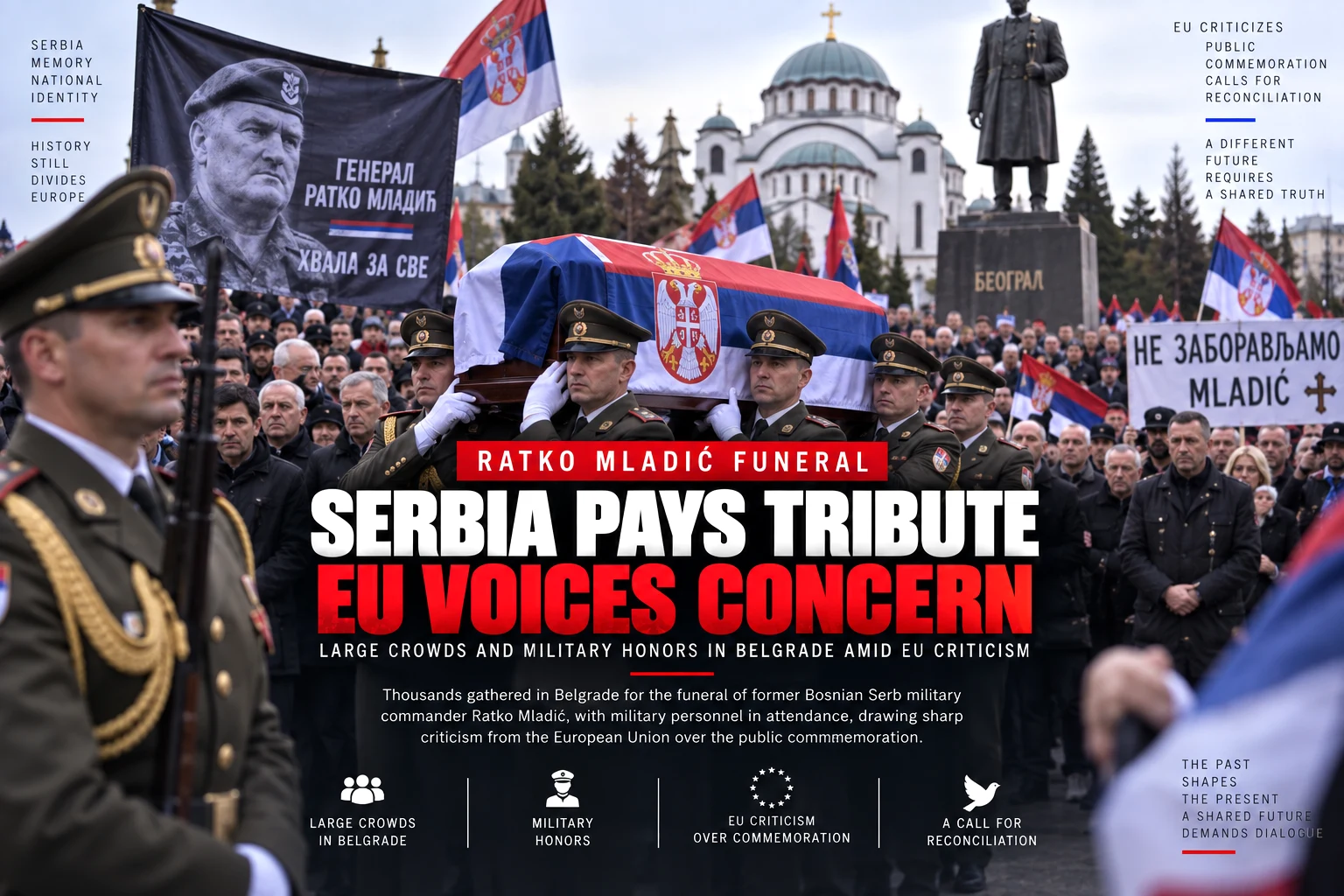
Crowds and Serbian military personnel at Ratko Mladić’s funeral in Belgrade amid EU criticism over the public commemoration
Table of Contents (13 sections)
Thousands of people gathered in Belgrade on 7 September 2026 for the funeral of former Bosnian Serb military commander Ratko Mladić, turning his burial into a major political and historical controversy across the Balkans.
Mladić died aged 84 on 27 August in The Hague, where he was serving a life sentence after being convicted of genocide, crimes against humanity and war crimes committed during the 1992–1995 Bosnian War.
He was convicted over crimes including the 1995 Srebrenica genocide, in which more than 8,000 Bosniak Muslim men and boys were killed, and the years-long siege of Sarajevo.
Despite those convictions, Mladić continues to be regarded as a hero by some Serbian nationalists.
His funeral reflected that divide.
Thousands came to pay respects, while the European Union, victims’ organisations and regional political figures condemned what they described as the glorification of a convicted war criminal.
The controversy is particularly important because Serbia remains a candidate for European Union membership, making the country’s approach to wartime accountability and reconciliation part of its relationship with Brussels.
Table of Contents
Recommended Reading
Related Stories & In-Depth Guides
Curated editorial perspectives matching this topic.
Major US television networks have suspended shared pool coverage of President Donald Trump after CNN was blocked from its scheduled duties, while CNN, MS NOW and Politico have sued over their White House access ban.
Canada has imposed new retaliatory tariffs of up to 50% on U.S. goods after trade negotiations with the Trump administration collapsed, escalating the Canada-US trade war.
What happened at Mladić’s funeral?
Why was the ceremony controversial?
What crimes was Mladić convicted of?
How did the EU respond?
What did President Vučić say?
Why does this matter for Serbia’s EU ambitions?
How have victims’ families reacted?
Could the funeral deepen Balkan tensions?
What happens next?
Key takeaway
Thousands Attend Funeral in Belgrade
Mladić’s body lay at the Serbian Orthodox Church of St. Luke in Belgrade before the burial.
Thousands of mourners arrived to pay their respects.
His military officer’s cap and sabre were displayed on the coffin, while men in military-style clothing stood nearby.
Patriarch Porfirije, head of the Serbian Orthodox Church, led the religious service.
Serbian soldiers later carried Mladić’s coffin, which was covered with the national flag, while a military orchestra played.
Mourners applauded during the procession.
The funeral was also broadcast extensively by pro-government Serbian media.
Prominent attendees included Bosnian Serb nationalist leader Milorad Dodik and Russian Ambassador to Serbia Alexander Botsan-Kharchenko.
Several serving Serbian ministers also attended.
President Aleksandar Vučić did not attend personally.
Was It an Official State Funeral?
This requires careful wording.
Before the burial, Serbian authorities had indicated that Mladić would not formally receive a state funeral or official military honours.
However, the actual events included substantial state and military involvement.
The Serbian government had previously sent an aircraft to The Hague to transport Mladić’s remains to Belgrade.
Soldiers carried his coffin.
A military commemoration was held at an official Serbian army venue before the funeral.
Several government ministers attended the burial.
That makes it reasonable to describe the event as a major public funeral involving Serbian state institutions.
But describing it simply as an officially declared “state funeral” could obscure the distinction between the government’s formal position and what occurred during the ceremonies.
Why Ratko Mladić Remains So Controversial
Mladić commanded Bosnian Serb forces during the Bosnian War.
An international tribunal convicted him of genocide, crimes against humanity and war crimes.
His most notorious conviction concerns Srebrenica.
In July 1995, Bosnian Serb forces overran the United Nations-designated safe area and killed more than 8,000 Bosniak Muslim men and boys.
Victims were buried in mass graves.
Mladić was also convicted in connection with the siege of Sarajevo and other crimes against non-Serb civilians.
His convictions were upheld on appeal.
These are therefore established international court judgments, not simply allegations against Mladić.
The Bosnian War ultimately killed more than 100,000 people and displaced more than a million before ending with the 1995 Dayton Peace Agreement.
EU Warns Serbia Against Glorification
The European Union responded strongly even before the funeral.
EU Enlargement Commissioner Marta Kos cancelled a planned trip to Serbia after Mladić’s remains were returned to Belgrade.
Kos said the glorification surrounding his death was incompatible with the values underpinning Serbia’s path towards EU membership.
The EU’s foreign service subsequently reiterated that glorification of war criminals, genocide denial and historical revisionism contradict fundamental European values.
Brussels stressed that reconciliation and respect for victims remain important requirements for countries seeking closer integration with the EU.
Serbia’s EU Membership Bid Could Face More Pressure
Serbia has been an EU candidate for years, but negotiations have moved slowly.
The Mladić controversy adds another obstacle.
Before the funeral, Kos described Serbia’s handling of the situation as an important test of its European path.
European diplomats had already expressed concern that official participation in commemorations for Mladić could weaken support among EU governments for advancing Serbia’s accession negotiations.
The issue is therefore larger than one funeral.
It raises questions about how Serbia addresses the legacy of the Yugoslav wars, international court judgments and reconciliation with neighbouring countries.
Vučić Rejects Western Criticism
President Vučić has rejected much of the criticism.
He described the large turnout surrounding Mladić as an “emotional outpouring” rather than something organised by his government.
Vučić has also accused Western governments of unfairly portraying Serbs as collectively responsible for the conflicts of the 1990s.
His government formally stopped short of designating the funeral as a full state ceremony.
At the same time, Serbia’s involvement in transporting Mladić’s remains, the participation of soldiers and the attendance by ministers have fuelled criticism that the boundary between a private funeral and official commemoration has become blurred.
Public Tributes Spread Beyond the Funeral
The funeral was not the only public tribute.
Since Mladić’s death, supporters have organised vigils, painted murals and lit flares in his honour.
Football supporters also displayed images of Mladić and chanted his name at a match in Belgrade shortly before the funeral.
Such displays have alarmed victims’ organisations and European officials because they suggest that competing interpretations of the 1990s wars remain deeply embedded in parts of Serbian society.
However, it would be misleading to claim that all Serbians support Mladić.
Serbian society remains politically divided, and opposition voices have publicly called for recognition of victims and acceptance of established facts about wartime crimes.
Srebrenica Victims’ Families Condemn the Homage
The Mothers of Srebrenica, representing relatives of people killed in the massacre, strongly condemned the public celebration surrounding Mladić’s funeral.
The group urged European institutions to respond and argued that glorifying a person convicted of genocide insults survivors and victims’ families.
Their reaction demonstrates why the controversy resonates far beyond Serbia.
More than three decades after the Bosnian War, families are still identifying and burying victims whose remains were recovered from mass graves.
For them, public homage to Mladić is not simply a debate about historical interpretation.
It concerns crimes for which international courts established criminal responsibility.
Why the Funeral Risks Renewing Balkan Tensions
Bosnia and Herzegovina remains politically divided between its Bosniak, Serb and Croat communities.
Public glorification of wartime commanders can therefore have political consequences.
It can deepen mistrust between communities, make reconciliation harder and increase tensions between Serbia and neighbouring countries.
The presence of Milorad Dodik at Mladić’s funeral adds another political dimension because Dodik remains one of the most influential Bosnian Serb nationalist figures.
The EU has repeatedly said reconciliation and good neighbourly relations are essential to the Western Balkans’ European future.
What Happens Next?
The immediate funeral has ended, but the diplomatic consequences may continue.
Serbia is approaching another important political period, with an early parliamentary election expected.
Vučić faces pressure from nationalist voters at home while simultaneously trying to maintain Serbia’s long-standing ambition of joining the European Union.
Brussels must now decide whether the Mladić commemorations affect the pace of accession negotiations.
The controversy could also intensify pressure on Serbian leaders to confront genocide denial and the glorification of convicted war criminals.
Key Takeaway
Ratko Mladić’s funeral in Belgrade has reopened one of the Balkans’ deepest historical wounds.
Thousands publicly honoured the former Bosnian Serb commander despite his final international convictions for genocide, crimes against humanity and war crimes.
The ceremony included soldiers, military music, senior Serbian officials and nationalist political figures, despite earlier attempts to distinguish the burial from a formal state funeral.
The European Union has condemned the glorification surrounding Mladić’s death and warned that Serbia’s handling of the issue conflicts with values expected of an EU candidate country.
For Serbia, the controversy is now about more than how one controversial wartime commander is remembered.
It concerns historical accountability, reconciliation with neighbouring countries and Serbia’s future relationship with Europe.
The Rajatheertha Team publishes news, explainers, guides and updates across India and the world. Our coverage follows Rajatheertha's editorial, verification and corrections standards.
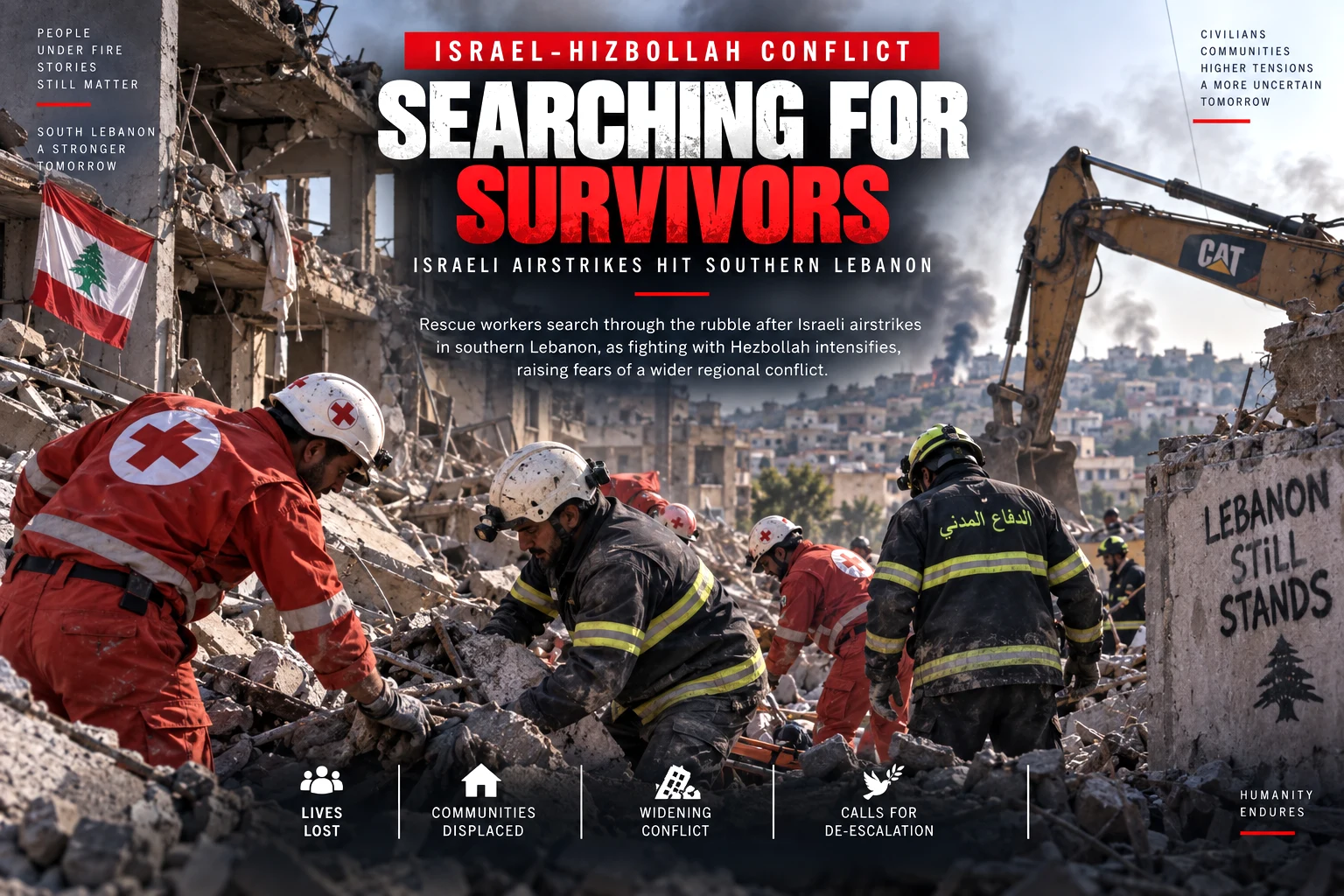
Israeli strikes in southern Lebanon have killed 12 people in Kfar Rumman, including children, women and a medic, as tensions with Hezbollah rise despite a June ceasefire.
U.S. envoys Steve Witkoff and Jared Kushner have met Vladimir Putin and Volodymyr Zelenskyy in a renewed push for Ukraine peace talks, but major differences remain as Russia resumes ballistic missile attacks on Kyiv.
The Trump administration faces multiple legal battles over mail voting, citizenship checks, voter data and election authority as the November 2026 midterms approach.
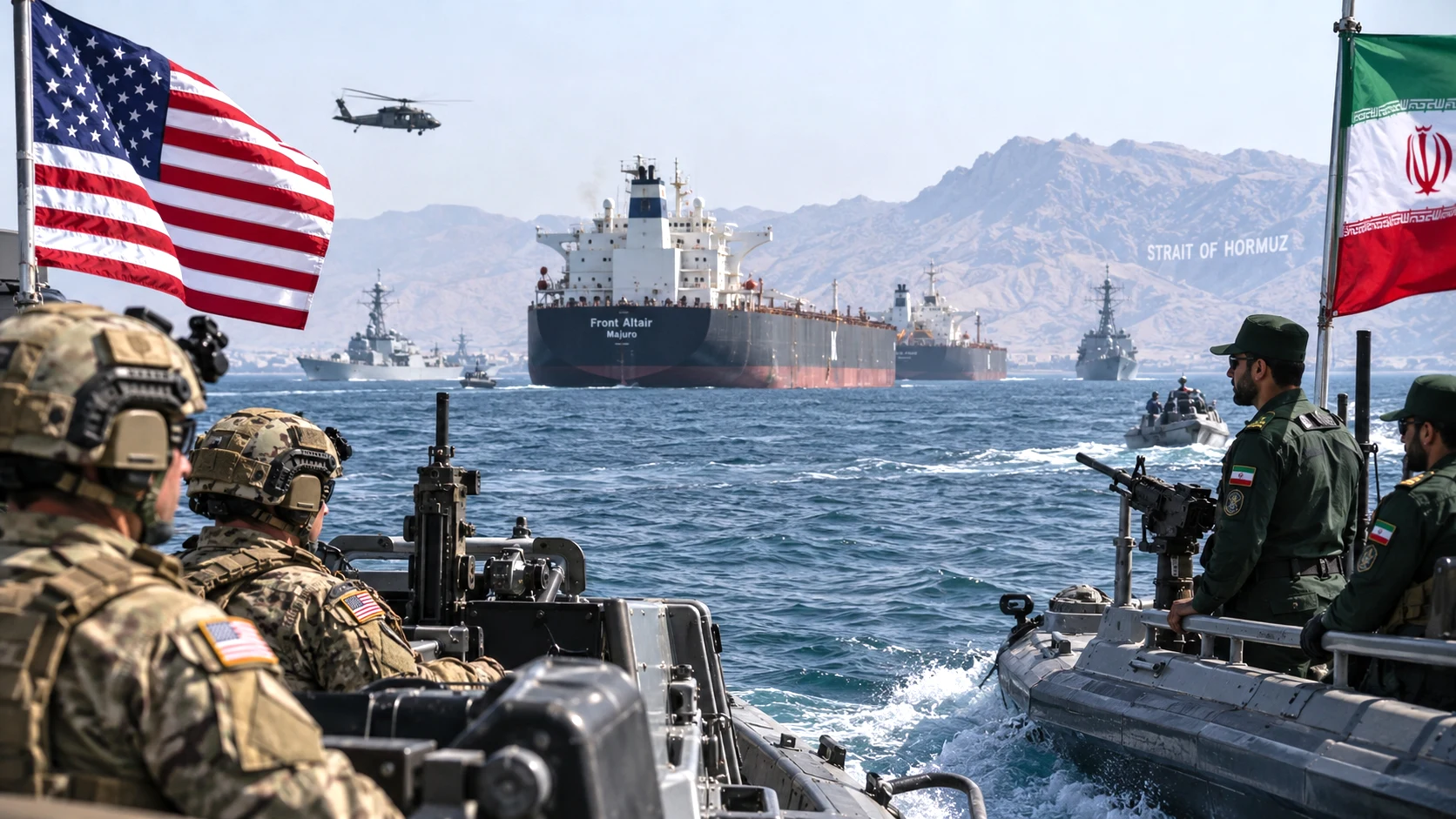
The US says it destroyed five Iranian oil tankers before Iran fired missiles toward a US-used base in Jordan and claimed attacks on ships near the Strait of Hormuz.
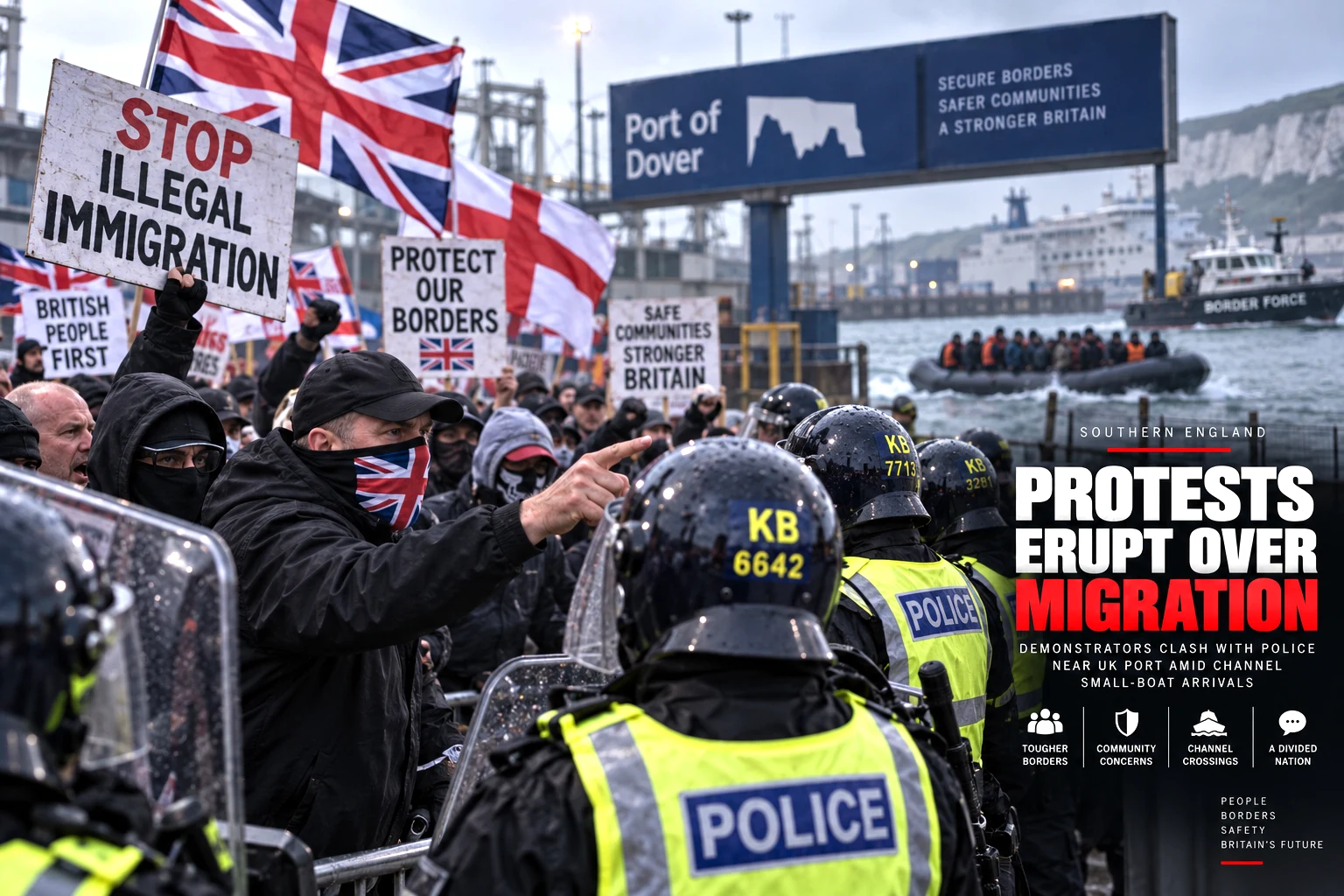
Anti-migration protests at Dover and Portsmouth have intensified Britain’s border debate after masked demonstrators blocked roads and clashed with police.
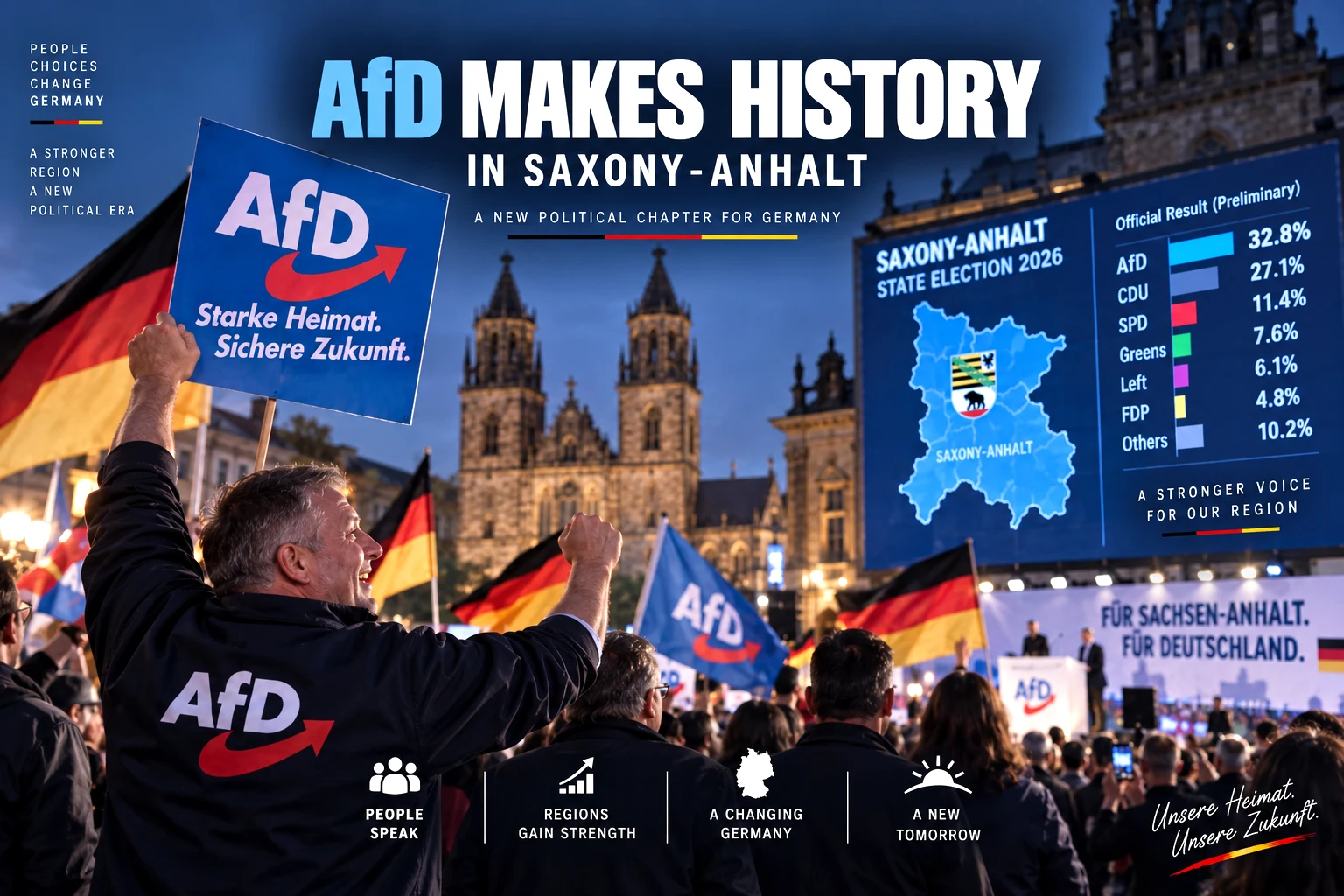
Germany’s far-right AfD has won 43.8% in Saxony-Anhalt, more than doubling its previous vote share and dealing a major blow to Chancellor Friedrich Merz’s CDU.





0 Comments