US-Iran War Escalates: US Destroys Five Iranian Oil Tankers as Iran Strikes Base in Jordan
The US says it destroyed five Iranian oil tankers before Iran fired missiles toward a US-used base in Jordan and claimed attacks on ships near the Strait of Hormuz.
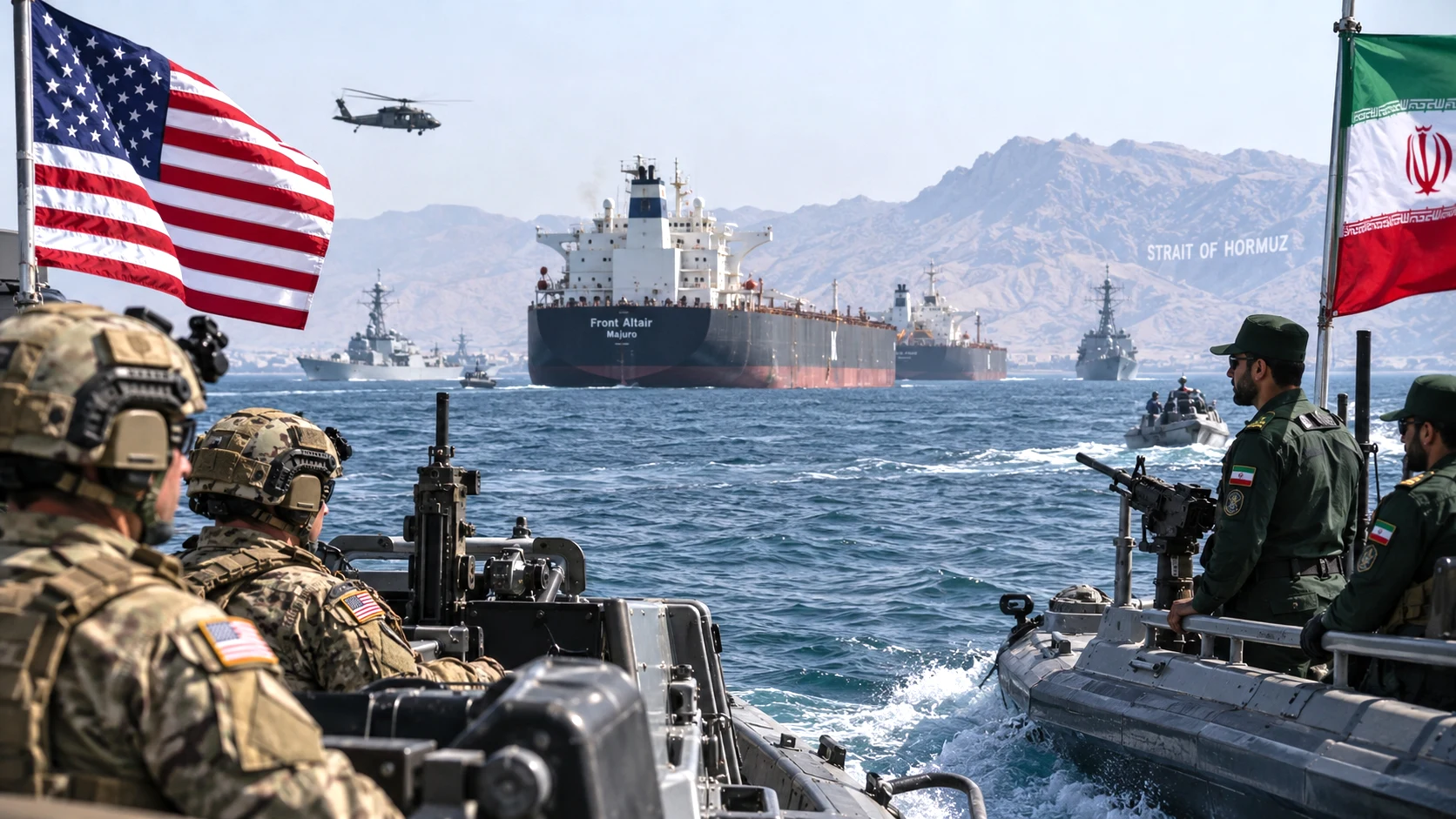
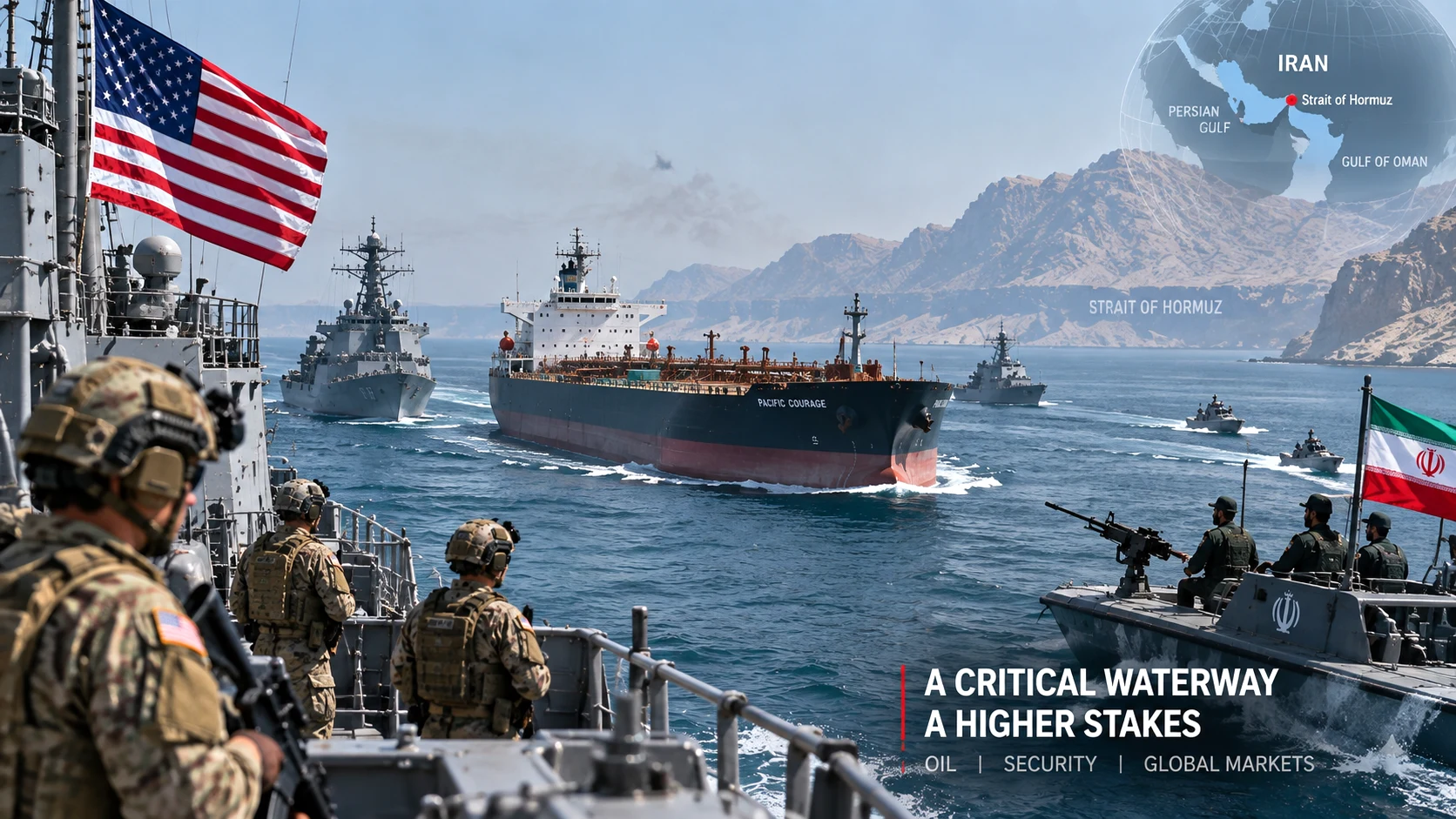
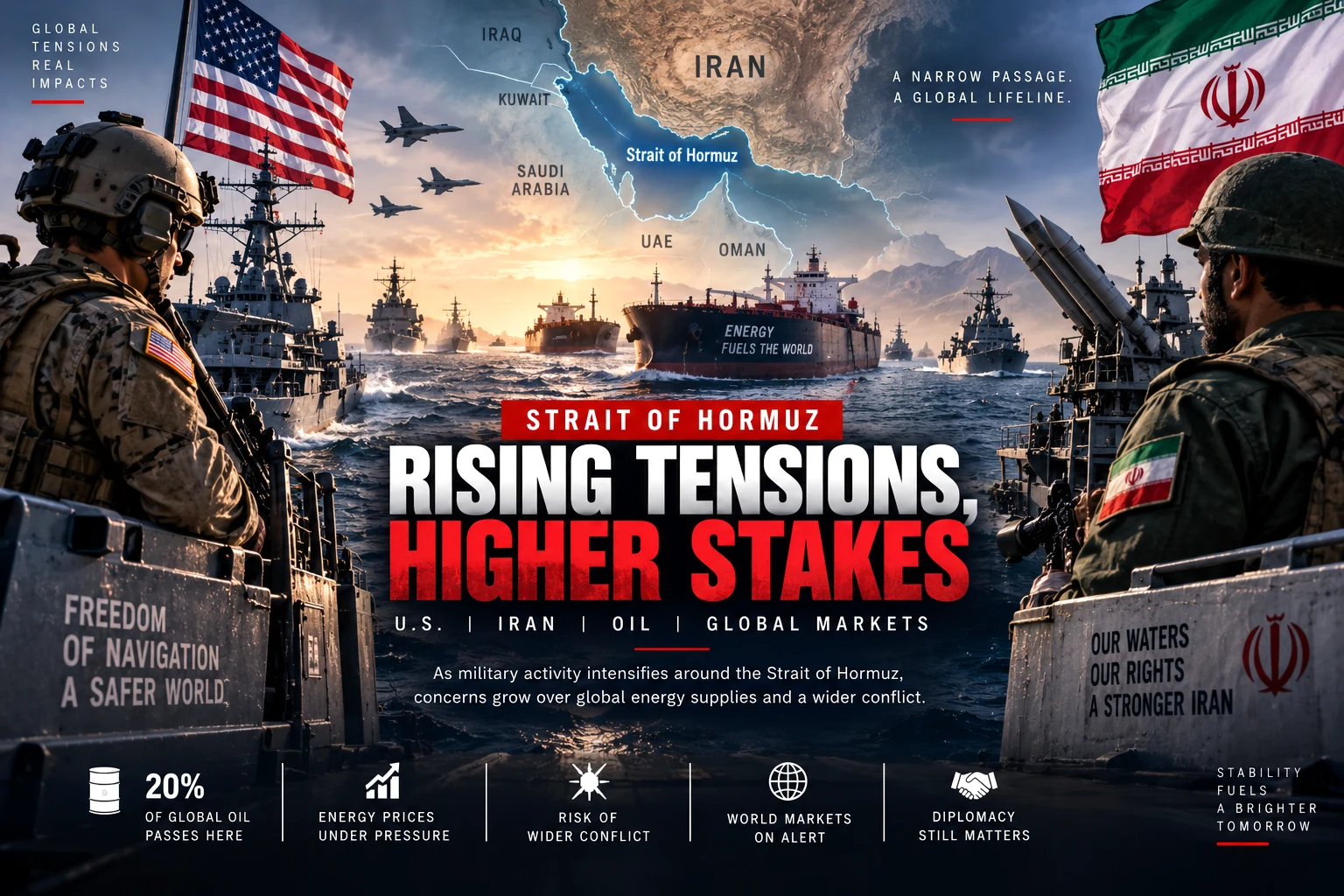
US and Iranian military forces and oil tankers representing escalating conflict around the Strait of Hormuz and global energy supplies
Table of Contents (15 sections)
September 9, 2026: The conflict between the United States and Iran has entered another dangerous phase after the U.S. military said it destroyed five Iranian oil tankers, followed by an Iranian ballistic missile attack targeting a base used by American forces in Jordan and attacks on vessels near the Strait of Hormuz.
Iran has also claimed the capture of an American underwater drone near the entrance to the Strait of Hormuz. The United States acknowledged losing an unmanned underwater vehicle but disputed Tehran’s portrayal of the incident, saying the drone had malfunctioned more than a day earlier and did not carry classified equipment.
The escalation is reverberating through global energy markets. Brent crude climbed to around $100 a barrel on Wednesday, as traders assessed the possibility of prolonged disruption to oil production and tanker traffic through one of the world’s most important energy corridors.
The latest developments come amid a six-month conflict that began with U.S.-Israeli attacks on Iran on February 28. After a period of relative calm, renewed attacks on military forces, commercial shipping and energy infrastructure have sharply increased the risk of a wider regional confrontation.
Table of Contents
Recommended Reading
Related Stories & In-Depth Guides
Curated editorial perspectives matching this topic.
Iran says it attacked 10 ships near the Strait of Hormuz after the US destroyed five Iranian oil tankers, sending Brent crude above $100 as global supply fears intensify.
U.S. envoys Steve Witkoff and Jared Kushner have met Vladimir Putin and Volodymyr Zelenskyy in a renewed push for Ukraine peace talks, but major differences remain as Russia resumes ballistic missile attacks on Kyiv.
What happened in the latest US-Iran escalation?
Why the US destroyed five Iranian oil tankers
Iran launches missiles toward US-used base in Jordan
Jordan says 18 of 20 missiles intercepted
Iran claims attacks on 10 vessels near Hormuz
Iran claims capture of US underwater drone
What the United States says about the captured drone
Why the Strait of Hormuz matters
Brent crude reaches around $100 a barrel
Houthi attacks add another layer of risk
What happens next?
Key takeaway
US Says It Destroyed Five Iranian Oil Tankers
The latest escalation began with U.S. military strikes against five Iranian oil tankers on Tuesday, September 8.
According to U.S. Central Command, four tankers were struck in the Gulf of Oman and another near Kharg Island, Iran’s primary crude-oil export hub.
The United States described the vessels as part of a network associated with Iran’s Islamic Revolutionary Guard Corps and said the strikes were carried out after Iranian forces allegedly attempted to attack a U.S. Navy warship with ballistic missiles twice over the preceding two days.
The U.S. said the American vessel successfully avoided those attacks and no U.S. personnel were injured.
The American operation follows an earlier round of attacks on Iranian tankers. The Associated Press reported that U.S. forces had struck three Iranian tankers several days earlier after the U.S. military said its warships were targeted by ballistic missiles.
The September 8 operation therefore represented a further escalation in Washington’s willingness to target Iran’s ability to export oil.
Why Is the US Targeting Iranian Oil Tankers?
The United States says the tankers are connected to a so-called shadow network that generates revenue for Iran’s Revolutionary Guard and its regional partners.
U.S. Secretary of State Marco Rubio linked the tanker strikes directly to Iranian attempts to target American naval forces.
Speaking during a visit to Colombia, Rubio said Washington intended to respond to attempts against American ships by imposing further costs on Iran’s tanker fleet.
Iran strongly rejects the American justification and has characterised the attacks on its oil shipping as unlawful aggression and economic warfare.
The competing claims underline an important feature of the current conflict: oil exports and maritime trade have become military as well as economic targets.
That creates risks extending far beyond Iran and the United States because Gulf shipping routes are essential to international energy supplies.
Iran Fires Ballistic Missiles at US-Used Base in Jordan
Iran responded by launching ballistic missiles toward a military base near Al Azraq in Jordan that is used by U.S. forces.
Iran’s Islamic Revolutionary Guard Corps announced the attack through state media and claimed its missiles had caused significant damage.
That claim is disputed.
Jordan’s military said its air defence systems intercepted 18 of the 20 ballistic missiles fired toward the country. The remaining two fell in unpopulated areas.
Jordan reported no casualties.
A U.S. official separately said all American personnel were accounted for and described the Iranian attack as ineffective.
Therefore, it would be inaccurate at this stage to report that Iran successfully destroyed the American base.
The verified development is that Iran launched ballistic missiles toward a base used by U.S. forces in Jordan, while Jordan says most were intercepted and no casualties resulted.
Why Jordan Is Becoming Part of the Conflict
Jordan is a close U.S. partner and hosts American military personnel.
Its geographical position between Israel, Iraq, Syria and Saudi Arabia makes the country strategically important but also exposes it to regional missile and drone activity.
The September 9 attack was not the first time American forces in Jordan have been targeted during the current conflict.
Reuters reports that Iranian attacks have targeted U.S. assets in Jordan several times during the war, including a strike in July that killed at least two U.S. military personnel.
The latest attack therefore increases pressure on Jordan as it attempts to protect its territory while avoiding deeper involvement in the conflict.
Iran Claims Attacks on 10 Ships Near Strait of Hormuz
The escalation has also spread directly into commercial shipping.
Iran’s Revolutionary Guard said it attacked 10 vessels, including two U.S. vessels and eight oil tankers, that were attempting to cross an area Iran described as prohibited and unsafe near the Strait of Hormuz.
Iran has also threatened vessels at ports in Kuwait and Bahrain.
The extent of damage from the claimed attacks remains unclear, and Iranian claims about individual targets have not all been independently verified.
A maritime security source also reported damage to a liquefied natural gas tanker at the Emirati port of Khor Fakkan, but responsibility for that incident had not been established.
The uncertainty is itself a major problem for shipping companies.
Even unsuccessful attacks or warnings can force vessels to delay voyages, change routes or wait for military protection, increasing transportation costs and reducing the amount of oil moving through the region.
Iran Claims Capture of American Underwater Drone
Another development attracting international attention is Iran’s claim that it captured an American unmanned underwater vehicle near the entrance to the Strait of Hormuz.
Iranian state media released images and footage purportedly showing the underwater drone being recovered.
Iran’s Revolutionary Guard described the vehicle as a highly advanced American unmanned submarine captured during an intelligence operation.
But the United States has offered a significantly different account.
The Pentagon confirmed that an American underwater drone had been lost but said it had malfunctioned more than a day before Iran recovered it.
The U.S. said the system was an older model being used to survey regional waters and did not contain sensitive information or classified sonar or radar equipment.
The manufacturer also acknowledged the loss of one of its vehicles while playing down its intelligence significance.
Therefore, the accurate description is that Iran recovered an American underwater drone and describes it as a capture, while the United States says the disabled vehicle had malfunctioned and contained no sensitive technology.
Why the Strait of Hormuz Matters to the World
The military exchanges are particularly dangerous because they are taking place around the Strait of Hormuz, one of the world’s most strategically important maritime passages.
The narrow waterway connects the Persian Gulf with the Gulf of Oman and the Arabian Sea.
Oil and liquefied natural gas exports from several Gulf producers normally move through the strait before reaching customers across Asia, Europe and other markets.
That means military disruption around Hormuz can rapidly become a global economic issue.
The current conflict has already sharply reduced normal shipping through the waterway.
For markets, the central question is not simply whether an oil facility has been destroyed. Traders must also assess whether tankers are willing and able to move safely through the region.
Brent Crude Reaches Around $100 a Barrel
Those fears are now clearly visible in energy prices.
Brent crude futures rose about 2.2% to roughly $100 a barrel on September 9, while U.S. West Texas Intermediate crude also climbed.
Reuters reported Brent at about $100.07 a barrel during Wednesday trading as markets reacted to the attacks on tankers, Iranian strikes and broader concerns about Middle Eastern energy security.
The Wall Street Journal reported Brent moving above $100 for the first time since July, with front-month futures reaching around $100.06 during trading.
Oil prices can move quickly, so these figures should be treated as market levels at the time of reporting rather than fixed prices.
The direction, however, is clear: escalating military action is adding a substantial geopolitical risk premium to global crude markets.
Why Higher Oil Prices Matter for India
India has a major economic interest in what happens next.
As one of the world’s largest crude-oil importers, India is exposed when international energy prices rise sharply.
A prolonged increase in crude prices can increase India’s import bill and put pressure on the rupee, inflation, transportation costs and fuel-related expenses.
The eventual effect on domestic petrol and diesel prices depends on several factors, including international crude prices, exchange rates, taxes and pricing decisions by oil-marketing companies.
A short-term spike around $100 therefore does not automatically mean an immediate equivalent increase at Indian fuel pumps.
But if disruption around the Strait of Hormuz persists, the economic consequences would become harder for major Asian oil importers to ignore.
Houthi Attacks Add Another Layer of Regional Risk
The U.S.-Iran confrontation is not occurring in isolation.
Yemen’s Iran-aligned Houthi movement has launched attacks against several locations in Saudi Arabia, including energy infrastructure and a military base.
Reuters reported that the attacks wounded 73 people and caused fires at oil installations.
The Houthis said drones and missiles targeted locations including Khamis Mushait as well as energy assets around Abha, Najran and Jazan.
These attacks create another potential problem for global energy markets.
The Strait of Hormuz is already under pressure on one side of the Arabian Peninsula. Renewed Houthi activity creates risks around the Red Sea and Saudi energy infrastructure on the other.
That combination increases concerns about the resilience of Middle Eastern oil production and shipping routes.
A Six-Month Conflict Returns to Intense Fighting
The latest escalation follows roughly six months of conflict that began on February 28, 2026, with joint U.S.-Israeli attacks on Iran.
Since then, the confrontation has moved through periods of intense fighting and relative calm.
Recent attacks have broken a roughly month-long period of reduced hostilities.
The conflict is increasingly being fought not only through strikes against military targets but also through attempts to impose economic pressure.
Washington is trying to restrict Iranian oil exports while supporting movement of energy supplies through the Strait of Hormuz.
Iran, meanwhile, has used its strategic position around the strait to threaten shipping and increase the economic cost of U.S. military pressure.
This creates a dangerous cycle.
An attack on a military vessel can lead to strikes on tankers. Those strikes can trigger missile retaliation. Maritime attacks then raise oil prices and potentially draw neighbouring states further into the conflict.
What Happens Next?
Three developments will be critical.
The first is whether the United States carries out additional strikes against Iranian oil tankers or other energy assets if Iran again targets American warships.
The second is whether Iran continues attacking commercial shipping and U.S.-linked military facilities around the Gulf.
The third — and potentially most important for the global economy — is whether tanker traffic through the Strait of Hormuz deteriorates further.
Any serious and prolonged interruption to Gulf oil exports could push energy prices higher and affect economies far beyond the Middle East.
Diplomatic developments will therefore be watched alongside military ones.
For now, however, the latest exchange shows that the conflict has entered a particularly dangerous phase in which military escalation and economic warfare are becoming increasingly intertwined.
The United States says its tanker strikes were retaliation for Iranian attempts to attack American warships. Iran says its subsequent military operations are retaliation for attacks on its oil trade.
Between those competing positions lies the Strait of Hormuz — and a global energy market increasingly sensitive to what happens there next.
Key Takeaway
The US-Iran conflict escalated sharply on September 8-9.
The United States says it destroyed five Iranian oil tankers after alleged ballistic-missile attempts against a U.S. Navy warship.
Iran responded with ballistic missiles toward a U.S.-used base in Jordan. Jordan said 18 of 20 missiles were intercepted and reported no casualties.
Iran also claimed attacks on vessels near the Strait of Hormuz and the recovery of an American underwater drone. The U.S. says the drone had malfunctioned and carried no classified equipment.
Brent crude reached around $100 a barrel as markets priced in heightened disruption risks around Hormuz.
The conflict is now being fought simultaneously in military, maritime and energy domains, with global economic consequences.
The Rajatheertha Team publishes news, explainers, guides and updates across India and the world. Our coverage follows Rajatheertha's editorial, verification and corrections standards.
The US-Iran conflict has entered another dangerous phase as strikes on tankers, missile attacks and renewed disruption in the Strait of Hormuz threaten global energy supplies.
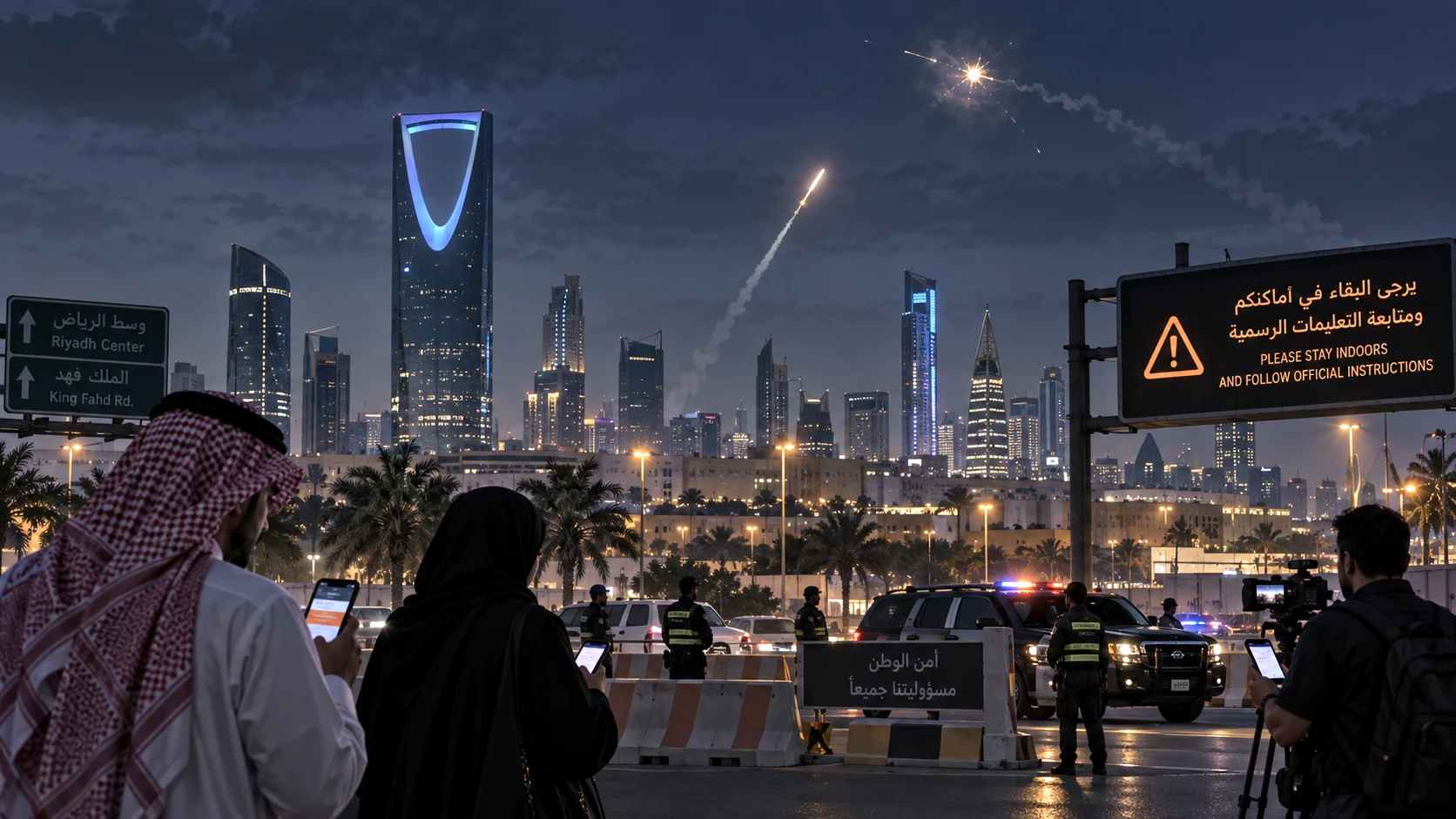
Saudi authorities said air defences destroyed a ballistic missile launched toward Riyadh on September 19, marking the first reported targeting of the capital since the latest escalation with Yemen’s Houthis, as residents received emergency warnings and explosions were heard.**
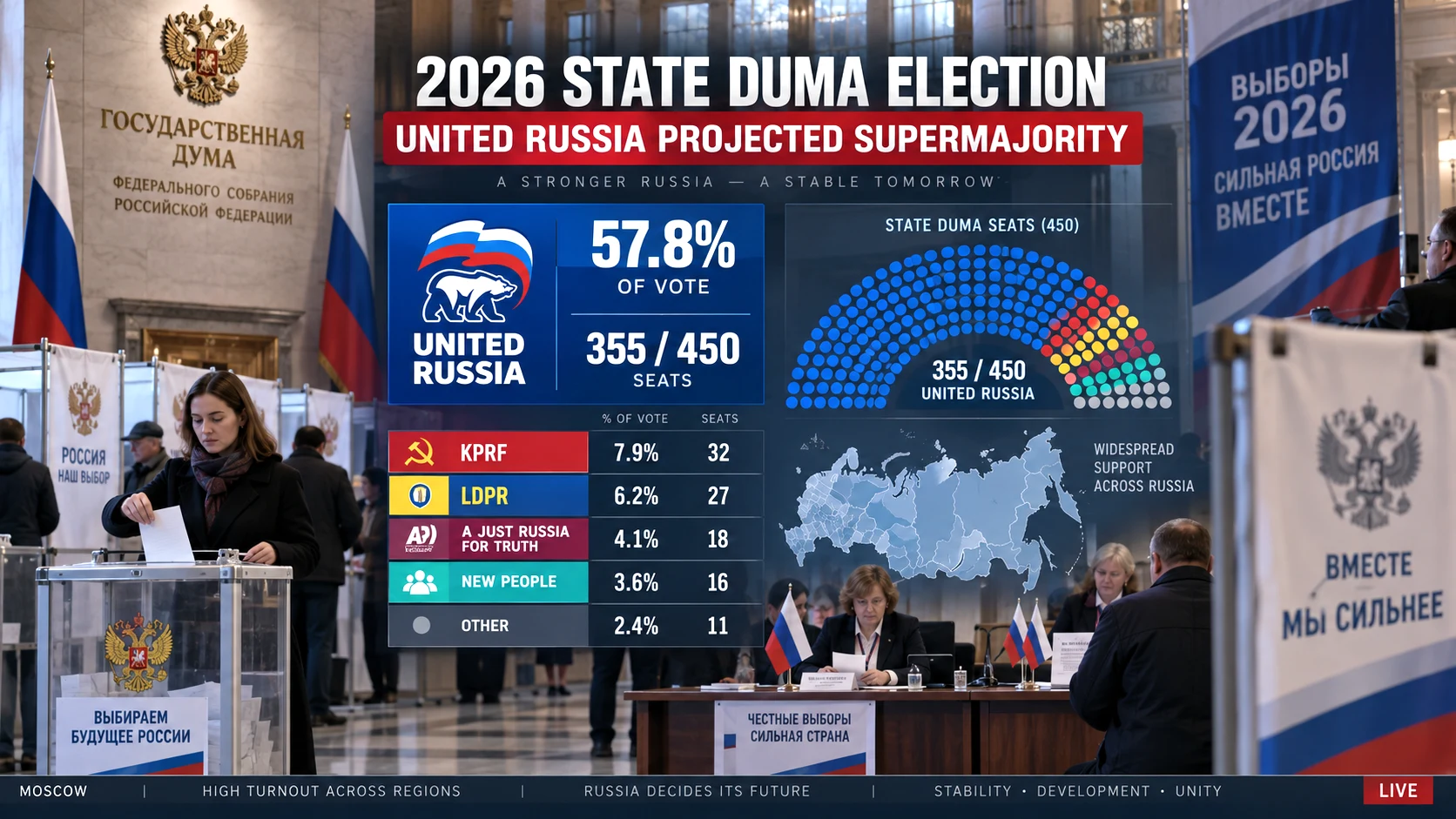
Russia’s ruling United Russia party has secured a decisive victory in the country’s 2026 parliamentary election, according to near-complete official results, putting the Kremlin-aligned party on course for a record 355 seats in the 450-member State Duma. The vote was Russia’s first parliamentary ele
The Trump administration faces multiple legal battles over mail voting, citizenship checks, voter data and election authority as the November 2026 midterms approach.
Israeli strikes in southern Lebanon have killed 12 people in Kfar Rumman, including children, women and a medic, as tensions with Hezbollah rise despite a June ceasefire.
Voting has begun in the 2026 US midterm elections as North Carolina sends the first mail ballots, while control of Congress, mail-voting rules and redistricting dominate the campaign.






0 Comments