RBI Policy October 2026: Will Repo Rate Rise to 5.50%? Home Loan EMI Impact Explained
The RBI MPC meets October 5–7 with the repo rate at 5.25%. Most economists in a Reuters poll expect a 25-bps hike to 5.50%. Here is why rates may rise and what that could mean for home-loan EMIs.
Reserve Bank of India headquarters ahead of the October 2026 MPC decision on repo rates and home-loan borrowing costs
Table of Contents (30 sections)
India's next interest-rate decision is approaching at a significantly more difficult moment for the Reserve Bank of India.
The RBI's six-member Monetary Policy Committee is scheduled to meet from October 5 to October 7, 2026, with the policy repo rate currently at 5.25%. A majority of economists surveyed by Reuters expect the central bank to raise the repo rate by 25 basis points to 5.50%.
Recommended Reading
Related Stories & In-Depth Guides
Curated editorial perspectives matching this topic.
Iran’s economy contracted by 10.1% year-on-year during the first quarter of its current Persian calendar year, according to official data, with a collapse in oil and natural-gas activity driving much of the decline. The figures cover the first months of the US-Israel conflict with Iran, although the
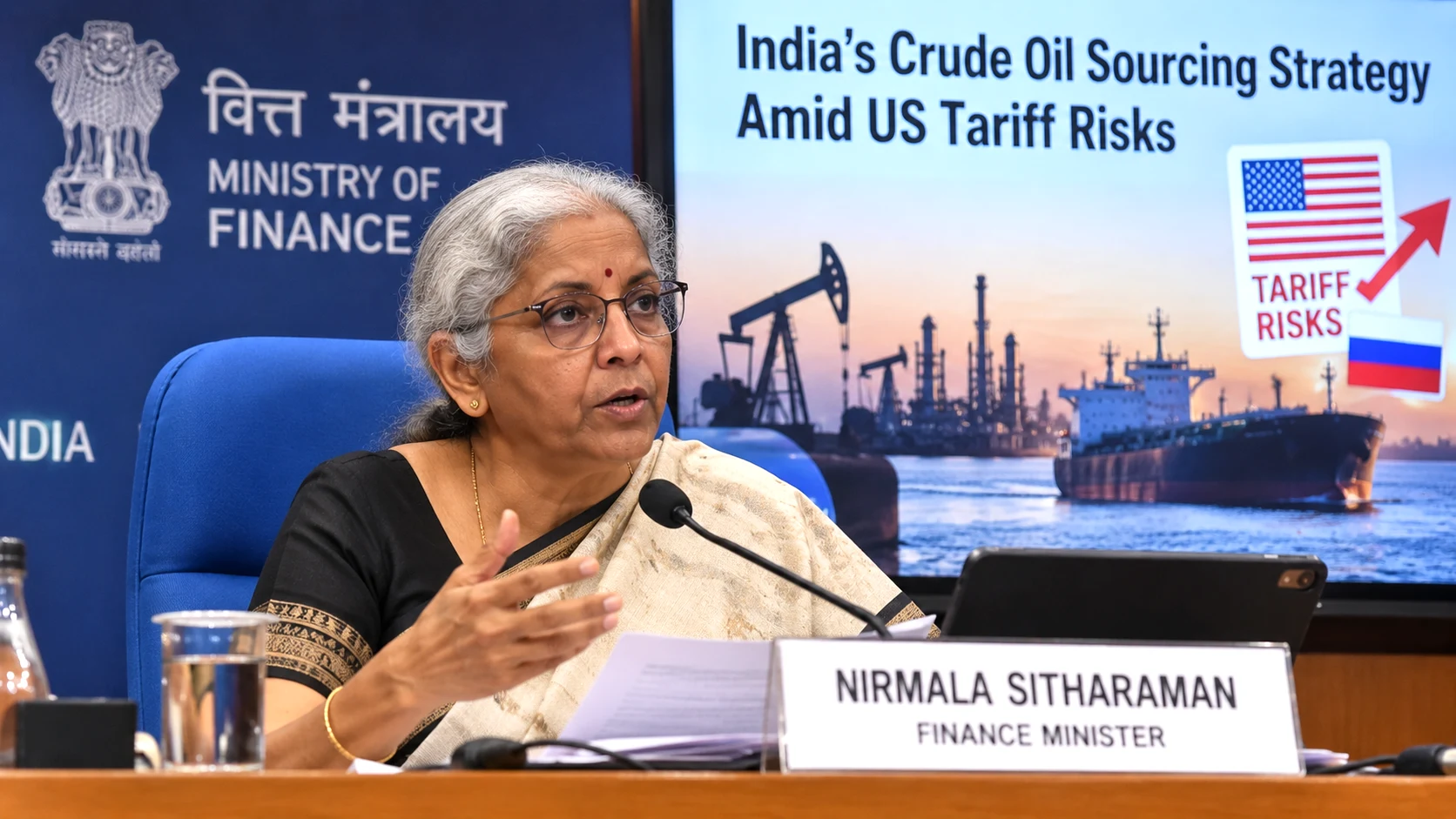
Finance Minister Nirmala Sitharaman says India cannot abruptly abandon Russian crude and will base oil purchases on availability, price and refinery suitability as a new US law raises the risk of tariffs of up to 100% on major Russian-energy buyers.
Such a move, if approved, would mark the RBI's first rate increase since February 2023. But borrowers should not treat the hike as certain before the MPC votes and Governor Sanjay Malhotra announces the decision.
The argument for tighter monetary policy has strengthened because inflation has moved above the RBI's 4% medium-term target, global energy costs remain elevated, the rupee has weakened sharply and inflationary pressures appear to be spreading beyond food and fuel.
At the same time, the RBI must weigh those risks against the effect that higher borrowing costs could have on households, businesses, housing demand and economic growth.
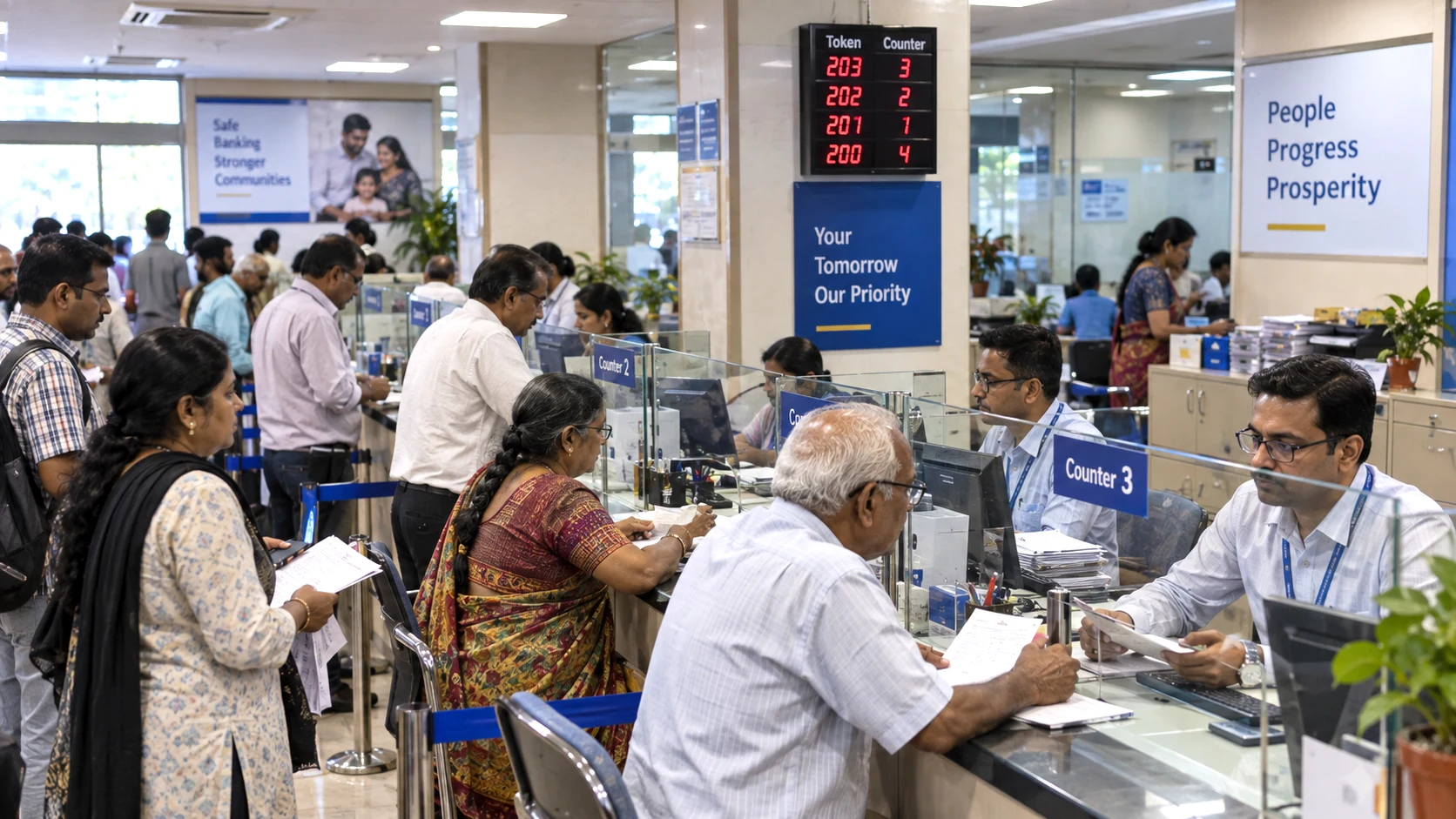
For homebuyers and existing mortgage borrowers, the October decision is especially important. If the RBI raises the repo rate and lenders transmit the increase to floating-rate loans, borrowers could face a higher EMI, a longer repayment period, or a combination of both.
Key Numbers Before the RBI October Policy
Here is where the major indicators stand ahead of the meeting:
Current repo rate: 5.25%
Expected rate after a possible 25-bps hike: 5.50%
MPC meeting: October 5–7, 2026
August CPI inflation: 4.82%
July CPI inflation: 4.45%
August food inflation: 5.95%
August core inflation: around 4.2%, according to an economist cited by Reuters
Latest rupee close: ₹96.3150 per US dollar
Latest Brent crude settlement: $102.25 per barrel on October 2
Recent Brent peak: close to $108 per barrel earlier in the period
India's August retail inflation accelerated to 4.82%, its third consecutive month above the RBI's 4% medium-term target, although it remained within the central bank's broader 2%–6% tolerance band.
Will RBI Raise the Repo Rate to 5.50%?
A rate increase is currently the majority expectation among economists, but it is not unanimous.
A Reuters poll conducted from September 18 to September 28 found that 35 of 61 economists — nearly 60% — expected the RBI to raise the repo rate by 25 basis points to 5.50% at the October meeting.
The same survey found that 29 of 53 economists expected at least one additional 25-bps increase by December.
If those forecasts prove correct, the repo rate could reach 5.75% by the end of 2026.
That remains a forecast rather than official RBI guidance.
The central bank could still choose to hold the rate at 5.25% if the MPC concludes that recent inflation is predominantly supply-driven, that the decline in crude prices reduces near-term pressure, or that more data are required before tightening monetary policy.
Why Has the Probability of a Rate Hike Increased?
Several developments have strengthened the case for tightening.
1. Inflation Has Moved Above the RBI's 4% Target
Consumer price inflation rose to 4.82% in August from 4.45% in July.
Food inflation increased to 5.95% from 5.52%, while price pressures were also appearing in categories beyond food and fuel.
That broadening is important.
Central banks generally have less ability to address a temporary rise caused purely by vegetables, fuel or other supply shocks. But when inflation spreads into a wider range of goods and services, policymakers may become more concerned that higher prices are becoming persistent.
Reuters reported that core inflation, which excludes volatile food and fuel components, rose to about 4.2% in August from 3.86% in July.
2. Crude Oil Remains Expensive
India imports the majority of the crude oil it consumes, making elevated international energy prices an important inflation risk.
Brent crude approached $108 per barrel during September as geopolitical and supply concerns intensified.
Prices have since eased.
At the latest October 2 settlement, Brent stood at $102.25 per barrel, after coordinated discussions over emergency oil and fuel reserve releases helped ease some market pressure.
That means describing crude as currently “near $107” would now be outdated.
However, oil remaining above $100 still matters for India because sustained high energy prices may feed into transportation, manufacturing, logistics and other costs.
3. The Rupee Has Weakened Beyond 96 Per Dollar
The Indian rupee recently broke through the psychologically important ₹96-per-dollar level.
Its latest available close was ₹96.3150 against the US dollar, its weakest level in about two months at that point.
Reuters reported that the currency had been pressured by:
higher oil prices;
rising global bond yields;
a stronger US dollar;
foreign portfolio outflows; and
broader global uncertainty.
A weaker rupee can make imported commodities more expensive in local-currency terms.
That creates another channel through which global inflation may enter India.
4. Global Interest Rates Are Also Rising
India is not making its monetary-policy decision in isolation.
Global borrowing costs have risen sharply, while several major central banks have either increased rates or considered doing so in response to inflation and energy shocks.
The Reuters economist poll noted that the rupee had weakened by about 6% during 2026, adding to pressure on the RBI as global interest-rate differentials change.
Higher overseas yields can make global investors less willing to hold emerging-market assets unless returns compensate for the additional risk.
This does not mean the RBI raises rates simply to defend a specific rupee level. Its formal monetary-policy mandate remains centred on inflation while keeping growth in mind.
What Did RBI Do at Its Previous Meeting?
At the August 3–5 MPC meeting, the committee unanimously kept the policy repo rate unchanged at 5.25% and retained a neutral stance.
The RBI said at that time it needed greater clarity on the future inflation path and on whether inflationary pressures were becoming more widespread.
The central bank's official rates showed:
Repo rate: 5.25%
Standing Deposit Facility: 5.00%
Marginal Standing Facility: 5.50%
Bank Rate: 5.50%
The neutral stance gives the committee flexibility to respond in either direction depending on incoming inflation, growth and financial-market data.
What Changed Since August?
Several indicators have become less comfortable for the RBI.
Inflation increased again in August.
Core inflation strengthened.
Oil prices moved substantially above their earlier levels.
The rupee weakened through 96 per dollar.
Global yields increased.
And policymakers themselves had indicated that monetary tightening could become appropriate if inflation broadened.
Reuters reported that minutes of the August meeting showed several policymakers, including Governor Sanjay Malhotra, viewed a rate increase as a possibility if price pressures spread across the economy.
Those developments help explain why the consensus among economists shifted toward an October hike.
What a 25-Basis-Point Repo Rate Hike Means
A basis point is one-hundredth of a percentage point.
Therefore:
25 basis points = 0.25 percentage point.
If the RBI raises the repo rate from:
5.25% → 5.50%
the increase is 25 basis points.
The repo rate is the policy rate at which the RBI provides short-term liquidity to banks against eligible securities.
A repo-rate increase does not automatically mean every home loan becomes exactly 0.25 percentage point more expensive immediately.
The actual impact depends on:
whether the loan has a fixed or floating rate;
the benchmark used by the lender;
the reset frequency;
the lender's spread;
the loan contract; and
how much of the RBI move is transmitted.
Home Loan EMI Impact: What Could a 25-Bps Hike Cost?
For borrowers with floating-rate home loans linked to an external benchmark, an RBI rate increase can eventually raise the applicable lending rate.
Here is an illustrative example.
Assume:
Loan: ₹50 lakh
Remaining tenure: 20 years
Current interest rate: 8.50%
New rate after full 25-bps transmission: 8.75%
At 8.50%, the monthly EMI is approximately:
₹43,391
At 8.75%, it becomes approximately:
₹44,186
That is an increase of roughly:
₹794 per month
If the higher EMI applied for the entire 20-year period, total payments would be approximately ₹1.91 lakh higher, assuming everything else remained unchanged.
This is only an illustration. Individual borrowers' actual rates, outstanding principal and remaining tenures will differ.
Illustrative EMI Effect of a 0.25% Increase
Loan amount
EMI at 8.50%
EMI at 8.75%
Approx. monthly increase
₹30 lakh
₹26,035
₹26,511
₹477
₹50 lakh
₹43,391
₹44,186
₹794
₹75 lakh
₹65,087
₹66,278
₹1,192
₹1 crore
₹86,782
₹88,371
₹1,589
Assumption: 20-year repayment period and full transmission of a 25-bps increase from 8.50% to 8.75%.
These figures are illustrative estimates rather than lender quotations.
Your EMI May Not Rise Immediately
A repo-rate increase does not necessarily produce an immediate EMI change on the same day.
The timing depends on the benchmark and reset schedule specified in the loan contract.
RBI rules provide that interest rates under an external benchmark framework are reset at least once every three months.
This means two borrowers with otherwise similar loans may see the change applied on different dates.
Borrowers should check:
their loan benchmark;
current spread;
next reset date;
present outstanding principal;
remaining tenure; and
lender's policy for adjusting EMI versus tenure.
Could the Bank Extend Your Loan Instead of Raising the EMI?
Yes.
For floating-rate EMI loans, an increase in the benchmark may be handled through:
a higher EMI;
a longer loan tenure; or
a combination of both.
RBI's borrower-protection framework requires regulated lenders to communicate the impact of interest-rate resets and provide borrowers with options when rates increase.
For example, consider the same ₹50-lakh, 20-year illustrative loan at 8.50%.
If the rate rose to 8.75% but the EMI remained around ₹43,391 rather than increasing, the repayment period could extend by roughly 12 months, subject to lender policy and individual loan conditions.
This illustrates why borrowers should monitor both EMI and remaining tenure after an interest-rate reset.
A small increase in the interest rate can have a meaningful effect when multiplied across a long mortgage period.
What Options Do Home-Loan Borrowers Have?
RBI rules require lenders, in applicable floating-rate EMI loans, to provide borrowers with choices when rates are reset.
These can include:
increasing the EMI;
extending the tenure;
using a combination of higher EMI and longer tenure;
making part-prepayments;
making full repayment; and
where available under the lender's approved policy, switching to a fixed rate.
Borrowers should compare the long-term interest cost rather than looking only at the immediate monthly EMI.
Extending the tenure can reduce short-term cash-flow pressure but may increase the total interest paid over the life of the loan.
Would Fixed-Rate Home Loans Be Affected?
A genuinely fixed-rate home loan generally does not change simply because the RBI alters the repo rate during the fixed period.
However, borrowers should check whether their product is:
fully fixed for the entire tenure;
fixed only for an introductory period; or
subject to periodic reset clauses.
The RBI's consumer guidance advises borrowers to understand whether their rate is fixed or floating and to check the applicable reset provisions carefully.
Could New Homebuyers Face Higher Rates?
Possibly.
If the RBI begins a rate-hiking cycle and banks pass higher funding costs into their loan pricing, prospective homebuyers could see higher mortgage rates.
The practical effect is that the same monthly budget could support a somewhat smaller loan.
This can influence:
home affordability;
buyer eligibility;
demand for higher-priced homes;
developers' sales strategies; and
housing-market sentiment.
However, a 25-bps policy increase alone does not determine property prices.
Real-estate markets are also affected by employment, household income, housing supply, construction costs, local infrastructure, location-specific demand and credit availability.
Could RBI Hold the Repo Rate Instead?
Yes.
Despite the majority forecast favouring a hike, 26 of the 61 economists in the Reuters poll did not forecast the 25-bps October increase.
That itself shows that the decision is not considered certain.
Arguments for holding at 5.25% could include:
waiting to see whether the recent oil-price decline persists;
determining whether inflation is truly becoming broad-based;
avoiding unnecessary pressure on growth;
allowing previous liquidity measures to work;
and waiting for additional inflation data.
The MPC's decision will therefore depend not only on the latest CPI number but on its assessment of where inflation is heading.
Why RBI Watches Inflation Expectations, Not Just Today's Inflation
Interest-rate policy works with a lag.
If the RBI waits until inflation is already very high and embedded across the economy, stronger tightening may eventually be required.
Conversely, raising rates aggressively because of a temporary supply shock could weaken demand without solving the original cause of inflation.
That balancing act is why the composition and persistence of inflation matter.
In August, the RBI had indicated it wanted more evidence about whether price pressures were spreading.
The subsequent rise in headline and core inflation has made that question more urgent.
What a Rate Hike Could Mean for Fixed Deposits
Borrowers would generally prefer lower rates, but depositors may benefit if banks eventually increase deposit rates during a tightening cycle.
A repo hike can improve the possibility of higher returns on:
bank fixed deposits;
some short-term debt instruments; and
newly issued fixed-income products.
Transmission is neither automatic nor uniform.
Banks determine deposit pricing based partly on liquidity conditions, funding requirements, competition and maturity.
What About Personal and Vehicle Loans?
Floating-rate loans may eventually become more expensive if benchmark rates rise.
Fixed-rate existing loans would usually be less directly affected during their fixed-rate period.
New borrowers could encounter higher offered rates if lenders reprice credit.
For consumers considering a large loan, the relevant comparison should include:
EMI;
annual percentage rate;
processing costs;
prepayment conditions;
reset frequency; and
total repayment amount.
Why the October 7 Decision Matters Beyond Borrowers
The RBI announcement will be watched closely by:
banks;
bond markets;
equity investors;
foreign portfolio investors;
homebuyers;
property developers;
automobile companies;
businesses;
exporters and importers;
and fixed-income investors.
Markets will focus not only on whether the RBI changes the repo rate but also on:
the MPC voting split;
inflation forecasts;
GDP-growth projections;
the policy stance;
Governor Malhotra's comments on oil;
remarks about the rupee;
liquidity measures; and
guidance about December.
A rate increase accompanied by cautious guidance could have a different market impact from a hike accompanied by a warning that several more increases may follow.
Could RBI Raise Rates Again in December?
That is possible, but far from certain.
In the Reuters poll, 29 of 53 economists expected the repo rate to rise by at least another 25 basis points by December.
The median forecast implied a policy rate of 5.75% after another increase.
Future action would depend heavily on inflation, oil, the rupee, domestic growth and global monetary conditions.
It would therefore be premature to state that a December hike is already decided.
What Home-Loan Borrowers Should Check Before October 7
Existing borrowers do not need to react to forecasts as though the rate hike has already occurred.
Instead, they can check their loan documentation for:
Outstanding loan balance
Current interest rate
Whether the rate is fixed or floating
Benchmark — repo/external benchmark/MCLR or another framework
Spread charged by the lender
Next interest-rate reset date
Remaining tenure
Current EMI
Part-prepayment rules
Options offered if rates rise
If the RBI does raise rates, the lender's official communication will show the actual effect on that borrower's account.
What Should New Homebuyers Do?
A potential rate hike should be included in affordability calculations, particularly for borrowers already close to their maximum comfortable EMI.
Instead of testing a home loan only at today's interest rate, buyers can consider whether their household budget could absorb rates that are 0.25–1 percentage point higher.
That is a stress test, not a prediction.
A buyer should also retain enough monthly cash flow for:
maintenance;
property tax;
insurance;
emergencies;
education;
healthcare;
and other household expenses.
Taking the maximum loan approved by a bank is not necessarily the same as taking the amount that is financially comfortable.
What Is the Most Likely RBI Outcome Right Now?
As of October 3, 2026, the balance of economist expectations favours a 25-bps repo-rate increase from 5.25% to 5.50% at the October 5–7 MPC meeting.
The strongest reasons are:
August CPI at 4.82%;
evidence of broader price pressures;
elevated energy costs;
rupee weakness;
rising global yields; and
concerns that inflation may remain above the RBI's 4% target.
But the final decision belongs to the six-member MPC.
Until that vote is announced on October 7, 5.50% should be described as the prevailing forecast, not the confirmed new repo rate.
Latest Verified Position — October 3, 2026
RBI's repo rate remains 5.25%.
The MPC meets October 5–7.
35 of 61 economists in the latest Reuters poll forecast a 25-bps increase to 5.50%.
August CPI inflation was 4.82%, compared with 4.45% in July.
Food inflation reached 5.95%.
The rupee's latest available close was ₹96.3150 per US dollar.
Brent crude settled at $102.25 per barrel on October 2, below the roughly $107–$108 levels seen earlier.
A 25-bps repo hike could eventually increase floating home-loan borrowing costs, but actual transmission depends on each lender and loan contract.
The October policy decision has not yet been made.
Frequently Asked Questions
When is the RBI October 2026 MPC meeting?
The Monetary Policy Committee is scheduled to meet from October 5 to October 7, 2026.
What is the current RBI repo rate?
The policy repo rate currently stands at 5.25%.
Will RBI increase the repo rate in October 2026?
Most economists surveyed by Reuters expect a 25-bps increase to 5.50%, but the decision has not yet been announced.
How many economists expect a hike?
Thirty-five of 61 economists in the latest Reuters poll forecast a 25-bps October increase.
What is India's latest retail inflation rate?
India's August 2026 CPI inflation was 4.82%, up from 4.45% in July.
Is crude oil still near $107 a barrel?
Not at the latest settlement. Brent had traded near $108 earlier, but settled at $102.25 per barrel on October 2.
Has the rupee crossed 96 per dollar?
Yes. The rupee's latest available reported close was ₹96.3150 per dollar.
Will a 25-bps repo hike increase my home-loan EMI?
It could if your loan is floating-rate and your lender transmits the increase. The exact effect depends on the benchmark, spread, reset date, outstanding balance and remaining tenure.
How much could a ₹50-lakh EMI rise?
For an illustrative 20-year loan whose rate moves from 8.50% to 8.75%, the EMI rises from about ₹43,391 to ₹44,186, an increase of roughly ₹794 per month.
Can my bank extend the loan tenure instead?
Depending on your loan terms, lenders may adjust the EMI, extend the tenure or use a combination. RBI rules require eligible borrowers to be informed about the impact and given applicable options.
Could RBI raise rates again in December?
A slim majority in the Reuters poll expected at least another 25-bps increase by December, but that outcome will depend on future economic data.
Bottom Line
RBI’s MPC meets October 5–7 with the repo rate at 5.25%. Most economists expect a 25-bps hike to 5.50%. Inflation, oil, the rupee and broader price pressures are the main reasons.
A hike could raise floating home-loan EMIs or extend tenure, depending on the loan. The decision is not yet confirmed.
The Rajatheertha Team publishes news, explainers, guides and updates across India and the world. Our coverage follows Rajatheertha's editorial, verification and corrections standards.
India received a record $94.53 billion in total FDI in FY2025-26, up about 17% from the previous year. Singapore led equity investment, software and hardware was the top sector, while Maharashtra attracted the most FDI equity.
Karnataka has suspended food licences linked to Amazon, Swiggy Instamart and BigBasket until further orders after authorities found poisonous Datura fruits and seeds being offered online as food. Here’s what actually happened and what the order means for consumers.
Indian Oil has approved ₹2,448.70 crore for a 424.65-km natural gas pipeline linking Kochi with Thoothukudi via Kanyakumari. The project will have 6.84 MMSCMD capacity and strengthen gas connectivity across southern India.
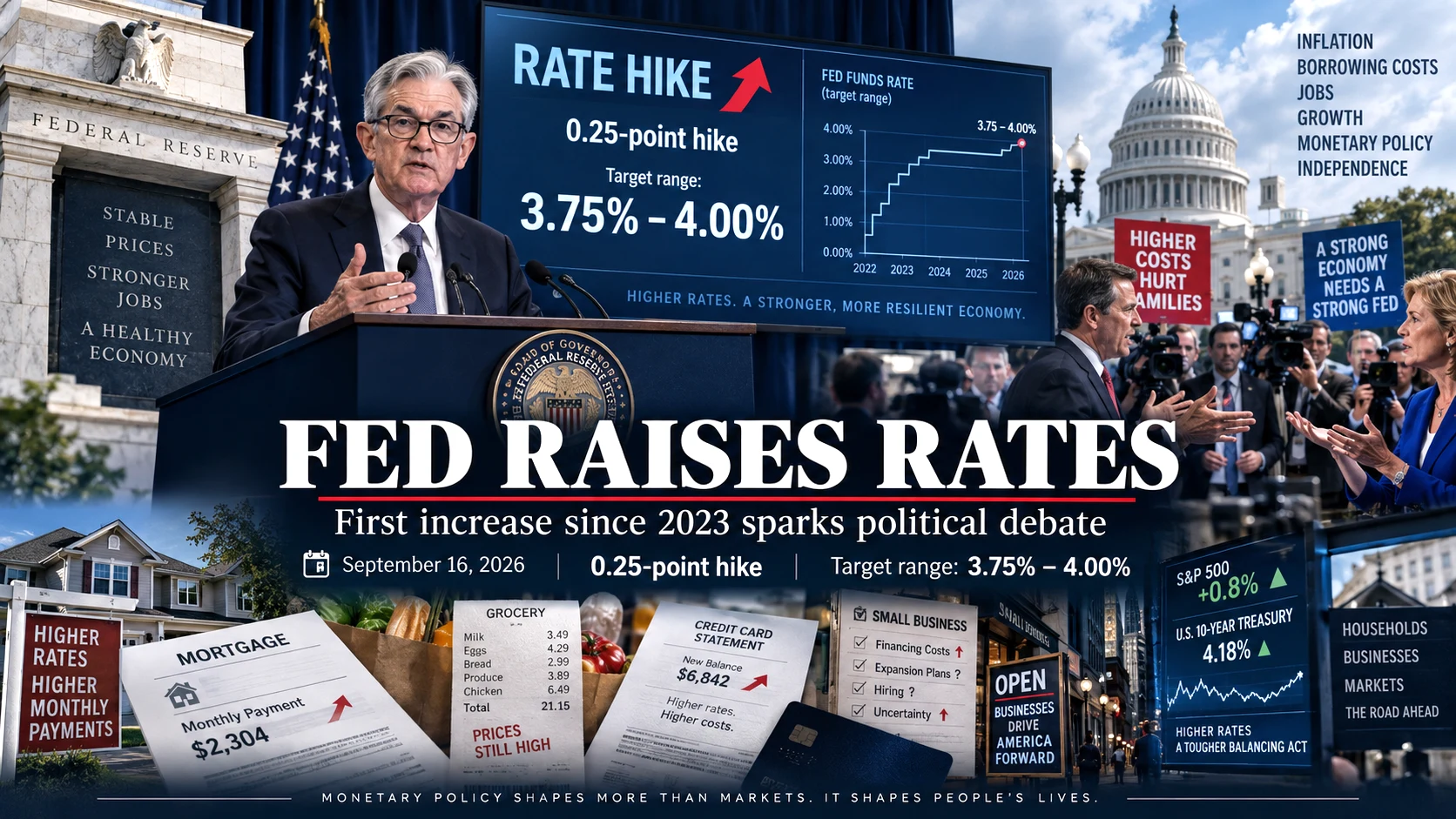
The Federal Reserve unanimously lifted its benchmark rate by 25 basis points to 3.75%-4.00% as inflation remained stubbornly above target. President Donald Trump demanded rates of 1% or lower and attacked the Fed board as political, although he said he still has confidence in Chair Kevin Warsh.
The New Delhi Declaration backs more interoperable payment systems and voluntary use of national currencies while calling for diversified critical-mineral supply chains, as India’s expanding semiconductor ecosystem highlights the commercial stakes behind the resilience agenda.
SBI, PNB and other public-sector banks have issued advisories ahead of the proposed September 28-30 nationwide bank strike. PSBs and RRBs will open on Sunday, September 27, while branch-dependent services could face disruption during the strike.











0 Comments