Indian Oil Approves ₹2,449-Crore Kochi–Thoothukudi Gas Pipeline: Route, Capacity and Impact
Indian Oil has approved ₹2,448.70 crore for a 424.65-km natural gas pipeline linking Kochi with Thoothukudi via Kanyakumari. The project will have 6.84 MMSCMD capacity and strengthen gas connectivity across southern India.
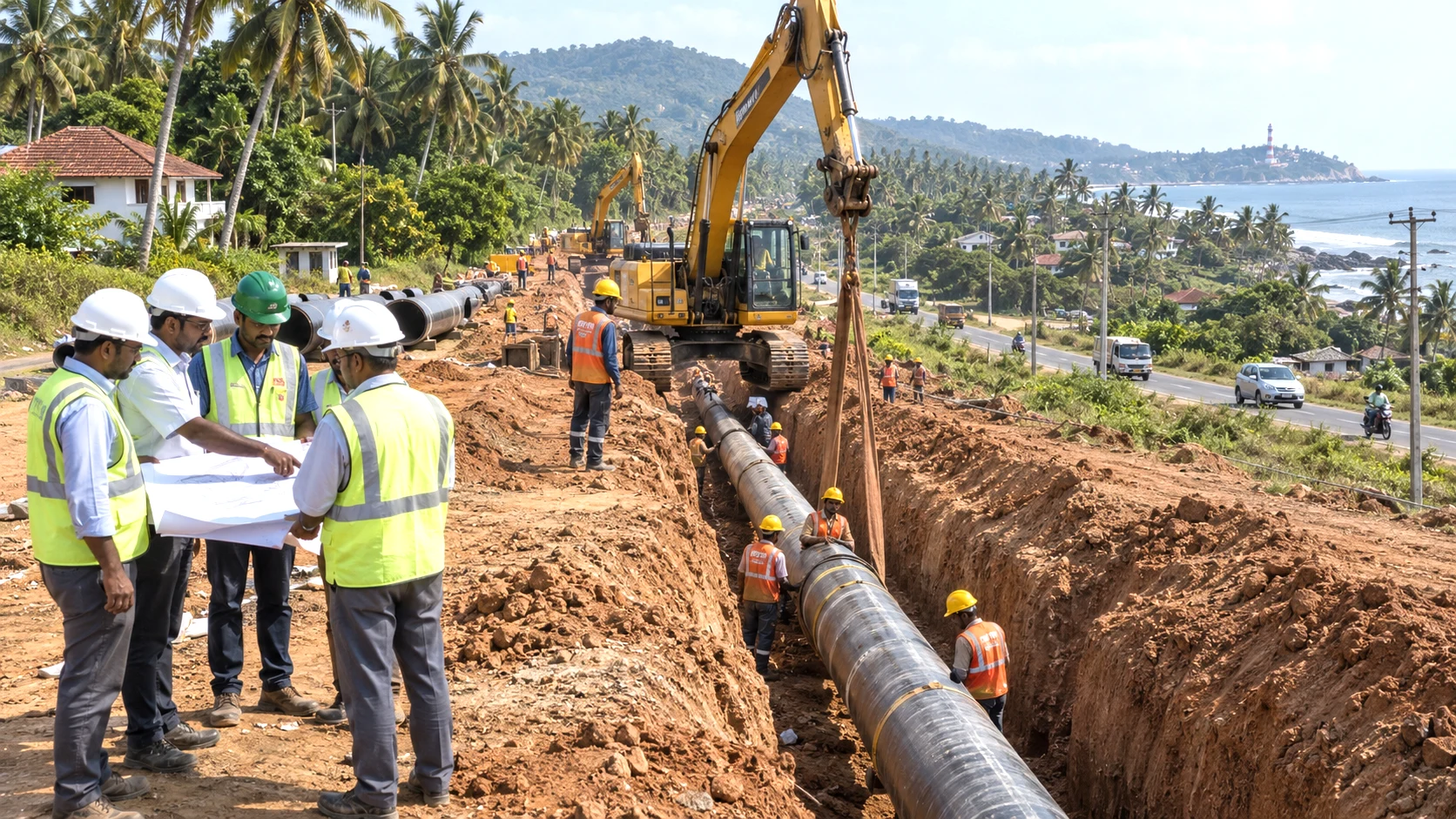
Illustrative natural gas pipeline construction representing Indian Oil's planned Kochi-Kanyakumari-Thoothukudi pipeline
Table of Contents (19 sections)
NEW DELHI / KOCHI, September 22, 2026: Indian Oil Corporation has approved an investment of ₹2,448.70 crore to develop a major natural gas pipeline linking Kochi in Kerala with Thoothukudi in Tamil Nadu through the Kanyakumari corridor, creating a new transmission link across southern India.
Indian Oil's board approved the investment on September 21, 2026, for laying, building and operating the Kochi-Kanyakumari-Thoothukudi Natural Gas Pipeline, or KTPL. The planned pipeline will extend 424.65 kilometres and have a system capacity of 6.84 million metric standard cubic metres per day, or MMSCMD.
At least 1.71 MMSCMD of that capacity will be available as common-carrier capacity, allowing eligible third parties to seek access under the applicable regulatory framework rather than reserving the entire system only for Indian Oil's own gas transportation requirements.
The project is designed to move regasified liquefied natural gas from the Kochi LNG system towards demand centres in Kerala and southern Tamil Nadu and ultimately connect with Indian Oil's existing gas-pipeline network around Thoothukudi.
Key Takeaways
Recommended Reading
Related Stories & In-Depth Guides
Curated editorial perspectives matching this topic.
ONGC has struck natural gas at a deepwater well about 43 km off Konark in Odisha's Mahanadi Offshore Basin. The well has shown encouraging flow and reservoir pressure, but reserve size and commercial viability still require appraisal.
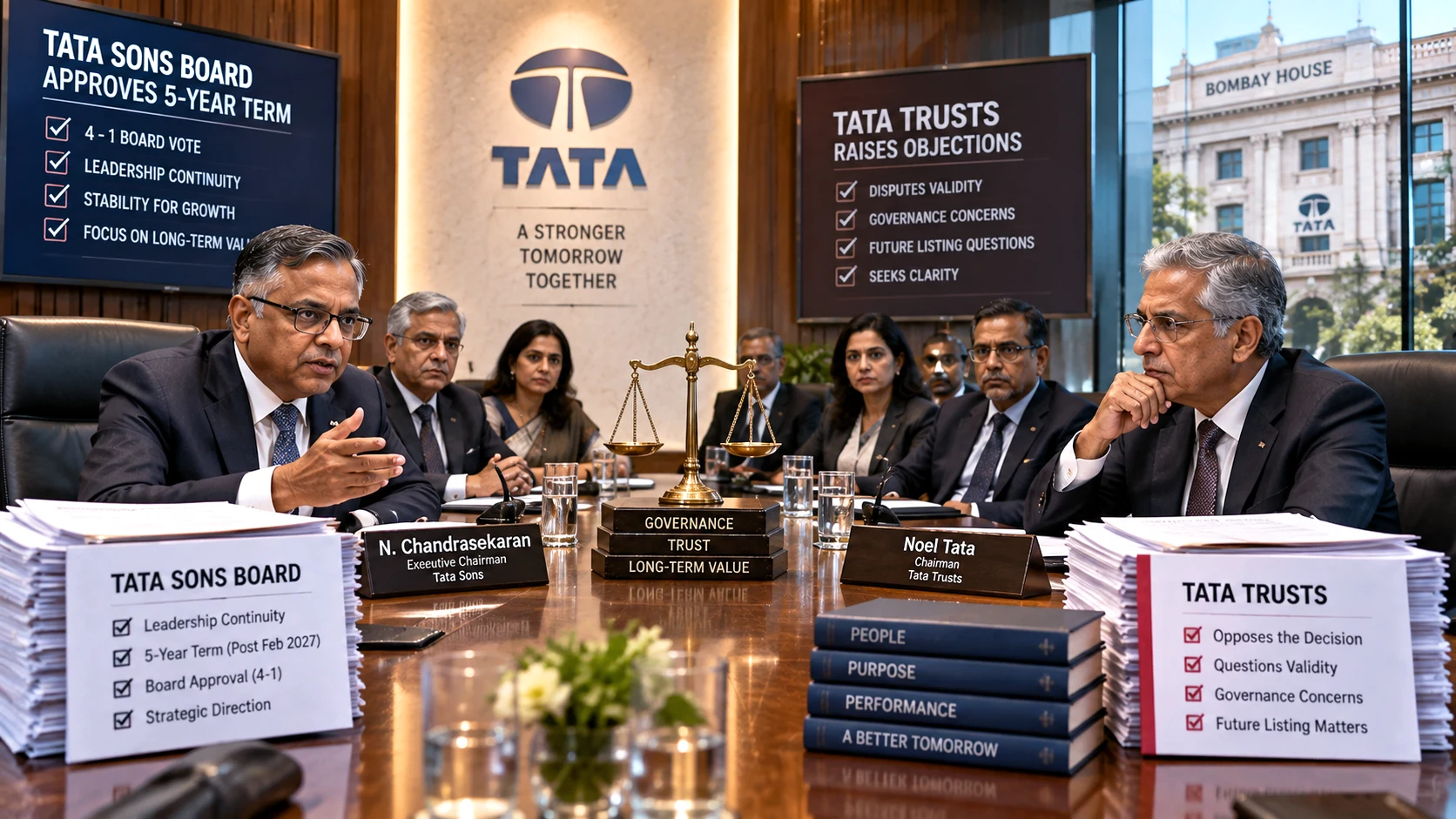
The Tata Sons board voted 4-1 to give N. Chandrasekaran another five years as executive chairman after his current term ends in February 2027. Noel Tata opposed the proposal, while Tata Trusts has formally argued that the resolution is invalid under Tata Sons’ Articles of Association.
Indian Oil approves ₹2,448.70 crore for Kochi–Thoothukudi gas pipeline.
Pipeline length: 424.65 km via Kanyakumari corridor.
System capacity: 6.84 MMSCMD, with at least 1.71 MMSCMD common-carrier.
Designed to move regasified LNG from Kochi towards southern demand centres.
Will connect with Indian Oil’s existing network at Thoothukudi.
Firm commissioning date not yet announced.
Kochi–Thoothukudi Pipeline: Key Project Details
Project detail
Approved information
Project
Kochi-Kanyakumari-Thoothukudi Natural Gas Pipeline
Developer
Indian Oil Corporation Limited
Approved investment
₹2,448.70 crore
Pipeline length
424.65 km
Route
Kochi–Kanyakumari–Thoothukudi corridor
System capacity
6.84 MMSCMD
Common-carrier capacity
At least 1.71 MMSCMD
Fuel
Natural gas / regasified LNG
Source area
Kochi LNG infrastructure
Destination
Thoothukudi, Tamil Nadu
Board approval
September 21, 2026
Regulator
Petroleum and Natural Gas Regulatory Board
Firm commissioning date
Not announced in the board approval
Indian Oil disclosed the investment after its board meeting, while the Petroleum and Natural Gas Regulatory Board, or PNGRB, had already selected and authorised the company to develop the pipeline.
Where Will the New Pipeline Run?
The new transmission line is planned to run from the Kochi area in Kerala southwards towards Kanyakumari before reaching Thoothukudi in Tamil Nadu.
The route is important because it creates another link between the natural gas infrastructure around Kochi and the gas network already extending through Tamil Nadu.
When PNGRB first proposed the corridor, the regulator said the pipeline would originate from the Kochi gas system, including Petronet LNG's Kochi LNG terminal, and connect at Thoothukudi with Indian Oil's existing southern natural gas pipeline infrastructure.
Kochi LNG therefore becomes a key supply point for the project.
LNG imported by ship can be received at the terminal, converted from its liquefied state back into gas and then transported through pipelines to consumers elsewhere.
The new corridor is intended to improve the ability to move that gas southwards towards markets that currently have more limited direct access to large transmission infrastructure.
Why Is the Kochi LNG Connection Important?
An LNG terminal becomes substantially more useful when it has sufficient pipeline connections to large demand centres.
A terminal can receive imported LNG, but industries, city gas distributors and other customers may be located hundreds of kilometres away.
Transmission pipelines provide the link between the terminal and those users.
PNGRB said when proposing the project that the Kochi–Kanyakumari–Thoothukudi pipeline would provide a crucial connection between the Petronet LNG terminal at Kochi and Indian Oil's existing southern pipeline network at Thoothukudi.
This means gas entering the network at Kochi could potentially reach a wider range of customers in Kerala and Tamil Nadu while also gaining access to interconnected transmission infrastructure.
The value of the project is therefore not limited to building 424.65 km of pipe. Its broader role is to improve connectivity between existing gas assets.
What Does 6.84 MMSCMD Capacity Mean?
MMSCMD stands for million metric standard cubic metres per day, a measurement commonly used for natural gas transportation.
The approved system capacity of 6.84 MMSCMD means the pipeline is designed to transport up to about 6.84 million standard cubic metres of gas per day under its specified operating conditions.
Actual utilisation, however, will depend on factors including:
availability and price of LNG or other gas supplies;
demand from industries;
city gas network expansion;
power-sector demand;
pipeline connectivity;
customer contracts;
transmission tariffs;
commissioning of downstream infrastructure.
A pipeline's designed capacity should therefore not be confused with guaranteed daily consumption.
What Is Common-Carrier Capacity?
Of the pipeline's total 6.84 MMSCMD capacity, at least 1.71 MMSCMD is designated as common-carrier capacity.
In practical terms, common-carrier rules are intended to make part of a regulated pipeline's capacity available to qualifying third-party users subject to applicable regulations, available capacity and transportation charges.
This can help prevent a major transmission pipeline from functioning only as a closed system for one company's own gas.
For industries and gas suppliers, third-party access can support greater flexibility in sourcing and transporting natural gas where the necessary commercial and regulatory conditions are met.
It does not mean every customer automatically receives pipeline capacity. Access remains subject to regulatory procedures, contracts and operational availability.
Who Could Benefit from the New Pipeline?
PNGRB has identified several potential groups that could benefit from stronger gas connectivity in this corridor.
City gas distribution networks
City gas distribution companies supply piped natural gas to eligible homes, commercial establishments and industries and compressed natural gas for vehicles.
CGD networks need reliable access to upstream gas transmission infrastructure.
A new trunk pipeline through underserved areas can make it easier for authorised city gas companies to connect their local distribution systems to larger gas sources.
Industrial consumers
Industries that currently depend on other fuels may gain another natural-gas supply option where pipeline connectivity becomes commercially and technically viable.
Natural gas is used in sectors ranging from manufacturing and chemicals to ceramics, food processing and other heat-intensive industrial operations.
The actual economic benefit for an individual industry will depend on delivered gas prices compared with alternative fuels.
Power plants
Gas-fired power facilities can also draw from transmission networks where suitable connections and gas supply arrangements exist.
However, pipeline availability alone does not determine whether gas-fired electricity generation is commercially competitive. Fuel prices and electricity-market conditions remain important.
Commercial users
Expansion of local gas-distribution networks may eventually support additional commercial customers, but such access depends on city gas infrastructure being built from the trunk pipeline to individual consumption areas.
Will the Pipeline Reduce Natural Gas Prices?
The project could improve gas availability and transportation connectivity, but consumers should not assume that the ₹2,449-crore pipeline will automatically make natural gas cheaper.
The final delivered cost of natural gas can depend on several components, including:
the underlying price of domestic gas or imported LNG;
regasification charges;
pipeline transportation tariffs;
taxes and applicable levies;
city gas distribution charges;
distance and network configuration;
customer category;
contractual terms.
Better infrastructure can improve competition, access and logistics in some circumstances, but it does not guarantee a specific reduction in household, CNG or industrial gas prices.
The clearest immediate benefit of KTPL is additional transmission capacity and network connectivity, rather than a promised retail-price cut.
How Will KTPL Connect with Indian Oil’s Existing Network?
Thoothukudi is already connected with Indian Oil's wider southern gas-pipeline system.
Indian Oil operates the Ennore-Tuticorin-Bengaluru R-LNG Pipeline, which has an installed capacity of 34.67 MMSCMD and supplies gas to industrial customers as well as city gas distribution networks in Tamil Nadu.
PNGRB's original plan for KTPL specifically envisaged connecting the Kochi corridor with Indian Oil's existing pipeline at Thoothukudi.
This creates the possibility of stronger east-west and north-south connectivity between gas infrastructure serving Kerala and Tamil Nadu.
It also fits into India's broader effort to develop an increasingly interconnected natural gas transmission grid.
How Did the Project Reach the Approval Stage?
KTPL has been in regulatory development for more than two years.
PNGRB began the formal public process in January 2024, proposing a pipeline from Kochi to Thoothukudi via Kanyakumari to serve natural gas demand in southern Kerala and Tamil Nadu.
In October 2024, the regulator invited competitive bids for development of the pipeline.
PNGRB described the proposed corridor as approximately 425 km long and said it would form a crucial connection between the Kochi LNG terminal and the southern gas network.
Indian Oil subsequently emerged as the successful bidder.
PNGRB's current authorisation records list Indian Oil Corporation Limited as the authorised entity for the Kochi-Kanyakumari-Thoothukudi Natural Gas Pipeline.
The September 21, 2026 board decision is therefore an important corporate-investment milestone following the earlier regulatory process.
When Will the Kochi–Thoothukudi Pipeline Be Completed?
Indian Oil's latest board announcement confirms the project investment but does not provide a firm commissioning date.
That means a specific completion year should not be treated as confirmed unless Indian Oil or PNGRB subsequently publishes an implementation schedule.
Before gas can begin flowing through a new transmission pipeline, development typically involves multiple stages, including detailed engineering, land and right-of-use work, statutory permissions, procurement, construction, river and road crossings, testing and final commissioning.
The exact pace can vary significantly depending on route conditions, approvals and execution progress.
Investors and consumers should therefore watch for future Indian Oil disclosures that provide construction milestones or a formal commissioning target.
Could Construction Face Delays?
Large interstate pipeline projects can face execution risks even after investment approval.
Potential issues include land access, right-of-use permissions, environmental or local approvals, road and railway crossings, procurement schedules, contractor performance and difficult terrain.
Southern Kerala in particular has densely populated corridors and varied terrain, factors that can influence pipeline engineering and construction.
None of these risks means the project will necessarily be delayed.
They explain why a board-approved investment amount should not be interpreted as confirmation that physical construction has already been completed or that gas supply will begin immediately.
How Large Is Indian Oil’s Pipeline Business?
Indian Oil already operates one of India's largest hydrocarbon pipeline networks.
The company says its network spans more than 20,000 km across crude oil, petroleum products and natural gas, with gas pipeline capacity of around 49 MMSCMD.
The Kochi-Kanyakumari-Thoothukudi project therefore adds to an established pipeline portfolio rather than creating a new business segment for Indian Oil.
Its strategic significance comes from the geography: strengthening a corridor between Kerala's LNG infrastructure and the gas-consuming regions of southern Tamil Nadu.
Why the Project Matters for Southern India
Kerala and Tamil Nadu have large urban populations and significant industrial energy requirements, but the commercial use of natural gas depends heavily on whether transmission and distribution infrastructure reaches potential consumers.
A new trunk pipeline can provide the backbone around which local connections are developed.
PNGRB has said the corridor is intended particularly to improve access in underserved regions and support city gas distribution entities.
For Kerala, the project could provide another route for gas from Kochi to reach markets farther south.
For Tamil Nadu, it creates another connection with the state's established pipeline system through Thoothukudi.
For the wider national gas grid, it strengthens interconnection between major energy infrastructure assets rather than leaving individual pipelines operating as isolated corridors.
Does Natural Gas Count as Clean Energy?
Natural gas generally produces lower carbon dioxide emissions at combustion than coal for an equivalent amount of energy and can produce fewer local air pollutants than some heavier fossil fuels.
However, it remains a fossil fuel.
Methane leakage across production, processing and transportation can also affect its overall climate impact.
It is therefore more accurate to describe natural gas as a potentially lower-emission fossil-fuel alternative in certain applications rather than as zero-carbon energy.
India has promoted greater natural gas use alongside the expansion of renewable power, biofuels, electric mobility and other energy-transition measures.
What Happens Next?
Following Indian Oil's investment approval, attention will shift from the financing decision towards execution.
Key developments to watch include:
detailed route and engineering progress;
land and right-of-use acquisition;
tendering and contractor appointments;
procurement of line pipes and equipment;
construction progress in Kerala and Tamil Nadu;
connections with city gas and industrial consumers;
linkage with the Kochi LNG system;
integration with Indian Oil's network at Thoothukudi;
testing and commissioning;
announcement of a formal project-completion schedule.
Future regulatory or company filings should provide a clearer picture of when construction moves through these stages.
For now, the confirmed development is that Indian Oil's board has committed ₹2,448.70 crore to the 424.65-km project, giving KTPL a major investment approval after its earlier PNGRB authorisation.
The pipeline's long-term significance will ultimately depend not just on completing the physical link, but on how much gas is transported through it and how effectively industries, city gas distributors and other consumers connect to the new capacity.
Frequently Asked Questions
How much will Indian Oil invest in the Kochi–Thoothukudi gas pipeline?
Indian Oil's board has approved an estimated investment of ₹2,448.70 crore for the Kochi-Kanyakumari-Thoothukudi Natural Gas Pipeline.
How long will the pipeline be?
The approved pipeline length is 424.65 kilometres, connecting Kochi with Thoothukudi through the Kanyakumari corridor.
What will be the capacity of the pipeline?
KTPL will have a total system capacity of 6.84 MMSCMD, including at least 1.71 MMSCMD of common-carrier capacity.
Where will the gas come from?
The pipeline is designed to facilitate transportation of regasified LNG from the Kochi LNG system towards demand centres in Kerala and southern Tamil Nadu, with connectivity to the existing gas network at Thoothukudi.
When will the Kochi–Thoothukudi pipeline be completed?
Indian Oil's September 21 board approval did not specify a firm commissioning date. A confirmed completion timeline should therefore await further company or regulatory disclosures.
Will this pipeline reduce CNG or PNG prices?
Not automatically. Improved pipeline connectivity can support supply and competition, but retail gas prices also depend on gas procurement costs, LNG prices, transportation tariffs, taxes and distribution charges.
Bottom Line
Indian Oil has approved ₹2,448.70 crore for a 424.65-km natural gas pipeline linking Kochi with Thoothukudi via Kanyakumari.
The project will have 6.84 MMSCMD capacity, including common-carrier access, and is designed to strengthen gas connectivity between the Kochi LNG system and southern demand centres. A firm commissioning date has not yet been announced.
Key Takeaway
IOC approves ₹2,449-crore Kochi–Thoothukudi pipeline.
The Rajatheertha Team publishes news, explainers, guides and updates across India and the world. Our coverage follows Rajatheertha's editorial, verification and corrections standards.
Global crude oil prices fell sharply on September 21, 2026, with Brent dropping toward $102 a barrel and US West Texas Intermediate slipping below $99, as recovering Saudi Arabian export flows and hopes for renewed US-Iran diplomacy outweighed immediate fears from Houthi missile and drone attacks on
The claim is confirmed by the Bloomberg Billionaires Index and fresh September 18 reporting. Zhang Yiming’s estimated wealth has climbed to about $105 billion as higher ByteDance valuations and the company’s expanding AI business push him ahead of Gautam Adani.
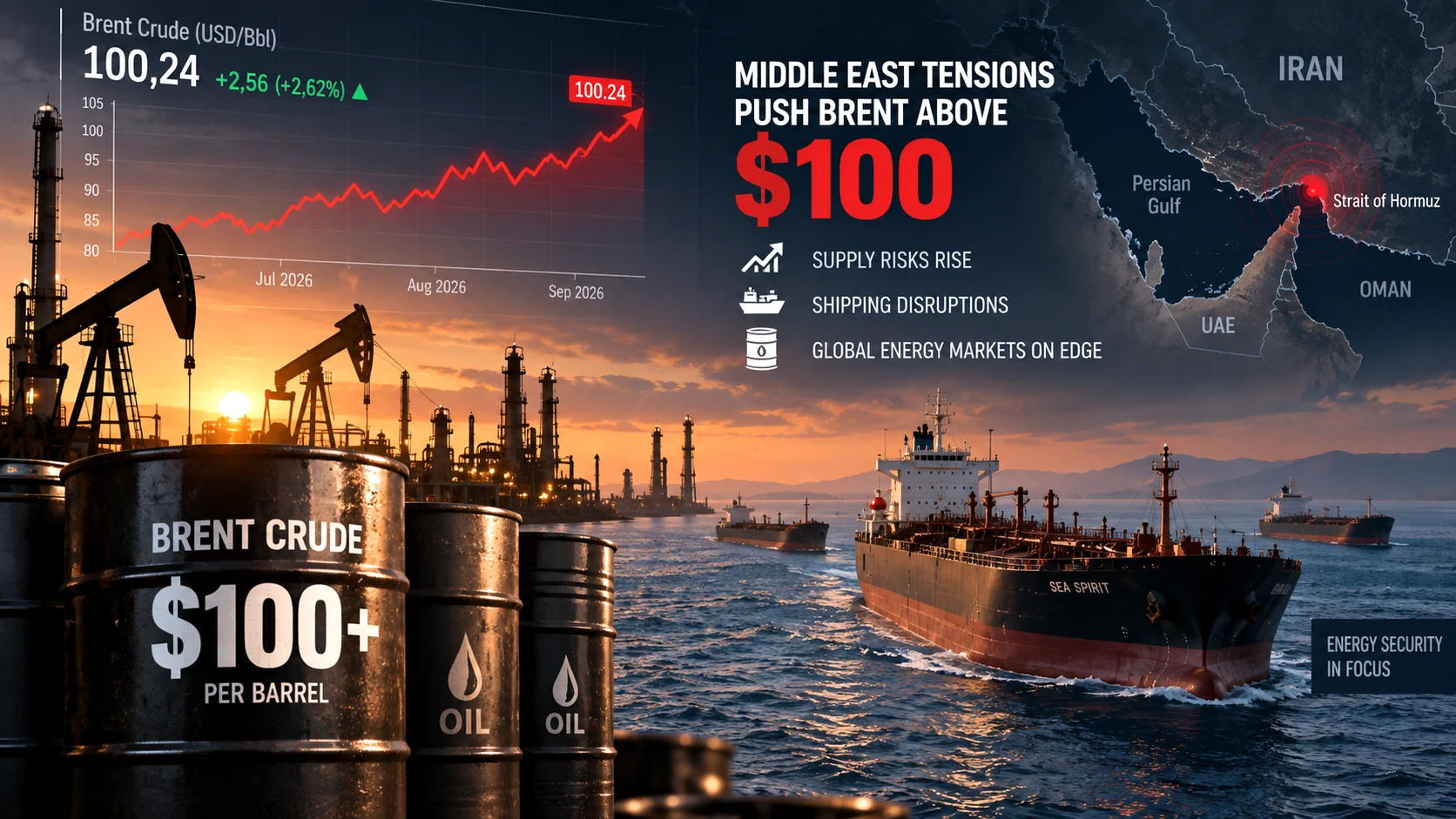
Brent crude has surged above $100 as US-Iran hostilities disrupt Middle East oil supplies, raising concerns over inflation, markets and India’s import costs.
The Federal Reserve unanimously lifted its benchmark rate by 25 basis points to 3.75%-4.00% as inflation remained stubbornly above target. President Donald Trump demanded rates of 1% or lower and attacked the Fed board as political, although he said he still has confidence in Chair Kevin Warsh.
John Ternus has officially succeeded Tim Cook as Apple CEO, while Cook remains at the technology giant as executive chairman after 15 years at the helm.
Claude maker Anthropic is preparing for a potentially historic IPO, with investors discussing a valuation of $2 trillion or more, though the filing timetable remains subject to change.









0 Comments