Cabinet Raises EPFO Wage Ceiling to ₹25,000; Over 51 Lakh More Workers Expected to Get Mandatory Coverage
The Union Cabinet has approved the first increase in the EPFO wage ceiling since 2014, raising it from ₹15,000 to ₹25,000 a month. The change expands mandatory provident fund coverage, but it does not mean every employee earning above ₹25,000 loses EPF eligibility or that ₹25,000 will be deducted fr
the Union Cabinet’s decision to raise the EPFO wage ceiling and expand mandatory provident fund coverage for workers
Table of Contents (19 sections)
The Union Cabinet has approved a major expansion of India’s provident fund safety net by raising the wage ceiling for mandatory Employees’ Provident Fund Organisation coverage from ₹15,000 to ₹25,000 per month.
The decision was approved on Wednesday, September 16, following a proposal from the Ministry of Labour and Employment. The government estimates that more than 51 lakh additional employees will come within mandatory EPFO coverage as a result.
The change marks the first revision of the statutory threshold in 12 years. The previous ceiling of ₹15,000 had been in place since September 2014, when it was raised from ₹6,500.
For millions of workers, however, the most important question is not simply that the limit has risen to ₹25,000. It is what that number actually means for EPF membership, monthly deductions, pensions and take-home pay.
The wage ceiling is principally a statutory threshold governing mandatory social-security coverage and contributions. It should not be confused with gross salary, total CTC or the amount an employee receives in hand.
Recommended Reading
Related Stories & In-Depth Guides
Curated editorial perspectives matching this topic.
Iran’s economy contracted by 10.1% year-on-year during the first quarter of its current Persian calendar year, according to official data, with a collapse in oil and natural-gas activity driving much of the decline. The figures cover the first months of the US-Israel conflict with Iran, although the
The claim is confirmed by the Bloomberg Billionaires Index and fresh September 18 reporting. Zhang Yiming’s estimated wealth has climbed to about $105 billion as higher ByteDance valuations and the company’s expanding AI business push him ahead of Gautam Adani.
Key Takeaways
The Union Cabinet on September 16 approved raising the wage ceiling for mandatory EPFO coverage from ₹15,000 to ₹25,000 per month.
The government estimates that more than 51 lakh additional employees will enter mandatory EPFO coverage.
This is the first revision of the ceiling in 12 years; it was last increased from ₹6,500 to ₹15,000 in September 2014.
The change expands access to EPF savings, Employees’ Pension Scheme protection and EDLI insurance for eligible workers.
Information and Broadcasting Minister Ashwini Vaishnaw said the revised ceiling will take effect from September 17, 2026. The government’s written Cabinet release also says the Labour Ministry and EPFO will carry out the necessary statutory and administrative implementation steps.
For establishments subject to the normal 12% contribution rate, a ₹25,000 statutory contribution base can mean a maximum standard employee contribution of ₹3,000 a month, compared with ₹1,800 on the earlier ₹15,000 ceiling, subject to applicable EPFO rules and the employee’s actual covered wages.
The ₹25,000 figure is a wage ceiling for statutory EPFO purposes, not necessarily an employee’s gross salary or CTC.
Workers already enrolled in EPFO do not cease to be members merely because their pay later crosses ₹25,000.
Cabinet Approval Is Confirmed
There is no longer any uncertainty over whether the ₹25,000 ceiling is merely a proposal.
The Prime Minister’s Office and the Press Information Bureau both confirmed on September 16 that the Union Cabinet, chaired by Prime Minister Narendra Modi, approved the Labour Ministry proposal to enhance the ceiling from ₹15,000 to ₹25,000.
Reuters independently reported the Cabinet approval after Information and Broadcasting Minister Ashwini Vaishnaw announced the decision.
This is important because reports about a possible ₹25,000 ceiling had circulated for months before the Cabinet acted. As recently as August, it remained a proposal awaiting final approval.
That position changed on September 16.
When Does the New ₹25,000 Limit Take Effect?
Vaishnaw said after the Cabinet meeting that the revised ceiling would take effect from September 17, 2026, according to reporting of the briefing.
There is, however, a procedural point worth noting.
The official PMO release says the Ministry of Labour and Employment and EPFO will undertake the “necessary statutory and administrative steps” required to implement the Cabinet decision.
For employees and payroll departments, that means the Cabinet decision is confirmed, while detailed operational implementation should continue to be checked against subsequent Labour Ministry and EPFO notifications or instructions.
What Is the EPFO Wage Ceiling?
The wage ceiling determines the level up to which workers entering covered employment fall within mandatory EPFO protection.
Before the latest decision, the statutory threshold was ₹15,000 a month.
An employee entering employment above the applicable ceiling could, depending on the circumstances and EPFO rules, remain outside compulsory enrolment unless the employee and employer opted for coverage.
Raising the ceiling to ₹25,000 substantially expands that compulsory coverage band.
Workers who previously fell between the ₹15,000 and ₹25,000 thresholds are the group most directly affected by the change.
The government says this will extend formal social-security protection to more workers as wages have risen across India.
More Than 51 Lakh Additional Employees Expected to Be Covered
The Centre estimates that more than 51 lakh additional employees will fall within mandatory EPFO coverage following the increase.
That does not mean exactly 51 lakh people will suddenly receive a new PF account on a single day.
The estimate represents workers expected to come within the expanded statutory coverage as the revised threshold is implemented across eligible employment.
The government says the move should improve formalisation, employee retention and long-term retirement security.
EPFO currently has around 7.98 crore contributing members across approximately 7.68 lakh contributing establishments, while the pension system serves around 82 lakh pensioners, according to government data.
EPF, Pension and Insurance Coverage All Matter
EPFO does more than maintain provident fund accounts.
Its social-security system includes three major components:
Employees’ Provident Fund (EPF): retirement savings built through employee and employer contributions.
Employees’ Pension Scheme (EPS): pension protection for eligible members.
The government says increasing the wage ceiling expands access to this wider package of statutory social security rather than merely increasing the size of PF accounts.
Does ₹25,000 Mean ₹25,000 Will Be Deducted From Salary?
No.
This is one of the most important misconceptions to avoid.
₹25,000 is the revised wage ceiling, not the PF deduction.
The standard EPF contribution rate remains 12% for employees and employers in establishments subject to the normal rate. The EPF Scheme 2026 retained that 12% structure.
At the former ₹15,000 statutory ceiling, 12% worked out to a maximum standard mandatory employee contribution of:
₹1,800 per month.
At a ₹25,000 contribution base, 12% is:
₹3,000 per month.
That is the maximum standard employee contribution when the full ₹25,000 statutory wage ceiling is the applicable base. A worker earning less than ₹25,000 would ordinarily contribute according to the applicable covered wage rather than automatically being charged ₹3,000.
The employer also has a contribution obligation, although its contribution is allocated between provident fund and pension components according to EPFO rules.
Will Everyone’s PF Deduction Jump From ₹1,800 to ₹3,000?
Not necessarily.
The effect depends on an employee’s covered wages, whether the person is already an EPFO member, the establishment’s contribution arrangements and how payroll applies the revised statutory framework.
Someone earning covered wages of ₹18,000, for example, is not automatically treated as earning ₹25,000 simply because the statutory ceiling has increased.
Likewise, many higher-paid employees already have PF contributions calculated on wages above the old statutory minimum because of existing employer policies or voluntary arrangements.
Their deduction may therefore not change in the same way as that of a worker newly entering compulsory coverage.
The reform should consequently not be reduced to the statement: “Every employee will now pay ₹3,000 PF.”
That would be inaccurate.
Could Take-Home Salary Fall?
For some workers, yes.
An employee who was previously outside compulsory EPFO coverage but now enters it may begin making an employee PF contribution.
Because that money goes into retirement savings rather than being paid as current cash salary, the employee’s monthly take-home amount can be lower than it would have been without the contribution.
Similarly, an employee whose statutory PF contribution was restricted to the earlier ₹15,000 ceiling could see a higher deduction after the new limit is applied.
But this is not the same as the government imposing a tax.
The amount credited to the employee’s provident fund remains part of the worker’s retirement savings, subject to EPFO withdrawal and settlement rules.
Any exact change in take-home salary should be calculated from the worker’s actual wage structure rather than assumed from the ₹25,000 headline number.
₹25,000 Is Not Necessarily Gross Salary or CTC
Another common source of confusion is the meaning of “wages”.
The EPF regime moved under the Employees’ Provident Funds Scheme, 2026 and the Code on Social Security framework earlier this year.
The statutory wage concept used for social-security calculations should therefore not automatically be equated with a person's entire gross salary or cost to company.
Salary structures can contain basic pay, dearness allowance and other components, and the Social Security Code contains rules governing what is included within statutory wages.
For readers, the practical point is straightforward:
A ₹30,000 CTC or gross monthly salary does not by itself tell you whether the employee’s statutory EPFO wage is ₹30,000.
Employees should look at their salary structure and EPFO payroll treatment before calculating the impact.
What About Employees Earning More Than ₹25,000?
The new ceiling does not mean that every person earning more than ₹25,000 becomes ineligible for EPF.
The ceiling primarily determines mandatory coverage and the statutory contribution framework.
Employees who are already EPFO members generally continue their membership even when their wages later cross the statutory ceiling.
The EPF Scheme also provides mechanisms for contributions above the statutory ceiling where the applicable requirements are met.
Therefore, the statement “EPF is only for people earning ₹25,000 or less” would be misleading.
The more accurate statement is:
₹25,000 is now the ceiling governing mandatory statutory coverage; it is not a universal maximum salary for EPFO membership.
Why Did the Government Raise the Ceiling?
The government says wage growth has increasingly made the ₹15,000 threshold outdated.
The official Cabinet release noted that in several states and occupations, minimum wages had moved closer to the previous EPFO threshold.
Vaishnaw similarly said the old ceiling no longer reflected prevailing wage conditions and that the government had acted after consultations.
The official rationale includes:
Rising wages and incomes
Expansion of formal employment
Wider social-security coverage
Greater retirement protection
Employee retention and workforce stability
The Expenditure Finance Committee recommended the proposal at its meeting on June 16, 2026, following inter-ministerial consultations.
First Revision Since 2014
The wage ceiling had remained unchanged at ₹15,000 since September 2014.
That earlier revision increased the threshold from ₹6,500.
The latest move therefore raises the ceiling by ₹10,000 — or about 66.7% — after 12 years.
The government argues that such an adjustment is necessary because wages and formal-sector employment have changed substantially during that period.
Government Spending Will Also Increase
Expanding mandatory pension and social-security coverage has a cost for the Centre.
The government estimates annual expenditure connected with the framework at approximately ₹11,339 crore, compared with existing annual budgetary support of around ₹10,250 crore.
Over five years, the estimated expenditure is approximately ₹56,696 crore.
The increase reflects the larger population expected to come within statutory coverage and the government's obligations under the social-security system.
What Changed Earlier in 2026?
The wage-ceiling decision comes only months after a broader legal restructuring of the provident fund system.
The government notified the Employees’ Provident Funds Scheme, 2026, along with updated pension and deposit-linked insurance schemes, under the Code on Social Security, 2020.
Those schemes replaced the earlier legal framework while preserving many of the familiar features of EPF, including the standard 12% contribution structure.
At the time those schemes were introduced, the wage ceiling remained ₹15,000.
The September 16 Cabinet decision is therefore a separate and significant subsequent change to the coverage threshold.
Who Is Likely to Benefit Most?
The most direct beneficiaries are workers whose statutory monthly wages fall above the former ₹15,000 ceiling but within the new ₹25,000 limit and who were previously outside compulsory EPFO enrolment.
For such workers, mandatory coverage can provide:
Employer-backed retirement savings
A formal provident fund account
Pension-linked protection where applicable
Deposit-linked insurance protection
Portable social-security benefits when changing eligible employment
The impact on individual workers will still differ depending on their wages and employment history.
What Employees Should Check
Workers should not make payroll assumptions solely from social-media posts claiming “PF is now ₹3,000” or “everyone below ₹25,000 must lose more salary”.
Employees affected by the change should check their salary slip and EPFO records after implementation.
The most useful items to verify are the statutory wage used for PF calculation, employee contribution, employer contribution, UAN membership and whether the revised coverage is reflected correctly in subsequent payroll filings.
Anyone already contributing on actual wages higher than the statutory ceiling may see a different impact from a worker joining EPFO for the first time.
Bottom Line
The Union Cabinet has formally approved increasing the wage ceiling for mandatory EPFO coverage from ₹15,000 to ₹25,000 per month, confirming a policy change that had been under discussion for months.
The Centre estimates that more than 51 lakh additional employees will gain mandatory social-security coverage as a result.
The change expands the reach of EPF retirement savings, pension protection and EDLI insurance and represents the first increase in the statutory wage ceiling since 2014.
Information and Broadcasting Minister Ashwini Vaishnaw said the revised threshold would take effect from September 17, 2026, while the government’s written release states that the Labour Ministry and EPFO will undertake the necessary statutory and administrative implementation measures.
For employees, the most important distinction is that ₹25,000 is a wage ceiling, not a ₹25,000 deduction and not necessarily gross monthly salary.
The reform can increase compulsory retirement contributions and, for some workers, reduce current take-home pay. At the same time, those contributions build provident-fund savings and extend access to formal pension and insurance protection.
Key Takeaway
EPFO wage ceiling raised from ₹15,000 to ₹25,000.
Over 51 lakh more workers expected under mandatory coverage.
₹25,000 is a ceiling, not a deduction; standard rate remains 12%.
Effective from September 17, subject to implementation steps.
The Rajatheertha Team publishes news, explainers, guides and updates across India and the world. Our coverage follows Rajatheertha's editorial, verification and corrections standards.
The Bank of Japan has raised its benchmark interest rate to 1.25%, taking borrowing costs to their highest level in 31 years as policymakers step up efforts to prevent inflation from moving persistently above the central bank’s target.
The Federal Reserve unanimously lifted its benchmark rate by 25 basis points to 3.75%-4.00% as inflation remained stubbornly above target. President Donald Trump demanded rates of 1% or lower and attacked the Fed board as political, although he said he still has confidence in Chair Kevin Warsh.
SBI, PNB and other public-sector banks have issued advisories ahead of the proposed September 28-30 nationwide bank strike. PSBs and RRBs will open on Sunday, September 27, while branch-dependent services could face disruption during the strike.
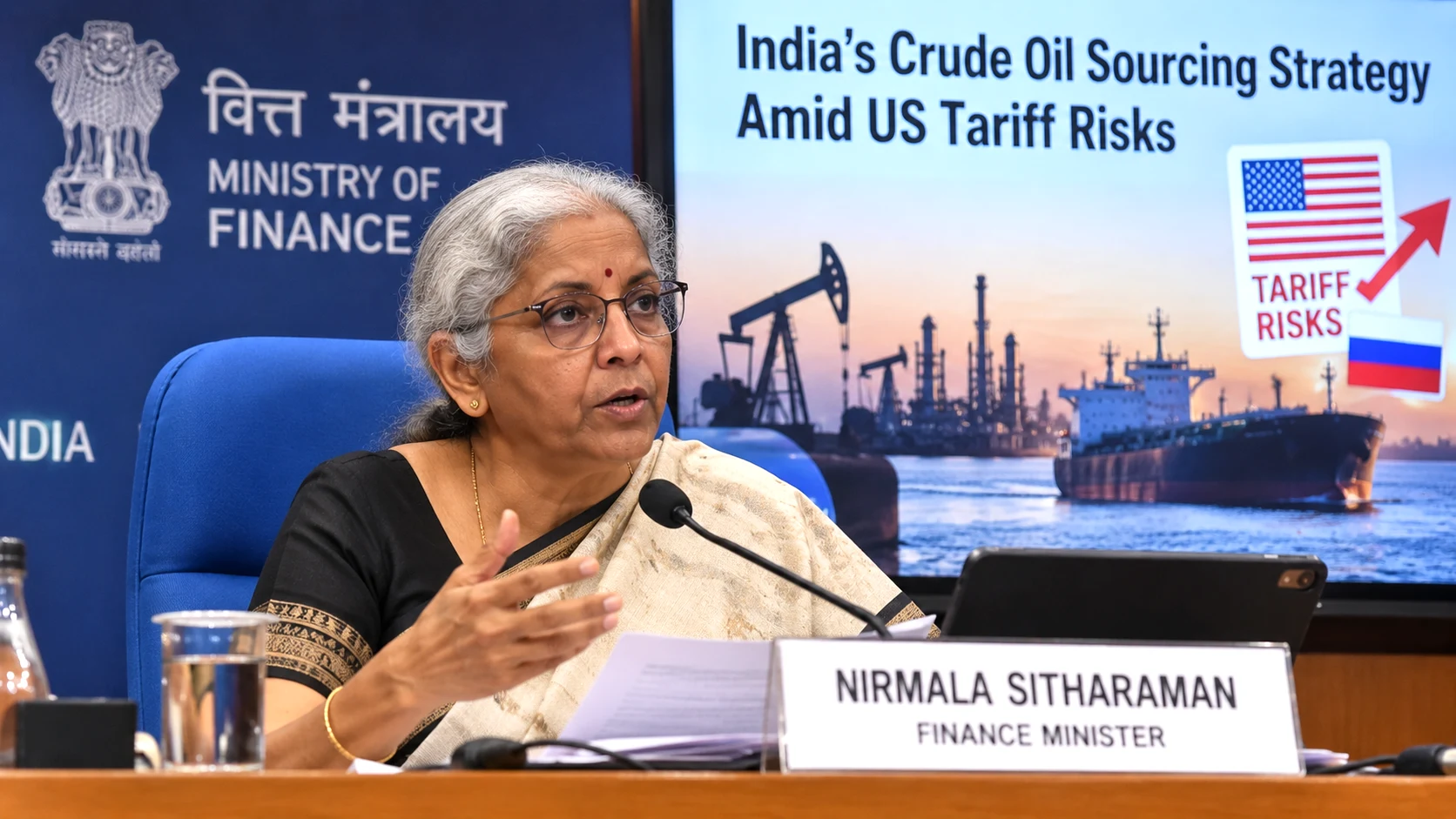
Finance Minister Nirmala Sitharaman says India cannot abruptly abandon Russian crude and will base oil purchases on availability, price and refinery suitability as a new US law raises the risk of tariffs of up to 100% on major Russian-energy buyers.
Brent crude remains above $100 as Iran says normal Strait of Hormuz passage will not resume until its conditions are met. A 100-million-barrel G7 emergency stock release and stronger Middle East exports are limiting further oil-price gains.
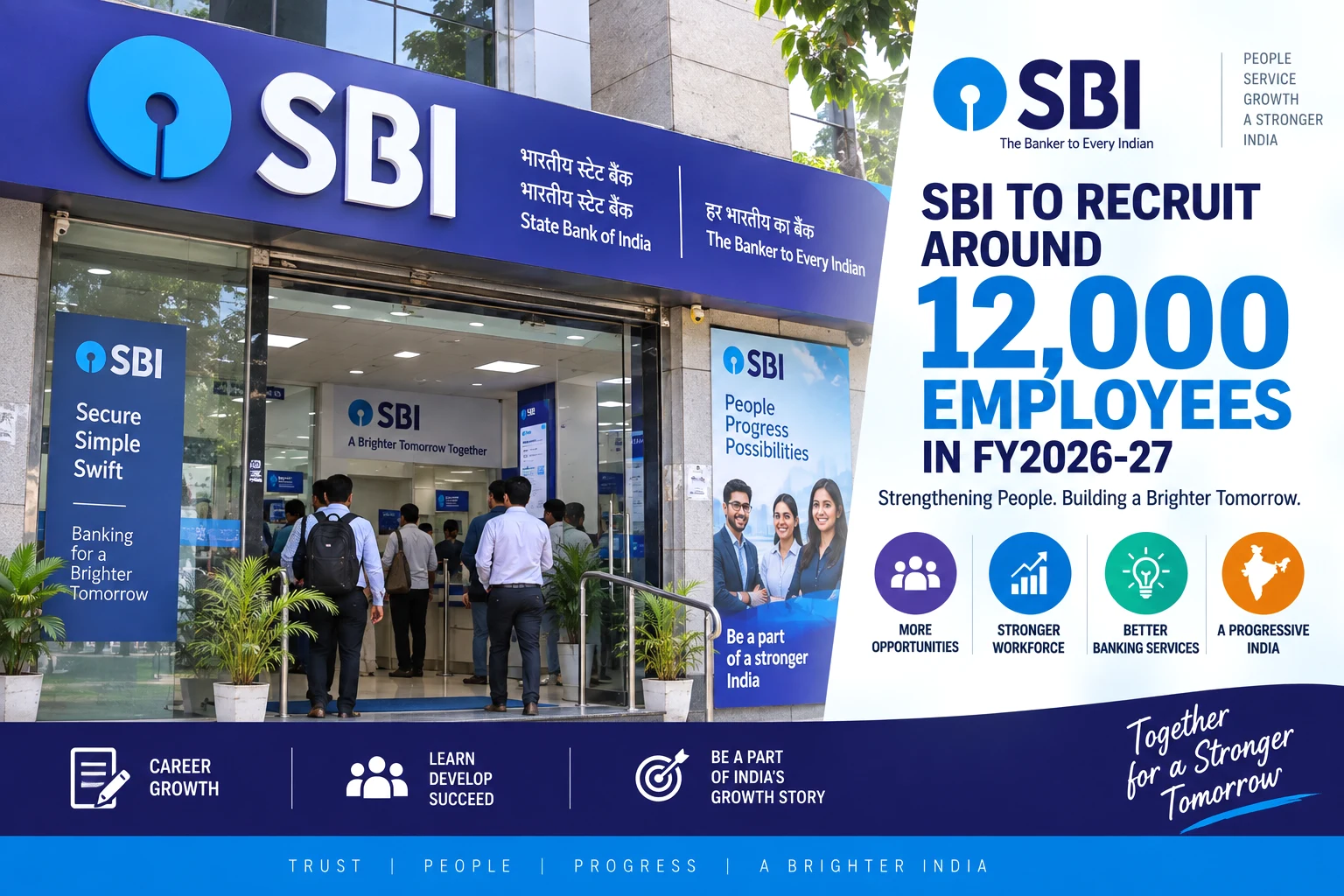
SBI Chairman C. S. Setty says the bank expects around 11,000–12,000 appointments across clerical and officer cadres in FY27. Here’s what candidates should know about the hiring plan and notifications.











0 Comments