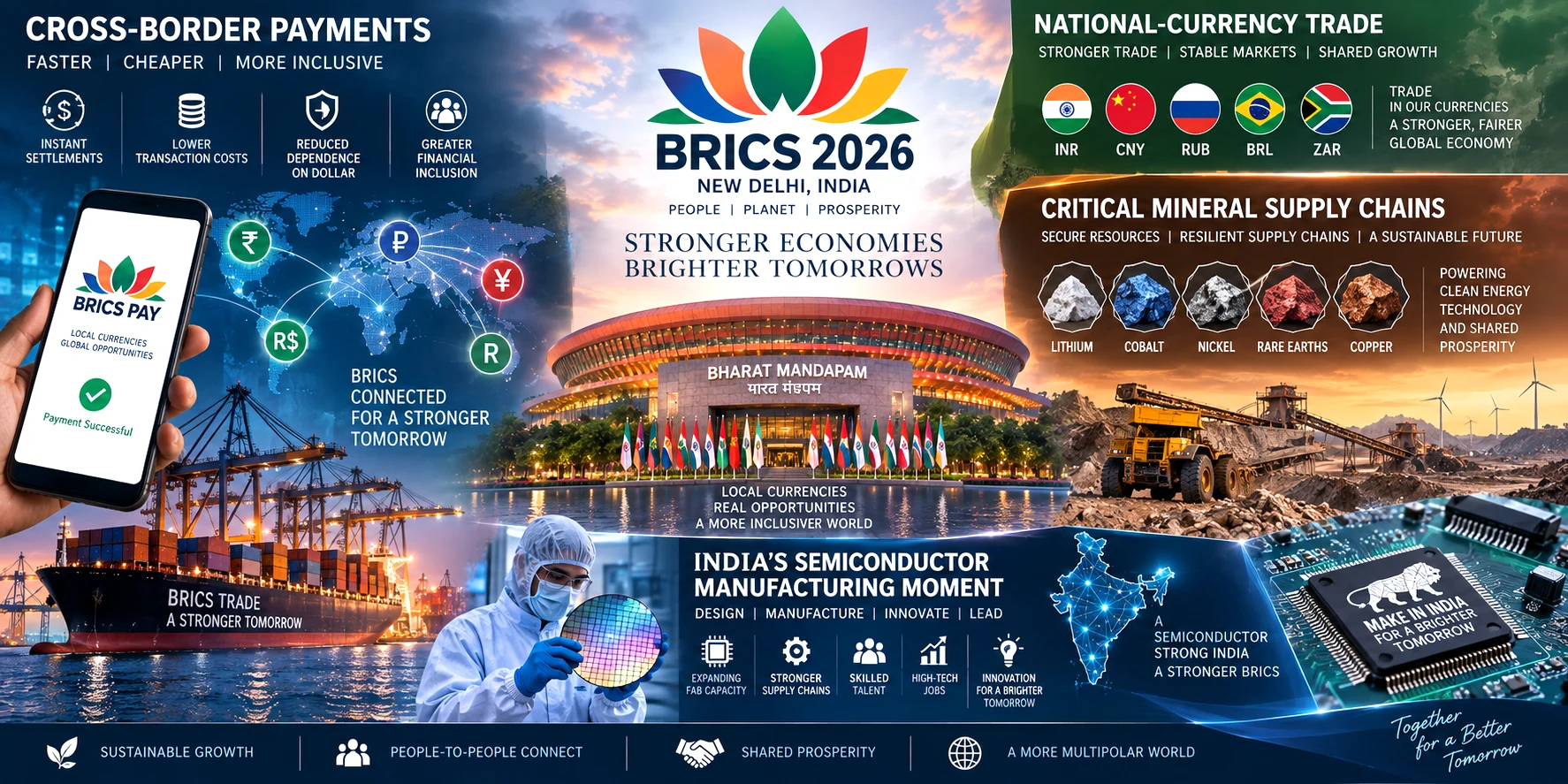
The New Delhi Declaration backs more interoperable payment systems and voluntary use of national currencies while calling for diversified critical-mineral supply chains, as India’s expanding semiconductor ecosystem highlights the commercial stakes behind the resilience agenda.
The BRICS countries have put cross-border payments, greater voluntary use of national currencies and more resilient supply chains at the centre of their economic agenda, setting out a practical framework in the New Delhi Declaration rather than pursuing the more dramatic idea of creating a single BRICS currency.
The declaration adopted at the 18th BRICS Summit in New Delhi acknowledges ongoing work by the BRICS Payment Task Force to explore more efficient mechanisms for moving money across borders. It specifically refers to studying interoperability between payment and messaging channels and discussions on using BRICS countries’ local currencies for trade settlements and investment.
The distinction is important.
BRICS has not announced a common currency, nor has the New Delhi Declaration established a formal programme to abolish the use of the US dollar.
Recommended Reading
Related Stories & In-Depth Guides
Curated editorial perspectives matching this topic.
India received a record $94.53 billion in total FDI in FY2025-26, up about 17% from the previous year. Singapore led equity investment, software and hardware was the top sector, while Maharashtra attracted the most FDI equity.
The Bank of Japan has raised its benchmark interest rate to 1.25%, taking borrowing costs to their highest level in 31 years as policymakers step up efforts to prevent inflation from moving persistently above the central bank’s target.
Instead, the economic approach emerging from New Delhi is more incremental: make existing national payment systems easier to connect, reduce transaction friction where possible and give businesses greater scope to settle eligible transactions in the currencies of participating countries.
At the same time, BRICS leaders are treating supply chains as an increasingly important economic-security issue.
The declaration calls for reliable, responsible, diversified and resilient supply chains for critical minerals — resources essential to sectors including semiconductors, batteries, renewable energy, electronics and advanced manufacturing.
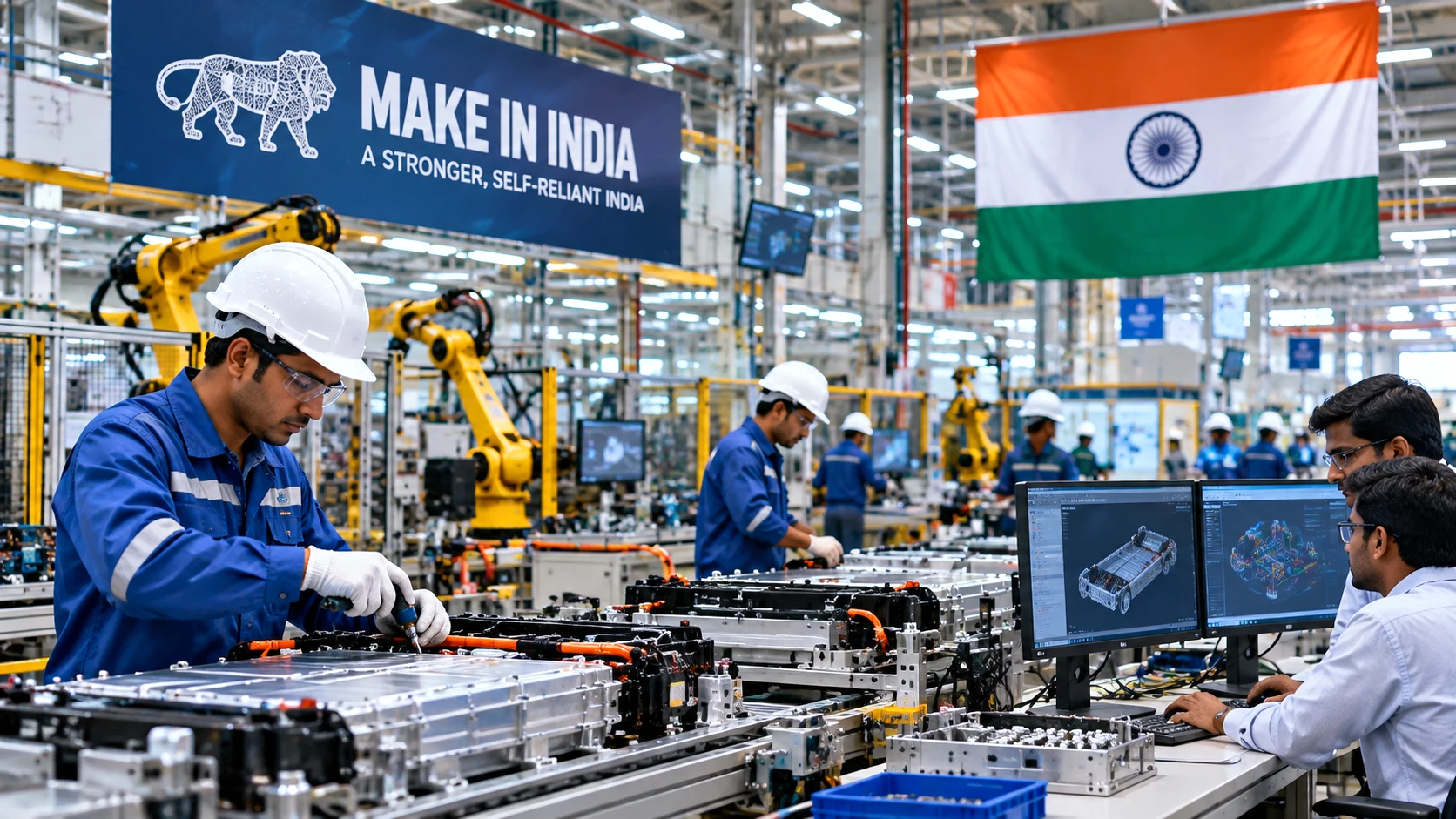
For India, the two issues are closely connected to a broader industrial ambition: building more of the technology and manufacturing value chain domestically while expanding commercial relationships with other emerging economies.
Key Takeaways
BRICS leaders have backed work on faster, cheaper and more efficient cross-border payments, including greater interoperability between national payment and messaging systems.
The New Delhi Declaration supports discussions on trade settlements and investments using members’ local currencies, while explicitly recognising different national priorities rather than prescribing a single model.
The declaration does not establish a common BRICS currency or announce the replacement of the US dollar.
BRICS also called for reliable, diversified and resilient critical-mineral supply chains, with greater value addition in resource-producing economies.
India’s semiconductor programme now includes 12 approved projects across six states with investment commitments exceeding ₹1.64 lakh crore, according to the Indian government.
BRICS Focuses on Practical Cross-Border Payment Links
The New Delhi Declaration gives the BRICS Payment Task Force a continuing role in developing the bloc’s payments agenda.
Rather than designing one completely new system to replace existing infrastructure, the task force has been examining how national payment and financial-messaging channels could work together more effectively across borders.
The commercial logic is straightforward.
A company buying goods from another country may face currency-conversion expenses, correspondent-bank charges, settlement delays and other transaction costs.
If national systems can become more interoperable, at least some cross-border transactions could potentially become faster or cheaper.
That is the objective.
The declaration does not guarantee that every BRICS transaction will immediately become cheaper, nor does it announce that the members have completed a unified payment network.
It acknowledges work already under way and calls for further practical solutions.
Local Currencies, Not a New BRICS Currency
Discussion around BRICS payments is frequently described as “de-dollarisation”, but that label can obscure what the members actually agreed in New Delhi.
The declaration discusses trade settlements and investments using BRICS local currencies.
It simultaneously recognises national priorities and states that there is no single approach suitable for every member.
That is considerably different from establishing a shared currency.
A transaction between companies in two BRICS countries could, for example, be settled in one country’s national currency without creating a new supranational monetary unit.
The declaration contains no decision to introduce a BRICS equivalent of the euro.
Nor does it require members to stop conducting business in dollars.
Reporting around the summit also indicates that the bloc remains cautious about formally presenting its payment work as a campaign to replace the dollar, with members preferring language around interoperability, voluntary local-currency settlement and financial cooperation.
For businesses, the distinction matters more than the political slogan.
The useful question is whether a particular payment mechanism lowers costs, improves settlement times and reduces unnecessary friction in actual trade.
India Wants BRICS Payment Systems to Connect
India has been one of the countries advocating stronger links between national payment systems.
Ahead of the leaders’ summit, Commerce and Industry Minister Piyush Goyal urged BRICS members and partner countries to connect their payment systems and promote trade using their respective local currencies.
India has an obvious reason to be interested.
Its domestic digital-payment infrastructure, particularly the Unified Payments Interface, has reached enormous scale.
Brazil has similarly developed Pix into a major domestic instant-payment network.
According to the Financial Times, UPI and Pix together processed more than $10 trillion in transactions over the previous 18 months. UPI has more than 550 million users, while Pix has more than 170 million.
Their success domestically does not mean connecting them internationally is simple.
Cross-border systems must deal with foreign-exchange conversion, regulatory requirements, anti-money-laundering rules, capital controls, data standards and settlement arrangements.
Those complications explain why the BRICS declaration talks about interoperability and experimentation rather than announcing an instant unified network.
Cross-Border Payments Still Face Difficult Obstacles
The technical challenge is only part of the problem.
Currencies are not interchangeable simply because two digital-payment platforms can communicate.
Countries have different exchange-rate systems and capital-account rules.
Trade between two economies may also be heavily imbalanced.
If one country consistently exports far more to another than it imports, large balances can accumulate in a currency for which the exporting country has limited commercial use.
That can reduce the attractiveness of local-currency settlement.
Financial institutions also need mechanisms for liquidity, compliance and foreign-exchange risk.
For those reasons, expanding national-currency trade is likely to proceed through specific corridors and commercial arrangements rather than replacing the established international financial system in a single move.
The New Delhi Declaration effectively acknowledges that reality by saying there is “no one-size-fits-all approach.”
Why BRICS Wants Cheaper Payments
BRICS now represents a large share of global trade and economic activity.
India’s Commerce Ministry said ahead of the summit that the grouping accounts for nearly one-fourth of global trade.
Even relatively small reductions in payment costs can therefore matter when applied across large volumes of commerce.
Lower settlement friction can be particularly useful for smaller businesses.
Large multinational companies generally have access to sophisticated treasury operations, international banks and currency-hedging products.
A small exporter may not.
BRICS governments therefore see payment connectivity as part of a wider effort to make intra-group commerce more accessible rather than simply as a geopolitical monetary project.
Trade Policy Is Another Part of the Economic Agenda
Payments alone cannot significantly expand commerce if businesses continue to face regulatory and market-access barriers.
That is why the summit’s economic discussions extended to trade facilitation.
Goyal called for BRICS countries to open markets, simplify regulatory procedures and build deeper and more balanced commercial relationships.
The New Delhi Declaration also supports a rules-based multilateral trading system and raises concerns about unilateral tariff and non-tariff measures that disrupt trade and global supply chains.
BRICS members themselves nevertheless have different trade policies and strategic interests.
The declaration therefore establishes broad common principles rather than eliminating those differences.
The practical commercial impact will depend on what governments subsequently change in tariffs, regulations, customs procedures and market access.
Critical Minerals Move to the Centre of Supply-Chain Policy
Payments were only one part of the economic discussion in New Delhi.
Critical minerals received unusually strong attention because they sit at the intersection of energy, technology and national security.
The declaration calls for “reliable, responsible, diversified, resilient, fair, sustainable, and just” critical-mineral supply chains.
It also emphasises benefit sharing, economic diversification and value addition in resource-rich countries while recognising their sovereign rights over mineral resources.
That wording addresses two different economic priorities.
Countries that consume large volumes of critical minerals want dependable supplies.
Countries that possess those resources increasingly want to process more of them domestically rather than remaining primarily exporters of raw materials.
BRICS is attempting to find common ground between those interests.
Why Critical Minerals Matter to Modern Industry
Critical minerals are not a single commodity.
Different countries classify different resources as critical depending on their industrial requirements and supply vulnerabilities.
What makes them strategically important is their role in industries that governments increasingly regard as essential.
Electric vehicles require sophisticated battery supply chains.
Renewable-energy technologies use specialised mineral inputs.
Electronics and telecommunications rely on complex material ecosystems.
Semiconductor manufacturing requires highly specialised chemicals, gases, equipment and materials.
Advanced defence, aerospace and computing industries add further demand.
A disruption in one apparently small component can therefore affect a much larger manufacturing chain.
That is why supply-chain resilience has moved from procurement departments into national economic policy.
India’s Semiconductor Expansion Shows What Is at Stake
India’s semiconductor push provides a practical example of this industrial strategy.
According to an August 2026 government assessment, 12 semiconductor projects had been approved across six Indian states, representing investment commitments exceeding ₹1.64 lakh crore.
Those projects span areas including silicon and compound-semiconductor fabrication, display fabrication and advanced packaging.
Three facilities had already begun commercial production by the time of that government update.
India’s semiconductor strategy has also expanded substantially in policy terms.
The first Semicon India programme was backed by a ₹76,000 crore outlay.
The government says Semicon India 2.0, approved in July 2026, carries an outlay of ₹1,27,500 crore and covers six areas: chip design, equipment and materials, fabrication, advanced packaging, research and development, and talent.
These figures describe government programmes and approved investment commitments. They should not be interpreted as proof that every rupee has already been spent or that all announced factories are operating.
Private Capital Is Also Looking at Indian Chip Companies
Investment interest is not limited to large government-supported fabrication and packaging projects.
Indian semiconductor startups are also seeking substantial private capital.
Moneycontrol reported in September that Bengaluru-based Agrani Labs was in advanced discussions to raise around $50 million for research, engineering and development of AI inference chips. The report said the negotiations valued the company at roughly $160 million to $200 million.
Another Indian company, Ananant Systems, was reported to be seeking approximately $5 million as it develops semiconductor and wireless-system technologies focused on 5G and 6G.
These rounds were reported as funding discussions rather than completed investments, so they should not be counted as closed funding until confirmed.
The distinction is important when assessing claims of “funding inflows”.
India is clearly attracting greater semiconductor investment interest, but announced projects, government incentives, proposed fundraising and completed private investments are different categories.
Estimates Point to a Much Larger Investment Pipeline
A Jefferies assessment cited by Moneycontrol estimated that around $20 billion of semiconductor investment is already under way in India, with further policy support potentially expanding the ecosystem.
That estimate provides useful evidence of the sector’s scale but should be identified as an analyst estimate rather than an official measure of capital already deployed.
The government’s more directly verifiable figure is the ₹1.64 lakh crore-plus in investment commitments associated with 12 approved semiconductor projects.
Taken together, the figures point to a sector moving beyond chip-design ambitions towards manufacturing, packaging, materials and supporting infrastructure.
The challenge is execution.
Semiconductor facilities require enormous capital, specialised equipment, reliable electricity and water, sophisticated supply networks and highly trained workers.
Announcing investment is therefore only the beginning of a much longer industrial process.
Critical Minerals and Chips Are Connected
The semiconductor discussion is relevant to BRICS supply-chain policy because advanced manufacturing cannot be separated from access to materials.
A semiconductor ecosystem depends on far more than the fabrication plant itself.
It requires wafers, gases, chemicals, specialised metals, equipment, packaging materials and logistics networks.
A country can invest heavily in domestic chip production and still remain vulnerable if essential inputs are concentrated elsewhere.
That makes diversification an important part of industrial policy.
BRICS contains both large manufacturing economies and countries with substantial natural-resource bases, giving the grouping potential opportunities for commercial partnerships around mining, processing, manufacturing and technology.
Whether that potential produces functioning supply chains will depend on actual investment agreements and commercial projects rather than summit language alone.
BRICS Wants More Developing Economies Inside Value Chains
The New Delhi economic agenda also reflects concern about where value is created.
Developing countries have often supplied commodities or low-value components while more profitable processing and advanced manufacturing take place elsewhere.
The BRICS approach seeks greater participation by emerging economies across global value chains.
India’s Commerce Ministry highlighted cooperation in pharmaceuticals, engineering, electronics, automobiles, services, startups and emerging technologies alongside agriculture.
Indian industry groups have similarly argued that BRICS should focus not merely on increasing exports but on investment, co-production, sourcing networks and technology partnerships.
That is a more ambitious objective than increasing bilateral trade figures.
It would require companies to build factories, source components, transfer expertise and establish long-term commercial relationships across BRICS markets.
MSMEs Could Benefit — If Systems Become Easier to Use
Small and medium-sized businesses are an important part of the payment and trade agenda.
The summit backed initiatives including the Global Value Chains Action Plan 2026–2030 and work intended to improve opportunities for MSMEs, including through digital tools and financing.
For smaller exporters, reducing paperwork and settlement costs can make foreign markets more practical.
But the benefits will depend on implementation.
A technically advanced cross-border payment system has limited value if businesses still face complicated customs procedures, unclear regulations or high logistics costs.
The payment, trade and supply-chain agendas therefore reinforce one another.
Supply-Chain Resilience Is Becoming a Business Decision
For much of the globalisation era, businesses often optimised supply chains primarily for cost and efficiency.
Recent shocks have changed that calculation.
The pandemic exposed dependence on concentrated manufacturing hubs.
Wars have disrupted energy and shipping routes.
Trade restrictions have affected technology flows.
Competition over strategic resources has made governments increasingly concerned about where essential materials originate.
Companies are consequently paying more attention to redundancy, geographic diversification and supplier risk.
Prime Minister Narendra Modi reflected that shift at the BRICS summit when he warned about the consequences of supply-chain disruption and the “weaponisation” of technology and critical minerals.
For businesses, resilience may cost more in the short term than sourcing everything from the cheapest supplier.
The economic argument is that diversified supply can reduce the damage caused by a major disruption later.
What the New Delhi Declaration Does — and Does Not Do
The declaration establishes a direction for BRICS economic cooperation.
It supports more efficient cross-border payments.
It encourages work on interoperability.
It allows greater use of national currencies where members find that practical.
It promotes more resilient critical-mineral and energy supply chains.
And it encourages deeper trade and investment cooperation.
But it does not create a new currency.
It does not instantly connect every BRICS payment network.
It does not guarantee that national-currency transactions will always be cheaper than dollar settlement.
And it does not create a common stockpile of critical minerals or a unified industrial policy.
Those distinctions are essential for assessing the summit without exaggerating its outcomes.
What Businesses Should Watch Next
The next stage will be less about declarations and more about infrastructure.
For payments, the key question is whether BRICS countries establish additional bilateral or multilateral links between their instant-payment systems and financial-messaging networks.
Businesses will also watch foreign-exchange arrangements and whether banks can make local-currency settlement commercially attractive.
For critical minerals, attention will shift to mining, refining, processing and long-term supply agreements.
For India, semiconductor execution will be particularly important.
Approved plants moving into production, startup funding actually closing, domestic suppliers entering the semiconductor value chain and factories achieving commercially viable output will provide better measures of progress than investment announcements alone.
Bottom Line
The business message from the New Delhi BRICS Summit is more practical than the geopolitical language often surrounding the grouping.
BRICS is not launching a common currency.
Instead, its members are trying to make cross-border payments more interoperable, expand voluntary settlement in national currencies and reduce unnecessary transaction costs while respecting each country’s financial priorities.
At the same time, the bloc is treating critical minerals and supply chains as strategic economic infrastructure.
For India, that agenda aligns closely with its semiconductor and advanced-manufacturing push. The country now has 12 approved semiconductor projects carrying more than ₹1.64 lakh crore in investment commitments, alongside growing private interest in domestic chip companies.
The New Delhi Declaration sets the direction.
The more consequential test begins after the summit: whether BRICS can turn payment interoperability, local-currency trade and supply-chain resilience from diplomatic commitments into systems and investments that businesses actually use.
Key Takeaway
BRICS has backed more efficient cross-border payments, greater voluntary use of national currencies and resilient critical-mineral supply chains.
The New Delhi Declaration does not create a common BRICS currency or replace the US dollar.
India’s semiconductor programme includes 12 approved projects with investment commitments exceeding ₹1.64 lakh crore.
The focus is practical: lower transaction friction, diversified supply chains and deeper commercial cooperation among emerging economies.
Implementation will determine the real business impact.
The Rajatheertha Team publishes news, explainers, guides and updates across India and the world. Our coverage follows Rajatheertha's editorial, verification and corrections standards.
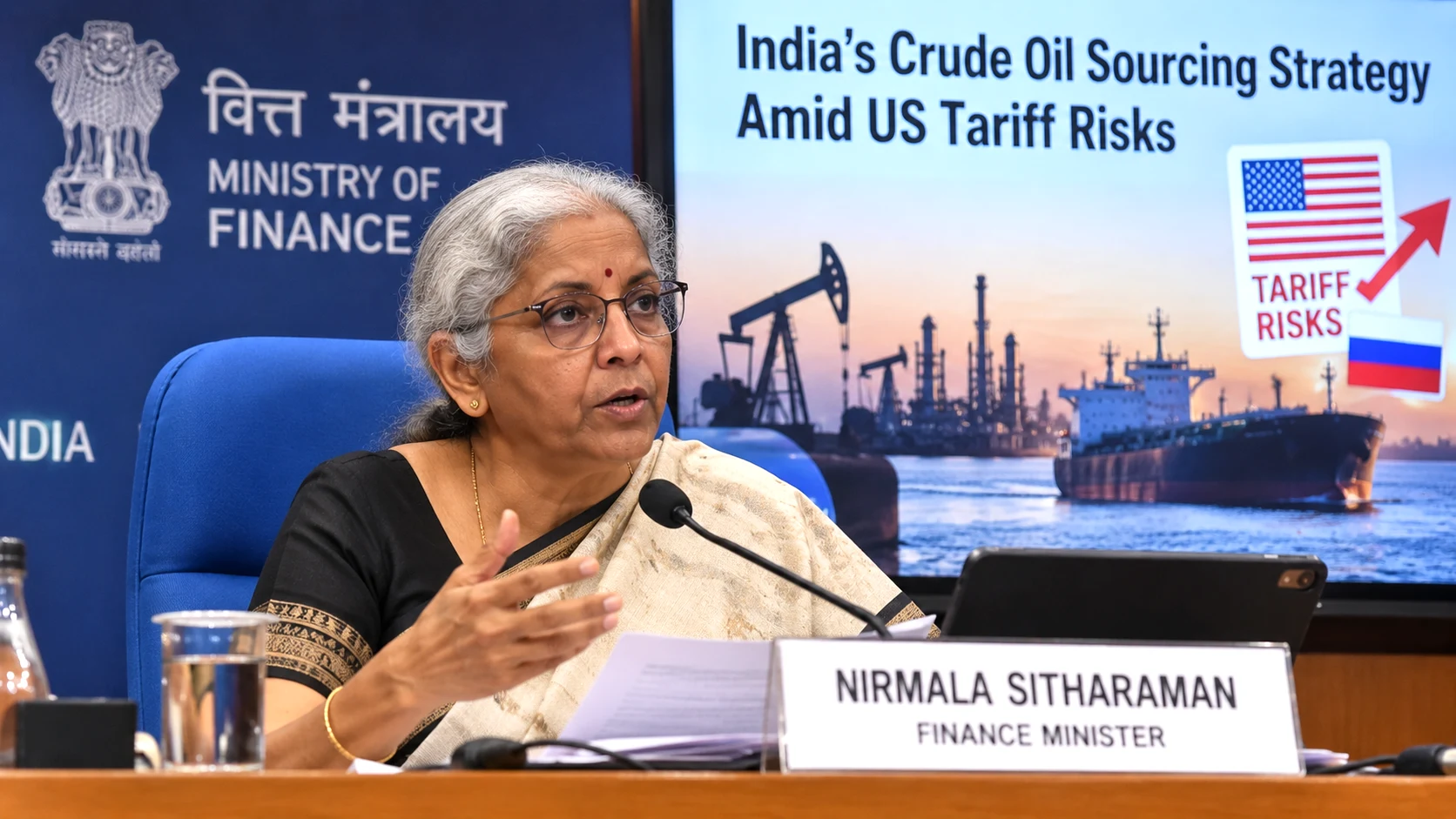
Finance Minister Nirmala Sitharaman says India cannot abruptly abandon Russian crude and will base oil purchases on availability, price and refinery suitability as a new US law raises the risk of tariffs of up to 100% on major Russian-energy buyers.
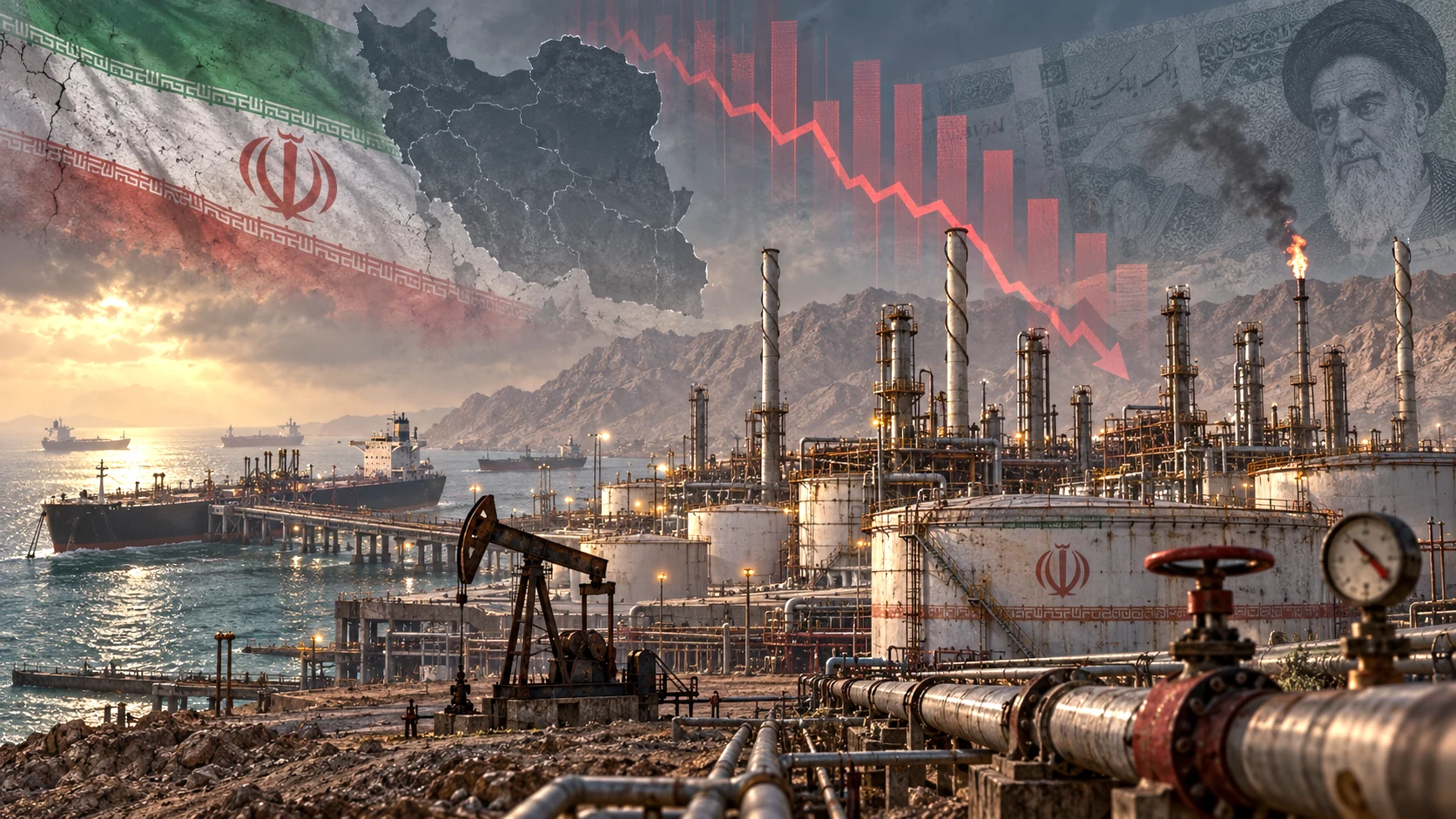
Iran’s economy contracted by 10.1% year-on-year during the first quarter of its current Persian calendar year, according to official data, with a collapse in oil and natural-gas activity driving much of the decline. The figures cover the first months of the US-Israel conflict with Iran, although the
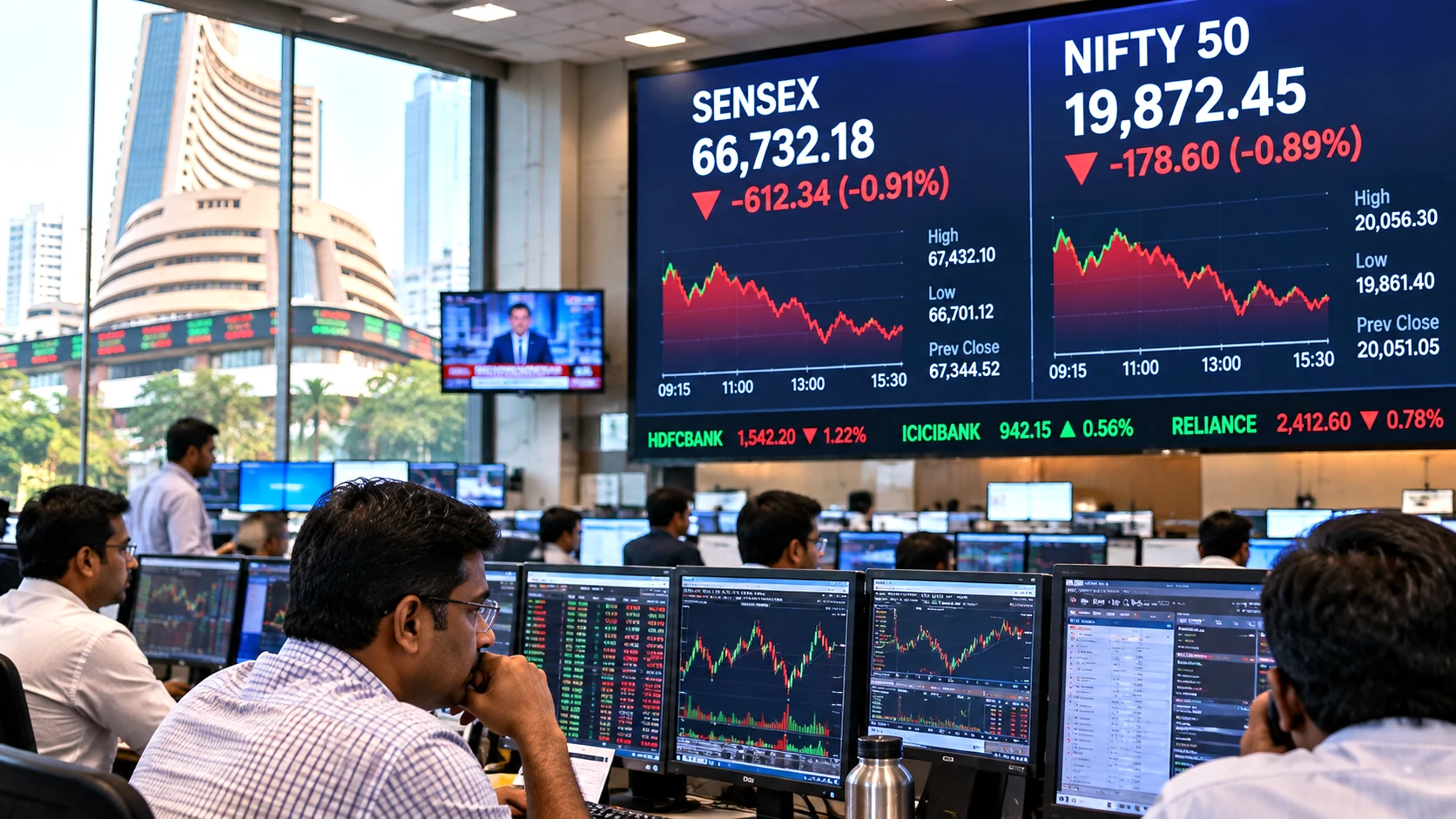
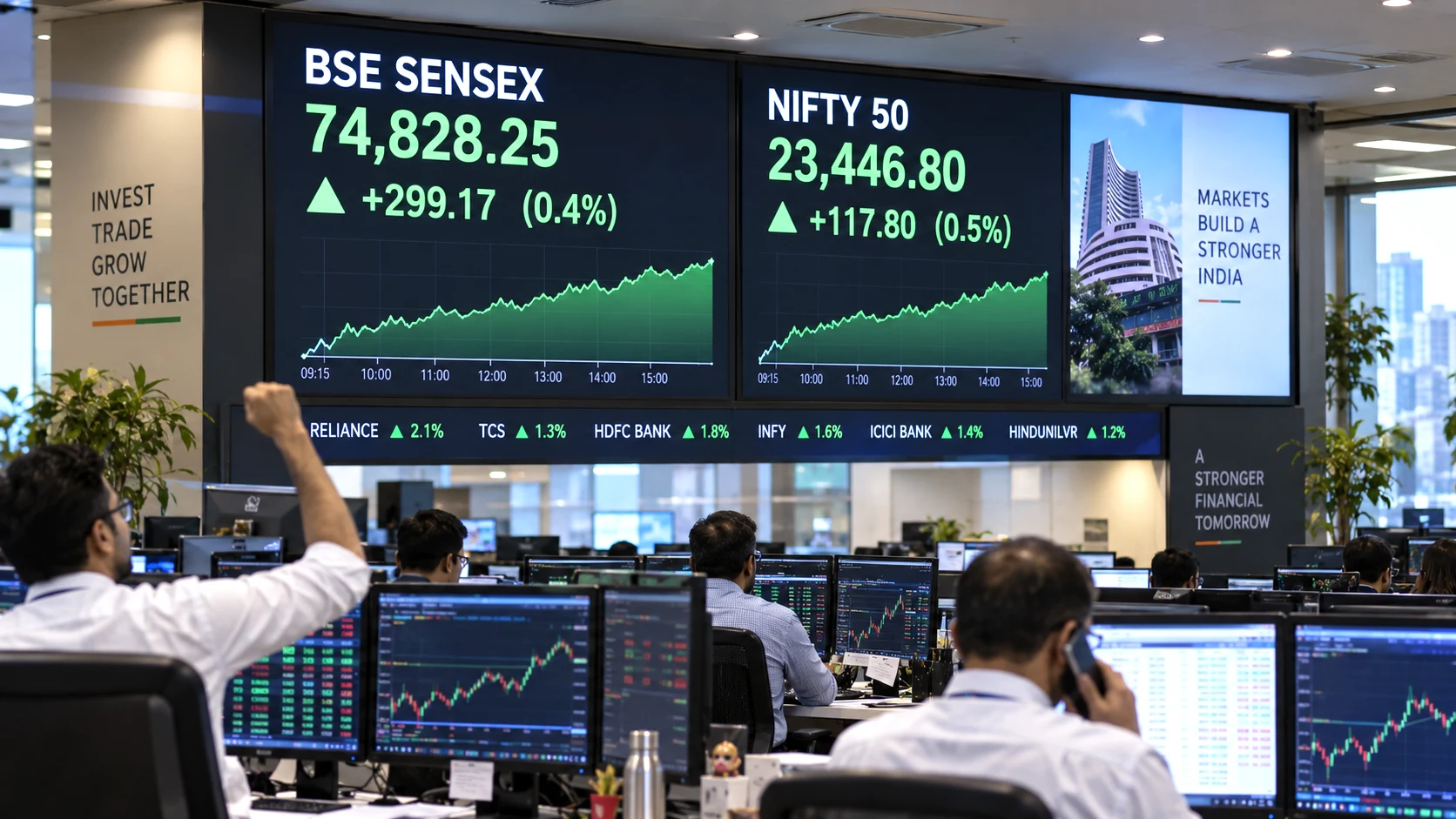
Sensex and Nifty rebounded on September 25 after Thursday's sharp selloff. At 2:35 PM IST, Sensex was up 328 points at 73,908 while Nifty gained 68 points to 23,131, helped by value buying and softer crude.
Sensex and Nifty opened higher and extended gains on September 23, led by metals, FMCG and realty stocks as crude oil eased and global cues improved. Bajaj Finance, Hindalco and Tata Steel were among the strongest Nifty gainers.
SBI, PNB and other public-sector banks have issued advisories ahead of the proposed September 28-30 nationwide bank strike. PSBs and RRBs will open on Sunday, September 27, while branch-dependent services could face disruption during the strike.
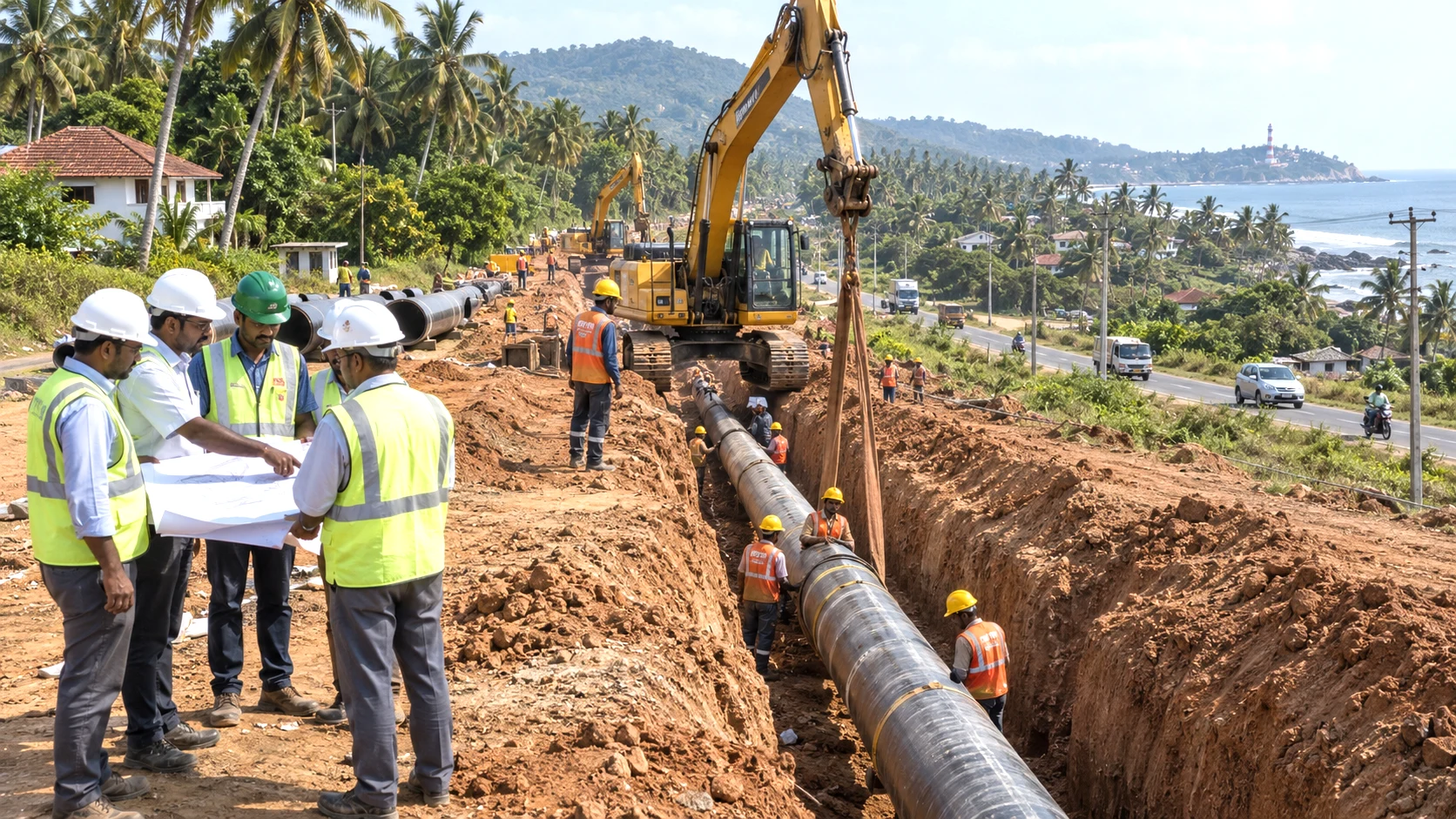
Indian Oil has approved ₹2,448.70 crore for a 424.65-km natural gas pipeline linking Kochi with Thoothukudi via Kanyakumari. The project will have 6.84 MMSCMD capacity and strengthen gas connectivity across southern India.






0 Comments