Fed Raises Rates for First Time Since 2023 as Trump Accuses Policymakers of Political Motives
The Federal Reserve unanimously lifted its benchmark rate by 25 basis points to 3.75%-4.00% as inflation remained stubbornly above target. President Donald Trump demanded rates of 1% or lower and attacked the Fed board as political, although he said he still has confidence in Chair Kevin Warsh.
the Federal Reserve’s first interest-rate increase since 2023 and the resulting political debate over monetary policy
Table of Contents (14 sections)
The US Federal Reserve has raised interest rates for the first time in more than three years, putting its inflation-fighting mandate directly at odds with President Donald Trump’s repeated demands for much cheaper borrowing.
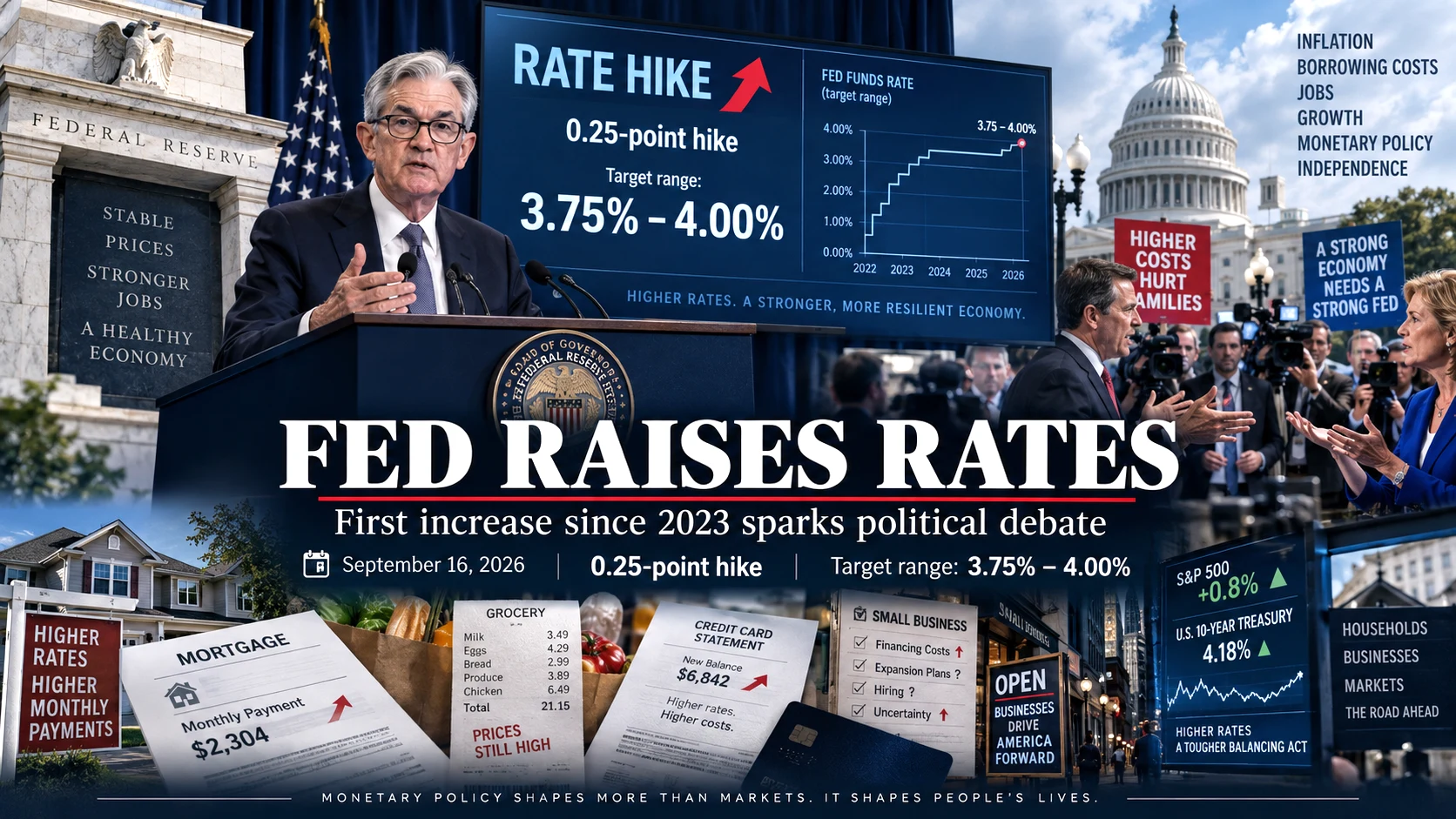
At the conclusion of its September 15-16 meeting, the Federal Open Market Committee voted unanimously to increase its target range for the federal funds rate by a quarter percentage point, from 3.50%-3.75% to 3.75%-4.00%. The change took effect on September 17.
The move is the Fed’s first rate increase since 2023 and represents a significant reversal after the central bank had previously been cutting and then holding borrowing costs steady.
But the political significance may be nearly as important as the economic one.
Trump, who has repeatedly demanded lower interest rates, accused the Federal Reserve board of being politically motivated and said policymakers were trying to damage him politically. He simultaneously demanded that US interest rates be reduced to 1% or less.
That makes the September decision a major test of Federal Reserve independence — particularly because Trump himself selected Kevin Warsh to replace former Chair Jerome Powell earlier this year.
Key Takeaways
The Federal Reserve raised the federal-funds target range by 0.25 percentage point to 3.75%-4.00% on September 16, 2026.
Recommended Reading
Related Stories & In-Depth Guides
Curated editorial perspectives matching this topic.
The claim is confirmed by the Bloomberg Billionaires Index and fresh September 18 reporting. Zhang Yiming’s estimated wealth has climbed to about $105 billion as higher ByteDance valuations and the company’s expanding AI business push him ahead of Gautam Adani.
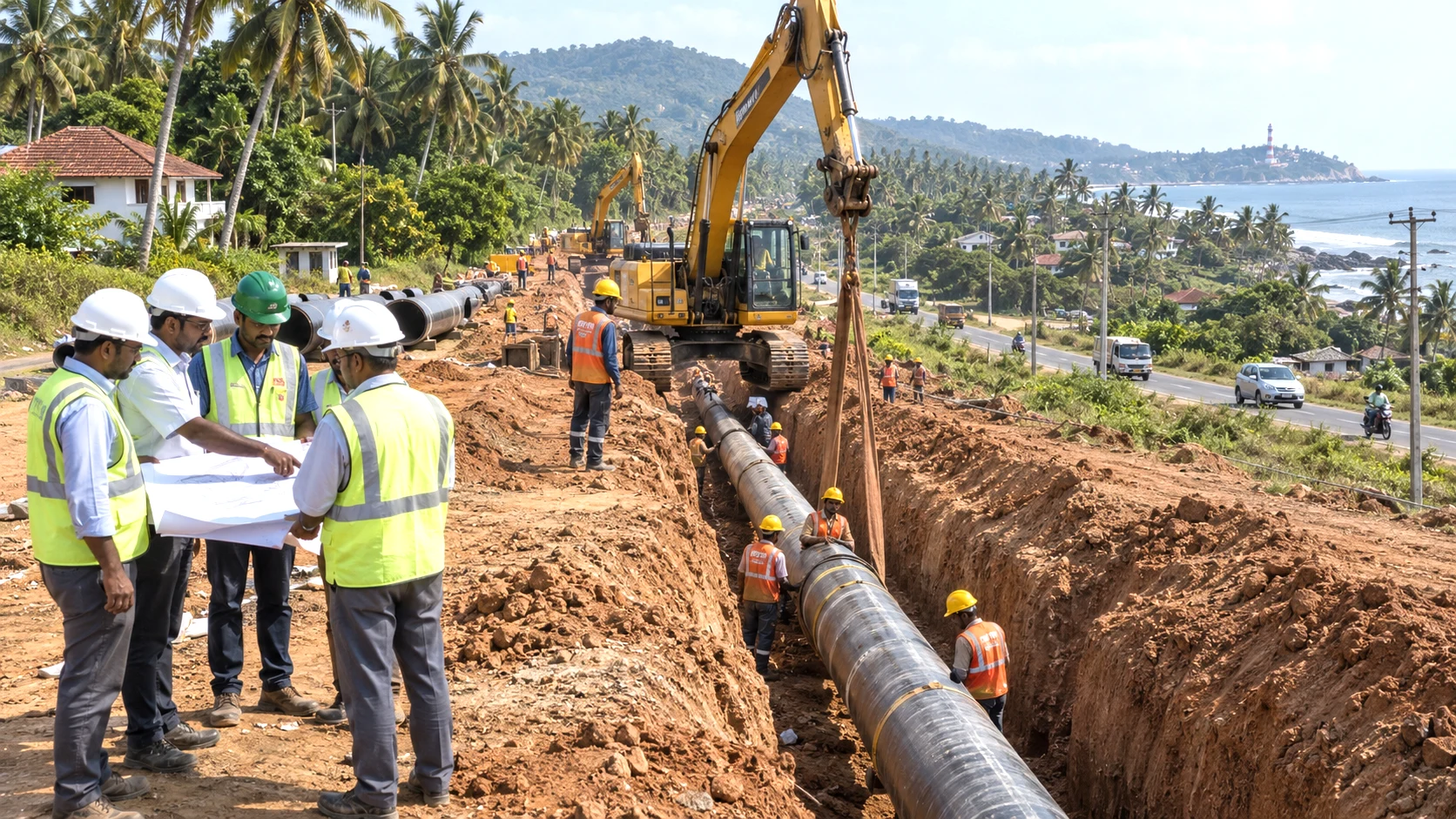
Indian Oil has approved ₹2,448.70 crore for a 424.65-km natural gas pipeline linking Kochi with Thoothukudi via Kanyakumari. The project will have 6.84 MMSCMD capacity and strengthen gas connectivity across southern India.
The decision was unanimous, 12-0, and marked the Fed’s first interest-rate increase since 2023.
Fed Chair Kevin Warsh said inflation remains too high and that recent data have not shown sufficient underlying improvement.
Sixteen of 18 policymakers submitting projections expect at least one additional rate increase before the end of 2026.
Trump responded by demanding US rates of 1% or lower and accused Fed policymakers of acting politically against him.
Trump nevertheless said he still has confidence in Warsh and that he wants the Fed chair to remain independent.
Higher policy rates can raise costs for credit cards and adjustable-rate borrowing, while mortgage rates depend more heavily on longer-term bond yields.
Fed Raises Rate to 3.75%-4.00%
The central bank’s official statement was direct.
The FOMC said economic activity was expanding at a solid pace, domestic spending remained resilient, productivity growth was strong and capital investment was robust.
At the same time, it said inflation remained elevated and that raising rates would support a faster return towards the Fed’s 2% inflation objective.
The decision was approved 12-0.
That unanimity is significant because it shows the rate increase was not simply Warsh acting against a divided central bank.
Every voting member of the FOMC supported the quarter-point increase.
Why Did the Fed Raise Rates?
The basic problem is persistent inflation.
Warsh said after the meeting that inflation had remained too high for too long and that summer inflation readings had not convinced him that underlying price pressures were improving sufficiently.
The Fed’s preferred inflation measure was running at 3.7% year-on-year in July, according to AP’s review of the latest available data.
Core inflation — which excludes volatile food and energy prices — was approximately 3.3%. Both remain well above the central bank’s 2% goal.
Several forces have complicated the inflation picture.
Energy costs have risen amid conflict involving Iran, while tariffs and strong domestic demand have also contributed to price pressure. At the same time, large capital expenditure associated with artificial intelligence infrastructure has supported investment and economic activity.
Retail sales jumped 1.2% in August, adding evidence that consumer demand remains resilient rather than collapsing under existing borrowing costs.
Warsh said those conditions gave the Fed less confidence that inflation would fall quickly enough without tighter monetary policy.
First Rate Increase Since 2023
The claim that this was the first Fed rate hike in about three years is correct.
The September 16 decision marked the central bank’s first increase since 2023.
The Fed subsequently moved through a period of easing before keeping rates unchanged earlier in 2026.
That makes September a meaningful turning point.
Instead of debating when borrowing costs might fall again, financial markets are now considering how many additional increases could follow.
Another Rate Hike Is Already on the Table
The September increase may not be a one-off.
Updated Fed projections show 16 of 18 policymakers who submitted forecasts expect at least one additional quarter-point increase before the end of 2026.
Only two expected rates to remain at the new level for the rest of the year.
The median projection points towards a federal-funds rate around 4.1% at year-end, consistent with another quarter-point move.
Warsh himself did not submit an individual rate projection and has repeatedly said he does not favour giving detailed forward guidance.
So another increase is not guaranteed.
Future decisions will still depend on inflation, employment, growth, energy prices and financial conditions.
Trump Demands Rates of 1% or Less
Trump responded within hours.
On Truth Social, he said US interest rates should be “1%, or less” and demanded that the central bank lower them quickly.
The president later intensified his criticism while speaking to reporters.
He described the Fed board as hostile and political and accused policymakers of raising rates in order to make his administration perform as badly as possible politically.
That part of the user-provided claim is therefore supported.
Trump did not merely disagree with the economic judgment. He explicitly alleged political motivation.
There is, however, no evidence in the Fed’s published decision establishing that the rate increase was motivated by partisan politics.
The official justification was persistent inflation, strong economic activity and the need to return inflation towards 2%.
Trump Stops Short of Breaking With Warsh
There is an important qualification to the Trump-versus-Fed narrative.
Trump sharply criticised the board, but he did not withdraw his support for Warsh.
Asked whether he still had confidence in the Fed chair, Trump said that he did.
He also said he wanted Warsh to remain independent.
Reuters similarly reported that Trump’s criticism was unusually pointed but remained more restrained towards Warsh personally than the attacks he had previously directed at Jerome Powell.
Trump said he had spoken with Warsh before the decision and told him he might as well vote with the rest of the board because the outcome would not change. Warsh declined to discuss any conversation with the president when questioned after the meeting.
That interaction is likely to intensify debate over the appropriate distance between the White House and an independent central bank.
Why Federal Reserve Independence Matters
The Federal Reserve sets monetary policy independently of day-to-day White House direction.
Presidents appoint members of the Federal Reserve Board, subject to Senate confirmation, but presidents do not formally decide interest rates.
That separation is intended to allow policymakers to make potentially unpopular decisions — such as raising borrowing costs before an election — when they believe those decisions are necessary for price stability and employment.
Warsh told lawmakers during his confirmation process that he would act independently as Fed chair.
The September decision therefore creates an unusual political situation.
A Fed chair selected by Trump has now joined a unanimous central-bank vote for tighter monetary policy despite the president publicly demanding dramatically lower rates.
Fed Decision Comes Just Weeks Before Midterms
Timing adds to the political sensitivity.
The rate hike arrived less than two months before the November midterm elections, when Republicans are fighting to preserve control of Congress.
Affordability, inflation, gasoline prices, mortgages and other household expenses are major campaign issues.
AP noted that the decision came seven weeks before the elections as Americans continued to face high costs for groceries, fuel and housing.
But proximity to an election does not itself establish that the decision was political.
The Fed follows a pre-announced meeting calendar and held its scheduled two-day policy meeting on September 15-16.
What Does the Rate Hike Mean for Consumers?
The federal-funds rate is not the interest rate consumers directly pay on mortgages, car loans or credit cards.
But it influences borrowing conditions throughout the economy.
Credit-card rates and other variable-rate borrowing can respond relatively quickly to higher short-term policy rates.
Adjustable-rate mortgages can also become more expensive depending on their reset terms. Savers, on the other hand, can benefit if banks increase returns on savings accounts, certificates of deposit and other interest-bearing products.
Fixed mortgage rates are more complicated.
They are influenced heavily by longer-term Treasury yields and expectations about future inflation and Fed policy, rather than moving mechanically by exactly 0.25 percentage point whenever the Fed acts.
AP reported that average 30-year mortgage rates were approaching 7% as the September decision arrived.
Markets Initially Read the Fed as Hawkish
Financial markets were prepared for the quarter-point increase, but the signal of potentially more tightening caught investors’ attention.
Reuters reported that the dollar strengthened, short-term Treasury yields jumped and the yield curve flattened after the announcement and projections.
The two-year Treasury yield, which is particularly sensitive to expectations for monetary policy, climbed after the decision.
The response reflected an important shift in investor thinking.
The debate is no longer simply about whether the Fed would resume rate increases.
Markets now have to assess whether September marks the beginning of a broader tightening cycle.
What the Fed Is Forecasting
The updated projections show policymakers expecting inflation to remain above target for longer than they previously hoped.
The median projection puts PCE inflation at approximately 3.7% in 2026, while the Fed expects economic growth around 2.3% this year.
Policymakers nevertheless expect inflation eventually to move back towards the 2% objective.
This combination — resilient growth alongside elevated inflation — gives the Fed more room to raise rates than it would have if unemployment were rapidly increasing or economic activity were contracting.
Warsh’s argument is essentially that the economy appears strong enough to tolerate tighter policy, while inflation is high enough to require it.
Bottom Line
The central claim is correct, with one important qualification.
The Federal Reserve did raise its key interest rate by 25 basis points on September 16, 2026, taking the target range to 3.75%-4.00% in its first hike since 2023.
The vote was unanimous.
Fed Chair Kevin Warsh said the economy remained resilient but inflation was still too high, and 16 of 18 policymakers submitting projections now anticipate at least one more increase before the end of the year.
Trump responded by demanding rates of 1% or lower and accusing Federal Reserve policymakers of political motives.
That creates a genuine confrontation between the White House’s preference for cheaper borrowing and the central bank’s assessment that inflation requires tighter policy.
But it is not yet a complete Trump-Warsh rupture.
Trump continues to express confidence in the Fed chair he appointed, while Warsh has publicly maintained that the central bank must make its monetary-policy decisions independently.
With another rate increase now projected by most Fed policymakers and the midterm elections approaching, the conflict between inflation control, borrowing costs and White House political pressure is likely to remain one of the most closely watched economic battles in Washington.
Key Takeaway
Fed raises rates 25 basis points to 3.75%-4.00% — first hike since 2023.
Decision unanimous; another increase projected by most policymakers.
Trump demands rates of 1% or less and alleges political motives.
The Rajatheertha Team publishes news, explainers, guides and updates across India and the world. Our coverage follows Rajatheertha's editorial, verification and corrections standards.
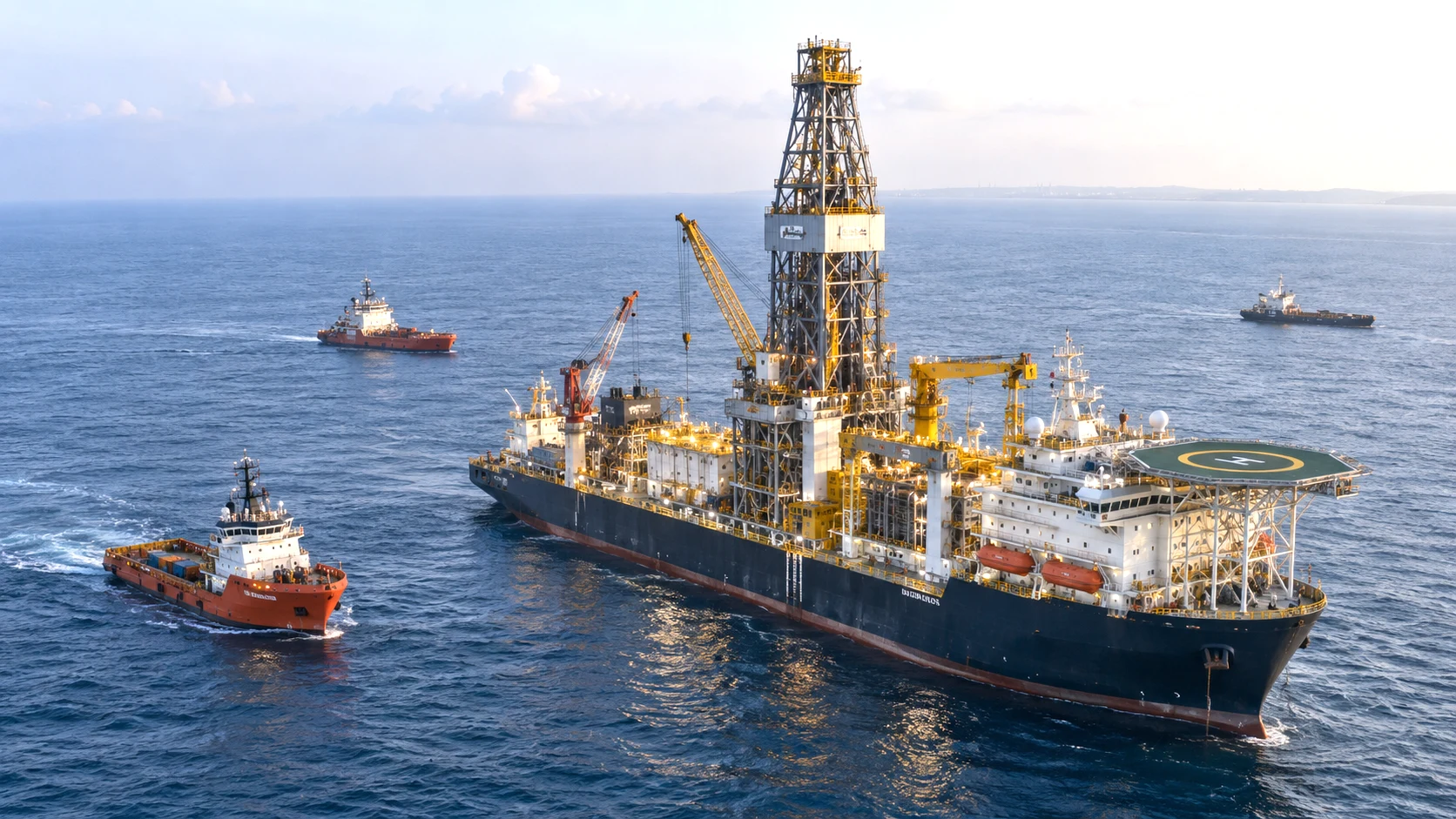
ONGC has struck natural gas at a deepwater well about 43 km off Konark in Odisha's Mahanadi Offshore Basin. The well has shown encouraging flow and reservoir pressure, but reserve size and commercial viability still require appraisal.
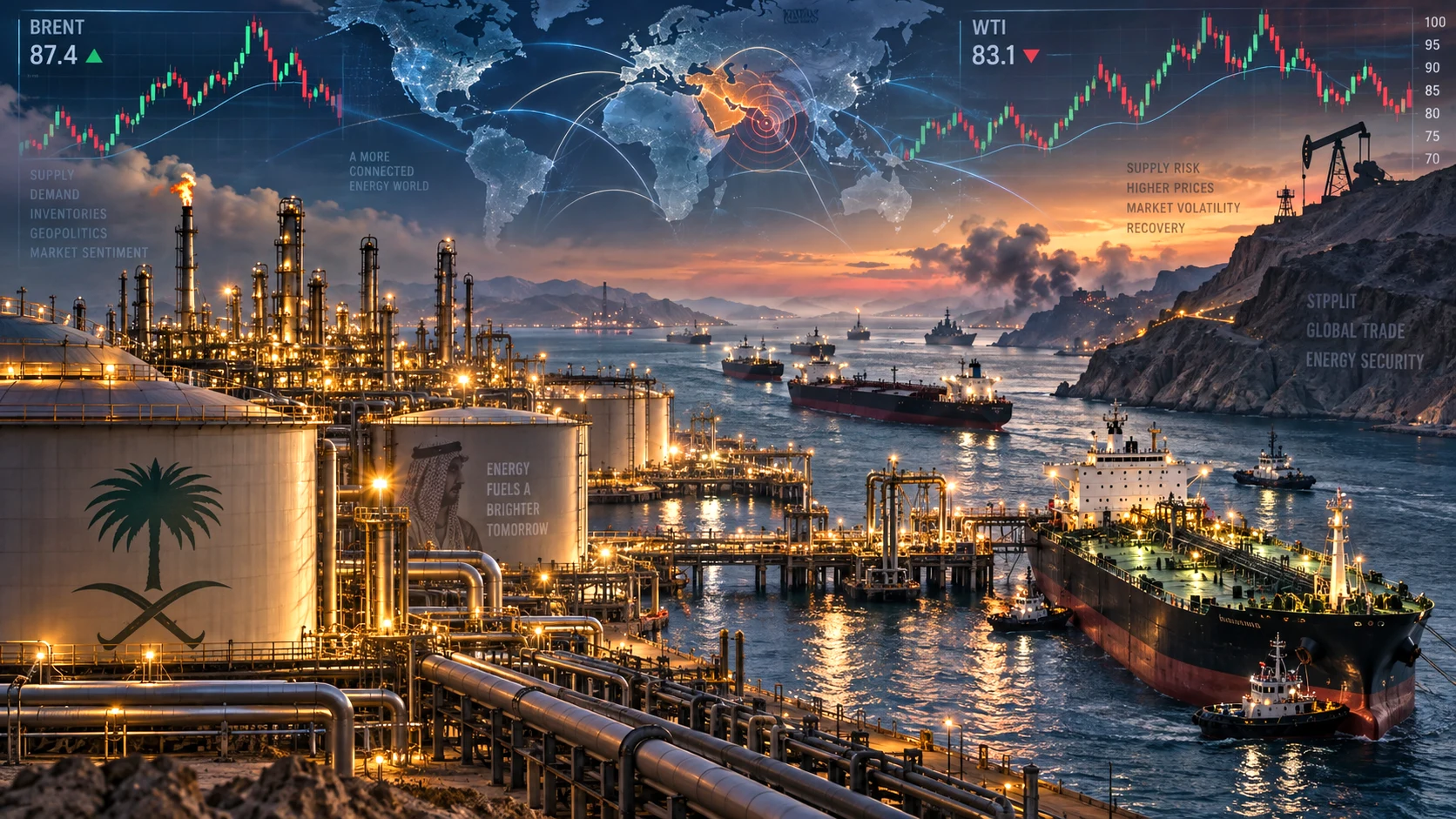
Global crude oil prices fell sharply on September 21, 2026, with Brent dropping toward $102 a barrel and US West Texas Intermediate slipping below $99, as recovering Saudi Arabian export flows and hopes for renewed US-Iran diplomacy outweighed immediate fears from Houthi missile and drone attacks on
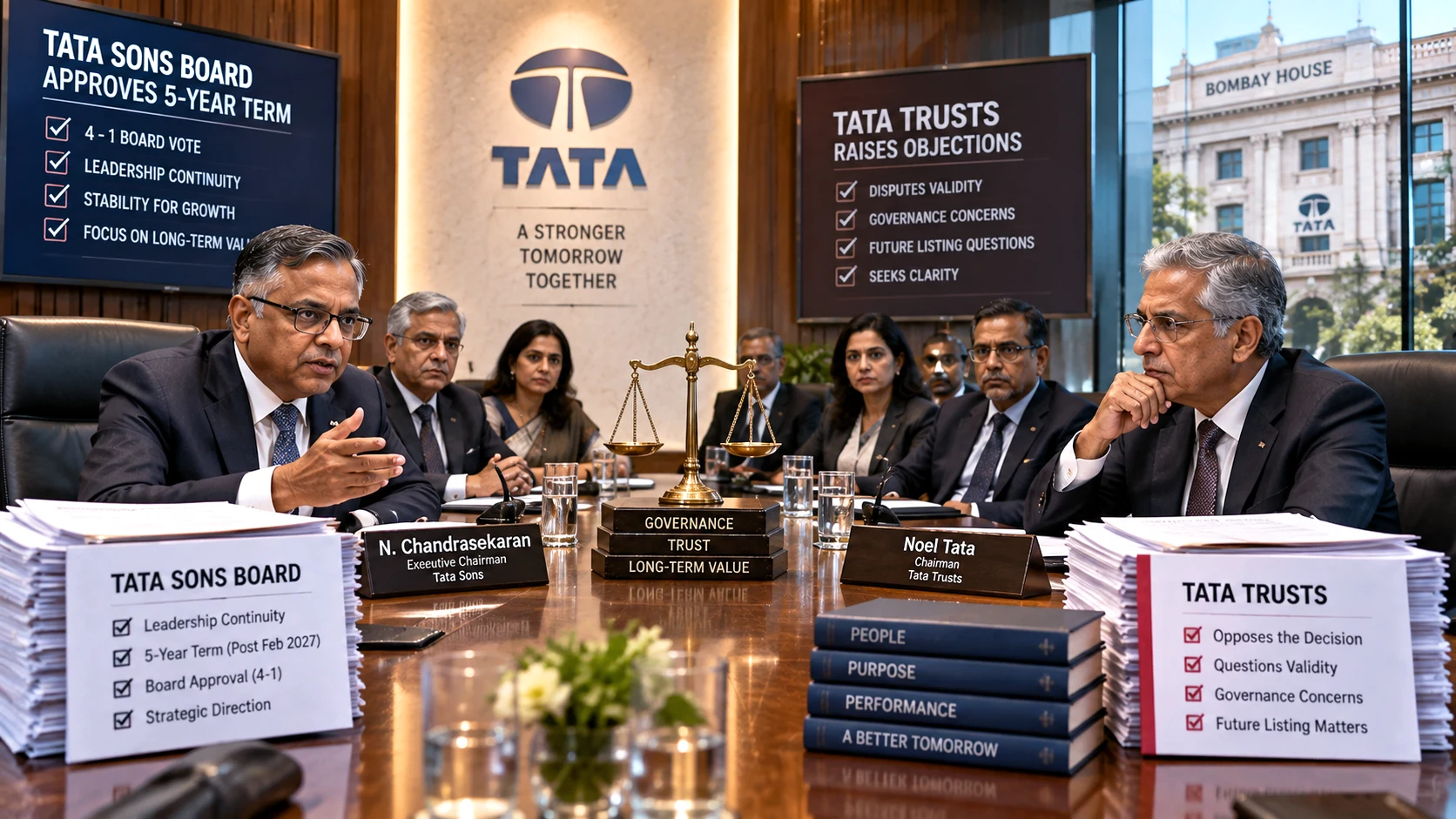
The Tata Sons board voted 4-1 to give N. Chandrasekaran another five years as executive chairman after his current term ends in February 2027. Noel Tata opposed the proposal, while Tata Trusts has formally argued that the resolution is invalid under Tata Sons’ Articles of Association.
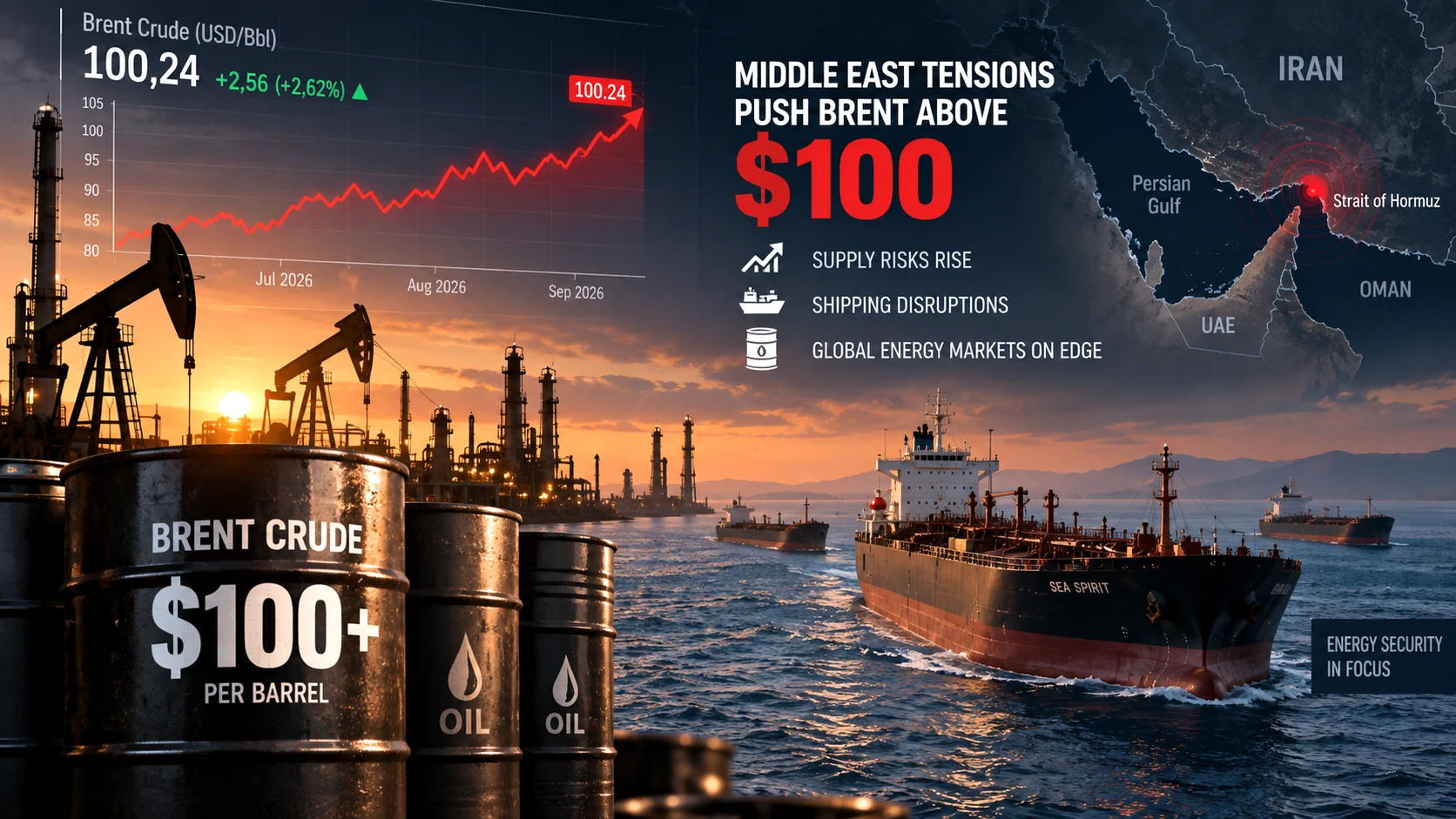
Brent crude has surged above $100 as US-Iran hostilities disrupt Middle East oil supplies, raising concerns over inflation, markets and India’s import costs.
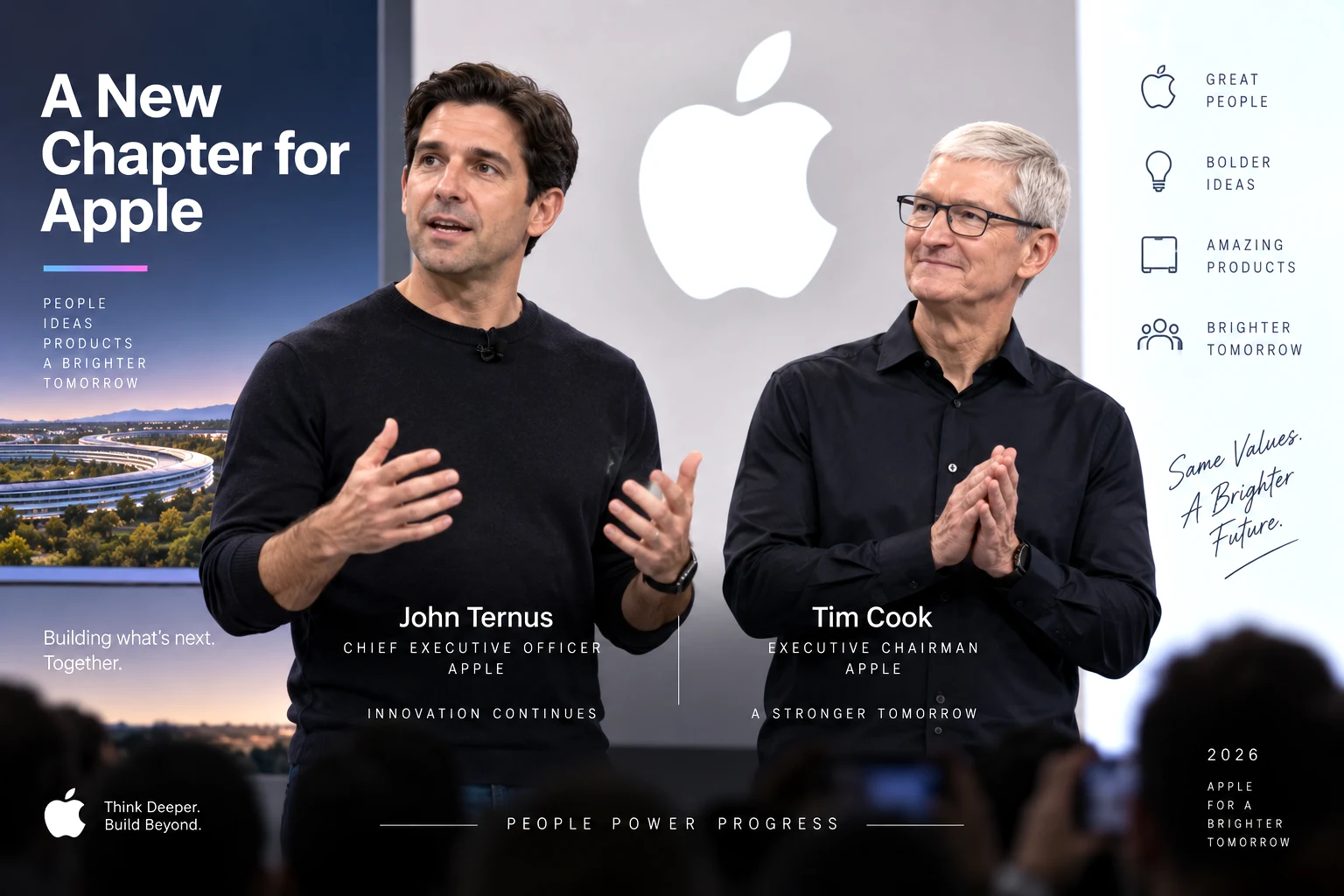
John Ternus has officially succeeded Tim Cook as Apple CEO, while Cook remains at the technology giant as executive chairman after 15 years at the helm.
Claude maker Anthropic is preparing for a potentially historic IPO, with investors discussing a valuation of $2 trillion or more, though the filing timetable remains subject to change.





0 Comments