Iran Economy Shrinks 10.1% as War and Oil Disruptions Deepen Economic Crisis
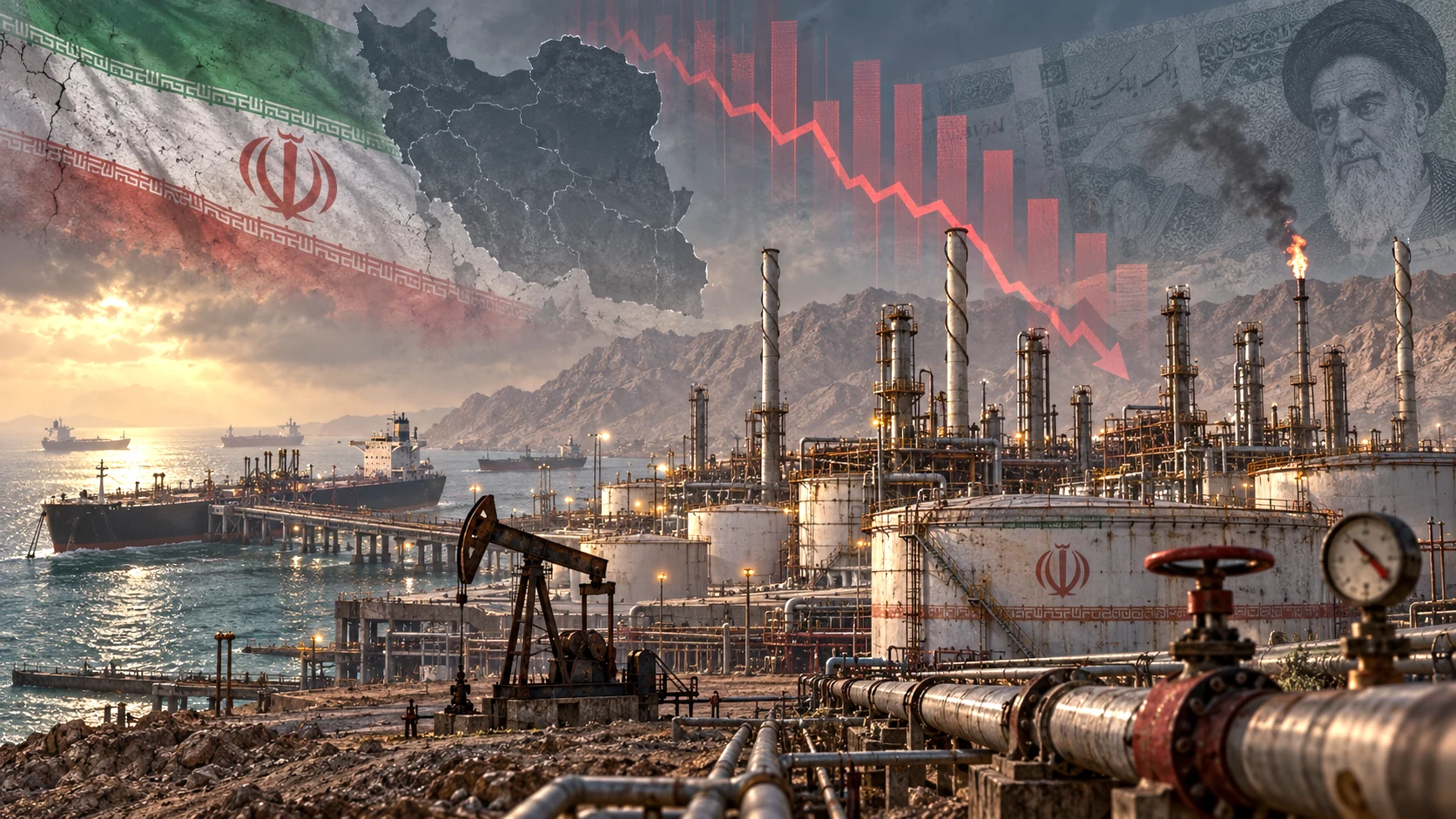
Iran’s economy contracted by 10.1% year-on-year during the first quarter of its current Persian calendar year, according to official data, with a collapse in oil and natural-gas activity driving much of the decline. The figures cover the first months of the US-Israel conflict with Iran, although the
Iran’s economic contraction driven by oil disruptions and wartime pressures
Table of Contents (22 sections)
TEHRAN, September 21, 2026: Iran has recorded one of its sharpest recent economic contractions, with official statistics showing gross domestic product falling 10.1% from a year earlier during the three months to June 20.
The figures were released by the Statistical Center of Iran and cover the first quarter of the Persian calendar year 1405, running from March 21 through June 20, 2026.
Real GDP including oil fell from about 24,255 trillion rials at constant 2021 prices in the comparable quarter a year earlier to about 21,795 trillion rials, according to the official national-accounts data.
Excluding oil, GDP declined by a smaller but still substantial 4.6% year-on-year.
The difference between those two numbers illustrates how heavily the downturn has been influenced by Iran’s energy sector.
Key Takeaways
Recommended Reading
Related Stories & In-Depth Guides
Curated editorial perspectives matching this topic.
India received a record $94.53 billion in total FDI in FY2025-26, up about 17% from the previous year. Singapore led equity investment, software and hardware was the top sector, while Maharashtra attracted the most FDI equity.
Sensex and Nifty rebounded on September 25 after Thursday's sharp selloff. At 2:35 PM IST, Sensex was up 328 points at 73,908 while Nifty gained 68 points to 23,131, helped by value buying and softer crude.
Iran’s GDP including oil contracted 10.1% year-on-year in the quarter to June 20.
Non-oil GDP fell 4.6% over the same period.
Oil and natural-gas extraction plunged 26.4%.
Industry and mining contracted 14.7%; services declined 4.8%.
Figures cover the opening months of the US-Israel conflict with Iran.
Oil and Gas Sector Falls 26.4%
The most severe contraction occurred in crude-oil and natural-gas extraction, which fell 26.4% year-on-year, according to the official figures reported on September 20.
That decline is particularly important because oil remains a critical source of export revenue and foreign currency for Iran.
The wider industries and mining group contracted 14.7%, while services declined 4.8%.
Agriculture was the major exception, expanding by 2.3% compared with the same quarter a year earlier.
The official sector data therefore show that Iran’s slowdown extended beyond oil.
Factories, mining operations, transport, commerce and service businesses were also operating at lower levels than a year earlier.
Did the War Cause Iran’s 10.1% GDP Contraction?
The timing strongly connects the downturn with the conflict, but the distinction between correlation and an official finding is important.
The quarter began on March 21, only weeks after US and Israeli strikes against Iran began on February 28, 2026.
The subsequent war disrupted energy production, trade, transport networks and shipping through the Gulf.
However, the Statistical Center of Iran released the national-accounts numbers without formally stating that the war alone caused the 10.1% decline.
Iran was already facing serious economic problems before the fighting began.
These included international sanctions, high inflation, persistent currency depreciation, restrictions on access to the global financial system and structural weaknesses in investment and productivity.
The most accurate conclusion is therefore that the official statistics show a sharp contraction during a quarter heavily affected by the war, with the conflict and resulting energy disruptions adding to pre-existing economic pressure.
Iran’s Non-Oil Economy Also Contracts
The 4.6% decline in GDP excluding oil is significant because it shows the downturn cannot be explained solely by lower crude production.
Iran’s services sector fell 4.8%, while industries and mining contracted much more sharply.
This suggests weaker economic activity was spreading through businesses and households as the conflict affected commerce, transportation and production.
The gap remains substantial, however:
GDP including oil: -10.1%
GDP excluding oil: -4.6%
That six-percentage-point difference highlights the outsized contribution of the oil shock to the overall contraction.
Iran’s Oil Exports Have Fallen Sharply
The deterioration in oil production has coincided with a major decline in Iranian crude shipments.
Energy analytics cited in recent reporting estimate Iranian crude and condensate loadings fell from around 2 million barrels per day in March to roughly 740,000 barrels per day in July.
By August, estimates had dropped further to approximately 220,000–255,000 barrels per day.
Those numbers illustrate the scale of pressure on one of Iran’s most important sources of foreign exchange.
Lower export volumes mean fewer dollars and other hard currencies flowing into the Iranian economy, limiting the government’s ability to finance imports and support the rial.
Strait of Hormuz Disruptions Add to Economic Damage
Iran’s economy has also been affected by severe disruption in and around the Strait of Hormuz.
Before the conflict, the narrow waterway carried roughly one-fifth of global oil and liquefied natural-gas flows.
Commercial shipping through the strait has since fallen dramatically.
On the weekend immediately preceding September 21, only 17 trackable commodity vessels crossed the Strait of Hormuz, compared with 37 a week earlier and a pre-war average of roughly 125 vessels per day, according to shipping data reported by Reuters.
Some energy shipments continue using vessels operating with limited public tracking or through ship-to-ship transfer arrangements.
But the reduction in regular traffic has made both Iranian exports and the wider Gulf energy trade more complicated and expensive.
Shipping Restrictions Hurt More Than Oil
The economic impact of maritime disruption reaches far beyond petroleum.
Iran depends on international shipping for imports of industrial equipment, raw materials, agricultural products and consumer goods.
When commercial vessels avoid Iranian ports or face higher insurance and security costs, businesses can struggle to obtain supplies.
Iranian President Masoud Pezeshkian said earlier in September that the country’s overall trade had fallen by roughly 25% to 35%, according to reporting cited in an analysis of the latest GDP figures.
The resulting shortages and higher import costs can also contribute to domestic inflation.
Inflation Adds Pressure on Iranian Households
Iran entered the war with persistent inflation and a weak currency.
Those pressures have intensified.
Recent reporting based on official Iranian data placed the country’s 12-month average inflation rate near 70%, while some categories of essential household goods have risen considerably faster.
The Iranian rial has also depreciated substantially.
Currency weakness makes imports more expensive, which can feed directly into prices for food, medicines, machinery and other products.
For households, the combination of falling economic output and high inflation is particularly difficult.
GDP contraction typically means weaker incomes and employment opportunities.
Inflation simultaneously reduces the purchasing power of whatever income remains.
Industry and Mining Take Major Hit
The 14.7% contraction in industry and mining is another important signal.
This broad group covers economic activity including manufacturing, mineral extraction, electricity and utilities, construction and energy-related production.
Such a deep contraction suggests Iran’s economic difficulties are becoming increasingly broad-based rather than remaining isolated in the oil sector.
War-related risks can affect factories through several channels.
They include shortages of imported components, disrupted electricity or fuel supplies, transportation difficulties, weaker domestic demand and uncertainty that discourages businesses from making new investments.
International financial restrictions can make those problems even more difficult to solve.
Services Fall 4.8%
Iran’s services economy also weakened.
Official data show a 4.8% year-on-year contraction in the sector.
Services cover activities including retail and wholesale trade, transportation, financial services, real estate, communications, education, healthcare, hospitality and other commercial services.
A decline across this group provides evidence that the downturn is reaching the everyday domestic economy.
Retailers can suffer when households cut spending.
Transport businesses lose activity when trade declines.
Tourism and hospitality can weaken during periods of conflict and security uncertainty.
Banks and other financial companies can face additional pressure from currency instability and sanctions.
Agriculture Provides Rare Growth
Agriculture was the only major broad category to avoid contraction.
The sector expanded 2.3% year-on-year.
That provided some support to overall economic output but was nowhere near enough to offset the large declines in energy, industry and services.
Agricultural output can also become increasingly important during wartime because domestic food production reduces reliance on imports.
However, farmers still face risks from inflation, water shortages, fuel costs and difficulties importing equipment and other inputs.
IMF Had Already Forecast a Full-Year Contraction
The International Monetary Fund was expecting Iran’s economy to shrink even before the latest quarterly data became available.
In its July 2026 World Economic Outlook update, the IMF projected Iran’s economy would contract around 5.4% for the full year 2026.
The Fund said Iran’s outlook reflected the effects of the conflict as well as changes in oil exports.
At that stage, the IMF expected some recovery later, although the scale would depend heavily on the duration of hostilities and the performance of Iran’s energy exports.
The new 10.1% quarterly year-on-year contraction does not mean Iran’s economy will necessarily shrink by 10.1% for the full year.
Quarterly growth and annual GDP growth are different measurements.
Iran’s performance in the remaining three quarters will determine the final full-year outcome.
Why the 10.1% Figure Is Not an Annual Forecast
This distinction is essential.
The 10.1% figure compares Iran’s economic output during March 21-June 20, 2026 with output during the same three-month period one year earlier.
It is therefore a year-on-year quarterly contraction.
It does not mean economists currently forecast Iranian GDP to be exactly 10.1% smaller across the whole of 2026.
A ceasefire, recovery in oil exports or reopening of trade routes could improve growth later in the year.
Additional military escalation could make the downturn worse.
Economic Pressure Becomes Part of US-Iran Confrontation
The economic deterioration has also become part of the political messaging surrounding the conflict.
US President Donald Trump has publicly cited Iran’s deteriorating economy while pressuring Tehran to reach an agreement.
At the same time, he has signalled that he remains open to diplomacy with Iranian President Masoud Pezeshkian.
Iranian officials have responded that they will not negotiate under military and economic pressure without concessions from Washington.
Qatar and other regional mediators are currently attempting to revive negotiations between the two governments.
Economic conditions inside Iran may therefore become an increasingly important factor in Tehran’s calculations.
Iran Still Has Economic Buffers
Despite the severe contraction, Iran retains some mechanisms that can help the government withstand external pressure.
The country has substantial energy resources, domestic industrial capacity and long experience operating under international sanctions.
It also maintains major trade relationships with countries outside the Western sanctions system.
Oil continues to leave the country despite maritime restrictions, although volumes have dropped substantially.
And government controls can redirect resources toward essential goods and strategic sectors during crises.
These factors do not eliminate the economic damage, but they complicate predictions that economic pressure alone will quickly force a change in Iranian policy.
Regional War Is Also Hurting Iran’s Neighbours
Iran is not the only Middle Eastern economy affected.
The closure and disruption of major shipping routes have damaged economic activity throughout the Gulf.
A Reuters poll in July found economists expected several Gulf economies to contract more sharply than had been forecast before the conflict disrupted the Strait of Hormuz.
Even large oil exporters have faced challenges moving crude to international markets.
Saudi Arabia has recently had to adjust export routes following attacks on infrastructure connected with its Red Sea network.
The consequences of the war have therefore spread through energy markets, transportation, inflation and global supply chains.
Global Oil Prices Remain Elevated
Oil prices remain substantially above their pre-war levels, although they have retreated from some recent peaks.
Brent crude was trading around $101.75 per barrel on September 21, as markets weighed diplomatic efforts against continuing regional instability.
High oil prices can provide some benefit to producers that successfully export crude.
But for Iran, that advantage is limited when export volumes themselves have fallen dramatically.
If a country can sell only a fraction of its previous output, a higher price per barrel does not necessarily compensate for the loss in volume.
What the Official GDP Numbers Show
The clearest picture from Iran’s latest national accounts is:
Real GDP including oil: -10.1%
Real GDP excluding oil: -4.6%
Oil and natural-gas extraction: -26.4%
Industry and mining: -14.7%
Services: -4.8%
Agriculture: +2.3%
Period covered: March 21-June 20, 2026
Comparison: Same quarter in 2025
These are official Statistical Center of Iran figures.
What Can Be Stated Confidently
It is factual to say:
Iran’s economy contracted 10.1% year-on-year in the first quarter of the Persian calendar year.
It is factual to say:
The quarter coincided with the opening months of the US-Israel war with Iran.
It is factual to say:
The oil and gas sector suffered a particularly severe 26.4% contraction.
It is also reasonable to report that war-related disruption has contributed significantly to Iran’s economic difficulties.
But it would be too strong to write:
“Iran’s GDP fell 10.1% entirely because of the war.”
Iran’s official statistical agency did not make that causal determination, and sanctions, inflation, currency weakness and longer-running structural problems were already weighing on the economy.
Why the Figures Matter
A contraction of this scale places additional strain on the Iranian government as it simultaneously funds military operations, manages high inflation and attempts to keep essential imports flowing.
The energy decline is particularly serious because oil exports generate foreign currency that helps finance imports and government spending.
If export volumes remain suppressed, Iran could face continued pressure on:
the rial;
government revenue;
industrial production;
employment;
household consumption;
and its ability to import goods.
A diplomatic agreement that restores trade and energy flows could reduce some of that pressure.
Continued war or another major escalation could deepen it.
Bottom Line
Iran’s latest official statistics provide the clearest evidence yet of how severely economic activity has weakened during the current conflict.
GDP including oil fell 10.1% year-on-year.
The non-oil economy contracted 4.6%.
Oil and gas extraction plunged 26.4%.
Those figures show that the energy shock accounts for a large part of the downturn, although weakness has also spread into industry and services.
The numbers cover only one quarter, meaning the full economic cost of the war is still unknown.
For now, the most accurate conclusion is that Iran entered the conflict with serious economic vulnerabilities, and the war and associated disruption to oil exports, trade and transportation have intensified them dramatically.
Key Takeaway
Iran GDP contracts 10.1% year-on-year in Q1.
Oil and gas plunge 26.4%; non-oil GDP falls 4.6%.
War and energy disruptions intensify pre-existing pressures.
Full-year impact remains dependent on later quarters.
The Rajatheertha Team publishes news, explainers, guides and updates across India and the world. Our coverage follows Rajatheertha's editorial, verification and corrections standards.
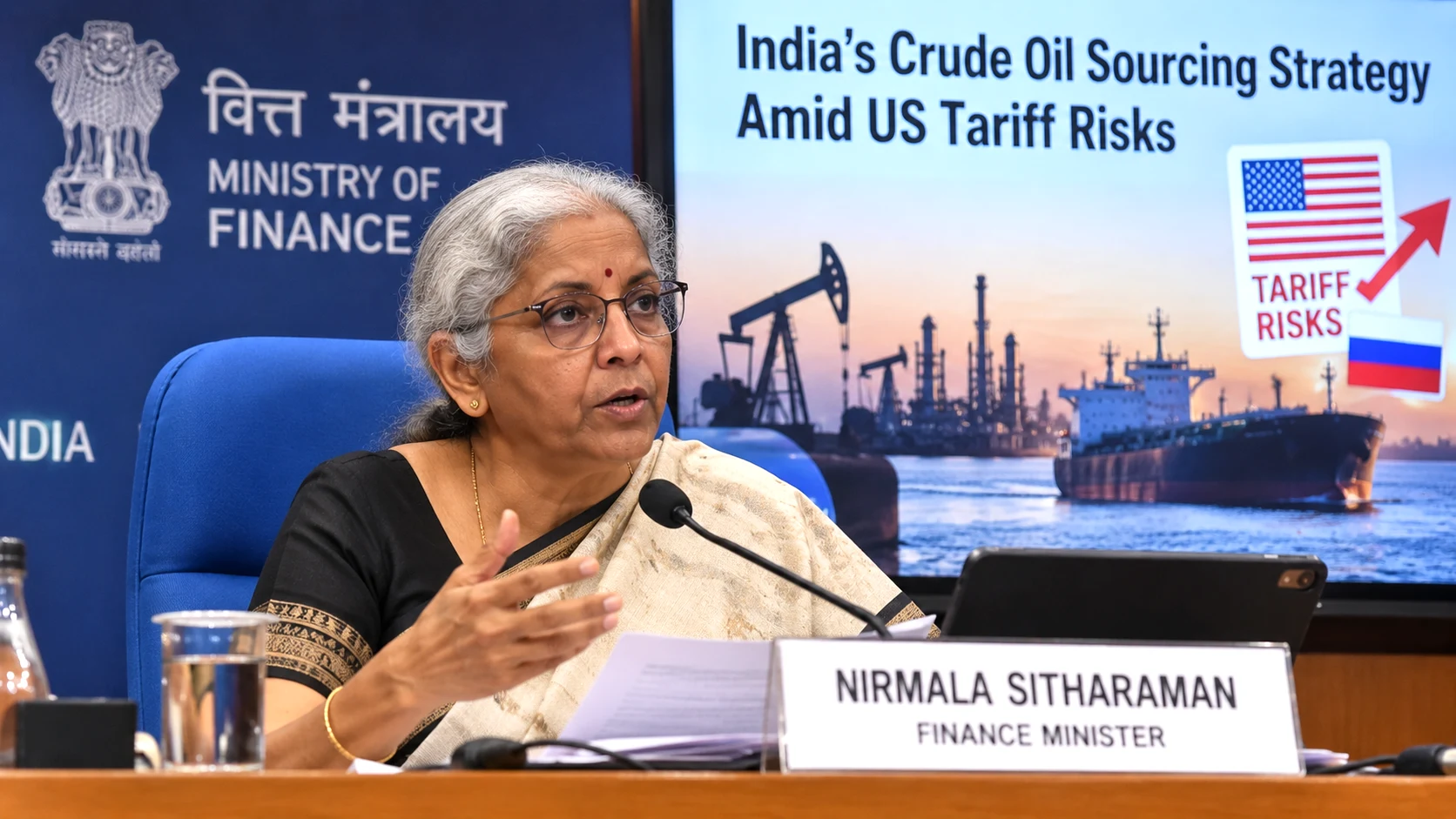
Finance Minister Nirmala Sitharaman says India cannot abruptly abandon Russian crude and will base oil purchases on availability, price and refinery suitability as a new US law raises the risk of tariffs of up to 100% on major Russian-energy buyers.
The Bank of Japan has raised its benchmark interest rate to 1.25%, taking borrowing costs to their highest level in 31 years as policymakers step up efforts to prevent inflation from moving persistently above the central bank’s target.
The New Delhi Declaration backs more interoperable payment systems and voluntary use of national currencies while calling for diversified critical-mineral supply chains, as India’s expanding semiconductor ecosystem highlights the commercial stakes behind the resilience agenda.
Sensex and Nifty opened higher and extended gains on September 23, led by metals, FMCG and realty stocks as crude oil eased and global cues improved. Bajaj Finance, Hindalco and Tata Steel were among the strongest Nifty gainers.
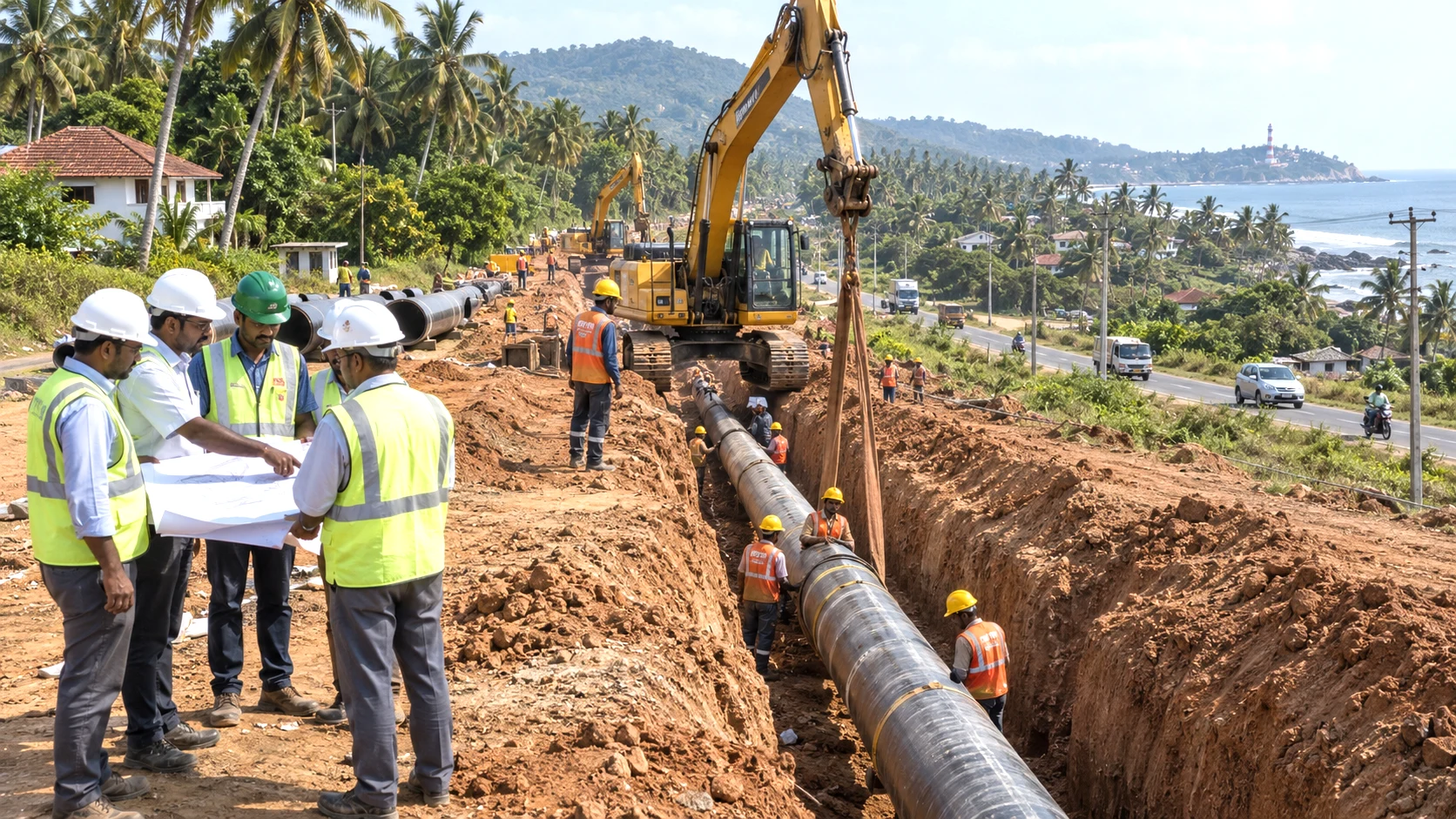
Indian Oil has approved ₹2,448.70 crore for a 424.65-km natural gas pipeline linking Kochi with Thoothukudi via Kanyakumari. The project will have 6.84 MMSCMD capacity and strengthen gas connectivity across southern India.
Brent crude remains above $100 as Iran says normal Strait of Hormuz passage will not resume until its conditions are met. A 100-million-barrel G7 emergency stock release and stronger Middle East exports are limiting further oil-price gains.









0 Comments