Bank Strike September 28-30: SBI, PNB and Other Banks Issue Advisories as Customers Prepare
SBI, PNB and other public-sector banks have issued advisories ahead of the proposed September 28-30 nationwide bank strike. PSBs and RRBs will open on Sunday, September 27, while branch-dependent services could face disruption during the strike.
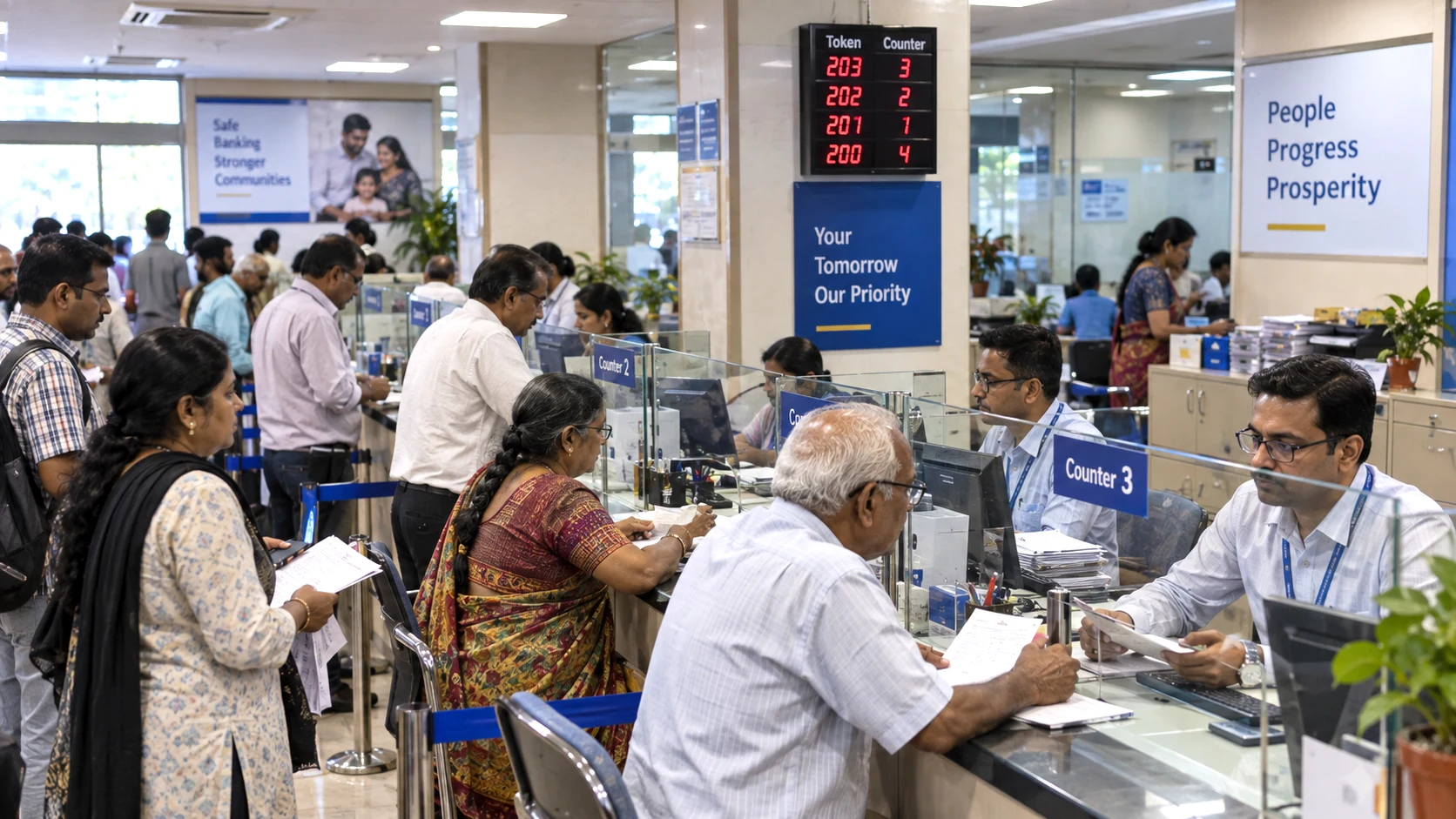
Customers using a public-sector bank branch ahead of the proposed September 28-30, 2026 nationwide bank strike
Table of Contents (32 sections)
Indian banks are preparing contingency measures ahead of the proposed nationwide bank strike from September 28 to September 30, 2026, with State Bank of India and several other public-sector lenders advising customers to complete important branch-dependent transactions in advance.
Recommended Reading
Related Stories & In-Depth Guides
Curated editorial perspectives matching this topic.
Sensex and Nifty opened higher and extended gains on September 23, led by metals, FMCG and realty stocks as crude oil eased and global cues improved. Bajaj Finance, Hindalco and Tata Steel were among the strongest Nifty gainers.
Sensex and Nifty rebounded on September 25 after Thursday's sharp selloff. At 2:35 PM IST, Sensex was up 328 points at 73,908 while Nifty gained 68 points to 23,131, helped by value buying and softer crude.
The United Forum of Bank Unions, or UFBU, has maintained its three-day strike call after conciliation talks on September 22 failed to produce what the unions described as sufficient progress on their central demand for a five-day banking week.
However, an important government intervention has changed the earlier concern that customers could face five consecutive days without access to normal public-sector bank branches.
The Ministry of Finance announced on September 23 that all Public Sector Banks and Regional Rural Banks will operate normally on Sunday, September 27. The Reserve Bank of India has approved the opening of branches, offices, ATM-linked branches and currency chests that day.
That means the current schedule is:
Date
Current banking position
September 26, Saturday
Fourth Saturday; regular bank holiday
September 27, Sunday
PSBs and RRBs to operate normally under special arrangement
September 28, Monday
Proposed nationwide UFBU strike
September 29, Tuesday
Proposed nationwide UFBU strike
September 30, Wednesday
Proposed nationwide UFBU strike; also half-yearly closing period
The strike could still be deferred if negotiations produce a concrete development before September 28.
Key Takeaways
UFBU strike remains scheduled for September 28–30.
PSBs and RRBs will open on Sunday, September 27.
SBI, PNB and other banks have issued customer advisories.
Digital channels and ATMs expected to remain available.
Branch-dependent services may face disruption.
Strike could still be deferred if talks succeed.
Is There Really a Five-Day Bank Closure From September 26?
For Public Sector Banks and Regional Rural Banks, no—not under the latest government arrangement.
Earlier advisories and reports warned about possible disruption across September 26-30 because:
September 26 is the fourth Saturday;
September 27 is Sunday; and
the strike is scheduled for September 28, 29 and 30.
SBI's earlier advisory was issued before the government's September 27 intervention and warned customers about the risk of an extended period of reduced branch access.
The Finance Ministry has now specifically broken that sequence by making Sunday, September 27 a working day for PSBs and RRBs.
Customers should therefore avoid relying on older “five-day bank closure” headlines without this update.
Is the September 28-30 Bank Strike Still On?
As of the latest verified information on September 23, yes, the UFBU strike remains scheduled.
UFBU said after the September 22 conciliation meeting that there had been no positive resolution on implementation of the five-day banking week.
The union forum said it would reconsider the strike if there were a concrete and positive development on its demand, but otherwise intended to proceed on September 28, 29 and 30.
The Finance Ministry, Indian Banks' Association and individual bank managements have appealed to employees to defer the strike and continue negotiations.
Therefore, the most accurate description is:
The strike is scheduled and unions say they intend to proceed, but it is still capable of being deferred before September 28.
What Has SBI Told Customers?
State Bank of India has advised customers to complete essential branch-related work before the proposed strike dates.
According to SBI's advisory, the bank is taking steps to maintain essential services even if employees participate in the strike.
SBI said customers should continue to have access to alternative channels including:
ATMs;
Automated Deposit and Withdrawal Machines, or ADWMs;
Customer Service Points;
internet banking;
mobile banking;
YONO; and
UPI.
The bank nevertheless warned that branch operations could be affected depending on employee participation at individual locations.
This distinction is important.
A nationwide strike call does not necessarily mean every SBI branch will be completely closed for all three days.
PNB, Union Bank, Bank of India and Indian Bank Issue Appeals
SBI is not the only public-sector lender preparing for the strike.
Fresh communications have also been issued by Punjab National Bank, Union Bank of India, Bank of India and Indian Bank, with managements urging employees to maintain uninterrupted banking services.
The banks' messages broadly emphasise continuity of customer services while asking employees not to participate in the industrial action.
The actual extent of branch disruption will depend on factors including:
employee participation;
staffing at individual branches;
local union presence;
contingency arrangements; and
which operations require manual processing.
It would therefore be too absolute to say that every PSB branch will definitely remain shut throughout September 28-30.
Why Are Bank Employees Planning a Three-Day Strike?
The key unresolved issue is implementation of a five-day working week for banks.
UFBU argues that the change was agreed to as part of the March 2024 wage-revision settlement but has not yet been implemented.
The government says the proposal remains under consideration.
An earlier part of the unions' protest involved the Performance Linked Incentive, or PLI, scheme.
The Finance Ministry said it had already decided to keep that scheme in abeyance, leaving the five-day banking demand as the principal unresolved issue behind the current strike programme.
Why Is September 27 Now a Working Sunday?
The government said the decision was taken to prevent genuine banking needs from being affected for an extended period.
The Finance Ministry specifically stated that:
all Public Sector Banks will operate;
all Regional Rural Banks will operate;
offices can remain open;
ATM-linked branches will operate; and
currency chests can remain functional.
RBI granted approval for the September 27 operation.
For customers with important branch work due around the strike period, September 27 may therefore provide an additional opportunity to complete it.
Does September 27 Opening Apply to Private Banks?
The government's announcement specifically covers Public Sector Banks and Regional Rural Banks.
It should not automatically be interpreted as requiring every private-sector or cooperative bank branch in India to open that Sunday.
Customers of private banks should check their own institution's official holiday and branch schedule.
Which Banking Services Could Be Affected During the Strike?
Services that depend heavily on branch employees may experience the greatest disruption if participation is widespread.
Potentially affected areas include:
staff-assisted cash deposits and withdrawals;
physical document submission;
cheque-related processing;
account opening;
KYC assistance;
loan documentation;
demand drafts and similar branch-issued instruments;
locker-related services;
pension or account queries requiring staff intervention; and
other manual branch transactions.
SBI specifically warned that physical-document and staff-assisted services could be affected and that cheque-related processes may face delays.
These should be described as possible disruptions, not guaranteed nationwide shutdowns.
Will UPI Work During the Bank Strike?
UPI is expected to remain available for routine digital payments.
SBI has listed UPI among the channels customers can use during the proposed industrial action.
A bank strike primarily affects employee-dependent operations and does not automatically shut down India's automated payment infrastructure.
However, no digital system is guaranteed to be free of unrelated technical outages.
Customers should therefore avoid interpreting “UPI expected to work” as an absolute assurance of uninterrupted service at every moment.
Will SBI YONO Work?
SBI has specifically included YONO among the channels customers can use for routine banking during the strike period.
Customers should be able to use supported features without visiting a physical branch.
Services that require human approval, physical documents or branch processing could still take longer.
Will Internet Banking and Mobile Banking Work?
Digital banking services are expected to remain available.
Banks are encouraging customers to use:
internet banking;
mobile banking;
UPI;
ATMs;
ADWMs; and
customer service points.
For routine transactions such as balance checks, electronic transfers and bill payments, these channels may reduce the impact of branch-level disruption.
Will ATMs Work?
Banks say ATM services are expected to continue.
The Finance Ministry has also taken measures aimed at maintaining essential banking services, while the special September 27 opening includes ATM-linked branches and currency chests.
This should help banks prepare their cash infrastructure before the proposed strike.
However, ATM cash availability can vary locally, particularly if withdrawal demand rises sharply.
Customers should not assume every individual ATM will always have cash simply because the network remains operational.
Will Cash Deposit Machines Work?
SBI says Automated Deposit and Withdrawal Machines will remain among its alternative channels during the strike period.
Services available at a particular machine depend on its capabilities.
Not every ATM functions as a cash-deposit machine.
Will Customer Service Points Be Available?
SBI has said Customer Service Points are expected to continue offering eligible services during the strike.
These outlets can be especially important in rural or semi-urban areas where customers may depend more heavily on assisted banking.
The services available at individual CSPs can differ, so they should not be treated as full replacements for every branch function.
Will Cheque Clearing Be Affected?
Cheque-related processing is among the areas that could face delays if staff participation affects banking operations.
SBI's advisory identifies cheque-related and branch-dependent processes as services that may be disrupted.
Anyone with a time-sensitive cheque transaction around September 28-30 may therefore wish to complete it earlier where possible.
Businesses should also consider the possibility of processing delays when planning payment deadlines.
What About NEFT, RTGS and IMPS?
Electronic fund-transfer systems are more automated than conventional branch work and are generally expected to remain accessible through banks' digital platforms.
However, the advisories reviewed for this article do not provide an unconditional guarantee covering every possible NEFT, RTGS or IMPS transaction throughout all three strike days.
Customers should monitor their bank's own service notices, particularly for high-value or deadline-sensitive payments.
Could Pension Payments Be Delayed?
Automated pension credits may continue through banking systems, but branch-level assistance relating to:
pension certificates;
account corrections;
documentation;
cash withdrawals requiring staff assistance; or
other manual issues
could be affected if a branch operates with limited staffing.
People who need in-person pension assistance during September 28-30 may find it useful to use the September 27 working Sunday where their PSB or RRB branch provides the required service.
Will Loan EMIs Still Be Deducted?
A bank strike does not automatically suspend scheduled financial obligations.
Automated EMI debits and standing instructions may continue if the relevant payment systems remain operational.
Customers should not assume a strike provides an automatic extension of loan, credit-card or bill-payment deadlines.
Where payment timing is important, checking directly with the lender remains advisable.
Should Businesses Arrange Cash Before September 28?
Businesses that depend heavily on cash deposits, branch documentation or cheque processing may benefit from planning ahead.
The government's decision to open PSBs and RRBs on September 27 creates an additional working day for branch transactions.
Businesses may wish to review:
payroll needs;
cash deposits;
supplier payments;
cheque submissions;
trade documentation; and
other branch-dependent deadlines.
This is precautionary planning rather than a prediction that every branch will close.
Why September 30 Matters More Than a Normal Strike Day
September 30 falls at the end of the financial half-year for banks.
That makes the proposed strike period operationally significant because banks typically carry out accounting, reconciliation and other closing-related activities around this date.
The timing is one reason government and bank managements have pushed for the strike to be deferred.
Customers should nevertheless distinguish banks' internal half-year closing work from a general bank holiday: September 30 is part of the proposed strike period, not automatically a nationwide public bank holiday.
What Did the Government Say to Employees?
The Finance Ministry has urged employees of Public Sector Banks and Regional Rural Banks to ensure uninterrupted banking services.
The ministry said one of the unions' principal demands—the PLI issue—had been addressed by keeping the scheme in abeyance, while talks continued over the five-day week.
It has asked employees to resolve the remaining disagreement through dialogue instead of further industrial action.
That is the government's position; UFBU maintains that the five-day workweek has been pending for too long.
Could the Strike Still Be Cancelled at the Last Minute?
Yes.
UFBU says it intends to proceed, but it has also indicated that it would consider deferring the strike if there is a concrete and positive development on five-day banking.
A last-minute agreement is therefore still possible.
Customers should watch for:
UFBU statements;
Finance Ministry announcements;
Indian Banks' Association updates; and
official notifications from their own bank.
A viral social-media post claiming that the strike has been cancelled should not be relied upon without verification from one of these sources.
What Should Customers Complete Before September 28?
Customers with important branch-dependent work may consider completing it by September 27.
This could include:
urgent cheque deposits;
KYC submissions;
account-opening documents;
loan documentation;
demand drafts;
large cash requirements;
branch-assisted account corrections;
pension-related documentation;
business banking paperwork; and
other transactions that cannot conveniently be completed digitally.
PSB and RRB customers have the unusual additional option of visiting branches on Sunday, September 27.
Should Customers Withdraw Large Amounts of Cash?
There is no reason for panic withdrawals.
Banks are making contingency arrangements and electronic channels are expected to remain available.
Customers who genuinely need cash during the strike window may reasonably ensure they have sufficient funds in advance, but withdrawing unnecessarily large amounts can create its own security and cash-management risks.
September 26-30: Practical Customer Calendar
Saturday, September 26
Fourth Saturday. Scheduled-bank branches are normally closed.
Sunday, September 27
Public Sector Banks and Regional Rural Banks will open normally under the government-RBI special arrangement.
Monday, September 28
UFBU's proposed strike begins if there is no settlement.
Tuesday, September 29
Second scheduled strike day.
Wednesday, September 30
Third scheduled strike day and the banking sector's half-year closing period.
October 1 onward
Normal operations would be expected to resume following the scheduled strike, assuming no further industrial action or other local disruption.
UFBU has separately announced the possibility of further action beginning later in October if the dispute remains unresolved.
Is There Another Bank Strike Planned for October?
The Finance Ministry's September 21 statement says the union programme also includes an indefinite strike proposed from October 26, 2026 if the dispute continues.
That is a future industrial-action plan, not a certainty that banks will enter an indefinite shutdown.
Its status will depend on negotiations and events over the coming weeks.
What Customers Should Remember
The situation as of September 23 can be summarised simply:
September 26: normal fourth-Saturday holiday.
September 27: PSBs and RRBs specially opened for customers.
September 28-30: proposed UFBU strike remains scheduled.
Digital banking: expected to remain broadly available.
Branch services: could face disruption depending on employee participation.
Strike cancellation: still possible if negotiations produce a settlement.
Latest Verified Status
As of late September 23, 2026:
UFBU continues to call for a nationwide strike on September 28, 29 and 30.
The principal unresolved demand is implementation of five-day banking.
SBI has asked customers to complete essential branch work early and use ATMs, ADWMs, CSPs, YONO, internet banking, mobile banking and UPI if branch operations are affected.
PNB, Union Bank of India, Bank of India and Indian Bank have also issued communications urging continuity of banking services.
The government has appealed to employees not to strike.
All PSBs and RRBs will open normally on Sunday, September 27, following RBI approval.
Consequently, customers of these banks should not be told they face five consecutive days without normal branch access from September 26.
The actual level of disruption on September 28-30 will depend on employee participation and contingency arrangements.
The strike remains capable of being deferred if there is a last-minute agreement.
Frequently Asked Questions
Is there a bank strike from September 28 to 30, 2026?
UFBU has called a three-day nationwide strike for September 28, 29 and 30 and continues to maintain the strike call as of September 23.
Are banks closed for five days from September 26?
Not for PSBs and RRBs under the latest arrangement. September 26 is a fourth-Saturday holiday, but these banks will open on Sunday, September 27 before the proposed September 28-30 strike.
Is SBI open on Sunday, September 27?
Yes. SBI is a Public Sector Bank and is covered by the Finance Ministry's announcement that PSBs will function normally that Sunday.
Will PNB and other government banks open on September 27?
Yes. The government order covers all Public Sector Banks and Regional Rural Banks.
Will SBI branches close during the strike?
SBI says branch operations may be affected depending on employee participation. It has not said every branch is guaranteed to be completely closed for all three days.
Will UPI work during the strike?
UPI is expected to remain available and SBI has included it among alternative channels customers can use during the proposed strike.
Will SBI YONO work during the bank strike?
SBI has advised customers to use YONO and its other digital channels for routine banking during the strike period.
Will ATMs remain open?
ATM services are expected to operate. Cash availability can still vary locally depending on withdrawals and replenishment.
Could cheque clearance be delayed?
Yes. Cheque-related processes are among the branch-dependent services that could face disruption if staffing is affected.
Has the bank strike been cancelled?
No cancellation was confirmed as of September 23. UFBU says the action will proceed unless there is concrete progress on five-day banking.
Why are bank employees striking?
The principal unresolved demand is implementation of a five-day banking week. The government says another major issue involving the PLI scheme has already been kept in abeyance.
Are private banks open on September 27?
The government's special Sunday-opening announcement specifically applies to PSBs and RRBs. Private-bank customers should check their bank's own schedule.
Bottom Line
SBI, PNB and other public-sector banks have issued advisories ahead of the proposed September 28-30 nationwide bank strike. PSBs and RRBs will open on Sunday, September 27, giving customers an extra working day.
Digital channels, ATMs and UPI are expected to remain available, while branch-dependent services may face disruption depending on employee participation. The strike remains scheduled but could still be deferred.
The Rajatheertha Team publishes news, explainers, guides and updates across India and the world. Our coverage follows Rajatheertha's editorial, verification and corrections standards.
Iran’s economy contracted by 10.1% year-on-year during the first quarter of its current Persian calendar year, according to official data, with a collapse in oil and natural-gas activity driving much of the decline. The figures cover the first months of the US-Israel conflict with Iran, although the
The claim is confirmed by the Bloomberg Billionaires Index and fresh September 18 reporting. Zhang Yiming’s estimated wealth has climbed to about $105 billion as higher ByteDance valuations and the company’s expanding AI business push him ahead of Gautam Adani.
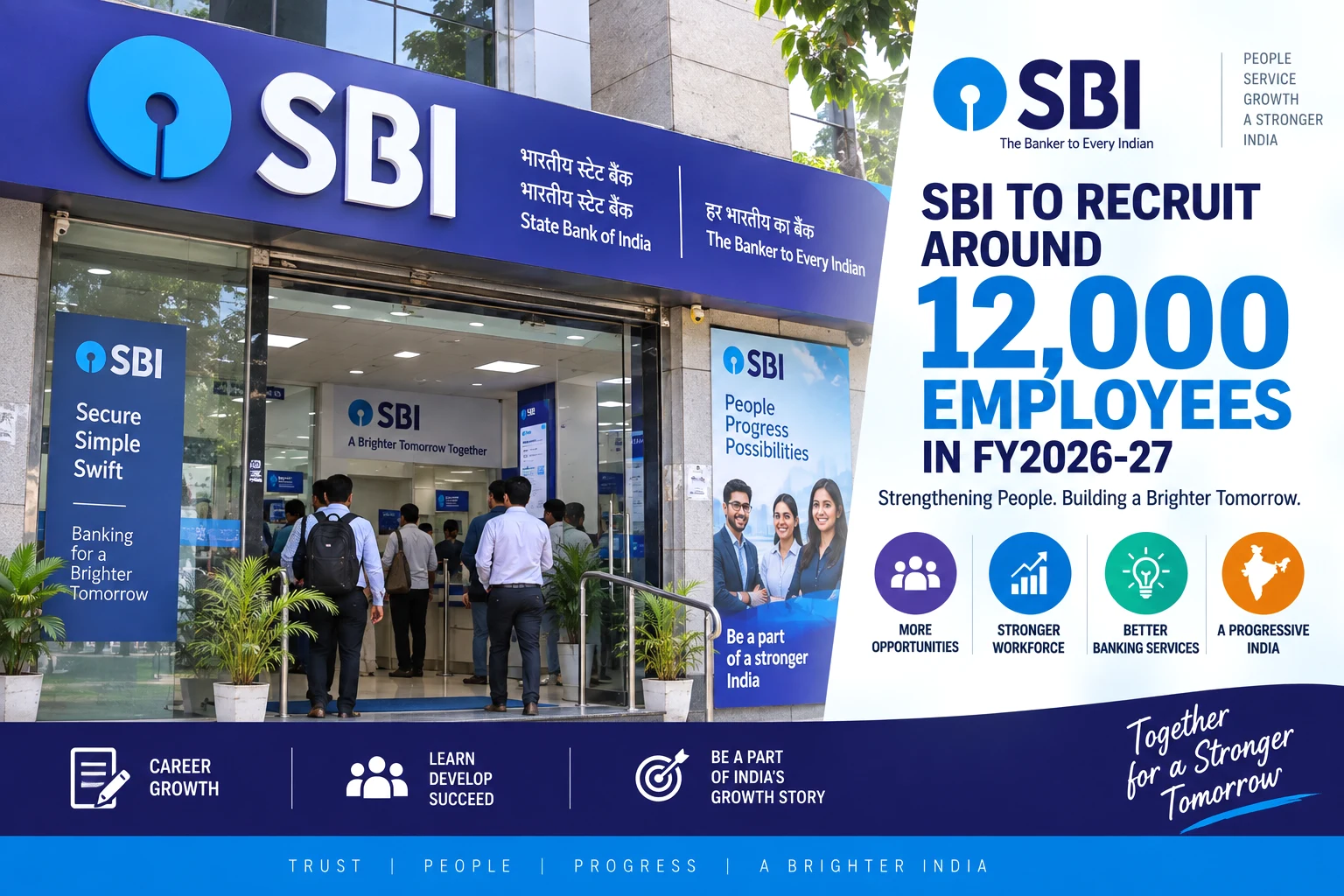
SBI Chairman C. S. Setty says the bank expects around 11,000–12,000 appointments across clerical and officer cadres in FY27. Here’s what candidates should know about the hiring plan and notifications.
India received a record $94.53 billion in total FDI in FY2025-26, up about 17% from the previous year. Singapore led equity investment, software and hardware was the top sector, while Maharashtra attracted the most FDI equity.
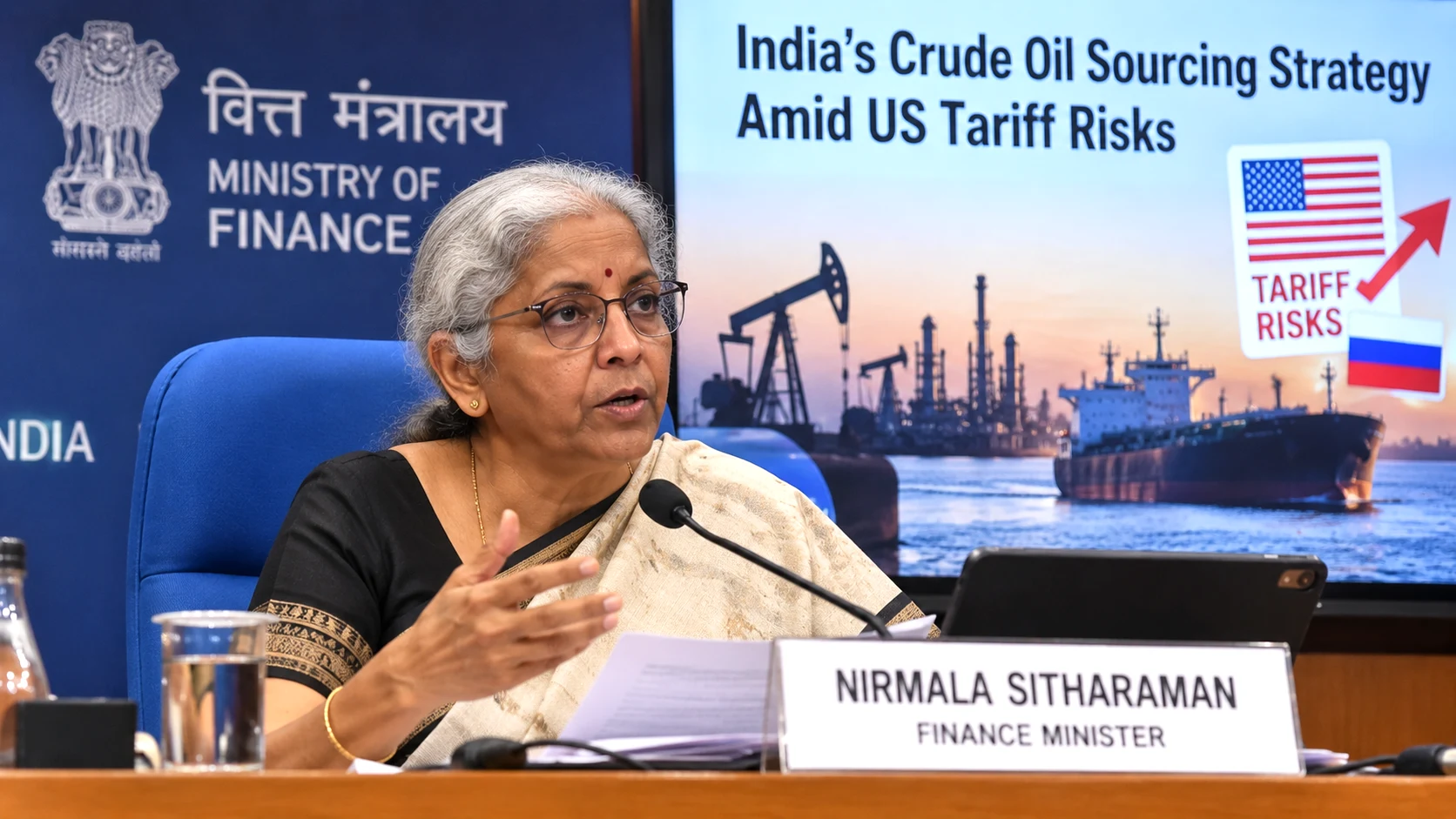
Finance Minister Nirmala Sitharaman says India cannot abruptly abandon Russian crude and will base oil purchases on availability, price and refinery suitability as a new US law raises the risk of tariffs of up to 100% on major Russian-energy buyers.
Global crude oil prices fell sharply on September 21, 2026, with Brent dropping toward $102 a barrel and US West Texas Intermediate slipping below $99, as recovering Saudi Arabian export flows and hopes for renewed US-Iran diplomacy outweighed immediate fears from Houthi missile and drone attacks on










0 Comments