Bank of Japan Raises Interest Rate to 1.25%, Highest Since 1995 as Inflation Risks Build
The Bank of Japan has raised its benchmark interest rate to 1.25%, taking borrowing costs to their highest level in 31 years as policymakers step up efforts to prevent inflation from moving persistently above the central bank’s target.
TOKYO, September 20, 2026: The Bank of Japan has raised its benchmark interest rate to 1.25%, taking borrowing costs to their highest level in 31 years as policymakers step up efforts to prevent inflation from moving persistently above the central bank’s target.
The BOJ increased its policy rate from 1.00% to 1.25% at its two-day monetary policy meeting that ended on September 18. The decision was approved by a 7-2 vote, marking another major step in Japan’s gradual move away from the ultra-low interest-rate policies that shaped its economy for decades.
The new rate is the highest since 1995, according to reports and official BOJ policy releases. The Bank of Japan has also confirmed that it will guide the uncollateralised overnight call rate at around 1.25%.
Key Takeaways
Bank of Japan raises policy rate from 1.00% to 1.25%, the highest level since 1995.
Decision approved by a 7-2 vote at the September 18 policy meeting.
Governor Kazuo Ueda cites underlying inflation approaching the 2% target and elevated wholesale price pressures.
Higher global energy costs linked to the Middle East conflict add to inflation risks for energy-importing Japan.
Further rate increases remain possible if inflationary pressures persist.
Two policymakers opposed the hike, preferring a more cautious approach.
Why Did the Bank of Japan Raise Interest Rates?
Recommended Reading
Related Stories & In-Depth Guides
Curated editorial perspectives matching this topic.
Iran’s economy contracted by 10.1% year-on-year during the first quarter of its current Persian calendar year, according to official data, with a collapse in oil and natural-gas activity driving much of the decline. The figures cover the first months of the US-Israel conflict with Iran, although the
The New Delhi Declaration backs more interoperable payment systems and voluntary use of national currencies while calling for diversified critical-mineral supply chains, as India’s expanding semiconductor ecosystem highlights the commercial stakes behind the resilience agenda.
Inflation has become the central concern for Japanese policymakers.
BOJ Governor Kazuo Ueda said underlying inflation is approaching the central bank’s 2% target, shifting the policy debate from trying to generate inflation toward preventing prices from rising too rapidly.
The central bank said wholesale inflation remained elevated and that price pressures originating in business-to-business transactions were increasingly being passed through to consumer prices.
At the same time, Japan is facing a more difficult international environment.
Higher global energy costs associated with the continuing conflict in the Middle East have added to inflation concerns across major economies. Japan is particularly sensitive to energy-price shocks because it depends heavily on imported fuel.
The recent increase in oil and other energy prices has therefore increased the risk that Japanese companies could face higher production and transportation costs, with some of those increases eventually reaching households through higher consumer prices.
The September BOJ decision came as central banks worldwide continued assessing inflation risks connected to energy markets, fiscal policy and other global economic pressures.
BOJ Shifts Toward Preventing an Inflation Overshoot
The latest decision also represents an important change in the Bank of Japan’s policy approach.
For years, Japan struggled with extremely low inflation and periods of deflation. The BOJ responded with negative interest rates, large-scale asset purchases and other unconventional monetary policies designed to stimulate demand and lift prices.
That environment has changed considerably.
Ueda indicated that policymakers are now increasingly concerned about the possibility of underlying inflation moving above the BOJ’s target rather than remaining below it.
The central bank said economic and price developments were broadly progressing in line with its forecasts, but warned that underlying inflation could deviate from its 2% objective.
More Interest-Rate Hikes Could Follow
The September increase may not be the final rate hike.
Ueda left open the possibility of further tightening if inflationary pressures remain strong. He also did not rule out consecutive rate increases or, under appropriate circumstances, larger moves.
However, future decisions are expected to depend on incoming economic data, wage developments, inflation trends and financial-market conditions.
The policy rate is now within the BOJ's estimated 1.1% to 2.5% nominal neutral-rate range, according to Reuters. A neutral rate is generally considered a level that neither significantly stimulates nor restricts economic activity.
Economists surveyed by Reuters expect the rate could rise to around 1.5% by the end of March 2027 and potentially reach 1.75% during the second quarter of 2027, although the outlook remains dependent on economic conditions.
What the Rate Hike Means for Japan
Higher interest rates can make mortgages, corporate loans and other borrowing more expensive, potentially slowing spending and investment.
For savers, however, higher rates can improve returns on deposits after years in which Japanese interest rates remained close to zero.
The decision could also influence the Japanese yen. Normally, higher interest rates can support a currency by making yen-denominated investments more attractive. Yet the yen weakened following the BOJ announcement as investors focused on disagreement within the policy board and uncertainty about how quickly further increases might occur.
Two of the BOJ's nine policymakers opposed the September increase, arguing for a more cautious approach.
Japan Enters a New Monetary-Policy Phase
The increase to 1.25% highlights how dramatically Japan's economic environment has changed since the years of negative interest rates.
The BOJ ended its decade-long extraordinary stimulus framework in 2024 and has since been gradually normalising monetary policy.
With energy prices, currency movements, wage growth and domestic inflation now shaping its decisions, the central bank appears increasingly prepared to act before inflation becomes entrenched.
For markets, businesses and Japanese households, attention will now turn to whether inflation remains close to the BOJ’s 2% objective — and whether another interest-rate increase arrives in the coming months.
Bottom Line
The Bank of Japan has raised its benchmark interest rate to 1.25%, the highest level in 31 years, as inflation risks build and global energy costs add pressure.
The decision, approved by a 7-2 vote, marks a further step away from the ultra-low-rate era that defined Japanese monetary policy for decades. Governor Kazuo Ueda signalled that preventing inflation from overshooting the 2% target is now a central concern.
Further rate increases remain possible if price pressures persist, while two board members preferred a more cautious approach. Markets, households and businesses will now watch closely to see whether Japan’s inflation stays near target and how quickly the BOJ is prepared to tighten policy further.
Key Takeaway
Bank of Japan raises rate to 1.25%, highest since 1995.
7-2 vote reflects growing inflation concerns.
Energy costs and underlying price pressures cited as key drivers.
Further hikes possible if inflation remains elevated.
The Rajatheertha Team publishes news, explainers, guides and updates across India and the world. Our coverage follows Rajatheertha's editorial, verification and corrections standards.
India received a record $94.53 billion in total FDI in FY2025-26, up about 17% from the previous year. Singapore led equity investment, software and hardware was the top sector, while Maharashtra attracted the most FDI equity.
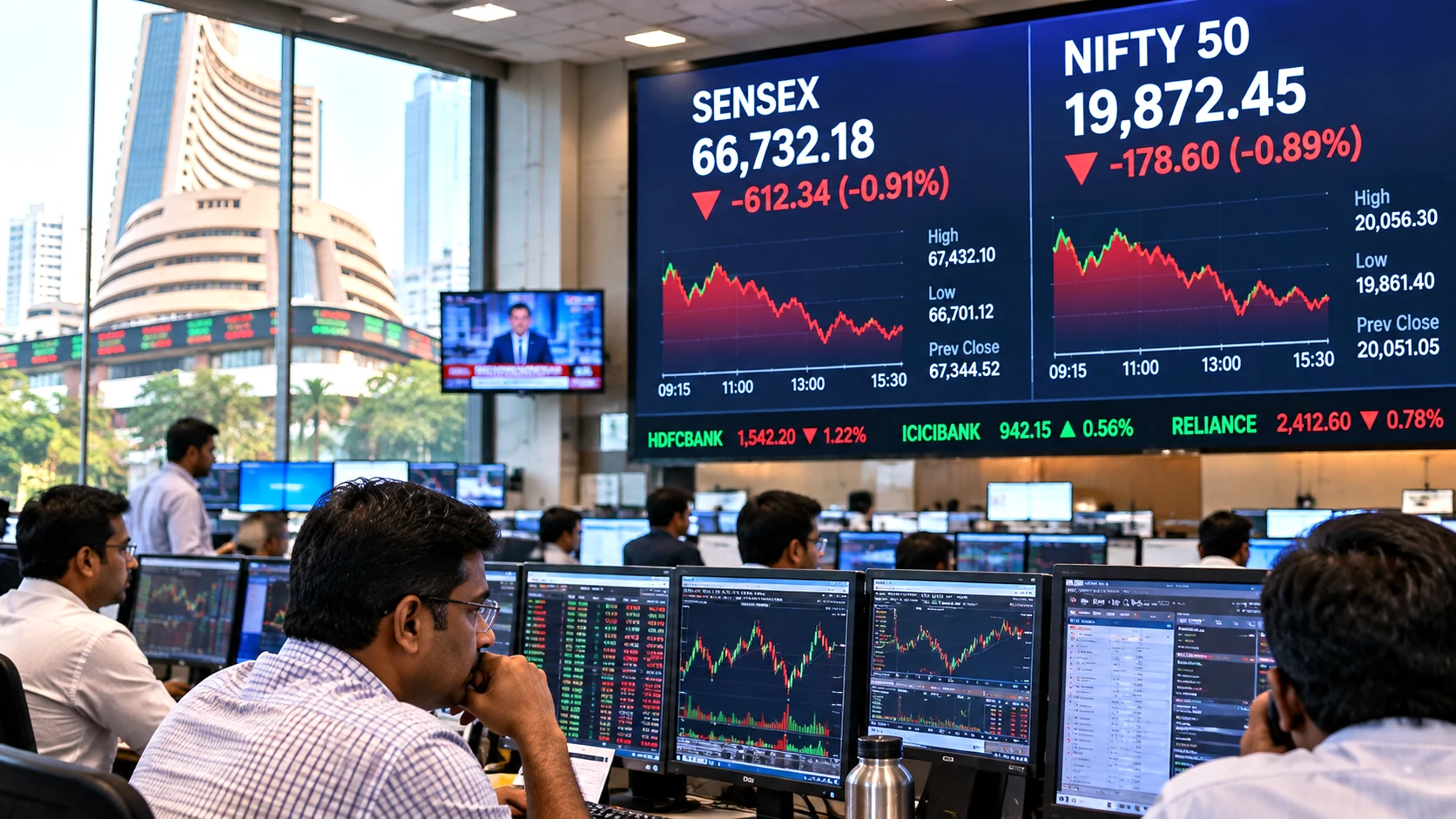
Sensex and Nifty rebounded on September 25 after Thursday's sharp selloff. At 2:35 PM IST, Sensex was up 328 points at 73,908 while Nifty gained 68 points to 23,131, helped by value buying and softer crude.
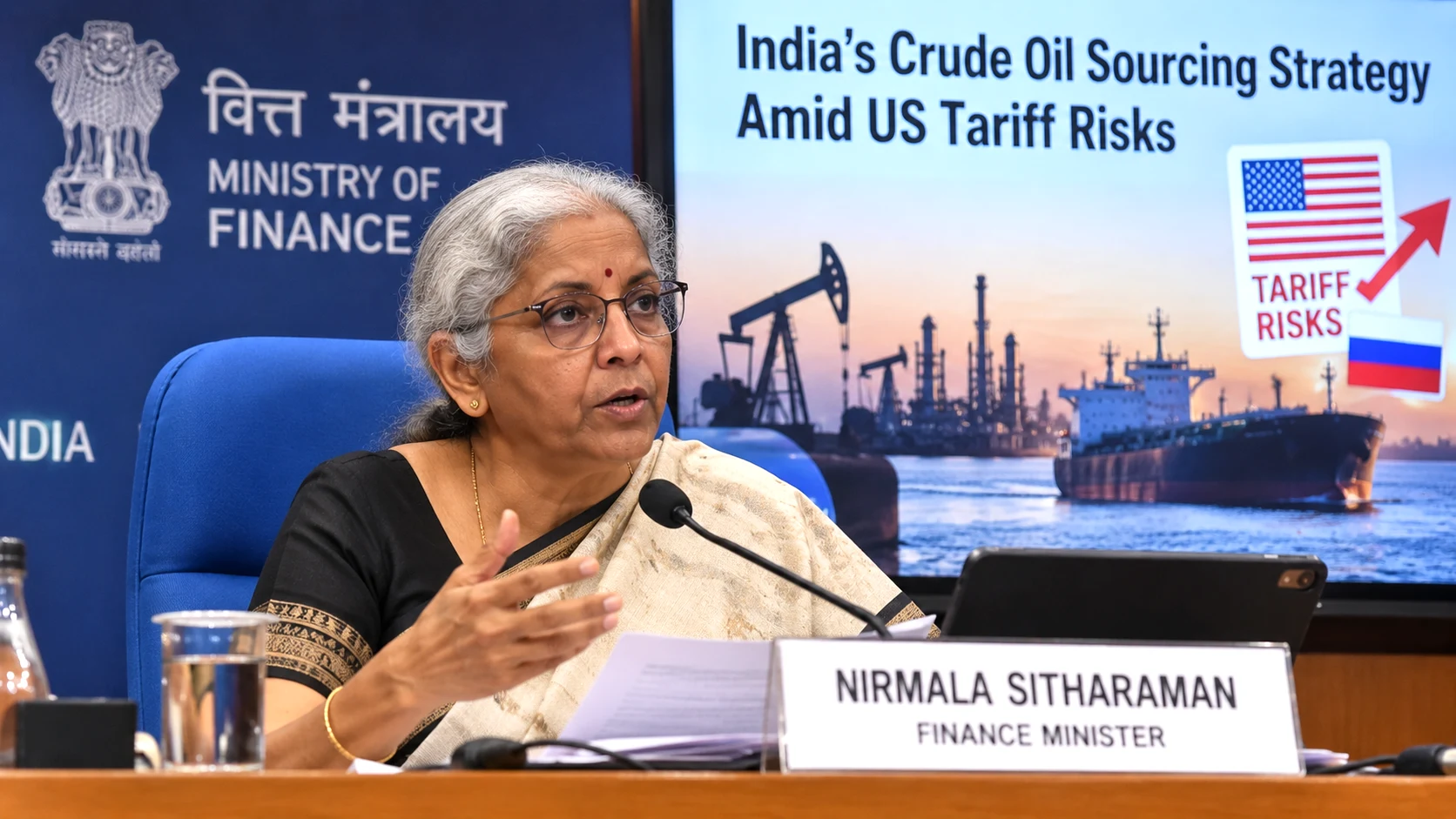
Finance Minister Nirmala Sitharaman says India cannot abruptly abandon Russian crude and will base oil purchases on availability, price and refinery suitability as a new US law raises the risk of tariffs of up to 100% on major Russian-energy buyers.
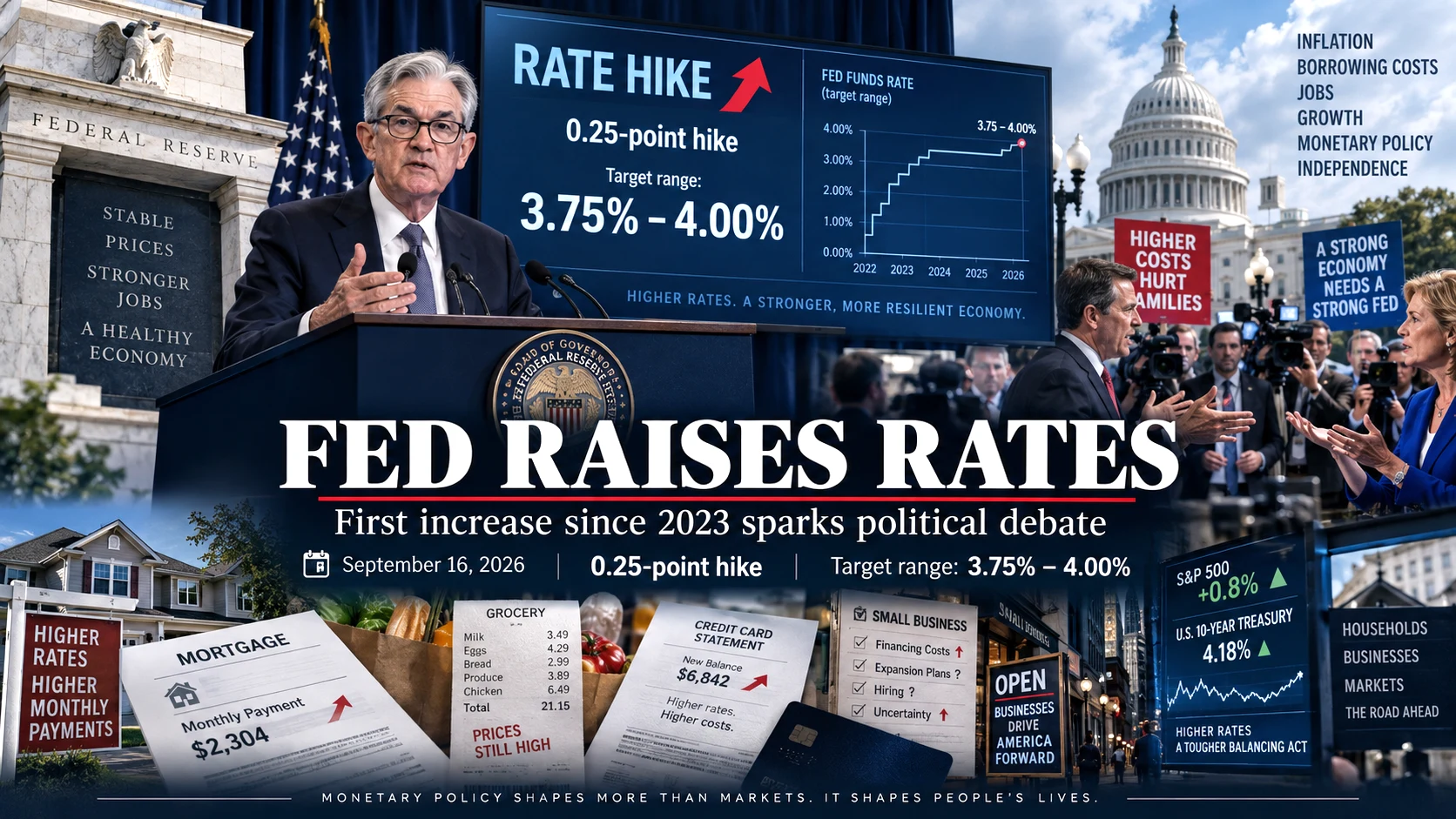
The Federal Reserve unanimously lifted its benchmark rate by 25 basis points to 3.75%-4.00% as inflation remained stubbornly above target. President Donald Trump demanded rates of 1% or lower and attacked the Fed board as political, although he said he still has confidence in Chair Kevin Warsh.
The Union Cabinet has approved the first increase in the EPFO wage ceiling since 2014, raising it from ₹15,000 to ₹25,000 a month. The change expands mandatory provident fund coverage, but it does not mean every employee earning above ₹25,000 loses EPF eligibility or that ₹25,000 will be deducted fr
The claim is confirmed by the Bloomberg Billionaires Index and fresh September 18 reporting. Zhang Yiming’s estimated wealth has climbed to about $105 billion as higher ByteDance valuations and the company’s expanding AI business push him ahead of Gautam Adani.











0 Comments