Brent Oil Holds Above $100 as Iran Keeps Hormuz Conditions; G7 Releases 100 Million Barrels
Brent crude remains above $100 as Iran says normal Strait of Hormuz passage will not resume until its conditions are met. A 100-million-barrel G7 emergency stock release and stronger Middle East exports are limiting further oil-price gains.
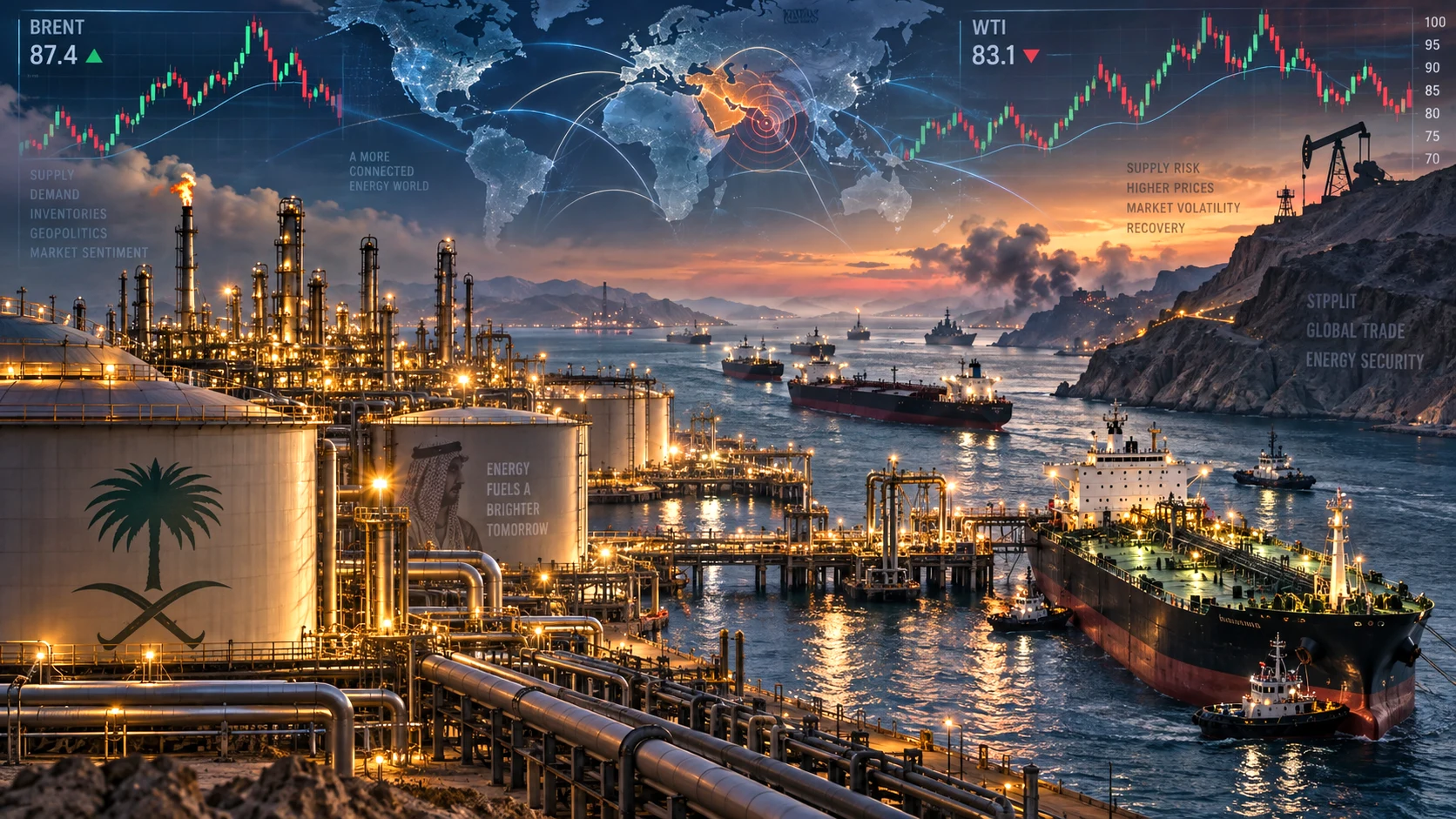
Oil tankers transit the Strait of Hormuz as Brent crude remains above $100 amid Iran tensions and G7 reserve releases
Table of Contents (22 sections)
Global oil prices remain elevated as the standoff over the Strait of Hormuz continues, but a major emergency-reserve release by Group of Seven economies and unexpectedly resilient Middle Eastern crude exports are preventing the latest supply fears from producing another sharp surge.
Benchmark Brent crude was trading around $101.52 a barrel during Asian trading on October 5, down about 0.7%, while US West Texas Intermediate crude was around $90.11 a barrel, down more than 1%. The distinction matters: Brent remains above the psychologically important $100 level, while WTI is substantially below it.
The immediate market pressure comes from two competing forces.
Iran says it will not restore normal passage through the Strait of Hormuz until seven conditions linked to an earlier agreement with Washington are met. At the same time, the G7 has agreed to release 100 million barrels of diesel and crude oil from emergency reserves, while Middle Eastern producers have managed to increase exports through a combination of Gulf shipments, alternative routes and ship-to-ship transfers.
Recommended Reading
Related Stories & In-Depth Guides
Curated editorial perspectives matching this topic.
Global crude oil prices fell sharply on September 21, 2026, with Brent dropping toward $102 a barrel and US West Texas Intermediate slipping below $99, as recovering Saudi Arabian export flows and hopes for renewed US-Iran diplomacy outweighed immediate fears from Houthi missile and drone attacks on
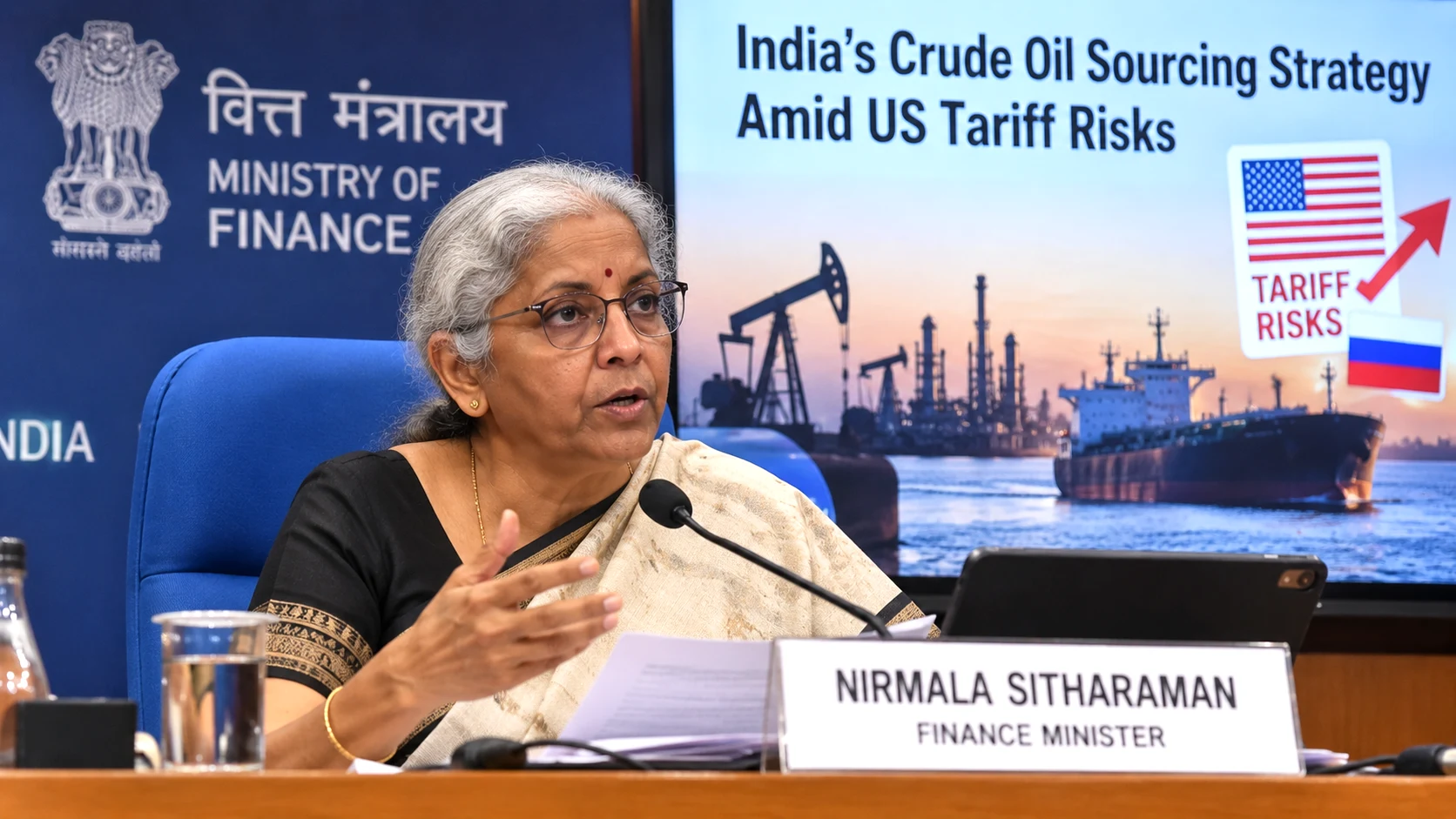
Finance Minister Nirmala Sitharaman says India cannot abruptly abandon Russian crude and will base oil purchases on availability, price and refinery suitability as a new US law raises the risk of tariffs of up to 100% on major Russian-energy buyers.
The result is a market in which geopolitical risk remains high enough to keep Brent above $100, but additional emergency supply and improving exports are limiting upward momentum.
Key Takeaways
Brent crude was near $101.52 a barrel on October 5, while WTI was near $90.11.
Iran says normal Strait of Hormuz passage will not resume until seven conditions connected to the June understanding with Washington are met.
Tehran says its immediate negotiating focus is maritime security and Hormuz rather than a new nuclear negotiation.
The G7 has agreed to release 100 million barrels of crude oil and diesel from emergency reserves.
It is not yet clear how much of the G7 release represents entirely new supply beyond the earlier 400-million-barrel IEA-coordinated commitment.
Middle East crude exports exceeded pre-war levels on several days in late September.
Shipping through and around Hormuz remains risky, with multiple recent vessel incidents reported.
Oil prices could remain volatile because reserve releases ease short-term shortages but do not resolve the underlying geopolitical dispute.
Iran Says Hormuz Will Stay Restricted Until Its Conditions Are Met
Iranian Parliament Speaker Mohammad Baqer Qalibaf, who has played a central role in Tehran's negotiations, said on October 4 that the Strait of Hormuz would not be reopened under normal conditions until Iran's seven requirements are fulfilled.
Iran says those conditions are based on an interim understanding reached with the United States in June, sometimes referred to in reporting as the Islamabad memorandum.
Tehran presented another proposal during the UN General Assembly under which normal maritime passage could be restored within seven days if the required steps were completed. Washington later responded through Qatari intermediaries.
The latest Iranian statement therefore does not mean negotiations have ended.
Rather, it indicates that the two governments remain divided over how and when agreed steps should be implemented.
Reuters reported that officials familiar with the discussions described sequencing — which side acts first and in what order — as one of the main unresolved issues.
That sequencing dispute is important because neither side wants to surrender its principal leverage before receiving reciprocal action.
Is the Strait of Hormuz Completely Closed?
The situation requires careful wording.
Iranian officials speak of reopening the Strait and restoring normal maritime passage, but physical shipping has not stopped completely.
Commercial vessels, tankers and LNG carriers are still moving through and around the region, although the operating environment remains significantly more dangerous and complicated than before the war.
Latest shipping data show that Middle Eastern crude exports actually exceeded pre-war levels on several days in the final week of September.
This means it would be misleading to describe Hormuz as a perfectly sealed waterway through which no oil is moving.
A more accurate description is that normal, secure and unrestricted commercial navigation remains disrupted, while substantial volumes continue to move through a high-risk environment.
Why Hormuz Still Matters So Much to Oil Prices
Before the current conflict, roughly one-fifth of the world's daily crude oil and liquefied natural-gas supply passed through the Strait of Hormuz.
That makes the narrow waterway one of the most economically important maritime chokepoints in the world.
Major Gulf exporters depend on it to varying degrees, and even countries with pipeline alternatives cannot easily reroute every barrel normally shipped through the Strait.
Oil markets therefore react not only to whether ships are physically moving, but also to questions including insurance costs, tanker availability, freight rates, delays, vessel safety and the possibility that military escalation could suddenly reduce flows again.
This explains why Brent can remain above $100 even as export volumes recover.
The market is pricing both current supply and the risk that those supplies could be disrupted again.
Middle East Oil Exports Have Recovered More Than Expected
One of the strongest forces keeping prices from rising further is the recent recovery in physical exports.
Ship-tracking data reported by Reuters showed that Middle Eastern crude exports exceeded pre-war levels on four of the seven days in the final week of September, reaching approximately 19.5 million to 22.5 million barrels per day on those stronger days.
The seven-day moving average stood at about 18.5 million barrels per day on October 1, compared with an average of roughly 18 million barrels per day before the conflict.
Those figures include exports through several channels, including Hormuz, the Red Sea, Gulf of Oman transfers and terminal shipments, so they should not be interpreted as proof that Strait of Hormuz traffic itself has returned fully to normal.
They do, however, show that Gulf producers and traders have developed ways to keep significant volumes moving despite the war.
That resilience has reduced fears of an immediate physical shortage.
Tanker Attacks Are Increasing Even as Exports Rise
The recovery in export volumes is occurring alongside worsening maritime-security risks.
Shipping intelligence cited by Reuters reported at least seven recent incidents involving vessels in and around the Strait of Hormuz.
A very large crude carrier, the Kazimah III, was reportedly struck by an unidentified projectile on October 1 and caught fire. Its crew was reported safe and evacuated.
The United Kingdom Maritime Trade Operations agency also reported a series of incidents in the Strait of Hormuz and Gulf of Aden in early October.
This produces an unusual market picture: more barrels are moving, but the route carrying them is becoming more dangerous.
Higher shipping volumes can reduce crude-price pressure in the short term, while increased attacks simultaneously raise insurance, freight and security costs.
G7 Agrees to Release 100 Million Barrels
The second major development is the G7 emergency-stock decision.
G7 economies agreed to release a combined 100 million barrels of diesel and crude oil from emergency reserves and said they would avoid imposing energy-export restrictions.
The action is designed to put additional supply into the market and reduce pressure created by high crude and refined-fuel prices.
The reserve release has already influenced oil-market sentiment.
Reuters reported that traders viewed the measure as reducing some of the immediate anxiety over shortages, particularly when combined with stronger Saudi and wider Middle Eastern exports.
That helps explain why Brent eased rather than rising further despite Iran's latest statement on Hormuz.
Is the Entire 100 Million Barrels New Supply?
Not necessarily.
This is an important detail for readers following the market.
International Energy Agency members had already agreed earlier in the year to release 400 million barrels from emergency stocks in response to disruption caused by the Iran conflict.
By early October, approximately two-thirds of that earlier commitment had been released, according to IEA chief Fatih Birol as reported by Reuters.
It remains uncertain how much of the new 100-million-barrel G7 commitment will represent genuinely additional barrels beyond volumes already planned under that earlier action.
Japan illustrates the complexity.
Japanese Chief Cabinet Secretary Minoru Kihara said on October 5 that Japan had no plans for an additional fresh national crude release at this stage, because it had already been drawing down reserves. Japan had previously committed about 80 million barrels under the March coordinated action and carried out another release in May.
The headline 100-million-barrel figure therefore should not automatically be interpreted as 100 million completely new barrels arriving immediately on top of all existing commitments.
Why Diesel Is Part of the G7 Decision
The G7 action is not focused exclusively on crude oil.
Diesel prices have become an important part of the broader energy problem.
Diesel is essential for trucking, agriculture, construction equipment, industrial activity and freight transport, meaning sustained shortages can spread inflation well beyond petrol stations.
G7 discussions have therefore focused on both crude availability and refined fuels.
Japan said the meeting included particular concern about elevated diesel prices in Europe, the United States and other markets.
This is one reason the announced release includes both crude oil and diesel stocks.
Why Brent Remains Above $100 Despite More Supply
Normally, stronger exports and large emergency-stock releases would be expected to place substantial downward pressure on oil prices.
They are doing so — but geopolitical risks remain large enough to prevent a full reversal.
Reuters reported Brent around $101.59 earlier on October 5, with analysts pointing to persistent Gulf tensions and increasing attacks on commercial vessels as reasons the benchmark remained above $100.
A later global-markets snapshot put Brent around $101.52, illustrating a modest decline rather than a collapse in prices.
Markets are effectively balancing greater available supply against the possibility of renewed disruption.
If physical exports continue improving and emergency stocks reach refiners quickly, Brent could face further downward pressure.
If attacks on ships or oil infrastructure intensify, the risk premium could quickly return.
OPEC+ Keeps November Production Targets Steady
Another important part of the supply picture is OPEC+.
Key oil-producing members agreed on October 4 to maintain their November production targets rather than announce another significant change.
The decision comes at a time when several Gulf producers have been unable to fully translate nominal production quotas into normal export volumes because of war-related disruptions.
OPEC+ has also faced delays in a capacity review that will influence 2027 production quotas.
This means the market is unlikely to receive a simple, immediate supply solution from OPEC+ alone.
Emergency stock releases and recovering export logistics are currently doing more of the short-term work.
Iran Says Current Talks Are Focused on Maritime Security
Iran has sought to separate the immediate Hormuz discussions from broader nuclear negotiations.
Iranian Foreign Ministry spokesperson Esmaeil Baghaei said Tehran's present focus was the Strait of Hormuz and the steps required from Washington to restore security to the waterway.
He also denied reports that Iran had offered nuclear inspections in exchange for sanctions relief, saying Iran had not entered a new nuclear discussion with Washington in this stage of the process.
Separately, Foreign Minister Abbas Araqchi said Iran hoped Washington would pursue diplomacy but warned that Tehran was prepared to respond if the United States returned to military action.
For oil markets, those statements reinforce the central question: can negotiators restore reliable maritime passage without another military escalation?
What Could Push Oil Prices Lower?
The clearest downward scenario would involve several developments occurring together.
Normal commercial navigation through Hormuz would need to become safer and more predictable, Middle Eastern exports would need to remain near recent levels, emergency reserve barrels would need to reach the market efficiently, and US-Iran diplomacy would need to show credible progress.
Under those circumstances, some of the geopolitical risk premium currently supporting Brent above $100 could fade.
Greater confidence in Gulf shipping could also lower tanker-insurance and freight costs, reducing the price of physically moving crude to refiners.
But that outcome is not guaranteed.
What Could Send Brent Higher Again?
The biggest upside risk remains a renewed reduction in Gulf exports.
Another major tanker attack, damage to Saudi or Emirati energy infrastructure, a breakdown in US-Iran diplomacy, or a significant fall in Hormuz traffic could rapidly reverse the current decline in crude prices.
Additional disruption elsewhere could amplify the problem.
Oil markets are also monitoring Houthi activity around Saudi infrastructure and continuing Ukrainian attacks on Russian refining facilities, meaning the global supply picture extends beyond Iran alone.
For this reason, a Brent price near $101 should not be interpreted as evidence that the energy crisis has ended.
What Higher Oil Prices Mean for India
The situation has particular importance for India because the country imports most of the crude oil it consumes.
Higher global crude prices can increase India's import bill, while a stronger US dollar can make those purchases more expensive in rupee terms.
On October 5, the Indian rupee was receiving some short-term relief from the slight fall in crude, but Reuters reported that persistently elevated oil prices remained one of the pressures on the currency.
The rupee had recently traded beyond 96 to the US dollar amid a combination of expensive energy and broader global-market pressures.
For Indian consumers, the eventual effect depends on how long crude remains expensive, exchange-rate movements, taxes and domestic fuel-pricing decisions.
A few days above $100 is economically different from Brent remaining at triple-digit levels for several months.
Duration matters.
Why the Latest Development Is Different From September
Earlier in September, the central market story was whether severe attacks and reduced shipping around Hormuz would push oil prices sharply higher.
By late September and early October, the situation had changed.
Middle Eastern exporters demonstrated they could move considerably more crude than markets initially feared.
Iran and the United States reopened indirect diplomatic channels.
And now G7 governments have announced another coordinated use of emergency reserves.
At the same time, Tehran has made clear that it is not yet prepared to restore normal Hormuz operations without reciprocal action from Washington.
That combination makes the October 5 market different from the September shock.
The immediate fear of an uncontrollable physical shortage has eased, but the geopolitical dispute responsible for the risk has not been resolved.
What Happens Next?
The most important issue for oil markets is no longer simply whether a tanker can physically pass through Hormuz on a particular day.
Markets will be watching whether US-Iran intermediaries can agree on the sequence of steps needed to restore normal maritime security, whether recent Middle East export volumes can be sustained, how quickly the G7 emergency stocks reach the market, whether commercial-vessel attacks intensify, and whether Brent can remain above or fall back below $100.
Japan's decision not to announce an additional fresh national release will also keep attention on how the overall G7 commitment is divided between genuinely new barrels and previously announced strategic-stock actions.
Latest Oil Price Snapshot — October 5, 2026
Brent crude: approximately $101.52 per barrel
WTI crude: approximately $90.11 per barrel
Brent direction: modestly lower
Main downward pressures: G7 emergency-reserve release and stronger Middle Eastern crude exports
Main upward risks: Hormuz uncertainty, vessel attacks, wider Gulf military escalation and infrastructure damage
Market prices change continuously, so these figures should be presented as an October 5 market snapshot rather than a fixed daily price.
Bottom Line
Brent crude remains above $100 because the geopolitical risk surrounding Iran and the Strait of Hormuz has not disappeared.
Iran says normal passage will not be restored until seven conditions connected to its previous understanding with Washington are fulfilled, while negotiations through Qatari intermediaries continue.
At the same time, global oil supply is proving more resilient than it appeared only weeks ago.
Middle Eastern crude exports reached or exceeded pre-war levels on several recent days, and G7 governments have agreed to release 100 million barrels of crude and diesel from emergency stocks.
Those additional barrels are helping prevent another immediate surge.
But they do not settle the dispute over Hormuz.
For now, the market is caught between improving physical supply and unresolved geopolitical risk — enough to push prices slightly lower, but not yet enough to remove Brent's $100-plus risk premium.
Frequently Asked Questions
What is the Brent crude oil price today?
Brent crude was trading around $101.52 per barrel during Asian trading on October 5, 2026. Prices change throughout the trading session.
Is WTI crude also above $100?
No. WTI was around $90.11 per barrel in the same market snapshot. Therefore, headlines should specify that Brent, rather than oil prices generally, remains above $100.
Has Iran reopened the Strait of Hormuz?
Iran says it will not restore normal maritime passage until seven conditions linked to its earlier agreement with the United States are met. However, commercial vessels and energy cargoes continue to transit the wider region, so the Strait is not completely devoid of shipping.
What is the G7 oil reserve release?
G7 countries agreed to release 100 million barrels of diesel and crude oil from emergency reserves and to avoid new energy-export restrictions.
Is the entire 100 million barrels additional to previous reserve releases?
That is not yet clear. IEA members had already committed to a 400-million-barrel release earlier in 2026, and about two-thirds had reportedly been deployed by early October.
Why are oil prices still above $100?
Brent remains supported by uncertainty surrounding Hormuz, attacks on commercial vessels, wider Middle East conflict and the possibility of renewed disruption to Gulf oil infrastructure. Additional supply and reserve releases are limiting those pressures rather than eliminating them.
Could Brent fall below $100?
It could, but no specific price move is guaranteed. Sustained Middle East exports, effective reserve releases and progress toward safer Hormuz shipping could put downward pressure on prices, while renewed military escalation could have the opposite effect.
Why does this matter for India?
India is a major crude importer, so sustained high oil prices can increase the import bill, pressure the rupee and raise transport and broader input costs.
Bottom Line
Brent holds above $100 as Iran maintains Hormuz conditions. G7’s 100-million-barrel release and stronger Middle East exports are limiting further gains, but geopolitical risk remains unresolved.
The Rajatheertha Team publishes news, explainers, guides and updates across India and the world. Our coverage follows Rajatheertha's editorial, verification and corrections standards.
G7 leaders have agreed to release 100 million barrels of emergency oil stocks over four months, with substantial diesel supplies due in the first 20 days, as geopolitical disruptions keep global fuel markets under pressure.
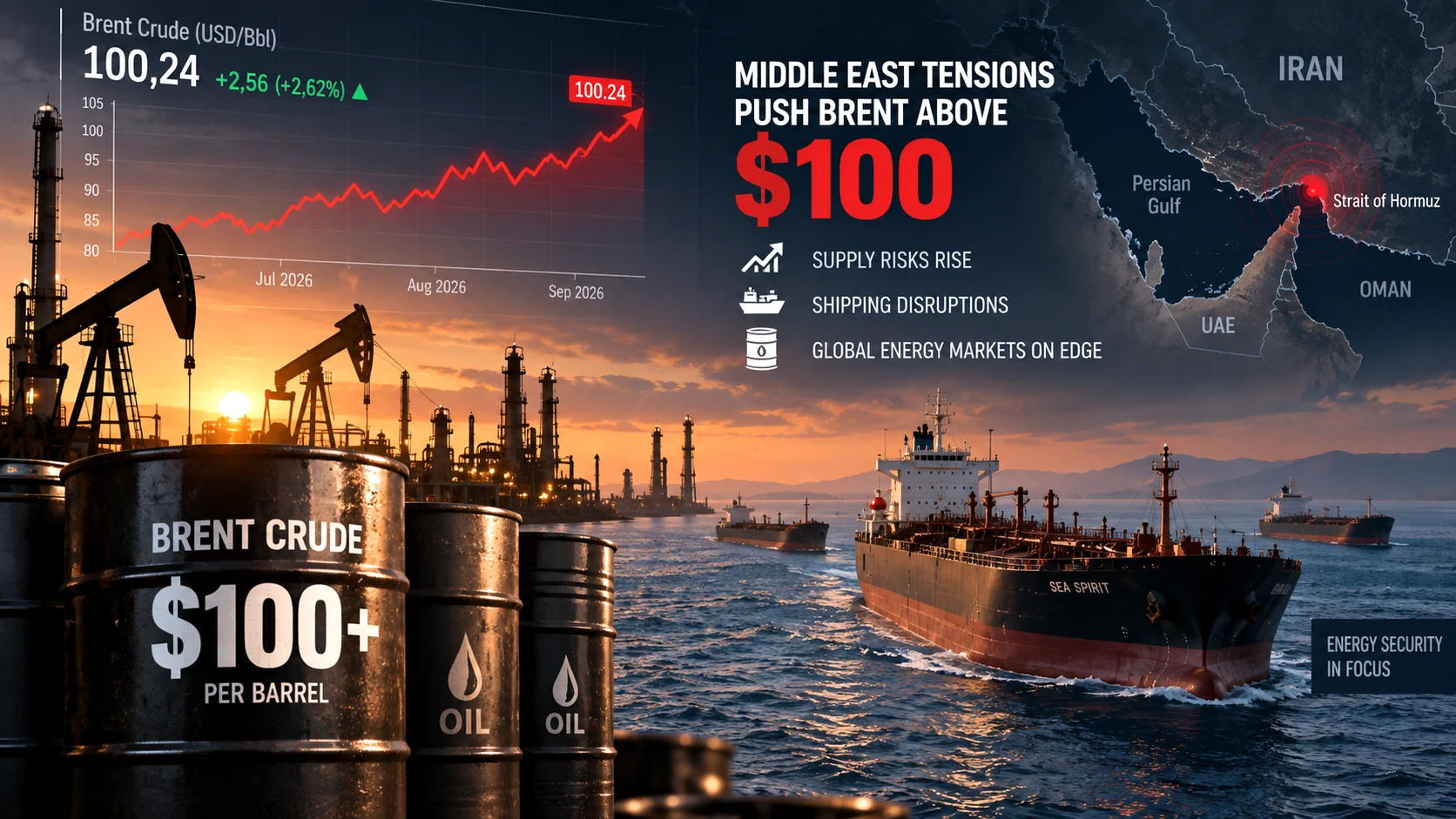
Brent crude has surged above $100 as US-Iran hostilities disrupt Middle East oil supplies, raising concerns over inflation, markets and India’s import costs.
Sensex and Nifty opened higher and extended gains on September 23, led by metals, FMCG and realty stocks as crude oil eased and global cues improved. Bajaj Finance, Hindalco and Tata Steel were among the strongest Nifty gainers.
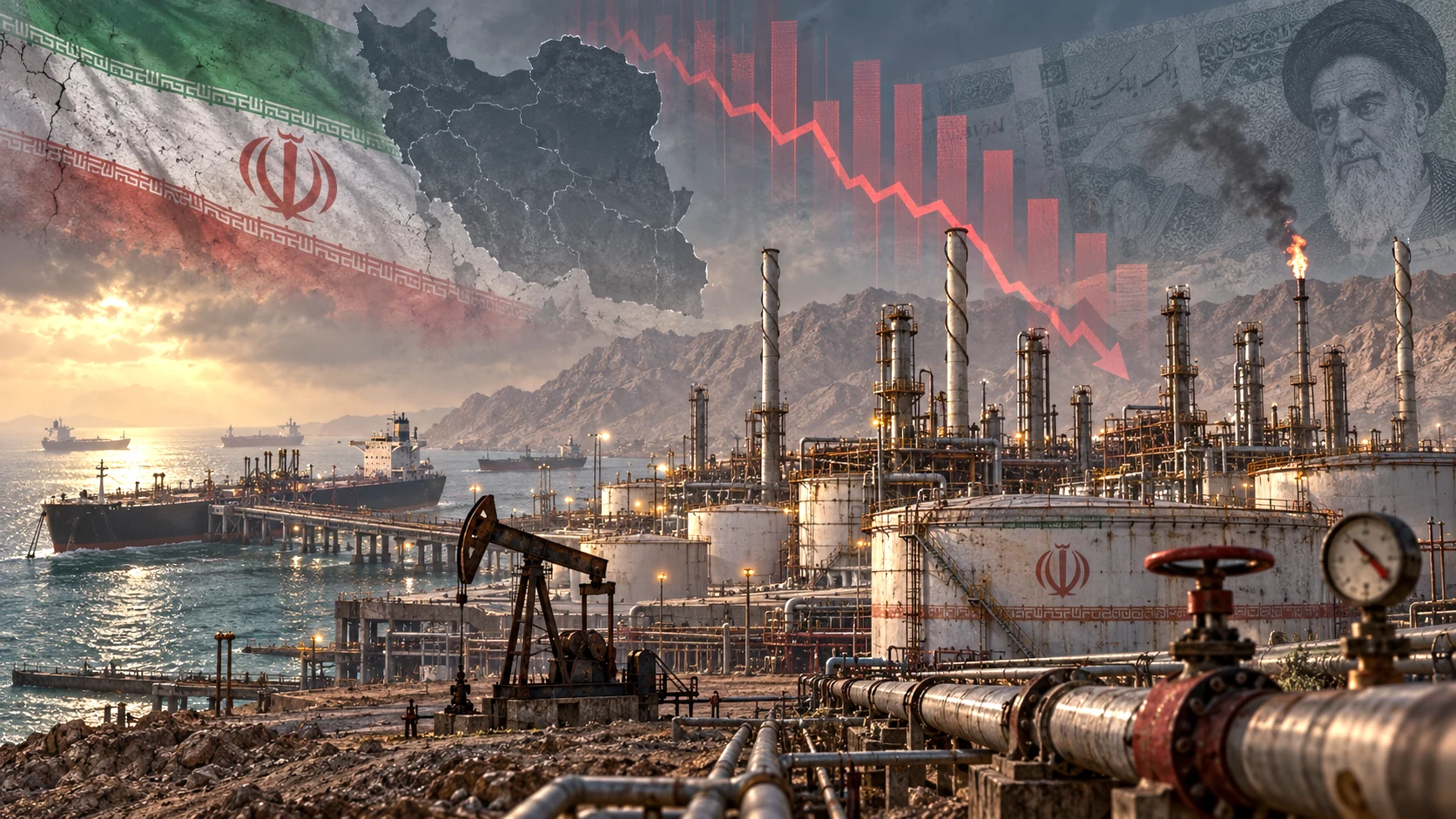
Iran’s economy contracted by 10.1% year-on-year during the first quarter of its current Persian calendar year, according to official data, with a collapse in oil and natural-gas activity driving much of the decline. The figures cover the first months of the US-Israel conflict with Iran, although the
Sensex and Nifty rebounded on September 25 after Thursday's sharp selloff. At 2:35 PM IST, Sensex was up 328 points at 73,908 while Nifty gained 68 points to 23,131, helped by value buying and softer crude.
Karnataka has suspended food licences linked to Amazon, Swiggy Instamart and BigBasket until further orders after authorities found poisonous Datura fruits and seeds being offered online as food. Here’s what actually happened and what the order means for consumers.










0 Comments