ONGC Strikes Gas at Deepwater Well Off Odisha Coast; Commercial Potential Under Evaluation
ONGC has struck natural gas at a deepwater well about 43 km off Konark in Odisha's Mahanadi Offshore Basin. The well has shown encouraging flow and reservoir pressure, but reserve size and commercial viability still require appraisal.
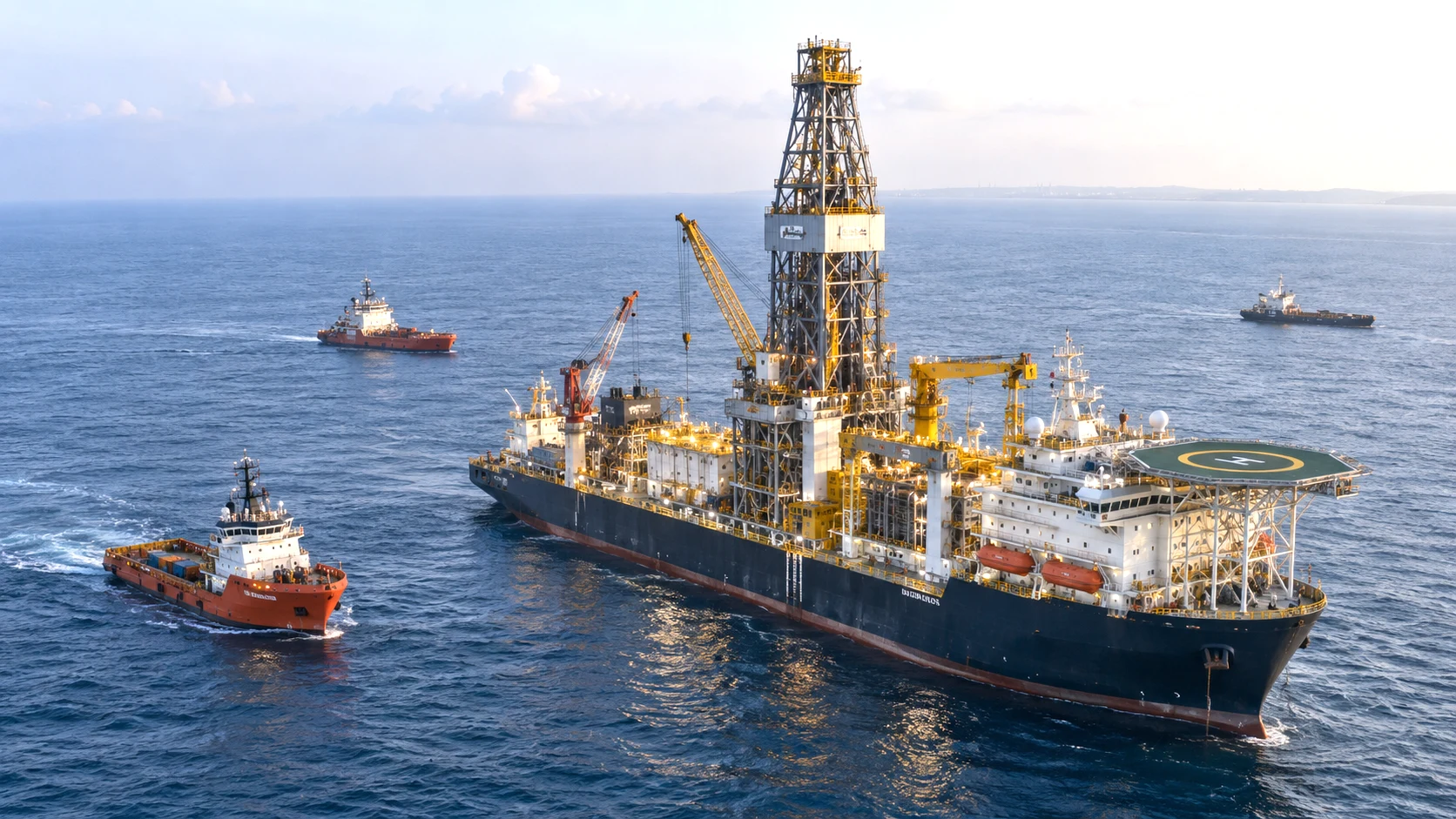
Illustrative deepwater drilling operation in the Mahanadi Offshore Basin off Odisha, where ONGC has reported a natural gas discovery
Table of Contents (19 sections)
NEW DELHI / BHUBANESWAR, September 22, 2026: Oil and Natural Gas Corporation has discovered natural gas at a deepwater exploration well in the Mahanadi Offshore Basin off Odisha, marking the first well drilled by the state-run explorer in the basin under the government's current Samudra Manthan offshore exploration campaign.
The discovery was made on September 18, 2026, at well MN-DW18-1-H-D, approximately 43 kilometres off Konark. ONGC drilled the well to a target depth of 1,623 metres and encountered gas in an interval between 1,441 and 1,452 metres.
ONGC said the well had been flowing gas for three days with encouraging flow and sustained reservoir pressure when the discovery was announced on September 21. However, the company has not disclosed the actual flow rate, estimated reserves, recoverable gas volume or expected production capacity.
Those missing numbers are important. A successful exploration well confirms the presence of hydrocarbons, but it does not automatically mean a commercially producing gas field has been established.
Further appraisal, testing and economic evaluation will determine whether the discovery is large enough and economically viable to develop.
Recommended Reading
Related Stories & In-Depth Guides
Curated editorial perspectives matching this topic.
The claim is confirmed by the Bloomberg Billionaires Index and fresh September 18 reporting. Zhang Yiming’s estimated wealth has climbed to about $105 billion as higher ByteDance valuations and the company’s expanding AI business push him ahead of Gautam Adani.
Global crude oil prices fell sharply on September 21, 2026, with Brent dropping toward $102 a barrel and US West Texas Intermediate slipping below $99, as recovering Saudi Arabian export flows and hopes for renewed US-Iran diplomacy outweighed immediate fears from Houthi missile and drone attacks on
Key Takeaways
ONGC discovers gas at deepwater well MN-DW18-1-H-D off Odisha.
Well located about 43 km from Konark in Mahanadi Offshore Basin.
Gas encountered between 1,441–1,452 metres; target depth 1,623 metres.
Encouraging flow and reservoir pressure reported; reserves not yet disclosed.
Commercial viability still under evaluation.
First well in basin under Samudra Manthan campaign.
ONGC Mahanadi Gas Discovery: Key Details
Detail
Confirmed information
Company
Oil and Natural Gas Corporation
Well
MN-DW18-1-H-D
Basin
Mahanadi Offshore Basin
Location
About 43 km off Konark, Odisha
Discovery date
September 18, 2026
Announcement
September 21, 2026
Target drilling depth
1,623 metres
Gas-bearing interval
1,441–1,452 metres
Current indication
Encouraging gas flow and reservoir pressure
Reserve estimate
Not yet disclosed
Commercial production
Not yet established
Campaign
Samudra Manthan
Next stage
Appraisal and commercial evaluation
The location relatively close to the Odisha coast could become an advantage if the discovery eventually moves into development because shorter distances to shore can, depending on geology and infrastructure, simplify some elements of bringing offshore gas to market. ONGC has nevertheless made clear that early monetisation remains conditional on appraisal and commercial evaluation.
Where Exactly Did ONGC Find the Gas?
The discovery lies in the deepwater portion of the Mahanadi Offshore Basin in the Bay of Bengal.
The well is around 43 km from Konark on the Odisha coast and is part of ONGC's effort to test deeper offshore prospects that have received less development than some of India's established hydrocarbon regions.
The well was started, or “spudded,” on July 25, 2026, as part of the latest exploration campaign. Petroleum and Natural Gas Minister Hardeep Singh Puri was present when drilling commenced.
ONGC Chairman and CEO Arun Kumar Singh and other senior company officials later visited the drilling operation aboard the Platinum Explorer during the campaign.
The gas strike was recorded less than two months after drilling began.
What Does a Gas Strike Actually Mean?
A gas strike means drilling has encountered a geological formation containing natural gas.
It is an encouraging exploration result, but several additional questions must be answered before a company can decide whether to build a commercial project.
ONGC will need to establish:
how large the gas-bearing structure is;
how much gas is present;
how much of that gas can technically be recovered;
whether gas can flow at commercially useful rates over time;
how many production wells may be required;
what subsea and processing infrastructure would be needed;
how the field could connect to shore;
the development cost;
expected gas prices and revenue;
and whether the project delivers an acceptable economic return.
That is why the company's reference to “encouraging flow and reservoir pressure” is positive but is not the same as announcing a recoverable reserve or commercial field.
Has ONGC Disclosed How Much Gas Was Found?
No.
As of the latest announcement, ONGC has not disclosed an estimated reserve figure for MN-DW18-1-H-D.
It has also not published the well's gas flow rate.
Reports based on the company's announcement say gas has flowed with encouraging reservoir pressure, but further testing is required to establish how much can ultimately be recovered.
This is an important distinction for both consumers and investors.
Headlines describing a “gas discovery” should not be interpreted as confirmation of billions of cubic metres of recoverable reserves unless ONGC subsequently publishes such an estimate.
Why Being 43 km from the Coast Matters
Deepwater discoveries can be expensive to develop.
Gas produced from the seabed may require subsea wells, pipelines, processing facilities, compression systems and connections to an onshore gas network before it can be sold to customers.
Distance from shore is one factor influencing those costs.
ONGC has specifically highlighted the Mahanadi discovery's relative proximity to the Odisha coastline as a factor that could support earlier monetisation if the field proves commercially viable.
That does not guarantee fast production.
Water depth, reservoir quality, seabed conditions, environmental approvals, project design and nearby infrastructure will also influence development.
Could ONGC Use Shared Infrastructure?
Potentially.
ONGC said the latest find, together with other discoveries in the area, could become a candidate for cluster development using shared facilities under the Petroleum and Natural Gas Rules, 2025.
This could become one of the most important commercial aspects of the discovery.
An isolated offshore field may be too small to justify building a complete set of pipelines and processing facilities exclusively for itself.
If several nearby discoveries can share subsea infrastructure, pipelines or processing facilities, the development economics may improve.
Shared infrastructure can potentially:
reduce duplicated capital expenditure;
shorten development timelines;
make smaller discoveries commercially viable;
allow several reservoirs to feed one production system;
and improve utilisation of expensive offshore facilities.
Whether this model is actually used will depend on the results of ONGC's appraisal programme.
How Does the Discovery Relate to Earlier Mahanadi Finds?
The latest gas strike is not ONGC's first indication of hydrocarbons in the broader Mahanadi offshore region.
Earlier exploration resulted in discoveries including Utkal and Konark, strengthening interest in the basin's deeper geological structures.
The new MN-DW18-1-H-D well adds another data point suggesting that the region may contain a wider gas-bearing system.
ONGC's latest campaign is intended to determine whether multiple discoveries can eventually support a larger development rather than being considered only as isolated wells.
This is why the commercial importance of the new well cannot be judged from one successful gas interval alone.
Additional wells can help ONGC understand whether the reservoirs are connected, their size and how production might be organised.
What Is Samudra Manthan?
Samudra Manthan is the government's broader push to accelerate offshore oil and gas exploration in India's deepwater and ultra-deepwater regions.
The programme is intended to expand seismic exploration, increase offshore drilling and improve the use of common infrastructure so that discoveries can move towards development more efficiently.
The Mahanadi Basin well is ONGC's first in the basin under this current campaign.
India is increasing offshore exploration partly because large portions of its deeper waters remain relatively under-explored compared with mature producing basins.
Successful discoveries could expand the country's domestic hydrocarbon resource base.
But exploration programmes also carry significant risk: many wells do not become commercial fields, and deepwater drilling is considerably more expensive and technically complex than conventional onshore exploration.
Why the Discovery Matters for India’s Energy Security
India imports a substantial proportion of the hydrocarbons it consumes.
Additional domestic natural gas production can therefore contribute to supply diversification if new discoveries ultimately reach commercial production.
Natural gas is used across multiple sectors, including:
fertiliser manufacturing;
city gas distribution;
compressed natural gas for vehicles;
industrial heating;
petrochemicals;
refineries;
and gas-fired power generation.
Domestic production can reduce some exposure to international LNG markets and global supply disruptions.
However, one exploration discovery will not materially change India's overall import dependence unless the reservoir proves sufficiently large and is successfully developed.
For that reason, the most accurate interpretation of the Odisha find is that it adds potential domestic resources, rather than immediately adding a known volume of gas to India's supply.
When Could Production Begin?
ONGC has not announced a commercial production date for the new discovery.
Before production can begin, the company could need additional appraisal drilling, reservoir studies and development planning.
A typical progression following an exploration discovery may include:
well testing;
geological and seismic interpretation;
appraisal wells;
reserve and resource estimation;
concept selection;
commercial evaluation;
investment approval;
engineering and procurement;
subsea infrastructure installation;
pipeline and processing connections;
commissioning;
first gas.
Not every discovery proceeds through all of these stages.
If appraisal shows that the reservoir is too small or too expensive to produce, development may not proceed.
Conversely, if the new find can be combined with nearby discoveries through common infrastructure, it could improve the economics and potentially reduce the time required to bring gas onstream.
What Does the Discovery Mean for ONGC Shares?
The announcement has attracted investor attention because a commercially successful offshore discovery could eventually add reserves and production to ONGC's portfolio.
However, investors should distinguish an exploration success from a quantified commercial asset.
ONGC shares closed at ₹235.63 on the NSE on Monday, September 21, up 1.22% for the session. Importantly, the detailed gas-discovery announcement came after the market had closed, meaning Monday's share-price gain should not be attributed to the announcement.
The information likely to matter more for valuation in the longer term includes:
reserve estimates;
appraisal results;
sustained well-flow rates;
recoverable gas volume;
development capital expenditure;
production start date;
expected annual production;
gas pricing;
and ONGC's ownership economics.
Until those figures are known, calculating a reliable financial value for the discovery would be speculative.
Could the Discovery Benefit Offshore-Service Companies?
A sustained increase in India's deepwater drilling programme could support demand for offshore drilling rigs, subsea services, marine vessels, engineering companies and oilfield-service providers.
That is a broader sector implication of the government's exploration drive.
However, the new ONGC discovery does not automatically mean any particular contractor will receive an order.
Contracts depend on future tenders, project design and ONGC's procurement decisions.
Investors should therefore avoid assuming that every offshore-services company will directly benefit from a single exploration success.
Why Appraisal Is the Next Critical Step
The most important phase now begins below the headline level.
ONGC must determine whether the reservoir can support sustained economic production.
Appraisal may involve additional wells in different parts of the geological structure to establish:
reservoir thickness;
pressure;
gas-water contacts;
geological continuity;
porosity;
permeability;
and estimated recoverable resources.
These results can significantly change the initial interpretation of a discovery.
A field can become larger than first expected, or later testing can show that the commercial potential is more limited.
ONGC's decision to highlight encouraging pressure and flow suggests a positive initial technical result, but the company itself has explicitly conditioned monetisation on further appraisal and commercial evaluation.
What Should Investors and Readers Watch Next?
Several future announcements could determine how important MN-DW18-1-H-D ultimately becomes.
Reserve or resource estimate
A quantified estimate would provide the first indication of the discovery's scale.
Appraisal-well results
Additional drilling could confirm whether the gas extends across a larger area.
Flow-test data
The actual sustained gas-production rate would provide more information about reservoir performance.
Cluster-development plan
ONGC may eventually explain how the latest well could connect with other Mahanadi discoveries using shared facilities.
Project investment
A formal development decision would likely include estimates of capital expenditure.
Production timeline
A target for first gas would indicate that the discovery has moved significantly closer to commercial development.
Until then, the well should be treated as a promising exploration result rather than a confirmed producing asset.
What Happens Next?
ONGC is expected to continue evaluating the discovery as part of its deeper exploration programme in the Mahanadi Offshore Basin.
The company has said it will continue pursuing deepwater and ultra-deepwater hydrocarbon opportunities while assessing how discoveries in the region might be developed together.
For India's upstream energy sector, the significance of the September discovery will ultimately depend on what the next wells reveal.
If appraisal confirms a sufficiently large recoverable gas resource, the location near Odisha and the possibility of shared infrastructure could support a future development project.
If the volumes prove limited, the well will still contribute valuable geological information for exploration across the basin.
For now, the confirmed development is narrower but important: ONGC has encountered flowing natural gas in its first Mahanadi deepwater well under the current Samudra Manthan campaign, while the size and commercial value of the discovery remain to be established.
Frequently Asked Questions
Where has ONGC discovered gas in Odisha?
ONGC discovered gas at deepwater well MN-DW18-1-H-D in the Mahanadi Offshore Basin, approximately 43 km off Konark on the Odisha coast.
How deep is the ONGC Mahanadi well?
The well was drilled to a target depth of 1,623 metres. Gas was encountered between 1,441 and 1,452 metres.
How much natural gas has ONGC discovered?
ONGC has not yet disclosed the reserve size or estimated recoverable gas volume. Further appraisal is required.
Is the Odisha gas discovery commercially viable?
Commercial viability has not yet been established. ONGC has reported encouraging flow and reservoir pressure, but additional appraisal and economic evaluation are required.
When will ONGC start producing gas from the well?
No production date has been announced. Commercial development will depend on appraisal results, project economics and future investment decisions.
What is Samudra Manthan?
Samudra Manthan is India's broader offshore exploration initiative aimed at accelerating exploration and development of deepwater and ultra-deepwater hydrocarbon resources.
Bottom Line
ONGC has struck natural gas at a deepwater well about 43 km off Konark in Odisha’s Mahanadi Offshore Basin.
The well has shown encouraging flow and reservoir pressure, but reserve size, recoverable volumes and commercial viability still require appraisal. The discovery is the first in the basin under the current Samudra Manthan campaign.
Key Takeaway
ONGC discovers gas at MN-DW18-1-H-D off Odisha.
Encouraging flow reported; reserves not yet quantified.
Commercial viability under evaluation.
First Mahanadi well under Samudra Manthan campaign.
The Rajatheertha Team publishes news, explainers, guides and updates across India and the world. Our coverage follows Rajatheertha's editorial, verification and corrections standards.
Indian Oil has approved ₹2,448.70 crore for a 424.65-km natural gas pipeline linking Kochi with Thoothukudi via Kanyakumari. The project will have 6.84 MMSCMD capacity and strengthen gas connectivity across southern India.
The Federal Reserve unanimously lifted its benchmark rate by 25 basis points to 3.75%-4.00% as inflation remained stubbornly above target. President Donald Trump demanded rates of 1% or lower and attacked the Fed board as political, although he said he still has confidence in Chair Kevin Warsh.
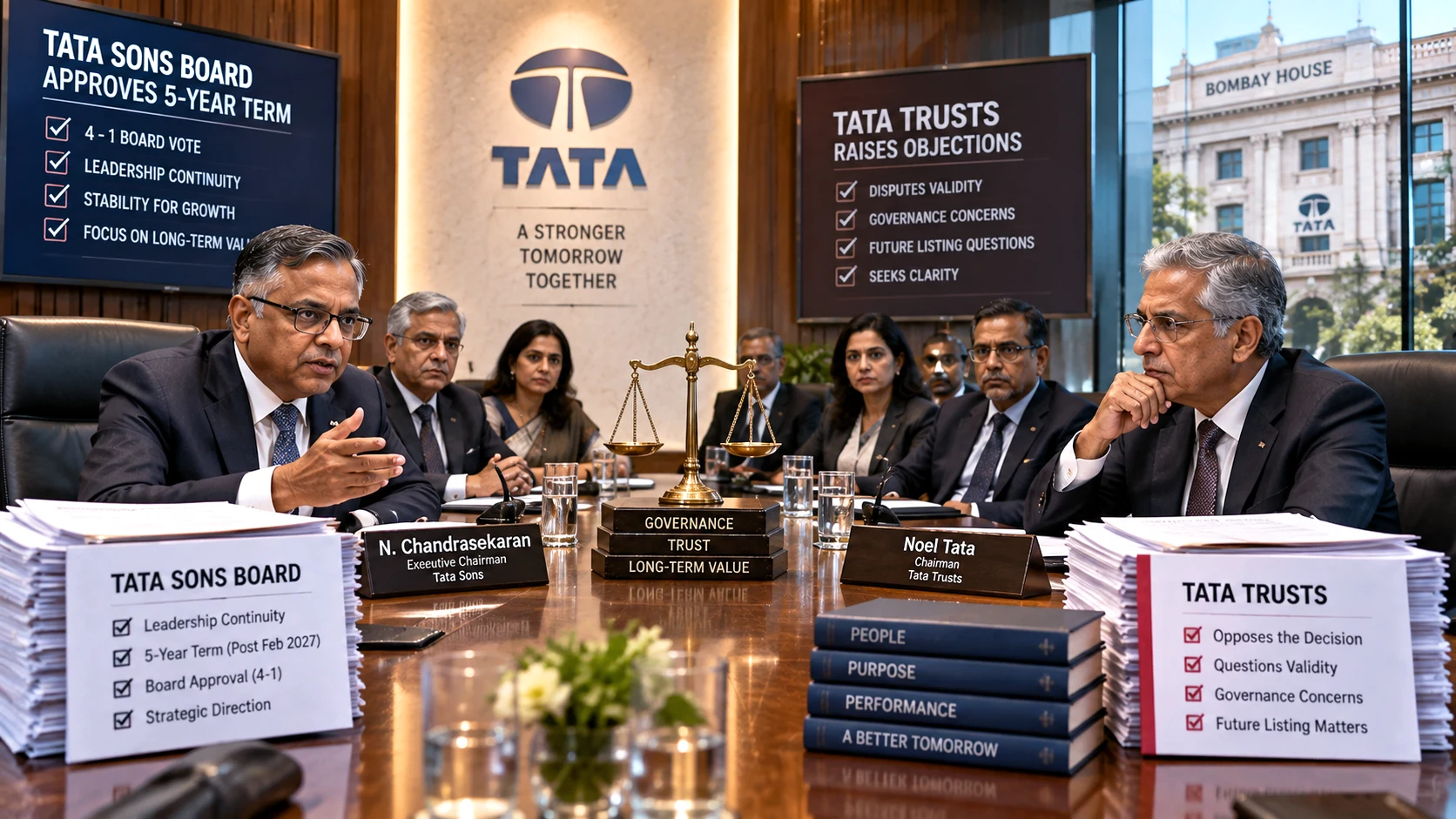
The Tata Sons board voted 4-1 to give N. Chandrasekaran another five years as executive chairman after his current term ends in February 2027. Noel Tata opposed the proposal, while Tata Trusts has formally argued that the resolution is invalid under Tata Sons’ Articles of Association.
John Ternus has officially succeeded Tim Cook as Apple CEO, while Cook remains at the technology giant as executive chairman after 15 years at the helm.
Claude maker Anthropic is preparing for a potentially historic IPO, with investors discussing a valuation of $2 trillion or more, though the filing timetable remains subject to change.
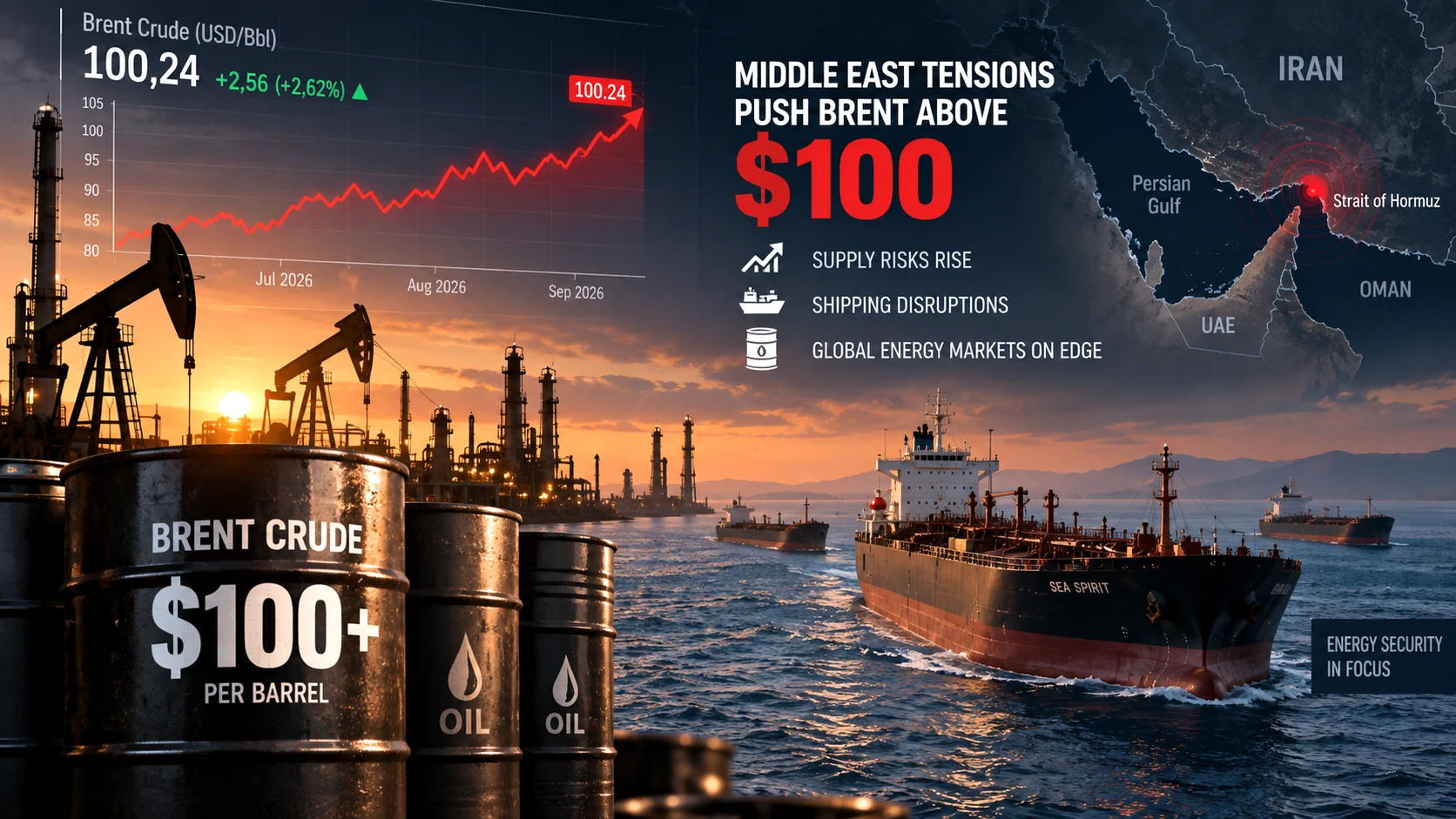
Brent crude has surged above $100 as US-Iran hostilities disrupt Middle East oil supplies, raising concerns over inflation, markets and India’s import costs.








0 Comments