US-Iran Shipping Attacks Escalate Near Strait of Hormuz as Brent Oil Holds Above $100
Iran says it attacked 10 ships near the Strait of Hormuz after the US destroyed five Iranian oil tankers, sending Brent crude above $100 as global supply fears intensify.
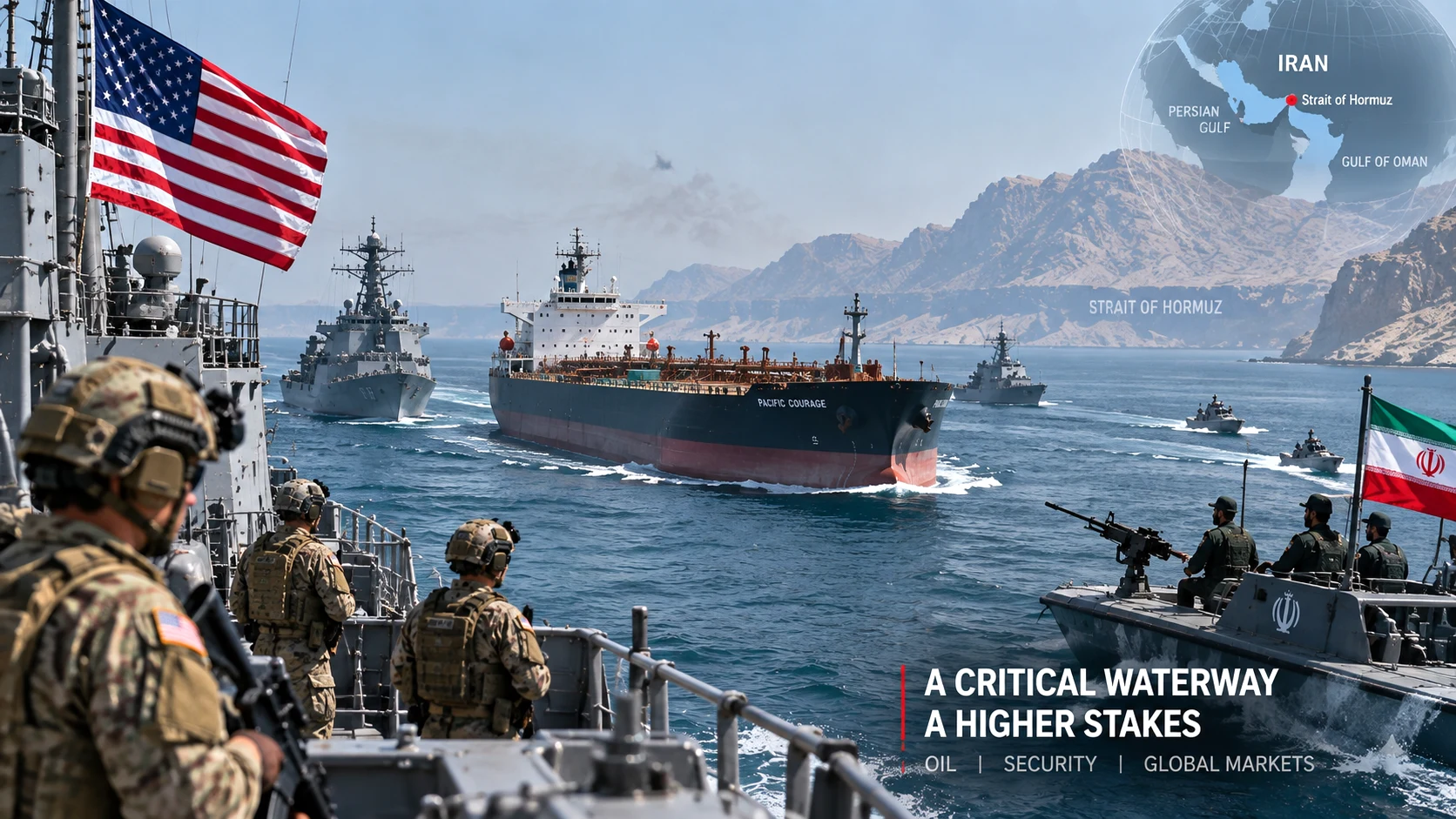
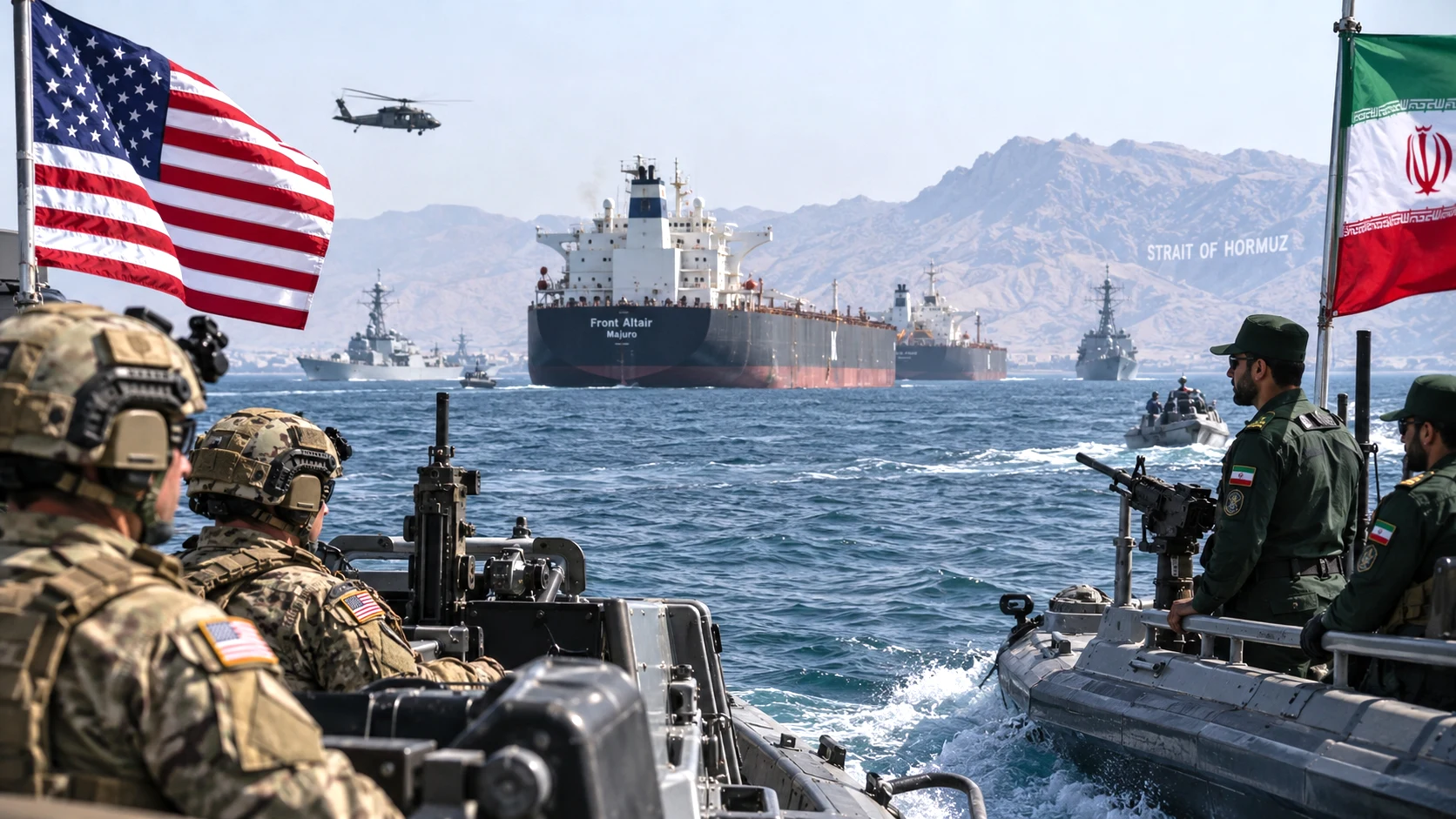
US and Iranian military forces and oil tankers representing escalating conflict around the Strait of Hormuz and global energy supplies
Table of Contents (16 sections)
September 10, 2026: The conflict between the United States and Iran has entered a dangerous new maritime phase after Iran claimed attacks on 10 ships near the Strait of Hormuz, following U.S. military strikes that destroyed five Iranian oil tankers.
The latest exchange represents the largest wave of attacks on shipping by the two sides since the six-month-old conflict began, according to Reuters. It has renewed concerns about the safety of commercial vessels moving through one of the world’s most important energy corridors and pushed international oil prices sharply higher.
Benchmark Brent crude crossed $100 a barrel for the first time since July on Wednesday. Early Thursday, Brent was trading at about $101.10 a barrel, while U.S. West Texas Intermediate crude was around $96.24. Brent has risen nearly 30% from its early-August lows as renewed fighting and uncertainty over Persian Gulf supplies have returned a significant geopolitical risk premium to the market.
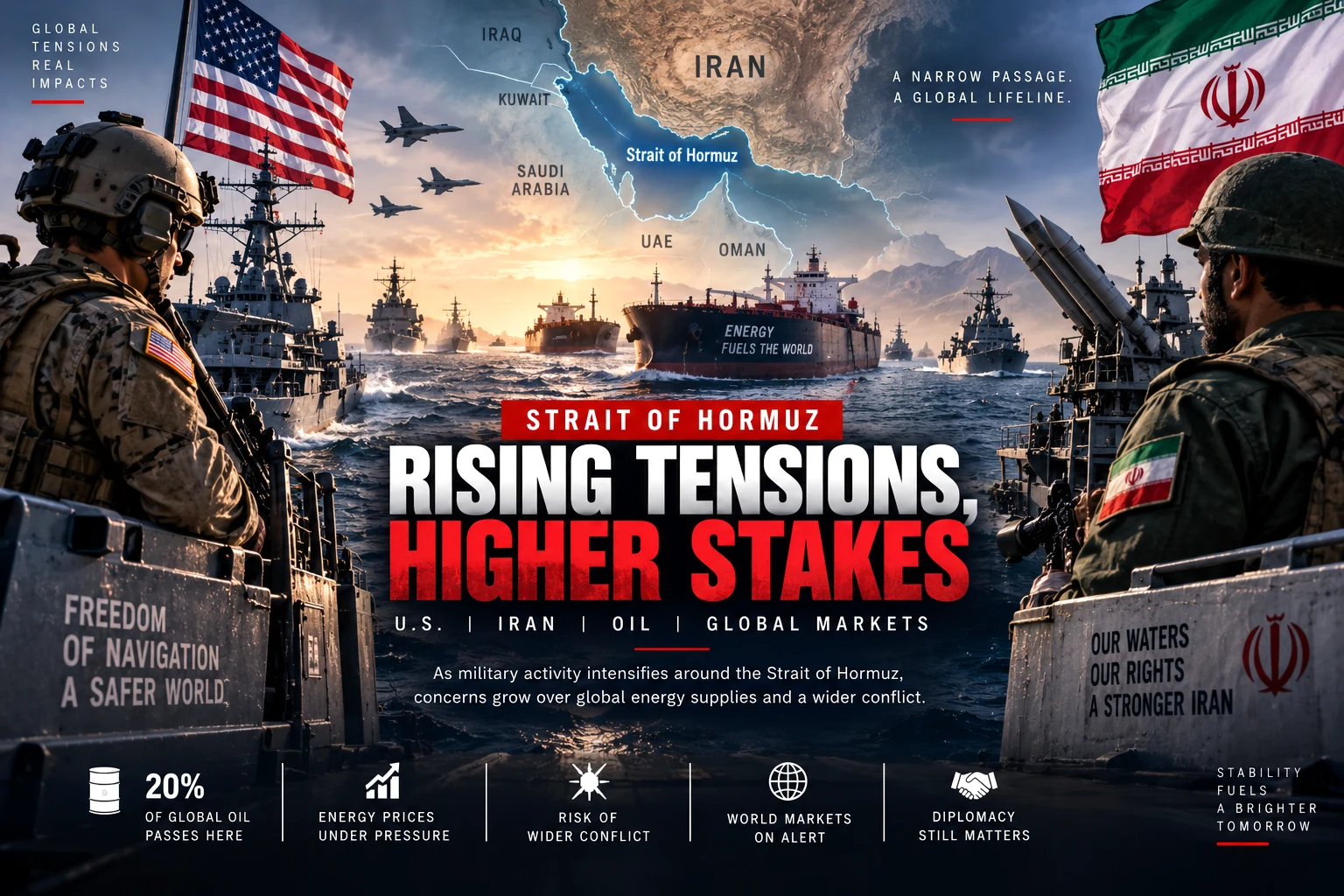
The escalation has direct implications far beyond the Middle East. The Strait of Hormuz carried roughly a fifth of global oil and gas supplies before the current conflict, making disruption around the narrow waterway a potential threat to energy prices, shipping costs and inflation worldwide.
Recommended Reading
Related Stories & In-Depth Guides
Curated editorial perspectives matching this topic.
The US says it destroyed five Iranian oil tankers before Iran fired missiles toward a US-used base in Jordan and claimed attacks on ships near the Strait of Hormuz.
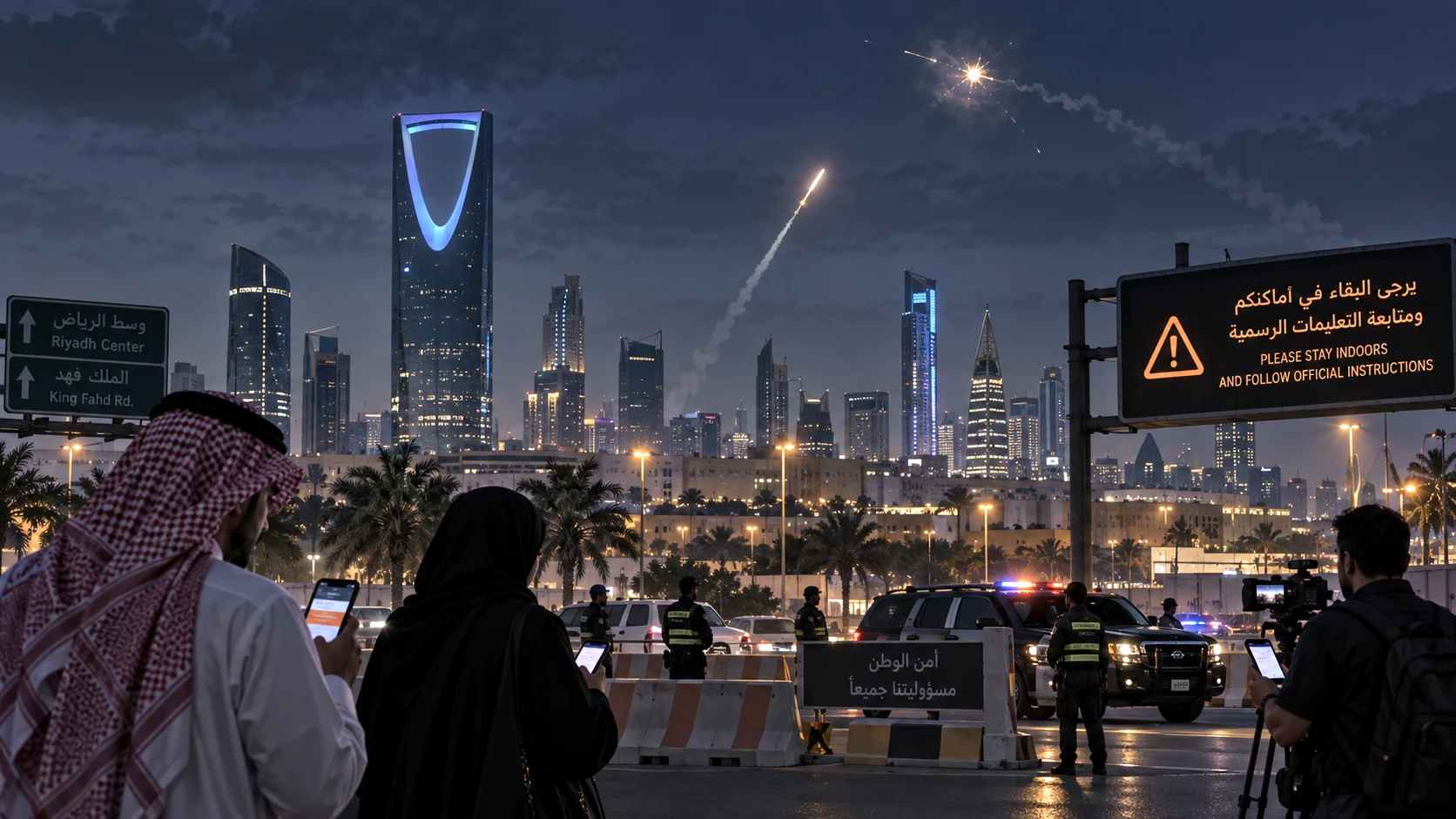
Saudi authorities said air defences destroyed a ballistic missile launched toward Riyadh on September 19, marking the first reported targeting of the capital since the latest escalation with Yemen’s Houthis, as residents received emergency warnings and explosions were heard.**
The latest attacks also demonstrate why claims from both belligerents require careful attribution. Iran says it targeted U.S. ships and commercial tankers in retaliation. Washington says its warships avoided Iranian missile attacks and has described its tanker strikes as a response to threats against American naval forces.
Table of Contents
What happened near the Strait of Hormuz?
Why did the US attack Iranian oil tankers?
Iran claims attacks on 10 ships
What happened to commercial vessels?
Brent oil rises above $100
Why the Strait of Hormuz matters
How much oil is still moving through Hormuz?
Iran warns of further escalation
Houthi attacks create another energy risk
What higher oil prices could mean for India
Could oil prices rise further?
What happens next?
Key takeaway
US Says It Destroyed Five Iranian Oil Tankers
The latest escalation followed a series of attacks involving U.S. warships and Iranian oil tankers.
The U.S. military said it destroyed five Iranian oil tankers overnight, releasing footage showing vessels burning before sinking.
U.S. Central Command said the operation was carried out after Iran’s Islamic Revolutionary Guard Corps repeatedly attempted to target a U.S. Navy warship with ballistic missiles.
No American personnel were injured in those attacks, according to U.S. officials.
The strikes represent an expansion of Washington’s military strategy.
Secretary of State Marco Rubio said the United States would retaliate against Iranian oil shipping when Iran attempts to attack American naval vessels.
The U.S. says it has targeted 10 Iranian tankers over the past week under the new approach.
Iran has condemned the attacks and accused Washington of conducting economic warfare.
The conflicting positions highlight the rapidly escalating cycle: the U.S. says its tanker strikes respond to Iranian attacks on American forces, while Tehran describes its attacks as retaliation for U.S. action.
Iran Says It Attacked 10 Ships in Retaliation
Iran responded by announcing what Reuters described as the largest wave of attacks on shipping by the two sides since the conflict began.
Iran said it attacked 10 ships near the Strait of Hormuz, including two U.S. vessels and eight tankers.
Those claims cannot all be independently verified.
The U.S. has said its warships avoided Iranian attacks, while maritime security agencies have confirmed reports involving several commercial vessels elsewhere in the Gulf and Gulf of Oman.
That distinction is important.
Iran’s announcement that it targeted a vessel does not automatically mean the vessel was successfully struck.
Confirmed damage to merchant shipping and Iranian claims involving U.S. military ships should therefore be reported separately.
Tanker Carrying 2 Million Barrels Catches Fire
Commercial shipping has nevertheless suffered serious consequences.
A tanker carrying approximately 2 million barrels of Iraqi fuel oil, the New Andros, caught fire after being struck by a drone in Iraqi waters, according to Iraqi port officials cited by Reuters.
The 22 crew members were reported safe.
Another tanker, the Hercules Star, was hit while anchored off Dubai.
One seafarer aboard the vessel was reported killed, and another was missing, according to its charterer.
Britain’s United Kingdom Maritime Trade Operations also received reports of merchant vessels being struck by disabling fire in the northern Gulf and Gulf of Oman.
A liquefied natural gas tanker was separately reported damaged at the Emirati port of Khor Fakkan.
These incidents are particularly important because the confrontation is no longer confined to military targets or Iranian oil exports.
Commercial vessels and their crews now face an increasingly dangerous operating environment.
Brent Crude Breaks Above $100 a Barrel
Energy markets reacted quickly.
Brent crude breached $100 a barrel on September 9 for the first time since July, as traders priced in the possibility that Persian Gulf supply disruptions could continue.
By early September 10, Brent was around $101.10 per barrel.
WTI crude was trading around $96.24 per barrel.
The physical oil market is showing even stronger pressure.
S&P Global reported that Platts Dated Brent reached $114.26 per barrel on September 9, reflecting tightening supplies and rapidly rising shipping costs.
These are different benchmarks, so the prices should not be directly confused.
Brent futures are widely followed as the headline international oil benchmark, while physical crude assessments can trade at different levels depending on immediate supply conditions.
The broader message from both markets is nevertheless similar: physical oil supplies are becoming more expensive and difficult to move.
Why the Strait of Hormuz Matters to the World
The Strait of Hormuz is a narrow maritime passage connecting the Persian Gulf with the Gulf of Oman and the Arabian Sea.
Before the current war, approximately one-fifth of global oil and gas supplies moved through the waterway, according to Reuters.
Major energy exporters, including Saudi Arabia, Iraq, the United Arab Emirates, Kuwait and Qatar, depend to varying degrees on Persian Gulf shipping routes.
That gives Hormuz enormous strategic importance.
A normal oil market can absorb an isolated tanker incident.
A prolonged reduction in traffic through a route responsible for such a large share of global energy movements is much harder to replace.
Alternative pipelines exist, but they do not have unlimited capacity.
This is why markets react strongly whenever military action threatens shipping around Hormuz.
Oil Flows Through Hormuz Have Fallen Sharply
Traffic through the Strait is already far below normal levels.
Reuters reported that oil flows through Hormuz fell as low as around 2 million barrels per day after the latest fighting intensified.
That compares with approximately 8 million to 9 million barrels per day during the week before fighting resumed on August 30, according to Rystad Energy estimates cited by Reuters.
The sharp reduction illustrates why oil markets are concerned even though some vessels continue to pass through the region.
The key issue is not whether Hormuz is completely closed.
It is whether enough oil can move safely and reliably through the waterway to meet global demand.
Insurance costs, tanker availability and freight rates can also rise sharply when shipowners consider an area too dangerous.
That can increase energy costs even without a formal closure of the Strait.
Iran Warns Response Could Escalate Further
The immediate concern is that the cycle of retaliation may continue.
Iran’s Revolutionary Guard has warned that further attacks against Iranian targets could produce a much larger response.
The IRGC has also indicated that Iran plans to announce an expanded maritime exclusion zone extending towards Chabahar, near Pakistan.
Such a move could create further uncertainty for commercial shipping.
However, statements about future military action should be treated as threats or declared intentions rather than assumptions about what will actually happen.
The U.S. has also adopted increasingly forceful rhetoric around Iranian shipping.
That creates the possibility of a repeating cycle:
Iran attempts to target U.S. forces, the U.S. attacks Iranian oil assets, Iran retaliates against shipping, and Washington responds again.
Breaking that cycle would likely require either renewed diplomacy or a significant change in military strategy by one or both sides.
Conflict Has Already Lasted Six Months
The current confrontation is not an isolated maritime crisis.
The wider conflict began on February 28, 2026, with U.S. and Israeli attacks on Iran and has continued intermittently for roughly six months.
Attempts to negotiate over Iran’s nuclear programme and other disputes have failed to produce a lasting settlement.
There was a period of relative calm before fighting intensified again around the end of August.
The renewed maritime attacks now threaten to turn control of energy shipping into one of the conflict’s central fronts.
That would significantly increase the economic consequences for countries that are not directly involved in the fighting.
Houthi Attacks Add Another Risk to Global Energy Routes
Hormuz is not the only concern.
Iran-aligned Houthi forces in Yemen have stepped up attacks against Saudi Arabia, creating additional risks for energy infrastructure and shipping routes connected to the Red Sea.
Recent Houthi attacks have injured dozens of people and affected oil facilities, according to Reuters.
This matters because alternative routes are particularly important when traffic through Hormuz is disrupted.
If both the Persian Gulf and Red Sea corridors face elevated security risks at the same time, oil exporters have fewer reliable options.
That could further increase freight costs and reinforce the risk premium already built into crude prices.
What Higher Oil Prices Could Mean for India
The developments are particularly important for India, one of the world’s largest crude-oil importers.
A sustained rise in international crude prices can increase India’s import bill and put pressure on the rupee.
Higher crude costs can also eventually affect:
petrol and diesel economics;
aviation turbine fuel;
transportation and logistics;
plastics and petrochemicals;
manufacturing costs;
fertiliser and agricultural inputs; and
inflation.
The final impact on Indian consumers depends on several factors, including how long international prices remain elevated, currency movements, government taxes and the pricing decisions of oil marketing companies.
A temporary spike above $100 is therefore different from Brent remaining above that level for several weeks or months.
Duration matters as much as the headline price.
Diesel Prices Highlight the Wider Inflation Risk
The consequences are already becoming visible elsewhere.
Reuters reported that the average U.S. retail price of diesel reached a fresh record above $5.94 per gallon on Wednesday.
Higher diesel costs can spread through an economy because trucks, agricultural machinery, industrial equipment and freight networks depend heavily on the fuel.
That means an energy shock can eventually increase the cost of transporting food, manufactured products and other goods.
The market’s concern is therefore broader than whether Brent trades at $99, $101 or $105 on a particular day.
The bigger question is whether disrupted Middle Eastern supply creates a prolonged period of expensive energy.
Could Oil Prices Rise Further?
There is no reliable way to predict a precise peak.
Oil prices will depend heavily on developments around Hormuz.
If attacks decrease and tanker traffic recovers, some of the geopolitical premium could retreat.
If attacks continue, more commercial vessels are damaged, or traffic falls further, prices could remain elevated or rise.
The U.S. Energy Information Administration has already raised its oil-price forecasts for this year and next because global inventories are declining as Middle Eastern supply is lost.
Markets will therefore be watching actual oil flows rather than political statements alone.
Shipping data, tanker insurance, freight rates, physical crude premiums and refinery supplies will provide important indications of how severe the disruption becomes.
What Happens Next?
Three developments now require particularly close attention.
The first is whether Iran follows through on its warning of further maritime retaliation.
The second is whether the United States continues attacking Iranian tankers when its naval forces are targeted.
The third — and economically most important — is whether commercial traffic through the Strait of Hormuz can recover.
For now, the direction is worrying.
Iran says it attacked 10 ships after U.S. forces destroyed five Iranian tankers. Commercial vessels have suffered casualties and damage. Oil flows through Hormuz remain severely reduced, and Brent crude has returned above $100 a barrel.
The Strait of Hormuz has always been one of the world’s most important geopolitical chokepoints.
The latest escalation demonstrates why a military confrontation concentrated around a relatively narrow stretch of water can rapidly become an energy, shipping and inflation problem for the global economy.
Key Takeaway
The US-Iran conflict has entered a more dangerous maritime phase.
The United States says it destroyed five Iranian oil tankers after alleged missile attempts against a U.S. Navy warship.
Iran claims it attacked 10 ships near the Strait of Hormuz in retaliation.
Confirmed damage to commercial vessels includes a tanker fire involving roughly 2 million barrels of Iraqi fuel oil and at least one seafarer death.
Brent crude has risen above $100 a barrel, with physical market assessments even higher.
Oil flows through Hormuz remain sharply reduced, keeping global energy markets under pressure.
The Rajatheertha Team publishes news, explainers, guides and updates across India and the world. Our coverage follows Rajatheertha's editorial, verification and corrections standards.
The US-Iran conflict has entered another dangerous phase as strikes on tankers, missile attacks and renewed disruption in the Strait of Hormuz threaten global energy supplies.
Russia’s ruling United Russia party has secured a decisive victory in the country’s 2026 parliamentary election, according to near-complete official results, putting the Kremlin-aligned party on course for a record 355 seats in the 450-member State Duma. The vote was Russia’s first parliamentary ele
Canada has imposed new retaliatory tariffs of up to 50% on U.S. goods after trade negotiations with the Trump administration collapsed, escalating the Canada-US trade war.
Qatar has launched an intensified diplomatic push to revive negotiations between Iran and the United States, shuttling proposals between Tehran and Washington as both sides combine threats of further military action with signals that a negotiated settlement remains possible. Iran has conveyed condit
The Trump administration faces multiple legal battles over mail voting, citizenship checks, voter data and election authority as the November 2026 midterms approach.
Anti-migration protests at Dover and Portsmouth have intensified Britain’s border debate after masked demonstrators blocked roads and clashed with police.





0 Comments