Oil Prices Surge Above $100 as US-Iran Conflict Threatens Global Energy Supplies
Brent crude has surged above $100 as US-Iran hostilities disrupt Middle East oil supplies, raising concerns over inflation, markets and India’s import costs.
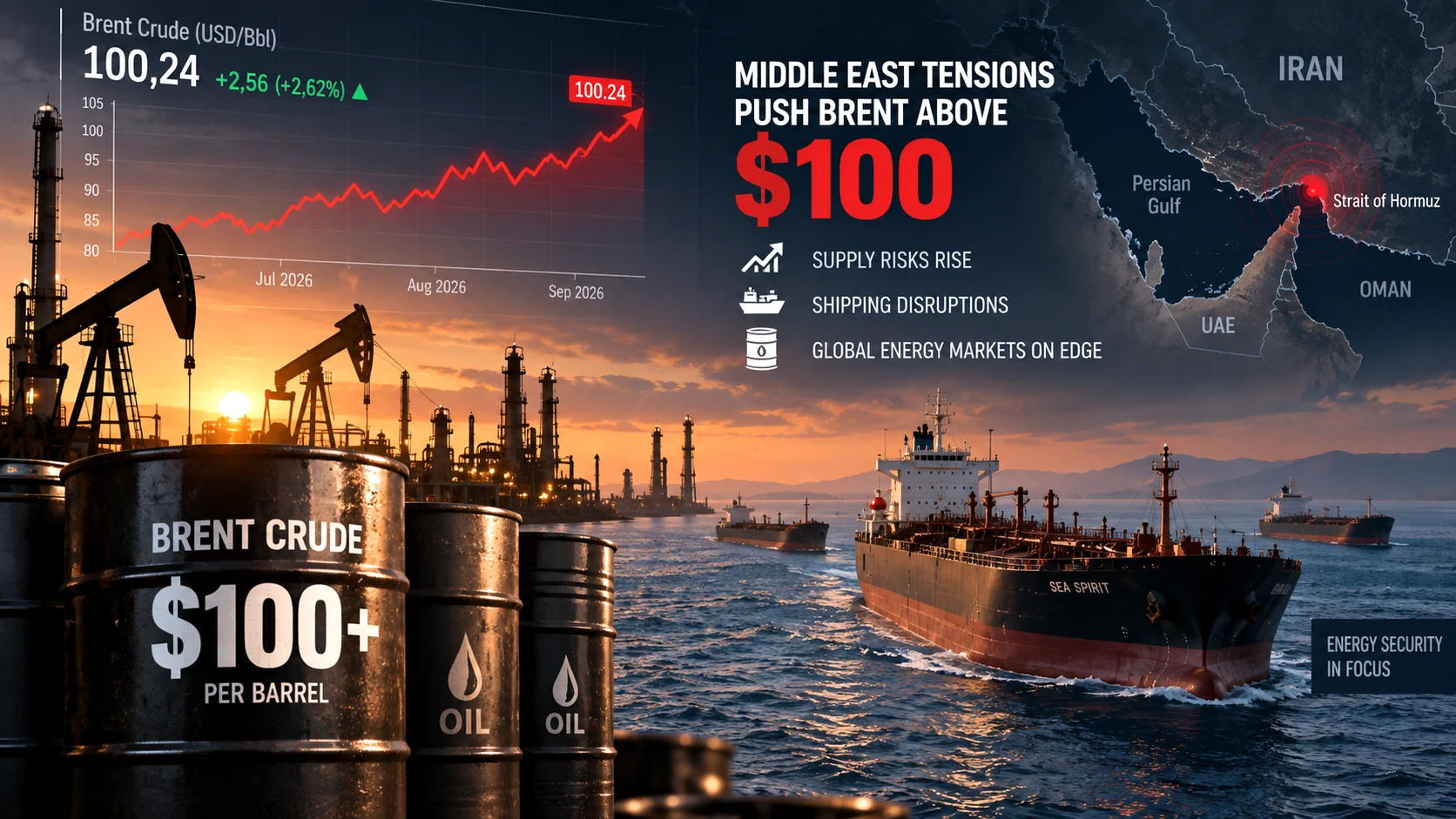
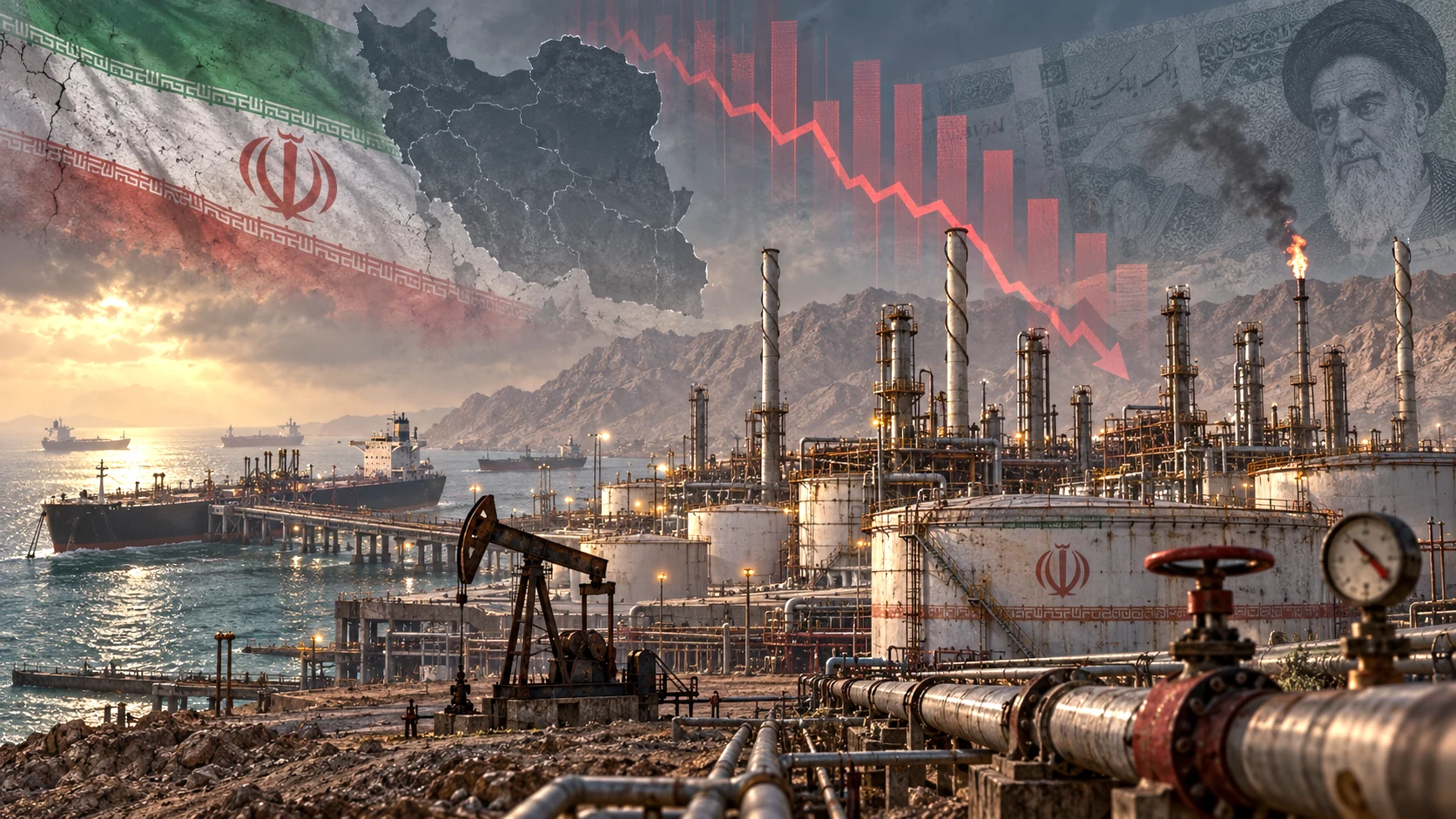
September 10, 2026: Global oil prices have surged back above the psychologically important $100-a-barrel mark, as escalating U.S.-Iran hostilities and attacks on commercial shipping intensify fears of prolonged disruption to Middle Eastern energy supplies.
International benchmark Brent crude was trading around $101.10 a barrel early Thursday, after breaking above $100 on Wednesday for the first time since July. U.S. West Texas Intermediate (WTI) crude was around $96.24 a barrel. Brent has climbed nearly 30% from its early-August lows as hopes for a lasting reduction in U.S.-Iran hostilities faded and fighting intensified again.
The latest rise is not being driven by geopolitical headlines alone. Physical oil flows from the Middle East remain constrained, global inventories are falling, and attacks around important maritime routes have increased the risks faced by tankers.
Iran said it attacked 10 ships near the Strait of Hormuz after the United States sank five Iranian oil tankers, marking the biggest wave of attacks on shipping by the two sides since their conflict began. Not all Iranian claims have been independently verified, but confirmed disruption to commercial shipping has been enough to keep markets on edge.
Recommended Reading
Related Stories & In-Depth Guides
Curated editorial perspectives matching this topic.
Global crude oil prices fell sharply on September 21, 2026, with Brent dropping toward $102 a barrel and US West Texas Intermediate slipping below $99, as recovering Saudi Arabian export flows and hopes for renewed US-Iran diplomacy outweighed immediate fears from Houthi missile and drone attacks on
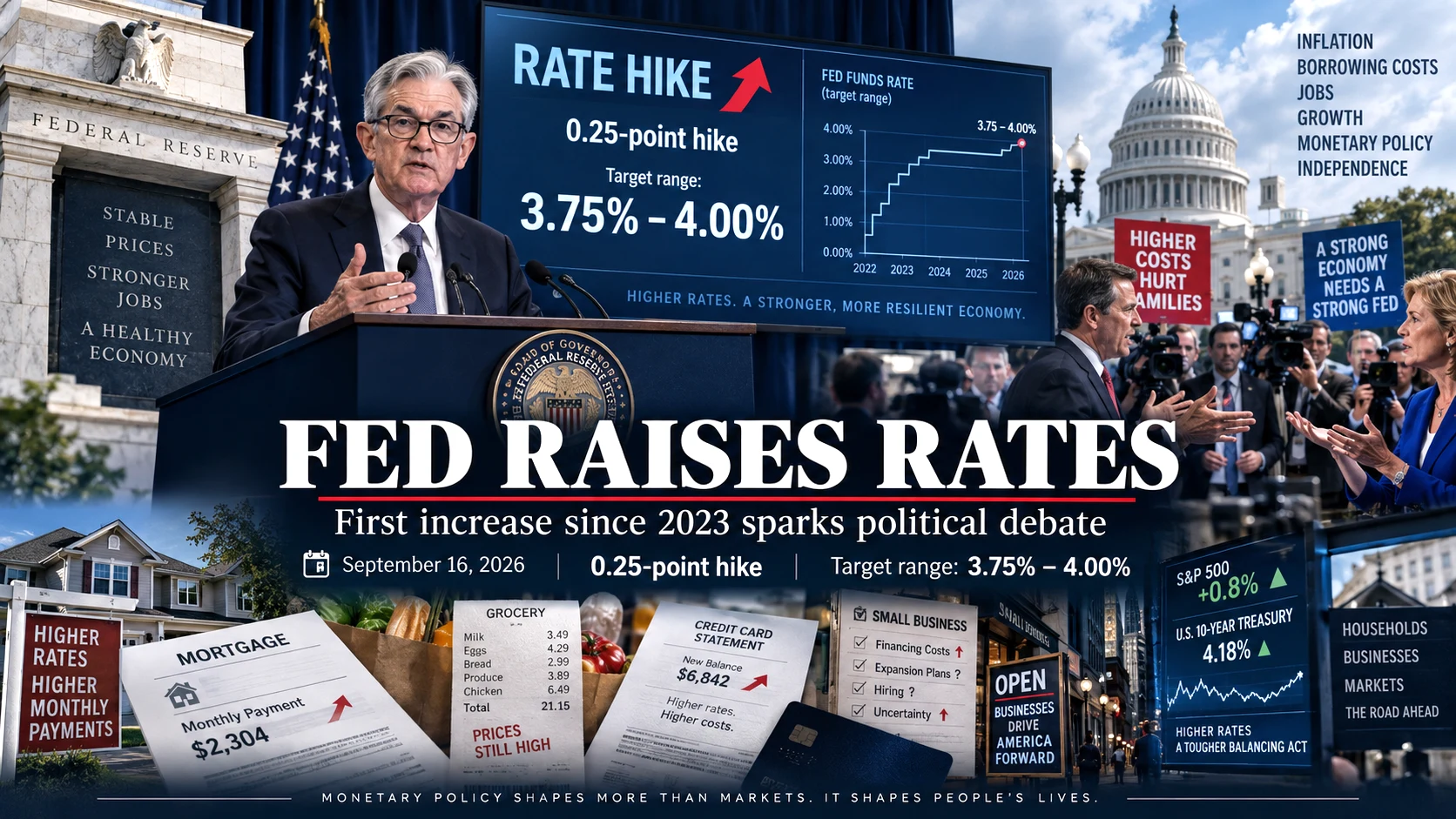
The Federal Reserve unanimously lifted its benchmark rate by 25 basis points to 3.75%-4.00% as inflation remained stubbornly above target. President Donald Trump demanded rates of 1% or lower and attacked the Fed board as political, although he said he still has confidence in Chair Kevin Warsh.
The consequences are already spreading beyond oil markets. U.S. stocks fell on Wednesday, global bond yields have risen, inflation concerns are returning, and oil-importing economies such as India are facing renewed pressure on their currencies and import bills.
Table of Contents
How high have oil prices risen?
Why did Brent crude cross $100?
Strait of Hormuz disruption drives supply fears
Why physical oil markets are tightening
Global inventories are falling
Stock markets react to the oil shock
Why $100 oil creates inflation concerns
What higher crude prices mean for India
The Indian rupee comes under pressure
Could petrol and diesel become more expensive?
Can oil rise to $120 or higher?
Why oil has not risen even further
What happens next?
Key takeaway
Brent Crude Holds Above $100 a Barrel
Brent crude crossed $100 on Wednesday and remained above that level on Thursday.
At around 0256 GMT on September 10, Brent futures were trading at approximately $101.10 per barrel, down marginally by 0.1% on the session.
WTI was around $96.24 per barrel, up approximately 0.2%.
The move is particularly significant because $100 oil is often viewed by markets as an important economic threshold.
There is nothing mechanically different about oil costing $99.90 rather than $100.10, but remaining above $100 for an extended period can have wider consequences for transportation, manufacturing, inflation and consumer spending.
The duration of the increase will therefore matter more than a single day’s headline price.
Why Are Oil Prices Rising?
The immediate reason is concern over the amount of oil that can safely leave the Middle East.
The U.S.-Iran conflict has entered another period of escalation, with attacks increasingly affecting tankers and shipping routes.
Iran said on Wednesday that it had attacked 10 ships near the Strait of Hormuz after the United States sank five Iranian oil tankers.
Iran’s Islamic Revolutionary Guard Corps also warned of further retaliation if attacks continue.
Markets are therefore facing a classic geopolitical supply problem.
Oil demand has not suddenly jumped enough to explain the entire price increase.
Instead, traders are paying more because there is greater uncertainty over whether expected supplies will reach buyers safely and on schedule.
This additional amount built into prices because of the possibility of disruption is commonly described as a geopolitical risk premium.
The Strait of Hormuz Is at the Centre of the Oil Crisis
The Strait of Hormuz is one of the world’s most strategically important energy chokepoints.
Before the current war, the waterway carried roughly one-fifth of global oil and gas supplies, according to Reuters.
Oil from major Gulf producers must either pass through Hormuz or use alternative pipelines and export routes with limited capacity.
That means the economic risk does not require the Strait to be completely closed.
Even partial disruption can matter.
If tanker operators delay journeys, insurers raise premiums, or vessels are forced to take different routes, the effective cost of delivering oil rises.
The market is therefore reacting not only to barrels physically lost but also to the risk that additional barrels could become difficult to transport.
Middle East Oil Flows Remain Far Below Normal
The disruption is substantial.
Reuters reported this week that roughly 9 million barrels per day of crude and another 1 million barrels per day of refined products had recently been exported from the Middle East.
Before the Iran war began on February 28, the comparable volume was around 20 million barrels of crude and products.
Some Gulf producers have been able to redirect supplies through alternative routes.
Saudi Arabia, Iraq, the UAE and Kuwait have adjusted export patterns, while production growth from countries outside OPEC — including the United States, Canada and Guyana — has provided additional supply.
Those factors help explain why Brent has not moved dramatically beyond $100 despite severe disruption.
But alternative routes cannot instantly replace all normal Gulf exports.
Physical Oil Market Shows Even Greater Tightness
Headline Brent futures tell only part of the story.
Physical oil markets have shown signs of even more severe tightness.
Reuters reported that spot premiums have risen sharply, while Oman futures reached $121.68 a barrel on Wednesday.
Physical crude prices can differ substantially from headline futures benchmarks because buyers may pay additional premiums when particular grades or immediate deliveries become scarce.
Diesel markets have also been under significant pressure.
That is important because diesel is widely used in trucking, agriculture, construction, industry and freight transportation.
An oil shock that spreads into diesel can therefore affect the cost of moving goods throughout an economy.
Global Oil Inventories Are Falling
Supply disruptions are occurring while global inventories are already declining.
The U.S. Energy Information Administration estimates that global oil inventories fell by an average 3.9 million barrels per day during the second quarter of 2026.
It expects inventories to decline by another 3 million barrels per day during the third quarter and 1.7 million barrels per day during the fourth quarter.
The EIA also estimates that crude production shut-ins averaged 6.7 million barrels per day in August, up from 5 million barrels per day in July.
It expects Middle Eastern oil flows to remain constrained through the fourth quarter.
That inventory decline provides fundamental support for oil prices even if geopolitical tensions temporarily ease.
EIA Raises Its Oil Price Outlook
The EIA’s September outlook illustrates how significantly the energy picture has changed.
It expects Brent crude to average around $90 a barrel during the second half of 2026, $8 higher than its previous month’s forecast.
The agency expects prices eventually to decline as Middle Eastern exports recover and global inventories rebuild.
Its current forecast sees Brent averaging around $77 a barrel by the second quarter of 2027, before declining further later in the year.
Forecasts are not guarantees.
A further escalation around Hormuz could push actual prices significantly above those assumptions, while a durable ceasefire and faster restoration of oil flows could bring prices down sooner.
Wall Street Falls as Oil Crosses $100
The oil shock has already spread into equity markets.
The S&P 500 fell 0.48% on Wednesday, while the Nasdaq declined 0.64% and the Dow Jones Industrial Average dropped 0.77%.
Energy was the only S&P 500 sector to finish higher, gaining about 1.1%.
The reaction illustrates the mixed impact of high oil prices.
Energy producers can benefit from higher crude prices.
But airlines, transport companies, manufacturers and other businesses that consume large quantities of energy can face higher costs.
Consumers can also have less disposable income if fuel and transportation expenses increase.
Why $100 Oil Is an Inflation Risk
Oil affects far more than petrol stations.
Crude oil and refined fuels are embedded throughout the global economy.
Higher prices can raise the cost of:
petrol and diesel;
air travel;
trucking and logistics;
agriculture;
fertilisers;
plastics and petrochemicals;
manufacturing;
shipping; and
electricity generation in some markets.
Businesses can absorb some of those increases.
But if energy remains expensive for long enough, companies may pass higher costs to consumers.
That is why central banks pay close attention to energy shocks.
Oil-driven inflation can complicate monetary policy because raising interest rates cannot create additional barrels of crude or reopen a disrupted shipping route.
Bond Markets Are Also Reacting
The renewed inflation risk is visible in global bond markets.
Benchmark U.S. 10-year Treasury yields have climbed to their highest levels since 2023, with the oil shock adding to concerns about persistent inflation.
Investors are now closely watching U.S. producer and consumer inflation data ahead of the Federal Reserve’s September meeting.
Markets were pricing roughly a 60% probability of a Federal Reserve rate increase next week, according to Reuters reporting on Thursday.
Europe faces similar pressure, with the European Central Bank also making policy decisions against the backdrop of elevated oil prices.
That demonstrates how a conflict thousands of kilometres away from major financial centres can influence monetary policy worldwide.
What $100 Oil Means for India
India is particularly exposed to sustained increases in global crude prices because it imports most of the oil it consumes.
Higher crude prices can increase the country’s energy import bill and raise demand for U.S. dollars from oil-importing companies.
That can put pressure on the Indian rupee.
The rupee has already begun showing that pressure.
Reuters reported Thursday that the currency was expected to open around ₹95.15–₹95.20 per U.S. dollar, after closing Wednesday at ₹95.1050.
It had weakened approximately 0.7% over the previous two sessions.
Traders told Reuters that rising crude prices were becoming increasingly visible in the rupee’s performance despite intervention by the Reserve Bank of India.
Why a Weaker Rupee Can Make Oil More Expensive
International crude oil is largely priced in U.S. dollars.
That creates a double challenge for India when crude rises and the rupee weakens simultaneously.
Suppose the international oil price increases.
Indian importers must already pay more dollars for every barrel.
If the rupee also falls against the dollar, they need more rupees to purchase each of those dollars.
The effective domestic cost therefore increases further.
That can affect the trade balance, inflation and eventually government and household finances.
Will Petrol and Diesel Prices Rise in India?
A rise in Brent above $100 does not automatically mean Indian petrol and diesel prices will immediately rise by a corresponding amount.
Domestic retail fuel prices depend on several factors, including international crude and product prices, exchange rates, refining costs, taxes and pricing decisions by oil marketing companies.
The duration of the oil shock is particularly important.
If Brent briefly moves above $100 and then falls, the impact may be limited.
If crude remains above $100 for weeks or months, pressure on refiners, oil companies and government finances becomes much more significant.
Consumers should therefore distinguish between a temporary market spike and a prolonged structural increase.
Could Brent Rise to $120 or $150?
Some market analysts have discussed significantly higher scenarios if the conflict worsens.
AP reported analysts warning that oil could potentially reach $120, with much higher temporary spikes possible if major energy infrastructure is damaged or shipping disruption becomes significantly more severe.
Those numbers are scenarios, not forecasts.
There is currently no certainty that Brent will reach either level.
The price path depends heavily on the Strait of Hormuz, the duration of U.S.-Iran hostilities, Gulf production levels and whether alternative export routes can compensate for lost supplies.
Predicting a precise peak during a military conflict is particularly unreliable.
Why Isn’t Oil Already Much Higher?
This is an important question.
The scale of Middle Eastern disruption might appear consistent with even higher prices.
Several factors are preventing that.
Some oil continues to flow through Hormuz.
Gulf producers have found alternative export routes.
Production from the United States, Canada and Guyana has increased.
Russian exports have remained relatively stable.
China has also reduced seaborne crude purchases and holds large strategic and commercial inventories, easing immediate competition for available barrels.
These factors provide the market with a buffer.
But they do not eliminate the risk.
If the conflict removes more supply than those alternatives can replace, the balance could tighten quickly.
What Happens Next?
The direction of oil prices now depends heavily on three factors.
The first is security around the Strait of Hormuz. A sustained recovery in tanker traffic could reduce the geopolitical premium.
The second is the direction of the U.S.-Iran conflict. Further attacks on tankers, ports or energy infrastructure could push prices higher.
The third is how quickly producers and shipping companies can develop alternative routes for Middle Eastern oil.
For financial markets, the critical question is no longer simply whether Brent has crossed $100.
It is how long it stays there.
A brief spike would create volatility.
A prolonged period of $100-plus oil could become a much larger economic story — raising transportation costs, worsening inflation pressures, challenging central banks and increasing the financial burden on major oil-importing economies such as India.
For now, Brent is holding above that threshold, global inventories are falling, and one of the world’s most important energy corridors remains under severe geopolitical pressure.
That combination means oil prices are likely to remain one of the most closely watched indicators across global markets.
Key Takeaway
Brent crude has returned above $100 a barrel as the US-Iran conflict disrupts Middle Eastern oil supplies and shipping through the Strait of Hormuz.
Physical markets are even tighter, with some assessments trading well above the headline futures price.
Global inventories are falling, supporting higher prices even beyond pure geopolitical risk.
India faces rising import costs and pressure on the rupee. Domestic fuel prices will depend on how long the spike lasts.
The duration of $100-plus oil will matter more than the single-day headline.
The Rajatheertha Team publishes news, explainers, guides and updates across India and the world. Our coverage follows Rajatheertha's editorial, verification and corrections standards.
Indian Oil has approved ₹2,448.70 crore for a 424.65-km natural gas pipeline linking Kochi with Thoothukudi via Kanyakumari. The project will have 6.84 MMSCMD capacity and strengthen gas connectivity across southern India.
ONGC has struck natural gas at a deepwater well about 43 km off Konark in Odisha's Mahanadi Offshore Basin. The well has shown encouraging flow and reservoir pressure, but reserve size and commercial viability still require appraisal.
The claim is confirmed by the Bloomberg Billionaires Index and fresh September 18 reporting. Zhang Yiming’s estimated wealth has climbed to about $105 billion as higher ByteDance valuations and the company’s expanding AI business push him ahead of Gautam Adani.
John Ternus has officially succeeded Tim Cook as Apple CEO, while Cook remains at the technology giant as executive chairman after 15 years at the helm.
The Tata Sons board voted 4-1 to give N. Chandrasekaran another five years as executive chairman after his current term ends in February 2027. Noel Tata opposed the proposal, while Tata Trusts has formally argued that the resolution is invalid under Tata Sons’ Articles of Association.
Claude maker Anthropic is preparing for a potentially historic IPO, with investors discussing a valuation of $2 trillion or more, though the filing timetable remains subject to change.









0 Comments