John Ternus Takes Over as Apple CEO as Tim Cook Becomes Executive Chairman
John Ternus has officially succeeded Tim Cook as Apple CEO, while Cook remains at the technology giant as executive chairman after 15 years at the helm.
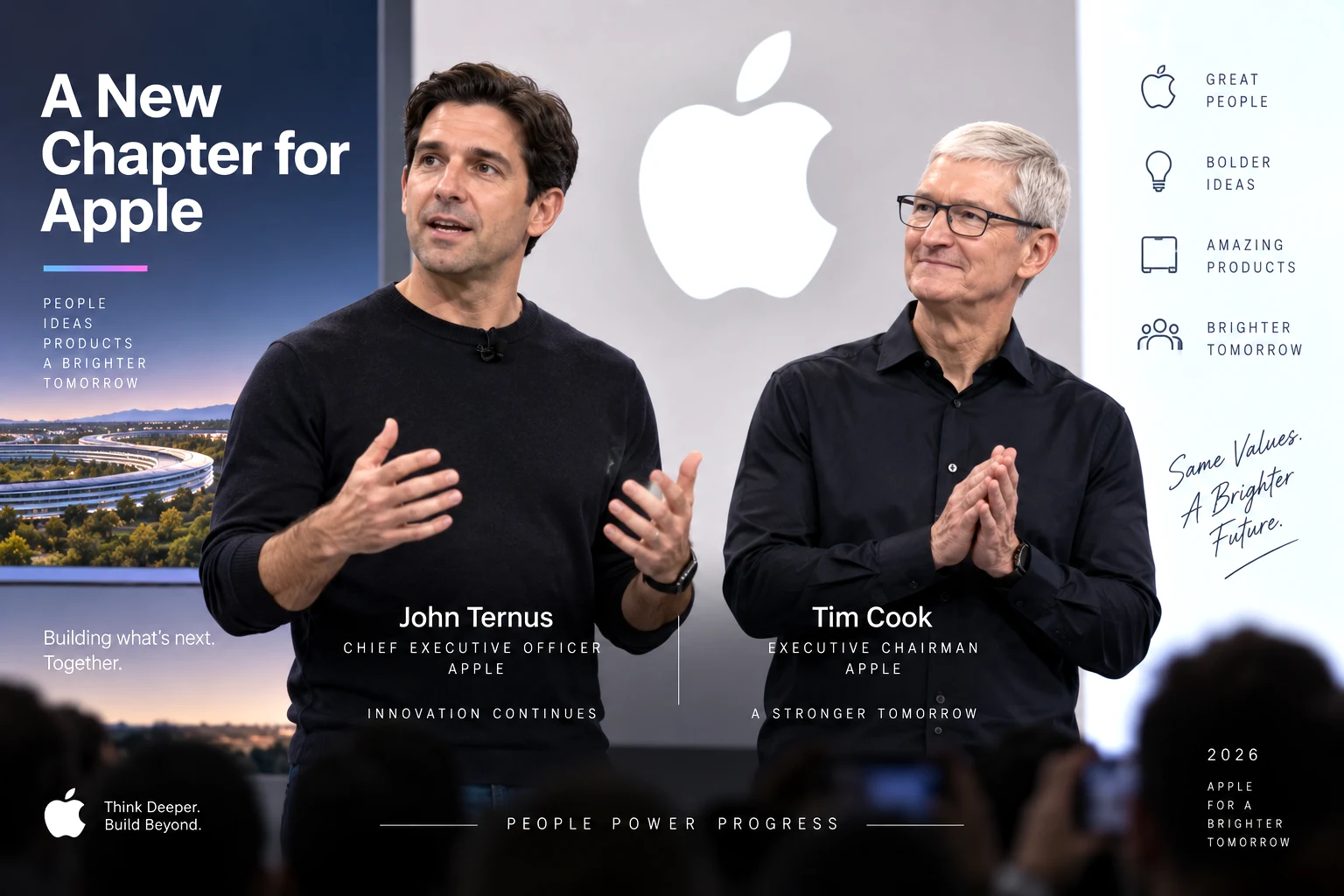
Apple CEO John Ternus and executive chairman Tim Cook representing Apple’s major 2026 leadership transition
Table of Contents (22 sections)
Cupertino, September 10, 2026: Apple has entered a new leadership era, with longtime hardware executive John Ternus officially taking over as chief executive officer and Tim Cook moving into the role of executive chairman after 15 years at the helm of one of the world’s most valuable companies.
Ternus formally became CEO on September 1, 2026, completing a succession plan Apple first announced in April.
The change represents Apple’s most important leadership transition since Cook succeeded co-founder Steve Jobs in 2011.
But Cook is not leaving the company.
As executive chairman, he will remain involved in selected areas of Apple’s business, including engagement with policymakers around the world, while providing continuity as Ternus assumes responsibility for day-to-day leadership.
Recommended Reading
Related Stories & In-Depth Guides
Curated editorial perspectives matching this topic.
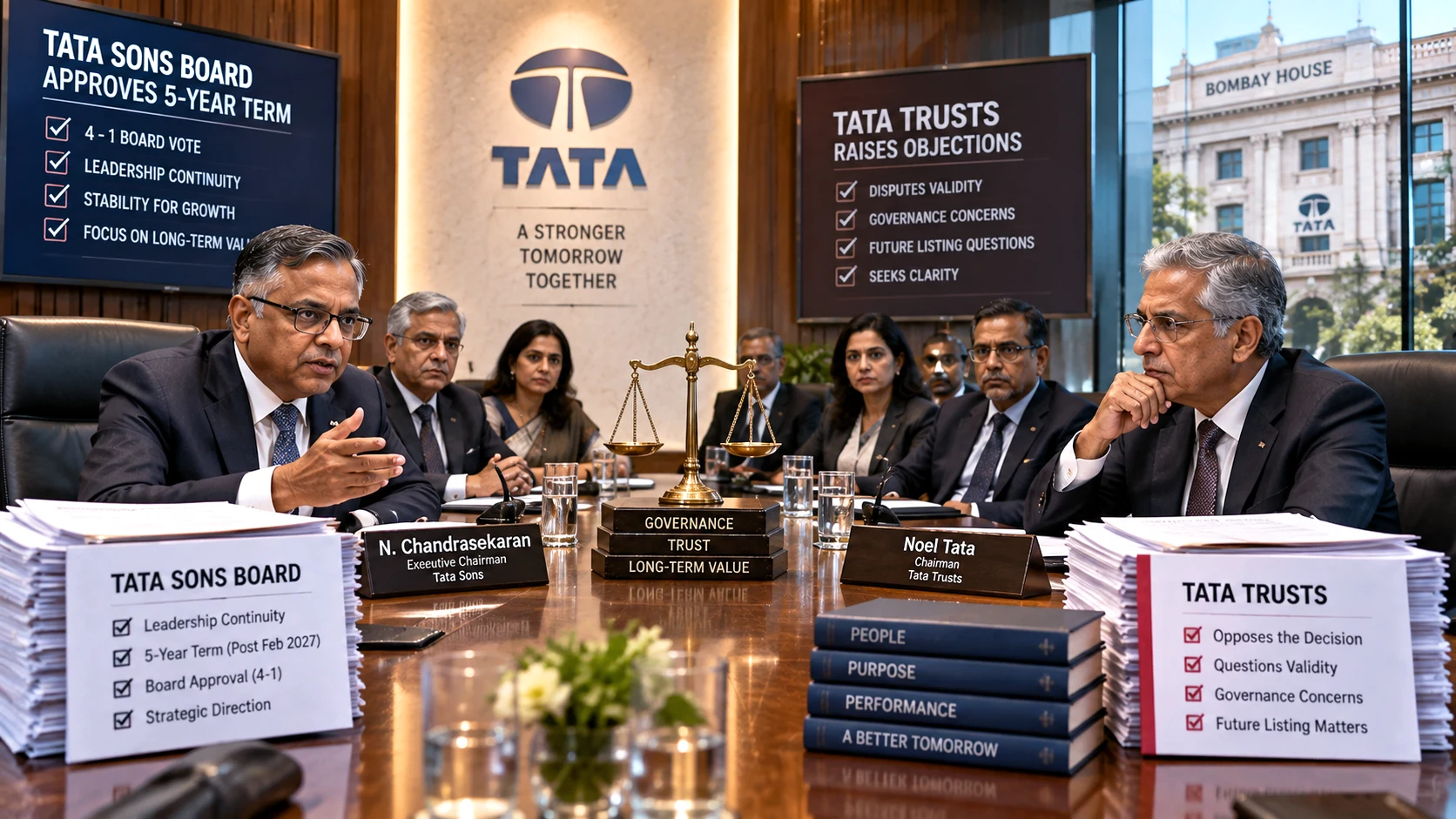
The Tata Sons board voted 4-1 to give N. Chandrasekaran another five years as executive chairman after his current term ends in February 2027. Noel Tata opposed the proposal, while Tata Trusts has formally argued that the resolution is invalid under Tata Sons’ Articles of Association.
Claude maker Anthropic is preparing for a potentially historic IPO, with investors discussing a valuation of $2 trillion or more, though the filing timetable remains subject to change.
The transition comes at a pivotal moment for Apple. The company remains an enormous global technology business with more than 2.5 billion active devices, but it faces intense competition in artificial intelligence, pressure to diversify manufacturing beyond China, and growing expectations for another major wave of product innovation.
Ternus, an engineer who has spent approximately 25 years at Apple, now has the task of leading that next chapter.
Table of Contents
John Ternus officially becomes Apple CEO
Why Tim Cook stepped down as CEO
Tim Cook remains as executive chairman
Who is John Ternus?
Ternus’s 25-year career at Apple
Tim Cook’s 15-year Apple legacy
How much Apple grew under Cook
Why AI is Ternus’s biggest challenge
Hardware innovation returns to the spotlight
Apple’s manufacturing challenge
India becomes increasingly important
Apple’s leadership structure changes
Ternus’s first major product launch
What the transition means for Apple
What happens next?
Key takeaway
John Ternus Officially Becomes Apple CEO
John Ternus officially assumed the CEO position on September 1.
Apple’s board unanimously approved the transition.
Ternus had previously served as the company’s senior vice president of hardware engineering, giving Apple’s new CEO a significantly different professional background from his predecessor.
Cook was best known for operations, supply chain management and organizational discipline.
Ternus comes directly from Apple’s product-engineering organization.
That difference has generated considerable interest over what Apple may look like under its new leader.
Ternus also joined Apple’s board of directors when he became CEO.
Former chairman Arthur Levinson moved into the role of lead independent director as Cook became executive chairman.
The arrangement gives Apple continuity at the board level while transferring executive control to Ternus.
This Was a Planned Transition, Not a Sudden Departure
The timing is important.
Apple did not unexpectedly replace Tim Cook in September.
The company publicly announced its succession plan in April 2026, giving Cook and Ternus several months to manage the transition.
Apple described the change as the result of a thoughtful, long-term succession-planning process.
Cook remained CEO throughout the summer and worked directly with Ternus before the September handover.
That makes descriptions such as “Tim Cook suddenly quits Apple” or “Apple unexpectedly replaces Cook” inaccurate.
The transition was planned, publicly announced and unanimously supported by Apple’s board.
Tim Cook Becomes Apple’s Executive Chairman
Cook’s move to executive chairman is particularly significant because it means his relationship with Apple continues.
He is no longer responsible for running the company as CEO, but he remains chairman of the board in an executive capacity.
Apple has specifically said Cook will continue assisting in certain areas, including engagement with policymakers around the world.
That could be valuable for the company.
Apple operates in an increasingly complicated political environment involving tariffs, manufacturing, antitrust regulation, app-store rules, privacy, artificial intelligence and relations between the United States and China.
Cook has spent years building relationships with governments and policymakers.
Keeping him involved provides Ternus with continuity while allowing the new CEO to focus more directly on Apple’s products and long-term technology strategy.
Who Is John Ternus?
Ternus is not an outsider brought in to transform Apple.
He is one of the company’s longest-serving senior product executives.
He joined Apple’s Product Design organization in 2001.
Before Apple, he worked as a mechanical engineer at Virtual Research Systems.
Ternus holds a bachelor’s degree in mechanical engineering from the University of Pennsylvania.
His career at Apple has been centered overwhelmingly on hardware.
He became vice president of Hardware Engineering in 2013 and was promoted to senior vice president in 2021.
During that period, he played important roles across some of Apple’s most recognizable products.
His engineering background now gives Apple something it has not had for many years: a CEO whose career inside the company was built primarily around developing hardware.
Ternus Helped Oversee Major Apple Products
Ternus has been involved in hardware development across Apple’s product portfolio.
His organization oversaw engineering for products including the iPhone, iPad, Mac, AirPods and Apple Vision Pro.
He also played a significant role in the Mac’s transition from Intel processors to Apple-designed silicon.
That transition became one of Apple’s most successful engineering projects of the Cook era.
By designing its own processors and integrating them closely with macOS and hardware, Apple substantially improved the performance and energy efficiency of its Mac lineup.
Ternus’s involvement in that transition helps explain why Apple sees him as capable of overseeing both individual products and broader technological shifts.
Tim Cook Leaves the CEO Job After 15 Years
Cook became Apple CEO in August 2011.
He inherited an extraordinary company but also an extraordinarily difficult position: succeeding Steve Jobs.
Over the next 15 years, Cook transformed Apple financially and operationally.
Reuters reported that Apple’s market value grew from approximately $350 billion when Cook became CEO to around $4.5 trillion by the time he handed over to Ternus.
Annual sales increased from roughly $108 billion to $416 billion, while annual profit exceeded $112 billion.
Those numbers demonstrate the scale of Apple’s transformation under Cook.
Apple did not simply sell more iPhones.
It expanded into wearables, subscriptions, financial services, streaming and health-related technology while building an enormous ecosystem around its devices.
Services Became a Major Apple Business
One of Cook’s most consequential strategic achievements was the expansion of Apple’s services business.
Apple Music, Apple TV, iCloud, Apple Pay, the App Store and other services created recurring revenue streams beyond hardware sales.
That reduced, although did not eliminate, Apple’s dependence on customers purchasing new iPhones.
The company also expanded into new product categories.
Apple Watch became a major wearable platform.
AirPods developed into one of the world’s best-known wireless-earbud products.
Apple Silicon transformed the Mac.
At the same time, Cook’s tenure included projects that did not meet expectations.
Apple spent years developing an electric vehicle program before cancelling it.
Vision Pro demonstrated technically ambitious spatial-computing technology but struggled to achieve mainstream adoption.
Those mixed results form part of the legacy Ternus inherits.
Apple’s AI Challenge Could Define the Ternus Era
Perhaps the biggest strategic challenge facing Ternus is artificial intelligence.
Apple remains enormously powerful in consumer hardware, but competitors have moved aggressively in generative AI.
Companies including OpenAI, Google and Anthropic have rapidly advanced AI assistants and frontier models.
Apple has introduced Apple Intelligence and substantial Siri improvements, but critics have argued that it reacted more slowly than major AI competitors.
Reuters identified catching up in AI as one of the central challenges facing the new CEO.
The significance is difficult to overstate.
AI is increasingly becoming an interface through which people interact with computers.
If consumers begin expecting AI agents to perform tasks across apps, devices and online services, Apple’s traditional advantage in hardware and operating-system integration will need to extend into AI.
Ternus therefore inherits a company that is financially enormous but still has important technological ground to cover.
Ternus Is Reportedly a Strong Believer in AI
Ternus’s hardware background does not mean Apple is retreating from AI.
Reporting around the leadership transition indicates that he views AI as central to the company’s future.
Apple’s hardware engineering organization has already been incorporating AI into product development and quality processes.
The strategic opportunity for Apple is also unusual.
Unlike companies that primarily offer cloud-based AI services, Apple controls an enormous ecosystem of consumer hardware.
iPhones, Macs, iPads, watches and other devices provide potential distribution for deeply integrated AI features.
Apple can therefore compete not necessarily by building a standalone chatbot, but by making AI part of the operating experience across its ecosystem.
The challenge is executing that strategy quickly enough.
Product Innovation Returns to the Center
Ternus’s appointment also puts product engineering back at the center of discussions about Apple’s future.
For years, investors and technology enthusiasts have questioned what Apple’s next transformative hardware category will be.
The iPhone remains the company’s most important product.
Apple Watch and AirPods became successful extensions of the ecosystem.
But Vision Pro has yet to develop into a mass-market platform.
Ternus now has to decide how aggressively Apple should pursue new device categories while continuing to improve its established products.
His engineering background may influence those decisions.
The CEO cannot personally design every product, but leadership priorities influence which technologies receive resources, which projects survive development and how quickly experimental products reach consumers.
Manufacturing Is Another Major Challenge
Apple’s supply chain is one of the world’s most complicated manufacturing networks.
China remains enormously important to it.
At the same time, Apple has spent years expanding manufacturing elsewhere, particularly in India and Vietnam.
Reuters identified further diversification away from dependence on China as another major challenge facing Ternus.
This is not simply a manufacturing-efficiency question.
Geopolitical tensions, tariffs and trade policy have made supply chain location increasingly strategic.
Apple must balance manufacturing capacity, costs, component availability, logistics and political risk while producing hundreds of millions of sophisticated devices.
Cook was famous for mastering this type of operational challenge.
Ternus will now have to demonstrate that his engineering-focused leadership can manage the same complexity.
India Is Becoming Increasingly Important to Apple
India is likely to be particularly important during the Ternus era.
Apple has been expanding both manufacturing and retail operations in the country.
India offers the company two strategic advantages.
It is a large and growing consumer market.
And it provides another major manufacturing base as Apple attempts to diversify its global supply chain.
The challenge is that shifting sophisticated electronics manufacturing is not as simple as moving an assembly line.
Apple’s supply chain includes component manufacturers, specialized equipment, logistics providers, engineering expertise and quality-control systems developed over decades.
Diversification is therefore likely to remain gradual rather than an immediate replacement of Chinese manufacturing.
Apple’s Board Structure Also Changes
The CEO transition has produced broader governance changes.
Ternus joined Apple’s board when he became CEO.
Cook became executive chairman.
Arthur Levinson, who had served as Apple’s non-executive chairman for approximately 15 years, became lead independent director.
That structure attempts to balance continuity and independent oversight.
Cook remains influential.
But Ternus is unquestionably CEO.
This distinction matters because Cook’s continued presence could otherwise create confusion about who runs Apple.
The company’s formal structure makes Ternus responsible for executive leadership while Cook operates from his new board-level position.
Ternus’s First Message to Apple Employees
On his first day as CEO, Ternus sent a message to Apple employees thanking Cook for his leadership and expressing excitement about the company’s future.
He praised the products already under development and emphasized Apple’s culture of building new technologies.
His first week also immediately placed him in the public spotlight.
Rather than enjoying a quiet transition period, Ternus took over immediately before one of Apple’s most important annual product events.
That meant investors, customers and developers did not have to wait long to see Apple’s new CEO representing the company.
His First Major iPhone Launch Followed Days Later
Ternus became CEO on September 1.
Just over a week later, Apple held its major September product event.
That made the 2026 iPhone launch the first major Apple product introduction under his leadership.
The timing gave the succession additional symbolic significance.
Ternus spent much of his career building Apple hardware.
His first major public test as CEO therefore arrived through exactly the type of product organization he previously led.
The launch also comes at a time when Apple is under pressure to demonstrate that it can still create meaningful new hardware experiences rather than relying exclusively on incremental upgrades to established products.
Cook’s Legacy Will Remain Visible
Leadership transitions at companies as large as Apple rarely produce immediate transformation.
Many of the products released during Ternus’s first years will have begun development while Cook was still CEO.
Apple’s hardware roadmaps can extend several years into the future.
The same is true for supply chain decisions, processor development and software architecture.
That means separating the “Cook era” from the “Ternus era” will initially be difficult.
The clearest differences may emerge gradually through investment priorities, organizational changes and decisions about which future products Apple chooses to pursue.
Cook’s continued role as executive chairman will make the transition even more gradual.
What Could Change Under John Ternus?
There are several areas to watch.
The first is AI.
Apple needs to demonstrate that its AI strategy can compete with rapidly advancing systems from other technology companies.
The second is hardware innovation.
Ternus’s engineering background naturally raises expectations that Apple will pursue ambitious product development.
The third is manufacturing.
Diversification into India, Vietnam and other locations will remain strategically important.
The fourth is Apple’s ecosystem.
The company must continue balancing privacy and security with increasing regulatory demands for more openness around apps, payments and digital platforms.
Finally, Ternus must manage expectations.
Leading Apple means overseeing one of the world’s largest businesses while simultaneously being expected to produce breakthrough products.
That is an unusually difficult combination.
A Different Kind of Apple CEO
Apple’s three most consequential modern leaders have brought very different strengths.
Steve Jobs was identified with product vision, design and marketing.
Tim Cook was identified with operations, supply chains, disciplined execution and enormous business expansion.
John Ternus arrives primarily as an engineer.
That does not guarantee Apple will suddenly become more experimental.
Nor does it mean the company will abandon the operating discipline developed under Cook.
But it does give the leadership transition a clear technological dimension.
Apple’s board has effectively placed a longtime product engineer in charge at a moment when the technology industry is being reshaped by artificial intelligence, new computing interfaces and changing manufacturing economics.
What Happens Next?
The immediate transition has already happened.
John Ternus is Apple’s CEO.
Tim Cook is executive chairman.
Arthur Levinson is the lead independent director.
The more important transition will take years.
Investors will watch Apple’s financial performance.
Developers will watch its AI platforms.
Customers will watch its products.
Competitors will watch whether Apple can turn its enormous hardware ecosystem into an advantage in the AI era.
And the technology industry will watch whether an engineer who spent approximately a quarter-century building Apple products can create a new growth chapter for a company already worth trillions of dollars.
Cook leaves the CEO position with Apple dramatically larger than the company he inherited in 2011.
Ternus inherits something different: a company with enormous financial strength and global reach, but also enormous expectations about what comes next.
That will define the John Ternus era far more than the title change itself.
Key Takeaway
John Ternus officially became Apple CEO on September 1, 2026, succeeding Tim Cook after a planned transition announced in April.
Cook remains with the company as executive chairman, focusing on selected areas including policy engagement.
Ternus, a 25-year Apple veteran and former head of hardware engineering, brings a product-engineering background to the role.
Key challenges include advancing Apple’s AI strategy, sustaining hardware innovation and further diversifying manufacturing beyond China.
India is expected to play a growing role in both markets and production.
The Rajatheertha Team publishes news, explainers, guides and updates across India and the world. Our coverage follows Rajatheertha's editorial, verification and corrections standards.
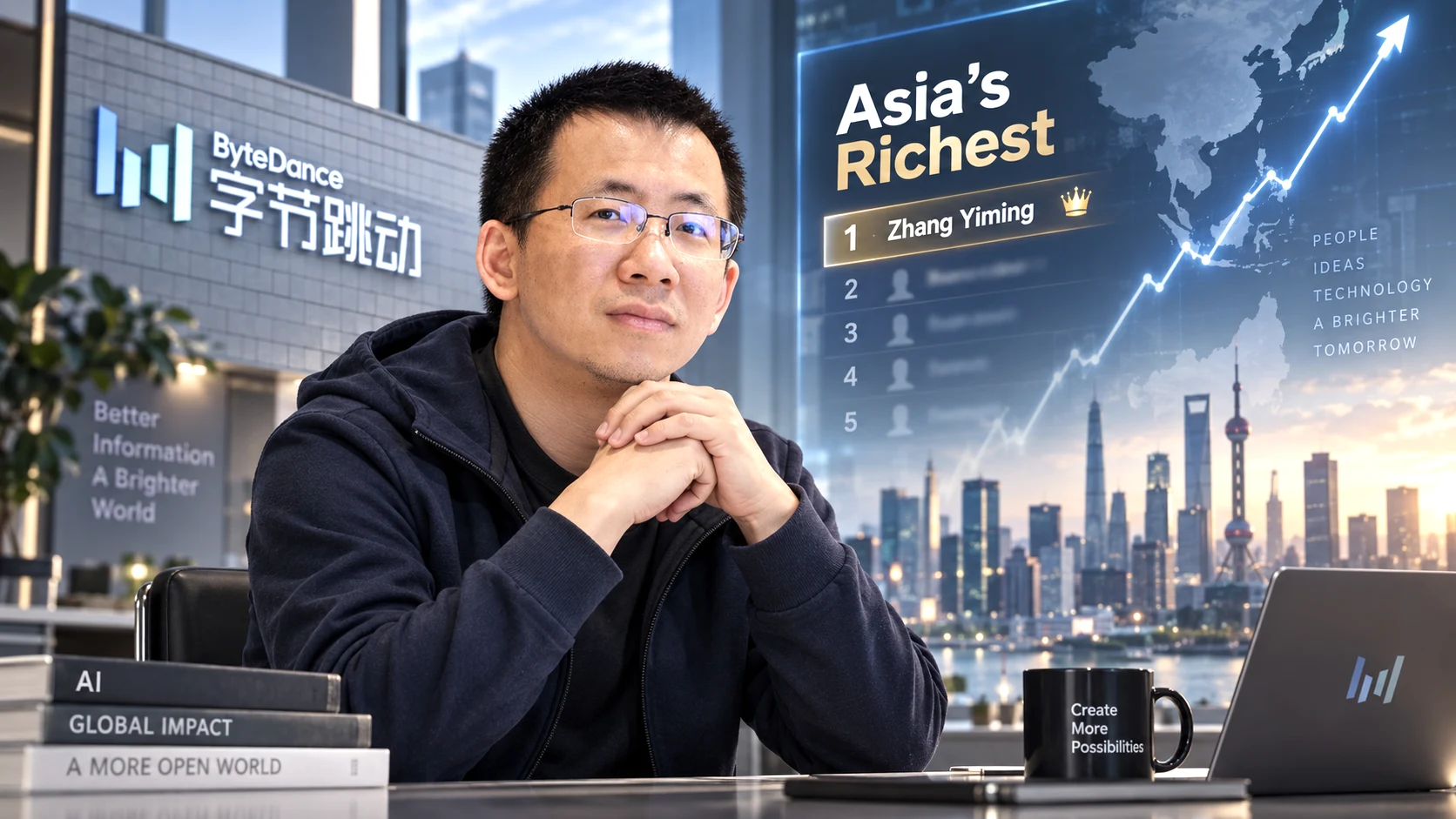
The claim is confirmed by the Bloomberg Billionaires Index and fresh September 18 reporting. Zhang Yiming’s estimated wealth has climbed to about $105 billion as higher ByteDance valuations and the company’s expanding AI business push him ahead of Gautam Adani.
ONGC has struck natural gas at a deepwater well about 43 km off Konark in Odisha's Mahanadi Offshore Basin. The well has shown encouraging flow and reservoir pressure, but reserve size and commercial viability still require appraisal.
The Federal Reserve unanimously lifted its benchmark rate by 25 basis points to 3.75%-4.00% as inflation remained stubbornly above target. President Donald Trump demanded rates of 1% or lower and attacked the Fed board as political, although he said he still has confidence in Chair Kevin Warsh.
Global crude oil prices fell sharply on September 21, 2026, with Brent dropping toward $102 a barrel and US West Texas Intermediate slipping below $99, as recovering Saudi Arabian export flows and hopes for renewed US-Iran diplomacy outweighed immediate fears from Houthi missile and drone attacks on
Indian Oil has approved ₹2,448.70 crore for a 424.65-km natural gas pipeline linking Kochi with Thoothukudi via Kanyakumari. The project will have 6.84 MMSCMD capacity and strengthen gas connectivity across southern India.
Brent crude has surged above $100 as US-Iran hostilities disrupt Middle East oil supplies, raising concerns over inflation, markets and India’s import costs.










0 Comments