US Ban on Nearly $1 Billion of Canadian Imports Takes Effect as Trade War Deepens
A US ban covering about $967 million of Canadian imports is now in force, targeting many alcoholic drinks, selected dairy-related products and large motorcycles. The measure marks another escalation in the US-Canada trade conflict and raises new questions over the future of USMCA.
Freight and selected Canadian exports at the US-Canada border as new American import restrictions take effect
Table of Contents (20 sections)
The United States has put into force an outright import ban covering nearly $1 billion worth of selected Canadian goods, marking another escalation in the increasingly confrontational trade relationship between Washington and Ottawa.
The restrictions took effect at 12:01 a.m. Eastern Time on Tuesday, September 29, 2026, under presidential proclamations signed earlier in September.
Based on 2025 trade data, the products covered by the exclusion lists were worth about $967 million, equivalent to roughly 0.3% of total US goods imports from Canada, according to analysis cited by the Congressional Research Service.
Although the value is small relative to the enormous US-Canada trading relationship, the importance of the move lies in something broader: Washington has moved beyond imposing high tariffs on selected Canadian goods and is now blocking certain Canadian products from entering the US market altogether.
The measure comes after months of tariffs, retaliatory Canadian duties, failed negotiations and disagreement over the future direction of the United States-Mexico-Canada Agreement, or USMCA.
Recommended Reading
Related Stories & In-Depth Guides
Curated editorial perspectives matching this topic.
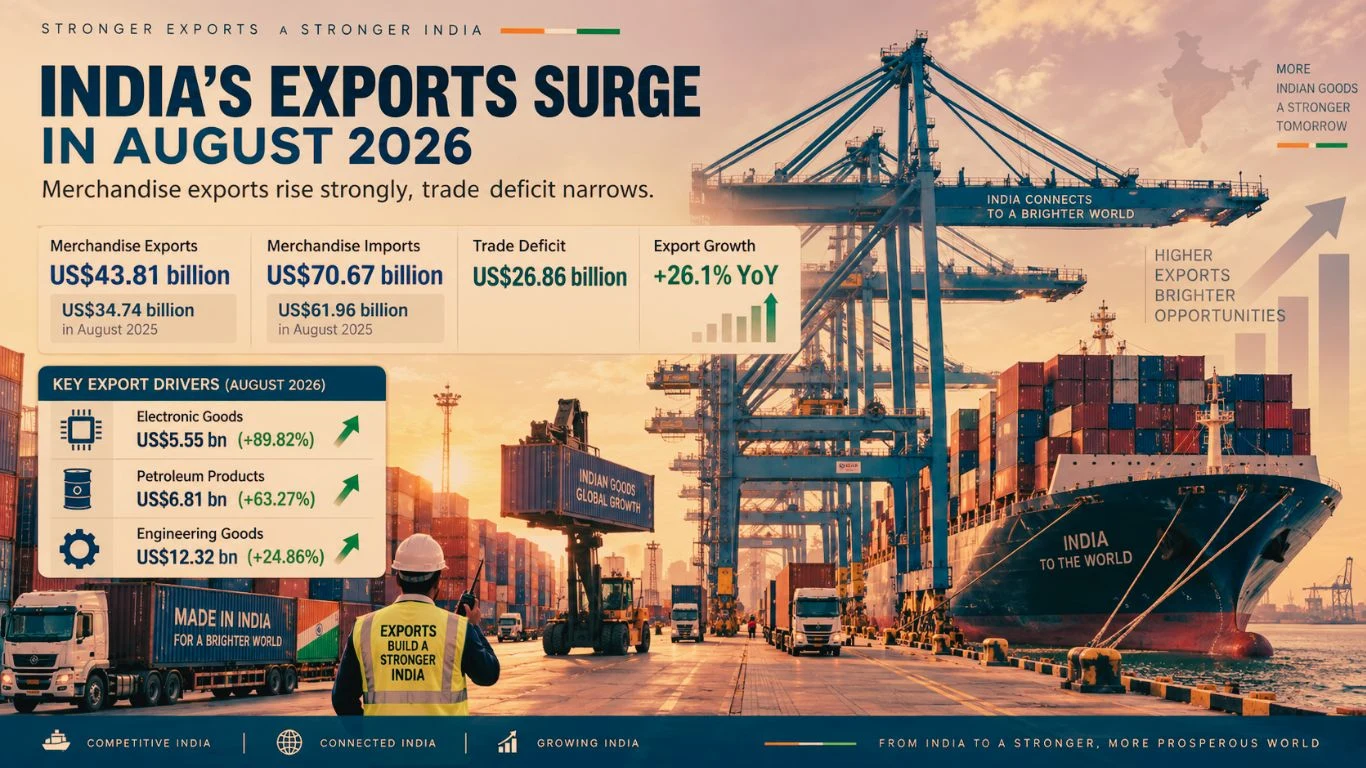
Merchandise exports recorded strong year-on-year growth in August 2026, led by electronics, petroleum products and engineering goods. The goods trade deficit fell sharply from July, helped partly by lower gold imports, although merchandise imports remained elevated at $70.67 billion.
Sensex and Nifty opened higher and extended gains on September 23, led by metals, FMCG and realty stocks as crude oil eased and global cues improved. Bajaj Finance, Hindalco and Tata Steel were among the strongest Nifty gainers.
What Canadian Products Are Actually Banned?
The phrase “Canadian import ban” can make the restrictions sound considerably broader than they are.
The new prohibitions apply only to specifically listed tariff classifications.
Canadian Alcohol
The largest portion of the approximately $967 million affected trade is alcohol.
The White House annex covers many forms of packaged Canadian alcoholic beverages, including categories of:
beer;
sparkling and still wine;
cider;
vermouth;
whisky;
rum;
gin;
vodka;
brandy;
liqueurs;
and other packaged spirits and fermented beverages.
For several tariff classifications, the prohibition specifically applies to products packaged in bottles, cans, boxes, kegs or similar direct-to-consumer containers.
Associated Press reported that alcohol accounts for approximately 87% of the value of goods covered by the new ban, based on estimates using 2025 trade figures.
That makes Canadian breweries, wineries and particularly smaller distillers among the businesses most directly exposed.
Reuters reported that large producers may have more flexibility because some bulk, unbottled alcohol can still enter the United States for processing or bottling there, while smaller Canadian distilleries that bottle locally may have fewer alternatives.
Is All Canadian Dairy Banned?
No.
The dairy-related prohibition is much narrower than a blanket ban on Canadian dairy products.
The White House annex lists products including:
whey protein concentrates;
modified whey;
fluid whey;
dried whey;
selected molasses products;
and non-alcoholic beer.
It does not amount to a general prohibition on Canadian milk, butter or cheese.
The distinction is important because dairy has become one of the most politically sensitive elements of the broader US-Canada trade dispute.
Washington has long objected to elements of Canada's supply-management system and the way dairy tariff-rate quotas are allocated.
Canada, meanwhile, argues that its system is legitimate and has defended its approach during previous USMCA disputes.
A 2021 USMCA panel found one Canadian dairy quota practice inconsistent with Canada's obligations, while a later 2023 dispute produced a ruling in Canada's favour on another US challenge.
Are Canadian Cars Banned?
No — not under this September 29 import ban.
The specific motor-vehicle-related exclusion contains only one listed tariff category:
motorcycles and similar cycles equipped with reciprocating internal-combustion engines larger than 800cc.
That includes some motorcycles manufactured by Quebec-based BRP, whose Can-Am Spyder and Canyon models are affected, according to AP.
Passenger cars are therefore not part of this particular $967 million import prohibition.
However, automobiles remain deeply involved in the wider US-Canada trade dispute through separate tariffs and Canadian countermeasures.
Why Did Trump Impose the Ban?
The Trump administration says the measure responds to what it considers discriminatory Canadian treatment of American businesses in areas including alcohol, dairy and motor vehicles.
The legal authority being used is Section 338 of the Tariff Act of 1930.
Under that provision, the US president may impose additional duties of up to 50% when a foreign country is found to discriminate against US commerce. If the administration concludes that the discrimination continues or increases, Section 338 also provides authority to exclude affected goods from the US market.
The Congressional Research Service said Trump's 2026 actions were the first time a president had expressly cited Section 338 to impose tariffs.
The White House says Canada continued the practices Washington objected to after the United States imposed tariffs, leading the administration to move from tariffs to import exclusions.
Canada rejects the US characterization of the dispute and says the American measures are unjustified.
How Did the Trade War Get Here?
The current confrontation developed through several stages.
On July 20, Trump announced 50% tariffs on selected Canadian goods under Section 338.
After a brief suspension while negotiations continued, those tariffs became effective on August 22 when the two governments failed to reach an agreement.
Canada then announced retaliatory duties.
Effective September 8, Ottawa imposed tariffs of 15%, 25% and 50% on C$27.6 billion worth of US goods, saying it was responding dollar-for-dollar to US measures.
Canadian targets include goods in industries such as steel, dairy, appliances, agricultural equipment, pulp and paper, plastics and electronics.
Washington responded again.
On September 8, Trump signed proclamations that converted some of the already heavily tariffed Canadian products into outright import prohibitions beginning September 29.
The result is now a multi-layered trade conflict involving tariffs, retaliatory tariffs and direct import restrictions.
Why the $1 Billion Figure Can Be Misleading
Nearly $1 billion sounds substantial in isolation.
But the United States and Canada conduct vastly more trade than that.
AP estimates annual two-way trade between the neighbouring economies at about $880 billion.
CRS calculates that the prohibited goods accounted for only around 0.3% of total US imports from Canada in 2025.
That means the immediate macroeconomic impact of this particular ban may be relatively modest.
For individual businesses, however, the effect can be severe.
A small Canadian distiller that depends heavily on US customers could lose access to its principal export market even if the wider national economic effect is limited.
Reuters reported that some Canadian spirits producers send a large share of their exports south of the border, and smaller companies may struggle to replace US demand quickly.
What Does This Mean for American Consumers?
The direct consumer impact is likely to vary by product.
US buyers could see:
reduced availability of certain Canadian alcoholic brands;
changes in distributor inventories;
substitution toward US or other foreign products;
higher prices in particular niche categories;
and fewer Canadian large-engine motorcycles entering the market.
But consumers should not expect Canadian goods generally to disappear from American stores.
The vast majority of Canadian trade is not covered by this specific import ban.
Even within alcohol, some bulk shipments and products outside the listed classifications may still enter the market.
Why the Wider Trade War Matters More
The larger concern is not the $967 million ban by itself.
It is the accumulation of trade barriers between two economies whose manufacturing, energy, agriculture and transportation networks have been deeply integrated for decades.
CRS notes that Canada was the largest destination for US automotive exports in 2025, buying about $61 billion worth, while Canada supplied roughly $53 billion in automotive products to the United States.
Components may cross the border several times during the production of a vehicle.
That means tariffs affecting integrated supply chains can raise costs on both sides rather than acting only as a penalty against the exporting country.
USMCA Is Now Part of the Dispute
The escalation also raises questions about the future of the trade agreement that was supposed to provide stability across North America.
On July 1, 2026, the United States, Canada and Mexico conducted the required USMCA joint review.
The United States declined to renew the agreement in its current form.
Importantly, that did not terminate USMCA. USTR said the agreement remains in force while the parties continue discussions over unresolved issues.
That distinction matters.
Most USMCA-compliant trade can still receive preferential treatment, although separate US tariff measures have increasingly complicated the system.
On October 2, USTR also opened a public consultation process ahead of another USMCA review process in 2027, showing that negotiations over the future architecture of North American trade remain active.
Could the Trade War Get Worse?
Yes, although further escalation is not inevitable.
Canadian Prime Minister Mark Carney has kept open the possibility of additional responses while saying Canada remains willing to negotiate.
AP reported that Canada has not ruled out further retaliation and that US officials believe difficult unresolved issues remain between the two governments.
Another escalation could potentially involve:
additional tariff categories;
higher tariffs on existing products;
new procurement restrictions;
expanded retaliatory Canadian measures;
auto-sector measures;
or additional restrictions tied to the USMCA negotiations.
Those are possibilities rather than confirmed next steps.
G20 Talks Have Not Broken the Deadlock
The dispute remained unresolved even after trade officials gathered in Milwaukee for the G20 Trade Ministerial on September 30 and October 1.
AP reported that the meeting produced no visible breakthrough in the US-Canada conflict.
US Trade Representative Jamieson Greer said difficult outstanding issues remained, while Canadian Trade Minister Maninder Sidhu called for the two sides to cooperate on shared economic challenges.
That suggests neither side has yet reached the point where it is prepared to make the concessions needed for a broad settlement.
Canada Is Trying to Reduce Its Dependence on the US
One of the potentially longer-lasting consequences of the conflict is Canada's effort to diversify trade.
More than 70% of Canadian exports went to the United States last year, according to AP.
Carney has said he wants Canada to double its non-US trade over the next decade.
Canada has consequently accelerated commercial discussions with several partners.
Reuters reported on October 2 that Carney is expected to pursue closer economic ties with Turkey, including possible advancement of free-trade negotiations, as part of a wider effort to reduce Canada's reliance on the US market.
Canada has also been developing trade relationships with India, Europe and China.
Diversification cannot quickly replace the United States because of the enormous scale and geographic convenience of bilateral trade, but the dispute could gradually change Canadian investment and export strategies.
The Bigger Risk: Investment Uncertainty
Trade wars do not affect only goods currently crossing a border.
They can also influence decisions about where companies build factories, source components and invest capital.
If businesses believe US-Canada market access has become less predictable, they may:
hold back investment;
move production;
build additional inventory;
seek alternative suppliers;
relocate processing operations;
or diversify export markets.
These changes can continue even after individual tariffs are eventually removed.
For highly integrated sectors such as automobiles, metals, food and energy, predictability may therefore matter as much as the headline tariff rate.
Is This the End of Free Trade Between the US and Canada?
No.
Hundreds of billions of dollars in goods and services continue to move between the countries, and USMCA remains in force.
But the relationship has clearly moved further away from the low-tariff, predictable North American trade environment that businesses had become accustomed to.
The September 29 bans matter because they represent an escalation from making imports expensive to preventing selected imports altogether.
That raises the stakes for future negotiations.
What Happens Next?
The main developments to watch are:
US-Canada negotiations: whether Washington and Ottawa restart substantive bilateral talks.
Canadian retaliation: whether Ottawa expands its countermeasures following the import bans.
USMCA negotiations: how the US pushes for changes to the North American agreement.
Auto policy: whether the dispute spreads further into the highly integrated automobile sector.
Alcohol industry impact: whether Canadian producers shift bottling or production into the United States.
Trade diversification: whether Canada makes measurable progress in expanding business with India, Europe, China, Turkey and other markets.
Prices and supply chains: whether tariffs and bans begin producing broader consumer or manufacturing effects.
Latest Verified Position
As of October 3, 2026:
The US import prohibitions took effect at 12:01 a.m. ET on September 29.
They cover approximately $967 million in Canadian imports based on 2025 data.
Approximately 87% of the affected value is alcoholic beverages, according to an estimate cited by AP.
The alcohol restrictions cover many packaged beers, wines and spirits.
The dairy-related list primarily covers whey products, molasses and non-alcoholic beer rather than all Canadian dairy.
The motor-vehicle-related prohibition covers motorcycles above 800cc, not Canadian passenger cars generally.
Canada has retaliatory tariffs on C$27.6 billion of US products.
The latest G20 trade meeting produced no breakthrough in the US-Canada dispute.
USMCA remains in force even though Washington declined to renew it in its current form during the July review.
Frequently Asked Questions
Has the US banned all Canadian imports?
No. The prohibition applies only to specifically listed products worth approximately $967 million based on 2025 trade data. Most US-Canada trade continues.
When did the Canadian import ban start?
The new import exclusions became effective at 12:01 a.m. Eastern Time on September 29, 2026.
Are Canadian cars banned in the United States?
No. The new motor-vehicle-related import prohibition specifically covers motorcycles with engines larger than 800cc. Passenger vehicles remain involved in separate tariff disputes.
Is Canadian cheese banned?
Not under the new dairy exclusion list. The annex targets whey products, molasses and non-alcoholic beer rather than imposing a blanket dairy ban.
Is Canadian whisky banned?
Many packaged Canadian whisky products fall within the alcohol restrictions. Reuters reported, however, that some bulk unbottled alcohol can still enter the US for processing.
Why did Trump impose the ban?
The Trump administration says Canada maintained discriminatory trade practices involving US alcohol, dairy and motor vehicles after earlier American tariffs were imposed. Canada disputes Washington's characterization and calls the US measures unjustified.
Is USMCA still active?
Yes. USTR said the agreement remains in force even though the United States declined to renew it in its current form during the July 2026 joint review.
Could Canada retaliate again?
It could. Canadian officials have not ruled out additional action, but no specific new retaliation should be treated as confirmed until announced.
Bottom Line
The US has banned about $967 million of selected Canadian imports effective September 29, 2026. Roughly 87% of the affected value is packaged alcoholic beverages; the rest covers selected whey products, molasses, non-alcoholic beer and motorcycles over 800cc.
The move escalates the US-Canada trade conflict. USMCA remains in force, but negotiations continue and further measures remain possible.
The Rajatheertha Team publishes news, explainers, guides and updates across India and the world. Our coverage follows Rajatheertha's editorial, verification and corrections standards.
India received a record $94.53 billion in total FDI in FY2025-26, up about 17% from the previous year. Singapore led equity investment, software and hardware was the top sector, while Maharashtra attracted the most FDI equity.
Finance Minister Nirmala Sitharaman says India cannot abruptly abandon Russian crude and will base oil purchases on availability, price and refinery suitability as a new US law raises the risk of tariffs of up to 100% on major Russian-energy buyers.
Iran’s economy contracted by 10.1% year-on-year during the first quarter of its current Persian calendar year, according to official data, with a collapse in oil and natural-gas activity driving much of the decline. The figures cover the first months of the US-Israel conflict with Iran, although the
SBI, PNB and other public-sector banks have issued advisories ahead of the proposed September 28-30 nationwide bank strike. PSBs and RRBs will open on Sunday, September 27, while branch-dependent services could face disruption during the strike.
The claim is confirmed by the Bloomberg Billionaires Index and fresh September 18 reporting. Zhang Yiming’s estimated wealth has climbed to about $105 billion as higher ByteDance valuations and the company’s expanding AI business push him ahead of Gautam Adani.
The New Delhi Declaration backs more interoperable payment systems and voluntary use of national currencies while calling for diversified critical-mineral supply chains, as India’s expanding semiconductor ecosystem highlights the commercial stakes behind the resilience agenda.












0 Comments